Winter EBC is quiet, cold, and beautiful. The trails are empty, the views are razor-sharp, and the teahouses have space. But the nights are brutal.
Govt Regd. No.: 147653/072/073
Travel Agency Licence: 2838/072
Everest Base Camp Trek in Winter (December to February): The Cold, Quiet Truth

Everest Base Camp Trek in Winter (December to February): The Cold, Quiet Truth
Last updated 2 October 2026. The temperature, rain and daylight figures below are published figures with their sources named, not forecasts. Above Dingboche there is no station, so for Gorak Shep and Base Camp I give an estimate and show how I made it. Comments on lodges, crowds and flights are what our guides see, and I label them that way.
The short answer: winter on the Everest trail is cold, dry, clear and quiet, and it is not for everyone. The average night at Dingboche (4,410 m) is about -13 degrees in December and about -15 in January, and it is colder again at Gorak Shep and Base Camp. The days are only about ten and a half hours long. Most lodges at Gorak Shep are shut in the winter months, which can change how your Base Camp day works. In return you get almost no rain at Lukla in December, a trail with very few other people, and the clearest views of the year, as guides see it. If you have good kit, a spare day and a flexible mind, it is a superb time to go. If cold nights are your main worry, wait for spring or October.
This page covers December, January and February together. For all twelve months, see the month-by-month weather guide.
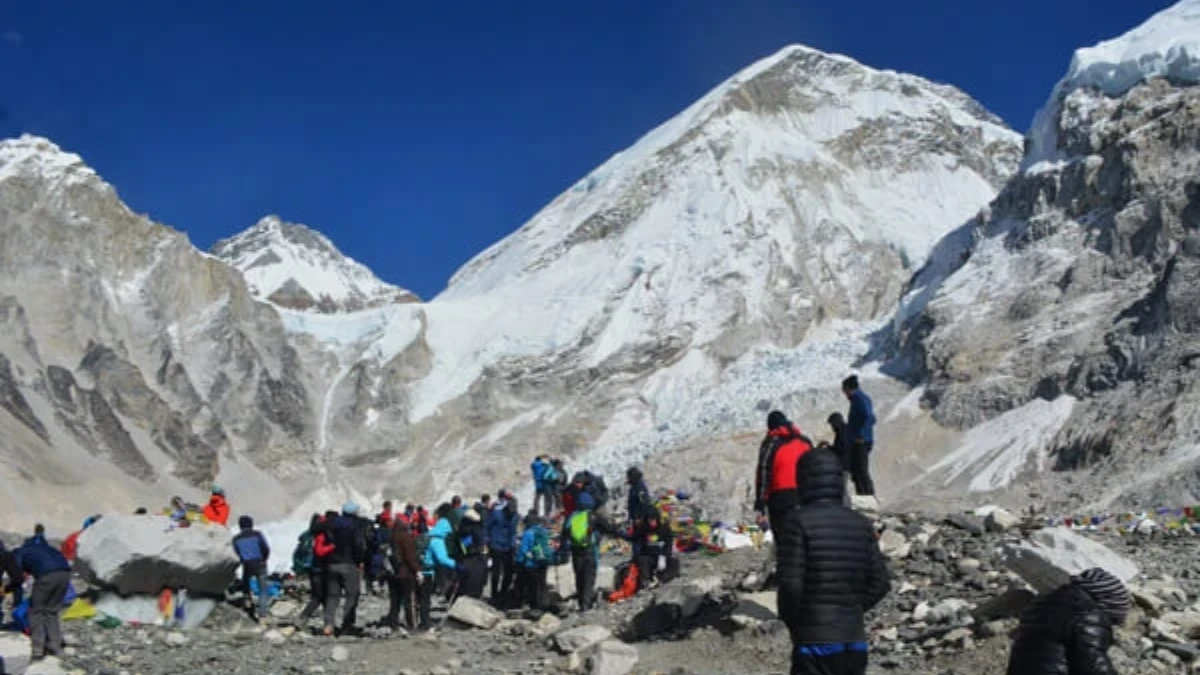
How cold is the Everest Base Camp trek in winter?
I use the four stations along the route that publish a record: Lukla (2,786 m), Namche Bazaar (3,450 m), Tengboche (3,857 m) and Dingboche (4,410 m, which is modelled data, not an instrument record). Each cell is the average daily high, then the average daily low, in degrees Celsius, with the month's rain or snowmelt in millimetres.
| Station | December | January | February |
|---|---|---|---|
| Lukla 2,786 m | 11.1 / -0.5 (0.5 mm) | 8.3 / -2.9 (15.3 mm) | 8.9 / -1.6 (17.2 mm) |
| Namche 3,450 m | 7.6 / -7.1 (24 mm) | 6.9 / -8.5 (43 mm) | 6.4 / -6.5 (20 mm) |
| Tengboche 3,857 m | 6.0 / -7.5 (0.6 mm) | 3.7 / -9.7 (22.0 mm) | 4.0 / -9.7 (14.1 mm) |
| Dingboche 4,410 m (modelled) | 3.2 / -13.4 (3 mm) | 1.0 / -15.3 (9 mm) | 1.5 / -14.2 (8 mm) |
Sources: Lukla, Nepal Department of Hydrology and Meteorology (DHM) 1991 to 2020 normals. Namche, FAO FAOCLIM. Tengboche, FAO and the Australian National University record. Dingboche, a computer model, so a guide and not a measurement.
In plain words: January is the coldest month at every station, December is a degree or two milder, and February is close to December. The sun still warms the day. At Lukla the average January afternoon is 8 degrees and at Namche about 7, so a sunny terrace with no wind is comfortable, and the nights are what bite: -8.5 at Namche, -15 at Dingboche.
What about Gorak Shep and Base Camp?
There is no station there, so here is an estimate and how I made it. The standard atmosphere cools by about 6.5 degrees for every 1,000 m of height (the ICAO figure). Gorak Shep (5,164 m) is about 750 m above Dingboche and Base Camp (5,364 m) is about 950 m above it, so I take Dingboche's average and subtract 4.9 degrees for Gorak Shep and 6.2 for Base Camp. This is my own calculation on a modelled figure, so it is a rough guide.
| Estimate (average day high / night low, °C) | December | January | February |
|---|---|---|---|
| Gorak Shep 5,164 m | -2 / -18 | -4 / -20 | -3 / -19 |
| Everest Base Camp 5,364 m | -3 / -20 | -5 / -22 | -5 / -20 |
These are averages. A clear, still night can be colder than an average, and one cold snap can be much colder, so treat the numbers as the mild end of what you might meet. I don't give wind-chill figures or the dramatic extremes you see on some sites, because I can't back them up. What I can say from guiding is that water bottles freeze overnight in rooms higher up, and that phone and camera batteries drain fast in the cold.
Is the Everest Base Camp trail snowy and icy in winter?
Less snowy than people expect, but icy in places. The rain and snowmelt in the table is small at Lukla and Tengboche in December, and larger at Namche in January (43 mm), where at those temperatures it is likely to fall as snow. High up, snow is possible on any day, and the trail can be icy even when it has not snowed, because the sun does not reach the shaded gullies. In my guides' experience, the stretches above Namche are the ones that need care, and microspikes earn their place on frozen mornings. Bring microspikes of your own for frozen mornings. That is guiding experience, not a statistic.
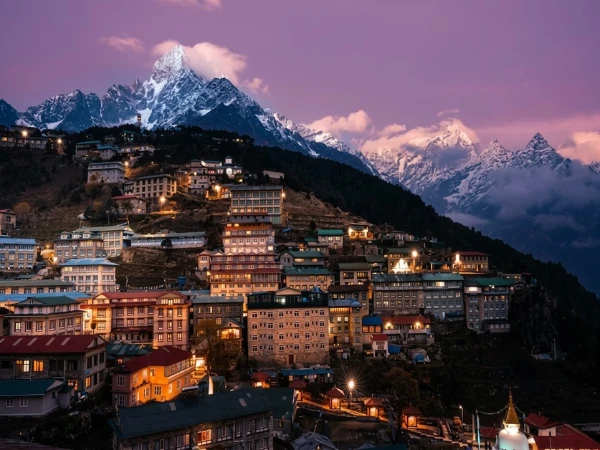
The final walk to Base Camp runs along the Khumbu Glacier, which is covered in rock and moraine. Our guides make the call on the day about whether conditions are safe for the last push, and they have the final say over the itinerary.
Do Lukla flights run in winter?
Yes, but they depend on cloud and wind like every month, and there is no published winter cancellation rate, so I won't give one. Tenzing-Hillary Airport has a short runway with mountain walls around it and no go-around once a pilot commits, and pilots must see the runway. The practical points are these.
- Where the flight leaves from. In autumn the busy fixed-wing flights leave from Ramechhap (Manthali), a four to five hour drive from Kathmandu, but that window runs to about 30 November and starts again about 15 March (see our domestic flights guide). So from December to the first half of March, flights leave from Kathmandu. Check the position for your week with me, because it can change at short notice.
- Helicopters. They fly from Kathmandu to Lukla all year. That is how the Luxury tier travels, round trip.
- A spare day. A delayed flight can take 24 to 48 hours to clear, so I would not book a tight international connection. If you cannot spare two or three extra days, winter is the wrong season for a Lukla trek.
If a flight is delayed, the guest pays for the extra nights and for any helicopter that you choose to take, so insurance that covers trip delay is worth having. Buy it in your home country, not in Nepal.
Is there a way to avoid the Lukla flight?
Yes. Our Everest Base Camp trek by road is a 15-day itinerary. You drive from Kathmandu to Salleri or Phaplu (the package says usually 8 to 9 hours), take a local jeep to Thamdanda and trek to Phakding, then follow the same trail as the flight itinerary. It is three days longer than the 12-day trek and is the same price, from US$1,399 Budget, US$2,499 Standard and US$4,999 Luxury for one traveller. I have no 2026 winter report on the Salleri road, either way, so ask me for the position before you choose it.
How short are the winter days?
Shorter than most people expect. These are published sunrise and sunset times for Kathmandu. The Lukla area is almost the same: on 21 December the same service gives sunrise 6:43 and sunset 17:09.
| Date | Sunrise | Sunset | Day length |
|---|---|---|---|
| 1 December 2026 | 6:35 | 17:09 | 10 h 34 min |
| 21 December 2026 (shortest day) | 6:48 | 17:14 | 10 h 26 min |
| 15 January 2027 | 6:54 | 17:31 | 10 h 37 min |
| 1 February 2027 | 6:49 | 17:45 | 10 h 55 min |
| 15 February 2027 | 6:39 | 17:55 | 11 h 15 min |
| 28 February 2027 | 6:28 | 18:04 | 11 h 36 min |
These are astronomical times. In a deep valley the low winter sun drops behind the ridges earlier, so the light you can actually walk in is shorter, and the temperature falls fast once the sun goes. In practice it means early starts, arriving at the lodge by mid-afternoon, and spending the evening in the dining room round the stove. That is our guides' experience, not a published figure.
Are teahouses open on the Everest Base Camp trek in winter?
From December to February most of the accommodation at Gorak Shep is closed, the area is snow-covered and the cold is intense. Our own best-time guide says some high lodges are shut in January and February, and our guides' experience is that the lower villages are the safest bet for a bed and that Namche stays open through winter. There is no published list of which lodges are open on which date, because the owners decide week by week, so I won't guess. The question to put to any operator is: where will we sleep on the Base Camp night, and what is the plan if that lodge is shut? Ask me for your dates and I will tell you what our guides are seeing on the trail that week.
Hot showers and charging cost extra on most of the trail and are often not available higher up in winter; ask what your tier covers. On Luxury, hot showers and charging are covered. Food choice is also narrower in winter, so this is not a trip for picky eaters. For what the rooms and meals are like in any season, read our teahouse guide and our teahouse menu guide.
Is the Everest Base Camp trek worth doing in winter?
If I have spent four sections warning you about cold, ice and flights, you might wonder why anyone goes. Here is the case for it, with the experience and the data kept apart.
It is dry and clear
Lukla averages 0.5 mm of rain in December and Tengboche 0.6 mm, the lowest figures in the table. Our guides' view is that the winter air is the cleanest and driest of the year, and that the view from Kala Patthar on a good morning is crisper than in October. That is a guide's judgement, not a measurement.
The trails are quiet
Our best time to trek guide rates crowds as low in December and very low in January and February. That is our judgement from guiding, not a counted figure. In practice you can expect the dining room to be nearly your own.
You meet the people who live there
This is less talked about, but in my guides' experience it is the most valuable part of a winter trek. In autumn, lodge families are flat out cooking and cleaning for dozens of guests. In winter, with a handful of trekkers passing through, there is more time to sit by the stove and talk. Some of our repeat clients choose winter for this reason.
The trek price does not change
The price on our package page is the same in winter as in October: US$1,399 Budget, US$2,499 Standard and US$4,999 Luxury for one traveller, and less per person for groups. I can't promise savings on lodge or flight prices in winter. Kathmandu hotels are not included in any trek tier, so we quote them separately.
Here is what one of our guests wrote after a January trek, from our TripAdvisor record: "So at the beginning, my friends told me it will be very cold and snowing but thank God it was perfect weather for me." (Candy, TripAdvisor, January 2021). One guest, one trip, not a forecast.
December, January or February: which winter month?
December is the mildest of the three at every station, and the days are at their shortest around the 21st. Our guides' view is that early December still carries the clear weather of November before the deep cold arrives, and that is the stretch I would pick. The November figures from the same sources, for comparison, are Lukla 13.8 / 2.4 and Dingboche 5.3 / -11.0, so early December feels like a slightly colder November, and from about the third week the deep cold sets in. If you can, go in the first two weeks, and keep a spare day at the end for flights. The question to put to any operator is: where will we sleep on the Base Camp night, and what is the plan if that lodge is shut?
January is the coldest month in every row of the table: Dingboche's average night is -15 and Namche has its most snowmelt (43 mm). If you want the deepest quiet and can handle the cold, this is your window. The days begin to lengthen, to 10 h 37 min by mid-January.
February is a degree or so milder than January, and the days are noticeably longer: 11 h 15 min by mid-month and 11 h 36 min at the end. March is warmer again (Namche averages 9.6 / -3.0 and Dingboche 4.7 / -10.5 in the same sources) but wetter at Lukla (45.3 mm). February is a good compromise for trekkers who want winter quiet without January's cold. Compare it with our March guide.
Who should not trek to Everest Base Camp in winter?
Winter is not a beginner season. If this is your first Himalayan trek, I would start with October, which is the most forgiving month. Here is who should reconsider:
- First-time high-altitude trekkers. You need to know how your body responds to altitude before adding the cold. Read our altitude sickness guide.
- Anyone with Raynaud's disease or a condition where cold is a medical issue. Speak to your doctor first. Fingers, toes and exposed skin are the risk.
- Trekkers on a tight schedule. If you cannot spare two or three extra days for flight delays, do not plan a winter Lukla trek.
- People who dislike early nights. Daylight is about ten and a half hours in December and January, and the dining room is the only warm room above Dingboche. If that sounds miserable rather than cosy, winter is not your season.
- Anyone who would be upset to find the lodge they hoped for at Gorak Shep shut. It may be.
Who is the winter trek best for?
- Experienced trekkers who have done at least one high-altitude trek.
- Photographers who want the clearest conditions and an empty trail.
- Solitude seekers who find crowds on the trail stressful.
- Flexible travellers who can absorb a few days of delay.
What gear do you need for Everest Base Camp in winter?
My Everest Base Camp packing list and the wider packing list apply, with the cold turned up. The winter specifics:
- Sleeping bag and down jacket. We provide both free on every tier. Our bag is rated to -15 degrees. The average January night at Dingboche is -15 and it is colder again above, so I would add a sleeping bag liner of your own. Ask me about it when you book.
- Layers. Merino or synthetic base layers (not cotton), a fleece mid-layer, insulated trousers above 4,000 m, a hat that covers your ears, liner gloves and insulated outer gloves.
- Insulated water bottle or a thermos. Our guides report water bottles freezing overnight in rooms higher up. Keep a bottle upside down in your sleeping bag.
- Traction. Microspikes for icy mornings. Bring your own.
- Hand warmers and spare batteries. Cold drains camera and phone batteries fast. Keep spares inside your jacket against your body, and the power bank in your sleeping bag at night.
- Balaclava and goggles for wind above Dingboche.
- Sun protection. Ultraviolet radiation rises with altitude and snow reflects it, and the World Health Organization notes it stays high under cloud. Wear sunglasses with UV protection and a high-factor sunscreen even in winter.
- Travel insurance from your own country. It must cover trekking and helicopter evacuation up to 6,000 m. See my insurance guide.
Do you need permits for Everest Base Camp in winter?
The permits are the same in every season, and we arrange them for you. They are the Sagarmatha National Park entry permit (NPR 3,000), the Khumbu Pasang Lhamu Rural Municipality fee (NPR 3,000, collected at Lukla or Monjo) and a TIMS card (NPR 2,000), about NPR 8,000 in all. The park fee is on the Nepal Tourism Board park entry fees page and the TIMS fee on the Nepal Tourism Board TIMS page. I arrange TIMS for every trekker because it records you, your guide and your route. Every booking comes with a licensed guide. For the full permit position see our permits guide, and for safety see is Nepal safe to visit.
What are easier winter alternatives to Everest Base Camp?
If minus twenty at Base Camp gives you pause, these lower treks start from Pokhara, where the long-run winter averages are mild: December 21.0 / 8.3, January 19.9 / 7.1 and February 22.7 / 9.7 degrees (Nepal DHM and WMO, 1991 to 2020). Prices below are the live per-person prices for one traveller.
| Trek | Days | Budget / Standard / Luxury (US$) | Note |
|---|---|---|---|
| Poon Hill | 6 | 499 / 960 / 1,930 | Poon Hill is 3,210 m. The itinerary's highest night is Ghorepani, 2,860 m. |
| Mardi Himal | 7 | 454 / 849 / 1,111 | Highest night 3,580 m on the itinerary. Steep days. |
| Annapurna Base Camp | 9 | 1,250 / 1,725 / 3,465 | Higher and colder than the other two. Ask me about conditions for your dates. |
One caution for 2027. The Annapurna south treks were reported open as at 29 September 2026, but the Pokhara to Baglung road lost about 150 m at Sahasradhara on 27 September and repair had started on 29 September (Kathmandu Post, ekantipur, as logged in our November status page). I confirm the road to the trailhead 48 hours before you go, and if it has not reopened we find an alternative. Langtang was not accessible as of 1 October 2026, and the Annapurna Circuit and Mustang roads were still cut off on 1 October. As of 14 October 2026 the Besisahar–Chame road and the Beni–Jomsom road are repaired and open to vehicles again, and as of 15 October 2026 the road to Dhunche and Syabrubesi is open again too (no hotels are running in Syabrubesi, so day 1 on Langtang is a walk on from the road head). The dated position is in our November 2026 status page and the late-September flood update. As at 29 September 2026, the Everest region was open and unaffected.
Frequently asked questions
Can I trek to Everest Base Camp in winter without prior trekking experience?
I would not recommend it. Winter adds cold on top of the altitude and the daily walking. If EBC is your goal but you have no trekking experience, do it in October or March first. If you specifically want a winter Himalayan trek as a beginner, Poon Hill is a much safer start.
Do I need technical mountaineering skills?
No. The route is still a trek, not a climb. You do not need ropes, harnesses or ice axes. You do need microspikes for icy sections and the confidence to walk on snow-covered trails. Your guide handles route-finding where the path is hidden.
How likely is it that I will not reach Base Camp because of weather?
There is no published figure and I won't invent one. The two common reasons for turning back are altitude sickness, as in any season, and heavy snow on the trail above Lobuche. The guide makes the safety decision on the day.
Is helicopter evacuation available in winter?
Yes, but our guides' experience is that weather windows are shorter and less predictable, and cloud or wind can delay a flight by hours or more. That makes acclimatisation and cautious decisions more important. Your insurance must cover helicopter rescue up to 6,000 m, and rescue is funded by your insurance.
What happens if my Lukla flight is cancelled for several days?
Our team in Kathmandu watches the flight situation and rebooks you on the first available flight. The extra nights, and any helicopter you choose, are paid by the guest, and a delay is one of the costs outside our control. Plan a spare day or two at the end. That is why I tell winter guests not to book a tight connection home.
What does a winter trek cost, and how do I book?
The 12-day Everest Base Camp trek is US$1,399 on Budget, US$2,785 on Standard and US$4,999 on Luxury for one traveller, and groups pay less each. Budget has no porter and no meals. Standard has one porter for every two trekkers and all meals; a solo Standard trekker has no porter and the guide carries up to 10 kg of the bag. Luxury has your own porter, all meals with fruit and nuts, and a helicopter to Lukla and back. An extra porter costs US$25 a day, plus 13 per cent VAT and 3.5 per cent bank charge on top. A 10 per cent deposit holds your dates and the balance is paid in Kathmandu. Card payment of the balance carries a 3.5 per cent charge; cash in Kathmandu does not. We take US dollars or card, not Nepali rupees, from foreign clients. If you need to move, you can reschedule free, with at least 72 hours' notice, to any date within one year. The deposit itself is not refunded if you cancel. If we cannot run the trip, we refund what you paid less taxes, bank and card charges and any money already spent on permits or flights.
We have no winter departure listed, so contact me for dates. Every date is a private departure at the same price. Tell me your dates on WhatsApp, +977 9810351300, or email [email protected], and I will tell you what that week usually does.
Sources: Nepal Department of Hydrology and Meteorology (Lukla, 1991 to 2020; Pokhara with WMO, 1991 to 2020), FAO (Namche Bazaar and Tengboche), the Australian National University (Tengboche), the ICAO standard atmosphere (lapse rate), the World Health Organization (UV), and the Nepal Tourism Board park entry fees and TIMS pages. Dingboche figures are modelled, and the Gorak Shep and Base Camp figures are our own estimate. Flight windows and the delay rule are in our domestic flights guide.
About The Everest Holiday
We are a family company in Kathmandu, three generations of Himalayan guides, registered in 2016 and a member of the Trekking Agencies' Association of Nepal, number 1586. When you book with us you deal with the family, not a call centre. Every booking helps fund our Nagarjun Learning Center at Saldum, where 70 children learn with a teacher I pay for personally.
WhatsApp: +977 9810351300
Email: [email protected]
Written by Shreejan Simkhada, CEO of The Everest Holiday and third-generation Himalayan guide. TAAN Member #1586.
Winter on the Everest trail is for prepared trekkers. Our EBC Trek 12 Days is private (your group only, no strangers), from USD 1,399. Message us on WhatsApp for dates and current conditions.
Planning a trip to Nepal?
Drop us your details and tell us what you have in mind. We will put together a personalised plan and get back to you.
Not sure which Nepal trek is right for you?
Take our free 2-minute quiz and get personalised recommendations based on your fitness, experience, and travel style.
Find Your Perfect Trek →Need Help? Call Us+977 9810351300orChat with us on WhatsApp
Related Trek Packages
 US$1,399
15 DaysMax 20
(6 reviews)
Everest Base Camp Trek By Road Trip - 15 Days Itinerary and Cost
Starts From
ExploreUS$1,399
Everest Base Camp with Gokyo Lakes Trek via Chola Pass - 15 Days
Starts From
ExploreUS$1,699
Latest Travel Blogs
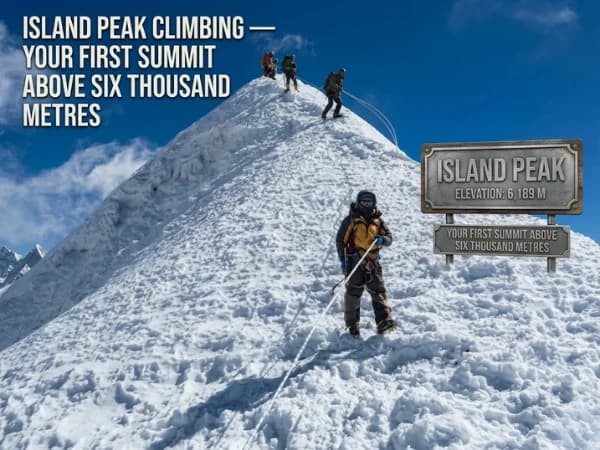
Island Peak Itinerary and Summit Day 2027: 14 Days, Base Camp to the Top
The 14-day Island Peak itinerary day by day, what summit day is like from base camp, where sources disagree on heights, best months and 2027 prices.
Read More
How Difficult Is the Mardi Himal Trek? An Honest Day-by-Day Rating for 2027
An honest day-by-day rating of the Mardi Himal trek: the steep climb to High Camp, the 4,500 m push to Base Camp, altitude risk, who finds it hard and 2027 prices.
Read More
Manaslu Circuit Reopened: What Changed After the 2026 Floods and How to Plan 2027
The Manaslu Circuit over the Larke Pass is open again with extreme caution. What changed in the lower valley after the two 2026 floods, 2027 prices and permits, and how I would plan.
Read More Chat with Shreejan