Kathmandu, Pokhara, Chitwan Tour - 8 Days

237 reviews
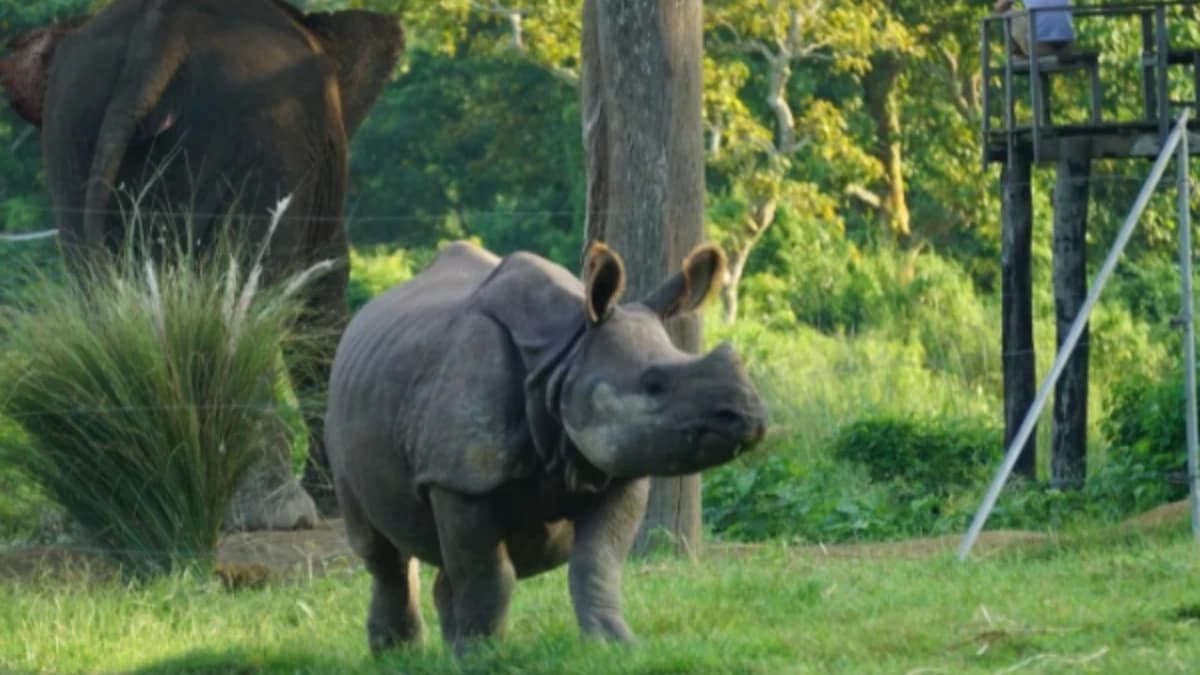
Wildlife safari scene with rhinoceros and elephant in lush national park grassland.
Quick Overview
Duration8 Days
Trip GradeEasy
CountryNepal
Maximum Altitude1,400m / 4,593ft
Group Size2-20
StartsKathmandu
EndsKathmandu
ActivitiesTour
Best TimeSpring and Autumn season

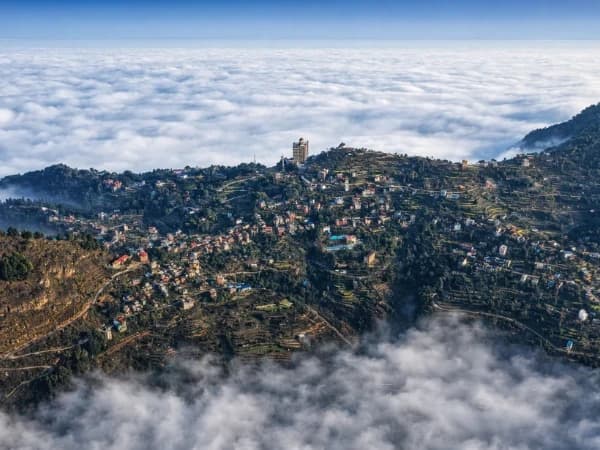
The prayer bells of Swayambhunath ring across the Kathmandu Valley as the first light catches the golden spire. Below, the old city is already stirring — incense smoke curling from temple doorways, vendors stacking pyramids of marigolds, motorcycle horns threading through streets that have carried traders and pilgrims for a thousand years. Kathmandu is not a city you observe. It pulls you in — through its narrow alleys, its rooftop restaurants, its Durbar Squares where medieval woodcarving meets the chaos of modern Nepal. This eight-day tour takes you from here to the lakeside calm of Pokhara and the wild subtropical lowlands of Chitwan — three faces of Nepal stitched together in a single, unhurried week.

What makes this route work is the contrast. One day you're standing in a temple courtyard where Hindu and Buddhist traditions have overlapped for centuries. Two days later you're watching the Annapurna range reflected in Fewa Lake, a rowing boat drifting across glass-still water. And by the end of the week, you're sitting in silence on a canoe in Chitwan's Rapti River, scanning the riverbank for the armoured silhouette of a one-horned rhinoceros. No trekking required. No altitude to worry about. Just Nepal's three most extraordinary destinations, connected by scenic drives and guided by people who grew up here.

What Makes This Tour Unforgettable

  • Explore four UNESCO World Heritage Sites in the Kathmandu Valley — Swayambhunath, Pashupatinath, Boudhanath, and Kathmandu Durbar Square
  • Watch the Sarangkot sunrise paint the Annapurna and Dhaulagiri ranges gold and pink
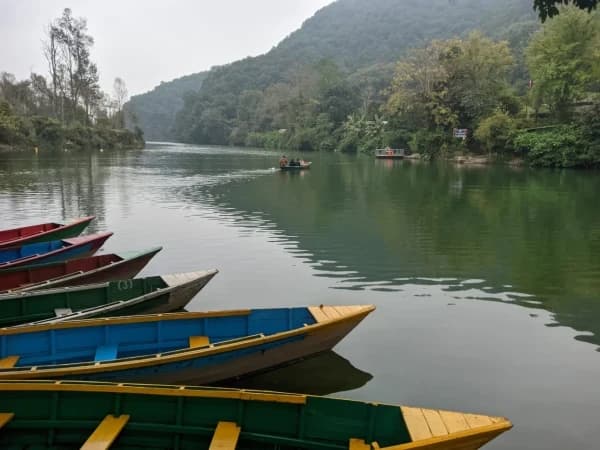
  • Boat across Fewa Lake with the Himalayan skyline reflected beneath you
  • Jeep safari through Chitwan National Park searching for one-horned rhinos, wild elephants, and the elusive Bengal tiger
  • Glide down jungle rivers by dugout canoe past basking mugger crocodiles and gharials
  • Experience a traditional Tharu cultural dance performance — the indigenous people of the Terai plains
  • Taste authentic Nepali cuisine from Newari feasts in Kathmandu to lakeside dining in Pokhara
  • Visit the Devi's Falls and Gupteshwor Cave in Pokhara — where a waterfall disappears underground
  • Suitable for all ages and fitness levels — no trekking, no altitude, entirely vehicle-based
  • TAAN-certified English-speaking guide throughout, with local naturalist guides in Chitwan

8-Day Overview

Days 1–3: Kathmandu Valley. Arrive in Kathmandu. Full-day guided tour of the valley's greatest heritage sites — the stupa of Swayambhunath perched above the city, the sacred cremation ghats of Pashupatinath, the vast white dome of Boudhanath, and the medieval carved temples of Kathmandu Durbar Square. A second day allows you to explore Patan Durbar Square, the Garden of Dreams, or simply lose yourself in Thamel's backstreets.

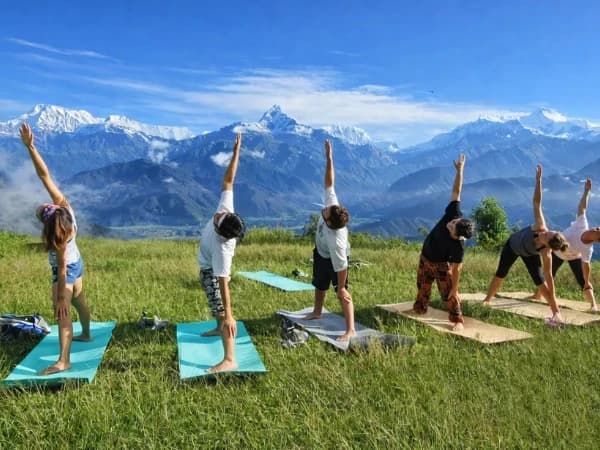
Days 3–5: Pokhara. Scenic drive to Pokhara (6–7 hours by road, or optional domestic flight). Early morning visit to Sarangkot for the famous Himalayan sunrise. Boat ride on Fewa Lake, visits to Devi's Falls, Gupteshwor Cave, and the International Mountain Museum. Free afternoon to stroll the lakeside or try paragliding (optional extra).

Days 5–7: Chitwan. Drive from Pokhara to Chitwan National Park (5–6 hours). Full jungle programme — jeep safari, canoe ride, elephant breeding centre visit, bird watching, and a Tharu cultural dance evening. Two nights in Chitwan gives you the best chance of spotting wildlife in both morning and afternoon game drives.

Day 8: Return to Kathmandu. Drive back to Kathmandu (5–6 hours). Farewell dinner with your guide and the team. Transfer to hotel or airport.

Compare Our Three Packages


Budget ($650)Standard ($799)Luxury ($1,000)
AccommodationTourist-class hotel3-star hotel4–5 star / boutique hotel
MealsBreakfast only (B&B)All meals (B/L/D)All meals at premium restaurants
TransportLocal / shared vehiclePrivate tourist vehicleLuxury private vehicle
GuideEnglish-speaking guideEnglish-speaking guide (1 per 6)Dedicated private guide
SafariJeep safari + canoeJeep safari + canoePrivate jeep safari + canoe
SIM cardSIM onlySIM + limited dataSIM + unlimited data
Best forBudget-conscious travellersComfortable touringPremium experience

Same expert guides, same destinations, same safety standards — three comfort levels to match your budget.

Your Tour, Our Family

Shreejan Simkhada doesn't just run The Everest Holiday — he comes from three generations of Himalayan expertise. His grandfather arranged logistics and support for expeditions and travellers in Nepal during the 1960s and 1970s. His father has held senior positions in Nepal's tourism and mountaineering institutions. Shreejan personally designs every itinerary and hand-picks the guide for your group.

Your guide will be one of our TAAN-certified professionals — experienced, locally knowledgeable, and personally briefed by Shreejan before your tour begins.

Need anything? WhatsApp Shreejan directly: +977 9810351300.

Why Travellers Trust Us

Three generations of local knowledge. We know which restaurant in Pokhara has the best dal bhat, which Chitwan guide spots tigers first, and which Kathmandu streets to avoid during festivals. That kind of knowledge doesn't come from a training manual.

Every detail handled. Airport pickup, hotel check-ins, park permits, internal transport — we manage every logistical piece so you can focus entirely on the experience. Our response time is under 30 minutes during Nepal business hours.

320+ five-star reviews and a TripAdvisor Travellers' Choice award. We earn trust one trip at a time.

Solo Travellers Welcome

Most of our travellers join solo — you'll be part of a small group of like-minded adventurers from around the world. Our groups stay small (1–20 people) so you get a personal experience. Many of our solo travellers tell us the group becomes like a second family by the time you reach Chitwan.

Tour Difficulty: Easy (1/5)

This is a cultural and wildlife tour with no trekking involved. All travel is by vehicle. The maximum altitude is 1,400 metres (Kathmandu) — lower than many European cities. Suitable for all ages, all fitness levels, and families with children. The only physical activity is walking around heritage sites and the safari, which is done by jeep and canoe.

Trek With a Purpose

A portion of every booking supports the Nagarjun Learning Center, founded by our family in 2019. Today, 70 children receive free education and hot meals daily at our flagship centre in Saldum Village, Dhading District. The centre is verified and listed on the UN Partner Portal.

Travel With a Purpose.

You Might Also Like

Interactive Tour Map

Follow the full route from Kathmandu to Pokhara to Chitwan and back — every stop, every highlight, every overnight location mapped out for you.

Note: A Google My Map for this tour needs to be created and the MID inserted above before publishing.

Short Itinerary
Day 01: Arrival in Kathmandu
Day 02: sightseeing in Kathmandu
Day 03: Drive to Pokhara
Day 04: Sightseeing in Pokhara
Day 05: morning visit Sarankot and drive 159 km/miles for 5-6 hours to Chitwan, and evening  participate in the Tharu cultural dance
Day 06: Jungle safari and sunset view from canoeing in the Rapti River.
Day 07: Drive back to Kathmandu
Day 08: Final departure
Expand
Detailed Itinerary
Day 01:


Meals: breakfast and dinnerAccommodation: hotel
Day 02:

Your Nepal adventure begins the moment the aircraft doors open and the warm Kathmandu air rushes in — carrying the faint scent of woodsmoke and marigolds. Inside Tribhuvan International Airport, our team member will be waiting with a traditional khada (white silk scarf) and a welcoming smile. From there, it's a short private transfer to your hotel, where the hectic beauty of Kathmandu reveals itself through the vehicle window: bicycle rickshaws loaded with fabric bolts, street dogs napping in doorways, and tiny roadside temples decorated with vermillion powder and fresh petals.

Check in, drop your bags, and take a breath. There's no schedule this evening — the city is yours to discover at your own pace. Walk south from your hotel towards Thamel and let the neighbourhood pull you in. Narrow alleys open into courtyards where locals sit cross-legged on low wooden platforms, sharing news over cups of chiya (sweet, spiced tea). The bookshops are stacked floor to ceiling with dog-eared travel memoirs, and the outdoor gear shops sell everything from yak wool blankets to hand-stitched leather belts. For dinner, find a local spot and order a plate of buff momos — Kathmandu's signature dumpling, filled with spiced buffalo meat and served with a fiery sesame-tomato chutney that'll clear your sinuses and make you grin.

Later, as the city quiets, step onto your hotel rooftop if there is one. On a clear night, the silhouettes of the valley's surrounding hills are just visible against the stars, and the distant sound of a temple bell carries across the rooftops. Your guide will meet you at breakfast tomorrow with a full briefing for the day ahead. Sleep well — this is just the beginning.

Meals: Breakfast, Lunch, and DinnerAccommodation: Hotel
Day 03:

Kathmandu has been a crossroads of faith, trade, and culture for over a thousand years, and today you'll walk through the layers. We begin after breakfast with the climb to Swayambhunath — the Monkey Temple. The 365 stone steps rise steeply through a canopy of old trees, past stone Buddhas worn smooth by centuries of weather and touch. Rhesus macaques sit on the railings grooming each other, entirely unbothered by visiting humans. At the top, the great white stupa commands the hilltop, its gilded spire catching the early light. The painted eyes of the Buddha gaze outward in four directions with an expression of infinite patience. Walk slowly around the dome, following the pilgrims, spinning the brass prayer wheels, and pausing to take in the view: the entire Kathmandu Valley laid out below, a patchwork of brick, green, and temple gold.

From Swayambhunath, we drive to Kathmandu Durbar Square — the ceremonial heart of the old city. Here, intricately carved wooden struts support pagoda temples built without a single nail, stone lions guard palace doorways, and the Kumari Ghar (House of the Living Goddess) sits quietly among the bustle. If timing is right, you may glimpse the young Kumari at her latticed window — a fleeting, extraordinary sight. Spend time here. Sit on the temple steps and watch the square do what it has done for centuries: vendors selling flower garlands, old men reading newspapers in the sun, schoolchildren running between the pillars.

After a lunch of Newari khaja set — beaten rice, spiced potatoes, marinated soybeans, and tangy pickle, all served on a brass plate — we continue to Boudhanath. This is the largest stupa in Nepal, its whitewashed dome rising from a mandala-shaped base like a snow-covered mountain. The circular plaza hums with devotion: maroon-robed monks walk the kora, prayer flags snap overhead, and the musky sweetness of Tibetan incense drifts from monastery doorways. Climb to one of the rooftop terraces that ring the stupa, order a pot of butter tea, and simply watch.

The day's final stop is Pashupatinath, Nepal's most sacred Hindu temple complex, set along the Bagmati River. In the golden hour before sunset, cremation ghats glow with small fires, sadhus in ash-painted faces meditate on the stone platforms, and the evening aarti begins — oil lamps, conch shells, and chanting voices rising together. It's deeply moving, and your guide will explain the rituals with sensitivity and care. We return to the hotel in reflective quiet, carrying the kind of experience that stays with you long after the trip ends.

Meals: Breakfast, Lunch, and DinnerAccommodation: Hotel
Day 04:

Today is a travel day, but in Nepal, the journey is never just a journey. We leave Kathmandu after breakfast, heading west along the Prithvi Highway — one of the country's most scenic roads. The route follows the Trishuli River through a series of gorges and valleys, the turquoise water churning below as the road winds past cliffside villages and suspension bridges strung with prayer flags.

Stop the vehicle when something catches your eye. That's the beauty of having six to seven hours on this road — there's no rush. Perhaps it's the woman carrying an impossibly tall stack of firewood on her back, or the group of children playing cricket on a terraced field, or the roadside stall where a man is grilling skewers of spiced chicken over charcoal, the smoke curling up through banana leaves. We'll stop for lunch at a local restaurant along the highway — a proper dal bhat with all the trimmings: lentil soup, rice, seasonal vegetables, a sharp tomato pickle, and as many refills as you can manage.

As the road continues west, the landscape softens. The gorges open into wider valleys, the terraced hillsides grow lusher, and the air takes on a warmth and sweetness that tells you the mountains are close. Somewhere in the final hour, you'll round a bend and see it — Fewa Lake shimmering in the afternoon sun, backed by the entire Annapurna range standing white and enormous against the sky. It's the kind of view that makes the whole car go quiet.

We check into your lakeside hotel and the evening is free. Pokhara's Lakeside district is Nepal's most laid-back neighbourhood: pedestrians stroll the tree-lined promenade, cafes spill onto the pavement with live acoustic music, and the lake reflects the last peach-coloured light of sunset. Find a table near the water, order a cold Everest beer or a fresh lime soda, and watch the rowing boats drift home as the mountains fade into dusk. Tomorrow, you'll explore this extraordinary place properly.

Meals: Breakfast, Lunch, and DinnerAccommodation: Hotel
Day 05:

This is a day designed for wonder. We start with a boat ride across Fewa Lake — a calm, mirror-still surface that reflects the Annapurna range so perfectly that you'll struggle to tell where the mountains end and the water begins. Your boatman paddles slowly past the tiny Tal Barahi island temple, where Hindu devotees leave offerings of fruit and flowers. Kingfishers — bright blue and orange, impossibly vivid — dart from overhanging branches. In the distance, Machhapuchhre's twin summits catch the morning sun like polished quartz. Bring your camera, but also put it down for a while. Some mornings deserve to be absorbed rather than documented.

Back on shore, we visit Devi's Falls (also called Patale Chhango), where the Pardi Khola stream vanishes abruptly into a deep, narrow chasm. The roar of the water is startling — you feel it in your chest before you hear it properly. Directly opposite, the entrance to Gupteshwor Cave leads underground through dripping limestone passages, past stalactites and stalagmites shaped by millennia of patient water, to a small Hindu shrine lit by oil lamps in the rock. The cool, damp air is a welcome contrast to the warmth above.

After lunch — perhaps a lakeside thali or a bowl of thukpa (Tibetan noodle soup) from one of the little restaurants along the shore — we make the gentle climb to the World Peace Pagoda. Set on a forested ridge high above the lake's southern shore, the gleaming white stupa offers what many consider the finest viewpoint in the entire Pokhara Valley. The Annapurna range stretches from Dhaulagiri in the west to Manaslu in the east, Fewa Lake gleams below like a dropped sapphire, and the city of Pokhara spreads along the valley floor in a patchwork of green and terracotta.

The walk back down threads through thick subtropical forest — ferns, bamboo, and the calls of coucals and barbets. By late afternoon, you're back in Lakeside, free to browse the artisan shops, book a lakeside massage, or simply sit on the hotel terrace and watch the mountains turn from white to gold to pink as the sun sets. This is the gift of an eight-day tour with a relaxed pace: time to actually be in a place, not just pass through it.

Meals: Breakfast, Lunch, and DinnerAccommodation: HotelDuration: 5-6 hour
Day 06:

It's worth setting the alarm for 4:30 a.m. — truly worth it. We drive the winding road up to Sarangkot in the pre-dawn darkness, arriving at the hilltop viewpoint while the sky is still deep violet. Other early risers huddle with thermoses of tea. Then, degree by degree, the eastern horizon lightens — pale grey, then soft apricot, then a burst of molten gold as the sun clears the hills. The Himalayan wall to the north ignites: Annapurna I, Annapurna South, Hiunchuli, and the unmistakable fishtail of Machhapuchhre, all glowing tangerine against the cool blue sky. Below, the Pokhara Valley is still wrapped in a blanket of low cloud, with only the tallest trees poking through. You can hear a rooster crow from some invisible village below the mist. It's a scene that belongs on a postcard, except postcards never capture how the cold mountain air smells or how your hands shake slightly around your tea cup.

Back at the hotel, a warm breakfast of aloo paratha (stuffed flatbread) with yoghurt and honey sets you up for the road ahead. Today we drive south to Chitwan — roughly five hours through dramatically changing terrain. You'll watch the landscape shift from Pokhara's temperate lakeside to the subtropical Terai lowlands: rhododendron and pine give way to sal forest and elephant grass, the air grows thicker and warmer, and the roadside wildlife changes from mountain goats to water buffalo standing chest-deep in paddy fields.

Arriving at your jungle lodge near Chitwan National Park, the change of world is complete. The sounds here are different — the buzz and chirp of a thousand insects, the distant trumpet of an elephant, the rustle of something unseen in the undergrowth. A cool drink and a briefing from your naturalist guide prepare you for the days ahead.

As twilight falls, the evening belongs to the Tharu people — the indigenous community of the Terai. Their traditional stick dance is performed by firelight, the rhythmic crack of bamboo staves accompanied by the deep pulse of madal drums. The dancers move with practised precision, their bodies telling stories of fishing, farming, and the forest spirits that inhabit Tharu mythology. The firelight catches their faces, the drums build in tempo, and for a few timeless minutes, the modern world disappears entirely. You'll head to bed tonight with the rhythm still pulsing in your head and the night sounds of the jungle filtering through the window.

Meals: Breakfast, Lunch, and DinnerAccommodation: HotelDuration: 5-6 hourDistance: 15 km / 9 mile
Day 07:

Dawn in Chitwan National Park sounds like nowhere else on earth. The first light brings a chorus of birdsong — drongos, mynas, hornbills — layered over the background hum of cicadas and the occasional deep, resonant call of a barking deer. Breakfast is early and fuel-rich: eggs, toast, fruit, and thick Nepali tea. You'll need the energy.

The morning safari takes you deep into the park by 4x4 jeep, pushing along mud tracks through towering sal forest and wide grassland clearings. Your naturalist guide has an uncanny ability to spot what you'd miss: the flick of a deer's ear in the grass, the claw marks of a sloth bear on a tree trunk, the v-shaped wake of a gharial crocodile slipping into a river. The park's star residents are the greater one-horned rhinoceroses — enormous, prehistoric-looking creatures that graze in marshland clearings with a calm indifference to passing jeeps. Spotted deer move in nervous herds at the forest edge, wild boar snuffle through the leaf litter, and if the jungle is truly on your side today, you may hear the low, rumbling call of a Bengal tiger from somewhere deep within the sal trees. Even without a sighting, knowing they're out there — fewer than 100 in this park — adds an electric edge to every shadow and every rustle.

Lunch back at the lodge gives your senses a chance to reset before the afternoon's quieter adventure. We board a traditional dugout canoe — hand-carved from a single sal log — and push off onto the Rapti River. The pace drops to almost nothing. You drift downstream in near-silence, the water glassy and still, the only sounds the soft dip of the paddle and the trill of a white-breasted kingfisher perched on an overhanging branch. Great egrets stand like white statues in the shallows. Marsh mugger crocodiles lie motionless on the sandy banks, their scaly backs warming in the afternoon sun.

As the sun slides towards the horizon, the entire river turns to liquid copper. The treeline on both banks becomes a dark silhouette, and the sky cycles through shades of amber, rose, and deep violet. It's profoundly peaceful — the kind of quiet that makes you aware of your own breathing. Back at the lodge, a candlelit dinner of fresh river fish, seasonal greens, and warm chapatis rounds off a day that swung from adrenaline to absolute stillness and back again. The Terai sky overhead is ablaze with stars.

Meals: Breakfast, Lunch, and DinnerAccommodation: HotelDuration: 5-6 hour
Day 08:

One last morning in the Terai. If you're awake early enough, take a short walk around the lodge grounds — the dawn light filters through the sal canopy in golden shafts, spider webs glitter with dew, and you might spot a peacock displaying his iridescent tail to an entirely unimpressed peahen. After breakfast, we say goodbye to Chitwan and begin the 5-6 hour drive north to Kathmandu.

The return journey is a reverse of the landscape transformation you saw on the way down. The flat, steamy Terai plains gradually give way to rolling foothills, then steeper valleys carved by fast-flowing rivers. The Trishuli River reappears, its jade-green water rushing through boulder-strewn gorges as the road climbs. You'll pass through small hillside towns where women spread mustard seeds on straw mats to dry in the sun and tea shops with wooden benches overlook the valley below. We stop for a roadside dal bhat lunch — the final one of the trip, and by now you'll know the ritual well: unlimited rice, two types of lentil soup, seasonal vegetable curry, and the sharp, bright hit of a homemade achar that ties the whole plate together.

As the road crests the final ridge and the Kathmandu Valley opens up below, there's a moment of recognition. This was the view that greeted you a week ago, but you see it differently now. The temples, the dust, the noise — they all carry meaning that they didn't before. Check into your hotel, shower off the road dust, and then join your guide and fellow travellers for a farewell dinner at a traditional Nepali restaurant.

The farewell meal is something special. Plates of Newari feast food arrive in waves: choyla (flame-grilled spiced meat), yomari (sweet rice-flour dumplings), aloo tama (potato and bamboo shoot curry), and sel roti (sweet, crispy rice bread). It's a celebration — of the places you've been, the things you've seen, and the people you've shared them with. Swap photos, trade stories about the best sunrise or the closest rhino encounter, and raise a glass to Nepal. Tomorrow is your last morning, but tonight is for gratitude.

Meals: BreakfastAccommodation: hotel
Couldn't find what you're after?Reach out to our travel experts.
Customize Trip
Availability
Book your own private small group trip
No. of traveler
Price per person
2 - 4 pax
US$649
5 - 8 pax
US$599
9 - 12 pax
US$549
13 - 20 pax
US$499

Discounts are determined exclusively by the size of your group. We do not add additional members to your group.

Book Now
hbl logo
Secure Payment by Himalayan Bank.
Cost Includes

Transportation

  • Airport pick-up and drop-off between Tribhuvan International Airport and your hotel.
  • Transportation from Kathmandu to Pokhara, Chitwan, and back to Kathmandu by local transport.

Accommodation and Food

  • Accommodation in Kathmandu at a tourist-standard hotel with breakfast (BB basis).
  • Accommodation in Pokhara at a tourist-standard hotel with breakfast (BB basis).
  • Accommodation in Chitwan at a tourist-standard hotel with breakfast (BB basis).

Guide

  • An English-speaking guide is provided throughout the tour.

Permits and Expenses

  • All entrance fees and permits required for sightseeing sites and the jungle safari are included.
  • All government taxes and official expenses.

Complimentary

  • The Everest Holiday branded T-shirt and cap before the tour.
  • A farewell dinner at a local restaurant in Kathmandu at the end of the tour, along with a certificate of completion.

Benefits

  • Free excess luggage storage at The Everest Holiday office for the duration of the tour.
  • A SIM card arranged for each traveller upon arrival in Kathmandu, with guidance on budget data packages and top-ups.
Cost Excludes

International Flight

  • International flight costs to and from Nepal.

Nepal Visa

  • Visa fees payable on arrival at Tribhuvan International Airport: USD 30 for a 15-day visa, USD 50 for a 30-day visa, or USD 120 for a 90-day visa. You may also apply in advance through a Nepalese embassy or consulate in your home country.

(Note: Travellers holding a pre-arranged visa enjoy express passage through the immigration queue. Visa fees at TIA Kathmandu must be paid in US dollars.)

Accommodation

  • Accommodation in Kathmandu before and after the tour is included in this package. Please let us know your preferences, budget, and preferred hotel standard during our online meeting so we can arrange it accordingly.

Guide

  • Tips for your guide (recommended).

Other Expenses

  • All drinks, including bottled water, soft drinks, juice, tea, coffee, and alcoholic beverages.
  • Additional costs arising from delays beyond our control, such as landslides, adverse weather, itinerary changes for safety reasons, illness, government policy changes, or strikes.
Essential Information

Customise Your Tour

The itinerary above is a suggested framework — we're happy to tailor it to your interests. If you'd like to add a jeep safari extension, white-water rafting, or extra nights in any city, just let us know. Contact us by phone, Viber, or WhatsApp at +977-9810351300, or by email at info@theeverestholiday.com.

Food

Three meals a day are included in Kathmandu, Pokhara, and Chitwan. Expect a good variety of local Nepali dishes, Asian options, and Western favourites at each stop. All meals are freshly prepared, flavourful, and hygienically cooked. Vegetarian and dietary requirements can be accommodated with advance notice.

Best Time to Visit

This tour runs year-round. Chitwan National Park sits in a subtropical zone affected by the monsoon, so the most popular months are October through March, when the weather is dry and comfortable. During the hot season (late February to June), wildlife is easier to spot around water holes. In winter, animals may retreat deeper into the forest and morning fog can reduce visibility.

Visa and Passport

All nationalities except Indian citizens require a visa to enter Nepal. Most travellers can obtain an on-arrival visa at Tribhuvan International Airport. You'll need a passport valid for at least six months, one passport-sized photo, and the visa fee in USD (USD 50 for 30 days). Visit immigration.gov.np for the latest requirements. Citizens of SAARC countries and China may be eligible for free or reduced-fee visas — specific conditions apply. A small number of nationalities are not eligible for on-arrival visas, so please check before you travel.

Changing Money

Nepal's currency is the Nepali Rupee (NPR). At the time of writing, 1 USD is approximately 130 NPR. We recommend exchanging money at licensed exchange counters in Kathmandu rather than banks, as they offer better rates with less paperwork. ATMs are widely available in Kathmandu and dispense up to NPR 35,000 per transaction (Rs 500 fee applies). Please note: only Indian Rupee notes of 100 and 2,000 denomination are accepted in Nepal, and banks will not accept old, torn, or faded foreign notes. Exchange your currency in Kathmandu, as this service may not be available in smaller towns. Budget approximately USD 20-25 per day for personal spending.

Security

Your safety is our highest priority. All our guides are government-licensed, experienced, and trained in first aid. You'll be accompanied by your guide throughout the tour, which adds an extra layer of security, local knowledge, and peace of mind at every stop.

Trip Conclusion

Farewell Dinner

On your final evening in Kathmandu, we'll host a farewell dinner at a local restaurant. It's a relaxed occasion to share stories, swap photos, and give us your feedback. You'll also receive a certificate of completion to mark your journey through Nepal's highlights.

Departure

To arrange your airport transfer, please share your hotel name, room number, and flight departure details with your guide. We'll collect you from your hotel and take you to Tribhuvan International Airport in good time for your flight. We hope this trip stays with you long after you're home — and we'd love to welcome you back to Nepal again.

Tipping

Tipping is customary in Nepal and always appreciated. We recommend a group tip for your guide at the end of the tour. The amount is entirely at your discretion and may reflect the quality of service, the length of the trip, and your overall experience.

FAQs

Q1. What is the best part of this 7-day trip? 
This is Nepal's "Golden Triangle" trip, which is meant to provide you with many different experiences in a short amount of time. Some of the best parts are:
Kathmandu: The capital valley has old temples, palaces, and a lively culture.
Pokhara: Beautiful vistas of the Annapurna range, quiet lakes, and a calm environment.
Chitwan: Go on a jungle safari in Chitwan National Park to view rhinos, elephants, crocodiles, and, if you're lucky, the Royal Bengal Tiger.

Q2. How fast is this 7-day tour?
The speed is quick. You will be going to three different areas that are far apart from each other (via plane or tourist bus). It's a full schedule that will let you see the finest of each place quickly. There is less "free time" than there would be on a separate excursion or stay.

Q3. Is this trip good for families with kids or older people?
Yes, but with thought. There is no hard hiking to do. But the quick pace, long bus rides, and chance of heat in Chitwan may be hard on people. For convenience and to save time, it's best to take domestic flights between cities (Kathmandu-Pokhara and Pokhara-Chitwan).

Q4. When is the ideal time to go on this tour?
The finest times of year are:

  • Autumn (October to November): The weather in Pokhara is perfect, with bright skies, nice temperatures, and great views of the mountains. This is the busiest time of year.
  • Spring (March to April): The weather is warm, and the rhododendrons blossom beautifully in the hills. The views are wonderful, but not necessarily as clear as they are in the fall.
  • Winter (December to February): The days are nice, but the mornings and nights in Kathmandu and Pokhara may be cold. The views of the mountains are still wonderful. During the day, Chitwan is really nice.
  • Monsoon (June to September): Not a good time. Heavy rain can make it hard to fly, drive, or see anything outside. You can't always see the mountains in Pokhara.

Q1. How will we get from one city to another? 
Most tour packages include a mix of 

  • By tourist bus: This is the most usual and cheapest way to go by road. Buses are pleasant and have air conditioning, although the trips are long (6–7 hours from Kathmandu to Pokhara).
  • By Domestic Flight: The best way to improve a 7-day tour. Flights between Kathmandu and Pokhara (25 minutes) and between Pokhara and Chitwan (or to and from Bharatpur) save a lot of time and give amazing views of the Himalayas.This costs more.

Q2. What kind of place to stay can we expect?
You will usually stay in hotels with three stars and share a room with another person. There are different places to stay in each city:

  • Kathmandu: City hotels, usually in the Thamel neighborhood, are easy to access for shopping and eating.
  • Pokhara: Hotels by the lake with great views and a calm atmosphere.
  • Chitwan: Jungle lodges or resorts, which are an experience in themselves, are generally on the edges of the national park.

Q3. What does a typical tour package include?
A normal all-inclusive plan usually includes:

  • All housing (7 nights).
  • All meals are included in the program, which usually includes breakfast in towns and full board in Chitwan.
  • All private car transportation for sightseeing and picking up and dropping off at the airport or bus station.
  • A certified, professional tour guide who speaks English.
  • All costs for getting into national parks and monuments.
  • In Chitwan, you may go on a jungle safari, ride in a jeep or a canoe, go on a nature walk, or see a traditional display.

Q4. What is usually NOT included?
Things that are usually not covered include:

  • Flights to other countries.
  • Fee for a Nepal visa.
  • Flights within the country (typically given as an extra).
  • Travel insurance.
  • In Kathmandu and Pokhara, lunch and supper are provided (just breakfast is normally included).
  • Personal costs include beverages, tips, washing, and so forth.

Q1. What should I bring on this trip?
You need to pack for three separate places:

  • Kathmandu: Casual clothes, comfy shoes for strolling, and a scarf or shawl to protect your shoulders in temples.
  • Pokhara: Wear clothes that are light and comfy. A light jacket for the nights. Shoes that are good for walking.
  • Chitwan: For the forest, wear light, breathable clothes in neutral colors like beige, green, and brown. A cap, shorts, a T-shirt, and heavy sunscreen. Don't wear bright colors when you're on safari.

Q2. Are there any specific shots I need?
There are no legal requirements for immunizations to enter; however, it is strongly advised that you get your normal vaccinations and consider getting shots for Hepatitis A,Typhoid, and Tetanus. A course of anti-malarial medication is generally recommended for Chitwan. Please talk to your doctor well before you leave. 

Q3. What about cash and visas?

  • Visa: Most people from other countries may get a visa when they arrive at Tribhuvan International Airport in Kathmandu. Bring a photo the size of a passport and cash (USD is preferable) for the charge.
  • Money: The Nepalese Rupee (NPR) is the money used in Nepal. You can use credit cards at bigger hotels and restaurants, but you should always have enough cash on hand for small purchases, tips, and meals that aren't included in your package. There are many ATMs in Kathmandu and Pokhara.