Everest Base Camp Trek - 12 Days

174 reviews
Everest Base Camp Trek
Quick Overview
Duration12 Days
Trip GradeModerate
CountryNepal
Maximum Altitude5,545m / 18,192ft
Group Size2-20
StartsKathmandu Airport
EndsKathmandu Airport
ActivitiesTrekking
Best TimeSep to Nov and Mar to May

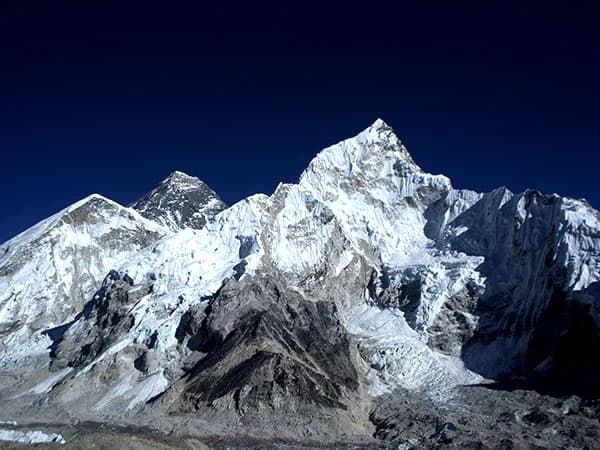
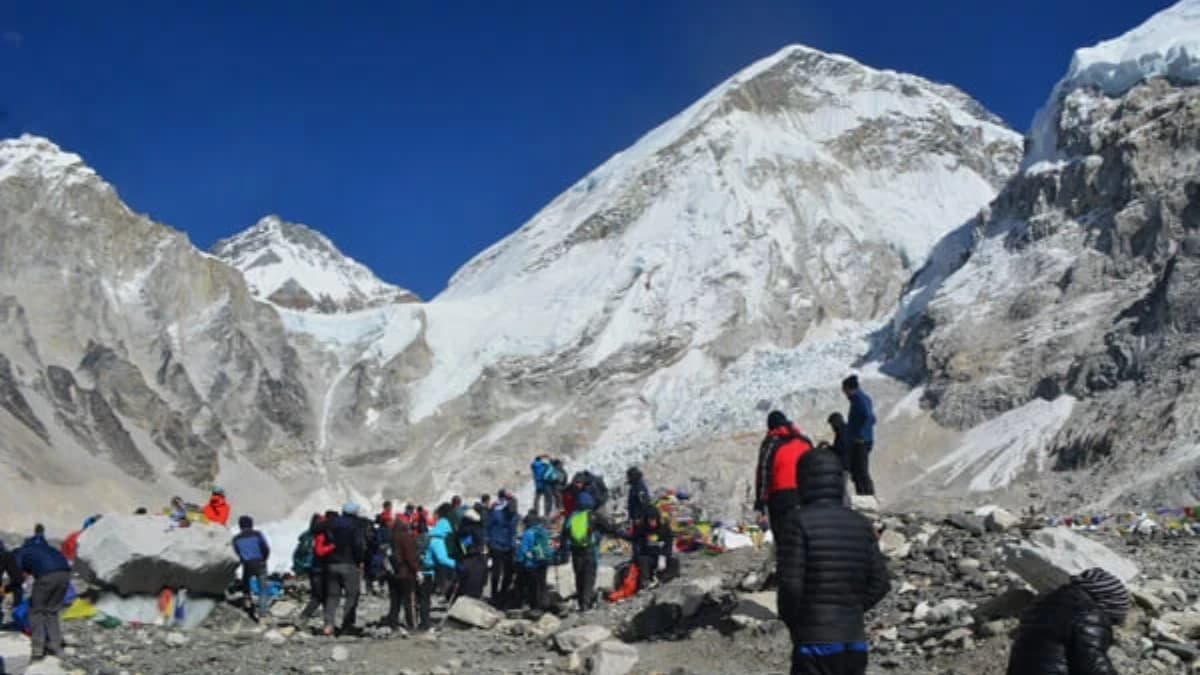
The morning air at 5,364 metres (17,598ft) is thin and cold, and the silence is so deep you can hear your own heartbeat. Then the sun breaks over the ridge, and Everest fills the sky. This is not a photograph. You are standing here.

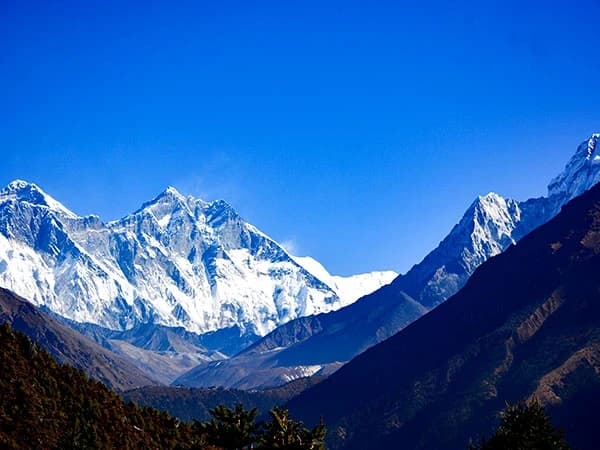
The 12-day Everest Base Camp Trek takes you through the heart of the Khumbu, across suspension bridges strung above glacial rivers, past ancient Sherpa monasteries where monks chant at dawn, and through villages where prayer flags snap in the mountain wind. You will walk beneath four of the world’s fourteen highest peaks: Everest (8,849m / 29,032ft), Lhotse (8,516m / 27,940ft), Makalu (8,463m / 27,838ft), and Cho Oyu (8,201m / 26,906ft). You will sleep in teahouses warmed by yak-dung stoves, eat dal bhat with families who have lived in these mountains for generations, and wake each morning to views that most people only see in documentaries.

What Makes This Trek Unforgettable

  • Stand at Kala Patthar (5,545m / 18,192ft) at sunrise, the most famous viewpoint of Everest, where four of the world’s highest peaks surround you
  • Walk through Sagarmatha National Park, a UNESCO World Heritage Site, home to snow leopards, Himalayan tahr, musk deer, and over 100 species of birds
  • Visit Tengboche Monastery, the spiritual heart of the Khumbu, with Everest and Ama Dablam framed behind it
  • Cross suspension bridges draped in prayer flags over the Dudh Koshi River, some of the highest in the world
  • Experience Sherpa hospitality in centuries-old villages where Buddhist prayer wheels spin at every corner
  • See the Khumbu Glacier up close, the largest glacier in the Everest region, stretching 12 kilometres
  • Land at Lukla, one of the world’s most dramatic airports at 2,860m (9,383ft), where the runway ends at a mountain wall
  • Acclimatise in Namche Bazaar (3,440m / 11,286ft), the vibrant Sherpa capital with markets, bakeries, and the best apple pie in the Himalayas
  • Hike to Everest View Hotel (3,880m / 12,730ft) on your rest day, your first clear view of Everest, with a hot cup of tea in your hand
  • Pass the Thukla memorial cairns, a quiet, powerful tribute to the climbers who gave everything to these mountains
  • Stand at Everest Base Camp (5,364m / 17,598ft), where the world’s greatest mountaineering expeditions begin, on the edge of the Khumbu Icefall

12-Day Everest Base Camp Trek Overview

Twelve days. That is all it takes to walk from the airstrip at Lukla to the foot of the highest mountain on earth and back. Most trekkers say those twelve days changed how they see the world.

The route follows the Dudh Koshi River valley through Sagarmatha National Park, climbing steadily from Phakding (2,610m / 8,563ft) through Namche Bazaar (3,440m / 11,286ft), Tengboche (3,860m / 12,664ft), Dingboche (4,410m / 14,468ft), and Lobuche (4,940m / 16,207ft) before reaching Everest Base Camp at 5,364 metres (17,598ft). Along the way, the scenery transforms, from rhododendron forests alive with birdsong, to the stark, windswept moraines of the Khumbu Glacier where nothing grows and the only sound is ice shifting beneath your feet.

Two acclimatisation days are built into the itinerary, one at Namche Bazaar and one at Dingboche, because rushing altitude is dangerous and we will never compromise your safety for schedule. These rest days are not wasted days. At Namche, you hike to the Everest View Hotel (3,880m / 12,730ft) for your first clear sight of the summit. At Dingboche, you climb to a ridge where Island Peak, Makalu, and Lhotse fill the horizon.

The summit day is not the peak itself, it is Kala Patthar (5,545m / 18,192ft), a rocky viewpoint where you stand before dawn in freezing darkness, waiting. Then the sun hits Everest. That moment is why people come here.

The walk back to Lukla takes three days of descending through familiar villages where teahouse owners now greet you by name. The final evening in Kathmandu is a farewell dinner with your guide and team, a chance to look back at what you did and realise you are not the same person who landed at Tribhuvan Airport twelve days ago.

Before You Arrive

Please arrive in Kathmandu by 4 PM the day before your trek. This gives you time for a final gear check, a briefing with your guide, and a good night’s rest before the early morning start.

Your Online Briefing

Think of this as our first coffee together, but online. After you book, we will schedule a video call where we walk you through every detail: what to pack, what each day on the trail looks like, how the altitude will feel, and anything else on your mind. No question is too small.

This is also when we learn about you. Our trek itinerary does not include your hotel in Kathmandu, during the briefing, share your preferences and budget, and we will arrange accommodation that fits. Whether you want a simple guesthouse in Thamel or a five-star hotel, we will set it up for you.

Lukla Flight — What You Need to Know

The flight to Lukla is one of the most dramatic in the world, a short ride between mountain peaks that ends on a runway carved into a hillside at 2,860m (9,383ft). From Kathmandu, it takes about 40 minutes. From Manthali, it takes about 20 minutes. It is also weather-dependent. Flights can be delayed by fog, cloud, or wind, sometimes for a full day. This is normal in the Himalayas and nothing to worry about, but it is something to plan for.

We strongly recommend keeping two buffer days at the end of your trip before your international flight home. This protects your connection if weather delays your return from Lukla.

During peak trekking season (March–May and October–November), flights to Lukla operate from Manthali Airport (Ramechhap) instead of Kathmandu, to reduce congestion on Kathmandu’s single runway. If your flight departs from Manthali, we will pick you up from your hotel around midnight and drive you there (4–6 hours).

For your return, you fly from Lukla back to Kathmandu or Manthali. If your return flight lands at Manthali, we drive you back to Kathmandu (4–6 hours). All ground transportation is included in every package.

Your Trek, Your Way

Every trek we run is private, your group only, no strangers added. Whether you choose Budget, Standard, or Luxury, the mountains are yours and your companions’ alone. This is not a conveyor belt. This is your personal Himalayan experience.

Your hotel in Kathmandu is not included in the trek package, and that is intentional. Kathmandu has everything from USD 10 guesthouses in Thamel to five-star hotels with rooftop views of the city. During the online briefing, tell us what you prefer and we will arrange it for you. Your trek package begins the moment you leave Kathmandu for the mountains.

Difficulty: Moderate to Challenging (4 out of 5)

You will walk 5-8 hours a day over mountain trails, gaining altitude each day until you reach 5,545m (18,192ft). The paths are well-established but uneven, stone steps, river crossings, and steep ascents are part of every day. No previous trekking experience is required, but you should be comfortable walking for extended periods and be in reasonable physical health. The two acclimatisation days help your body adjust, and our guides monitor your condition throughout.

Compare Our Three Packages

  Budget Standard Luxury
Price from USD 1,072 USD 1,250 USD 2,500
Meals Choose your own (approx. USD 15-25/day) 3 meals + tea + fruits + 2L water daily All meals + all drinks anytime (except alcohol)
Room Shared teahouse Private twin w/ bathroom Private deluxe w/ bed heater
Porter Not included 1 per 2 trekkers 1 per trekker (carry nothing)
Guide 1 guide, assistant at 8+ 1 guide per 6, assistant at 6+ 1 guide per 2 trekkers
Transport Local vehicle + flight to Lukla Private vehicle + flight to Lukla Luxury vehicle + helicopter to Lukla
SIM data SIM only Limited data Unlimited data
Best for Backpackers and independent travellers Comfort trekkers, couples, families Premium experience seekers

Himalayas for Every Budget, same expert guides, same safety, three comfort levels.

Your Trek, Our Family

In the 1960s, Shreejan’s grandfather Hari Lal Simkhada helped international travellers experience the Himalayas for the first time, arranging logistics, finding routes, building trust with people who had come halfway around the world on a dream. His son Ganesh went on to serve at the Nepal Tourism Board and the Nepal Mountaineering Association. And now Shreejan, the third generation, designs every itinerary you see on this website.

This is not a company that was started in a boardroom. It was started on a mountain trail, three generations ago.

Shreejan hand-picks the guide for your group from our team of TAAN-certified mountaineering professionals, people who grew up in these mountains and know every trail, every teahouse owner, and every weather sign. He briefs your guide personally before your trek begins, because your safety and experience are not something we delegate to a system.

Have a question right now? WhatsApp Shreejan directly: +977 9810351300. No sales team. No chatbot. The person who designed your trek answers personally.

Our Credentials

  • 196+ TripAdvisor Reviews, 4.9 out of 5 stars, TripAdvisor Travellers Choice 2024
  • 108+ Google Reviews, 4.9 out of 5 stars
  • TAAN Certified, Member #1586, Government Reg: 147653/072/073
  • Secure 10% Deposit, pay just $107 to reserve, via Himalayan Bank
  • Himalayas for Every Budget, breakfast, lunch, and dinner throughout the trek
  • Three Generations, family guiding in the Himalayas since the 1960s

Solo Trekkers Welcome

You do not need a travel partner to trek in Nepal. Most of the people who book with us come alone, and by day three on the trail, they are sharing meals, swapping stories, and watching sunrises together like old friends.

Our groups are small, 2 to 20 people, because the Himalayas deserve more than a crowd. You book your trek, and it is yours. We will never add strangers to your group without your permission.

If you want to trek completely privately, you can. If you prefer company, tell us and we will list your dates as a fixed departure on our website so other solo travellers can find you and join. Either way, the trek is built around you.

Difficulty: Moderate to Challenging (4 out of 5)

You need to be comfortable walking 5-8 hours per day over uneven terrain with significant altitude gain. No previous trekking experience is required, but a reasonable level of fitness is important. We build two acclimatisation days into the itinerary (Namche Bazaar and Dingboche) to help your body adjust safely.

Trek With a Purpose — Changing the World, One Step at a Time

In 2019, Shreejan and Shamjhana Basukala founded the Nagarjun Learning Center in Saldum Village, one of the most remote communities in Nepal’s Dhading District, where children had no school after hours, no computers, and limited healthcare. Today, 70 children receive free education and hot meals every school day. The centre has grown to 7 learning centres across Nepal, providing healthcare for 600 people, internet access for 65 children, and support programmes for over 275 women.

A portion of every trek you book funds this work directly. The centre is verified and listed on the United Nations Partner Portal.

When you walk these mountains with us, every step you take helps change a life in rural Nepal. That is what we mean by Trek With a Purpose, changing the world, one step at a time.

What Trekkers Say About This Trek

"Standing at Everest Base Camp was a dream come true. The trek was challenging but our guide made it manageable with proper acclimatisation days. Kala Patthar sunrise was the highlight — seeing Everest light up gold at dawn."

— Catherine Brooks, New Zealand (TripAdvisor, 5 stars)

"Travelling to Everest Base Camp with The Everest Holiday was an experience I will always remember. Every day on the trail brought something new, from stunning mountain views to warm interactions with local people."

— Sakshyam Blon, United Kingdom (TripAdvisor, 5 stars)

"The Simkhada family treated us like their own. Every detail was taken care of and our guide knew the Khumbu region inside out. The sunrise from Kala Patthar was unforgettable."

— TripAdvisor Review, 5 stars

"Our guide made sure we acclimatised properly with rest days at Namche and Dingboche. I never felt rushed. The teahouses were comfortable and the food was surprisingly good."

— Google Review, 5 stars

"Our guide made sure we acclimatised properly with rest days at Namche and Dingboche. I never felt rushed. The teahouses were comfortable and the food was surprisingly good."

— Google Review, 5 stars

Read all 320+ reviews →

Short Itinerary
Day 01: Early morning Air Transport 40–20 minutes from Kathmandu/Manthali to Lukla (2,850m / 9,350ft) after landing, your first trek to Phakding (2,650m / 8,562ft) with a change of elevation +1,260m / +4,134ft.
Max Altitude: 2,850m / 9,350ft
Day 02: After breakfast, trek begins with 7.4 km walk from Phakding (2,650m / 8,562ft) to Namche Bazaar (3,440m / 11,285ft) with a change of elevation 790m / 2,723 ft
Max Altitude: 3,440m / 11,286ft
Day 03: Acclimatisation at Namche Bazaar
Max Altitude: 3,440m / 11,286ft
Day 04: Trek starts with 9.2 km from Namche (3,440m / 11,285ft) to Tengboche (3,855m / 12,850ft), usually around 5 hours with a total elevation change of 415m / 1,565 ft.
Max Altitude: 3,860m / 12,664ft
Day 05: The Trek starts with a 12 km walk from Tengboche (3,855m / 12,850ft) to Dingboche (4,360m / 14,290ft), usually around 5 hours with a total elevation change of 505m – 1440ft.
Max Altitude: 4,410m / 14,468ft
Day 06: Acclimatisation at Dingboche
Max Altitude: 4,410m / 14,468ft
Day 07: Trek starts with 8.5 km walk from Dingboche (4,360m / 14,290ft) to Lobuche (4,930m / 16,175ft) ), usually around 5 hours with a total elevation change of 570m / 1,885 ft.
Max Altitude: 4,940m / 16,207ft
Day 08: The Trek start with 15 km from Lobuche (4,930m / 16,175ft) to Everest Base Camp (5,364m / 17,598ft) and back to Gorak Shep (5,185m / 17,010ft), usually around 6-8 hours with a total elevation change of 434m – 1423ft.
Max Altitude: 5,364m / 17,598ft
Day 09: Trek starts with 14 km walk to Kala Patthar Viewpoint (5,545m / 18,208ft) to Pangboche  (3,985m/13,074ft), usually around 7 -8 hours with a total elevation of 1570m - 5134ft.
Max Altitude: 5,545m / 18,192ft
Day 10: The Trek starts with a 13 km walk from Pangboche (3,985 m/13,074 ft) to Namche Bazaar (3,440 m/11,285 ft), usually around 6-7 hours with a total elevation change of 545m – 1790ft.
Max Altitude: 3,440m / 11,286ft
Day 11: The Trek start with a 21 km walk from Namche Bazaar (3,440m / 11,285ft) to Lukla (2,850m / 9,350ft), usually around 7-9 hours with a total elevation change of 590m - 1935ft.
Max Altitude: 2,860m / 9,383ft
Day 12: Air transport 40–20 minutes from lukla to Kathmandu or Manthali, with a total elevation change of 1616m–5006ft.
Max Altitude: 1,350m / 4,429ft
Expand
Detailed Itinerary
Day 01:

The day begins before anyone should be awake. If your flight departs from Manthali (as it does during peak trekking season), we pick you up from your Kathmandu hotel between midnight and one in the morning for the five-hour drive through sleeping streets and dark countryside. The headlights cut through fog in the Terai. You doze against the window. It sounds brutal, and at two in the morning it feels brutal. But every trekker who has done this drive says the same thing: the moment the twin-engine Otter lifts off that tiny runway and the Himalayas appear through the cabin window, white and enormous and impossibly close, every hour of lost sleep is forgotten instantly.

From Kathmandu, the flight takes forty minutes. From Manthali, twenty. Either way, you land at Lukla—a small mountain village where the runway tilts uphill into a rock wall and the air already carries a cold, clean sharpness that Kathmandu's diesel haze never allows. The landing is dramatic. The runway is short, sloped, and ends at a cliff on one side and a mountain wall on the other. Pilots who fly this route are among the most skilled in Nepal. You trust them because you have no choice and because they have done this ten thousand times.

The first day's trek is gentle by design: a three-hour walk along the Dudh Koshi River to Phakding. The trail descends gently through pine forest, crosses a pair of suspension bridges where prayer flags snap overhead and the river churns pale blue far below, and passes through small settlements where teahouse owners wave from doorways. Your guide sets a pace that feels almost frustratingly slow. This is not laziness. This is the pace that 2,600 meters demands and that 5,000 meters will require. Slow, steady, breathing measured. The habit starts here, on easy ground, so that it is instinct by the time the ground is no longer easy.

Phakding is a single street of teahouses along the riverbank. The air smells of pine resin and wood smoke and the mineral scent of glacial water. You drop your pack, order tea, sit on a bench outside the lodge, and listen to the Dudh Koshi, a sound so constant it becomes silence, the white noise that will follow you up the valley for the next eleven days. Your guide checks in: How do you feel? Any headache? How much water did you drink? These questions are not small talk. They are the first of many daily health assessments that your guide performs without making them feel clinical.

Tonight you eat dal bhat with the family who runs the teahouse. Their children do homework at the next table. The stars, visible through the window of your room, are brighter than anything you have seen from sea level. And the down jacket hanging on the hook behind the door, the one you packed but do not need tonight, waits for the altitude where it will become the most important thing you own.

Explore the full trek route:View our interactive 12-day Everest Base Camp trek map on Google Maps, with GPS waypoints for every stop, surrounding peaks, and points of interest along the trail.

Max Altitude: 2,850m / 9,350ftAccommodation: Tea House or Local lodgesDuration: 3 hoursDistance: 6.2 km/3.8 milesElevation: +1,260m / +4,134ft
Day 02:

The trail follows the Dudh Koshi north from Phakding, crossing suspension bridges strung with faded prayer flags and passing porters carrying loads that weigh more than you do, balanced on a single strap across the forehead. The morning air is cool and carries the mineral smell of glacial water. You walk at a pace that feels slow until your guide reminds you that today gains nearly eight hundred meters of altitude, and the body that feels strong at 2,600 meters will feel every step above 3,000.

Two hours in, you reach the Sagarmatha National Park entrance at Monjo. Your guide handles the permits while you sit on a wooden bench with a cup of tea, watching the quiet parade of trekkers, porters, and the occasional yak train heading the same direction. The tea costs fifty rupees. The warmth it puts in your hands is worth more. This is the last flat ground you will see for three hours.

Then the climb begins. Six hundred meters of altitude were gained in a single sustained ascent through pine forest, past waterfalls that catch the light, and across the highest suspension bridge on the trail where prayer flags snap overhead and the river is a white thread far below. Your calves tighten. Your breathing changes. The pack that felt manageable at breakfast develops a weight that suggests someone added rocks while you slept. Your guide walks ahead, unhurried, turning back every few minutes, not to rush you but to read your face, checking your breathing, your colour, and the small signs that separate exertion from distress. This is what good guides do. They watch you so closely that you never realize you are being watched.

Somewhere on that climb, between the sweat and the heavy breathing, your guide stops and points up through a gap in the trees. And there it is. Everest. Just the summit, a white triangle above the ridgeline, impossibly high, impossibly real. Everyone stops. Nobody speaks for a moment. The six hundred meters of climb become the best trade you ever made.

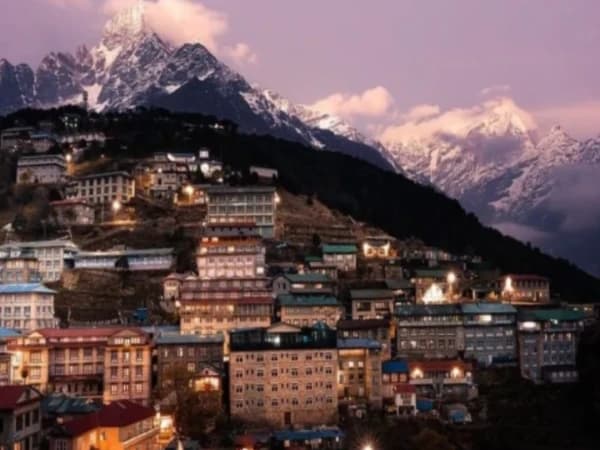
The trail crests the ridge, and Namche Bazaar appears below, a natural amphitheater of stone and colour carved into the mountainside. Teahouses and lodges stack in terraces from the river below to the ridge above. Prayer flags cross the gaps between buildings. The sound of construction mixes with the distant chanting from the monastery above. This is not a village. This is the capital of the Khumbu, the largest settlement in the Everest region, a trading hub that has connected Sherpa communities with the outside world for centuries.

Namche has bakeries that have no business being this good at three and a half thousand meters—fresh cinnamon rolls, apple pie, and proper espresso made with beans carried up from Lukla on someone's back. It has gear shops where you can buy what you forgot and sell what you no longer need. It has WiFi that works, hot showers for three hundred rupees, and a Saturday market where traders have been exchanging goods since before the word "trekking" existed. Tonight you eat well, drink water instead of beer, and sleep at the altitude where your body begins the quiet work of adaptation that will carry you to Base Camp and back. Tomorrow is your rest day, and Namche rewards those who arrive ready for it.

Max Altitude: 3,440m / 11,286ftMeals: Breakfast, Lunch & DinnerAccommodation: Tea House or LodgeDuration: 6-7 hoursDistance: 12 Km
Day 03:

Today you do not walk to the next village. You walk up, and then you walk back down. This is how acclimatisation works, and this is the most important single day of the trek. Not the most dramatic. that comes at Kala Patthar. Not the most emotional; that comes at Base Camp. But the most important is because the way your body responds to today determines whether it can handle every altitude above Namche for the next eight days.

The morning hike climbs to the Everest View Hotel at Syangboche, a ninety-minute ascent that gains four hundred and forty meters and delivers the first close, unobstructed view of Everest, Lhotse, Ama Dablam, and the full sweep of the Khumbu peaks. The hotel itself is a curiosity: the highest-placed hotel in the world, built by Japanese investors in 1971, serving tea on a terrace with a view that justifies any price. The tea costs five dollars. The view is free. The combination—sitting in a wooden chair at 3,880 meters, hands wrapped around a hot cup, looking at four eight-thousanders across a valley that holds the entire Khumbu—is one of the defining moments of the trek. Your body registers the reduced oxygen and begins the adaptive work: increased red blood cells, recalibrated breathing, and adjusted blood chemistry. You do not feel this happening. You feel a mild headache and a slight breathlessness. But underneath, your body is preparing itself for the days ahead. Climb high, sleep low. The principle that saves lives at altitude.

The afternoon belongs to Namche itself. The town is real, not a trekking village but a working settlement with hardware shops, a dental clinic, a post office, two ATMs that sometimes function, and the Sagarmatha National Park headquarters. The Saturday market, if you are here on the right day, is the oldest trading tradition in the Khumbu. For centuries, lowland traders brought grain and highland traders brought salt, and the exchange happened in the terraced square below the main street. The goods now include Korean instant noodles and Chinese electronics, but the tradition is unchanged.

Walk the main street. Buy a yak-wool hat if you need one, or a pair of warmer gloves, or the chocolate bar you have been thinking about since Phakding. Visit the Sherpa Culture Museum above the town, a small collection that documents Sherpa history and mountaineering achievements with the quiet pride of a community that knows its own worth. And find a south-facing terrace with a view. Order tea. Watch the trail, the trekkers arriving from below, the porters carrying impossible loads, and the yak trains threading through the narrow streets with bells clanking. Namche is a confluence. Every EBC trekker, every Gokyo trekker, and every Three Passes trekker passes through this amphitheater. The human traffic is as interesting as the mountain views.

Tonight, eat the best food you will have on the trail. The bakeries produce cinnamon rolls and apple pie that would be creditable in a European city. The restaurants serve dal bhat, pizza from wood-fired ovens, and espresso that is genuinely good. Enjoy it. Above Namche, the menus shrink, the prices climb, and the bakeries disappear. This is the last evening where the infrastructure feels urban, where you can charge your phone for free, take a hot shower without paying extra, and eat a meal that qualifies as a pleasure rather than fuel.

Max Altitude: 3,440m / 11,286ftMeals: Breakfast, Lunch & DinnerAccommodation: Tea House or LodgeDuration: 2-3 hoursDistance: 3-4 KmElevation: Acclimatisation day — no altitude change. Rest and recovery at 3,440m.
Day 04:

The trail leaves Namche along the hillside above the Dudh Koshi, contouring through pine and rhododendron forest with views that stop you mid-step. Everest, Nuptse, Lhotse, and Ama Dablam fill the northern sky in a panorama so complete that it looks composed rather than natural. You walk slowly, not because the trail is difficult but because the views demand attention, and your guide knows that some of the best moments on the EBC trek happen on this stretch when the mountains open up and the scale of the Khumbu registers for the first time.

The trail is gentle for the first two hours—undulating through forest, crossing small streams, and passing through Phunki Tenga, where a monastery sits beside a river and water-driven prayer wheels turn continuously in the current. Then the climb to Tengboche begins. Three hours of steady ascent through dense rhododendron forest, the trees still bare in autumn and spectacular with red and pink blossoms in spring. The altitude at Tengboche is 3,860 meters. Your body notices. The climb feels longer than it should. The pack feels heavier. Your guide adjusts the pace without saying anything.

You hear the monastery before you see it. The deep, resonant hum of monks chanting, a sound that travels through cold mountain air with a clarity that lower altitudes cannot produce. The forest opens onto a ridge, and there it is: Tengboche Monastery, the largest and most important in the Khumbu, framed against a sky that holds Everest and Ama Dablam in a single view that would be too dramatic for a painting but is exactly real.

The monastery is open to visitors in the morning and late afternoon. Remove your shoes before entering. The interior is dark, lit by butter lamps and the light that filters through painted windows. The walls are covered in murals depicting Buddhist deities and teaching stories, painted by Sherpa artists during the 1990s reconstruction; the original monastery was destroyed by fire in 1989 and rebuilt with international donations. If you are present during a prayer session, sit quietly at the back. The monks chant in Tibetan, accompanied by drums, cymbals, and the deep resonance of dungchen horns. The chanting is not for your benefit. It is the daily practice of men who have devoted their lives to something larger than any mountain. Your presence as a silent observer is welcomed but not catered to.

Sunset at Tengboche is the experience most trekkers remember longest. Step outside as the light changes. Watch the first orange touch Everest's summit while the valley below is already in shadow. Ama Dablam catches the last light like a jewel. The prayer flags snap in the evening wind. For ten minutes, the world is nothing but mountains, light, and the silence that altitude creates when the wind pauses.

Max Altitude: 3,860m / 12,664ftMeals: Breakfast, Lunch & DinnerAccommodation: Tea House or LodgeDuration: 5-6 hoursDistance: 10 Km
Day 05:

The trail descends from Tengboche through rhododendron forest, crosses the Imja Khola on a steel bridge at Phunki, and begins climbing into a wider, drier valley where the landscape shifts under your feet. The lush forest of the lower Khumbu gives way to scrub, then to brown grass, then to the bare alpine terrain that defines every day above here. The trees thin. The wind picks up. The temperature drops by a degree for every hundred meters you gain, and by mid-afternoon you are reaching for layers you have not needed since Kathmandu.

Pangboche appears halfway through the day, the oldest permanent settlement in the Khumbu, with stone houses clustered around a monastery that sits on a ridge above the village. This is the monastery where Tenzing Norgay and Edmund Hillary received their blessing before the 1953 expedition. The monastery is older than Tengboche and smaller and more intimate. The ancient juniper trees surrounding it are considered sacred—cutting one carries social consequences more severe than any legal penalty. If your guide suggests a quick visit, say yes. The experience is brief but genuine in a way that larger monasteries cannot replicate.

Beyond Pangboche, the valley opens and the landscape becomes austere. Barley and buckwheat fields give way to rock and dried grass. The peaks close in—Lhotse's massive south face dominates the northern sky, Ama Dablam stands behind you like a sentinel, and Island Peak appears to the east, steep and triangular, the most popular climbing peak in Nepal. You are walking into a world where vegetation surrenders to altitude and the only colour comes from prayer flags and the jackets of trekkers on the trail ahead.

Dingboche sits at 4,410 meters in a flat valley ringed by peaks: quiet, exposed, and noticeably colder than anything before. The wind here is constant, pouring through the valley with a persistence that makes the teahouse common room feel like a refuge. Your appetite has changed. The dal bhat that was delicious at Namche is functional here; you eat because your body needs fuel, not because you are hungry. Your guide encourages you to eat more. They are right. The calories you consume tonight power the next three days of the hardest walking on the trek. The headache arrives in the late afternoon, a dull pressure behind the eyes that paracetamol reduces but does not eliminate. This is altitude. This is normal. This is why tomorrow is a rest day.

Max Altitude: 4,410m / 14,468ftMeals: Breakfast, Lunch & DinnerAccommodation: Tea House or LodgeDuration: 5-6 hoursDistance: 11 Km
Day 06:

At Dingboche, the mountain decides. Not your fitness. Not your gear. Not your twelve-week training plan. The altitude decides whether you continue to Everest Base Camp or turn back. This is not melodrama. At 4,410 meters, your body has roughly sixty percent of the oxygen it would have at sea level, and the acclimatisation hike today is when your body either demonstrates it can adapt or reveals that it cannot.

The morning hike climbs the ridge above the village toward Nangkartshang Peak at approximately 5,000 meters. The climb takes about two hours—steep but not technical, following a trail that switchbacks up a grassy hillside. The altitude makes it feel disproportionately hard. You stop every fifty steps to breathe. The final section feels like climbing stairs in a building where someone removed half the air. Your guide walks beside you at exactly your pace, neither pushing nor patronizing, clipping the pulse oximeter to your finger at the top and reading the numbers with the attention that this altitude demands.

The views from the ridge justify every gasping step. Island Peak fills the east, a steep, triangular summit that draws climbers from around the world. Ama Dablam dominates the south, its perfect pyramid visible from an angle that shows both its beauty and its intimidating steepness. Lhotse's south face fills the north, a wall of ice and rock so massive it blocks the sky. On clear days, the summit of Makalu, the world's fifth highest mountain, is visible to the east. You are surrounded by four of the world's highest peaks, standing at five thousand meters, and the views are simultaneously the reward for the climb and the reason you are doing it, because your body needs this altitude exposure, and the Himalayas provide it wrapped in the most spectacular scenery on earth.

You walk back down to Dingboche to sleep. Climb high, sleep low. Your body has registered the oxygen at 5,000 meters and triggered the adaptive responses, more red blood cells, and recalibrated breathing that will carry you through the next three days. The afternoon is yours. Rest. Drink water, three to four liters today, minimum. Write in your journal. Sit in the common room near the yak-dung stove and listen to other trekkers compare notes on how they slept, how their heads feel, and how much water they managed. These conversations are not small talk. They are altitude reconnaissance, and everyone is listening for reassurance that what they are feeling is normal.

Max Altitude: 4,410m / 14,468ftMeals: Breakfast, Lunch & DinnerAccommodation: Tea House or LodgeElevation: Acclimatisation day — no altitude change. Rest and recovery at 4,410m.
Day 07:

The landscape above Dingboche transitions from alpine meadow to glacier moraine, a grey, rubble-strewn terrain where nothing grows and the wind carries a cold that cuts through every layer except the down jacket you have been saving for this moment. The trees are gone. The grass is gone. The colour is gone, replaced by the monochrome gray of rocks deposited by the Khumbu Glacier over millennia. This is the most barren section of the trek, and it is also where the Khumbu reveals its true character: austere, enormous, indifferent to the small figures walking across its surface.

Along the way, you pass the Pyramid International Laboratory, a glass-roofed Italian research station perched at nearly 5,000 meters, studying glacial change, atmospheric chemistry, and the effects of altitude on the human body. It has been here since 1990, quietly collecting data while trekkers walk past. Most people glance at it and keep moving. But the station is a reminder that these mountains are not just scenery—they are a living system, changing faster than the science can measure, and the glaciers you are walking beside today are smaller than they were a decade ago.

The climb to Thukla Pass is the steepest sustained ascent of the day, with three hundred meters gained in about ninety minutes. Your pace drops. Twenty steps, then rest. Fifteen steps, then rest. Ten. This is normal at 4,800 meters. Your guide walks beside you, matching your speed exactly, monitoring your breathing with the quiet attention that distinguishes a professional from a companion.

At the top of the pass, you stop. Not for logistics but for respect. The Thukla memorial cairns cover a broad flat area facing the glacier: stone towers topped with prayer flags, metal plaques, and weathered photographs for climbers and Sherpas who died on Everest and the surrounding peaks. Scott Fischer. Rob Hall. Babu Chiri Sherpa. The sixteen Sherpas killed in the 2014 icefall avalanche. Your guide may share a story, who they were, how they died, and what the mountain was doing that day. These stories are not meant to frighten. They are meant to contextualize. Everest is not a destination with safety rails. It is a mountain. The memorials are an honest disclosure.

Lobuche appears thirty minutes beyond the memorials, four stone teahouses pressed against the mountainside at 4,940 meters. Higher than Mont Blanc. Higher than any point in the contiguous United States. The rooms are basic, the walls are stone, and the temperature drops to minus ten inside by midnight. The common room stove burns dried yak dung, a distinctive, not entirely unpleasant smell, and the seats nearest the stove are claimed early by trekkers who have learned that the difference between the stove side and the wall side of the room is the difference between five degrees and minus five.

Tonight the conversation is different from lower stops. Less small talk, less comparison of gear. More quiet assessment: how is the headache? How is the breathing? How much water did you drink? Everyone in this room is two days from Everest Base Camp. They have walked for seven days. They have passed the memorials and absorbed what they mean. The guide's evening briefing is listened to with concentration. Tomorrow is Gorak. Shep. The plan is simple. The execution, at this altitude, is anything but.

Max Altitude: 4,940m / 16,207ftMeals: Breakfast, Lunch & DinnerAccommodation: Tea House or LodgeDuration: 5-6 hoursDistance: 10 Km
Day 08:

The trail from Lobuche follows the lateral moraine of the Khumbu Glacier—a surreal landscape of grey rock, ice towers, and frozen rubble stretching for kilometers, like a construction site abandoned by giants. The footing is uneven. The altitude is above 5,000 meters for the first time. Every step is deliberate. Your breathing is audible. Your heart rate is elevated. And the scenery—Pumori to the west, Nuptse's massive wall ahead, and the glacier spreading below like a frozen river of rubble—is so dramatic that you stop to photograph it even though stopping means restarting the breathing rhythm that walking requires.

Gorak Shep appears as a cluster of flat-roofed buildings on a sandy plateau beside a frozen lake bed. The wind is constant. The air temperature, even in October sunshine, rarely exceeds five degrees. You arrive, drop your pack at a teahouse, order tea, and sit. This is not laziness; at 5,164 meters, your body is working harder to breathe, to pump blood, and to think than it has ever worked while sitting still.

After lunch, you leave your heavy gear and walk to Everest Base Camp. The route crosses the Khumbu Glacier itself, not ice but rock rubble deposited by the glacier's slow movement. You walk over loose stones, around ice pinnacles, and across frozen streams. The terrain is grey, austere, and alien. There are no trees, no grass, and no colour except the occasional prayer flag and the white of ice towers rising from the glacier surface like sculpture.

Base Camp is not a single point. It is a sprawling area of flat glacier where expedition teams build their tent cities during climbing season. Prayer flags mark the spot where trekkers stop, take photographs, and absorb the fact that they are standing at 5,364 meters at the foot of the highest mountain on earth. The Khumbu Icefall towers above, cascading blocks of ice the size of houses, tilted at impossible angles, deep blue in the cracks where compressed ice catches the light. The icefall is mesmerizing and terrifying in equal measure. This is where the climbing route begins. This is where the stories you have read become real.

The emotion varies. Some trekkers cry. Some laugh. Some stand quietly, having a private conversation with the mountain that no one else needs to hear. And some pull out their phones and call home, because the satellite signal here is surprisingly good, and the desire to say "I'm here" to someone who understands what "here" means is powerful enough to cross oceans.

The walk back to Gorak Shep in the late afternoon is cold and tiring. The sun drops behind Pumori by four o'clock, and the temperature falls immediately. Tonight is the coldest night of the trek. Every layer you packed goes on. Sleep comes in fragments; periodic breathing wakes you every few minutes with a gasp, but you sleep with the satisfaction of someone who has stood at the foot of Everest and earned it with their own two feet.

Max Altitude: 5,364m / 17,598ftMeals: Breakfast, Lunch & DinnerAccommodation: Tea House or LodgeDuration: 7-8 hoursDistance: 14 Km
Day 09:

The guide knocks at three in the morning. Not four. Three. Your phone died in the cold, and the alarm did not sound. You unzip the sleeping bag, and the cold hits like a wall. Minus fifteen, minus twenty. The kind of cold that makes your fingers fumble with zippers and your brain resist the idea of leaving the warmth. Every layer goes on: thermals, fleece, down jacket, balaclava, two pairs of gloves. Boots are frozen stiff from the night and resist your feet. You step outside into darkness and stars and air so thin it tastes like metal.

The climb from Gorak Shep to Kala Patthar gains 381 meters in ninety minutes. In the dark, with only headlamps for illumination, the world shrinks to three things: the circle of your light, the sound of your lungs, and the crunch of frozen scree underfoot. You climb slowly. Everyone climbs slowly. At 5,400 meters, there is no other option. Your guide is a shadow ahead, turning back to check on you by the light of their headlamp, adjusting the pace with the instinct of someone who has climbed this ridge hundreds of times.

Then the sky brightens. The eastern horizon turns from black to grey to pale blue. The stars fade. The peaks emerge: first as dark shapes, then as outlines, then as the full, illuminated reality of the highest mountains on earth. And the sun hits Everest. A line of gold on the highest point on the planet. The gold spreads: down the summit pyramid, across the South Col, along the ridge to Lhotse. The Khumbu Icefall catches the light and turns from grey to blazing silver. Nuptse's wall becomes a canvas of orange and gold. And you, standing at 5,545 meters, breathing air that is barely sufficient, tears frozen on your cheeks from the wind or the emotion or both, you are watching the most famous sunrise in the world from the highest point you will ever stand.

This is the moment. This is why people walk for nine days through altitude headaches and frozen water bottles and sleepless nights. This light. This mountain. This unreproducible, earned experience.

The descent begins. Down from Kala Patthar to Gorak Shep. Pack up. Down through Lobuche. Down past the Thukla memorials. Down through the barren moraine into the valley where, gradually, impossibly, colour returns: first brown grass, then green scrub, then the stone walls of Pangboche at 3,985 meters, where the air is thick and warm and your lungs fill completely for the first time in three days. The relief is physical and immediate. Your headache lifts. Your appetite returns. Your body, which has been running on determination and dal bhat, suddenly remembers what oxygen feels like. Tonight you sleep deeply for the first time since Dingboche. The mountains are behind you. The memory is permanent.

Max Altitude: 5,545m / 18,192ftMeals: Breakfast, Lunch & DinnerAccommodation: Tea House or LodgeDuration: 7-8 hoursDistance: 16.5 Km
Day 10:

The return is faster than the ascent. Your body is altitude-adapted, your legs are strong from nine days of climbing, and the trail, which felt like an endless series of uphills on the way up, now flows downhill through landscapes you remember but see differently. The alpine meadows above Tengboche, which you pushed through with your eyes on the trail, now reveal wildflowers and bird life you missed on the way up. Ama Dablam and Thamserku, which were ahead and above on the ascent, are now behind and beside, familiar shapes seen from new angles.

You pass through Tengboche. The monastery is still there. The chanting is still there. The view of Everest from the ridge is still there. But you see it differently now, not as a promise but as a confirmation. You have been to the foot of that mountain. You have watched the sun set its summit on fire. The monastery's meaning has deepened, and the prayer flags feel less decorative and more earned.

The trail descends through pine forest, crosses the Dudh Koshi on familiar suspension bridges, and follows the river downstream past Phunki Tenga and along the hillside above the valley. The teahouse owners at the stops along the way recognize you (or at least recognize your guide), and the tea arrives faster, the greeting warmer. You are no longer walking toward something. You are walking home from something, and the trail, which was an ascent nine days ago, is now a gentle descent through country you have earned the right to call familiar.

Namche Bazaar appears in its amphitheater in the late afternoon, and the feeling is homecoming. The bakeries are still there. The cinnamon rolls taste better than you remember. The hot shower, three hundred rupees, worth every one, washes away three days of Gorak Shep cold and Lobuche dust. The WiFi works. Your phone charges for free. And the altitude at 3,440 meters, which left you breathless six days ago, feels almost tropical after 5,545. Tonight you eat well, sleep deeply, and feel the energy of a trekker who has been to Base Camp and back: lighter, quieter, and carrying something that has no weight but changes everything.

Max Altitude: 3,440m / 11,286ftMeals: Breakfast, Lunch & DinnerAccommodation: Tea HouseDuration: 6-7 hoursDistance: 13.5 Km
Day 11:

The final full trekking day: twenty-one kilometers of descent through the Khumbu, back along the trail that started this journey eleven days ago. The morning in Namche is relaxed: a last breakfast at the bakery, a last look at the amphitheater, and a last walk through the streets where prayer wheels line the path and the sounds of construction mix with chanting from the monastery above.

The trail drops from Namche through dense pine and rhododendron forest, crossing the suspension bridges that terrified you on Day 2 and now feel like old friends. The prayer flags are the same. The river is the same. The porters carry the same impossible loads. But you are not the same. Your legs move with a confidence that eleven days of mountain walking has built. Your breathing is effortless at 2,600 meters. Your eyes catch things you missed on the way up, a Himalayan monal pheasant calling from the undergrowth, prayer stones carved with mantras you now recognize, and the way afternoon light falls through pine forest in the Khumbu.

Behind you, if you turn at the right bend, the top of Everest and the backside of Lhotse are visible one last time. Most trekkers stop here. Some take a photograph. Some just look. The mountain that pulled you across the world and up through nine days of altitude and effort is a white triangle against blue sky, no larger than a thumbnail held at arm's length. It does not look like the most famous mountain on earth. It looks like a small piece of the sky. And you know, because you have stood at its feet and watched the sun set it on fire, that the smallness is an illusion of distance, and that the memory of standing there will outlast every other memory you carry home.

Lukla appears in the late afternoon. The trail rises gently for the last hour, the only uphill of the day, and enters the village through a stone gate decorated with prayer flags. The evening is for goodbyes. Your guide gathers the group for tea and a final meal together. Stories are shared: the climb to Kala Patthar in the dark, the moment at Base Camp, and the night at Gorak Shep when nobody slept. The guide who watched your face every day for eleven days, who adjusted the pace without being asked, who pointed out Everest through the trees on Day 2, shakes your hand and says something that every returning trekker understands: you did well.

Max Altitude: 2,860m / 9,383ftMeals: Breakfast, Lunch, & DinnerAccommodation: Teahouse or LodgeDuration: 5-6 hours
Day 12:

The return flight mirrors the outbound journey: a dramatic runway, mountain views, and the exhilaration of lifting off a runway that ends at a cliff. Peak season flights land at Manthali, where a four-to-six-hour drive returns you to Kathmandu through the same countryside you drove through in darkness twelve days ago. Quiet season flights arrive directly in the capital.

The city hits you. The noise, the heat, the traffic, and the thick air that your altitude-adapted lungs process so efficiently that you feel almost dizzy with oxygen. Kathmandu, at 1,400 meters, after twelve days above 3,000, feels like sea level. The smells are different: diesel, spices, dust, and the sweetness of incense from a street-corner temple. The sounds are different: horns, voices, the chaos of a Nepali city in full motion. You came from silence and mountains and thin air, and now you are back in the world, carrying something that does not fit into a duffel bag and does not pass through airport security but will stay with you long after the blisters heal and the photographs are sorted.

The evening farewell dinner brings the trek full circle. Your guide is there. The team that supported your journey, the porters who carried your gear, the kitchen staff at the teahouses, and the company that designed the itinerary are represented at the table. There are certificates and photographs and the warmth of a meal shared by people who walked through something together. The conversation is quieter than the first night's dinner. The silences are comfortable. You have been to Everest Base Camp. You have watched the sunrise from Kala Patthar. You have walked through the Khumbu for twelve days and come back changed in ways you will spend the next weeks and months understanding.

Tomorrow you fly home. Tonight you sit in Kathmandu with mountains in your memory and the quiet knowledge that you did something extraordinary, not because Base Camp is extraordinary, though it is, but because you chose to walk there under your own power, through altitude and cold and doubt, and you made it.

Max Altitude: 1,350m / 4,429ftMeals: Breakfast, Lunch, and DinnerAccommodation: Teahouse or LodgeDuration: 40 min flight
Couldn't find what you're after?Reach out to our travel experts.
Customise Trip
Route Map
Everest Base Camp Trek Route Map Nepal
Altitude Chart
Everest Base Camp Trek Elevation Profile 12 Days
Availability
Book your own private small group trip
No. of travellers
Price per person
2 - 4 pax
US$1045
5 - 8 pax
US$1025
9 - 12 pax
US$1010
13 - 20 pax
US$999

Discounts are determined exclusively by the size of your group. We do not add additional members to your group.

Book Now
hbl logo
Secure Payment by Himalayan Bank.
Cost Includes

Transportation

  • Airport pickup and drop-off from Tribhuvan International Airport to the hotel of your choice by taxi or local Jeep transfer.
  • Round-trip flight from Kathmandu/Manthali to Lukla. (Local bus or Jeep ground transportation to Manthali and back to Kathmandu is also included if the flight is rescheduled.)

Accommodation and Food

  • During the trek, food and drinks are not included.
  • You will stay in a local teahouse or lodge in a shared room for the duration of the trek.

Guide and Porter

  • An English-speaking, Nepal government well-trained guide is provided (one guide for your group). For groups of 8 or more trekkers, an additional assistant guide is included.
  • Porter service is not included in the Budget package, only the guide.

Permits and Expenses

  • Sagarmatha National Park permit.
  • Khumbu Pasang Lhamu Rural Municipality fees.
  • Trekkers Information Management System (TIMS) card fee.
  • All government taxes and official expenses.
  • Rescue operation arrangement in case of an emergency health condition (funded by the trekker's travel insurance).

Medical Assistance

  • First aid kit provided, including an oximeter to check blood oxygen levels at high altitudes.

Complimentary

  • Company T-shirt and cap before the trek.
  • At the end of your trip, you'll have a farewell meal at a local restaurant. After the Everest Base Camp Trek – 12 Days, we will provide a certificate of achievement for successful completion of the trek.

Benefits

  • Sleeping bags and down jackets: if you do not have your own, please inform us either at your online briefing or after the arrival briefing in Kathmandu before your trek so we can provide you with one for your use during the trek.
  • Free excess luggage storage at The Everest Holiday store for the duration of the trek.
  • We will arrange a SIM card for every individual trekker upon arrival in Kathmandu and provide guidance on how to purchase data packages and top-up services.
Cost Excludes

International Flights

  • Cost of international flights to and from Nepal.

Nepal Visa

  • Upon arrival at Tribhuvan International Airport, you can pay the following visa fees: $30 for a 15-day visa, $50 for a 30-day visa, or $120 for a 90-day visa. Alternatively, you can apply for a Nepal visa from the Nepalese embassy or consulate in your home country.

(Note: Travellers with a visa obtained before arrival can use the express line at immigration. To obtain a visa upon arrival at TIA Kathmandu, you must have the necessary funds in US dollars.)

Accommodation

  • Accommodation in Kathmandu before and after the trek is not included in this package. Please let us know your preferences, budget, and desired hotel standard during the online meeting so we can arrange it for you accordingly.

Gratuities

  • Tips for guides and porters (recommended).

Other Expenses

  • Excess luggage charges for an extra porter, as well as any airline charges for extra luggage. Note: Porter service is not included in the Budget package; any requested porter service will incur an additional fee.
  • All drinks, including bottled water, hot water, soft drinks, juice, tea, coffee, and alcoholic beverages.
  • Additional costs due to delays caused by circumstances beyond our control, such as landslides, unfavourable weather, itinerary modifications for safety, illness, changes in government policies, strikes, etc.
Add-Ons and Trip Extension

The first thing you notice is the silence. Thirty kilometres east of Kathmandu, the honking fades and the air sharpens, carrying the faint scent of pine and woodsmoke from the villages below. From Dhulikhel's ridge, the Himalayan panorama opens before you: Langtang Lirung, Dorje Lakpa, Gauri Shankar, and on a clear morning the white pyramid of Everest itself, catching the first amber light of dawn.

Then you walk. The trail drops through terraced mustard fields, passes stone-walled farmhouses where grandmothers dry grain on woven mats, and climbs gently through sal forest to Namobuddha, one of the three holiest Buddhist sites in Nepal. Here, at Thrangu Tashi Yangtse Monastery, the air smells of juniper incense and butter lamps, and the only sound is the low hum of monks chanting. This is not a day trip. This is a day that changes how you breathe.

What Makes This Hike Unforgettable

  • Sunrise over the Himalayas from Dhulikhel ridge, with peaks stretching from Langtang to Everest visible on clear mornings.
  • Walk to Namobuddha Stupa, one of the three most sacred Buddhist pilgrimage sites in all of Nepal.
  • Visit the peaceful Thrangu Tashi Yangtse Monastery, where monks have practised for generations and the ancient story of Prince Mahasattva's sacrifice is told in stone carvings.
  • A gentle 3-4 hour trail through terraced farmland, traditional Newar and Tamang villages, and quiet forest, perfect for anyone who can walk at a comfortable pace.
  • Just 30 km from Kathmandu, ideal for travellers with limited time who still want a genuine Himalayan experience beyond the city.
  • No altitude concerns whatsoever. The highest point is only 1,750 m, lower than many European hill towns.
  • Photograph rice paddies, mustard fields, prayer flags, and monastery architecture within a single morning's walk.
  • Learn about Buddhist prayer traditions, mani stones, and the living spiritual culture of Nepal's hill communities.
  • Return to Kathmandu by late afternoon with time for evening plans, making this the perfect first or last day addition to any Nepal itinerary.

1-Day Hike Overview

Your guide collects you from your Kathmandu hotel around 7:00 am for the one-hour drive east along the Araniko Highway to Dhulikhel, a small hilltop town at 1,550 m. You will arrive just as the morning light hits the peaks, with time to absorb the panoramic views before beginning the walk.

The trail to Namobuddha is a gentle climb through some of the most beautiful rural scenery in the Kathmandu Valley's eastern rim. You will pass through villages where Newar, Tamang, and Brahmin families live side by side, their homes decorated with carved wooden windows and marigold garlands. The terraced fields change colour with the seasons: emerald rice in summer, golden mustard in winter, and the fresh green of millet in between.

At Namobuddha (1,750 m), you will visit the ancient stupa, explore the monastery grounds, and hear the remarkable story of Prince Mahasattva, who offered his body to a starving tigress and her cubs on this very hillside. The monastery's prayer hall is open to visitors, and you are welcome to sit quietly and observe the monks at prayer. After time at the monastery, your vehicle meets you for the return drive to Kathmandu, arriving by 4:00-5:00 pm.

Your Hike, Your Way

This is a private experience. Your group hikes with your own guide, at your own pace. Want to spend longer at the monastery? Prefer an earlier start for better light? We adjust everything to suit you. The itinerary above is a suggestion; the day is yours.

Compare Our Three Packages

  Budget Standard Luxury
Price from USD 150 USD 200 USD 250
Meals Not included (B&B basis) Lunch with tea/coffee Lunch + all drinks (except alcohol)
Transport Local vehicle Private tourist vehicle Luxury private vehicle
Guide English-speaking hiking guide Experienced hiking guide Expert guide with personal attention
Water Not included Bottled water provided Unlimited bottled water
Best for Budget-conscious hikers Comfortable day out Premium experience

Himalayas for Every Budget — same trail, same safety, three comfort levels.

Your Hike, Our Family

When Hari Lal Simkhada helped international travellers experience the Himalayas in the 1960s, he could not have imagined his grandson would still be doing the same thing six decades later. His son, Ganesh Prasad Simkhada, went on to hold senior positions in Nepal's tourism and mountaineering institutions. Today, Shreejan Simkhada carries that legacy forward as CEO of The Everest Holiday, personally designing every itinerary and hand-picking the guide for your group.

Your guide will be one of our Nepal government well-trained professionals, fluent in English and deeply knowledgeable about the cultural and natural heritage of the Dhulikhel-Namobuddha region. Shreejan briefs every guide personally before your hike begins.

Need anything? WhatsApp Shreejan directly: +977 9810351300.

Why Travellers Trust Us

  • 196+ TripAdvisor, 108+ Google, and 16 Trustpilot Reviews — 4.9 out of 5 stars, TripAdvisor Travellers Choice 2024
  • 108+ Google Reviews — 4.9 out of 5 stars
  • TAAN Certified — Member #1586, Government Reg: 147653/072/073
  • Secure 10% Deposit — pay just $15 to reserve your Budget hike, via Himalayan Bank
  • Himalayas for Every Budget — from $150 to $250 for the same beautiful trail
  • Three Generations — family guiding in the Himalayas since the 1960s

Solo Travellers Welcome

Travelling Nepal alone? You are in good company. Most of our travellers book solo, and on a day hike like this you will be walking with your own guide in a small, relaxed group of 2-20 people. There is no minimum group size required for departure.

You also have the option to book this hike privately for yourself. If you would prefer to join others, let us know and we will list your date as a fixed departure so other solo travellers can join you.

Difficulty: Easy (1 out of 5)

This is a gentle 3-4 hour walk on well-maintained trails with modest elevation gain. The highest point is 1,750 m (5,741 ft), so there are no altitude concerns at all. The trail passes through villages and farmland on mostly earthen paths with a few stone steps. Anyone who can walk comfortably for half a day on uneven ground will enjoy this hike. It is suitable for families, older travellers, and anyone who wants a taste of Nepal's hills without a multi-day commitment.

Trek With a Purpose — Changing the World, One Step at a Time

In 2019, Shreejan Simkhada and Shamjhana Basukala founded the Nagarjun Learning Center to give back to the communities that shaped their family. Today, 70 children receive free education and hot meals daily at the flagship centre in Saldum Village, Dhading District. The centre has expanded to 7 locations across Nepal, provided free medical care to over 600 people, and brought internet access to 65 children for the first time in their village's history.

A portion of every booking with The Everest Holiday supports the Nagarjun Learning Center, which is verified and listed on the UN Partner Portal. Every step you take helps change a life.

You Might Also Like

Interactive Hike Map

Follow the trail from Dhulikhel to Namobuddha on our interactive map. [Google My Maps link to be added when map is created.]

Equipment Lists

Pack only what you need for the trek — travel light and comfortable. You can store excess luggage at The Everest Holiday office in Kathmandu for free. Porters carry your main trekking bag while you walk with a daypack.

Budget: Porter service is not included but can be arranged at extra cost.

Standard: One porter carries for two trekkers, with a 10 kg weight limit per person. We recommend sharing one large duffel bag (60+ litres) with your trekking partner.

Luxury: One dedicated porter per trekker, with a 20 kg weight limit.

  • Sun hat (wide-brimmed)
  • Beanie (for warmth)
  • Neck gaiter or buff (for warmth and sun protection)
  • Sunglasses with UV protection
  • Insulated gloves or mittens (for cold weather)
  • Waterproof gloves (for wet conditions)
  • Waterproof hiking boots with ankle support and good traction
  • Thick wool or synthetic moisture-wicking socks (3-4 pairs)
  • Sandals or flip-flops (for teahouse use)
  • Gaiters (optional, useful in snow or mud)
  • Moisture-wicking t-shirts (short and long sleeves)
  • Thermal base layer (for colder conditions)
  • Fleece jacket (mandatory)
  • Down jacket (mandatory)
  • Waterproof and windproof jacket (Gore-Tex or similar)
  • Lightweight, breathable long-sleeve shirt
  • Polypropylene underwear (3-4 sets)
  • Quick-drying trekking trousers (2 pairs)
  • Thermal leggings or long underwear (for cold mornings and evenings)
  • Lightweight cotton pants (for teahouse evenings)
  • Biodegradable bar soap
  • Toothbrush and toothpaste
  • Medium-sized quick-dry towel
  • Wet wipes or hand sanitiser
  • Toilet paper (stored in a ziplock bag)
  • Feminine hygiene products
  • Travel-sized shampoo
  • Nail clippers
  • Small mirror
  • Duffel bag (60+ litres) for porter to carry
  • Daypack (20-30 litres) for daily essentials
  • Notebook and pen
  • Few passport-size photos
  • Passport photocopies
  • Binoculars (optional)
  • Camera or smartphone (extra memory cards and batteries)
  • Portable charger or battery pack
  • Two-pin charging plug (Nepal uses Type C/D/M sockets)
  • Lightweight headlamp (with extra batteries)
  • Water bottle or hydration bladder (2 litres, with insulated cover for cold)
  • Water purification tablets, filter bottle, or UV filter
  • Energy bars or trail snacks
  • Basic first aid kit (plasters, antiseptic wipes, blister pads)
  • Pain relievers (ibuprofen, paracetamol)
  • Diamox (for altitude sickness prevention — consult your doctor)
  • Personal medications (inhalers, allergy meds, etc.)
  • Rehydration salts
  • Adjustable trekking poles (collapsible)
  • Face wipes
  • Ziplock bags (for keeping items dry)
  • Small padlock (for duffel bag)
Essential Information

Essential information for the Everest Base Camp trek (12 Days)

Arriving in Kathmandu

When your plane touches down at Tribhuvan International Airport, one of our team will be waiting for you at arrivals, holding a sign with your name and a marigold garland. It's a small thing, but after a long flight it makes Nepal feel like home from the first minute.

A private vehicle takes you to your accommodation from there. We ask that you arrive in Kathmandu at least one day before the trek begins, ideally by 4:00 PM, so there's time to settle in, sort your gear, and meet your guide over a briefing.

On trek day, we pick you up from your hotel and head to the airport for your flight to Lukla. During peak season (March to May and September to November), flights sometimes depart from Manthali Airport instead of Kathmandu to ease air traffic. If that happens, our guide collects you around 12:30 AM for the drive to Manthali, followed by a 20-minute flight to Lukla. In the quieter months (December to February and June to August), flights leave directly from Kathmandu, a 40-minute hop into the mountains.

Budget: Your flight departs from Kathmandu or Manthali depending on the schedule. If it's Manthali, you'll travel there by local bus or shared jeep.

Standard: Same flight schedule, but if departing from Manthali, you'll be driven in a private jeep.

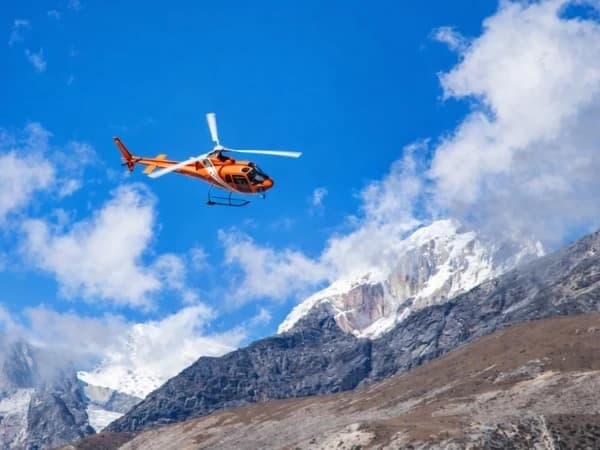
Luxury: You travel to and from Lukla by helicopter, avoiding flight delays entirely and enjoying some of the best aerial views in the Himalayas.

Accommodation

You'll spend 11 nights in traditional teahouses and lodges along the trail. Some have Wi-Fi, charging points, and hot showers, though at higher altitudes these come at a small extra cost. Your Kathmandu accommodation is not included in the trek package, but we'll help you find the right hotel for your budget during the online briefing before you arrive.

Budget: Shared rooms in local teahouses and lodges.

Standard: Private twin rooms with attached bathrooms wherever available.

Luxury: Private deluxe rooms with bed heaters and attached bathrooms in the best teahouses and lodges available at each stop.

At very high altitudes, accommodation options narrow. In those spots, we always secure the best available rooms regardless of tier.

Meals

The teahouse menus along the Everest trail are surprisingly varied, from dal bhat (the Nepali staple of lentil soup, rice, and vegetable curry that will keep you going all day) to pasta, soup, and pancakes. Our guides will steer you towards what works best at altitude: garlic soup for acclimatisation, ginger tea for digestion, plenty of fresh vegetables and fluids. We'd suggest avoiding alcohol and heavy meat dishes above 4,000 metres.

Budget: Meals are not included. You'll order and pay for your own food at teahouse menus along the trail. Most meals cost $5-10 USD each.

Standard: Three meals a day (breakfast, lunch, and dinner) with a cup of tea or coffee at each meal and seasonal fruits at breakfast.

Luxury: Three meals a day with seasonal fruits, dry fruits, and nuts at every meal. Tea, coffee, juices, cold drinks, and mineral water available anytime. All extras like hot showers, phone charging, bed heaters, and Wi-Fi are fully covered. The only thing not included is alcohol.

Luggage

Pack light. You'll carry only a daypack (20-30 litres) with your water, snacks, camera, and warm layers for the day. Your main trekking bag goes with the porter. Any luggage you don't need on the trek can be stored at our Kathmandu office for free.

Budget: Porters are not included, so you'll carry your own bag throughout the trek. If you'd prefer porter support, we can arrange one at extra cost.

Standard: One porter for every two trekkers, carrying up to 10 kg per person. We recommend sharing a duffel bag (60+ litres) with your trekking partner.

Luxury: One dedicated porter per trekker, carrying up to 20 kg. You don't carry anything.

Water

Clean drinking water matters more than almost anything else on this trek. You can buy bottled water at shops along the trail or get boiled water from lodges. We recommend bringing a reusable bottle and refilling with boiled or purified water. Never drink untreated tap, well, or river water. Water purification tablets are available in Kathmandu and at shops along the trail.

Budget: Bring your own refillable water bottle. You can buy bottled water or pay for boiled water at lodges, but water is not included in the package.

Standard: Two litres of warm water provided daily. Additional drinks are at your own cost.

Luxury: Unlimited mineral water, tea, coffee, juices, and cold drinks anytime. No need to carry or purify your own water.

Communication

We'll provide you with a Nepali SIM card in Kathmandu and show you how to set up data and top up credit. Mobile signal is reliable up to Namche Bazaar but weakens at higher altitudes. For safety, our lead guide maintains daily radio contact with all teams via mobile, walkie-talkie, and satellite phone in areas with no network coverage. You're never out of reach.

Budget: SIM card provided. You'll be shown how to buy a data package and recharge, but data costs are not included.

Standard: SIM card with a data package set up and ready to go.

Luxury: SIM card with unlimited data, so you can call home, share photos, and stay connected throughout the trek without worrying about running out.

Travel essentials

Visa

All foreign nationals except Indian citizens need a visa to enter Nepal. Most nationalities can get one on arrival at Kathmandu airport. You'll need a passport valid for at least six months, one passport-sized photo, and cash for the visa fee (US $50 for a 30-day visa).

Travel insurance

Comprehensive travel insurance is mandatory for this trek. Your policy must cover medical expenses and emergency helicopter rescue up to 5,545metres. We'll need a copy of your insurance policy before the trek begins. This is not optional, and we will check.

Currency

Nepal's currency is the Nepali Rupee (NPR), roughly 130 NPR to 1 USD. Banks and authorised exchange centres in Kathmandu offer good rates. ATMs are widely available but may charge a service fee. Bring clean, undamaged notes as torn or old bills are often refused. Only the 100 INR note from India is accepted in Nepal. Exchange everything you need in Kathmandu before heading to the mountains, as there are very few options on the trail.

Personal budget

Beyond the package cost, you'll want to budget for Kathmandu meals and accommodation, your Nepal visa, hot showers along the trail, personal snacks and drinks, and tips for the crew. We recommend setting aside roughly $20 USD per day for personal expenses during the trek.

Best time to trek

Spring (March to May) and autumn (September to November) are the prime seasons: stable weather, clear mountain views, and comfortable temperatures. Spring days sit around 20°C, dropping to -5°C at night at altitude. Autumn days are warmer, up to 25°C, with nights around -10°C.

Summer trekking (June to August) is possible but wet. The trails are quieter and the hills are green, but rain and cloud can limit views. Daytime temperatures reach 27°C at altitude, with mild evenings around 5°C.

Winter (December to February) brings cold, clear skies and empty trails. Days reach 15°C, but nights can plunge to -20°C. You'll need serious cold-weather gear, but the solitude and the clarity of the mountain views make it worth it for the right trekker.

Lukla flight delays

Flights to Lukla depend entirely on weather and can be delayed or cancelled, sometimes for days. If your flight is cancelled, a helicopter is the alternative, typically costing $500 to $1,000 USD per person (based on five people sharing). We strongly recommend building one or two buffer days into your travel plans after the trek, so a delayed flight doesn't mean a missed international connection.

A typical day on the trail

Mornings start early. Breakfast, pack up, and you're walking by 7:00 or 8:00 AM. The day splits naturally into a 3-4 hour morning trek, a long lunch break at a teahouse where you warm up and refuel, and a shorter 2-3 hour afternoon stretch to the next stop. You arrive at the day's lodge by mid-afternoon, in time for tea, a hot shower if one's available, and some time to explore the village or just sit and watch the mountains change colour. Dinner is served around 7:00 PM, and afterward your guide briefs you on the next day's route, altitude, and what to expect. The rest of the evening is yours.

Booking your trek

Your trek, your group

Every trek we run is private. You'll only walk with your own group. We never add strangers to your trek, and every itinerary is customisable to your schedule.

Solo trekkers and group bookings

Our treks run with a minimum of two people. If you're travelling alone, we can connect you with other solo trekkers and organise an open group trek. Once you confirm, your group trek is posted on our website so others from around the world can join. This way, every trek becomes your own personal holiday in the Himalayas.

Why book with us

The Everest Holiday is a government-registered trekking operator (Reg: 147653/072/073), proudly a member of the Trekking Agencies' Association of Nepal (TAAN, #1586) and the Nepal Mountaineering Association. Our family has been in Nepal's tourism and mountaineering industry for three generations. Ganesh Prasad Simkhada has held senior positions in Nepal's tourism institutions, including the Nepal Tourism Board and the Nepal Mountaineering Association. His son Shreejan co-founded The Everest Holiday in 2016 and personally oversees the design of every trek.

To confirm your booking, we require a 10% advance payment through the Himalayan Bank online portal on our website, or by bank transfer, Wise, or Western Union. The remaining balance is due upon your arrival in Kathmandu. Please send us a copy of your passport within one week of booking, and make sure it has at least six months' validity from your arrival date in Nepal.

Last-minute bookings

We recommend booking in advance, but we understand plans change. Last-minute bookings require full payment 24 hours before departure. Contact Shreejan directly on WhatsApp at +977-9810351300 or email info@theeverestholiday.com. Last-minute treks may face delays due to permit processing and logistics, but we'll do everything we can.

Flexible dates

Your travel date determines the schedule, and we can adjust it. If none of our listed departure dates work for you, let us know and we'll arrange a trek that fits your timeline.

Extend your adventure

Nepal has more to offer than the Everest trail. After your trek, we can arrange a jungle safari in Chitwan or Bardiya, white-water rafting on the Bhote Koshi, Trishuli, or Seti rivers, paragliding over Pokhara, zip-flying in Kushma, or canyoning near Pokhara.

If culture interests you more, we can set up guided tours of the Kathmandu Valley's seven UNESCO World Heritage Sites: Bhaktapur Durbar Square, Patan Durbar Square, Kathmandu Durbar Square, Swayambhunath, Boudhanath Stupa, Changu Narayan, and Pashupatinath Temple. For a quieter day, we suggest sunrise from Nagarkot or a walk through Dhulikhel. Check our add-on packages when you book.

Our commitment

Leave no trace

We take the Everest region's fragile environment seriously. At the start of your trek, each person receives an eco-waste bag. Everything that can't be composted, from snack wrappers to batteries, goes in the bag and comes back down with us. Our guides know where every recycling point and waste station is along the trail. We need your help keeping the Himalayas clean for the generation walking behind us.

The family behind your trek

We are a family business, three generations deep in Nepal's mountains. We started as porters and now run the agency. Every guide, every porter, every cook on our team is family to us. Our guides hold wilderness first-aid certifications and speak fluent English. Many are from the upper Himalayan villages along the very trails you'll be walking, which means they know every teahouse owner, every shortcut, every weather sign. We cover their insurance, meals, accommodation, and medical care. Please treat them as family too, and never hesitate to ask them anything.

Farewell dinner

When you return to Kathmandu, we celebrate with a farewell dinner. It's a chance to share stories from the trail, swap photos, and raise a glass to what you've just achieved. You'll also receive a trek completion certificate to take home.

Departure

Let us know your hotel, room number, and flight details, and we'll arrange your transfer to Tribhuvan International Airport. We hope this won't be goodbye, just see you next time.

Tipping

Tipping is a common and appreciated practice in Nepal. At the end of your trek, most groups give a combined tip to the guide and porters. The amount is entirely up to you and depends on the length of the trip, quality of service, and your own budget.

FAQs

Where is the Everest Base Camp Trek?
The trail follows the Khumbu Valley in northeastern Nepal, through Sagarmatha National Park. You start in Lukla at 2,860 metres and walk north through Sherpa villages, across suspension bridges that sway over the Dudh Koshi river, through rhododendron forests that bloom pink and red in spring, past the monastery at Tengboche where monks chant at sunset, and up through glacier valleys until you're standing at Everest Base Camp at 5,364 metres. The Khumbu Icefall is right there in front of you, groaning and cracking. It's the sound the mountain makes when nobody is climbing it.

How long does the Everest Base Camp Trek take?
Twelve days on the trail. We build two acclimatisation days into every itinerary — one at Namche Bazaar, one at Dingboche — because rushing altitude is how people get sick. We recommend arriving in Kathmandu one day before departure and keeping one or two buffer days after the trek in case Lukla flights are delayed by weather. It happens more often than anyone tells you, and a missed international connection is worse than an extra day in Kathmandu.

What are the main highlights?
The flight into Lukla is an experience before the walk even starts — a tiny runway cut into a mountainside at 2,860 metres. From there: Namche Bazaar, the Sherpa capital where you'll find bakeries, gear shops, and the best apple pie on the trail. Tengboche Monastery, sitting on a ridge with Ama Dablam rising behind it like a wall of ice. The memorial cairns at Thukla Pass, where you walk in silence past stones carved with the names of climbers who didn't come home. And the sunrise from Kala Patthar at 5,545 metres, where Everest, Lhotse, Nuptse, and Changtse light up gold before the sun reaches you.

Is this trek suitable for beginners?
Yes, with preparation. You don't need previous trekking experience. The trail is well-maintained — no ropes, no scrambling, no technical sections. The challenge is altitude, not terrain. If you can walk 5-7 hours a day on uneven ground and you're willing to go slowly, you can do this trek. Most of our first-timers finish it. The ones who struggle are the ones who rush.

What makes trekking with The Everest Holiday different?
Every trek is private. You walk with your own group, never with strangers we've added to fill numbers. We offer three tiers — Budget, Standard, and Luxury — so you choose the comfort level that fits your budget and your style, and you get exactly that. Our guides grew up in the Khumbu. They know the teahouse owners by name, they know which lodge serves the best dal bhat at Dingboche, they know the weather signs that say turn back before the weather itself says it. And a portion of your booking goes to the Nagarjun Learning Center — 70 children in rural Dhading getting free education because someone like you booked a trek.

How fit do I need to be?
Fit enough to walk 5-7 hours a day for twelve consecutive days on uneven terrain, with some steep uphill sections. You don't need to be an athlete. You need to be consistent. The people who do well on this trek are the ones who trained for six weeks beforehand, not the ones who ran a marathon five years ago.

Can beginners do this trek?
Yes. Many of our trekkers have never done a multi-day hike before. Our guides set a pace that feels frustratingly slow at the start — and lifesaving by day eight. We check your oxygen levels daily with a pulse oximeter. The two acclimatisation days at Namche and Dingboche exist specifically so your body can catch up with the altitude your legs have carried you to.

What training do you recommend?
Start 6-8 weeks before your trek. Walk uphill. That's the single best thing you can do. Stair climbing, jogging, cycling — anything that builds your cardiovascular endurance. Do practice hikes on weekends with a 5-8 kg daypack. If you can walk uphill for four hours without stopping and wake up the next morning wanting to do it again, you're ready. Squats and lunges help with the descents, which are harder on the knees than the climbs.

What permits do I need?
Three: a Sagarmatha National Park entry permit, a Khumbu Pasang Lhamu Rural Municipality fee, and a TIMS card (Trekkers' Information Management System). These are checked at multiple points along the trail — Monjo, the national park entrance, and occasionally at Namche.

Are permits included in the package?
Yes, all of them, in every tier. We handle the paperwork. You just need to bring passport-sized photos and a copy of your passport. The permits will be arranged before you leave Kathmandu.

Is travel insurance mandatory?
Mandatory. No exceptions, no flexibility on this. Your policy must cover emergency helicopter evacuation and medical treatment up to 5,555 metres. We ask for a copy before the trek begins. If the cover isn't adequate, we'll tell you, and we won't let you start until it is. This isn't bureaucracy. At 5,000 metres, the only way down in an emergency is a helicopter, and a helicopter rescue without insurance costs $3,000-5,000 USD out of your pocket.

What exactly should my insurance cover?
Emergency helicopter rescue at high altitude (up to 5,555m), medical treatment, trip cancellation, and personal belongings. Many standard travel policies exclude trekking above 4,000 metres — check the fine print. If your policy doesn't cover it, buy a specialist trekking policy. World Nomads and Global Rescue are two that our trekkers use often.

Do I need a visa?
All foreign nationals except Indian citizens need one. Most nationalities get it on arrival at Kathmandu airport — no advance application needed. Bring a passport valid for at least six months, one passport-sized photo, and US $50 cash for a 30-day visa. The queue moves faster than it looks.

Is a guide mandatory?
Yes. Since 2023, Nepal law requires all trekkers to have a registered guide. Our guides are TAAN-certified with wilderness first-aid training, and most of them are from the villages along the trail you'll be walking. They didn't learn the Khumbu from a textbook.

What do the guides and porters actually do?
Your guide leads the trek, manages all the logistics with teahouses and checkpoints, monitors your health daily (pulse oximeter readings, oxygen levels, how you slept, whether you have a headache), and shares the kind of local knowledge that turns a walk into an experience — the history of the monastery, what the prayer flags say, why the yaks always have the right of way on bridges, which teahouse owner makes the garlic soup that actually helps with altitude.

Porters carry your main bag so you walk with just a daypack. They're quiet, strong, and fast — they'll arrive at the next teahouse before you do, and your bag will be waiting in your room.

What's included in each tier?

Budget: One guide for up to 8 trekkers. No porter — you carry your own bag. Porter available at extra cost. Assistant guide added for groups over 8.

Standard: One guide for up to 6 trekkers. One porter for every two trekkers, carrying up to 10 kg per person. Assistant guide added for groups over 6.

Luxury: One guide for every 2 trekkers. One dedicated porter per trekker, carrying up to 20 kg. You carry nothing but your daypack, and even that your guide will help with if you're tired.

Where do I sleep?
In traditional mountain teahouses along the trail. These are simple lodges run by Sherpa families — twin beds, blankets, a communal dining room with a stove burning dried yak dung or wood in the centre. Everyone gathers around it in the evenings: trekkers, guides, the lodge owner's children doing homework. The higher you go, the more basic the lodges get, but even at Gorak Shep (5,164m) you'll have a bed, a blanket, and a hot meal.

We offer three accommodation tiers — Budget, Standard, and Luxury — with increasing levels of comfort and privacy. Scroll up to the What's Included section for full details on what each tier covers.

At very high altitudes, there may only be one type of room available. We always get the best that exists at each stop, regardless of your tier.

Is electricity and Wi-Fi available?
Yes at most stops, but it gets expensive and unreliable above Namche. Charging your phone might cost 200-500 NPR at higher lodges. Wi-Fi works below Tengboche but don't rely on it above. Standard and Luxury tiers include charging; Luxury covers Wi-Fi too.

Can I get a hot shower?
At lower altitudes, yes — most lodges have solar or gas-heated showers. Above Dingboche, availability drops and the water may be barely warm. Honestly, by day eight you won't care. Everyone smells the same. Luxury tier covers all hot shower costs.

What food is available on the trek?
More than you'd expect. Every teahouse has a menu — dal bhat (the Nepali staple that our guides say "dal bhat power, 24 hour"), fried rice, noodle soup, pasta, momos (dumplings), chapati, pancakes, eggs, and porridge. Some lodges bake their own bread and make apple pie that has no business being as good as it is at 3,800 metres. Our guides know which kitchen is best at each stop, and they'll steer you right.

Garlic soup — order it. It helps with acclimatisation, and it tastes better than it sounds after six hours of walking.

What's included in each tier?
Each tier includes different levels of meals and drinks. Budget gives you flexibility to order what you want from teahouse menus. Standard includes three meals daily with tea or coffee. Luxury covers everything including unlimited drinks, snacks, and all extras. Check the What's Included section above for the complete breakdown.

Are vegetarian and vegan options available?
Plenty. Dal bhat is naturally vegetarian and it's the most nutritious meal on the menu. Most teahouses also serve vegetarian pasta, soup, fried rice, and noodles. Tell us your dietary requirements when you book and our guides will communicate them at each stop.

When is the best time to trek to Everest Base Camp?
Spring (March to May) and autumn (September to November). Stable weather, clear views, and comfortable temperatures. Spring days around 20°C dropping to -5°C at night. Autumn is slightly warmer during the day, slightly colder at night. The rhododendrons bloom in spring. The skies are sharpest in autumn. Both are beautiful for different reasons.

Can I trek in summer or winter?
Yes to both, with trade-offs you should know about.

Summer (June to August) is monsoon season. Rain below Namche, cloud that rolls in by afternoon. But the trails are quiet, the hills are impossibly green, and above Namche the rain shadow of the Himalaya means drier conditions than the valleys below. Some trekkers prefer it — you'll have the trail almost to yourself.

Winter (December to February) is cold. Seriously cold. Nights at Gorak Shep can hit -20°C and the teahouses aren't heated beyond the dining room stove. But the skies are the clearest of the year, the mountains are covered in fresh snow, and you might go a whole day without seeing another trekker. If you have the gear and the tolerance for cold, winter EBC is unforgettable in a way that peak season isn't.

How does weather affect Lukla flights?
Lukla's runway sits on a mountainside at 2,860 metres. Pilots need clear visibility to land. Cloud, wind, or rain cancels flights, sometimes for a day, sometimes longer. This is why we tell every trekker to build buffer days into their travel plans after the trek. A missed international connection because of a Lukla delay is avoidable if you plan for it. If flights cancel, helicopter transfers are available at additional cost (roughly $500-1,000 per person, shared between 4-5 passengers).

What are the main health risks?
Altitude sickness. Full stop. That's the one that matters. It causes headache, nausea, dizziness, loss of appetite, and disturbed sleep. It can happen to anyone regardless of age or fitness — we've seen marathon runners get it and grandmothers walk through without a symptom. The difference is pace and hydration, not fitness.

Sunburn is the one people forget about. The UV at 5,000 metres is brutal. Wear sunscreen, lip balm with SPF, and sunglasses every day, even when it's cloudy.

How do you manage altitude sickness?
Our guides carry a pulse oximeter and check your oxygen saturation and heart rate every morning and evening. We built two acclimatisation days into the itinerary at Namche Bazaar (3,440m) and Dingboche (4,410m) — you hike high during the day and sleep low at night, which is how the body adjusts. Stay hydrated (3+ litres a day), walk slowly, avoid alcohol above 3,500m, and tell your guide the moment you feel off. If symptoms become serious, we descend. Immediately. No discussion, no "let's wait and see." That's the rule.

What happens in an emergency?
Our guides are trained in wilderness first aid. If you need evacuation, we coordinate a helicopter through your insurance provider. The helicopter can reach most points on the trail within 30-60 minutes in clear weather. This is why travel insurance with helicopter cover is mandatory — not a suggestion, not a recommendation, mandatory.

What should I pack?
The essentials: waterproof hiking boots you've already broken in (not new — never new), a fleece jacket, a down jacket (both mandatory above Namche), thermal base layers, a waterproof shell, sunglasses with UV protection, SPF 50+ sunscreen, and a daypack. Our full equipment checklist is on this page — scroll to the Equipment section.

The mistake most trekkers make is overpacking. You don't need three books, a laptop, and five changes of clothes. You need one set of walking clothes, one set of evening clothes, warm layers, and rain protection. Everything else is weight your porter carries and you'll never use.

Do I need a sleeping bag?
All teahouses provide bedding and blankets. A sleeping bag adds warmth on cold nights above 4,000 metres, and at Gorak Shep you'll be glad of it. If you don't own one, we can provide one for the trek — just tell us when you book.

Should I bring trekking poles?
Strongly recommended. On day one you'll wonder why you brought them. By day five, on the steep descent from Tengboche to the river, your knees will tell you exactly why. They reduce joint strain on descents, improve balance on rocky terrain, and over twelve days of walking, the difference is significant. Collapsible poles pack easily for flights.

How far in advance should I book?
At least a month if you can, so we can arrange Lukla flights and logistics smoothly. Peak season (October-November, March-April) fills up faster — two months ahead is better. But we also take last-minute bookings. Shreejan has put treks together in 48 hours when people show up in Kathmandu and decide they want to go. WhatsApp him at +977-9810351300.

How does payment work?
A 10% deposit confirms your booking — that's as low as $95 depending on the package. The rest is due when you arrive in Kathmandu. We accept payment through the Himalayan Bank portal on our website, bank transfer, Wise, or Western Union. Card payments carry an additional 3.5% bank processing fee. In Kathmandu, cash or card both work. Once you book, we email you everything — payment details, preparation guide, what to pack, what to expect.

What is your cancellation policy?
We have one, and it's on our Terms and Conditions page. We try to be fair. If circumstances change and you need to reschedule rather than cancel, we'll work with you on that.

How do I get to the start of the trek?
You fly from Kathmandu to Lukla — a 40-minute flight that lands on one of the world's most famous runways, cut into a mountainside with a cliff at one end and a mountain wall at the other. During peak season (March-May and September-November), flights often go from Manthali Airport instead of Kathmandu due to air traffic. If that's the case, our guide picks you up around 12:30 AM for the five-hour drive to Manthali, followed by a 20-minute flight. In quieter months, flights go directly from Kathmandu.

Budget: If departing from Manthali, you travel there by local bus or shared jeep.
Standard: Private jeep to Manthali.
Luxury: You skip the Lukla flight entirely and travel by helicopter — no delays, no Manthali drive, and the aerial views of the Himalaya are something you won't forget.

Can I avoid the Lukla flight altogether?
Yes. We offer an Everest Base Camp by Road trip (15 days) that drives to the trailhead instead of flying. You save $200-300 on flights and get to see Nepal's hill country on the way. A lot of trekkers tell us the drive was one of their favourite parts.

How do I get back after the trek?
You fly from Lukla back to Kathmandu or Manthali. If you land at Manthali, we drive you back. Luxury trekkers return by helicopter. Build a buffer day into your plans — Lukla flights cancel more often than they run on time.

NTC (Nepal Telecom) is the one you want. It has the most reliable coverage on the Everest route — intermittent signal up to Namche Bazaar, occasional signal beyond, and very little above Dingboche (4,410m). Ncell works well in Kathmandu but drops out earlier on the trail.

We'll set you up with an NTC SIM card in Kathmandu before the trek.

Budget: SIM card provided, you buy your own data.
Standard: SIM card with a data package ready to go.
Luxury: SIM card with unlimited data — call home, post photos, stay connected the whole way.

Bring a power bank. Charging at teahouses above Namche costs money and isn't always available. A 20,000 mAh bank will last the whole trek if you're sensible with your phone.