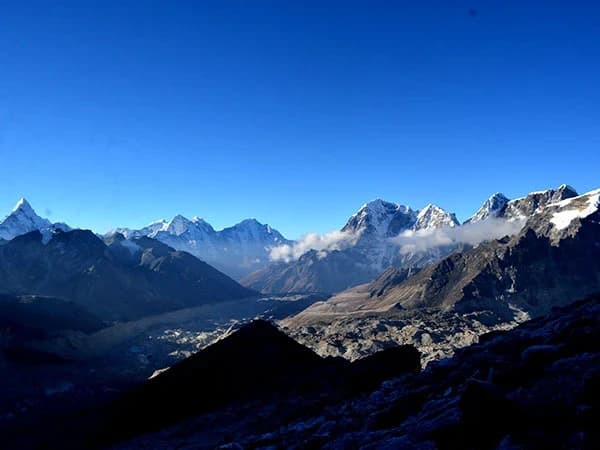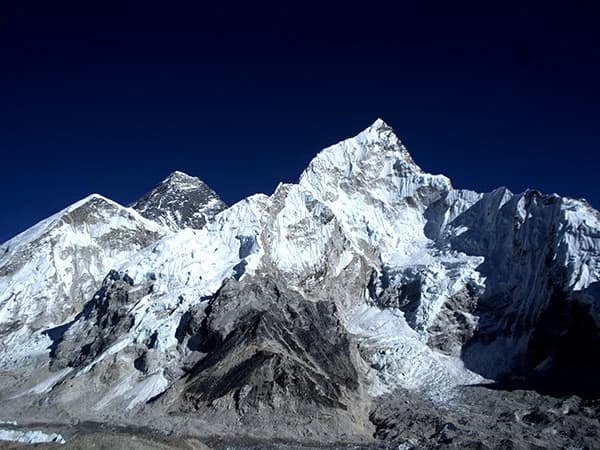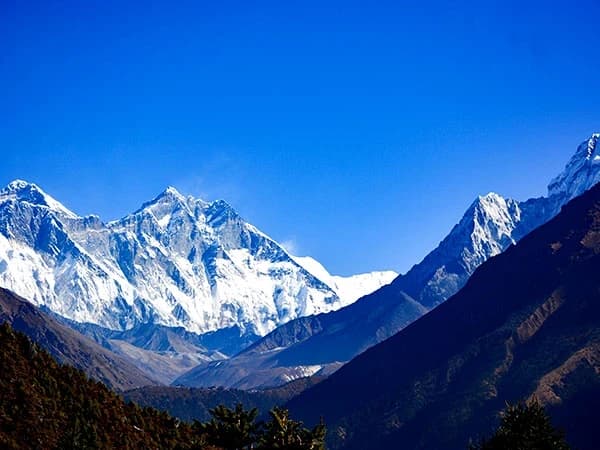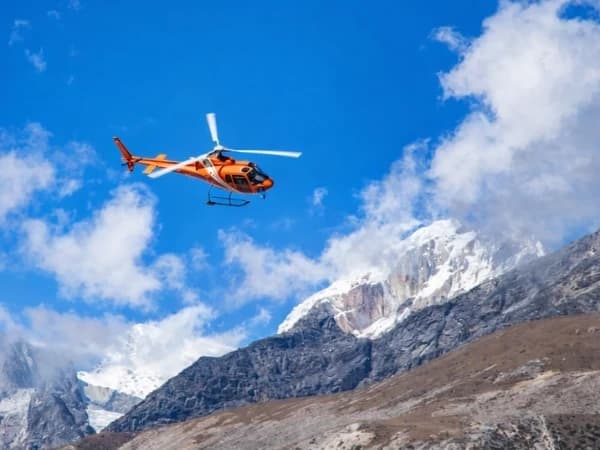
Trek Highlights
- 18-day private trek following the original 1953 Hillary route from Jiri to Everest Base Camp. The classical walked-in approach that all Everest expeditions used before Lukla airport opened.
- Walk through the Solu region villages of the lower Khumbu, including Junbesi, Kharikhola, and Surke. Real Sherpa village life that the Lukla-flight version skips.
- No Lukla flight required. The slow climb from Jiri (2,400m) gives the longest acclimatisation gradient of any EBC trek we run.
- Private guide and porter ratio that does not change based on group size. No shared-group surcharge gimmicks.
- 10% deposit to lock dates, balance paid in person in Kathmandu. No full prepayment required to a foreign trekker you have never met.
- Every booking helps fund our Nagarjun Learning Center work at Saldum, where 70 children are taught by one dedicated teacher.
Why I built this trek the way I did
I am Shreejan, the founder of The Everest Holiday. The Jiri to EBC trek is the historical route. Sir Edmund Hillary and Tenzing Norgay walked this way in 1953 because Lukla airport did not exist. Their party started the trek at Jiri, in the foothills east of Kathmandu, and walked for 5 days through the Solu villages before they even reached the lower Khumbu. The route is still walkable today and it remains the deepest cultural experience of the entire Everest region.
I run this 18-day version because that is what the Jiri start actually requires. Days 1 to 5 are the Solu villages: Junbesi, Kharikhola, Surke. The trail passes through working farms, schools, and the homes of the Sherpa families who supplied the original Everest expeditions. Days 6 to 12 are the standard EBC corridor through Phakding, Namche, Tengboche, Dingboche to Gorakshep. Days 13 to 18 are the descent back through Lukla (you can fly out from Lukla instead of walking back to Jiri if you prefer; we route the trip both ways).
This is the trek for serious walkers who want the historical experience, the acclimatisation benefit of a low starting altitude, and the cultural richness of the Solu region villages. It is not the right trek for someone with limited vacation days or who wants to be in and out of Nepal in 2 weeks.
We run this as a private trek by default, and we never add strangers to your booking. If you would rather have company on the trail, you can choose to join one of our fixed departures instead. Either way the price per person is the same. Your pace, your rest days, your conversations at dinner. We do not change the guide-to-porter ratio when the group is smaller. Your guide and porter are with you whether you are two people or six.
Every booking on this trip helps us pay the teacher’s salary at our Nagarjun Learning Center in Saldum, where 70 children get free education. The salary is currently funded out of my own pocket. Your trek is what makes that sustainable.
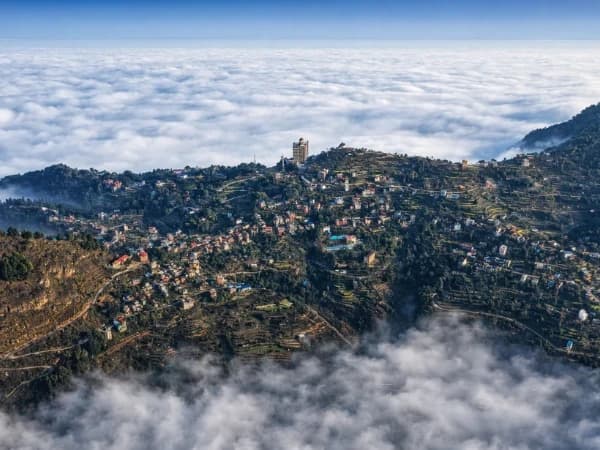
The road from Kathmandu to Jiri climbs through the Mahabharat Range in a series of switchbacks that feel like the country itself is winding up for what lies ahead. Green terraces drop into valleys where mist gathers in the morning and burns off by noon. You are heading east, towards the mountains, following the same route that Sir Edmund Hillary and Tenzing Norgay took in 1953 when they became the first humans to stand on the summit of Everest. There was no airstrip at Lukla then. There was only this road, this trail, and the slow, honest approach through the heart of Sherpa country that gave climbers time to understand what they were walking into before the mountain revealed itself.
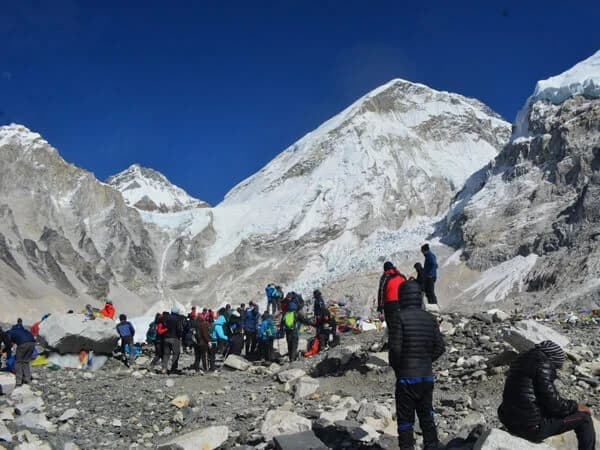
Eighteen days. The original route. From the terraced lowlands of Jiri through the rolling ridges of the Solu-Khumbu, Bhandar, Junbesi, Nunthala, Puiyan, where prayer flags mark every pass and monastery bells carry across empty valleys. Then the trail joins the classic Everest corridor at Phakding and climbs north through Namche Bazaar, Tengboche, Dingboche, and Lobuche to Everest Base Camp (5,364m / 17,598ft) and the sunrise at Kala Patthar (5,545m / 18,192ft). You will eat dal bhat with families who have lived in these mountains for centuries, sleep in teahouses that smell of woodsmoke and juniper, and arrive at the foot of the highest mountain on earth having earned every single metre of the approach.
What Makes This Trek Special
- Walk the original Hillary–Tenzing route, the historic 1953 approach through the Solu-Khumbu lowlands that every Everest expedition followed before Lukla airstrip was built
- At USD 1,599 for the Budget tier, this is the most affordable Everest Base Camp trek available from any reputable operator
- Trek through six days of unspoilt Solu-Khumbu countryside that most trekkers fly over entirely, rice terraces, rhododendron forests, ancient monasteries, and villages where children wave from schoolyard fences
- Stand at Kala Patthar (5,545m / 18,192ft) at sunrise, the most famous viewpoint of Everest, where four of the world’s highest peaks surround you
- Arrive at Everest Base Camp (5,364m / 17,598ft) with the best natural acclimatisation of any Everest trek, six days of rolling hills condition your body before you enter the high Khumbu
- Cross Lamjura La and Khari La, the same passes that Hillary’s porters crossed, with views that unfold like a slowly opening map
- Visit Junbesi monastery, one of the oldest and most peaceful in the Solu district, where monks chant at dawn in a valley that time seems to have forgotten
- Walk through Sagarmatha National Park, a UNESCO World Heritage Site home to snow leopards, Himalayan tahr, and over 100 species of birds
- Acclimatise in Namche Bazaar (3,440m / 11,286ft), the lively Sherpa capital with markets, bakeries, and views of Everest from every rooftop
- See the Khumbu Glacier up close, 12 kilometres of slow-moving ice where the only sound is rock shifting beneath frozen debris
- Experience cultural immersion that no other Everest trek can match, the Jiri approach passes through communities that rarely see foreign trekkers, where hospitality is instinctive and unhurried
18-Day Historical Jiri to Everest Base Camp Trek Overview
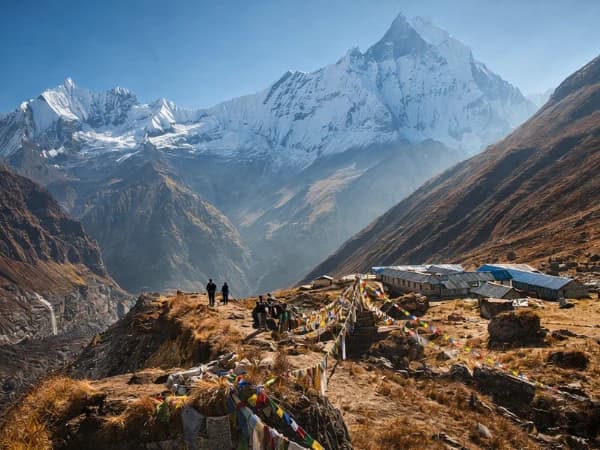
Eighteen days sounds like a long time, and it is, deliberately so. The first six days walk you through the Solu-Khumbu lowlands from Jiri, where the road ends, through a succession of ridges and valleys that run perpendicular to your line of travel. This means climbing to a pass, descending into a valley, and climbing again, a rollercoaster of altitude that takes you from Bhandar through Junbesi, over Lamjura La, down to Nunthala, up again to Puiyan, and finally into the Dudh Koshi valley. The terrain shifts from rice paddies to oak forest to rhododendron to high scrub, and the mountains on the northern horizon grow larger with every pass you cross.
This is the section that no other Everest trek gives you. The teahouses are simpler here, the trails quieter, and the hospitality more personal. You will walk through villages where dal bhat is cooked over wood fires and where children practise English with trekkers who pass through once a week rather than once an hour. By the time you reach Phakding on Day 7 and join the classic Everest trail, your legs are conditioned, your lungs are adapted to moderate altitude, and you have a connection to the landscape that trekkers who flew to Lukla two days earlier simply cannot have.
From Phakding, the route north is the one walked by thousands each season: the steep climb to Namche Bazaar, the acclimatisation day with its hike to the Everest View Hotel (3,880m / 12,730ft), the trail through Tengboche to Dingboche, the push past the Thukla memorial cairns to Lobuche and Gorak Shep, and finally the walk across the Khumbu Glacier to Everest Base Camp. The difference is that you arrive here with six days of hill walking already in your legs, and the mountain feels like a destination you earned rather than one you were delivered to.
After Base Camp and the pre-dawn climb to Kala Patthar, the moment where the sun hits Everest and the entire Khumbu ignites with gold, the descent follows the standard route back through Namche to Lukla. Budget and Standard trekkers fly from Lukla back to Kathmandu or Manthali. Luxury trekkers return by helicopter directly to Kathmandu, no Manthali transfer, no flight delays, no waiting.
Before You Arrive
Please arrive in Kathmandu by 4 PM the day before your trek. This gives you time for a final gear check, a briefing with your guide, and a good night’s rest before the early morning drive to Jiri.
Your Online Briefing
Think of this as our first coffee together, but online. After you book, we schedule a video call where we walk you through every detail: what to pack, what each day on the trail looks like, how the altitude will feel, what the Jiri section is really like, and anything else on your mind. No question is too small.
This is also when we learn about you. Our trek itinerary does not include your hotel in Kathmandu, during the briefing, share your preferences and budget, and we will arrange accommodation that fits. Whether you want a simple guesthouse in Thamel or a five-star hotel, we will set it up for you.
Transport — Jiri Drive and Lukla Return
The outbound journey is by road to Jiri, a full day’s drive through the Mahabharat Range and the green hills of the Solu district. Budget trekkers travel by local bus or jeep. Standard trekkers ride in a shared tourist vehicle. Luxury trekkers travel in a luxury private vehicle.
The return journey is by air from Lukla. Budget trekkers fly from Lukla to Manthali, then travel by local bus or jeep back to Kathmandu. Standard trekkers fly from Lukla to Kathmandu or Manthali with a shared tourist vehicle transfer. Luxury trekkers fly by helicopter directly from Lukla to Kathmandu, no Manthali, no delays.
During peak season (roughly 15 March–15 May and 25 September–30 November), flights from Lukla may operate to Manthali Airport instead of Kathmandu. If your return flight lands at Manthali, ground transport back to Kathmandu is included in every package.
We strongly recommend keeping two buffer days at the end of your trip before your international flight home, in case weather delays your Lukla return flight.
Your Trek, Your Way
Every trek we run is private, your group only, no strangers added. Whether you choose Budget, Standard, or Luxury, the mountains are yours and your companions’ alone. This is not a conveyor belt. This is your personal Himalayan experience.
Your hotel in Kathmandu is not included in the trek package, and that is intentional. Kathmandu has everything from USD 10 guesthouses in Thamel to five-star hotels with rooftop views of the city. During the online briefing, tell us what you prefer and we will arrange it for you. Your trek package begins the moment you leave Kathmandu for Jiri.
Difficulty: Strenuous
This is a long trek, 18 days on the trail, but it is not technically difficult. The challenge is duration and cumulative fatigue rather than any single dangerous section. You will walk 5-8 hours a day over mountain trails, crossing multiple passes in the Solu section and gaining altitude steadily through the Khumbu. The paths are well-established but uneven, stone steps, river crossings, and steep ascents are part of every day. No previous trekking experience is required, but you should be in good physical condition and comfortable with sustained walking over many consecutive days. The six-day Jiri approach provides excellent natural acclimatisation, and our guides monitor your condition throughout with first aid kits and pulse oximeters.
Jiri to Everest Base Camp at a glance
| Duration | 18 days, Kathmandu to Kathmandu |
|---|---|
| Highest point | Kala Patthar, 5,545 m (Base Camp 5,364 m) |
| Region | Gaurishankar Conservation Area and the Khumbu (Sagarmatha National Park) |
| Difficulty | Strenuous |
| Start | The classic walk-in from Jiri, no Lukla flight in |
| Permits | Gaurishankar Conservation Area, Sagarmatha National Park, Khumbu Pasang Lhamu Rural Municipality and a TIMS card |
| Best months | October to November and March to May |
Best time to trek Jiri to Everest Base Camp
| Season | Months | What it is like | Verdict |
|---|---|---|---|
| Autumn | October to November | Clearest and busiest; the main season. Late October can carry a cyclone-tail risk, so we watch the forecast | Best overall |
| Spring | March to May | Warm, the climbing-expedition season at Base Camp, second busiest | Great, second season |
| Winter | December to February | Very cold and quiet, clear skies, some higher lodges shut | Clear but cold |
| Monsoon | June to mid-September | Cloud, rain and flight delays to Lukla | Avoid |
Permits
The Jiri approach passes through the Gaurishankar Conservation Area, and the Khumbu itself needs Sagarmatha National Park entry plus the Khumbu Pasang Lhamu Rural Municipality permit. You also need a TIMS card. We arrange all four permits below and include them in your trek price.
| Permit | Foreigner | SAARC |
|---|---|---|
| Gaurishankar Conservation Area (the Jiri to Bhandar section) | NPR 3,000 | NPR 1,000 |
| Sagarmatha National Park entry | NPR 3,000 | NPR 1,500 |
| Khumbu Pasang Lhamu Rural Municipality | NPR 3,000 | NPR 3,000 |
| TIMS card | NPR 2,000 | NPR 1,000 |
Trekking as a group?
Bring your own group — friends, family, a club, a university society, your workplace, or a cause you are raising money for — and any of the three comfort levels can run as a private group on your own dates. Private or group, the price per person is the same; we never put strangers in your group. The more of you there are, the less each person pays:
| Group size | Budget (per person) | Standard (per person) | Luxury (per person) |
|---|---|---|---|
| 1-4 people | US$1,599 | US$2,699 | US$5,199 |
| 5-8 people | US$1,499 | US$2,649 | US$5,149 |
| 9-12 people | US$1,399 | US$2,599 | US$5,099 |
| 13-20 people | US$1,199 | US$2,549 | US$5,049 |
The organiser travels free. Get fourteen or more paying people together and whoever organised the group joins the trip free. The one thing the organiser still pays is their own flights and permits, since those are fixed costs we pay out for every person and cannot absorb, and we cover the rest. Your departure is guaranteed on your own dates — from a solo traveller up to a group of twenty, and we never merge you into another trip.
Planning a group? Message me on WhatsApp with the trip, roughly when, and how many of you, and I will send you a price and a plan.
Compare Our Three Packages
| Budget | Standard | Luxury | |
|---|---|---|---|
| Price from | USD 1,599 | USD 2,699 | USD 5,199 |
| Meals | Choose your own (approx. USD 15-25/day) | 3 meals + tea + fruits + 2L water daily | All meals + all drinks anytime (except alcohol) |
| Room | Shared teahouse | Private twin w/ bathroom | Private deluxe w/ bed heater |
| Porter | Not included | 1 per 2 trekkers | 1 per trekker (carry nothing) |
| Guide | 1 guide, assistant at 8+ | 1 guide per 6, assistant at 7+ | 1 guide per 2 trekkers, plus an assistant guide for every 2 more |
| Transport | Local bus to Jiri + flight Lukla–Manthali, local bus back | Shared tourist vehicle to Jiri + flight from Lukla | Luxury vehicle to Jiri + helicopter Lukla–KTM |
| SIM data | SIM only | Limited data | Unlimited data |
| Best for | Backpackers and history lovers on a budget | Comfort trekkers wanting the full experience | Premium travellers, time-sensitive return |
Himalayas for Every Budget, same expert guides, same safety, three comfort levels.
Difficulty: Strenuous
You need to be comfortable walking 5-8 hours per day over uneven terrain for 18 consecutive days. The Jiri section involves multiple pass crossings with significant ascent and descent each day. The Khumbu section reaches 5,545m (18,192ft) at Kala Patthar. No technical climbing is involved, but cumulative fatigue over 18 days demands good baseline fitness. The six-day approach from Jiri provides excellent natural acclimatisation, and we build additional rest days at Namche Bazaar and Dingboche into the itinerary. Our guides carry altitude medication and pulse oximeters, monitoring your condition throughout.
The 1953 route, a 2026 contribution
This is the original Mallory-era route to Everest before flights to Lukla existed. Eighteen trekking days. It is also the most heavily contributed-to trek on our website, because the longer the booking, the more money flows into the Nagarjun Learning Center in Saldum village. My mother runs the school, which serves around seventy children with free schooling and two meals a day. We are a registered Nepalese charity and listed on the UN Partner Portal.