

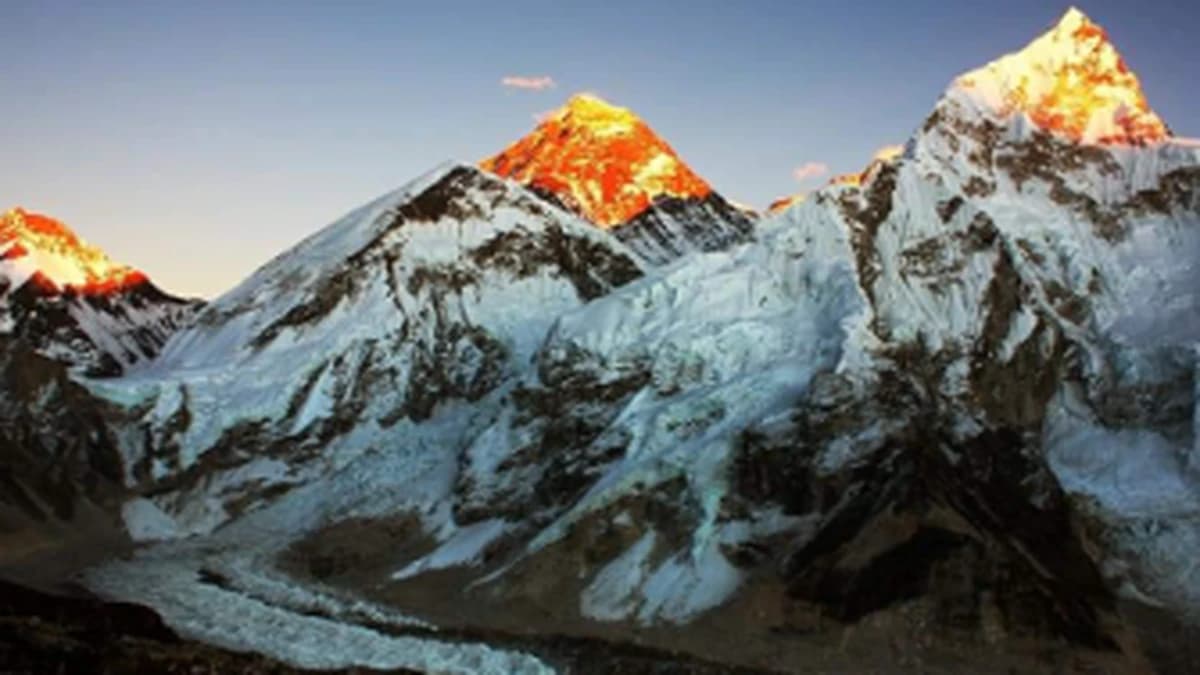
Short answer: Yes. Kala Patthar (5,545 m), the rocky hill above Gorak Shep, is the classic viewpoint for the summit of Mount Everest, which you cannot see from Everest Base Camp itself because the Khumbu Icefall and Everest's west shoulder hide it. Most trekkers climb it in the dark to reach the top for sunrise. The climb is part of our 12-day Everest Base Camp trek.
Can you see Mount Everest summit from Kala Patthar?
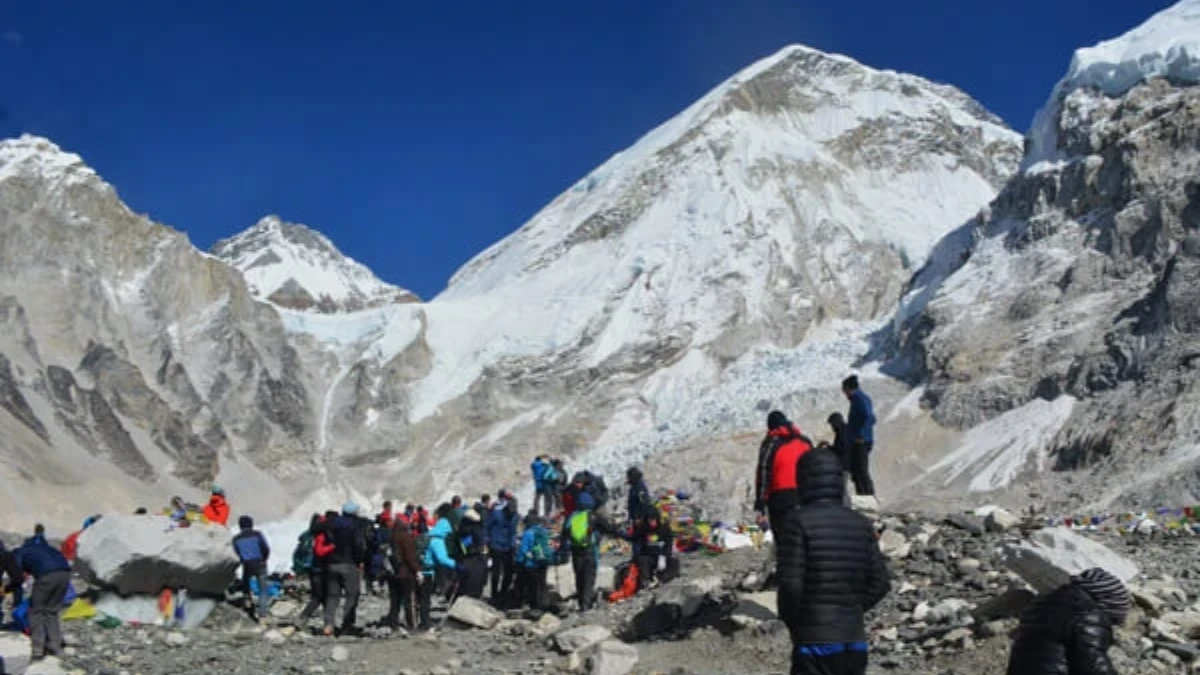
I'll be honest with you. When most people think about trekking to Everest, they picture standing at Base Camp and staring up at the world's tallest mountain. It's a nice thought. But here's the thing: from Everest Base Camp itself, you can't actually see the summit of Everest. The mountain is hidden behind the Khumbu Icefall and the massive west shoulder. You're standing on a glacier surrounded by moraine rubble, and the view, while impressive, isn't the one you've seen in all those photographs.
That photograph, the one with the golden light hitting Everest's pyramid summit, with Nuptse's enormous wall stretching out beside it, that's taken from Kala Patthar. Every single time.
Kala Patthar sits at 5,545 metres above sea level. It's a dark, rocky hill just south of Pumori, and it's the highest point most trekkers will ever reach in their lives. There's no teahouse at the top, no prayer flags (well, a few tattered ones), no fanfare. Just you, the cold, the wind, and the most extraordinary mountain panorama anywhere on the planet.
I've guided people up Kala Patthar more times than I can count. Some arrive in tears. Some can't speak. Some just sit on the rocks and stare. Nobody, and I mean nobody, has ever told me it wasn't worth the effort.
Why Is Kala Patthar Better Than Everest Base Camp for the Best Views?
This confuses a lot of first-time trekkers, so let me explain it properly.
Everest Base Camp sits at 5,364 metres on the Khumbu Glacier. It's a working camp during climbing season, tents, equipment, climbers preparing for their summit push. The atmosphere is brilliant and you'll feel an enormous sense of achievement standing there. But the view of Everest? It's blocked. You're too close and too low. The mountain's own bulk hides the summit from you.
Kala Patthar, on the other hand, is across the valley. It sits at 5,545 metres on a ridge that faces directly north-east towards Everest. From up there, you're looking straight at the south-west face, the full pyramid, summit to base, completely unobstructed. There's nothing between you and the highest point on earth except thin air.
That's why every professional photograph of Everest from the Nepal side is taken from Kala Patthar or somewhere very near it. It's the viewpoint. If you trek all the way to the Khumbu region and skip Kala Patthar, you'll regret it for the rest of your life. I've had clients tell me exactly that.
On our treks, we always include both. You visit Everest Base Camp on one day and climb Kala Patthar the next morning for sunrise. That way you get the achievement of Base Camp and the views from Kala Patthar. It's the complete trip.
What is the sunrise climb up Kala Patthar like?
Most trekkers climb Kala Patthar from Gorak Shep, which is the last settlement before Base Camp at 5,164 metres. It's the highest you'll sleep on the entire trek, and I won't pretend it's comfortable. The teahouses at Gorak Shep are basic, the air is thin, and you probably won't sleep brilliantly. That's normal.
Your alarm goes off somewhere between 3:30 and 4:30 in the morning, depending on the season and how fast you walk. It's dark. It's cold, genuinely cold, often minus 15 to minus 20 degrees Celsius. You'll put on every layer you've got, grab your head torch, and start walking.
The trail from Gorak Shep to Kala Patthar takes between 1.5 and 3 hours depending on your fitness and how you're handling the altitude. It's not technically difficult, there's no scrambling or climbing involved, but at 5,000 metres plus, every step feels like ten. The path is steep in places, loose rock and scree, and your lungs are working overtime because there's roughly half the oxygen you're used to at sea level.
Here's what I always tell my groups: go slow. Slower than you think. There's no prize for getting there first, and if you push too hard, you'll either have to turn back or you'll arrive feeling so awful you can't enjoy it. Take small steps. Rest when you need to. Drink water even though you don't feel thirsty. Your guide will set the pace, trust them.
The first section from Gorak Shep climbs gradually across a rocky plateau. Then the trail steepens as it heads up the ridge. There are a few false summits that'll test your patience, you think you're nearly there, then the path keeps going. Keep walking. The final push to the summit cairn is the steepest part, but by then you can see the sky beginning to lighten behind the mountains, and that gives you all the motivation you need.
When you reach the top, find a spot out of the wind if you can (there's not much shelter, but some rocks offer a bit of protection), sit down, and wait. The sunrise over Everest is coming, and it's worth every frozen finger and aching leg.
What You'll See from the Top
I could describe this a hundred times and it still wouldn't prepare you for the real thing. But I'll try.
As the sky lightens, the first thing you notice is the sheer scale of what surrounds you. You're in a natural amphitheatre of the highest mountains on earth. Directly ahead, north-east, is Everest herself, 8,849 metres, the full south-west face glowing in the pre-dawn light.
To Everest's right, connected by the South Col, is Lhotse (8,516m), the fourth highest mountain in the world. Its enormous face drops almost vertically, it's one of the most intimidating walls of rock and ice you'll ever see. Further right again, you can make out Nuptse (7,861m), which actually appears taller than Everest from this angle because it's closer to you. The Nuptse wall is massive, a continuous ridge of rock and hanging glaciers stretching for kilometres.
On the other side of Everest, slightly behind, you'll spot Changtse (7,583m) on the Tibetan side of the border. And if you turn around to look west, right behind you and towering above Kala Patthar itself, is Pumori (7,161m), close enough that you can see individual crevasses in its glaciers.
But the moment everyone waits for is the sunrise.
The light hits Everest's summit first. Just the very tip turns gold while everything else is still in blue shadow. Then, over the next twenty minutes or so, that golden light creeps slowly down the face of the mountain. The snow and ice catch fire, orange, pink, gold, while the valleys below stay dark and cold. It's the most beautiful thing I've seen in my life, and I see it multiple times every season.
On a clear autumn morning, the visibility can stretch for hundreds of kilometres. You can see Makalu (8,485m) to the east, the fifth highest mountain in the world. Occasionally you'll catch a glimpse of Cho Oyu (8,188m) to the west. The entire Khumbu Glacier spreads out below you like a frozen river of rubble. It's overwhelming in the best possible way.
Photography Tips for Kala Patthar From a Local Guide Who's Been There Too Many Times
If you're carrying a camera, Kala Patthar is the reason you brought it. Here's what I've learnt from watching hundreds of photographers, professionals and amateurs, work the summit.
- Charge your batteries the night before and keep spares inside your jacket, close to your body. Cold kills batteries fast. At minus 15, a full battery can die in thirty minutes if it's exposed. Keep one battery warming against your skin and swap them when the active one fades.
- Bring a small, lightweight tripod or a Gorillapod. Your hands will be shaking from the cold and the exertion. A tripod means sharper photos, especially in the low light before sunrise. You can also use it for time-lapse, the changing light over Everest makes for incredible footage.
- Don't just photograph Everest. The 360-degree panorama is extraordinary. Shoot the Khumbu Glacier below, the other peaks, your fellow trekkers silhouetted against the dawn. Some of the best photos I've seen from Kala Patthar are of people, not mountains.
- Shoot during the golden hour, not just at the moment of sunrise. The best light lasts for about 30 to 40 minutes as the sun climbs. Stay as long as you can bear the cold.
- Wide-angle lenses capture the scale better. Everest through a telephoto is impressive, but a wide-angle that shows Everest, Nuptse, Lhotse, the glacier, and the sky all in one frame, that's the shot that makes people gasp.
- Phone cameras work fine. Modern smartphones take brilliant photos in good light. If you don't have a dedicated camera, don't worry about it. Just keep your phone warm in your inner pocket and pull it out when you need it.
- Take a video. Even just thirty seconds panning across the panorama. Photos capture the view, but a video captures the wind, the breathing, the cold, the feeling of actually being there.
How high is Kala Patthar and is it safe?
I need to be straight with you here. Kala Patthar at 5,545 metres is serious altitude. You're well above the danger zone for Acute Mountain Sickness (AMS), and every year people get into trouble because they underestimate it.
By the time you climb Kala Patthar on our treks, you'll have had proper acclimatisation days built into your itinerary, one at Namche Bazaar (3,440m) and one at Dingboche (4,410m). These aren't optional rest days. They're medically necessary. Your body needs time to produce extra red blood cells and adjust to the lower oxygen levels. Skipping them is genuinely dangerous.
Our guides carry a pulse oximeter on every trek and check your blood oxygen levels each evening. Normal at sea level is 95-100%. At 5,000 metres, anything above 75-80% is acceptable. Below that, we monitor more closely. If you show signs of serious AMS, severe headache that won't go away with paracetamol, vomiting, confusion, loss of coordination, we descend immediately. No discussion, no negotiation, no waiting to see if it improves. Going down is the treatment.
Common symptoms you can expect at this altitude even if you're perfectly healthy include mild headache, shortness of breath on exertion, poor sleep, and loss of appetite. These are normal and manageable. Drink at least three to four litres of water per day. Avoid alcohol completely above 3,500 metres. Some trekkers take Diamox (acetazolamide), discuss this with your doctor before you leave home.
The climb to Kala Patthar itself adds risk because you're exerting yourself at extreme altitude in the cold and dark. If at any point during the climb you feel seriously unwell, not just tired, but genuinely ill, tell your guide and turn back. Kala Patthar will still be there. Your health matters more than any sunrise.
We also require that every trekker carries travel insurance that covers helicopter evacuation up to 6,000 metres. This isn't negotiable. Emergency helicopter evacuations from Gorak Shep happen regularly during peak season, and without insurance, the cost can exceed USD $5,000.
What should I pack for the Kala Patthar summit climb?
Packing right for the Kala Patthar climb makes the difference between enjoying it and being miserable. Here's what I recommend:
- Thermal base layer, merino wool or synthetic, top and bottom
- Fleece or insulated mid layer
- Down jacket, this is essential, not optional. A good down jacket rated to minus 20 is your best friend above 5,000 metres
- Windproof outer shell, the wind at the summit can be brutal, especially before sunrise
- Warm trekking trousers, or thermal leggings under your regular trekking trousers
- Warm hat that covers your ears
- Neck gaiter or balaclava, your face will thank you
- Insulated gloves, liner gloves plus outer mittens is ideal. Fumbling with camera controls in thick gloves is annoying, so liner gloves let you do the fiddly stuff
- Warm socks, two pairs if your boots allow it
- Head torch with fresh batteries, you'll need this for the first hour at least
- Water bottle, keep it inside your jacket so it doesn't freeze. A thermos with hot tea or lemon water is even better
- Snacks, chocolate bars, energy bars, nuts. Your body burns enormous calories at this altitude in the cold
- Sunglasses and sunscreen, the UV at this altitude is intense once the sun comes up. Snow blindness is a real risk
- Camera gear, see photography tips above
Don't bring your full pack. Leave everything else at the teahouse in Gorak Shep. You want to be as light as possible for the climb.
When Is the Best Time to Climb Kala Patthar?
The Khumbu region has two main trekking seasons, and both offer something different at Kala Patthar.
Autumn (September to November)
This is peak season for good reason. After the monsoon rains clear out in late September, the atmosphere is washed clean and the visibility is extraordinary. October and November mornings at Kala Patthar often give you perfectly clear skies, you can see every peak from Makalu to Cho Oyu. The temperatures are cold but manageable, typically minus 10 to minus 15 at the summit before sunrise. The trails are busier, especially in October, but that also means better teahouse services and a great atmosphere on the trail.
Spring (March to May)
Spring brings warmer temperatures and rhododendron forests in bloom at lower elevations. The views from Kala Patthar are generally good, though not quite as consistently clear as autumn, there's sometimes a slight haze in the afternoons as the pre-monsoon moisture builds. Morning visibility is usually excellent though. March and early April are the sweet spot. By late May, the monsoon is approaching and cloud builds earlier each day.
Winter (December to February)
Winter trekking to Kala Patthar is possible but demanding. The skies can be incredibly clear, some of the best visibility of the year, but the cold is extreme. Summit temperatures before sunrise can drop below minus 25, and many teahouses above Namche close for the season. You'll need serious cold-weather gear and an experienced guide. We do run winter treks, but only for experienced trekkers who know what they're getting into.
Monsoon (June to August)
Avoid. The trails are wet and dangerous, visibility is poor, and most of the time Everest is hidden behind thick cloud. There are very few trekkers and many services close. It's not worth it.
How do you get to Kala Patthar?
Kala Patthar isn't a standalone destination, it's part of the Everest Base Camp trek. You can't drive there or take a helicopter to the summit (well, you could technically charter a helicopter, but that rather misses the point).
The standard route takes you from Kathmandu to the Khumbu region, either by flying to Lukla (the classic route) or by driving via Salleri and Phaplu (the road route we offer, which avoids the notoriously unreliable Lukla flights entirely).
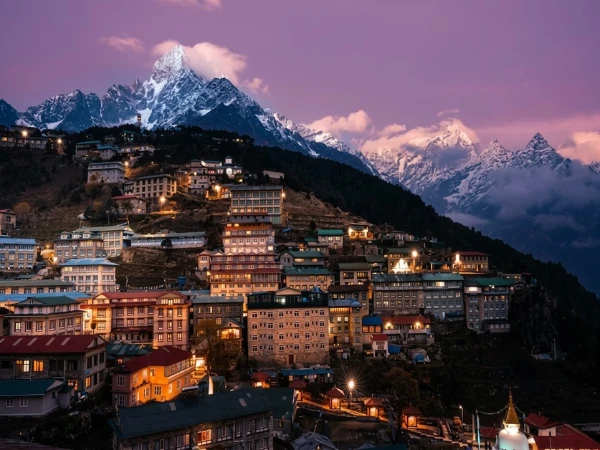
From the trailhead, you trek north through the Khumbu valley over 8-10 days, passing through Namche Bazaar, Tengboche, Dingboche, and Lobuche before reaching Gorak Shep. Along the way, you gain altitude gradually with built-in acclimatisation days. Kala Patthar is typically climbed on the morning after you visit Everest Base Camp, as the final highlight of the trek before you begin your descent.
On our 15-day Everest Base Camp Trek by Road, the Kala Patthar sunrise is on Day 10. By that point, you've had nine days of gradual acclimatisation, two dedicated rest days, and you've already stood at Base Camp the day before. Your body is as ready as it's going to be.
After the sunrise, you descend from Kala Patthar back to Gorak Shep for breakfast, then continue the trek downhill towards Pheriche. The descent is fast, you lose altitude quickly, and most people feel noticeably better within hours. The hard part is over. You've done it.
Is climbing Kala Patthar worth it?
I want to be honest about something. The climb to Kala Patthar is hard. At 4 in the morning, in the dark, in the freezing cold, with a headache and legs that feel like lead, there will be a moment when you ask yourself why you're doing this. Every trekker has that moment. I've had it myself.
And then the sky starts to change colour. And then you see the outline of Everest against the stars. And then the first light hits the summit and turns it to gold. And suddenly you understand exactly why you're doing this, and you wouldn't trade that moment for anything in the world.
That's Kala Patthar. That's why we climb it. Not because it's easy, but because it gives you something that stays with you forever, a memory of standing at 5,545 metres, watching the sun rise over the tallest mountain on earth, knowing that you walked every step to get there.
If you're thinking about trekking to Everest Base Camp, make sure Kala Patthar is part of your itinerary. It's the real highlight of the entire journey. And if you'd like to do it with a team that knows these mountains like family, because they are family, get in touch. We'd love to take you there.
Plan your Kala Patthar sunrise with The Everest Holiday:
WhatsApp: +977 9810351300
Email: [email protected]
Browse our Everest Base Camp treks: www.theeverestholiday.com
How do I book a Kala Patthar sunrise trek?
Kala Patthar is the highest viewpoint reachable without climbing a mountain, and it sits on every full Everest Base Camp itinerary we run. If this guide has convinced you to stand here yourself, here are the treks that take you to the summit and the trail-stop guides for the villages right below it.
- Everest Base Camp Trek - 12 Days : the headline route, with the Kala Patthar sunrise on Day 9.
- Everest Base Camp Trek by Road - 15 Days : the longer overland route via Jiri, the original 1953 expedition trail.
- Everest Base Camp with Helicopter Return - 10 Days : the shorter option that walks up and flies back from Gorak Shep.
- Gorak Shep Guide : the highest village on the trail, where you sleep before the 4am Kala Patthar climb.
- Lobuche Village Guide : the last village before Gorak Shep, with the memorial that stops every trekker walking.
Kala Patthar is the sunrise highlight of the Everest Base Camp Trek. For the full day-by-day itinerary including the Kala Patthar morning, see our 12-day EBC trek page.
Kala Patthar is the EBC summit view. Our Everest Base Camp Trek (12 Days) is private (your group only, no strangers), 2027 dates open, From USD $1399. WhatsApp us for tailored 2027 dates and current departures.
 Chat with Shreejan