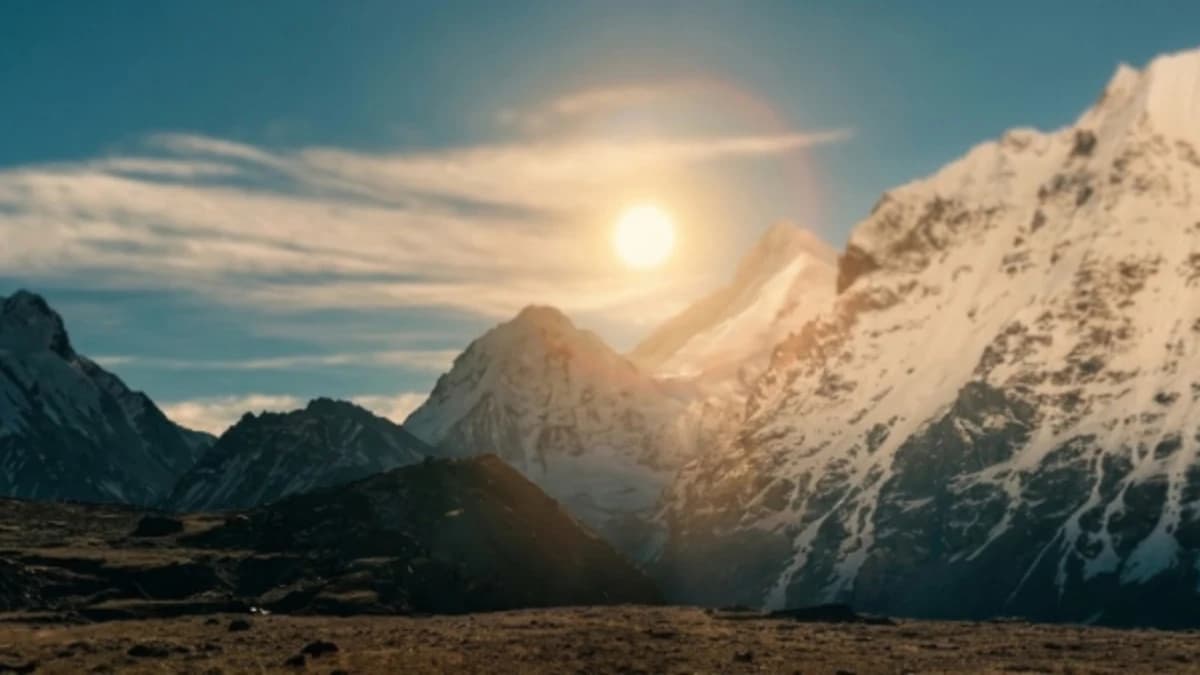
Kanchenjunga Base Camp Trek: 19 Days to the Foot of the World's Third Highest Peak

Kanchenjunga Base Camp Trek
Quick Overview
Duration19 Days
Trip GradeTechnically Challenging
CountryNepal
Maximum AltitudeNorth Base Camp  (5140 m/16863 ft)
Group Size2-20
StartsKathmandu
EndsKathmandu
ActivitiesTrekking
Best TimeMar - May & Oct - Nov

The 19-day Kanchenjunga Base Camp Trek takes you to the foot of the world’s third-highest peak. This journey through Eastern Nepal leads you off the usual paths, where you’ll discover untouched landscapes, centuries-old monasteries, and genuine local culture far from the busy trekking routes.

What Makes This Trek Unforgettable

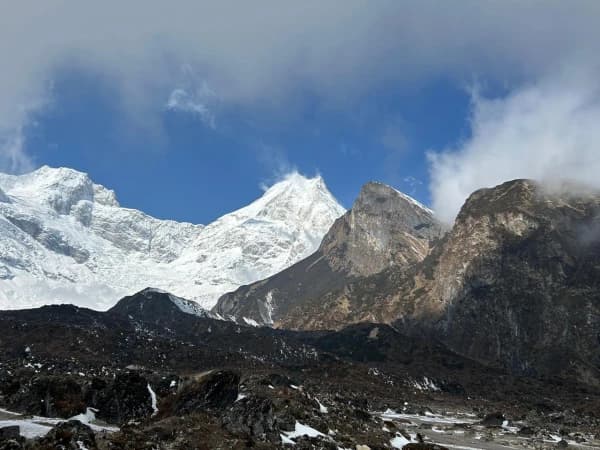
  • Standing at the foot of Mount Kanchenjunga, the world’s third-highest peak.
  • Trekking through remote trails that few travellers ever explore.
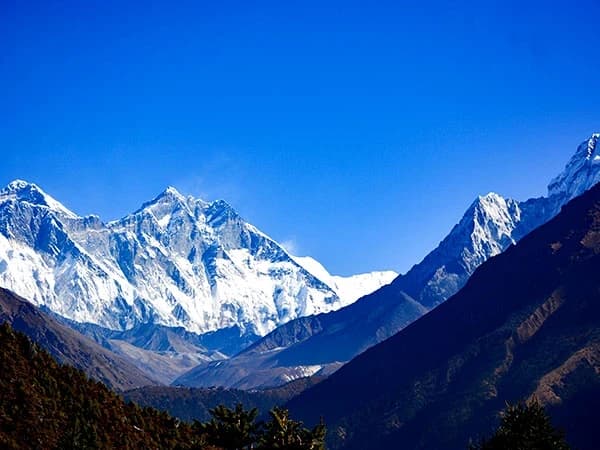
  • Stunning views of Everest, Lhotse, Makalu, and Kanchenjunga in one sweep.
  • Walking across diverse landscapes—from subtropical valleys to high alpine terrain.
  • Deep exploration of Rai and Limbu culture in the lower regions and Tibetan Buddhist influences in the higher villages like Ghunsa and Phale
  • Visiting ancient monasteries and prayer walls that reflect deep Buddhist heritage.
  • Crossing the Kanchenjunga Conservation Area, home to the Red Panda and Snow Leopard. 
  • Staying in traditional villages and enjoying genuine mountain hospitality.

19-Day Kanchenjunga Base Camp Trek Overview

Before You Arrive

For a smooth and stress-free start, we highly recommend arriving in Kathmandu by 4 PM the day before we leave. This gives you enough time for a final gear check, a trip briefing with your guide, and to make sure you have everything you need before heading to the trek. 

Online Briefing

This is like our first coffee before the trip, but online!  This online meeting is our chance to show you everything that will happen on the trip.  We'll talk about everything from what gear to bring to what each day on the route will be like and how it will feel, and we'll answer any questions you have.  After you book, we'll send you an email with a couple of times when we can talk. We'll set up the meeting after the booking process is completed. Furthermore, our trek itinerary does not include your hotel stay in Kathmandu. During the online meeting, please share your preferences, budget, and the standard of the hotel you would like to stay at in Kathmandu. We will arrange it for you accordingly. 

Your Trek, Your Way

Experience the Himalayas on your terms. We create personal, intimate treks for groups of two or more. Whether you select our Budget, Standard, or Luxury package, your adventure will be exclusively for you and your companions, ensuring a comfortable and personal journey from start to finish.

Kathmandu Accommodation

Your hotel in Kathmandu is not included in the trek package. During the online briefing before your trek, we will ask about your preferences and budget — whether you want a simple guesthouse or a five-star hotel — and help you arrange it. Your trek package begins when you leave Kathmandu for the mountains.

Compare Our Three Packages

  Budget Standard Luxury
Price from USD 850 USD 1,750 USD 3,200
Meals Choose your own (approx. USD 15-25/day) 3 meals + tea + fruits + 2L water daily All meals + all drinks anytime (except alcohol)
Room Shared teahouse Private twin w/ bathroom Private deluxe w/ bed heater
Porter Not included 1 per 2 trekkers 1 per trekker (carry nothing)
Guide 1 guide, assistant at 8+ 1 guide per 6, assistant at 6+ 1 guide per 2 trekkers
Transport Local vehicle Private tourist vehicle Luxury private vehicle
SIM data SIM only Limited data Unlimited data
Best for Backpackers and independent travellers Comfort trekkers, couples, families Premium experience seekers

Himalayas for Every Budget — same expert guides, same safety, three comfort levels.

Your Trek, Our Family

Shreejan Simkhada doesn’t just run a trekking company — he comes from three generations of Himalayan expertise. His grandfather arranged expeditions in the 1960s. His father served at the Nepal Tourism Board. Shreejan personally designs every itinerary and hand-picks the guide for your group.

Your guide will be one of our TAAN-certified professionals — qualified mountaineering experts, all with years of Himalayan experience. Shreejan briefs every guide personally before your trek begins.

Need anything? WhatsApp Shreejan directly: +977 9810351300.

Why Trekkers Trust Us

  • 196 TripAdvisor Reviews — 4.9 out of 5 stars, TripAdvisor Travellers Choice 2024
  • 108+ Google Reviews — 4.9 out of 5 stars
  • TAAN Certified — Member #1586, Government Reg: 147653/072/073
  • Secure 10% Deposit — pay just $37 to reserve, via Himalayan Bank
  • Himalayas for Every Budget — breakfast, lunch, and dinner throughout the trek
  • Three Generations — family guiding in the Himalayas since the 1960s

Solo Trekkers Welcome

Most of our trekkers join solo — you will be part of a small group of like-minded adventurers from around the world. Our groups are kept small (2-20 people) so you get a personal experience, not a conveyor belt. Many of our solo trekkers tell us the group becomes like a second family by day three.

You also have the option to book the trek privately for yourself. If you choose to make it a public group, we will list your dates as fixed departures on our website so other solo travellers can join you.

Difficulty: Moderate (3/5)

A beautiful valley trek close to Kathmandu. You will walk 5-6 hours per day to a maximum of 3,870m. The trail passes through bamboo forests, yak pastures, and Tamang villages. Suitable for trekkers with moderate fitness.

Trek With a Purpose — Changing the World, One Step at a Time

A portion of every booking supports the Nagarjun Learning Center, founded by our family in 2019. Today, 70 children receive free education and hot meals daily at our flagship centre in Saldum Village, Dhading District. We have also provided free medical care to 600+ people and reached 275+ women through empowerment programmes. The centre is verified and listed on the UN Partner Portal.

When you trek with us, you are not just climbing mountains — you are building futures. Trek With a Purpose.

Short Itinerary
Day 01: Fly from Kathmandu (1,324 m / 4,344ft) to Bhadrapur, then drive to Tapalejung  (1,800m / 4,730ft), usually around 8 -9 hours with a total elevation change 476m – 386ft.
Max Altitude: 1,800m / 4,730ft
Day 02: Drive from Taplejung (1,800m / 4,730ft) to Shekathum(1,650m / 5,413ft), usually around 6 – 7 hours with a total elevation change 150m - 683ft.
Max Altitude: 1,650m / 5,413ft
Day 03: Trek starts with a 9 km/5.59 mile walk from Shekathum (1650 m/5413 ft) to Amjilesa (2498 m/7933 ft), usually around 6-7 hours with a total elevation change of 848 m/2782 ft.
Max Altitude: 2498 m/7933 ft
Day 04: Trek starts with an 8 km/4.9 mile walk from Amjilesa (2498 m/8195 ft) to Gyabla/Kyapra (2725 m/8940 ft), usually around 5–6 hours with a total elevation change of 227 m/744.5 ft.
Max Altitude: 2,725m / 8,940ft
Day 05: Trek starts with a 10.7 km/6.64 mile walk from Gyabla (2725 m/8940 ft) to Ghunsa (3415 m/11204 ft), usually around 6–7 hours with a total elevation change of 2035 m/6676 ft.
Max Altitude: 3415 m/11204 ft
Day 06: Acclimatization day at Ghunse (3,415 m / 11,204 ft).
Max Altitude: 3,415 m / 11,204 ft
Day 07: Trek starts with an  11.2 km/6.9 miles from Ghunse  (3415 m/11204 ft) to Kangpachen (4145 m/14599 ft), usually around 6 hours with a total elevation change of 730 m/2395 ft.
Max Altitude: 4145 m/14599 ft
Day 08: Acclimatization days at Kangpachen (4,145 m / 13,599 ft)
Max Altitude: 4,145m / 13,599ft
Day 09: Trek starts with a 9.6 km/5.96 mile walk from Kangpachen (4145 m/14599 ft)  to Lhonak (4792 m/15721 ft), usually around 6–7 hours with a total elevation change of 647 m/2122 ft.
Max Altitude: 4792 m/15721 ft
Day 10: Trek starts with a 16.7 km / 10.37 miles from Lhonak (4792 m / 15721 ft) to North Base Camp  (5140 m / 16863 ft) and back to Lhonak (4792 m / 15721 ft), usually around 7 -8 hours with a total elevation change of 348 m / 1141 ft
Max Altitude: 4,792m / 15,721ft
Day 11: Trek 21.6 km / 13.42 miles from Lhonak (4,792 m / 15,721 ft) to Ghunsa (3,415 m / 11,204 ft), usually around 7–8 hours, total elevation change 1,377 m / 4,517 ft
Max Altitude: 3,415 m / 11,204 ft
Day 12: Trek 7.5 km / 4.6 miles from Ghunsa (3,415 m / 11,204 ft) to Sele Le (4,290 m / 14,074 ft), usually around 4–5 hours, total elevation change 875 m / 2,870 ft
Max Altitude: 4,290 m / 14,074 ft
Day 13: Trek 10.5 km / 6.5 miles from Sele Le (4,290 m / 14,074 ft) to Tseram (3,868 m / 12,690 ft), usually around 9 hours, total elevation change 422 m / 1,384 ft
Max Altitude: 3,868 m / 12,690 ft
Day 14: Trek 7 km / 4.34 miles from Tseram (3,868 m / 12,690 ft) to Ramche (4,610 m / 15,124 ft), usually around 3 hours, total elevation change 742 m / 2,434 ft
Max Altitude: 4,610 m / 15,124 ft
Day 15: Trek 7 km / 4.35 miles from Ramche (4,610 m / 15,124 ft) to South Base Camp (4,730 m / 15,512 ft) and back to Tseram (3,868 m / 12,690 ft), usually around 7–8 hours; total elevation change: 862 m / 2,827 ft.
Max Altitude: 3,868 m / 12,690 ft
Day 16: Trek 12 km / 7.46 miles from Tseram (3,868 m / 12,690 ft) to Tortong (2,980 m / 9,776 ft), usually around 6–7 hours, total elevation change 888 m / 2,913 ft
Max Altitude: 2,980 m / 9,776 ft
Day 17: Trek starts with 10 km / 6.21 miles walk from Tortong (2,980 m / 9,776 ft) to Yamphuding (1,692 m / 5,551 ft), usually around 5–6 hours, total elevation change 1,288 m / 4,225 ft
Max Altitude: 1,692 m / 5,551 ft
Day 18: Drive 35 km / 21.7 miles from Yamphuding (1,692 m / 5,551 ft) to Illam (1,627 m / 5,337 ft), usually around 8-9 hours, with a total elevation change 65 m / 213 ft
Max Altitude: 1,627 m / 5,337 ft
Day 19: Drive 70 km / 43.5 miles from Illam (1,627 m / 5,337 ft) to Bhadrapur (1,324 m / 4,344 ft) and fly to Kathmandu (1,324 m / 4,344 ft), usually around 4–5 hours, total elevation change of 303 m / 994 ft.
Max Altitude: 1,324 m / 4,344 ft
Expand
Detailed Itinerary
Day 01:

Your Kanchenjunga adventure begins before dawn in Kathmandu, where the city is still half-asleep as your driver loads bags into the vehicle and a flask of sweet milk tea appears on the dashboard. The domestic flight to Bhadrapur takes roughly fifty minutes, crossing eastward over green middle hills and terraced farmland that most Nepal visitors never see because they turn west toward Pokhara or north toward Lukla. From the window, the Himalayan chain stretches along the northern horizon — a jagged white wall that includes, somewhere in the haze far to the east, the mountain you have come to walk toward.

Bhadrapur sits in the eastern Terai at just 100 metres above sea level — flat, subtropical, warm in a way that makes the mountain cold ahead feel theoretical. Your guide will have a vehicle waiting, and the drive north to Taplejung begins immediately. The road climbs steadily through the eastern hills of Nepal, a region that feels markedly different from the Kathmandu Valley. The villages here are Limbu and Rai, indigenous communities of the far east whose languages, religions, and food traditions set them apart from anything you will encounter on the Everest or Annapurna trails. The Limbu people, who consider these hills their ancestral homeland, practise Kirat religion, a tradition that predates both Hinduism and Buddhism in Nepal. You will see small shrines at crossroads, offerings of rice and flowers left on flat stones, and the distinctive wooden homes built on raised platforms that characterise Limbu architecture in the middle hills.

The drive passes through cardamom fields and tea gardens, eastern Nepal produces over seventy percent of the country's tea, before the road narrows and begins the serious climbing toward Taplejung at 1,800 metres. The air cools noticeably. Sal forest gives way to pine and oak. By late afternoon, the road reaches Taplejung town, a compact hill bazaar with a main street of shops, tea stalls, and the particular unhurried atmosphere of a place that exists not for tourists but for the farming communities that surround it. Your guide will walk you through the bazaar to collect any last supplies, this is the final town with shops, mobile coverage, and a bank before the trail. Bring enough Nepali rupees for the entire trek, because the next ATM is weeks away.

Dinner at your lodge introduces the eastern Nepali kitchen: dal bhat with mustard oil rather than ghee, a sharper spice profile than Kathmandu's cooking, and perhaps a plate of sel roti, ring-shaped fried rice bread, slightly sweet, crisp on the outside and soft within. If someone offers tongba, a fermented millet beer served warm in a wooden vessel with a bamboo straw, accept it. This is the traditional drink of the Limbu people, and sipping it while the evening mist rolls through Taplejung is the proper way to begin a journey toward one of Nepal's most remote treks. Tomorrow the road continues, and after that, only footpaths. You are heading toward the third highest mountain on earth, through country that fewer than two thousand foreign trekkers visit each year. Your permits are arranged. Your guide knows every bend in the trail. Sleep well tonight, Taplejung's quiet darkness, broken only by the distant barking of a hill dog, is the last town-noise you will hear for weeks.

View the Full Kanchenjunga Base Camp Trek Route on Google Maps

Max Altitude: 1,800m / 4,730ftMeals: Breakfast, Lunch & DinnerAccommodation: Tea House or Local lodgesDuration: 8-9 hoursDistance: 260km / 161mileElevation: 476m – 386ft
Day 02:

The morning drive from Taplejung drops steeply through terraced hillsides before the road reaches the Tamor River valley and follows it northward toward Shekathum. This is not a comfortable drive — the road is rough, sometimes unpaved, and the vehicle lurches through potholes and over rocks with a rhythm that your spine will remember. But it is also beautiful. The Tamor River, fed by the glaciers of Kanchenjunga far above, runs wide and grey-green through a gorge that narrows and opens in alternating stretches of rapids and calm pools. Fishermen stand thigh-deep in the shallows. Suspension bridges cross at intervals, their steel cables humming in the river-generated wind. The subtropical forest that clings to the valley walls is dense and ancient — sal, chilaune, and wild banana, and the air through the open window is warm, humid, and scented with the particular green sweetness of eastern Nepal's lowland forests.

Your guide will point out the villages along the road, each one a window into the cultural complexity of the far east. The Limbu communities here have lived in the Tamor valley for centuries, farming rice on terraces carved from the hillside and cultivating cardamom in the shade of the forest canopy. Cardamom, the large black variety, alaichi, is eastern Nepal's cash crop, and in autumn the drying sheds fill the air with a warm, aromatic sweetness that drifts across the trail. The food at the roadside stops is generous and fresh: dal bhat served on brass plates, the lentils simmered with turmeric and cumin, the rice steaming, the pickle sharp enough to make your eyes water. Eat well. The body needs fuel for what is coming.

Shekathum, also written Sekathum on some maps, sits at 1,650 metres on the bank of the Tamor River, where the road ends and the walking begins. The settlement is small: a handful of stone houses, two teahouses, and a river crossing that marks the transition from the lowland approach to the mountain valleys above. The Tamor here is powerful, too deep to ford, fast enough to carry boulders, and the suspension bridge that crosses it is long, narrow, and dramatic, swaying in the breeze that the river generates. Cross it slowly. The view upstream, where the gorge disappears into green shadows and the water catches flashes of afternoon light, is worth stopping for.

The teahouse at Shekathum is basic, rooms with two beds and thin mattresses, a shared bathroom, and a common room where the stove burns wood and the menu offers dal bhat, noodle soup, and endless cups of tea. The river noise fills every conversation, every silence, every dream. It is the soundtrack of the next several days, growing fainter as you climb higher into the mountains but never entirely disappearing. Tonight, lying in your sleeping bag with the Tamor roaring below, you are officially on the Kanchenjunga trail. The road is behind you. Ahead lies nine kilometres of forest, bamboo, and Limbu villages that will carry you to Amjilesa tomorrow. Your guide checks the route conditions with the teahouse owner over evening tea, the trail reports are passed by word of mouth here, not by app or website, and the information is better for it.

Max Altitude: 1,650m / 5,413ftMeals: Breakfast, Lunch & DinnerAccommodation: Tea House or Local lodgesDuration: 6–7 hoursDistance: 60 to 70 km / 37–43 milesElevation: 150m - 683ft.
Day 03:

The trail from Shekathum to Amjilesa is nine kilometres of steady climbing through some of the most intact subtropical and temperate forest left in eastern Nepal. You cross the Tamor on a suspension bridge in the early light, the river still cold and low before the day's sun begins melting glacier ice upstream, and then the forest swallows you. The canopy closes overhead — sal and chilaune at first, then oak and rhododendron as the altitude increases — and the world contracts to the narrow footpath, the sound of birdsong, and the green-filtered light that falls in broken coins across the trail. This is walking in the Kanchenjunga Conservation Area at its most elemental: no teahouse every thirty minutes, no signposts, no other trekkers. Just forest, and the faint thread of a trail that local people have walked for generations.

The Limbu villages along this stretch are small, often just three or four houses clustered on a cleared terrace above the river. Smoke rises from cooking fires. Children pause their games to watch you pass, then wave with a shy enthusiasm that suggests foreign faces are still rare enough to be interesting. Your guide may stop at one of these homes for tea, not a teahouse transaction but a genuine visit, where you sit on a wooden bench in the kitchen and accept a cup of chiya with both hands while the family watches with polite curiosity. The etiquette here matters: remove your shoes at the threshold, accept food with your right hand, and greet elders with a respectful namaste. These small courtesies open doors that money cannot.

The forest between villages is alive in ways that the popular trekking routes have lost through sheer foot traffic. The Kanchenjunga Conservation Area protects over 2,035 square kilometres of habitat that supports red pandas, Himalayan black bears, musk deer, and more than three hundred bird species. You are unlikely to see a red panda, they are nocturnal and shy, but the birdsong is extraordinary. Listen for the metallic whistle of a verditer flycatcher, the deep coo of a hill pigeon, the cascading song of a laughingthrush hidden in the understorey. Your guide knows many of the calls and will stop to point out a flash of colour in the canopy, a minivet, perhaps, or the iridescent throat of a sunbird catching the light.

Bamboo appears as you climb higher, forming dense groves that the trail threads through in green tunnels where the temperature drops and the air smells of damp earth and new growth. Bamboo is more than scenery here, it is construction material, food (the shoots are eaten fresh or pickled), and habitat for the wildlife of the middle hills. The groves thin as the trail climbs above 2,200 metres, replaced by rhododendron forest that in spring, late March through May, blooms in crimson and pink so vivid the hillsides look painted. Autumn trekkers see a different beauty: the post-monsoon greens are deep and saturated, the forest floor carpeted with fallen leaves, and the air has a clarity that makes every detail sharp.

Amjilesa appears at 2,498 metres, a clearing with a handful of stone buildings and the unmistakable smell of dal bhat cooking over a wood fire. The teahouse is modest but the welcome is warm, and the evening meal is generous: rice, lentils, seasonal greens from the kitchen garden, and as much tea as you can drink. Step outside after dinner. At this altitude, with no artificial light for kilometres, the Milky Way stretches overhead in a band so vivid it looks like spilled milk. You have climbed 850 metres today through forest that most of the world will never see. Tomorrow you push higher toward Gyabla, where the cultural landscape begins to shift from Limbu lowlands to something altogether different.

Max Altitude: 2498 m/7933 ftMeals: Breakfast, Lunch & DinnerAccommodation: Tea House or Local lodgesDuration: 6–7 hoursDistance: 9 km/5.59 milesElevation: 848 m/2782 ft
Day 04:

The trail from Amjilesa to Gyabla follows the Ghunsa Khola upstream for roughly eight kilometres, and the walking is a gradual, forest-enclosed ascent that gives your legs a rhythm and your mind time to absorb the landscape changing around you. The rhododendron forest thickens as you climb — gnarled trunks wrapped in pale-green lichen, branches knotted overhead like the ribs of a cathedral, the trail soft with fallen leaves and crossed by roots that demand attention with every step. In spring, these trees produce flowers so abundant they carpet the trail in crimson petals; in autumn, the canopy is a mix of evergreen and gold that catches the morning light in shafts and pools.

What makes this day quietly remarkable is the cultural transition unfolding around you. Below Gyabla, the villages have been Limbu — wooden houses, Kirat traditions, the eastern Nepali kitchen of mustard oil and fermented greens. But as you climb past 2,500 metres, the architecture begins to change. Stone replaces wood. Flat roofs appear. Prayer flags stretch between buildings, and the first mani walls, long rows of stones engraved with Buddhist mantras, line the trail. You are crossing the cultural boundary between the Hindu-Kirat lowlands and the Tibetan Buddhist highlands, a transition that the Kanchenjunga trek compresses into a single morning's walk with a vividness that few other treks in Nepal can match.

Your guide will explain the mani wall protocol: always pass on the left, keeping the carved stones to your right. This is not just etiquette but an expression of the clockwise circumambulation that Tibetan Buddhism practises around all sacred objects. The mantras carved into the stones, most commonly Om Mani Padme Hum, have been placed here by local families over generations, each stone a prayer made physical, a devotion given weight and permanence. Some of the walls along this section are decades old; others have freshly carved stones added each season. The practice is living, not historical.

The Ghunsa Khola river is your companion throughout this day, running fast and milky-grey below the trail. The valley narrows in places to genuine gorges, walls of rock rising vertically, the river compressed to a torrent, the trail carved into the cliff face or crossing on wooden bridges that creak with familiarity. Fill your water bottles at the clear side streams rather than the glacial main river, the side streams run through forest and are cleaner, though purification is still essential.

Gyabla appears at 2,725 metres in a small clearing where the valley widens just enough for a few stone houses and a strip of cultivated land. The settlement marks the point where lowland Nepal ends and the high Himalaya begins, above here, the forest changes character, the air thins noticeably, and the peaks that have been hidden by the valley walls begin to show themselves above the ridgeline. Your layering system becomes important from this altitude, warm enough for morning starts, light enough for midday walking, with a windproof shell accessible in your pack. Dinner tonight is dal bhat with whatever the teahouse family harvested from their garden, eaten at a wooden table by the glow of the cooking fire. Your guide will brief you on tomorrow's walk to Ghunsa, the Tibetan Buddhist village that serves as the cultural and logistical heart of the entire Kanchenjunga trek.

Max Altitude: 2,725m / 8,940ftMeals: Breakfast, Lunch & DinnerAccommodation: Tea House or Local lodgesDuration: 7–8 hoursDistance: 8 km/4.9 milesElevation: 227 m/744.5 ft
Day 05:

Today is the day the Kanchenjunga trek reveals its hand. The ten-kilometre walk from Gyabla to Ghunsa at 3,415 metres crosses through the final band of forest and delivers you into a village that feels, after five days of eastern Nepali lowlands, like arriving in Tibet. The trail follows the Ghunsa Khola upstream, climbing steadily through forest that thins with altitude — the dense rhododendron canopy of yesterday gives way to juniper and birch, then to the windswept scrub that marks the transition zone between forested and alpine. The air is thinner here. You notice it on the steeper sections, where your breathing deepens and your pace slows involuntarily. This is your body telling you that altitude is now a factor, and the message deserves respect.

The forest along this stretch is some of the most biodiverse in the Kanchenjunga Conservation Area. Silver fir and hemlock join the rhododendron at higher elevations, their straight trunks rising from a forest floor thick with ferns and mosses. Look for wildlife signs — scratch marks on bark where Himalayan black bears have climbed for berries, the pellet-like droppings of musk deer on the trail, the distinctive double whistle of a Himalayan monal (Nepal's national bird) echoing from a ridge above. The blue sheep, bharal, that are the snow leopard's primary prey inhabit the rocky slopes above the treeline, and where there are bharal, there are snow leopards, though seeing one is extraordinarily unlikely. Their presence, however, is a fact of this landscape, and knowing you walk through snow leopard country adds a dimension to the trek that the more visited routes cannot claim.

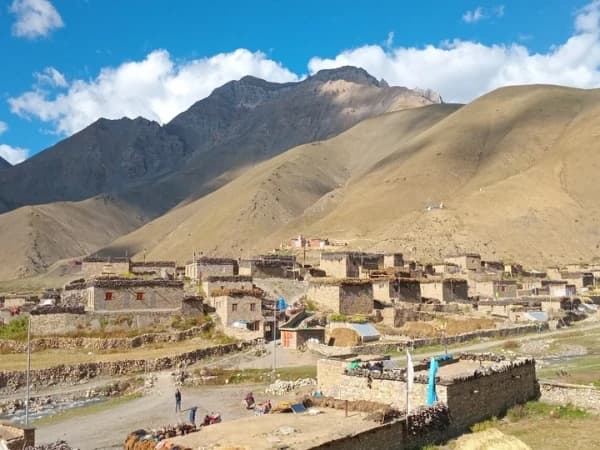
Ghunsa appears around a bend in the trail where the valley opens into a broad, flat-bottomed basin surrounded by peaks above six and seven thousand metres. The change is immediate and dramatic. The houses have flat roofs of stone slabs. Prayer flags cross every gap between buildings, their colours faded to the pale pastels that altitude and ultraviolet produce over a season of exposure. Mani walls line the approach trail in unbroken rows of carved stone. And the people, who have been Limbu and Rai for four days, are suddenly Sherpa, speaking a Tibetan-derived language, practising Buddhism, and living in a village that is culturally and architecturally closer to Lhasa than to Kathmandu.

Ghunsa is the largest settlement on the Kanchenjunga trek, roughly forty houses, a monastery, a school, and a health post. It is also the main acclimatisation stop before the push to the high camps, and the cultural centre of the upper valley's Sherpa community. The monastery, Ghunsa Gompa, sits on a rise above the village, following the Nyingma tradition. The prayer hall holds wall paintings, statues, and butter lamps that cast flickering light across centuries of accumulated devotion. Visitors are welcome; ask your guide to introduce you to the caretaker monk. The chanting that sometimes drifts from the gompa in the early morning is not a performance, it is daily practice, unchanged by the few hundred trekkers who pass through each year.

Dinner at the teahouse in Ghunsa feels celebratory. You have walked from the subtropical lowlands to a Tibetan Buddhist village at 3,415 metres in five days, crossing three cultural zones and an altitude range that spans nearly everything Nepal contains. The fortress-like peak of Jannu (Kumbhakarna, 7,711 metres) is visible to the north, catching the last light while the village falls into shadow. Tomorrow is an acclimatisation day, your body needs the rest, and Ghunsa deserves the time. Drink plenty of water, eat well, and sleep with the sound of the monastery bell marking the hours.

Max Altitude: 3415 m/11204 ftMeals: Breakfast, Lunch & DinnerAccommodation: Tea House or Local lodgesDuration: 6–7 hoursDistance: 10.7 km / 6.64 milesElevation: 2035 m/6676 ft.
Day 06:

The acclimatisation day at Ghunsa is not a rest day in the sense of doing nothing — it is a day designed to let your body adapt to 3,415 metres while you explore a village and a landscape that reward slow attention. Your guide will wake you gently, without urgency. Breakfast is unhurried: Tibetan bread fried golden in a cast-iron pan, porridge sweetened with honey, and as much butter tea or black tea as you want. The principle of acclimatisation is simple — climb high, sleep low, and today's programme follows it precisely: a morning hike to roughly 4,000 metres, then a return to Ghunsa's 3,415 metres for the night.

The acclimatisation hike follows the trail north toward Khangpachen, climbing through increasingly sparse vegetation as the valley narrows between glaciated peaks. Within an hour, the trees have thinned to scattered juniper and the grass is the yellow-gold of high alpine pasture, cropped short by yaks whose bells carry across the valley with a clarity that the thin air preserves. The walking is gentle, the point is altitude exposure, not exercise, and your guide will set a measured pace that keeps your heart rate honest without pushing into breathlessness. At around 4,000 metres, you stop. The views are extraordinary: Jannu's ice-fluted north face fills the horizon to the northwest, its summit nearly four vertical kilometres above where you stand. Your guide may tell you that Jannu, also called Kumbhakarna, was first climbed by a French expedition in 1962, and its north face is considered one of the great Himalayan walls, drawing elite mountaineers the way Everest's south face draws to the Khumbu.

Returning to Ghunsa by late morning, the afternoon is yours. Walk through the village slowly. Visit the monastery if the caretaker is available, the gompa's interior, with its painted walls and rows of butter lamps, has an atmosphere of lived devotion that tourist-oriented monasteries sometimes lack. Watch the Sherpa women weaving on back-strap looms outside their homes, the woollen fabric they produce is used for blankets, bags, and the traditional clothing that withstands winters at 3,400 metres. Notice the woodpiles stacked against every wall, each one represents months of labour and months of warmth, gathered from the forests below and carried up to sustain the village through the cold season.

Photograph the details: the carved window frames on the older houses, the mani stones along the path to the monastery, the children playing in the schoolyard, the thread of smoke rising from a stone chimney against the enormous backdrop of snow-capped peaks. These images tell a story that summit panoramas cannot, the story of people living at altitude, maintaining traditions, raising families in one of the most remote communities in Nepal. Fewer than two thousand foreign trekkers reach Ghunsa each year. Compare that to the fifty thousand who reach Namche Bazaar on the EBC trail, and you begin to understand what remoteness means in practice.

Evening at Ghunsa is gentle. The teahouse dining room fills with warmth from the wood-burning stove, and dinner is a communal affair, your trekking group, the teahouse family, perhaps a few locals who drift in for tea and conversation. Your guide will brief you on tomorrow's walk to Khangpachen, where the valley opens wider and the views of Kanchenjunga's northern flanks begin to build toward the climax at Pangpema. Monitor how you feel: a mild headache is normal at this altitude and usually responds to water and rest. Anything more persistent, nausea, dizziness, breathlessness at rest, should be reported to your guide immediately. The mountains will wait. Your health will not.

Max Altitude: 3,415 m / 11,204 ft
Day 07:

The trail from Ghunsa to Khangpachen covers ten kilometres and gains 635 metres, and the walking transforms with every hour. You leave the village in morning shadow, following the Ghunsa Khola north through the last stands of juniper and birch that cling to the valley floor. Within two hours, the trees are gone. The transition is abrupt — one moment you are walking through scrubby woodland, the next you are on open alpine meadow with nothing above you but sky and the white geometry of peaks that line both sides of the valley like a guard of honour.

The meadows above Ghunsa are yak pasture — broad, undulating grasslands grazed by the herds that Sherpa families drive between high summer pastures and lower winter grounds. The yaks themselves are magnificent animals, their long hair swaying as they move across the hillside with an unhurried grace that belies their power. Your guide may point out the difference between yak (male), nak (female), and dzo (the yak-cattle crossbreed used at lower altitudes). The herders who tend these animals live in stone huts scattered across the pasture, and the smoke from their fires and the sound of yak bells create an atmosphere that is pastoral in the deepest sense, people and animals living in partnership with a landscape that has sustained them both for centuries.

As the valley widens, the peaks reveal themselves. Jannu dominates to the northwest, its north face even more imposing from this angle, the details of ice walls and rock bands visible in the crystalline air. But it is the growing presence of Kanchenjunga itself that begins to command attention. The mountain is still partially hidden behind the ridges that form the valley walls, but glimpses of its upper snowfields appear above the skyline, and the sheer scale of what those glimpses suggest, a mountain so massive it creates its own weather, its own ecosystem, its own gravity on the imagination, is difficult to process. Layer up for the wind that crosses the meadows with increasing force as the altitude rises. A buff or balaclava protects your face; sunglasses are essential against the ultraviolet that intensifies with every hundred metres gained.

Khangpachen sits at 4,050 metres on a flat terrace above the river, a cluster of stone buildings that function as seasonal dwellings for yak herders and basic teahouses for the trekkers who pass through between September and November, and again from March to May. The settlement is not a village in any permanent sense; it empties in winter when the snow drives everything, human and animal, to lower ground. The teahouses offer rooms with beds, a common dining area warmed by a dung or wood fire, and a menu that depends on what the operator carried from Ghunsa. Purify your water carefully, the glacial streams here look clean but carry fine sediment that needs filtering.

The evening view from Khangpachen is worth every step of the day's effort. The unnamed six and seven-thousanders that flank the valley catch the setting sun in a progression of gold, pink, and violet that lasts nearly an hour at this latitude. The silence is enormous, no river roar (the Ghunsa Khola is far below), no forest rustle, no village sounds. Just the wind, the distant crack of ice from a glacier face, and the sound of your own breathing in air that provides roughly sixty percent of sea-level oxygen. Tomorrow is another acclimatisation day at Kambachen, and the views of Jannu from that valley are considered by many to be the visual highlight of the entire trek, not the base camp, not the summit panorama, but the moment the valley opens and the fortress-mountain fills the sky.

Max Altitude: 4145 m/14599 ftMeals: Breakfast, Lunch & DinnerAccommodation: Tea House or Local lodgesDuration: 6 hoursDistance: 11.2 km/6.9 milesElevation: 730 m/2395 ft.
Day 08:

Acclimatisation at Kangpachenfollows the same principle as Ghunsa — climb high, sleep low — but the landscape has changed so dramatically that the day feels like a different trek entirely. You woke at 4,145 metres in a valley of rock and yellow grass, with Jannu's fortress-like pyramid filling the northern sky and the sound of glacial ice cracking in the distance. Breakfast is eaten in gloves. The morning air at this altitude bites exposed skin within minutes, and the tea in your cup steams furiously, cooling faster than it would at sea level because the reduced air pressure lowers the boiling point. These are small physics lessons that altitude teaches without a textbook.

The day hike from Kangpachen aims for a viewpoint above the settlement at roughly 4,500 metres, where the Kanchenjunga massif reveals more of its northern architecture. Your guide will lead you up the moraine ridge on the valley's western side, a steady climb over loose rock and frozen ground that demands careful footwork. The altitude makes itself felt in the deliberate slowness of every movement, at 4,400 metres, you are breathing air that provides roughly fifty-seven percent of sea-level oxygen, and what would be a brisk thirty-minute walk at lower elevation takes an hour of patient, rhythmic stepping. This is acclimatisation at work: the stress of climbing prompts your body to produce more red blood cells, deepen your breathing patterns, and adjust the chemistry of your blood to extract oxygen more efficiently.

The viewpoint rewards the effort with a panorama that experienced trekkers rank among the finest in the Himalaya. Kanchenjunga's northern flanks are visible now, not the full north face (that awaits at Pangpema) but enough of the mountain to comprehend its scale. The name means "The Five Treasures of the Great Snow" in Tibetan, and the five summits, each said to contain one of five treasures: gold, silver, gems, grain, and holy scriptures, are the physical expression of a belief system that treats the mountain as sacred rather than conquerable. When Charles Evans led the first successful expedition in 1955, the climbers stopped just below the true summit in respect for this sanctity, a tradition that most subsequent expeditions have honoured.

Return to Kangpachen by midday and spend the afternoon resting, writing in your journal, or simply sitting outside the teahouse watching the light change on Jannu's face. The mountain is close enough from Kambachen that individual features, seracs, crevasses, the blue veins of compressed ice on the north wall, are visible without binoculars. At dawn and dusk, the summit catches light while the valley is in shadow, and the ice turns gold, then rose, then the specific cold blue of a Himalayan peak after sunset. Your camera will work hard today, but also put it down sometimes and simply look. There is a quality to seeing a 7,711-metre mountain from two kilometres away that no lens can replicate.

The night at Kangpachen is cold, minus fifteen to minus twenty in autumn, and the wind blows down from the glacier with a constancy that the lower valleys dampened. Your sleeping bag should be rated to minus twenty for this section of the trek. The shelters provide walls and a roof but not insulation, and the interior temperature approximates the exterior within an hour of the fire going out. Sleep comes in fragments at this altitude, the periodic breathing that altitude produces wakes you repeatedly, but each waking brings the sound of wind and the knowledge that tomorrow you push toward Lhonak, deeper into the glacial world that guards the base of the world's third highest mountain.

Max Altitude: 4,145m / 13,599ft
Day 09:

Above Kambachen, the world empties. The alpine meadows that carried you through yesterday are behind you now, and the trail from Kambachen to Lhonak at 4,792 metres crosses terrain that is glacial moraine in every sense — the rubble, rock, and frozen ground deposited by the Kanchenjunga Glacier as it has retreated over centuries. The walking takes five to six hours and gains roughly 650 metres, and the challenge is not technical difficulty but altitude. At 4,500 metres and above, every step requires conscious effort. Your pace drops. Your heart rate rises. And the trail, which at lower altitudes you would walk without thinking, demands the specific, deliberate, one-step-at-a-time rhythm that extreme altitude imposes.

The landscape is stark and beautiful in a way that forest and meadow are not. The vegetation has been stripped away — the last juniper scrub disappeared an hour below, and what remains is rock, ice, and the bleached yellow grass that clings to sheltered hollows. The peaks that surround the valley are unnamed six and seven-thousanders that would be famous in any other range but that here, in the shadow of Kanchenjunga, go unremarked. Their walls are steep, glaciated, and geologically active, the occasional distant rumble of rockfall or ice calving is the soundtrack of a landscape that is continuously reshaping itself under the forces of gravity, ice, and time.

Your guide navigates by cairns and experience. The trail across the moraine is not always obvious, loose rock shifts between seasons, streams change course, and the markers left by previous parties can be dislodged by wind or meltwater. This is one of the practical realities that distinguishes Kanchenjunga from the popular routes: local knowledge is not a luxury here but a necessity. The river, the Ghunsa Khola, now reduced to a glacial stream, runs somewhere below the moraine, audible but often invisible beneath the rubble. Several side streams must be crossed, running cold and fast over smooth rock. Your guide will test each crossing before you step across.

Lhonak appears as a cluster of three or four stone shelters on a flat of rubble and frozen ground at the head of the glacier's northern moraine. The shelters are survival infrastructure rather than teahouses, stone walls, tin or stone-slab roofs, a raised sleeping platform, and perhaps a stove if fuel has been carried from below. The food is whatever the cooking team brought from Kambachen or Ghunsa, and on a well-organised trek this means dal bhat, noodle soup, tea, and biscuits. The quality of your provisions at this altitude is directly proportional to the quality of your trekking company, this is where good logistics make the difference between adequate and miserable.

The night at Lhonak is the coldest of the trek. Minus fifteen to minus twenty in autumn, with wind that blows down from the glacier above with a constancy that the stone walls reduce but do not stop. Your guide monitors the group carefully, checking oxygen levels with a pulse oximeter, watching for signs of altitude sickness, ensuring everyone is hydrated and fed. Sleep will be fragmented. The altitude produces periodic breathing that wakes you repeatedly. The cold seeps through even the best sleeping bag in the small hours. But beyond the shelter walls, the stars at 4,792 metres are astonishing, more stars than sky, the Milky Way so dense it casts visible shadow, and tomorrow you walk to the base of the third highest mountain on earth.

Max Altitude: 4792 m/15721 ftMeals: Breakfast, Lunch & DinnerAccommodation: Tea House or Local lodgesDuration: 6–7 hoursDistance: 9.6 km / 5.96 milesElevation: 647 m/2122 ft.
Day 10:

This is the day. You rise in darkness, pull on every warm layer you own, and step outside the shelter at Lhonak into a cold so sharp it makes your teeth ache. The sky above is still black, pinpricked with stars, but the eastern horizon shows the faintest grey — dawn is coming, and with it the light that will illuminate Kanchenjunga's north face from your position at Pangpema, the north base camp at 5,143 metres. The walk takes three to four hours and gains 351 metres over glacial moraine that is frozen solid in the early morning, the rocks locked in place by overnight ice that makes the footing more stable than it will be on the afternoon return.

The trail follows the glacier moraine northward, crossing several ridges of rubble and descending to stream crossings before the final approach. Your guide sets a pace so slow it feels almost ceremonial — and in a way, it is. At this altitude, rushing invites disaster: headaches, nausea, the dangerous confusion of high-altitude cerebral oedema. The air provides roughly fifty percent of sea-level oxygen. Every breath is work. But the growing view ahead, Kanchenjunga's north face appearing in stages as each moraine ridge is crested, is motivation that no amount of oxygen debt can diminish.

Pangpema is not a camp in the way that Everest Base Camp is a camp. There are no teahouses, no flat gathering areas where hundreds of trekkers mill about, no postcards for sale. Pangpema is a point on the moraine, marked by cairns and the small offerings of the few hundred trekkers who reach it each year, from which the north face of Kanchenjunga is visible in its full, staggering scale. The face rises over three thousand vertical metres directly above you, a wall of ice and rock that extends from the glacier at your feet to the summit at 8,586 metres. The summit is the third highest point on earth, and from here the vertical distance between your boots and that point is greater than at any other base camp accessible by trekking in Nepal. The photographs you take here will not capture the scale. They cannot. But take them anyway, then lower the camera and simply stand in the presence of a mountain that has been considered sacred by the Limbu and Sikkimese people for centuries.

The surrounding peaks create an amphitheatre of ice: Wedge Peak (6,802m), Twins (7,350m), Nepal Peak (7,168m), and the connecting ridges that link Kanchenjunga's five summits. The five treasures, gold, silver, gems, grain, and holy scriptures, are said to be stored within these summits, and the tradition of not standing on the very highest point, established by the first ascent team in 1955, continues. Your guide may offer a prayer or tie a small prayer flag at the cairn. In this silence, at this altitude, in this company, the gesture feels entirely natural.

The descent to Lhonak takes two to three hours and is harder on the knees than the ascent was on the lungs. The moraine that was frozen solid at dawn is thawing now, the rocks loosening, the streams running higher. Walk carefully, use trekking poles, and trust your guide's choice of route. Back at Lhonak, the shelter feels almost warm after the exposure of Pangpema, and the tea your cook prepares tastes better than any tea you have ever had. Tonight you sleep at altitude one final time before beginning the long descent. You have stood at the base of the third highest mountain on earth, in a place that most of the world will never visit, and the silence of that experience will stay with you far longer than the cold.

Max Altitude: 4,792m / 15,721ftMeals: Breakfast, Lunch & DinnerAccommodation: Tea House or Local lodgesDuration: 7-8 hoursDistance: 16.7 km / 10.37  milesElevation: 348 m / 1141 ft
Day 11:

The descent from Lhonak to Ghunsa is the longest single day of the trek — roughly 1,377 metres of altitude loss over terrain that your body remembers from the way up but that somehow looks different in reverse. The moraine of the upper valley, which felt so barren on the ascent, now feels almost familiar. The first scrub juniper appears and you greet it like an old friend. The first birch tree. The first rhododendron. Each species marks a return to oxygen-richer air, and with every hundred metres of descent your lungs expand, your appetite sharpens, and the particular fog of high altitude lifts like a curtain being drawn back from a window.

The walking is steady and sustained — eight to nine hours, with the trail retracing the route through Kambachen's yak pastures and the narrowing valley below. Your knees bear the brunt of the effort on the downhill sections, and trekking poles are essential for distributing the impact across your arms and shoulders. Your guide will set a pace that protects joints without dragging the day into darkness, the objective is Ghunsa before nightfall, and the daylight hours at this time of year are finite.

Passing through Kambachen on the way down feels different from arriving on the way up. The anticipation that drove the ascent has been replaced by something quieter, a contentment that comes from having reached Pangpema and stood in the presence of the mountain. The yak herders at Kambachen may wave as you pass. The valley below Kambachen, which felt like an approach corridor on the way up, now reveals details you missed: a waterfall on the far valley wall, the pattern of glacial deposits on the hillside, the way the light falls differently on the south-facing slopes. Descending is a different kind of attention, slower, more observant, less focused on the destination and more aware of the journey itself.

Below Kambachen, the forest returns. First juniper, sparse and wind-shaped. Then birch, with its papery white bark that peels in strips. Then rhododendron, full, dense, canopy-forming rhododendron that closes overhead and returns the green-filtered light that was absent for three days. The temperature rises with every hour. The air thickens. And Ghunsa, when it appears around the final bend in the trail, feels like a homecoming. The flat-roofed stone houses, the prayer flags, the monastery on the rise above, everything is exactly as you left it, but you see it differently now. You have been to 5,143 metres and returned. The village at 3,415 metres, which felt like altitude five days ago, now feels like the lowlands.

The teahouse at Ghunsa welcomes you back with warmth, hot food, and the particular luxury of a room that, compared to Lhonak's stone shelter, feels almost lavish. Dal bhat has never tasted this good. The stove in the common room has never felt this warm. And sleep, deep, unbroken sleep at an altitude where the air has enough oxygen to keep your breathing steady through the night, is the body's reward for the days above. Tip the teahouse staff generously, they maintain this outpost of warmth and hospitality in one of the most remote valleys in Nepal, and their work makes your trek possible. Tomorrow you leave the northern valley and begin the crossing toward Kanchenjunga's southern face, a different mountain, a different route, a different reward.

Max Altitude: 3,415 m / 11,204 ftMeals: Breakfast, Lunch & DinnerAccommodation: Tea House or Local lodgesDuration: 7-8 hoursDistance: 21.6  km / 13.42  milesElevation: 1,377 m / 4,517 ft
Day 12:

Today the trek changes direction and character. Instead of retracing the approach trail south toward Taplejung, you turn west from Ghunsa and begin the crossing to the Simbua Khola valley — the route that connects Kanchenjunga's northern and southern base camps and that makes the full circuit possible. The trail to the Sele Le pass area at 4,290 metres diverges from the main Kanchenjunga corridor below Ghunsa, heading southwest into forest that feels wilder, quieter, and less travelled than anything on the northern route. Fewer people walk this way. The trail is sometimes more suggestion than path, marked by cairns and the memory of your guide rather than signposts or worn earth.

The first hours climb through dense rhododendron and bamboo forest — old-growth Himalayan woodland that the Kanchenjunga Conservation Area has preserved through the simple fact of its remoteness. The trees are gnarled and ancient, their trunks wrapped in pale-green lichen, their branches draped in old man's beard moss that hangs in curtains and catches the light like cobwebs. The forest floor is thick with ferns, mosses, and fallen leaves so deep your boots sink with each step. In spring, this stretch is a corridor of crimson and pink as the rhododendron blooms; in autumn, the canopy is dark and atmospheric, the air humid and rich with the smell of decomposing leaves.

The forest climb takes most of the day, gaining altitude steadily from roughly 2,800 metres to a camp at around 4,290 metres in the Sele Le pass area. The gradient is honest rather than punishing, but the trail is rough, fallen trees, muddy sections, and the tangle of roots and rocks that old forest produces make the walking slow and demanding. Good waterproof boots are essential on this section, not optional. After rain, some stream crossings become ankle-deep wades, and the forest trail itself can turn to mud.

As you climb above 3,500 metres, the forest thins and the first views of the surrounding ridges appear. The peaks that separate the Ghunsa and Simbua drainages line the horizon, snow-covered, unnamed, seen by almost nobody. The Sele Le pass itself is not a dramatic notch between ridges but a broad, gradual ridge that you cross over minutes rather than seconds, marked by cairns and a few prayer flags placed by the few hundred trekkers and porters who cross each season. The satisfaction of the crossing is quiet, the private satisfaction of navigating a route that most of Nepal's trekking community does not know exists.

Camp tonight is in the pass area, where your crew pitches tents on whatever flat ground the terrain offers. The accommodation is camping rather than teahouse, there are no lodges on the Sele Le route, and the experience is closer to expedition trekking than the lodge-based walking of the northern route. Your cook prepares dinner in a kitchen tent, the food is hot and adequate, and the tent provides shelter from wind that at 4,290 metres crosses the ridge with an authority that the forest below dampened. Stay hydrated and report any symptoms of altitude discomfort to your guide, you have climbed back above 4,000 metres after yesterday's descent, and the body needs time to readjust. The stars above the pass are extraordinary. The silence is the silence of a place that the rest of the trekking world has not yet found.

Max Altitude: 4,290 m / 14,074 ftMeals: Breakfast, Lunch & DinnerAccommodation: Tea House or Local lodgesDuration: 4-5 hoursDistance: 7.5 km / 4.6 milesElevation: 875 m / 2,870 ft
Day 13:

The morning at the Sele Le camp is cold and sharp, the kind of cold that makes you reluctant to leave the sleeping bag but that rewards you when you do with air so clear the peaks seem close enough to touch. Today's walk crosses the Mirgin La pass and descends to Tseram at 3,868 metres — a journey that takes you from the pass's exposed ridge into the Simbua Khola valley and the rhododendron forests that guard Kanchenjunga's southern approach. The walking is moderate in distance but demanding in terrain: the descent from the pass is steep, the trail rough, and the forest on the Simbua side is dense enough to slow progress.

The Mirgin La crossing is the trek's second high pass, and like Sele Le it is marked by cairns and faded prayer flags rather than the elaborate stone chortens that mark the crossings on more visited routes. The views from the top depend on weather — on clear days, you can see the southern approaches to Kanchenjunga, the forested valleys below, and the ridges that separate the drainage systems of eastern Nepal. On cloudy days, which are common by late morning, the views contract to the immediate surroundings: rock, grass, wind, and the knowledge that you are crossing terrain that perhaps a few hundred people cross each year. Your guide navigates with confidence, this is a route known to the few companies that operate the full Kanchenjunga circuit, and the knowledge is passed between guides the way it was passed between trading communities for centuries before trekking existed.

The descent into the Simbua Khola valley is where the landscape transforms. The barren alpine terrain of the pass gives way first to dwarf rhododendron and juniper scrub, then to the full rhododendron forest that is one of the ecological treasures of the Kanchenjunga Conservation Area. The trees here are ancient, trunks as thick as your torso, branches draped in lichen, the canopy dense enough to filter sunlight into green shafts that fall across the trail like cathedral light. In spring, this forest blooms in crimson and white, the flowers so abundant they carpet the trail. In autumn, the forest is dark and atmospheric, the air scented with damp bark and decomposing leaves, and the specific quality of walking through old-growth woodland, the sense of time measured in centuries rather than hours, settles around you.

The wildlife in this transition zone is richer than the barren upper valleys. Listen for the calls of laughingthrushes in the understorey, the alarm whistle of a Himalayan monal on a ridge above, the distant crash of a Himalayan black bear moving through bamboo (more commonly heard than seen, and the sound is less alarming than it seems). Walk quietly through the forest and you increase your chances of seeing the wildlife that this protected area harbours.

Tseram appears at 3,868 metres, a small seasonal settlement of stone shelters in the Simbua Khola valley, tucked against the hillside with the first views of Kanchenjunga's south face visible above the ridgeline to the northeast. The teahouses are basic but welcoming, and the evening meal is cooked over a wood fire that fills the room with warmth and the smell of burning juniper. You have crossed from the northern side to the southern side of the Kanchenjunga massif, a transition that most trekkers accomplish by choosing one base camp or the other, but that the full circuit achieves by walking over the passes between them. The dal bhat at Tseram tastes of accomplishment. Tomorrow you push toward Ramche, closer to the mountain's southern face, and the day after that you will stand at the second base camp of this extraordinary trek.

Max Altitude: 3,868 m / 12,690 ftMeals: Breakfast, Lunch & DinnerAccommodation: Tea House or Local lodgesDuration: 9 hoursDistance: 10.5 km / 6.5 milesElevation: 422 m / 1,384 ft
Day 14:

The walk from Tseram to Ramche at 4,610 metres is a day of building anticipation. The trail follows the Simbua Khola upstream, climbing through terrain that transitions from the rhododendron forest of yesterday to the sparse alpine scrub and rocky moraine of the southern approach to Kanchenjunga. The distance is moderate — roughly five hours of walking — but the altitude gain of 740 metres over increasingly barren ground makes the effort feel greater than the numbers suggest. At 4,000 metres and above, every uphill section requires deliberate pacing, and your guide will slow the group to a rhythm that protects against the altitude sickness that can strike on the second ascent of a trek even after successful acclimatisation on the first.

The forest thins within the first hour. The gnarled rhododendrons that sheltered Tseram give way to dwarf species, knee-high shrubs with leathery leaves adapted to wind and cold, and then to the open alpine meadow that stretches toward the glacier above. The Simbua Khola runs beside the trail, milky-grey with glacial sediment, its sound changing from the forest-muffled murmur of the lower valley to the exposed rush of a stream running through open ground. The valley narrows as you climb, and the peaks on either side close in, Rathong (6,678m), Koktangri (6,147m), and the lesser summits of the Yalung ridge create a mountain corridor that funnels your gaze northward toward the growing presence of Kanchenjunga's south face.

And then you see it. Not suddenly, the mountain has been hinting at its presence for two days, a flash of white above a ridgeline, a shadow that could not be cloud, but fully, unmistakably, the south face of the world's third highest mountain revealed in a width and height that the northern approach did not prepare you for. The south face is different from the north. Where the north face is a vertical wall, steep, intimidating, a face that makes you understand why climbers die, the south face is a sweep. Broad. Glaciated. An enormous expanse of ice and rock that catches the light differently at every hour and that from this distance looks not like a wall but like a frozen ocean tilted toward the sky.

Ramche sits at 4,610 metres on a flat above the river, a camping area rather than a village, with space for tents and perhaps a basic seasonal shelter. The accommodation is tent-based, and your crew will have camp set up by the time you arrive. The altitude here demands respect, you have gained significant height in a single day, and the body needs time to adjust. Drink water continuously, eat even if your appetite has diminished, and report any symptoms to your guide. A mild headache is common; anything more persistent requires attention.

The evening at Ramche is cold and magnificent. The south face of Kanchenjunga catches the setting sun in a progression of colours, gold, then rose, then the deep violet that precedes darkness, and the photographs you take in this light will be among the finest of the entire trek. As darkness falls, the mountain becomes a silhouette against a sky thick with stars, and the glacier below it glows faintly in the starlight. Tomorrow you walk to the south base camp at Oktang, the second of the two base camps, the second face of the mountain, and for many trekkers who complete the full circuit, the more emotionally powerful of the two encounters. Sleep in every layer you have. The cold at 4,610 metres is serious, and the morning start will be early.

Max Altitude: 4,610 m / 15,124 ftMeals: Breakfast, Lunch & DinnerAccommodation: Tea House or Local lodgesDuration: 3 hoursDistance: 7 km / 4.34 milesElevation: 742 m / 2,434 ft
Day 15:

You leave Ramche in the grey light before dawn, climbing toward Oktang and the Kanchenjunga South Base Camp viewpoint at 4,700 metres. The morning air is sharp enough to make your eyes water, and the trail crosses glacial moraine that is frozen solid in the early hours — the rocks locked in place by overnight ice, the footing more stable now than it will be on the afternoon return. Your guide sets a pace that is almost meditative: slow, rhythmic, each step placed with deliberate care on ground that at this altitude forgives nothing.

The approach takes three to four hours and gains roughly 90 metres from Ramche, though the undulating moraine terrain means you climb and descend repeatedly across glacial debris. The Yalung Glacier — one of the longest glaciers in the Kanchenjunga massif, flows from the base of the south face toward you, its surface covered in grey rubble that makes it nearly indistinguishable from the surrounding moraine. And above the glacier, growing larger and more overwhelming with every step, the south face of Kanchenjunga fills the sky in a width and height that no photograph, no description, no amount of anticipation can prepare you for.

Oktang is a viewpoint rather than a camp, a flat area on the moraine marked with cairns, prayer flags, and the accumulated offerings of the few hundred trekkers who reach it each year. The view is different from Pangpema, and trekkers who see both faces consistently find it difficult to say which is more powerful. The north face is steeper, more vertical, more intimidating. The south face is broader, more glaciated, more beautiful in the way that a mountain can be beautiful when it occupies your entire field of vision and the light catches its ice in patterns that change by the minute. The surrounding peaks, Kabru (7,338m), Rathong (6,678m), and the summits of the Yalung ridge, create an amphitheatre of ice that is wider and more open than the northern cirque. The prayer flags at the cairn snap in the wind, each printed with mantras that Buddhists believe are carried skyward with every gust. Your guide may pause to add an offering or murmur a prayer. In this silence, at this altitude, in the presence of a mountain that both the Limbu people and the mountaineering community treat as sacred, the gesture transcends religion and becomes simply human.

You have now stood at both base camps of the world's third highest mountain, the north face from Pangpema at 5,143 metres, the south face from Oktang at 4,700 metres. Fewer than a few hundred trekkers complete this full circuit each year. The experience of seeing both faces, the vertical and the broad, the wall and the sweep, the different light, the different silence, gives you a comprehension of Kanchenjunga's scale that single-base-camp trekkers cannot access. The mountain is not one view. It is many. And you have seen two of its most powerful.

The descent to Tseram at 3,868 metres takes the rest of the day, retracing the route through Ramche and down through the gradually returning vegetation of the Simbua Khola valley. The afternoon thaw loosens the moraine rocks, so watch your footing carefully and trust your guide's route choices. Back at Tseram, the forest's embrace feels like shelter after the exposed high ground, and the evening meal in the warm teahouse carries the particular satisfaction of a day that delivered everything the Kanchenjunga trek promises: solitude, scale, and the sacred.

Max Altitude: 3,868 m / 12,690 ftMeals: Breakfast, Lunch & DinnerAccommodation: Tea House or Local lodgesDuration: 3 hoursDistance: 9 km / 5.59 milesElevation: 862 m / 2,827 ft.
Day 16:

The descent from Tseram to Tortong at 2,980 metres is a day of returning — returning to forest, to warmth, to the oxygen-rich air that your body has been craving since Lhonak. The trail drops over 880 metres through the Simbua Khola valley, and with every hour the landscape grows greener, denser, more alive. The sparse alpine scrub above Tseram gives way to juniper, then birch, then the full rhododendron forest that is the ecological glory of the Kanchenjunga Conservation Area's middle altitudes. The trees here are ancient specimens — trunks as thick as oil drums, branches reaching across the trail to form a canopy that filters the sunlight into green shafts and dappled pools.

The change in your body is immediate and dramatic. The fog of altitude, the mild headaches, the shallow breathing, the appetite suppression, the fragmented sleep, lifts with every hundred metres of descent. By the time you reach 3,500 metres, your lungs feel expansive. By 3,000 metres, you are breathing easily, moving freely, and noticing details that altitude made invisible: the texture of bark, the colour of a flower, the specific song of a bird in the canopy above. Your appetite returns with an enthusiasm that surprises you, the dal bhat at the lunch stop tastes extraordinary, every flavour sharp and distinct in a way that altitude blunted.

The forest between Tseram and Tortong is one of the richest wildlife corridors in the conservation area. The Kanchenjunga region supports over three hundred bird species, and the transition zone between alpine and temperate forest is where many of them concentrate. Listen for the laughingthrushes, gregarious birds that move through the understorey in noisy flocks, their varied calls filling the forest with sound. Watch for the flash of a satyr tragopan, a spectacular pheasant with crimson plumage and blue facial wattles that inhabits exactly this kind of dense, damp forest. Your guide may stop suddenly, hand raised, listening. The call of a Himalayan monal, Nepal's national bird, carries from a ridge above: a piercing, ascending whistle that echoes off the valley walls.

Tortong sits at 2,980 metres in a clearing in the forest, a camping area rather than a village, with flat ground for tents surrounded by trees that have been growing undisturbed for centuries. The air here is thick with the scent of damp bark, decomposing leaves, and the wild orchids that cling to tree trunks at head height. Camp in the forest with the discipline that the conservation area deserves: pack out all waste, use established fire rings, and respect the silence that the minimal foot traffic has preserved.

The evening at Tortong is the warmest you have experienced since Ghunsa, and the absence of altitude's cold grip feels like a gift. Your cook prepares dinner in the kitchen tent, hot soup, dal bhat, perhaps pancakes with honey, and the meal is eaten in a circle of headlamp light with the forest dark and alive around you. The sound of the Simbua Khola running below the camp, the occasional call of a nightjar, the rustle of something, a mouse, a marten, a porcupine, moving through the leaf litter: these are the sounds of a forest that belongs to its wildlife first and to trekkers second. Tomorrow the descent continues to Yamphudin, where the trail meets the lowland communities of the Kanchenjunga foothills and the cultural wheel turns once more from Buddhist highlands to the Limbu and Rai villages of the eastern hills.

Max Altitude: 2,980 m / 9,776 ftMeals: Breakfast, Lunch & DinnerAccommodation: Tea House or Local lodgesDuration: 4 hoursDistance: 13 km / 8.07 milesElevation: 888 m / 2,913 ft
Day 17:

The trek from Tortong to Yamphudin at 1,692 metres is the longest descent of the entire journey — nearly 1,300 metres of altitude loss through a landscape that changes character every hour. You leave the temperate forest of Tortong in morning mist, the trail dropping steeply through rhododendron and oak before entering the subtropical zone where bamboo, banana plants, and broad-leaved trees return with an exuberance that feels almost tropical after the sparse vegetation of the high camps. The warmth builds with the descent. By midday, you are walking in shirtsleeves, a scenario that would have been unthinkable at Lhonak four days ago.

The trail passes through small settlements that mark the return to the inhabited world. After days of glacial moraine, stone shelters, and camping areas where the only other souls were your guide and porters, the sight of terraced fields, kitchen gardens, and smoke rising from farmhouse chimneys feels both ordinary and extraordinary. Children emerge to watch you pass. A woman offers water from a brass jug. A man looks up from ploughing a rice terrace, leans on his implement, and nods with the unflappable composure of someone who sees foreign faces a few times a year and considers the novelty manageable. You are back in farming Nepal, where the rhythms are agricultural, the concerns are weather and harvest, and the mountains above are backdrop rather than destination.

The cultural transition is vivid. The Tibetan Buddhist Sherpa communities of the upper valley give way to Rai and Limbu villages — wooden houses replacing stone, Hindu and Kirat shrines replacing Buddhist chortens, the food shifting from Sherpa butter tea and tsampa to the eastern Nepali kitchen of mustard oil, fermented greens, and tongba. Your guide, who has navigated three cultural zones in three weeks, moves between languages and customs with the ease of someone born in the borderlands between traditions. This cultural fluency is one of the gifts of the Kanchenjunga trek, it does not just show you a mountain, it walks you through the human geography of eastern Nepal, from the Hindu-Kirat lowlands through the mixed middle hills to the Tibetan Buddhist highlands and back again.

Yamphudin sits at 1,692 metres in a broad valley where the Simbua Khola meets the lower farmland. The village is larger than anything you have seen since Ghunsa, a proper settlement with a school, a few shops, and teahouses that feel luxurious after the camping of recent days. The teahouse room may even have a hot shower, a bucket of water heated over a fire, not a pressurised system, but after two weeks of high-altitude cold, the warm water running over your shoulders feels like the finest spa in the world.

The evening in Yamphudin is gentle and social. The teahouse common room fills with locals as well as your trekking group, and the conversation drifts between Nepali, Limbu, and English with the polyglot ease that characterises eastern Nepal. This is a good evening to begin thinking about tips for your guide and porters, the people who carried your equipment, navigated the route, cooked your meals, and kept you safe through three weeks of some of the most remote terrain in Nepal. Their work is the foundation on which your experience rests, and fair compensation is both expected and deserved. Tomorrow the trail meets the road, and the journey toward Kathmandu begins.

Max Altitude: 1,692 m / 5,551 ftMeals: Breakfast, Lunch & DinnerAccommodation: Tea House or Local lodgesDuration: 5-6 hoursDistance: 10 km / 6.21 milesElevation: 1,288 m / 4,225 ft
Day 18:

The drive from Yamphudin to Illam covers a distance that your feet would measure in days but that wheels accomplish in hours, descending through the eastern hills on a road that switchbacks past terraced farmland, cardamom plantations, and the subtropical forest of the lower foothills. The vehicle is a relief after seventeen days of walking — your legs have earned the rest — though the road surface invites its own brand of physical endurance. Nepali hill roads are an experience in themselves: narrow, unpaved in sections, shared with buses, motorcycles, chickens, and the occasional goat, and governed by rules that appear to be more advisory than compulsory. Your driver, however, knows every bend, and the views from the window as the road descends through the green hills of eastern Nepal are worth every lurch and bump.

The landscape shifts dramatically as you drop below 1,500 metres. The mountain forest gives way to the cultivated slopes of Nepal's tea country, and the change is startling: after three weeks of wild terrain, the neat rows of tea bushes covering the hillsides in contoured lines of emerald green look almost manicured. Illam district produces over seventy percent of Nepal's tea, orthodox, hand-plucked, traditionally processed, and comparable in quality to the Darjeeling teas produced on the other side of the Indian border. The comparison is not coincidental: Illam and Darjeeling share the same latitude, altitude range, monsoon pattern, and soil. The only difference is the international boundary running between them.

Illam town sits at 1,627 metres amid the tea gardens, a pleasant hill settlement with a bazaar, teashops, and the unhurried atmosphere of a place that the trekking industry has largely ignored. Your guide will arrange a visit to a tea estate, where you can watch the processing, withering, rolling, oxidation, drying, and taste the finished product in proper teaware. The first-flush Illam tea, brewed by someone who knows what they are doing, is a revelation: floral, complex, and utterly unlike any tea bag you have tasted. Buy some to take home. It weighs nothing, lasts months, and every cup will carry the memory of these green hills and the mountain that stands above them.

The afternoon in Illam is your first genuine leisure time in three weeks. Wander the bazaar. Sit in a tea shop and drink cup after cup of the local product. Watch the mist settle in the valleys below as the afternoon cools. The air here is thick and warm and fragrant with oxidising tea leaves, a sensory world entirely different from the glacial cold of Pangpema or the forest dampness of Tortong. This is the Nepal that most visitors never see: agricultural, subtropical, gentle, and beautiful in a way that requires neither crampons nor altitude pills to appreciate.

Your lodge in Illam is the most comfortable accommodation since Kathmandu, a proper bed, a warm room, perhaps even a television in the common area showing a Nepali cricket match. Dinner includes fresh vegetables from the local market, and the food has a richness and variety that altitude camping could not provide. Mobile coverage returns in Illam, and the flood of messages that arrives when your phone reconnects to the network is a reminder of the world you left behind at Taplejung three weeks ago. Share a photo or two. Let people know you are safe. Then put the phone away and drink one more cup of Illam tea while the evening mist rolls through the tea gardens. Tomorrow you fly home to Kathmandu, but tonight belongs to the eastern hills.

Max Altitude: 1,627 m / 5,337 ftMeals: Breakfast, Lunch & DinnerAccommodation: Tea House or Local lodgesDuration: 8 - 9 hoursDistance: 35 km / 21.7 milesElevation: 65 m / 213 ft
Day 19:

The final day of the Kanchenjunga circuit begins with an early departure from Illam, driving south through the tea gardens and into the lowland Terai toward Bhadrapur and the flight to Kathmandu. The road descends from the green hills into the subtropical flatlands — the landscape flattens, the temperature rises, the vegetation shifts from tea bushes and forest to rice paddies and the wide, lazy rivers of the eastern plains. By the time you reach Bhadrapur, you are at barely 100 metres above sea level, and the Himalaya behind you is a memory that the plains' humidity and haze make hard to see but impossible to forget.

The domestic flight from Bhadrapur to Kathmandu reverses the journey of Day 1, crossing eastward over the green middle hills and the Kathmandu Valley's brown sprawl. From the aircraft window, if the weather is kind, the Himalayan chain is visible along the northern horizon — and somewhere in that jagged white wall, now seen from fifty kilometres away rather than from its base, is Kanchenjunga. The mountain that you walked toward for a week, stood beneath at two base camps, and walked away from for another week is now a distant white triangle on the horizon, indistinguishable to your fellow passengers from the dozens of other peaks in the chain. But you know which one it is. You can feel the difference.

Back in Kathmandu, the noise and colour and density of the capital are overwhelming after three weeks of forest silence and glacial emptiness. Your guide will transfer you to your hotel, and the transition from trail to city happens faster than the body or mind expects. The shower, a real shower, with hot water and pressure, is almost disorienting in its luxury. The bed is too soft after weeks on thin mattresses and sleeping mats. And the first meal in a Kathmandu restaurant, with a menu longer than your arm and cold drinks that appeared without a porter carrying them for five days, is both wonderful and slightly unreal.

Your guide will present you with a trek completion certificate, a small formality, but one that marks what you have accomplished. You have walked the full Kanchenjunga circuit: nineteen days through some of the most remote terrain in Nepal, from subtropical lowland to glacial moraine to Tibetan Buddhist village to two base camps of the world's third highest mountain. You have crossed two high passes, walked through snow leopard country, drunk tongba in Limbu villages, received blessings at a Sherpa monastery, and stood in places that fewer than a few hundred people visit each year. This is not the Nepal of postcards and Instagram feeds. This is the Nepal that exists beyond the popular routes, wilder, quieter, and more deeply rewarding for those who have the time, the fitness, and the willingness to walk where almost nobody walks.

Present your tips to the team at the farewell dinner, your guide, your cook, your porters. These are the people who made the trek possible, who navigated trails that have no signposts, who carried supplies through terrain that challenges pack animals, and who created warmth and safety in places where neither exists naturally. The Kanchenjunga circuit is not a trek you forget. The scale of the mountain, the depth of the forest, the silence of the moraine, the warmth of the villages, these impressions settle into your memory and stay. There is a Limbu saying that your guide may share as you part ways: the mountains do not call you once, they call you back. Believe it. File your insurance paperwork, unpack your bags, and start counting the days until the next time you hear Kanchenjunga's call.

Interactive Route Map

Explore the full trek route on our interactive Google Map. Click markers for altitude details at each stop.

Open Full Route Map in Google Maps

Max Altitude: 1,324 m / 4,344 ftDuration: 4–5 hoursDistance: 70 km / 43.5 milesElevation: 303 m / 994 ft.
Couldn't find what you're after?Reach out to our travel experts.
Customize Trip
Route Map
Kanchenjunga Base Camp Trek Route Map Nepal
Altitude Chart
Kanchenjunga Base Camp Trek: 19 Days to the Foot of the World's Third Highest Peak
Availability
Book your own private small group trip
No. of traveler
Price per person
2 - 4 pax
US$820
5 - 8 pax
US$769
9 - 12 pax
US$749
13 - 20 pax
US$699

Discounts are determined exclusively by the size of your group. We do not add additional members to your group.

Book Now
hbl logo
Secure Payment by Himalayan Bank.
Cost Includes

Transportation

  • Airport Pick-up and Drop-off from Tribhuvan International Airport to the Hotel of your choice.
  • Transportation from Kathmandu via Bhadrapur (trek start point) and from Taplejung (trek end point) to Illam to Bhadrapur and then back to Kathmandu by local transportation. 

Accommodation and food

  • During the trek, Food or drinks are not included. 
  • You will stay in a local teahouse and lodge in a shared room during the duration of the trek.

Guide and porter

  • An English-speaking, TAAN-certified guide is provided (one guide for your group). For groups of 8 or more trekkers, an additional assistant guide is included. For more than 8 trekkers, 1 assistant guide is added.
  • Porter is not included, only the guide.

Permits and Expenses

  • Kanchenjunga Restricted Area Permit (RAP)
  • Kanchenjunga Conservation Area Permit (KCAP)
  • Trekkers Information Management System (TIMS) card fee.
  • All government taxes and official expenses

Medical Assistance

  • First aid kits are provided, including an oximeter to check blood oxygen levels at high altitudes.
  • Arranging rescue operations in case of an emergency health condition. (funded by the trekker's travel insurance).

Complimentary

  • Company's T-shirt and Cap before the trek.
  • At the end of your trip, you'll have a farewell meal at a restaurant in the area. At the farewell dinner after the Kanchenjunga Base Camp Trek—19 Days, we will provide you a certificate of achievement for successful completion of the trek. 

Benefits

  • Sleeping bags and down jackets: if you do not have your own, please inform us either at your online briefing or after the arrival briefing in Kathmandu before your trek so we can provide you with one for your use during the trek.
  • Free Excess luggage storage at The Everest Holiday store for the duration of the trek.
  • We will arrange a SIM Card for every individual trekker upon arrival in Kathmandu and teach them how to get budget internet packages and top up their services

Important Note for Budget Travellers

In the Budget package, you travel overland to the trailhead instead of flying. This means your trip will take a few extra days compared to the stated duration — but all transport is included in your package at no extra cost. You save on domestic flight fees while experiencing more of Nepal's diverse landscape along the way. The Himalayas are accessible to every budget — and this route proves it.

Cost Excludes

International Flight

  • International flight cost.

Nepali Visa

  • At Tribhuvan International Airport, you can pay the following fees upon arrival: $30 for a 15-day visa, $50 for a 30-day visa, and $120 for a 90-day visa. Alternatively, you can apply for and receive a Nepal visa from the Nepalese embassy or consulate in your country.

(Note: Anyone having a visa before arrival has an express exit through the immigration line. To obtain a visa upon arrival at TIA Kathmandu, you must have the necessary funds in US dollars.)

Accommodation

  • Accommodation in Kathmandu before and after the trek will not be included in this package. So, please let us know your preferences, budget, and standard of the hotel you would like to stay in Kathmandu during the online meeting. So we can arrange it for you accordingly.

Guide and Porter

  • Tip for guides and porters. (Recommended)

Other expenses

  • Excess luggage charges for an extra porter to carry luggage and also any extra cost charged by the airline for extra luggage, as there is no porter in the budget service package; any extra porter service will be charged extra. 
  • All non-alcoholic drinks like bottled water, hot water, soft drinks, juice, tea, coffee and alcoholic drinks are not included, etc.
  • Additional costs due to delays caused by circumstances out of our control, like landslides, unfavourable weather, itinerary modification due to safety concerns, illness, changes in government policies, strikes, etc.

Equipment Lists

Only pack what’s needed for the trek to travel light and comfortably. You can store your excess luggage at The Everest Holiday for free. Porters will carry your main trekking bag, but the weight limit is 10 kg for each trekker. Since one porter carries the luggage for two people, we suggest that you and a trekking partner share one large duffel bag (over 60 Liters).

  • Sun hat (wide-brimmed)
  • Beanie (for warmth)
  • A neck gaiter or buff (for warmth and sun protection)
  • Sunglasses with UV protection
  • Insulated gloves or mittens (for cold weather)
  • Waterproof gloves (for wet conditions)
  • A thick-wool or synthetic pair of moisture-wicking socks
  • waterproof hiking boots with ankle support and excellent traction
  • Sandals (for camp use or river crossings)
  • Gaiters protect
  • Moisture-wicking t-shirts (short and long sleeves)
  • Thermal base layer (for colder conditions)
  • Fleece jacket and down jacket (Mandatory)
  • Lightweight puffy jacket (for extra warmth)
  • Waterproof and windproof jacket (Gore-Tex or similar)
  • Raincoat
  • Lightweight, breathable long-sleeve shirt
  • Polypropylene underwear (four)
  • Quick-drying pants/trousers (convertible or full-length)
  • Insulated pants (for colder conditions)
  • Lightweight cotton pants
  • Wear long underwear or thermal leggings when it is cold.
  • Two pairs of thermal/trekking trousers (pants)
  • Biodegradable bar soap
  • Toothbrush and toothpaste
  • Medium-sized drying towel
  • Wet wipes or hand sanitizers
  • The toilet paper is stored in a Ziplock bag.
  • Feminine hygiene products
  • Travel-sized shampoo
  • Nail clippers
  • Small mirror
  • A duffel bag with a capacity of over 60 liters is intended for porters, with one duffel bag for every trekker.
  • An individual's daypack or backpack with a 20- or 30-liter capacity should be plenty.
  • Adjustable and lightweight poles (preferably collapsible)
  • A two-liter water bladder or bottle (with a protective cover for cold climates)
  • Use water purification methods such as purification tablets, filter bottles, or UV filters.
  • Camera/smartphone (extra memory cards and batteries)
  • A portable charger, spare batteries, or a battery pack
  • Two-pin charging plug
  • Basic first aid supplies include band-aids, antiseptic wipes, pain relievers, and Diamox (which is used to prevent or lessen symptoms related to mountain sickness).
  • Personal medications (inhalers, allergy meds, etc.)
  • Few passport-size photos
  • Passport photocopies
  • Notebook and pen
  • Binoculars
  • Basic first aid kit (band-aids, antiseptic wipes, pain relievers, etc.)
  • Diamox (for altitude sickness prevention/relief)
  • Personal medications (inhalers, allergy meds, etc.)
  • Water purification (tablets, filter bottle, UV filter)
  • Energy bar
  • Lightweight headlamp (with adjustable brightness)
  • Face wipes
  • An extra pair of batteries
Essential Information

Kanchenjunga Base Camp Trek (19 Days) — What You Need to Know

Arrival and Welcome

When you land at Tribhuvan International Airport, our representative will be waiting with a sign showing your name. You'll be welcomed with a traditional marigold garland or khada and driven to your hotel in a private car. We ask that you arrive in Kathmandu by 4 pm the day before your trek departs — this gives us time for final preparations. On trek day, we'll collect you from your hotel. The adventure officially begins with a scenic flight from Kathmandu to Bhadrapur, according to your package tier.

Accommodation

During the trek, you'll stay in local lodges or traditional teahouses — simple, family-run places that give you a real taste of mountain life. Along the way you'll find facilities like hot showers, electricity for charging devices, and sometimes Wi-Fi. These services aren't included in the package price and come at a small extra cost. Kathmandu accommodation isn't included in the itinerary, but we can help you arrange hotel bookings before and after the trek.

Budget: Shared rooms in local teahouses or lodges. Facilities vary — some have electricity and hot water, others don't. It's part of the authentic mountain experience.

Standard: Private twin rooms in standard teahouses or lodges, with attached bathrooms wherever available.

Luxury: The best available rooms — private, with attached bathroom and bed heater wherever available. All extras (hot showers, charging, bed heaters, Wi-Fi) are fully covered.

Meals

At altitude, your body works harder and needs proper fuel — plenty of carbohydrates, protein, and hydration. Despite the limited menus at higher elevations, we'll make sure you eat well throughout the trek. Expect a mix of Nepali, Asian, and Western dishes. We strongly recommend garlic soup, fresh vegetables, green tea, hot lemon, and ginger tea. For a hearty, filling meal, try the local favourite: Dal Bhat Tarkari (lentil soup, rice, and vegetable curry). Personal extras like alcohol, snacks, and drinks between meals aren't included.

Budget: Meals are not included. You'll eat at teahouses along the trail, choosing your own food at local prices.

Standard: Three meals a day (breakfast, lunch, and dinner), plus a cup of tea or coffee with each meal and seasonal fruits at breakfast.

Luxury: Three meals a day with seasonal fruits, dry fruits, and nuts at every sitting. Tea, coffee, juices, cold drinks, and mineral water available whenever you like — everything except alcohol. All extras (hot showers, phone charging, bed heaters, Wi-Fi) are fully covered.

Luggage

We provide one porter for every two trekkers. Each person's luggage allowance is 10 kg, so a porter carries no more than 20 kg total — we never overload our porters. Pack your gear in a duffel bag of over sixty litres and team up with a fellow trekker. You'll still carry a small daypack for your valuables, water, and camera. Extra bags can be stored free at your hotel or our Kathmandu office.

Budget: No porter included — you'll carry your own backpack throughout the trek.

Standard: One porter for every two trekkers, carrying up to 20 kg (10 kg per person).

Luxury: Your own personal porter. You carry nothing but your daypack.

Facilities and Essentials

Water

You can buy bottled water from shops along the trail or drink boiled or filtered water at lodges. We strongly recommend bringing a reusable bottle and refilling it with boiled water — this cuts down on plastic waste and saves money. Never drink untreated tap, river, or well water. For extra safety, carry water purification tablets (available at shops along the trail). Staying well hydrated is one of the most important things you can do at altitude.

Budget: Bring your own refillable bottle. You can buy bottled water or pay for boiled water at lodges, but these aren't included.

Standard: Two litres of warm water provided daily, keeping you safely hydrated without buying bottled water. Additional drinks are at your own expense.

Luxury: Unlimited mineral water, coffee, tea, juices, and cold drinks whenever you want — everything except alcohol. No need to carry or purify water yourself.

Communication

We'll provide you with a SIM card in Kathmandu and show you how to set up data and top up credit. Mobile signal can be patchy at higher altitudes, but our lead guide stays in daily contact with all trekking teams. For emergencies, we carry walkie-talkies and satellite phones in areas with no mobile coverage.

Budget: SIM card provided and set up for you, but data costs are not included.

Standard: SIM card with a limited data package, ready to use from day one.

Luxury: SIM card with an unlimited data package — stay connected with family, share your journey, and check maps without worrying about running out.

Travel Essentials

Visa

All foreign nationals need a visa to enter Nepal (Indian citizens are exempt). Most nationalities can get a visa on arrival at Kathmandu airport — the current fee is USD 50 for 30 days, payable in cash. Citizens of China and SAARC countries receive free visas. We also recommend registering your visit with your country's embassy or consulate in Nepal.

Travel Insurance

This is a long, remote trek reaching serious altitude — travel insurance is mandatory. Your policy must cover medical expenses and emergency helicopter rescue up to 5,500 metres. Please send us your insurance details within a week of booking — in an emergency, we'll use them to arrange rapid evacuation and hospital transfer.

Currency Exchange

The Nepali Rupee (NPR) is the local currency. ATMs are available in Kathmandu, Pokhara, and major towns. Credit cards are accepted at larger hotels and restaurants but not at smaller shops or on remote trails.

We recommend carrying cash in NPR for daily expenses. USD, GBP, EUR, and AUD can be exchanged at banks and money changers in Kathmandu.

Extra Expenses

While the package covers most trek costs, you'll need to budget for some personal items: meals and accommodation in Kathmandu, visa fees, snacks on the trail, hot showers, personal gear, and tips for the crew. We recommend roughly USD 20 per day for these extras during the trek.

Trek Season and Weather

The best windows for the Kanchenjunga Circuit Trek are the clear, dry seasons of autumn and spring. Autumn (late September–November): The ideal season — exceptionally stable weather and pristine skies with unparalleled mountain views. Daytime temperatures at lower elevations sit around 10–15°C, while higher camps (above 4,000 metres) range from 5–10°C. Nights at altitude can plummet to -10°C or lower. Spring (March–May): Warmer days, with valley temperatures reaching 15–20°C and higher camps seeing 5–12°C during the day. The trade-off is a higher chance of afternoon cloud and occasional snow showers, with nights still freezing. Winter (December–February): Extremely cold — temperatures at high camps consistently between -10°C and -20°C, suitable only for the most experienced and well-equipped trekkers. Summer/Monsoon (June–August): Heavy rain, warm valley temperatures of 15–25°C, but constant cloud cover, slippery trails, and a high risk of landslides.

A Typical Day

An early breakfast kicks off each morning. The day's walking is split into two parts: three to four hours in the morning, a one-hour lunch stop, then a shorter afternoon stretch to your lodge. Dinner is served around 7 pm, when your guide will brief you on the next day's plan. The rest of the evening is yours — relax, explore the settlement, or swap stories with fellow trekkers.

Booking Your Trek

Private Treks

Every trek we run is private — you'll only walk with your own group. We never add strangers to your trip. All itineraries are fully customisable to suit your schedule.

Solo Trekkers and Group Bookings

Our treks run with a minimum of two people. If you're travelling alone and don't have a companion, we can set up a group trek open to others — once you confirm, it goes on our website so other trekkers can join. This way, every trip becomes your own personal holiday in the Himalayas.

Secure Booking

The Everest Holiday is a registered and bonded trekking operator — proud members of the Trekking Agency Association of Nepal (TAAN) and the Nepal Mountaineering Association (NMA). Shreejan's father, Ganesh Prasad Simkhada, has held senior positions at the Nepal Tourism Board and the Nepal Mountaineering Association. To confirm your booking, we require a 10% advance payment.

Payment options include the Himalayan Bank online portal (on our website), major credit cards, bank transfers, Wise, and Western Union. You can pay the remaining balance after arriving in Kathmandu. Please send us a copy of your passport within one week of booking, and make sure it has at least six months' validity from your arrival date in Nepal.

Last-Minute Bookings

We recommend booking in advance, but we do accept last-minute bookings with full payment required 24 hours before departure. For last-minute treks, contact Shreejan directly at +977-9810351300 or email info@theeverestholiday.com. Please note that last-minute trips may face delays due to circumstances beyond our control.

Our Team

We're a family business with three generations in Nepal's tourism industry. We started as porters and now run the agency — and we still treat every team member like family. Your guides and porters are experienced professionals from the upper Himalayas who know these mountains intimately. They're trained in wilderness first aid, altitude safety, and speak good English. We cover their insurance, meals, accommodation, and medical care. Don't hesitate to ask them anything — they're there for you.

Flexible Schedule

Your trip dates are entirely up to you. If our listed departure dates don't work, let us know and we'll arrange a trek that fits your schedule.

Trip Extensions

Want to see more of Nepal? We can add activities like a jungle safari in Chitwan or Bardiya, bungee jumping in Pokhara, Bhote Koshi, or Kushma, white-water rafting on the Bhote Koshi, Trishuli, or Seti rivers, kayaking in Trishuli or Pokhara, paragliding over Pokhara or Kathmandu, zip flying in Kathmandu, Pokhara, or Kushma, canyoning at Pokhara or Sukhuta Beach, or hot air ballooning in Pokhara.

For culture and history, we arrange guided tours of the Kathmandu Valley's UNESCO World Heritage Sites — Bhaktapur Durbar Square, Patan Durbar Square, Kathmandu Durbar Square, Swayambhunath (the Monkey Temple), Boudhanath Stupa, Changunarayan Temple, and Pashupatinath Temple. Sunrise trips to Nagarkot and Dhulikhel are also popular. We can arrange spiritual visits to temples, stupas, monasteries, and meditation centres too. Check our ADD-ON packages when you book.

Ecotourism

We take the health of these mountains seriously. At the start of your trek, every guest receives an eco-waste bag. Please use it for all non-compostable rubbish — snack wrappers, plastic bottles, batteries. Carry it with you as you walk; our guides will show you where to dispose of waste properly at designated collection points. Help us keep the Kanchenjunga region clean for the people who live here and the trekkers who come after you.

After the Trek

Farewell Dinner

Back in Kathmandu, we'll host a farewell dinner where you can share stories from the trail and give us your honest feedback. You'll also receive a certificate of achievement to mark what you've accomplished.

Departure

Let us know your hotel name, room number, and flight details, and we'll arrange your transfer to Tribhuvan International Airport. We hope you'll come back to Nepal for another adventure.

Tipping

Tipping is appreciated in Nepal but never obligatory. The amount should reflect the quality of service, the length and difficulty of the trek, and your overall experience. We recommend tipping the crew collectively at the end of the trek.

Typical Day and Contingencies

Flight Delays

Domestic flights in Nepal depend on the weather and can sometimes be delayed or cancelled. If your flight is cancelled, a helicopter is a possible alternative. A helicopter flight usually costs between USD 500 and USD 1,000 per person, depending on weather and group size. We highly recommend adding one or two extra days to your travel plans just in case there are any flight delays.

Trek Booking

Trek Booking

To confirm your trek booking, we require a 10% advance payment. Payment is processed securely through Himalayan Bank Limited’s online portal on our website. We also accept bank transfer via Wise. The remaining balance is due at least 60 days before your departure date.

Personal Trek

Every trek with The Everest Holiday is designed as a private experience. You will not be merged with strangers unless you choose to join a group departure. Your guide, porter, and itinerary are dedicated to you and your group.

Individual to Group Booking

Our treks are organised with a minimum of 2 people. If you are travelling alone, we can organise a group trek open to all. Once you confirm, your group trek will be posted on our website so others can join. This is our policy to make every trek your own personal holiday in the Himalayas.

Trust Trek Booking

The Everest Holiday is a registered and bonded trekking operator, ensuring a secure booking process. We are proudly members of the Trekking Agency Association of Nepal (TAAN) and the Nepal Mountaineering Association (NMA). Ganesh Prasad Simkhada, Shreejan’s father, has held senior positions in Nepal’s tourism and mountaineering institutions. To confirm your booking, we require a 10% advance payment.

Payment options include the Himalayan Bank online portal (on our website), major credit cards, or bank transfer via Wise. The remaining balance is due at least 60 days before your departure.

TEH Family

TEH Family

The Everest Holiday is more than a trekking company — it is a family. Founded in 2016 by Shreejan Simkhada and Shamjhana Basukala, the company carries forward three generations of Himalayan expertise.

Shreejan’s grandfather, Hari Lal Simkhada, arranged logistics and supported Himalayan expeditions in the 1960s and 1970s. His father, Ganesh Prasad Simkhada, has held senior positions in Nepal’s tourism and mountaineering institutions.

When you trek with us, you are joining this family tradition.

Trip Conclusion

Trip Conclusion

At the end of your trek, we host a farewell dinner at a local restaurant in Kathmandu. It is a relaxed evening to share stories, swap photos, and give us your feedback. You will also receive a certificate of completion to mark your journey. On your departure day, we transfer you to Tribhuvan International Airport in good time for your flight.

FAQs

Q1. What is the Kanchenjunga Circuit Trek like?

The Kanchenjunga Circuit is one of Nepal’s most adventurous and remote treks. It takes you through lush forests, traditional Rai, Limbu, and Sherpa villages, high mountain passes, and both the North and South Base Camps of Mount Kanchenjunga (8,586m), the world’s third-highest peak. It is a long and challenging trek that rewards you with unmatched Himalayan scenery and rich culture.

Q2. What is the maximum altitude of the trek?

The highest point of the trek is Kanchenjunga North Base Camp (Pangpema) at 5,140 meters / 16,863 ft. acclimatisation days are built into the itinerary to minimize the risk of altitude sickness.

Q3. Can beginners attempt the Kanchenjunga Circuit Trek?

This trek is considered strenuous and is best suited for trekkers with previous high-altitude trekking experience. Beginners with strong fitness, proper preparation, and mental determination can attempt it, but guidance from an experienced trekking guide is strongly recommended.

Q4. How difficult is the Kanchenjunga Circuit Trek?

It is graded as challenging. Expect 6–8 hours of trekking per day, with steep ascents, long descents, and high passes like Sele La (4,290m) and Sinelapche La (4,830m). The trek is long (19 days), so stamina and a steady pace are key.

Q5. Do we need any permits for the Kanchenjunga Circuit Trek?
Yes. You will need:
* Kanchenjunga Conservation Area Permit (KCAP)
* Restricted Area Permit (RAP)—required because the trek passes close to the Nepal-India border.
These permits are usually arranged by your trekking agency before your trip begins.

Q6. Do I need travel insurance?
Yes, insurance is essential. It should cover trekking above 5,000 meters, helicopter evacuation, accidents, and medical emergencies.

Q7. Do I need a visa for Nepal?
Most travelers need a tourist visa, available on arrival at Kathmandu airport or in advance from a Nepalese embassy.

Q8. Can I hire guides and porters for the trek?
Yes, and it is highly recommended. Because the region is remote and partly restricted, you must trek with a registered guide. Porters can also be hired to carry your luggage, making the trek easier and more enjoyable.

Q9. Are the guides and porters experienced?
Absolutely. Local guides and porters are familiar with the terrain, culture, and weather of the Kanchenjunga region. Most guides speak good English and have years of trekking experience.

Q10. What kind of accommodation is available?
You’ll mostly stay in basic teahouses along the route. These provide simple rooms with twin beds, blankets, and shared toilets. In more remote villages, facilities are very simple, but warm meals and basic comfort are available.

Q11. Is camping required?
No, the Kanchenjunga trek has now been developed as a teahouse trek, so camping is not required. However, in some less-visited sections, the teahouses may be very basic.

Q12. When is the best time to do the Kanchenjunga Circuit Trek?
The best trekking seasons are
* Spring (March–May): Warm days, blooming rhododendrons, and clear views.
* Autumn (September–November): Stable weather, crisp skies, and excellent mountain visibility.
Winter (December–February) can be extremely cold and snowy, while summer/monsoon (June–August) brings heavy rain and leeches.

Q13. What food is available on the trek?
Teahouses serve basic but filling meals. The staple is Dal Bhat (rice, lentils, and vegetables). You can also get noodles, potatoes, eggs, momos, soup, and occasionally pasta or chapati. Food options become more limited as you go higher.

Q14. Can I drink water along the trek?
Do not drink untreated tap or stream water. Carry water purification tablets or filters, or buy boiled water from teahouses. Bottled water is available in lower villages but becomes expensive higher up.

Q15. What should I pack for the Kanchenjunga trek?
Essentials include sturdy trekking boots, layered clothing (for both warm and cold weather), a down jacket, a sleeping bag (-15°C comfort rating), a water bottle, trekking poles, gloves, a hat, a headlamp, and personal medicines.

Q16. Are trekking poles useful?
Yes, highly. They give extra stability on steep ascents and descents, reduce knee strain, and help with balance on rocky trails.

Q17. How do I book the Kanchenjunga Circuit Trek?
You can book through a trekking agency in Kathmandu or online in advance. A deposit is usually required to confirm your spot, with the balance payable on arrival in Nepal.

Q18. How can I pay for the trek?
Payments can be made via bank transfer, credit card, or in cash (USD/NPR) in Kathmandu. We also accept Wise, Western Union, or online payment gateways. Note that credit card payments usually include a small surcharge.

Q19. How do I reach the starting point of the trek?
The trek begins in Taplejung. You’ll fly from Kathmandu to Bhadrapur (about 45 minutes), then drive 7–9 hours to Taplejung.

Q20. How do I return to Kathmandu after the trek?
From Yamphudin, you’ll take a jeep to Illam or Bhadrapur, then a short flight back to Kathmandu.