Upper Mustang Motorbike Tour - 11 Days Itinerary and Costs

237 reviews
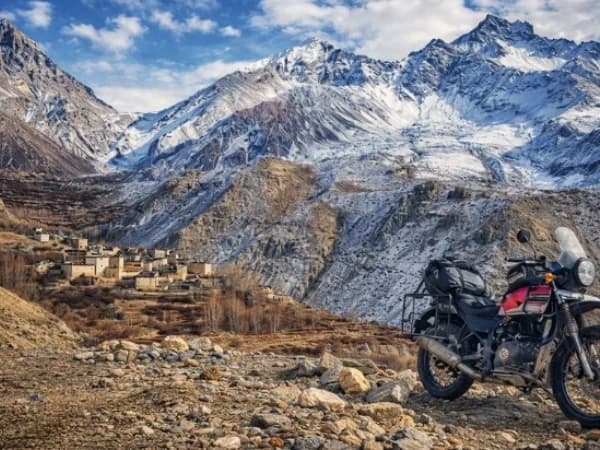
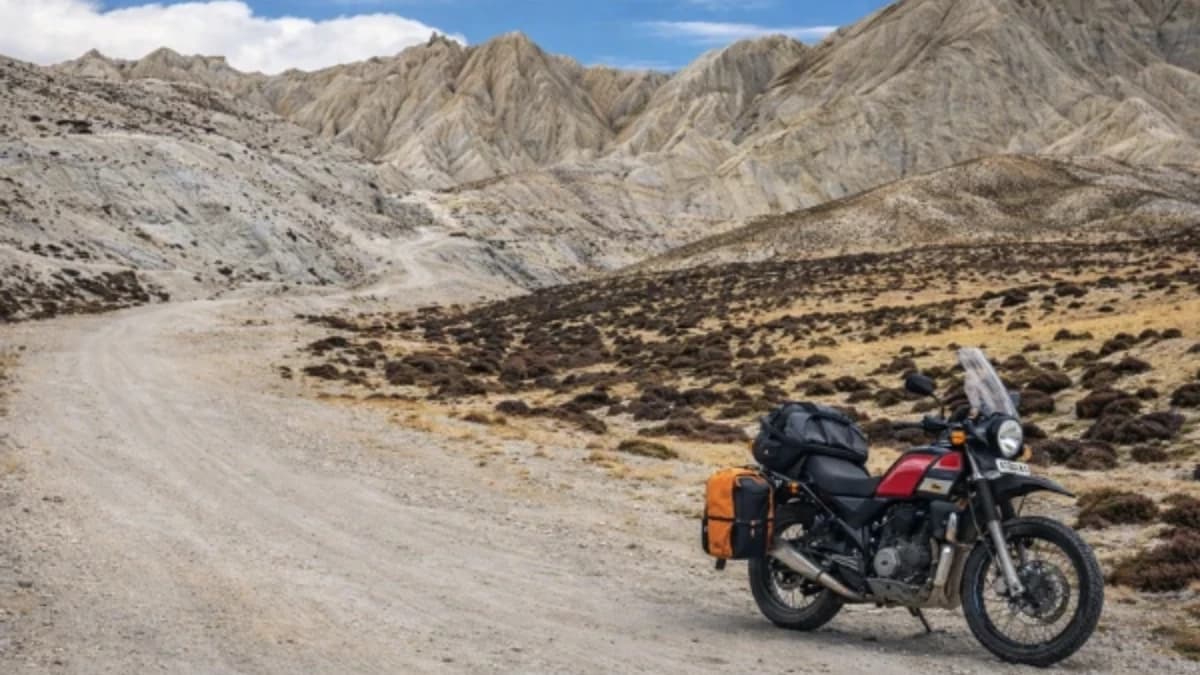
Single adventure motorbike on a remote Himalayan dirt road with dramatic rocky mountains in Nepal
Quick Overview
Duration11 Days
Trip GradeModerate
CountryNepal
Maximum Altitude3,840m / 12,598ft
Group Size2 - 20
StartsKathmandu
EndsKathmandu
ActivitiesMotorbike Riding Tour
Best TimeSpring (March–May) and Autumn (September–November)

Somewhere north of Kagbeni, the Nepal you thought you knew disappears. The green terraces are gone. The monsoon doesn't reach here. What's left is a wind-scoured desert of red and ochre cliffs, carved by centuries of sand and silence, with cave dwellings hollowed into the rock face thousands of years ago and Tibetan prayer flags snapping on ridgelines that haven't changed since the kingdom closed its borders. This is Upper Mustang, the last forbidden kingdom, and you're about to ride a motorbike through its front door.

Over 11 days you'll cover one of the most restricted and least-visited routes in the Himalayas. From Pokhara you ride through the Kali Gandaki corridor past Jomsom and Kagbeni, then cross the permit checkpoint into Upper Mustang's restricted zone. The road climbs through dry canyons and ancient villages to Lo Manthang, a walled city at 3,840m where the king's palace still stands and Buddhist monks paint murals in the same style their predecessors used 600 years ago. The return ride takes a different route through the kingdom's eastern corridor, giving you two perspectives on a landscape that most travellers will never see.

What Makes This Tour Unforgettable

  • Ride into the restricted zone of Upper Mustang, a region that was closed to all foreigners until 1992 and still requires a special permit that we arrange for you
  • Reach the walled city of Lo Manthang at 3,840m, where the former king's palace, four major monasteries, and centuries of Tibetan Buddhist art survive largely unchanged
  • Pass through ancient cave systems where 2,000-year-old human remains and Buddhist manuscripts have been discovered by archaeologists
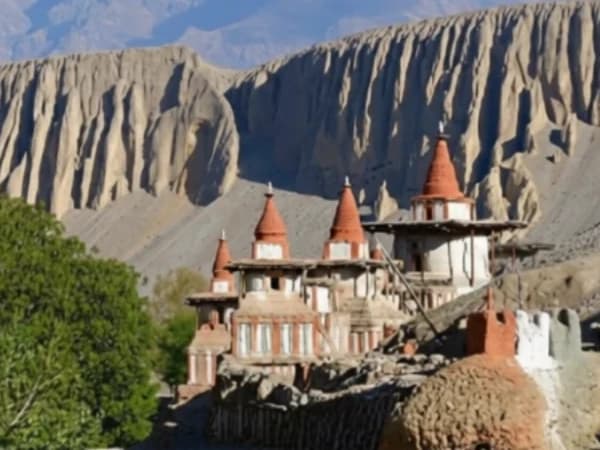
  • Cross landscapes that look more like Tibet or Mars than Nepal: red cliffs, eroded canyons, treeless plateaux, and fossil beds where ammonite shells (shaligrams) lie scattered on the ground
  • All bikes are serviced before every departure. Your guide carries a full tool set, spare parts, and a first aid kit with oximeter for altitude monitoring
  • The Luxury tier includes a backup support vehicle that follows the group through every stretch of the route
  • Visit Muktinath Temple and Kagbeni on the way up, and ride back through Jomsom and the world's deepest gorge
  • Spend a full day exploring Lo Manthang on foot, visiting monasteries, the royal palace, and local artisan workshops
  • Private departures from 1 to 20 riders, on any date you choose
  • Restricted area permit, ACAP, and TIMS all included in every package

11-Day Route Overview

Day 1 is your arrival in Kathmandu, where you'll meet your guide, get your bike assignment, and go through a full briefing on the route, road conditions, and what to expect in the restricted zone. Day 2 is a long ride to Pokhara along the Prithvi Highway. Days 3 and 4 take you through the Kali Gandaki corridor to Jomsom, Kagbeni, and up to Muktinath. From Day 5 you enter the restricted area, riding through Chele, Samar, and Syangboche, with the terrain becoming progressively drier and more dramatic. Days 6 and 7 bring you into Lo Manthang itself, with a full exploration day in the walled city. Days 8 and 9 take the return route through the eastern corridor with different views and villages. Day 10 brings you back to Pokhara, and Day 11 is your return ride to Kathmandu or transfer to the airport.

The most demanding section is the restricted zone between Kagbeni and Lo Manthang: unpaved tracks with steep switchbacks, river fords, and sections where the road is little more than a carved shelf on a cliff face. Wind is strongest between midday and 4pm in the Kali Gandaki valley, so we always schedule morning starts on those stretches. If altitude bothers you, our guide monitors oxygen levels daily. We've run this route for years and we know every section where riders need extra care.

Compare Our Three Packages

Feature Budget (USD 1,299) Standard (USD 2,149) Luxury (USD 2,499)
Meals Bed & Breakfast All meals (company selects restaurants) All meals (better restaurants) + fruits, dry nuts, all drinks except alcohol
Accommodation Shared room in guesthouse/lodge Private room, attached bathroom where available Private deluxe room, bed heater, attached bathroom where available
Motorbike Standard touring bike Better touring bike Premium bike of your choice
Support Vehicle Not included Not included Backup jeep included
Guide Professional riding guide Professional riding guide Professional riding guide
Fuel & Tools Included Included Included
Permits ACAP + TIMS + Restricted Area Permit ACAP + TIMS + Restricted Area Permit ACAP + TIMS + Restricted Area Permit
SIM Card Not included Included Included
Extras T-shirt, cap, certificate T-shirt, cap, certificate, farewell dinner T-shirt, cap, certificate, farewell dinner, hot showers & WiFi covered
Best For Experienced riders comfortable self-catering Most riders — best balance of comfort and value Riders wanting full support and premium comfort
Deposit (10%) USD 130 USD 215 USD 250

About the Restricted Area Permit: Upper Mustang requires a special permit from the Nepal government that costs USD 500 per person for the first 10 days and USD 50 per additional day. This permit is included in all three package tiers. We handle the entire application process for you.

Your Tour, Our Family

In the 1960s, Hari Lal Simkhada was arranging logistics for Himalayan expeditions when Upper Mustang was still sealed shut. His son, Ganesh Prasad Simkhada, went on to hold senior positions in Nepal's tourism and mountaineering institutions. Today, Shreejan Simkhada runs The Everest Holiday with the same principle: if you're riding with us, you're family, not a booking number.

We don't farm out your tour to a subcontractor. Our guides are our people. Your bike has been checked by our mechanic. And when you're in the restricted zone with no mobile signal for hours at a stretch, knowing that your operator actually cares makes a real difference.

Questions before you book? Message Shreejan directly on WhatsApp: +977 9810351300. He'll usually reply within the hour.

Why Riders Trust Us

Upper Mustang demands experience. The walled city of Lo Manthang, the desert canyon roads, the altitude above 3,800 metres — this isn't a casual ride. We've guided dozens of groups through this restricted region and understand what it takes.

All permits handled. Upper Mustang requires a restricted area permit ($500/person for 10 days), ACAP permit, and TIMS card. We process everything in advance — you just ride.

Three generations of Himalayan expertise. Family-run since 2016, with roots in Nepal tourism stretching back to the 1960s.

Solo Travellers Welcome

You don't need a group. More than half of our riders book as solo travellers. We run private departures for a single rider all the way up to 20. You get the same guide, the same bikes, and the same restricted area permit whether you're riding alone or with nine mates. Pick your date, and we'll confirm within 24 hours.

Tour Difficulty

Moderate to Challenging. The roads in the restricted zone are rougher than Lower Mustang. Expect loose gravel, river crossings, cliff-edge tracks, and long stretches without fuel or services. The maximum altitude is 3,840m at Lo Manthang, and you'll spend several consecutive days above 3,500m. Our guide carries an oximeter and monitors your oxygen levels daily. You need solid motorbike skills, a valid licence, and comfort riding on unpaved mountain roads. Previous high-altitude riding experience is helpful but not required, as we pace the route to allow gradual acclimatisation. If you can handle a challenging ride and you're prepared for basic conditions in remote lodges, this tour will reward you with scenes you won't find anywhere else on earth.

Trek With a Purpose

When Shreejan Simkhada and Shamjhana Basukala founded The Everest Holiday, they also founded the Nagarjun Learning Center, a charity providing free education and daily hot meals to 70 children in remote Dhading district. A portion of every booking goes directly to this work. The centre is verified and listed on the UN Partner Portal (#51103), and today it runs 7 learning centres across Nepal, has delivered free medical care to 600+ people, and employs 3 full-time teachers.

Your ride through the forbidden kingdom funds a child's education. That's the kind of trip worth taking.

You Might Also Like

Interactive Tour Map

[Google My Maps embed will be added here — Kathmandu to Pokhara to Jomsom to Kagbeni to Lo Manthang and return route through eastern corridor]

Short Itinerary
Day 01: Arrival to Kathmandu and Evening test ride
Max Altitude: 1,400m/4,593ft.
Day 02: Ride starts with 200 km from Kathmandu (1,400 m / 4,593 ft) to Pokhara (800 m / 2,625 ft), usually around 8 hours, with a total elevation change of 600 m / 1,968 ft.
Max Altitude: 800m/2,625ft
Day 03: Ride starts with 125 km from Pokhara (800 m / 2,625 ft) to Kalopani (2,350 m / 7,710 ft), usually around 7 hours, with a total elevation change of 1,550 m / 5,085 ft.
Max Altitude: 2,350m/7,710ft
Day 04: Ride starts with 90 km from Kalopani (2,350 m / 7,710 ft) to Samar (3,650 m / 11,975 ft), usually around 7 hours, with a total elevation change of 1,300 m / 4,265 ft.
Max Altitude: 3,650m / 11,975ft
Day 05: Ride starts with 75 km from Samar (3,650 m / 11,975 ft) to Lo Manthang (3,860 m / 12,664 ft), usually around 6 hours, with a total elevation change of 210 m / 689 ft.
Max Altitude: 3,860m / 12,664ft
Day 06: Explore Lo Manthang – visit Chhoser Cave and Monastery
Max Altitude: 3,860m/12,664ft
Day 07: Ride starts with 109 km from Lo Manthang (3,860 m / 12,664 ft) to Muktinath (3,710 m / 12,172 ft), usually around 7 hours, with a total elevation change of 150 m / 492 ft.
Max Altitude: 3,710m / 12,172ft
Day 08: Ride starts with 80 km from Muktinath (3,710 m / 12,172 ft) to Tatopani (1,190 m / 3,904 ft), usually around 6 hours, with a total elevation change of 2,520 m / 8,267 ft.
Max Altitude: 1,190m/3,904ft
Day 09: Ride starts with 105 km from Tatopani (1,190 m / 3,904 ft) to Pokhara (800 m / 2,625 ft), usually around 6 hours, with a total elevation change of 390 m / 1,280 ft.
Max Altitude: 800m / 2,625ft
Day 10: Ride starts with 200 km from Pokhara (800 m / 2,625 ft) to Kathmandu (1,400 m / 4,593 ft), usually around 8 hours, with a total elevation change of 600 m / 1,968 ft.
Max Altitude: 1,400m /4,593ft
Day 11: Departure to Kathmandu Airport
Max Altitude: 1,400m/4,593ft
Expand
Detailed Itinerary
Day 01:


Max Altitude: 1,400m/4,593ft.Accommodation: Hotel
Day 02:

Nepal announces itself before you've even cleared customs. The warm, spice-scented air of Tribhuvan International Airport wraps around you as you step off the jetbridge, and by the time you reach the arrivals hall, the sounds of Kathmandu are already filtering through the doors — distant temple bells, the buzz of motorbike engines, the calls of taxi drivers. Our team will be there waiting, your name on a sign, a smile and a traditional welcome ready. The drive from the airport to your hotel threads through the old city's narrow streets, past Newari courtyards where grandmothers dry chillies on rooftop terraces and children chase pigeons between centuries-old stone carvings. This is Kathmandu, and it wastes no time making an impression.

Once you've checked in and rested, your Upper Mustang ride captain will sit down with you for a detailed pre-tour briefing. This isn't a quick overview — it's a thorough session covering every aspect of the 11-day route ahead: the restricted-area permits required for Upper Mustang, the altitude profile, daily distances, the types of terrain you'll face (from smooth highway to loose gravel to rocky mountain trails), and the riding techniques that'll keep you safe. You'll learn Nepal's left-hand traffic system, the group's hand signals for road hazards, and what the support vehicle carries in case of mechanical trouble. There's time for every question, and our team won't move on until you feel confident about what lies ahead.

Then comes the evening's highlight: choosing your machine. The bike lineup is waiting, and you'll test-sit each one, checking weight distribution, handlebar height, and overall feel before making your pick. With your bike selected, the group heads out for a shakedown ride through Kathmandu's streets. You'll practise clutch control in traffic, get comfortable with the mirrors, and build a feel for the bike's power on real Nepali roads — roundabouts, narrow lanes, the odd wandering cow. By the time you return to the hotel, the nerves have settled into excitement. The Upper Mustang Motorbike Tour — one of the most remote and culturally rich rides in the Himalayas — starts tomorrow. Tonight, explore Thamel's lantern-lit streets, try a plate of steaming momo dumplings, and rest well. The road to the forbidden kingdom is calling.

Max Altitude: 800m/2,625ftMeals: Breakfast / Lunch / DinnerAccommodation: HotelDuration: 7 - 8 hoursDistance: 200 km / 125 milesElevation: 600m / 1,968ft
Day 03:

The convoy rolls out of Kathmandu after breakfast, engines rumbling through the morning traffic as you leave the city's dense streets behind. The support vehicle takes position at the rear, loaded with luggage, spare parts, and a mechanic who'll shadow the group for the entire tour. Past Kalanki and Thankot, the road drops toward the Prithvi Highway, and within forty minutes the scenery has transformed completely. The city is gone. In its place: the turquoise Trishuli River winding through a steep valley of sal forest and red clay, with eagles circling the thermals above and the occasional white-water rapid frothing below the road.

The highway follows the river for hours, curving through small bazaar towns where fruit sellers stack pyramids of tangerines and teahouses pour milky chai from enormous kettles. A mid-morning stop at one of these riverside spots is the first chance to feel the pace of the journey — slow, deliberate, nothing rushed. The road surface is good asphalt throughout this stretch, but the corners are constant, and every few minutes a bus or truck swings around a blind bend with its horn blaring. It keeps you alert. Past the Mugling junction, the route turns west along the Marsyangdi River corridor, and the landscape widens into terraced rice paddies that climb the hillsides in emerald steps. The hilltop village of Bandipur sits above the highway on a ridge, its old Newari houses and quiet cobbled streets a world apart from the traffic below.

As the afternoon wears on, the first Himalayan peaks emerge above the western horizon. Annapurna South, Machhapuchhre, and the Ganesh Himal range appear as white silhouettes against the blue sky, growing larger and more detailed with every kilometre. The final approach to Pokhara is a straight highway run with those mountains filling the windshield, and arriving in the lakeside city feels like stepping into a painting. Phewa Lake lies flat and green, reflecting the Annapurna massif in perfect symmetry. The pace here is gentler, the air warmer, and the evening free for lakeside walks, cold drinks, and the anticipation of what tomorrow's mountain roads will bring. This is the last comfortable lowland night before the high country takes over.

Max Altitude: 2,350m/7,710ftMeals: Breakfast / Lunch / DinnerAccommodation: HotelDuration: 6 - 7 hoursDistance: 125 km/ 78 milesElevation: 1,550m / 5085ft
Day 04:

Today the Upper Mustang Motorbike Tour shifts into a different register. The smooth highways and lowland warmth of yesterday give way to mountain roads, river gorges, and the first real taste of Himalayan riding. Leaving Pokhara on the Baglung Highway, the route climbs through forested hills and small farming villages where women spread grain on straw mats to dry in the morning sun. At Kushma, you'll cross one of Nepal's famous suspension bridges — a swaying, narrow span high above a rushing gorge that tests your confidence and rewards your nerve with an unforgettable view straight down to the white water below.

Past Baglung, the road reaches Beni, where a local Thakali restaurant serves lunch — dal bhat with pickled radish and fresh greens, the fuel that powers every ride in these mountains. Then the landscape shifts again, dramatically. Ahead lies the mouth of the Kali Gandaki Gorge, the deepest river valley on earth, walled in by Dhaulagiri (8,167 m) to the west and Annapurna I (8,091 m) to the east. The numbers are almost meaningless until you're riding between them, the bike a tiny dot on a gravel road at the bottom of something immeasurably vast. The dust thickens, the surface roughens, and the wind begins — the famous Kali Gandaki headwind that funnels down the gorge every afternoon.

You'll push through Tatopani and climb toward Dana at 1,446 m, pausing at the Rupse Chhahara waterfall where a single white column of water drops from the cliff face into the gorge below. Beyond Dana, the road ascends through Ghasa at 2,012 m, where prayer flags stretch between wooden poles above stone walls, and into apple country at Tukuche. The famous Thakali kitchens here serve the best dal bhat in Nepal — a bold claim, but one that riders from around the world tend to agree with. The final stretch to Kalopani follows the river through a narrowing valley, and by the time you reach your lodge, Dhaulagiri's south face towers above the rooftop, turning gold in the last light. This is your base for the night, and the view alone is worth the ride. Read more in our Jomsom and Mustang gateway guide.

Max Altitude: 3,650m / 11,975ftMeals: Breakfast / Lunch /DinnerAccommodation: HotelDuration: 5 - 6 hoursDistance: 90 km / 56 milesElevation: 1300m / 4265ft
Day 05:

This is the day the landscape breaks its final connection with the green Nepal you've known until now. After breakfast, the group rides north from Kalopani through the apple orchards of Marpha, a village so neat and tidy it looks stage-designed — whitewashed stone walls, cobbled lanes, apple pies cooling in bakery windows. A quick stop for a glass of Marpha's famous apple brandy (or cider, if you prefer) is non-negotiable. Beyond Marpha, the valley widens and the vegetation thins as you approach Jomsom, the wind-blasted administrative capital of Mustang. The airstrip's windsock stands horizontal, and dust devils spin across the gravel flats. You'll refuel here, check over the bikes, and prepare for the world that lies beyond.

Past Jomsom, the Kali Gandaki River spreads into a broad, braided floodplain of grey gravel and pale sand. The riding surface is loose and unpredictable — riverbed crossings, patches of deep sand, stretches of compacted rock that rattle through the handlebars. The air is noticeably drier, the sky a deeper blue, and the mountains have shed their green cloaks entirely. At Ekle Bhatti, a solitary teahouse marks the fork where you take the left path toward Kagbeni, the ancient village that guards the entrance to Upper Mustang. Prayer wheels spin along the village walls, chortens mark the trail, and the ACAP checkpost verifies your restricted-area permits before you can continue northward into the forbidden kingdom.

Beyond Kagbeni, the terrain becomes genuinely remote. The trail climbs through arid, wind-sculpted valleys where the only colours are rust, ochre, and the occasional flash of blue sky reflected in a stream. Nilgiri's snow-capped summit (7,061 m) dominates the southern horizon behind you, growing smaller with every pass. The route descends to Chhusang at 2,980 m, crosses the Kali Gandaki again, and then tackles the steep switchbacks up to Chele. From Chele, the final ascent to Samar at 3,650 m is a test of both rider and machine — loose rock, tight corners, and thin air that makes the engine work harder. But when you arrive at the lodge and look out at the vast, silent landscape of Upper Mustang stretching north toward Tibet, you'll understand why riders come from across the world for exactly this.

Max Altitude: 3,860m / 12,664ftMeals: Breakfast / Lunch / DinnerAccommodation: HotelDuration: 5 - 6 hoursDistance: 75 km / 47 milesElevation: 210m / 690ft
Day 06:

Today you ride into the heart of the forbidden kingdom. The morning begins with engines echoing off Samar's silent valley walls, and the first target is Syangboche La Pass at 3,850 m. The trail is steep, rocky, and exposed — the kind of riding where you stand on the pegs, grip the tank, and let the bike find its own line through the loose stone. At the pass, the engine note carries across empty space, and the view opens in every direction: rust-red cliffs, pale sand valleys, and the snow peaks of the Annapurna range retreating to the south. The descent into Syangboche village is fast and technical, and from there the route continues to the quiet settlement of Ghami at 3,520 m, where narrow alleys wind between flat-roofed mud-brick houses painted in faded earth tones.

Beyond Ghami, the landscape becomes something you won't find anywhere else on earth. Massive Mani walls — long stone structures carved with thousands of Buddhist mantras — line the trail like silent sentinels. Red and grey cliffs rise in vertical bands, weathered into shapes that look almost sculptural. The trail climbs again, steeply, to Mui La Pass at 4,170 m — the highest point of the day and one of the most exhilarating moments of the tour. At this altitude, the air is thin enough to feel in your chest, and the silence at the top is absolute. From here, a thrilling descent takes you to Dhakmar Village, also called Ghar Gompa, where the Lo-Ghekar Monastery sits against a backdrop of crimson cliffs. Inside, centuries-old murals and butter lamps glow in the darkness, and the monk who keeps the keys tells stories that stretch back a thousand years.

The afternoon ride follows the Charang Khola to Tsarang Village, perched above a deep canyon with a five-storey Dzong — part monastery, part fortress — rising from its centre. Inside, you'll find exquisitely painted thangkas and carved Buddha statues that have survived centuries of wind and isolation. Outside, Annapurna I, Tilicho, and Nilgiri fill the southern sky. From Tsarang, the trail descends to Tsarang Chu at 3,900 m, the natural boundary of the Kingdom of Lo, and then climbs to the windy Lo La Pass at 3,950 m. And then, spread below you like a scene from a medieval painting, the walled city of Lo Manthang appears — the last forbidden kingdom on earth. You've arrived. Park the bike, walk through the ancient gates, and step into a place where time moves at a different speed.

Max Altitude: 3,860m/12,664ftMeals: Breakfast / Lunch / DinnerAccommodation: HotelDuration: 3 - 4 hours
Day 07:

No riding today — or rather, no long-distance riding. The bikes rest while you explore Lo Manthang on foot and by short motorcycle excursion. This walled city, capital of the former Kingdom of Lo, is unlike anywhere you've been. Its mud-brick walls, whitewashed buildings, and narrow lanes have changed remarkably little over the past five hundred years. Prayer flags stretch between rooftops, monks in maroon robes walk to morning prayers, and the sound of chanting drifts from open monastery doors. The first stop is the local nomad camps in the surrounding hills, where yak herders offer thick, salty yak-butter tea — an acquired taste that warms you from the inside at this altitude.

Back in the city, the monastery circuit begins. Champa Lhakang, built in the fifteenth century, houses a towering statue of Maitreya Buddha surrounded by murals that glow with mineral pigments — lapis lazuli blues and vermillion reds that have survived half a millennium. The two-hundred-year-old Chode Gompa sits at the city's heart, its courtyard calm and unhurried, while the vibrant red walls of Thugchen Gompa contain some of the finest examples of Tibetan Buddhist art in the entire Himalayan region. Each monastery tells a different chapter of Lo's history, from the kingdom's founding to the arrival of Buddhism, to the long centuries of isolation that kept this culture intact while the rest of the world changed around it.

In the afternoon, a short 16-kilometre ride east takes you to Chhoser Village, a Tibetan-style settlement famous for its ancient cave systems. The Jhongu Caves are the centrepiece — a network of interconnected chambers, tunnels, and wooden-laddered shafts spanning five levels, some sections believed to be over 3,000 years old. Archaeologists have found burial remains, manuscripts, and artefacts here that rewrite the history of trans-Himalayan trade. Standing inside these caves, with nothing but candlelight and the sound of wind outside, you're as far from the modern world as a motorbike tour can take you. The ride back to Lo Manthang is quiet and reflective, the evening sky turning orange over the Tibetan plateau. Dinner in the lodge feels different tonight — you've touched something genuinely ancient, and it stays with you. Learn more about this remarkable region in our Upper Mustang guide.

Max Altitude: 3,710m / 12,172ftMeals: Breakfast / Lunch / DinnerAccommodation: HotelDuration: 6 - 7 hoursDistance: 109 km / 68 milesElevation: 150 m / 492 ft
Day 08:

Leaving Lo Manthang behind is bittersweet. The walled city shrinks in your mirrors as the trail heads south, and the morning light paints the Tibetan plateau in soft golds and dusty pinks. The first challenge of the day is the climb back to Lo La Pass at 3,950 m, where the wind hits hard and the prayer flags on the pass snap like whips. From the summit, the trail drops into the vast valley systems that connect the Kingdom of Lo to the rest of Mustang — wide, empty expanses of grey and brown where the only movement is dust and the occasional raptor riding a thermal.

The return route follows a different line through the remote villages and river valleys of central Mustang, offering fresh views even for riders who passed through two days ago. The terrain is classic Upper Mustang: rocky trails cutting across high desert plateaux, steep switchbacks dropping into narrow gorges, and occasional river crossings where the water runs cold and fast over smooth stone. The air is thin and dry, and the sun is fierce at this altitude — lip balm and sunscreen are essential, and hydration stops are frequent. The support vehicle is never far behind, carrying water, snacks, and mechanical backup for anyone who needs a break from the demanding terrain.

As the kilometres roll south, the landscape gradually softens. The first juniper bushes appear, then scrubby grass, and finally the cultivated terraces that signal the approach to the Muktinath Valley. The sacred site of Muktinath emerges at 3,710 m, its temple complex tucked beneath the massive wall of the Thorong La range. This is one of the holiest places in Nepal — revered equally by Hindus and Buddhists, with 108 sacred water spouts, an eternal natural gas flame, and a serenity that feels earned after the wild roads of the past three days. Park the bike, walk through the temple grounds, and let the quiet settle in. Tonight's lodge sits in the shadow of the mountains, and there's something deeply satisfying about arriving here under your own power, having ridden through one of the most remote regions in the Himalayas.

Max Altitude: 1,190m/3,904ftMeals: Breakfast / Lunch / DinnerAccommodation: HotelDuration: 5 - 6 hoursDistance: 80 km / 50 milesElevation: 2,520m /8,267ft
Day 09:

Before the engines start, there's one more thing to do. The Muktinath Temple opens at dawn, and walking up to the complex in the early morning cold is an experience that stays with you long after you leave Nepal. The 108 stone waterspouts pour glacial water in a continuous arc, and pilgrims bathe beneath them in the sharp mountain air, believing the water cleanses past wrongdoings. Inside the temple compound, a natural gas flame burns behind a curtain of water — fire within water, earth beneath both — a phenomenon that's drawn pilgrims here for centuries. The altitude makes your breath visible, and the silence is broken only by the splashing of water and the low murmur of prayer.

After breakfast, the ride south begins — and today is one of the most dramatic descents in Himalayan motorcycling. From 3,710 m at Muktinath, you'll drop to 1,190 m at Tatopani, losing over 2,500 metres of altitude in a single riding day. The route crosses Jhong Khola back to Kagbeni, and as you head south the barren Mustang landscape begins its slow transformation. Brown gives way to green, stone to soil, silence to birdsong. Past Jomsom, the road enters the apple orchards of Marpha, where whitewashed stone houses line cobbled lanes and the smell of apple pie hangs in the air. A stop here for fresh cider or brandy is tradition, not indulgence.

South of Marpha, the descent continues through Tukuche, Lete, and Ghasa — each village warmer and greener than the last, the Kali Gandaki gorge tightening around the road. The riding demands attention: steep gradients, loose gravel, occasional water crossings, and the river roaring somewhere below. There are sections where the support vehicle steps in for riders who want a rest, and that's always an option. By late afternoon, you'll roll into Tatopani, where the temperature feels subtropical after days in the high desert. The village's famous hot springs are carved into the riverbank — natural thermal pools steaming in the cool mountain air, with Nilgiri's snow-capped peak smiling down from above. After eight days of dust and altitude and wind, sinking into those warm waters is the reward your body's been waiting for.

Max Altitude: 800m / 2,625ftMeals: Breakfast / Lunch / DinnerAccommodation: HotelDuration: 5 - 6 hoursDistance: 105 km / 65 milesElevation: 390m / 1,280ft
Day 10:

The hot springs have done their work — muscles feel loose, joints feel easy, and the morning air in Tatopani carries a warmth that signals the lowlands ahead. Today's ride is one of the most relaxing of the entire tour: a 105-kilometre run from the gorge country back to Pokhara's lakeside calm. The morning starts with a short stretch to a bridge over the Kali Gandaki River, where you cross from east to west bank and follow a quiet road through subtropical vegetation. A waterfall appears around the first bend, its mist catching the early sunlight in a brief rainbow, and the road rolls through Tiplyang and Baisari with the ease of a ride that knows it has time on its side.

At Beni, the route joins the Baglung-Pokhara highway — smooth, well-maintained asphalt that feels almost luxurious after the rocky trails of Upper Mustang. The riding becomes rhythmic and unhurried: sweeping curves through river valleys, terraced hillsides in every shade of green, and the occasional farming village where women spread maize on straw mats and children chase each other through the lanes. This is the Nepal that exists between the mountains and the plains, a landscape of gentleness and abundance where the pace of life is set by the seasons rather than the clock. The Annapurna range is visible behind you, receding into the afternoon haze, a reminder of where you've been and what you've crossed.

Arriving in Pokhara by early afternoon gives you a full half-day to enjoy the lakeside city. Take a rowing boat onto Phewa Lake, where Machhapuchhre's perfect triangular reflection shimmers in the green water. Visit the Barahi Temple on its tiny island. Browse the lakeside shops for pashmina, singing bowls, and hand-carved wooden pieces. Or find a rooftop cafe overlooking the water, order a cold beer, and watch paragliders spiral down from Sarangkot like slow-motion confetti against the mountain backdrop. Tonight's dinner brings the group together — riders who've crossed the highest passes in Mustang, soaked in Tatopani's springs, and stood inside caves that are older than written history. The stories flow easily now. Tomorrow is the long highway home, but tonight belongs to Pokhara.

Max Altitude: 1,400m /4,593ftMeals: Breakfast / Lunch / DinnerAccommodation: HotelDuration: 7 - 8 hoursDistance: 200 km / 125 milesElevation: 600m / 1,968ft
Day 11:

The last long ride of the Upper Mustang Motorbike Tour takes you back across Nepal's middle hills to the capital. Leaving Pokhara, the convoy climbs out of the lakeside valley and joins the Prithvi Highway heading east. The Annapurna, Machhapuchhre, and Ganesh peaks line up behind you in the mirrors, and each backward glance brings a fresh wave of something between gratitude and reluctance. You've spent ten days in some of the most remote terrain on the planet, and today's return to civilisation feels like crossing a threshold.

The highway follows the Marsyangdi and then the Trishuli River through their deep, forested valleys. Rafters in bright helmets navigate rapids far below the road, fish eagles circle on thermals above the water, and the occasional suspension bridge spans the gorge in a graceful arc of cable and wood. The riding rhythm is familiar now — horn etiquette, bus avoidance, the steady lean-and-counter-lean of Nepali curves — and your confidence on these roads is something you couldn't have imagined eleven days ago. You've crossed passes above 4,000 metres, ridden through desert plateaux where the nearest town was hours away, and navigated trails that were built for yaks, not motorcycles. The Prithvi Highway, by comparison, feels almost leisurely.

Lunch at a riverside dhaba brings one last plate of dal bhat — the dish that's fuelled every day of this journey, and somehow it never tastes the same twice. The afternoon stretch passes through the narrowest section of the Trishuli valley, where waterfalls streak down cliff faces close enough to feel the spray, and the road traffic thickens as Kathmandu draws near. By early evening, the familiar chaos of the capital wraps around you: temple bells, taxi horns, the smell of grilling maize from a street vendor's cart. At the hotel, there's time to clean up before the farewell dinner. Over Newari cuisine and local beer, the group swaps stories one last time — the wind at Lo La Pass, the caves at Chhoser, the hot springs at Tatopani, the moment Lo Manthang's walls first appeared below. Certificates of achievement are handed out, and the Upper Mustang Motorbike Tour officially comes to a close. But what you've seen and felt in these eleven days will stay with you far longer than the dust on your jacket.

Max Altitude: 1,400m/4,593ftMeals: BreakfastAccommodation: Hotel
Couldn't find what you're after?Reach out to our travel experts.
Customize Trip
Availability
Book your own private small group trip

Discounts are determined exclusively by the size of your group. We do not add additional members to your group.

hbl logo
Secure Payment by Himalayan Bank.

Equipment Lists

The Upper Mustang Motorbike Tour is an exciting and unique adventure, where you feel the wind on your face, hear the roar of your bike, and share the experience with your group of riders. However, without proper riding gear, this exciting journey can quickly become uncomfortable or unsafe. To make sure you enjoy the stunning scenery safely and comfortably, we have prepared a list of essential gear that every rider should bring on the tour. 

Documents & Essentials 

  • Passport, Visa & Passport Photo 
  • International Driving License & Bike License
  • Emergency Contacts & Travel Insurance 
  • Local Currency & Credit/Debit Cards 
  • Booking Information 

Motorbike Riding Gear 

  • Helmet (Full Face with Bluetooth) 
  • Protective Jacket with Pads (Shoulders & Elbows) 
  • Riding Gloves (Full-Fingered, Knuckle Protection) 
  • Riding Trousers with Knee & Seat Pads 
  • Long Riding Boots with Thick Soles 
  • Waterproof Rain Gear 
  • Sunglasses or Safety Glasses 
  • Kidney Belt 

Clothing for Himalayan Adventure 

  • Moisture-Wicking Shirts & T-Shirts 
  • ThermalLayers & Comfortable Riding Pants 
  • Waterproof Warm Jacket & Windbreaker 
  • Sweaters, Fleece Jackets & Down Jackets 
  • Thermal Underwear, Socks, Hats, Bandana 

Luggage & Storage 

  • Waterproof Backpack 
  • Tank or Saddle Bags 
  • Handlebar Bag & Cargo Straps 

Navigation & Electronics 

  • GPS or GPS Watch 
  • Mobile Phone & Charger 
  • Power Bank & Solar Charger 
  • GoPro or Camera 

Tools & Bike Maintenance 

  • Basic Tools & Spares 
  • Tire Repair Kit & Chain Oil
  • Multipurpose Knife / Swiss Army Knife
  • Duct Tape, Electrical Wire, Small Flashlight 
  • Spare Bike Key 

First Aid & Health Essentials 

  • Painkillers, Antacids & Altitude Sickness Medicine (Diamox) 
  • Bandages, Gauze, Disinfectant & Tweezers 
  • Anti-allergic Medications & Common Remedies 
  • Moleskin / Blister Pads 
  • Eye & Ear Drops, Thermometer, Disposable Gloves 

Toiletries & Personal Care 

  • Toothbrush, Toothpaste, Floss 
  • Soap, Shampoo, Conditioner, Moisturizer 
  • Razor, Deodorant, Lip Balm 
  • Microfiber Towels & Toilet Paper 
  • Sanitary Pads, Cotton Swabs, Nail Clippers 
  • Wet Wipes 

Safety & Adventure Accessories 

  • Thermal Blanket, Compass, Whistle 
  • Mosquito Spray / Repellent
  • Water Filter or Purification Tablets 
  • Binoculars 
Essential Information

Arrival, welcome, and tour start

When you arrive at Tribhuvan International Airport, our representative will greet you with a traditional marigold garland and Khada, holding a sign with your name. You'll be transferred to your hotel in a private vehicle. Once settled, you'll choose your motorbike for the tour, making sure it's the right fit. There's free time to explore Kathmandu's markets, pick up souvenirs, or enjoy a cup of Nepali tea at a nearby cafe. The next morning, after breakfast, your Upper Mustang Motorbike Tour officially begins.

Accommodation and meals on the Upper Mustang Motorbike Tour

Accommodation

Throughout the tour, you'll stay in authentic local lodges and guesthouses that reflect the charm and traditions of the Mustang region. These lodges are clean, safe, and provide comfortable beds, blankets, and pillows for a restful night after long riding days. Many offer shared or private bathrooms, and hot water is usually available at some locations (sometimes for an additional fee). In Kathmandu, hotel accommodation is included. In Pokhara, accommodation is on a comfortable bed-and-breakfast basis. Along the Mustang trails, lodges offer twin beds and basic furnishings. While simple compared to city hotels, they provide a welcoming environment surrounded by spectacular Himalayan views — a genuine way to experience local life in Upper Mustang.

Meals

Meals are carefully planned to keep you energised for long rides. Most lodges provide nutritious breakfast, lunch, and dinner featuring local Nepali dishes and simple continental options. You'll try authentic Mustang cuisine including Tibetan-style bread, local vegetables, and yak or goat dishes in certain villages. Food and water quality are maintained throughout. Riders can also enjoy tea, coffee, and local snacks at stops along the trail.

Why choose our Upper Mustang Motorbike Tour package?

This tour perfectly combines adventure, cultural discovery, and comfort. It takes you through one of Nepal's most remote and breathtaking regions — from rugged cliffs and river valleys to the walled city of Lo Manthang — with nonstop views of Annapurna, Nilgiri, and Tilicho. Every detail is carefully planned: bike selection, route planning, daily support, and accommodation. You'll ride reliable motorcycles, travel with certified English-speaking guides, and have mechanical and logistical support whenever needed.

Safety is our top priority. Our guides know the roads, weather, and local conditions of Upper Mustang, riding at a comfortable pace that lets you enjoy the journey. The tour also offers freedom to explore villages, monasteries, and cultural sites rather than following a rigid schedule. This isn't just a ride — it's a complete Upper Mustang experience: ancient Tibetan-style villages, sacred monasteries, dramatic desert landscapes, and timeless local traditions.

Difficulty level of the Upper Mustang Motorbike Tour

This is an adventurous and physically demanding journey, ideal for experienced riders comfortable with off-road conditions and high altitudes. After Beni, smooth gravel gives way to rocky trails and uneven paths that test both skill and endurance. Riders will frequently stand on the pegs to navigate rough sections. The bikes are specifically designed for off-road and mountainous terrain — dirt and adventure motorcycles equipped for rocky trails, river crossings, and steep climbs. Many passes reach high altitudes, adding both panoramic views and physical challenge. Despite the difficulty, the combination of rugged trails, dramatic landscapes, and isolated villages makes this one of Nepal's most unique motorbike adventures.

Safety and support

Our Upper Mustang Motorbike Tour combines comfort, adventure, and exploration. While mostly pleasant, some off-road stretches call for careful riding. You'll choose from reliable motorcycles capable of handling dusty, bumpy, wet, or slippery terrain. An English-speaking certified Nepali guide and skilled mechanic accompany you throughout, advising on safe riding practices. A support 4x4 vehicle follows the group with luggage and spare parts (optional). Our motorcycle travel experts are available at any time for questions or assistance.

Best season for the Upper Mustang Motorbike Tour

Mustang's location in the rain shadow of the Annapurna and Dhaulagiri ranges means very little rainfall, making it ideal for high-altitude motorbike adventures.

Spring (March to May): Mild weather, longer days, clear skies, and spectacular views of snow-capped peaks. Hills and valleys are full of wildflowers, and riding conditions on high passes are excellent.

Autumn (late September to November): Crisp air, unmatched visibility, golden landscapes, and dry trails. Perfect for photography and sightseeing.

Winter (December to February): Fewer crowds, crystal-clear skies, and dramatic snow-capped views. Cold nights but sunny days make for peaceful, visually striking rides.

Monsoon (June to early September): Generally not recommended. Although Mustang itself receives minimal rainfall, heavy rain in surrounding regions can cause landslides and trail hazards.

Travel essentials

Visa

Except for Indian citizens, all foreign nationals need a visa to enter Nepal. Visas are available on arrival at Tribhuvan International Airport. You'll need a passport valid for at least six months, one passport-sized photo, and cash for the visa fee (USD $50 for 30 days).

Travel insurance

Travel insurance is essential for the Upper Mustang motorbike tour. Without proper coverage, you won't be able to obtain the restricted-area permits required. The policy should cover medical emergencies, bike damage, breakdowns, and accidents. Choose coverage specifically designed for motorbike riders, including provisions for protective gear and high-altitude riding. The policy must cover air rescue at altitudes up to 4,000 m. Read the terms carefully and note any limits or exclusions.

Currency exchange

The Nepali Rupee (NPR) is the official currency — roughly 130 NPR to one US dollar. Banks and approved exchange centres in Kathmandu accept major foreign currencies. ATMs are available but may carry service fees. Ensure your notes are clean and undamaged. Exchange money in Kathmandu before heading to remote areas.

Extra expenses

Budget approximately USD $20 per day for personal costs: meals and accommodation in Kathmandu, visa fees, snacks, hot showers, personal equipment, and crew tips.

Tour booking

Individual to group bookings

Our tours run with a minimum of two people. Solo riders can join a group tour posted on our website, or we'll help connect you with other riders.

Trusted booking

The Everest Holiday is a registered and bonded trekking operator — proud members of TAAN and the Nepal Mountaineering Association. A 10% advance payment confirms your booking via the Himalayan Bank online portal, credit cards, bank transfers, Wise, or Western Union. Balance is due on arrival in Kathmandu. Please send a passport copy within one week and ensure your passport is valid for at least six months from your arrival date.

Last-minute booking

We recommend booking in advance. Last-minute bookings require full payment 24 hours before departure. Contact Shreejan at +977-9810351300 or email info@theeverestholiday.com.

Flexible schedule

Trip dates can be adjusted to suit your timing. If our listed dates don't work, let us know and we'll arrange accordingly.

Trip extension

Extend your stay with jungle safaris, bungee jumping, rafting, kayaking, paragliding, zip-flying, canyoning, or Kathmandu Valley heritage tours. Check our ADD-ON packages when booking.

Ecotourism practices

Each rider receives an eco-waste bag. Please collect all non-compostable rubbish and carry it with you. Our guides will direct you to proper disposal points along the route.

The family

We're a family business with three generations in Nepal's tourism industry. Our guides and road captains ride with you every day, trained in wilderness first aid, fluent in English, and deeply familiar with these mountain roads. Please treat our team as family — ask questions or request help at any time.

Trip conclusion

Farewell dinner

We host a farewell dinner in Kathmandu to celebrate your achievement. It's a wonderful chance to share stories and reflect on the journey. You'll also receive a tour achievement certificate.

Departure

Share your hotel, room number, and flight details so we can arrange your airport transfer to Tribhuvan International Airport.

Tipping culture

Tips are a common way to show appreciation for good service. They're encouraged at the end of the tour and best given as a group gift, reflecting service quality, tour cost, and duration.

FAQs

When is the best time to do the Upper Mustang Motorbike Tour?

The ideal seasons are spring (March–May) and autumn (September–November).

  • Spring: Mild weather, clear skies, and blooming rhododendrons make the landscapes colorful and vibrant.

  • Autumn: Crisp air, dry trails, and excellent visibility provide perfect conditions for high-altitude riding and photography.

How far will we ride each day?

The daily distance is usually 50–60 kilometers, with plenty of breaks for meals, rest, and photography along the route.

How many days does the Upper Mustang Motorbike Tour typically take?

A standard Upper Mustang motorbike itinerary usually takes about 11 days, starting and ending in Kathmandu or Pokhara. This allows for a steady pace to navigate the rugged terrain up to Lo Manthang and provides adequate time for high-altitude acclimatisation.

Who can join the Upper Mustang Motorbike Tour?

This tour is suitable for riders with basic to intermediate riding experience. Participants should be comfortable on paved roads and rough, high-altitude trails. Riders must have a valid motorcycle license and be physically fit to handle daily rides in varying conditions.

Do I need prior off-road riding experience for Upper Mustang?

Yes, having some off-road experience is highly recommended. Once you pass Kagbeni and enter the restricted Upper Mustang region, the terrain changes to high-altitude desert with rocky trails, loose gravel, sandy patches, and occasional shallow river crossings.

How should I physically prepare for riding at high altitudes?

Handling a heavy motorbike on rough mountain terrain requires stamina and core strength. We recommend starting regular cardiovascular exercises (such as cycling, swimming, or jogging) and core workouts a few weeks before your departure to build up your endurance.

What essential documents do I need for the Upper Mustang motorbike tour?

To ensure a smooth and hassle-free adventure, carry the following:

  • Passport with at least 6 months validity & Nepal Visa

  • International Driving Permit valid in Nepal & Motorcycle license

  • Travel insurance covering motorbike riding and high-altitude travel

  • Passport-sized photos & Emergency contact information

Do we need special permits to visit Upper Mustang?

Yes. Upper Mustang is a restricted area due to its cultural and historical significance. You must obtain a special Upper Mustang Restricted Area Permit, an Annapurna Conservation Area Permit (ACAP), and a Trekker Information Management System (TIMS) card.

Do I need a valid driving license?

Yes. A valid motorcycle license from your home country is required to ride in Upper Mustang, ensuring compliance with local regulations and the safety of all participants.

Is travel insurance required?

Absolutely. Travel insurance is mandatory for obtaining your restricted area permit. It should cover high-altitude riding, medical emergencies, accidents, bike damage, and emergency air rescue up to at least 4,000 m (13,120 ft).

Will there be an experienced road captain leading the tour?

Yes, every Upper Mustang tour is led by a professional, English-speaking road captain who intimately knows the remote trails leading to Lo Manthang. They set the pace, guide you through challenging off-road sections, and ensure group safety.

What happens if the motorbike breaks down during the tour?

Our support vehicle is always nearby with a skilled mechanic and necessary tools. Basic repairs can be done on the spot. For more serious issues, the support vehicle can transport both bike and rider, ensuring the tour continues smoothly without delays.

Do you provide a backup vehicle for luggage and non-riders?

Yes, a reliable 4x4 backup jeep follows the riding group all the way to Lo Manthang. It carries your heavy luggage, spare parts, and medical kits. It also provides a comfortable seat for pillion passengers or anyone who needs a temporary break from riding the rough trails.

What kind of accommodation can we expect in Upper Mustang?

While you will enjoy comfortable 3-star hotels in Kathmandu and Pokhara, the Upper Mustang region is much more remote. Accommodation consists of traditional, family-run teahouses and Tibetan-style lodges. These lodges provide clean, basic twin-sharing rooms with cozy communal dining areas.

Are hot showers and electricity available all the way to Lo Manthang?

Yes, but they are more basic than in lower regions. Many teahouses rely on solar power for electricity and hot water. You can usually charge your devices and get a hot shower, but teahouses often charge a small extra fee for these services.

Is there Wi-Fi and mobile network coverage during the ride?

Wi-Fi is available in most teahouses along the route, and local mobile networks (like NTC or Ncell) do work in certain villages. However, because Upper Mustang is a high-altitude, restricted desert region, the connection can be slow, spotty, or temporarily unavailable.

What kind of food will we eat on the Upper Mustang route?

Despite the remote location, the teahouses offer a great menu. You will find standard staples like traditional Nepali Dal Bhat (rice, lentils, and vegetable curries), which provides excellent energy for riding. You can also enjoy local Tibetan specialties like Thukpa (noodle soup), Tibetan bread, and momos, alongside basic Western options.

Is safe drinking water accessible in this restricted area?

Yes. You can purchase boiled or filtered water at every lodge along the trail. To help preserve the fragile environment of Upper Mustang, we strongly encourage you to bring a reusable water bottle and your own water purification tablets or a portable filter.

Can you accommodate dietary restrictions in such remote villages?

Vegetarian options are standard and readily available everywhere. If you have strict vegan requirements, gluten allergies, or other specific dietary needs, please let The Everest Holiday team know during the booking process so we can coordinate with the remote lodges in advance.

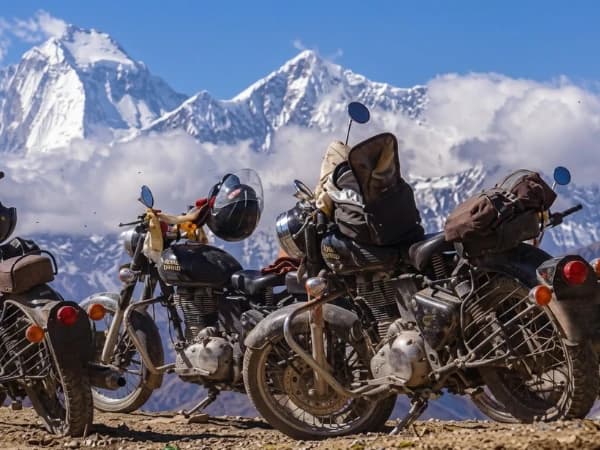
Which motorbikes are recommended for the Upper Mustang Tour?

Bikes suitable for this high-altitude and off-road terrain include:

  • Royal Enfield Himalayan 411–450: Ideal for rough trails and long rides.

  • Royal Enfield Classic 350: Comfortable and durable for extended journeys.

  • Honda CRF 250/300: Lightweight and agile, perfect for narrow or uneven paths.

Do I need to bring personal riding gear?

Yes. Riders must bring a high-quality helmet, a protective riding jacket and pants, armored gloves, sturdy waterproof footwear, and weather-appropriate layers to ensure safety and comfort throughout the tour.

How much luggage can I bring on the tour?

We recommend packing light. You should bring one main duffel bag (around 10–15 kg) which will be carried by the support 4x4 vehicle. You can also bring a small daypack or tank bag for daily riding essentials like sunscreen, water, your permit, and a camera.

What happens if it rains during the tour?

Safety comes first. Our guides may adjust the route or speed in wet conditions. Riders can use waterproof gear, and a support 4x4 vehicle is available for those who prefer to skip slippery sections. In case of heavy rain, we may pause the ride and let you relax in local lodges until the weather improves.

Is Altitude Mountain Sickness (AMS) a risk in Upper Mustang?

Yes, as Lo Manthang sits at an elevation of 3,840 meters (12,598 feet), and some passes are even higher. Our itinerary is carefully designed with shorter riding days as we gain elevation to allow your body to properly acclimatize. Staying hydrated and avoiding alcohol on the ascent are highly recommended.

Do your guides carry comprehensive first aid kits?

Yes, our road captain and the backup support vehicle carry comprehensive first aid and trauma kits. We travel stocked with basic medications for treating minor injuries, headaches, and altitude-related symptoms.

How far in advance do I need to book the Upper Mustang tour?

Because Upper Mustang is a highly restricted area with a strict permit process, we strongly recommend booking at least 2 to 3 months in advance. This lead time is crucial for us to secure the mandatory $500 Restricted Area Permits from the government and book rooms in Lo Manthang, which has limited accommodation.

What is included in the deposit and payment terms?

To confirm your spot, a non-refundable advance deposit (usually 10% of the total cost) is required. This deposit is immediately utilized to secure your restricted area permits, motorbike reservations, and domestic flights (if applicable). The remaining balance can be paid upon your arrival in Kathmandu.

What is your cancellation policy for this specific restricted-area tour?

Cancellations must be made in writing. Please be aware that the Upper Mustang Restricted Area Permits are strictly non-transferable and non-refundable once issued by the government. Last-minute cancellations are generally non-refundable minus the deposit used for these permits and reservations.