Everest Two Passes Trek| Renjo La and Cho la- 15 Days

237 reviews
Everest Two Passes Trek| Renjo La and Cho la- 15 Days
Quick Overview
Duration15 Days
Trip GradeStrenuous
CountryNepal
Maximum Altitude5555 m
Group Size2-20
StartsKathmandu
EndsKathmandu
ActivitiesTrekking
Best TimeSpring and Autom

The first pass nearly breaks you. You have been climbing since before dawn, crampons biting into ice, breath visible in the thin air at 5,360 metres (17,585ft). Then you crest Renjo La and the world opens: the turquoise Gokyo Lakes glitter below, Everest rises behind them, and you understand why people call this the most beautiful pass crossing in the Himalayas. Two days later, you do it again at Cho La (5,420m / 17,782ft), scrambling across a glacier that connects the Gokyo Valley to the Everest Base Camp trail. This is not a trek for the faint-hearted. This is the Everest Two Passes.

The 15-day Everest Two Passes Trek crosses Renjo La and Cho La while skipping Kongma La, giving you two of the Khumbu's three legendary high passes plus Everest Base Camp, Kala Patthar, and Gokyo Ri in a single circuit. You start by climbing from Namche Bazaar through the rarely visited Thame valley, cross Renjo La into Gokyo, then cross Cho La into the EBC corridor and walk to the foot of the world's highest mountain. It is the most scenic, most challenging, and most rewarding way to see the Everest region without committing to the full 17-day Three Passes circuit.

What Makes This Trek Unforgettable

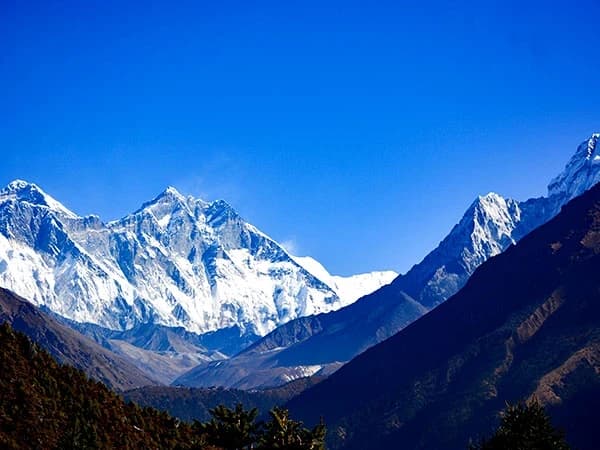
  • Cross Renjo La (5,360m / 17,585ft), widely considered the most scenic high pass in the Everest region, with views of Everest, Lhotse, Makalu, and the turquoise Gokyo Lakes spread below
  • Cross Cho La (5,420m / 17,782ft), a thrilling glacier crossing that links the Gokyo Valley to the classic EBC trail corridor
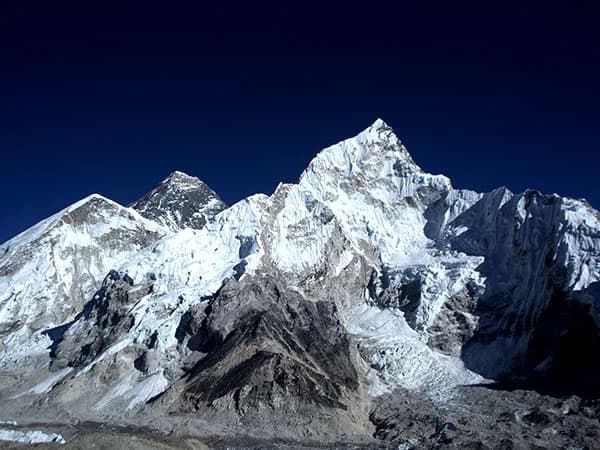
  • Stand at Kala Patthar (5,545m / 18,192ft) at sunrise, the most famous viewpoint of Everest, where four of the world's highest peaks surround you
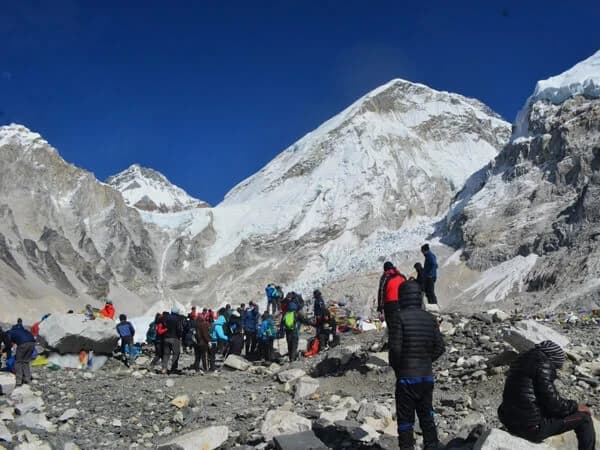
  • Reach Everest Base Camp (5,364m / 17,598ft), where the world's greatest mountaineering expeditions begin, on the edge of the Khumbu Icefall
  • Climb Gokyo Ri (5,357m / 17,575ft) for a sunrise panorama of Everest, Lhotse, Cho Oyu, and Makalu with the sacred turquoise lakes below
  • Trek through Thame, the ancestral village of Tenzing Norgay, where few trekkers venture and Sherpa culture remains undiluted by tourism
  • Walk alongside the Ngozumpa Glacier, the longest glacier in the Himalayas at over 36 kilometres, stretching from the flanks of Cho Oyu
  • Trek through Sagarmatha National Park, a UNESCO World Heritage Site home to snow leopards, Himalayan tahr, and over 100 bird species
  • Acclimatise safely with rest days at Namche Bazaar and Gokyo before tackling the high passes
  • Complete two glacial pass crossings, three iconic viewpoints, and the full Everest Base Camp experience in 15 days, saving two days compared to the Three Passes trek

15-Day Everest Two Passes Trek Overview

Fifteen days. Two glacial passes. Three iconic viewpoints. The Everest Two Passes Trek is the most efficient way to experience the wildest side of the Khumbu without the full 17-day commitment of the Three Passes circuit. By crossing Renjo La and Cho La while skipping Kongma La, you see everything that matters and still finish in two weeks.

The route begins at Lukla and climbs through Phakding to Namche Bazaar (3,440m / 11,286ft) for your first acclimatisation day. From Namche, instead of heading towards Tengboche on the classic EBC trail, you turn northwest through Thame (3,820m / 12,533ft) and up to the remote settlement of Lungden (4,380m / 14,370ft). The next morning you cross Renjo La (5,360m / 17,585ft), descending into the Gokyo Valley beside the turquoise lakes. A rest day at Gokyo lets you climb Gokyo Ri (5,357m / 17,575ft) at sunrise before tackling the second pass.

From Gokyo, you trek to Thangnak (4,700m / 15,420ft), then cross Cho La (5,420m / 17,782ft) the following morning. The descent brings you to Dzongla and then Lobuche (4,940m / 16,207ft), where you rejoin the classic Everest Base Camp trail. From Lobuche, the route follows the standard path to Gorak Shep, Everest Base Camp (5,364m / 17,598ft), and Kala Patthar (5,545m / 18,192ft) for that unforgettable sunrise. The descent takes you through Pheriche and back to Namche and Lukla.

Two acclimatisation days are built into the itinerary, one at Namche Bazaar and one at Gokyo. At Namche, you hike to the Everest View Hotel (3,880m / 12,730ft) for your first clear view of the summit. At Gokyo, you climb Gokyo Ri for the four-peak sunrise panorama. By the time you tackle the high passes, your body has had the time it needs to adjust.

The walk back to Lukla takes two days of descending through familiar villages where teahouse owners now greet you by name. The final evening in Kathmandu is a farewell dinner with your guide and team, a chance to look back at what you accomplished and realise you have just crossed two of the Himalayas' great glacial barriers.

Before You Arrive

Please arrive in Kathmandu by 4 PM the day before your trek. This gives you time for a final gear check, a briefing with your guide, and a good night's rest before the early morning start.

Your Online Briefing

Think of this as our first coffee together, but online. After you book, we will schedule a video call where we walk you through every detail: what to pack, what each day on the trail looks like, how the altitude will feel, what to expect on the two pass crossings, and anything else on your mind. No question is too small.

This is also when we learn about you. Our trek itinerary does not include your hotel in Kathmandu. During the briefing, share your preferences and budget, and we will arrange accommodation that fits. Whether you want a simple guesthouse in Thamel or a five-star hotel, we will set it up for you.

Lukla Flight — What You Need to Know

The flight to Lukla is one of the most dramatic in the world, a short ride between mountain peaks that ends on a runway carved into a hillside at 2,860m (9,383ft). From Kathmandu, it takes about 40 minutes. From Manthali, it takes about 20 minutes. It is also weather-dependent. Flights can be delayed by fog, cloud, or wind, sometimes for a full day. This is normal in the Himalayas and nothing to worry about, but it is something to plan for.

We strongly recommend keeping two buffer days at the end of your trip before your international flight home. This protects your connection if weather delays your return from Lukla.

During peak trekking season (March to May and October to November), flights to Lukla operate from Manthali Airport (Ramechhap) instead of Kathmandu, to reduce congestion on Kathmandu's single runway. If your flight departs from Manthali, we will pick you up from your hotel around midnight and drive you there (4 to 6 hours).

For your return, you fly from Lukla back to Kathmandu or Manthali. If your return flight lands at Manthali, we drive you back to Kathmandu (4 to 6 hours). All ground transportation is included in every package.

Your Trek, Your Way

Every trek we run is private, your group only, no strangers added. Whether you choose Budget, Standard, or Luxury, the mountains are yours and your companions' alone. This is not a conveyor belt. This is your personal Himalayan experience.

Your hotel in Kathmandu is not included in the trek package, and that is intentional. Kathmandu has everything from USD 10 guesthouses in Thamel to five-star hotels with rooftop views of the city. During the online briefing, tell us what you prefer and we will arrange it for you. Your trek package begins the moment you leave Kathmandu for the mountains.

Difficulty: Challenging (5 out of 5)

This is one of the most demanding treks in the Everest region. You will walk 6 to 9 hours a day over mountain trails, moraine fields, and two glacial passes above 5,300 metres. Renjo La involves steep snow and ice sections. Cho La requires crossing a glacier. Both demand early starts in freezing temperatures. Previous high-altitude trekking experience is strongly recommended. A serious level of physical fitness is essential. Our guides carry crampons and ropes when needed and monitor your condition daily, but you must be prepared for sustained effort at extreme altitude.

Compare Our Three Packages

  Budget Standard Luxury
Price from USD 1,168 USD 1,580 USD 2,800
Meals Choose your own (approx. USD 15-25/day) 3 meals + tea + fruits + 2L water daily All meals + all drinks anytime (except alcohol)
Room Shared teahouse Private twin w/ bathroom Private deluxe w/ bed heater
Porter Not included 1 per 2 trekkers 1 per trekker (carry nothing)
Guide 1 guide, assistant at 8+ 1 guide per 6, assistant at 6+ 1 guide per 2 trekkers
Transport Local vehicle + flight to Lukla Private vehicle + flight to Lukla Luxury vehicle + helicopter to Lukla
SIM data SIM only Limited data Unlimited data
Best for Experienced backpackers and strong hikers Comfort trekkers with high-altitude experience Premium experience seekers who want full support

Himalayas for Every Budget, same expert guides, same safety, three comfort levels.

Your Trek, Our Family

In the 1960s, Shreejan's grandfather Hari Lal Simkhada helped international travellers experience the Himalayas for the first time, arranging logistics, finding routes, building trust with people who had come halfway around the world on a dream. His son Ganesh went on to hold senior positions at the Nepal Tourism Board and the Nepal Mountaineering Association. And now Shreejan, the third generation, designs every itinerary you see on this website.

This is not a company that was started in a boardroom. It was started on a mountain trail, three generations ago.

Shreejan hand-picks the guide for your group from our team of TAAN-certified mountaineering professionals, people who grew up in these mountains and know every trail, every teahouse owner, and every weather sign. For a two-pass trek like this, guide selection is especially critical. He briefs your guide personally before your trek begins, because your safety and experience are not something we delegate to a system.

Have a question right now? WhatsApp Shreejan directly: +977 9810351300. No sales team. No chatbot. The person who designed your trek answers personally.

Why Trekkers Trust Us

  • 196 TripAdvisor Reviews, 4.9 out of 5 stars, TripAdvisor Travellers Choice 2024
  • 107 Google Reviews, 4.9 out of 5 stars
  • TAAN Certified, Member #1586, Government Reg: 147653/072/073
  • Secure 10% Deposit, pay just $117 to reserve, via Himalayan Bank
  • Himalayas for Every Budget, three comfort levels, same mountain, same safety
  • Three Generations, family guiding in the Himalayas since the 1960s

Solo Trekkers Welcome

You do not need a travel partner to trek in Nepal. Most of the people who book with us come alone, and by day three on the trail, they are sharing meals, swapping stories, and watching sunrises together like old friends.

Our groups are small, 2 to 20 people, because the Himalayas deserve more than a crowd. You book your trek, and it is yours. We will never add strangers to your group without your permission.

If you want to trek completely privately, you can. If you prefer company, tell us and we will list your dates as a fixed departure on our website so other solo travellers can find you and join. Either way, the trek is built around you.

Difficulty: Challenging (5 out of 5)

This is the hardest standard trekking route in the Everest region. You will cross two glacial passes above 5,300m, both requiring early starts in freezing temperatures and some sections of ice and snow. The maximum altitude is 5,545m (18,192ft) at Kala Patthar. You will walk 6 to 9 hours per day over 15 days, with several consecutive days above 4,500m. Previous high-altitude trekking experience is strongly recommended. Serious physical fitness is essential. We build two acclimatisation days into the itinerary (Namche Bazaar and Gokyo) and our guides carry pulse oximeters, crampons, and ropes. Travel insurance with helicopter evacuation cover is mandatory.

Trek With a Purpose — Changing the World, One Step at a Time

In 2019, Shreejan and Shamjhana founded the Nagarjun Learning Center in Saldum Village, one of the most remote communities in Nepal's Dhading District, where children had no school after hours, no computers, and limited healthcare. Today, 70 children receive free education and hot meals every school day. The centre has grown to 7 learning centres across Nepal, providing healthcare for 600 people, internet access for 65 children, and empowerment programmes for over 275 women.

A portion of every trek you book funds this work directly. The centre is verified and listed on the United Nations Partner Portal.

When you walk these mountains with us, every step you take helps change a life in rural Nepal. That is what we mean by Trek With a Purpose, changing the world, one step at a time.

You Might Also Like

Interactive Trek Map

Explore the complete 15-day Everest Two Passes trek route on Google Maps with GPS waypoints for every stop, pass crossings, and points of interest along the trail.

Open Interactive Google Map →

Short Itinerary
Day 01: Fly to Lukla (2,850m), Trek to Phakding (2,650m)
Max Altitude: (2,650 m - 8,562 ft).
Day 02: Phakding to Namche Bazaar (3,440m)
Max Altitude: (3,440m / 11,285ft)
Day 03: Acclimatisation Day in Namche Bazaar
Max Altitude: 3,440 m/ 11,285ft.
Day 04: Namche Bazaar to Thame (3,820m)
Max Altitude: 3750m / 12,303ft
Day 05: Thame to Lungden (4,500m)
Max Altitude: 4,500m / 14,764ft
Day 06: Lungden over Renjo La Pass (5,360m) to Gokyo (4,790m)
Max Altitude: 17,867 feet (5,446 meters)
Day 07: Gokyo Ri Sunrise (5,357m), Rest at Gokyo
Max Altitude: 5,400m/17,814 ft.
Day 08: Gokyo to Thangnak (4,700m)
Max Altitude: 4790 m /15684 ft
Day 09: Thangnak over Cho La Pass (5,420m) to Dzongla (4,855m)
Max Altitude: (5,420 m – 17,783ft
Day 10: Dzongla to Lobuche (4,930m)
Max Altitude: (4,910 m - 16,175 ft),
Day 11: Lobuche to Everest Base Camp (5,364m) via Gorak Shep
Max Altitude: 5,185m/ 17,010ft)
Day 12: Kala Patthar Sunrise (5,545m), Descend to Pheriche
Max Altitude: 4,250m/13,945ft.
Day 13: Pheriche to Namche Bazaar (3,440m)
Max Altitude: 3,440m / 11,285ft
Day 14: Namche Bazaar to Lukla (2,850m)
Max Altitude: 2850 m - 9350 ft.
Day 15: Fly Lukla to Kathmandu, Transfer to Hotel
Expand
Detailed Itinerary
Day 01:

The alarm goes off at an hour that feels unreasonable, but the anticipation you've been carrying for weeks makes it easy to move. After a short transfer from your Kathmandu hotel, you'll arrive at the domestic terminal — a place buzzing with the quiet energy of trekkers about to swap city noise for mountain silence. The flight to Lukla is one of those experiences that stays with you long after you've returned home. If you're departing from Manthali (Ramechhap), the drive starts even earlier, winding through the green middle hills before the aircraft lifts above terraced farmland and into the high country. Either way, the final approach is unforgettable: the runway at Tenzing-Hillary Airport appears on its famous hillside shelf, the pilot commits, and within seconds you're standing on the tarmac at 2,850 metres with cooler air filling your lungs.

Lukla is a compact town built around the needs of trekkers and the lives of the Sherpa families who call it home. Your guide will organise the porters, distribute loads, and walk you through the opening minutes of what will become a familiar rhythm: boots on trail, one foot in front of the other, eyes drawn upward. The path out of Lukla drops gently through pine forest and past small settlements where prayer wheels line the trail. You'll hear the Dudh Koshi River long before you see it — a milky torrent fed by glaciers far above that will be your companion for the next several days.

By mid-afternoon, you'll reach Phakding, a village strung along the riverbank at 2,650 metres. It's a modest place — a handful of teahouses with colourful corrugated roofs, a few small shops selling biscuits and bottled water, and a suspension bridge that sways just enough to remind you how far from home you are. Take the evening slowly. Sit on the terrace if the weather's kind, watch the river churn below, and let the reality settle: you're about to cross two of the highest trekking passes in the Himalaya, climb two summit viewpoints, and walk to Everest Base Camp. Every step starts here.

There's a temptation on the first day to charge ahead, to prove something. Resist it. The guides who've done this route dozens of times, the Sherpa porters who move through these valleys like water through a streambed — they all walk at a pace that looks almost lazy. That's the secret. This trek rewards patience, not speed. Tonight in Phakding, your body begins the invisible work of acclimatisation, producing extra red blood cells that will carry you over Renjo La and Cho La in the days ahead. Trust the process, drink plenty of water, and sleep well. Tomorrow the trail climbs to Namche Bazaar, and it won't really stop climbing until you're standing on a 5,545-metre viewpoint watching the sun rise over the highest mountain on earth.

Max Altitude: (2,650 m - 8,562 ft).Meals: breakfast , Lunch , DinnerAccommodation: Local Tea houseDuration: 40–20 minutes fDistance: 6.2 km / 3.8 miles
Day 02:

You'll wake to the sound of the Dudh Koshi and the clatter of teahouse kitchens firing up for breakfast. The trail from Phakding follows the river north, crossing it twice on suspension bridges strung with prayer flags that snap in the valley breeze. Each bridge is an event in itself — the steel cables groan under the combined weight of trekkers, porters, and the occasional mule train, and looking down through the mesh you'll see blue-green water churning over boulders fifty metres below. The path climbs and drops through small settlements, and the rhythm of the walking is addictive: the crunch of gravel, the distant roar of water, the occasional jangle of a yak bell from around the next bend.

About two hours in, you'll reach the entrance to Sagarmatha National Park, where your guide handles the permits while you rest on a bench and study the information boards. This is a UNESCO World Heritage Site, home to snow leopards, Himalayan tahr, and the elusive musk deer — though you're far more likely to spot a Danphe pheasant, Nepal's national bird, flashing iridescent plumage in the undergrowth. Beyond the checkpoint, the valley narrows, the forest thickens with blue pine and rhododendron, and the trail begins its serious work. The final climb to Namche is the stuff of trekking legend: a relentless zigzag up the valley wall that gains over 600 metres in roughly three hours.

Halfway up this climb, if the clouds cooperate, you'll catch your first proper glimpse of Everest. It appears between two ridges — just the dark pyramid of the summit, barely distinguishable from the surrounding peaks unless you know where to look. Your guide will point, and for a moment the exhaustion vanishes. That's the mountain you'll stand beneath in nine days' time, after crossing two frozen passes to reach it.

Namche Bazaar opens up suddenly, a horseshoe of buildings clinging to the inside of a natural amphitheatre at 3,440 metres. It's the largest settlement in the Khumbu, and after the quiet trail it feels almost urban: bakeries selling fresh cinnamon rolls, gear shops with name-brand jackets hanging outside, and a market where Tibetan traders lay out turquoise jewellery on blankets. You'll spend two nights here, so there's no rush. Find your teahouse, claim a seat by the dining room stove, and order something hot. The altitude may give you a mild headache tonight — that's normal. Drink plenty of water, skip the beer, and let your body do its work.

Max Altitude: (3,440m / 11,285ft)Meals: Breakfast / Lunch / DinnerAccommodation: Local Tea houseDuration: 6 hoursDistance: 7.9 km / 4.6 miles
Day 03:

There's a reason the itinerary holds you in Namche for a second night, and it isn't sentimentality. At 3,440 metres, your body is still catching up to the altitude, and the golden rule of Himalayan trekking — climb high, sleep low — means today's excursion is designed to push your ceiling upward before bringing you back down to rest. After breakfast, you'll set out on a trail that climbs steeply above the village, winding through juniper scrub and past a small army post before reaching the ridge at Syangboche. The air is noticeably thinner here, and you'll feel it in your lungs, but the reward is waiting just ahead: the Everest View Hotel, perched at 3,880 metres with a terrace that faces the most famous mountain panorama on earth.

On a clear morning, the view from the hotel terrace is the kind that makes you put your camera down because no lens can do it justice. Everest, Lhotse, Nuptse, Ama Dablam, Thamserku, Kongde Ri — the names roll off your guide's tongue while you stand there trying to absorb a horizon that's more ice than sky. If you're lucky with the light, the early sun catches the summit plume and turns it gold against a cobalt sky. The hotel was built in the 1970s with Japanese investment, intended as a luxury lodge for tourists who'd fly in by helicopter. It never quite achieved that vision, but its location remains unmatched.

Back in Namche, the afternoon is yours. This is the place to sort out anything you've forgotten — the gear shops stock everything from trekking poles to down jackets. Wander through the narrow lanes, visit the Sherpa Culture Museum, and watch the mule trains arrive loaded with supplies for the villages above. There's a monastery at the top of the village with views down the valley, and the weekly market, if your timing is right, is a wonderful collision of cultures: Sherpa traders, Tibetan merchants, and trekkers from twenty countries all haggling over the same yak cheese.

Tonight, pay attention to how you feel. A mild headache, some loss of appetite, and difficulty sleeping are all normal at this elevation. Serious symptoms — persistent vomiting, confusion, a staggering gait — are not, and your guide knows the difference. The altitude sickness protocols on this trek are well established, and every good guide carries a pulse oximeter and checks readings twice daily. Drink at least three litres of water today, eat well even if you're not hungry, and avoid alcohol entirely. Tomorrow you leave Namche heading west toward Thame, and you'll notice something immediately: the crowds thin out, the trail quietens, and the Two Passes Trek begins to feel like the adventure it truly is. The teahouse menus will start getting simpler the further you go from the main Everest highway.

Max Altitude: 3,440 m/ 11,285ft.Meals: Breakfast, Lunch, and DinnerAccommodation: tea house or lodge
Day 04:

This is the morning the Two Passes Trek separates itself from the classic EBC route. While most trekkers leave Namche heading north toward Tengboche, you'll turn west, following a trail that contours high above the Bhote Koshi valley toward the quieter, deeper reaches of the Khumbu. The difference is immediate. The crowded highway to base camp fades behind you, and within an hour you're walking through scattered Sherpa settlements where the only sounds are birdsong, the creak of prayer wheels, and the occasional bleat of a yak grazing on the hillside above. This is the old trade route between Nepal and Tibet, used for centuries by Sherpa merchants carrying salt, wool, and grain across the Nangpa La.

The trail rolls gently through juniper and rhododendron forest, passing mani walls inscribed with mantras that have been carved and recarved over generations. Your guide will remind you to keep these walls on your right as you pass — a small act of respect that Buddhists follow as a form of walking prayer. The valley opens and closes around you, offering glimpses of Kongde Ri's ice face to the south and the snow-plastered peaks guarding the Tibetan border to the north. There's a rhythm to this walking that feels different from the busy trail to Namche: slower, more contemplative, as if the landscape itself is asking you to pay closer attention.

By early afternoon, you'll arrive in Thame, a village sitting at 3,820 metres in a broad, windswept valley beneath the Nangpa La pass. Thame has a significance that goes beyond its modest size. This is the birthplace of Tenzing Norgay Sherpa, the man who stood on the summit of Everest with Edmund Hillary in 1953, and the village's monastery — perched on a rocky promontory above the settlement — is one of the most important gompa in the Khumbu. If you arrive with energy to spare, the short climb to the monastery is worth every step. The views down the valley are extraordinary, and the quiet courtyard with its fluttering prayer flags offers a stillness that's hard to find on the busier trails.

Your teahouse in Thame will likely be quieter than Namche — fewer trekkers pass through here, and the dining room conversations tend to be between people attempting the same ambitious circuit you are. Swap notes, compare fitness levels, and listen carefully to anyone who's come from the other direction over Renjo La. Their descriptions of the pass will range from glorious to gruelling depending on conditions and temperament, but all of them will agree on one thing: the view from the top is worth whatever it takes to get there. Tonight, top up your water bottles, organise your warm layers so they're easy to reach, and get to bed early. The next two days push you higher than you've been before.

Max Altitude: 3750m / 12,303ftMeals: Breakfast, Lunch, and DinnerAccommodation: tea house or lodgeDuration: 6 hrsDistance: 6.8km / 4.2miles
Day 05:

The trail out of Thame heads north into one of the most remote valleys on the entire route. Within an hour of leaving the village, the last traces of cultivation disappear and you're walking through a landscape stripped to its essentials: grey rock, thin soil, scattered cushion plants, and the vast sky of the high Himalaya pressing down from above. The Bhote Koshi River, which you've been following since Namche, has shrunk to a glacial stream, and the valley walls have closed in, funnelling the wind into gusts that can stop you mid-stride. Pull your hood up, lean into it, and keep moving. Your body knows what to do by now.

The trail climbs steadily but not steeply, gaining altitude through a series of broad yak pastures where stone walls mark the boundaries of summer grazing. In the warmer months, Sherpa herders bring their animals here to feed on the sparse grass, and you might pass a few stone huts with smoke curling from their chimneys. In autumn and spring, these pastures are empty — just you, your group, and the mountains. The solitude is extraordinary. On the standard Everest route, you're rarely out of sight of another trekker; here, you can walk for an hour without seeing another soul.

Lungden appears at 4,500 metres — a tiny settlement of just a few stone buildings tucked into a sheltered hollow below the moraine that guards the approach to Renjo La. If Thame felt quiet, Lungden feels like the edge of the inhabited world. The teahouse is basic — thin walls, cold rooms, and a dining area where the stove is the centre of all life — but the hospitality is genuine, and the food is hot. Dal bhat is the wisest choice tonight: it's the most calorie-dense option, it's freshly cooked, and your body needs every bit of energy it can store for tomorrow's climb.

After dinner, step outside and look up. At 4,500 metres, with no light pollution and air so thin it barely scatters, the stars are staggering. The Milky Way arches overhead like a river of spilt light, and you can pick out constellations that are invisible from lower elevations. It's a reminder of how far you've come — and how high you'll go tomorrow. Renjo La at 5,360 metres is the first of your two pass crossings, and the alarm will ring well before dawn. Make sure your headtorch batteries are fresh, your acclimatisation feels solid, and your warmest layers are within arm's reach. Sleep won't come easily at this altitude — periodic breathing is normal and harmless — but even lying still lets your body rest. Tomorrow is one of the defining days of this trek.

Max Altitude: 4,500m / 14,764ftMeals: Breakfast, Lunch, and DinnerAccommodation: tea house or lodgeDuration: 6 hrsDistance: 8.2 km / 5 miles
Day 06:

The headtorch clicks on before the sun has any intention of showing itself. Breakfast is quick — porridge, tea, whatever your stomach will accept at 4,500 metres in the cold dark of pre-dawn — and then you're on the trail, following your guide's lamp up the moraine toward the first pass of the trek. The initial climb from Lungden is steep and relentless, switchbacking up a rocky slope where the footing demands attention and the thin air makes every upward step feel like two. Your breathing will be loud in your own ears, and you'll settle into a rhythm of ten steps, pause, ten steps, pause. That's not weakness — that's strategy. Every experienced high-altitude trekker moves this way above 5,000 metres.

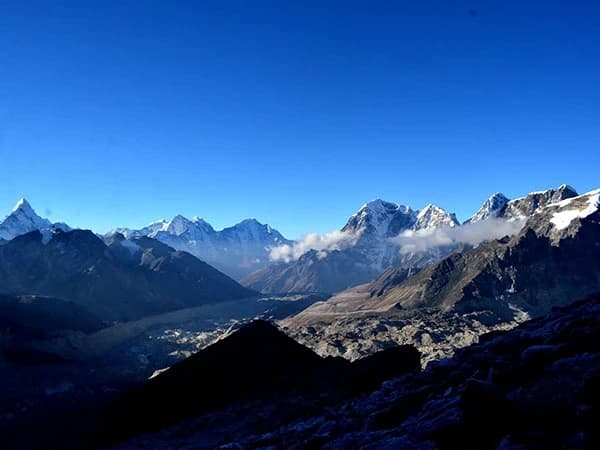
As dawn arrives, the landscape transforms from monochrome grey into a palette of amber and rose. The snow on the surrounding peaks catches the first light while you're still climbing in shadow, and for a few minutes the world looks painted rather than real. The trail steepens further as you approach the pass itself, scrambling over boulders and patches of old snow. And then, quite suddenly, the climb is over. You're standing on Renjo La at 5,360 metres, with prayer flags snapping in the wind and a view that justifies every burning muscle in your legs. To the east, the turquoise lakes of Gokyo are laid out below you like jewels set in grey stone. Behind them, the Ngozumpa Glacier — the longest in Nepal — flows south in a river of debris-covered ice. And there on the horizon, Everest rises above everything else, its dark pyramid trailing a plume of spindrift in the jet stream.

The descent from Renjo La into the Gokyo valley is long and steep, dropping over 500 metres on a trail that zigzags through loose rock and occasional snow patches. Your knees will feel every metre of it, and trekking poles earn their weight in gold on this section. As you drop lower, the lakes appear one by one — each a different shade of turquoise depending on the light, the glacial sediment, and whatever alchemy the Himalaya uses to make its water impossibly beautiful. The third lake, the largest, sits beside the village of Gokyo, and by the time you reach its shore your legs will be telling you that seven or eight hours of mountain walking is quite enough for one day.

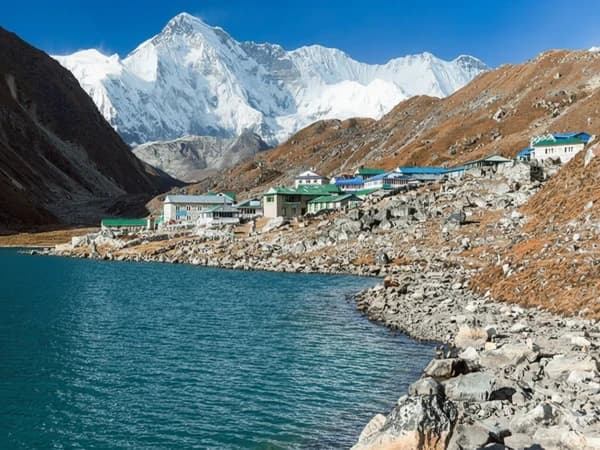
Gokyo sits at 4,790 metres on the shore of its lake, a handful of teahouses backed by the immense wall of Cho Oyu to the north. It's a place of extraordinary beauty — the kind of place where you sit on the terrace of your teahouse and simply stare, too tired and too moved to reach for your camera. Dinner tonight will taste better than anything you've eaten in days, partly because your body is desperate for calories and partly because you've earned it. You've crossed your first pass. One remains. Tomorrow morning, in the pre-dawn darkness, you'll climb Gokyo Ri for what many trekkers call the finest viewpoint in the Everest region. For now, drink your tea, eat your dal bhat, and let the satisfaction settle over you.

Max Altitude: 17,867 feet (5,446 meters)Meals: Breakfast, Lunch, and DinnerAccommodation: tea house or lodgeDuration: 8 hoursDistance: 9 km / 5.6 miles
Day 07:

The alarm goes off at four in the morning, and everything in your body protests. Your muscles ache from yesterday's pass crossing, the air in your teahouse room is cold enough to see your breath, and the idea of climbing another 567 vertical metres in the dark sounds like a punishment rather than a privilege. But you'll get up anyway, because Gokyo Ri at sunrise is one of those experiences that changes the way you think about mountains, and your guide wouldn't wake you this early if it weren't worth it. A quick cup of tea, a couple of biscuits, headtorch on, and you're out the door into a darkness so complete the stars look close enough to touch.

The trail up Gokyo Ri is steep from the start and stays steep all the way to the summit at 5,357 metres. There are no switchbacks to ease the gradient — just a direct line up the ridge with cairns marking the way and the occasional false summit that tests your resolve. You'll stop frequently, hands on knees, breathing hard, watching the beam of your headtorch illuminate the loose rock beneath your feet. Other trekkers' lamps dot the ridge above and below like a slow-motion string of fireflies. Nobody talks much. The effort is too great and the anticipation too sharp for conversation.

And then you reach the top, and the sun arrives, and nothing you've been told about this moment quite prepares you for it. Four of the world's six highest mountains are visible from Gokyo Ri: Everest, Lhotse, Makalu, and Cho Oyu, all catching the first light in a sequence that turns the horizon from grey to gold to white. Below you, the Gokyo lakes shimmer in shades of turquoise and emerald, and the Ngozumpa Glacier stretches south like a frozen highway. The scale is almost impossible to process — you're standing on a minor bump in a landscape of giants. Take your photographs, but also take five minutes to put the camera away and simply look.

The descent back to Gokyo is faster but no less demanding on tired legs, and by mid-morning you'll be back in the teahouse with a second breakfast that you'll eat with the appetite of someone who's earned every calorie. The rest of the day is yours. Some trekkers walk to the fourth or fifth Gokyo lakes, which sit further up the valley beneath Cho Oyu's enormous west face. Others simply rest — reading, writing in journals, or sitting on the lakeshore watching the light move across the glacier. This is a recovery day by design, and your body needs it: tomorrow you'll trek to Thangnak, and the day after that you'll cross Cho La, which is steeper, icier, and more technical than Renjo La. Let your legs rest, keep drinking water, and enjoy the quiet. Gokyo is one of the most beautiful places in the Himalaya, and you've got a whole afternoon to let it sink in.

Max Altitude: 5,400m/17,814 ft.Meals: Breakfast, Lunch, and DinnerAccommodation: tea house or lodgeDuration: 1 to 2 hrsDistance: 1.5km / 0.9 miles
Day 08:

The trail out of Gokyo follows the lateral moraine of the Ngozumpa Glacier, and from the first steps you're walking through a landscape that feels fundamentally different from the green valleys further south. The glacier is enormous — a river of ice and debris several kilometres wide — and its presence dominates everything. Boulders the size of houses sit balanced on pedestals of ice. Meltwater pools shine an unnatural blue in hollows between the rubble. The sound of running water is everywhere, though you can rarely see its source. It's an alien world, and walking along its edge, with Everest and its neighbours visible above the far moraine, gives you a sense of geological time that no photograph can convey.

The path dips and climbs across the moraine in a pattern that's physically tiring without gaining much altitude. Your ankles will work hard on the uneven ground, and the constant small ascents and descents add up. This is one of those days where the scenery does the heavy lifting — the walking itself is not particularly long, but the terrain keeps you focused. Along the way you'll pass the fourth and fifth Gokyo lakes if you didn't visit them yesterday, each one progressively more wild and less visited than the last.

Thangnak sits at 4,700 metres in a bleak but beautiful hollow beneath the peaks that guard the western approach to Cho La. It's a tiny settlement — three or four teahouses clustered together for warmth and company — and its sole purpose is to serve as a staging point for the pass crossing. Your guide will likely spend part of the evening talking with other guides about conditions on Cho La: the state of the ice, the snow levels, the weather forecast for dawn. These conversations determine whether you'll cross tomorrow or wait, and the decision is never taken lightly.

Cho La is the more technical of the two passes on this route. The approach involves navigating a rocky glacial valley, and the pass itself often requires crossing a section of bare ice with the help of fixed ropes. Crampons may be needed in some seasons — your guide will advise. None of this should worry you if you're fit and well-acclimatised at this point, but it should sharpen your focus. Tonight, eat everything you can, fill your water bottles, lay out your warmest clothing, and make sure your layers are organised so you can add and remove them without stopping. The alarm will ring at three or four in the morning, and by the time the sun rises you'll want to be well into the climb. Cho La waits for no one, and the early hours are when the ice is firmest and the conditions safest.

Max Altitude: 4790 m /15684 ftMeals: Breakfast, Lunch, and DinnerAccommodation: tea house or lodgeDuration: 5 hrsDistance: 3.7km / 2.3 miles
Day 09:

This is the day the trek earns its reputation. You'll leave Thangnak in the dark, headtorches bobbing as your group picks its way up the rocky valley toward the base of Cho La. The initial approach follows a narrow trail between boulders, climbing steadily through terrain that's more scramble than walk. Your guide sets the pace — deliberate, unhurried, with frequent pauses to check that everyone's breathing is steady and no one's showing signs of altitude sickness. The cold is sharp at this hour, biting at any exposed skin, and you'll be grateful for the effort of the climb if only because it generates warmth.

As dawn begins to light the eastern sky, the ice section comes into view. Cho La's passage at 5,420 metres involves crossing a glacial saddle that can range from dry rock in late autumn to a genuine ice field in spring. Your guide will have assessed conditions the night before and again at first light. On firm days, the crossing is straightforward — careful footwork on packed snow and ice, possibly with fixed ropes for the steeper pitches. On uncertain days, your guide may change the route or adjust the timing. This is why experience matters here, and it's why every guide we assign to this trek has crossed Cho La many times in different seasons.

The summit of Cho La at 5,420 metres is a windswept saddle marked by cairns and prayer flags. The views are less expansive than Renjo La — Cho La is a pass of passage rather than panorama — but the sense of achievement is every bit as powerful. You've now crossed both high passes on this trek, and the hardest climbing is behind you. What follows is one of the steepest descents in the Khumbu: a long, loose, knee-punishing drop down the eastern side toward Dzongla. The scree is relentless, and trekking poles are essential. Take your time, keep your weight back, and let your guide pick the line.

Dzongla sits at 4,855 metres in a sparse, wind-scoured valley that serves as the gateway between the Gokyo and Everest Base Camp corridors. The teahouses here are simple, but after the intensity of the pass crossing, a hot meal and a warm sleeping bag feel like five-star luxury. You'll notice something different about the trail from here: you're now on the classic EBC route, and the number of trekkers increases noticeably. After the solitude of the western Khumbu, it can feel almost crowded — a reminder that most visitors to this region never see the side you've just walked through. Tomorrow you continue to Lobuche, and the following day you'll finally walk to Everest Base Camp.

Max Altitude: (5,420 m – 17,783ftMeals: Breakfast, Lunch, and DinnerAccommodation: tea house or lodgeDuration: 6-7 hoursDistance: 16 km /9.9 miles
Day 10:

The trail from Dzongla to Lobuche is a relatively short day by the standards of this trek, and your body will welcome the reprieve after yesterday's pass crossing. The path follows the valley east, contouring above the lateral moraine of the Khumbu Glacier, with views south toward Ama Dablam and north toward the Everest massif that improve with every step. You'll pass the Thukla memorial cairns, a field of stone monuments built in honour of climbers and Sherpas who lost their lives on Everest and the surrounding peaks. It's a sobering place, and most trekkers pause here in silence — reading the names on the plaques, feeling the weight of the mountains' history.

The climb from Thukla is moderate but noticeable at this altitude. Every gain feels amplified above 4,500 metres, and you'll be breathing harder than the gradient seems to justify. This is normal, and by now your body has adapted enough that the discomfort is manageable rather than alarming. The landscape here is raw and stripped bare — grey moraine, scattered boulders, thin air, and above it all the immense wall of Nuptse closing off the western horizon like a frozen fortress.

Lobuche appears at 4,930 metres as a cluster of stone-and-tin teahouses huddled together on a flat stretch of ground between the moraine and the hillside. It's not a pretty village — function trumps form at this altitude — but it's a critical stop on the route to Base Camp, and the teahouses serve food that keeps trekkers fuelled for the push to Gorak Shep tomorrow. The dining rooms here are some of the most sociable on the trail: trekkers from different routes, different countries, and different speeds all converge at Lobuche, and the stories shared over cups of ginger tea are part of the trek's fabric.

Tonight, your guide will brief you on the next two days — the biggest days of the trek. Tomorrow you'll walk to Gorak Shep and continue to Everest Base Camp. The day after, you'll rise before dawn to climb Kala Patthar for the sunrise panorama that is, for many trekkers, the emotional high point of the entire journey. Eat well, drink at least three litres of water, and ignore the headache that most people feel at this elevation. Your pulse oximeter readings will tell the true story, and your guide will share them after dinner. Sleep may come in fragments — periodic breathing is standard above 4,800 metres — but the excitement of what's ahead tends to carry you through. Base Camp is less than a day away now.

Max Altitude: (4,910 m - 16,175 ft),Meals: Breakfast, Lunch, and DinnerAccommodation: tea house or lodgeDuration: 5 hoursDistance: 8.36 km / 5.1 miles
Day 11:

The trail from Lobuche to Gorak Shep follows the edge of the Khumbu Glacier through a landscape that feels less like earth and more like the surface of another planet. The glacier here is a chaos of ice pinnacles, debris ridges, and meltwater pools, and the trail picks its way along the moraine in a series of ups and downs that tire the legs without gaining obvious altitude. Pumori and Nuptse dominate the view, closing in on both sides until the valley feels like a corridor leading somewhere extraordinary. It is.

Gorak Shep sits at 5,164 metres on a sandy flat beside a frozen lake. It's the last settlement before Base Camp — a handful of teahouses that exist solely to serve the trekkers and climbers passing through. You'll drop your bags here, have an early lunch, and then set out on the final walk to Everest Base Camp at 5,364 metres. The trail crosses the glacier itself, winding through a maze of ice and rock that demands careful attention but rewards it with views that are like nothing else on earth. The ice formations here — seracs, towers, ridges of blue-white ice — are the result of centuries of slow movement and rapid melt, and walking among them feels genuinely surreal.

And then you're there. Everest Base Camp. At 5,364 metres, during climbing season, this is a city of tents, the staging ground for summit attempts on the highest mountain on earth. Outside climbing season, it's quieter — a rocky flat marked by cairns and prayer flags, with the Khumbu Icefall tumbling down from the Western Cwm above. The icefall is extraordinary: a frozen waterfall of blue-white ice blocks the size of buildings, creaking and groaning as the glacier moves. You'll stand here, look up at Everest's summit far above, and feel something that's hard to put into words. After crossing two high passes and walking through the wildest corners of the Khumbu, you've arrived at the mountain itself.

The walk back to Gorak Shep takes about two hours, and by the time you return your legs will know they've put in a proper day's work. Dinner at this altitude is more about fuel than flavour — garlic soup, noodles, whatever your stomach will accept — but the conversation in the dining room will be electric. Everyone here has a story, a reason they came, a moment from the day that hit them hardest. Share yours, listen to theirs, and get to bed early. Tomorrow morning, well before dawn, you'll climb Kala Patthar — the highest point of this entire trek at 5,545 metres — for the sunrise that draws trekkers from around the world.

Max Altitude: 5,185m/ 17,010ft)Meals: Breakfast, Lunch, and DinnerAccommodation: tea house or lodgeDuration: 6-8 hoursDistance: 15 km / 9.3 miles
Day 12:

The wake-up call comes somewhere around three in the morning, and it may be the hardest of the entire trek. You're at 5,164 metres, you've barely slept, the air in your teahouse room is below freezing, and your body is running on ginger tea and willpower. But this is the morning you've been walking toward since Lukla, and the trekkers who skip Kala Patthar regret it for the rest of their lives. Layer up, grab your headtorch, and follow your guide into the darkness. The trail climbs directly from Gorak Shep up the ridge, gaining nearly 400 metres in roughly two hours. It's steep, exposed to the wind, and at 5,500 metres every step requires a conscious effort.

As you climb, the eastern sky begins to lighten, shifting from black to indigo to grey to a thin line of gold on the horizon. The summit of Kala Patthar at 5,545 metres is the highest point you'll reach on this entire trek — higher than both passes, higher than Base Camp, higher than Gokyo Ri. And when the sun finally crests the ridge to the east and its light hits the south face of Everest, you'll understand why people fly halfway around the world for this moment. The mountain turns from black silhouette to blazing gold in a matter of seconds, and the entire Khumbu lights up around you: Nuptse's massive wall, Pumori's sharp pyramid, Changtse in Tibet, and the Khumbu Icefall cascading down from the Western Cwm like a frozen river caught mid-fall.

You'll stay on the summit for as long as the cold allows, taking photographs that will never quite capture the scale, and then the descent begins. Down to Gorak Shep for breakfast, then further down through the Khumbu corridor. The altitude drops quickly now — from 5,164 metres to Pheriche at 4,371 metres in a single day — and with each hundred metres of descent you'll feel your body come alive again. Your appetite returns, your headache lifts, your lungs fill more easily. The relief is physical and immediate, and by the time you reach Pheriche in the late afternoon, the mountain fatigue that's been accumulating for days begins to ease.

Pheriche is a small settlement in the broad Imja Valley, backed by the peaks of Island Peak and Ama Dablam. There's a Himalayan Rescue Association aid post here that provides altitude advice and medical support, and its evening talks are worth attending if the timing is right. Tonight you'll eat more than you have in days, sleep more deeply than you have in a week, and wake up feeling like a different person. The two passes are behind you. Base Camp and Kala Patthar are behind you. The remaining three days are descent — long, steady, and increasingly green as the valleys widen and the air thickens and the forests return. The hardest and the highest is done.

Max Altitude: 4,250m/13,945ft.Meals: Breakfast, Lunch, and DinnerAccommodation: tea house or lodgeDuration: 6-8 hoursDistance: 9.6 km / 5.9 miles
Day 13:

You'll wake in Pheriche with an appetite you haven't felt since Namche. That's the altitude releasing its grip, and it's a wonderful feeling. The trail south drops steadily through the broadening valley, passing stone walls and yak pastures and the scattered settlements that make up the middle Khumbu. For the first time in days, you'll notice birdsong — the high-altitude silence gives way to the sounds of a living landscape as you descend below 4,000 metres. The peaks are still enormous above you, but the air carries more oxygen, the colours are richer, and the vegetation returns in patches of juniper, scrub, and eventually the first rhododendron trees.

The trail passes through Pangboche, one of the oldest Sherpa settlements in the Khumbu, where the monastery is said to hold a relic of the yeti. Whether you believe the story or not, the gompa is worth a visit for its antiquity alone — centuries of incense smoke have darkened the walls, and the prayer wheels in the courtyard have been turned by more hands than anyone can count. Below Pangboche, the trail descends through Tengboche, where the most famous monastery in the Khumbu sits on its forested ridge with Ama Dablam and Everest rising behind it. If you passed through here on the way up, you'll see it with different eyes now — the exhaustion and uncertainty of the outward journey replaced by the quiet satisfaction of having done what you came to do.

The descent from Tengboche to Namche Bazaar drops through rhododendron forest alive with birdlife and dappled light. You'll cross suspension bridges over the Dudh Koshi that seemed intimidating on the way up but now feel familiar, almost friendly. Namche itself, when you arrive in the late afternoon, feels like returning to civilisation. Hot showers, bakeries, Wi-Fi, cold beer if you want it — the luxuries you barely noticed on Day 2 now feel like gifts. This is your last evening in the Sherpa heartland, and it deserves to be savoured.

Sit in the teahouse dining room tonight and think about what you've done. You've crossed Renjo La and Cho La, climbed Gokyo Ri and Kala Patthar, walked to Everest Base Camp, and traversed two valleys that most visitors to this region never see. You've slept above 4,500 metres for the better part of a week, eaten dal bhat in teahouses where the only heating was a yak-dung stove, and watched sunrises that no photograph will ever do justice. Tomorrow is Lukla, and the day after that, Kathmandu. The mountains will still be here when you leave. The question is whether they'll let you leave without planning to come back.

Max Altitude: 3,440m / 11,285ftMeals: Breakfast, Lunch, and DinnerAccommodation: tea house or lodgeDuration: 4-5 hoursDistance: 14.3 km / 8.6 miles
Day 14:

The trail from Namche to Lukla is the reverse of your second day — a long descent through pine and rhododendron forest, across suspension bridges, and past the settlements that felt so novel a fortnight ago and now feel like waypoints on a trail you know by heart. The walking is mostly downhill, which is kinder to your lungs but harder on your knees, and by mid-morning you'll have dropped below the Sagarmatha National Park checkpoint and back into the lower valleys where the air is thick and warm and smells of earth rather than ice.

You'll pass through Phakding, where this journey started fourteen days ago, and the contrast between the person who walked out of here on Day 1 and the person who walks through it now is worth noticing. You're leaner, probably. Certainly fitter. Your legs know how to handle a trail without thinking about it. But it's more than physical — there's a quietness that comes from spending two weeks in the mountains, away from screens and schedules and the noise of ordinary life, that takes weeks to fully fade. Some trekkers say it never does.

The final climb from Phakding to Lukla gains about 200 metres through terraced farmland and scattered houses, and by early afternoon you'll be walking into the town's narrow main street with its guest houses, gear shops, and the unmistakable sound of small aircraft engines warming up on the runway above. This is your last night in the Khumbu, and the traditional way to mark it is with a farewell dinner. Your guide will likely arrange something at the teahouse — dal bhat, of course, but also momos if you're lucky, and the kind of warmth that comes from sharing a table with people who've walked through something extraordinary together.

After dinner, consider tipping your guide and porter. Tipping is not mandatory in Nepal, but it is deeply appreciated, and the people who carried your bags over two high passes and kept you safe at 5,545 metres have earned whatever gratitude you can express. Your guide will advise on appropriate amounts if you ask. Pack your bags tonight, set your alarm early, and try to sleep despite the nervous energy that comes with knowing tomorrow's flight is one of the most dramatic in aviation. Lukla's runway is short, steep, and carved into a mountainside — and you've already seen it from the ground. Tomorrow you see it from the air.

Max Altitude: 2850 m - 9350 ft.Meals: Breakfast, Lunch, and DinnerAccommodation: tea house or lodgeDuration: 6-8 hoursDistance: 13.5 km / 8.3 miles
Day 15:

The morning flight from Lukla depends on weather, and your guide will have the latest update before breakfast. On clear days, the first flights leave shortly after dawn, and the twenty-five-minute journey back toward Kathmandu offers a final aerial view of the peaks you've spent a fortnight walking among. Everest, Lhotse, Nuptse, Ama Dablam — they pass beneath the wing in miniature, and from the air the scale of what you've walked is even more astonishing. The valleys you trekked through for days are reduced to folds in the landscape, the passes to thin lines of shadow on the ridgelines, the glaciers to ribbons of grey-white ice threading between peaks.

If the flight is delayed — and Lukla delays are common enough that they're part of the experience — your guide will keep you informed and comfortable. The teahouses in Lukla are well practised at hosting waiting trekkers, and the mood is usually cheerful rather than anxious. Most delays resolve within a few hours as cloud lifts from the valley, and the sound of the first engine overhead brings everyone to their feet.

Back in Kathmandu, the contrast hits you immediately: heat, noise, colour, traffic, the smell of incense and exhaust and frying momos all arriving at once. After two weeks in the Khumbu, the city feels overwhelming in the best possible way. Your transfer will take you to your hotel or the airport, depending on your onward plans. If you have time, the Thamel district is worth an evening of wandering — the rooftop restaurants, the narrow alleys full of thangka paintings and singing bowls, and the energy of a city that serves as the gateway to the highest mountains on earth.

This trek gave you something that the standard Everest Base Camp route cannot: two valleys, two passes, two summit viewpoints, and a route through the Khumbu that most trekkers never walk. You've seen Everest from the west at Renjo La, from the north at Gokyo Ri, and from the south at Kala Patthar. You've crossed ice on Cho La and stood on the glacier at Base Camp. You've walked through Thame, where Tenzing Norgay was born, and through Namche, where the modern Khumbu lives and breathes. Whatever comes next — another trek, a return home, or simply a long shower and a proper bed — you'll carry these fifteen days with you. The mountains have a way of staying, long after you've left them behind.

Meals: Breakfast and DinnerDuration: 40 min. flightElevation: 1616m – 5006ft
Couldn't find what you're after?Reach out to our travel experts.
Customize Trip
Route Map
Everest Two Passes Trek| Renjo La and Cho la- 15 Days
Altitude Chart
Everest Two Passes Trek| Renjo La and Cho la- 15 Days
Availability
Book your own private small group trip
No. of traveler
Price per person
1 - 4 pax
US$1149
5 - 8 pax
US$1100
9 - 12 pax
US$1050
13 - 20 pax
US$999

Discounts are determined exclusively by the size of your group. We do not add additional members to your group.

Book Now
hbl logo
Secure Payment by Himalayan Bank.
Cost Includes

Transportation

  • Airport Pickup and drop-off from Tribhuvan International Airport to the hotel of your choice by taxi or local Jeep transfer.
  • Round-trip flight from Kathmandu/Manthali to Lukla. (local  transportation to manthali and back to kathmandu.)

Accommodation and food

  • During the trek, Food or drinks are not included. 
  • You will stay in a local teahouse and lodge in a shared room during the duration of the trek.

Guide and porter

  • An English-speaking, TAAN-certified guide is provided (one guide for your group). For groups of 8 or more trekkers, an additional assistant guide is included. For more than 8 trekkers, 1 assistant guide is added.
  • Porter is not included, only the guide.

Permits and Expenses

  • Sagarmatha National Park Permits.
  • Khumbu Pasang Lhamu Rural Municipality fees.
  • Trekkers Information Management System (TIMS) card fee.
  • All government taxes and official expenses.

Medical Assistance

  • First aid kits are provided, including an oximeter to check blood oxygen levels at high altitudes.
  • Arranging rescue operations in case of an emergency health condition. (funded by travel insurance of the trekker)

Complimentary

  • Company's T-shirt and Cap before the trek.
  • At the end of your trip, you'll have a farewell meal at a restaurant in the area. At the farewell dinner after the Everest High Passes Trek—15 Days, we will give you a certificate of achievement for successful completion of the trek. 

Benefits

  • Sleeping bags and down jackets: if you do not have your own, please inform us either at your online briefing or after the arrival briefing in Kathmandu before your trek so we can provide you with one for your use during the trek.
  • Free Excess luggage storage at The Everest Holiday store for the duration of the trek.
  • We will arrange a SIM Card for every individual trekker upon arrival in Kathmandu and teach them how to get budget internet packages and top up their services.
Cost Excludes

International Flight

  • International flight cost.

Nepali Visa

  • At Tribhuvan International Airport, you can pay the following fees upon arrival: $30 for a 15-day visa, $50 for a 30-day visa, and $120 for a 90-day visa. Alternatively, you can apply for and receive a Nepal visa from the Nepalese embassy or consulate in your country.

(Note: Anyone having a visa before arrival has an express exit through the immigration line. To obtain a visa upon arrival at TIA Kathmandu, you must have the necessary funds in US dollars.)

Accommodation

  • Accommodation in Kathmandu before and after the trek will not be included in this package. So, please let us know your preferences, budget, and standard of the hotel you would like to stay in Kathmandu during the online meeting. So we can arrange it for you accordingly.

Guide and Porter

  • Tip for guides and porters. (Recommended)

Other expenses

  • Excess luggage charges for an extra porter to carry luggage and also any extra cost charged by the airline for extra luggage, as there is no porter in the budget service package; any extra porter service will be charged extra. 
  • All non-alcoholic drinks like bottled water, hot water, soft drinks, juice, tea, coffee and alcoholic drinks are not included, etc.
  • Additional costs due to delays caused by circumstances out of our control, like landslides, unfavourable weather, itinerary modification due to safety concerns, illness, changes in government policies, strikes, etc.

Equipment Lists

Pack only what you need for the trek — you can store excess luggage at The Everest Holiday office in Kathmandu for free. Budget trekkers carry their own gear (no porter provided). Standard trekkers share one porter between two — each person gets a 10 kg allowance in the duffel bag we provide. Luxury trekkers have a personal porter each and carry nothing beyond a light day bag; your guide helps with water, camera, and snacks.

Sleeping bags and down jackets are provided on all tiers as a safety requirement for teahouse nights at altitude. If you prefer to bring your own, let us know during the online briefing.

  • Sun hat (wide-brimmed)
  • Beanie (for warmth)
  • A neck gaiter or buff (for warmth and sun protection)
  • Sunglasses with UV protection
  • Insulated gloves or mittens (for cold weather)
  • Waterproof gloves (for wet conditions)
  • A thick-wool or synthetic pair of moisture-wicking socks
  • waterproof hiking boots with ankle support and excellent traction
  • Sandals (for camp use or river crossings)
  • Gaiters protect from mud, water, and debris.
  • Moisture-wicking t-shirts (short and long sleeves)
  • Thermal base layer (for colder conditions)
  • Fleece jacket and down jacket (Mandatory)
  • Lightweight puffy jacket (for extra warmth)
  • Waterproof and windproof jacket (Gore-Tex or similar)
  • Raincoat
  • Lightweight, breathable long-sleeve shirt
  • Polypropylene underwear (four)
  • Quick-drying pants/trousers (convertible or full-length)
  • Insulated pants (for colder conditions)
  • Lightweight cotton pants
  • Wear long underwear or thermal leggings when it is cold.
  • Two pairs of thermal/trekking trousers (pants)
  • Biodegradable bar soap
  • Toothbrush and toothpaste
  • Medium-sized drying towel
  • Wet wipes or hand sanitizers
  • The toilet paper is stored in a Ziplock bag.
  • Feminine hygiene products
  • Travel-sized shampoo
  • Nail clippers
  • Small mirror
  • A duffel bag with a capacity of over 60 liters is intended for porters, with one duffel bag for every trekker.
  • An individual's daypack or backpack with a 20- or 30- liter capacity should be plenty.
  • Adjustable and lightweight poles (preferably collapsible)
  • A two-liter water bladder or bottle (with a protective cover for cold climates)
  • Use water purification methods such as purification tablets, filter bottles, or UV filters.
  • Camera/smartphone (extra memory cards and batteries)
  • A portable charger, spare batteries, or a battery pack
  • Two-pin charging plug
  • Basic first aid supplies include band-aids, antiseptic wipes, pain relievers, and Diamox (which is used to prevent or lessen symptoms related to mountain sickness).
  • Personal medications (inhalers, allergy meds, etc.)
  • Few passport-size photos
  • Passport photocopies
  • Notebook and pen
  • Binoculars
  • Water purification (tablets, filter bottle, UV filter)
  • Energy bar
  • Basic first aid kit (band-aids, antiseptic wipes, pain relievers, etc.)
  • Diamox (for altitude sickness prevention/relief)
  • Personal medications (inhalers, allergy meds, etc.)
  • Lightweight headlamp (with adjustable brightness)
  • Face wipes
  • An extra pair of batteries
Essential Information

Everest Two Passes Trek (15 Days) information

Arrival, welcome, and trek start.

Airport Transfers: We offer free transportation to and from the airport for all of our trekking clients to make sure your arrival and departure go smoothly. When you arrive at Tribhuvan International Airport in Kathmandu, our representative will meet you with a sign with your name on it and give you a traditional marigold garland.

After that, a private car will take you to your accommodation. We request you arrive in Kathmandu by one day before the trek starts, by 4:00 PM, so you have time to get ready. On the day of the trek, we’ll pick you up from your accommodation and take you to the airport for your flight to Lukla, which is part of your package.

During the busiest trekking months (March, April, May, September, October, and November), flights to Lukla may leave from Manthali Airport instead of Kathmandu to ease traffic. In this instance, our guide will pick you up from your hotel at about 12:30 a.m. and bring you to Manthali, where you will take a 20-minute flight to Lukla.

During the off-season (December, January, February, June, July, and August), flights leave directly from Kathmandu. On these days, you’ll take a 40-minute flight to Lukla.

(Note:
Budget package: Your flight will be from either Kathmandu or Manthali to Lukla, depending on flight schedules. If the flight is from Manthali, you’ll travel there by local bus or shared jeep.
Standard package: Your flight to Lukla will also be from Kathmandu or Manthali, but if it’s from Manthali, you’ll be driven there in a private jeep.
Luxury Package: You’ll travel to and from Lukla by helicopter, which offers stunning views and avoids the risk of flight delays or long road travel.)

Accommodation

Along the way, you’ll spend 14 nights in teahouses or lodges on the 15-day trek. The lodges along the way have amenities like power for charging devices, Wi-Fi, and hot showers. However, you might have to pay for it. You will need at least two additional nights in Kathmandu, which our package does not cover, but as stated above, we can arrange one for you as per your choices and budget.

(Note:
Budget Package: You’ll stay in local teahouses or lodges in a shared room with other trekkers. Facilities vary, some lodges have electricity and hot water, others don’t. It’s part of the authentic mountain experience.
Standard Package: You’ll stay in standard teahouses or lodges, usually in a private twin room. Attached bathrooms are provided wherever available. Your comfort goes up, but the mountains stay the same.
Luxury Package: You’ll stay in the best available rooms, private, with attached bathroom and bed heater wherever available. All extra costs for hot showers, charging, bed heaters, and internet are fully covered.)

Meals

This travel plan includes three meals a day. The menu has a wide range of foods, from traditional Nepali to Asian to Western. We strongly suggest that you eat things that are good for you and keep you hydrated, like fresh vegetables, green tea, hot lemon, ginger tea, and garlic soup. Dal Bhat Tarkari is a cuisine from the area that has lentil soup, rice, and vegetable curry. It’s a big supper that will provide you with energy. If you want to be healthy at high altitudes, you should keep away from alcohol, caffeinated drinks, and foods that aren’t vegetarian. This bundle does not include hot, cold, or alcoholic drinks.

During the pass crossing days (Renjo La and Cho La), lunch is pre-packed as there are no teahouses at the passes.

(Note:
Budget Package: Meals are not included. You’ll eat at teahouses along the trail, choosing your own food at local prices. Most trekkers spend approximately USD 15-25 per day on meals.
Standard Package: Three meals a day, breakfast, lunch, and dinner, with seasonal fruits at breakfast. Except for one cup of tea or coffee at every meal and two litres of hot water a day, all other drinks and meals outside of mealtimes are at your own expense.
Luxury Package: Three meals a day with seasonal fruits, dry fruits, and nuts at every meal. Tea, coffee, juices, cold drinks, and mineral water provided whenever you need them, everything except alcoholic drinks. All extra costs for hot showers, phone charging, bed heaters, and internet are fully covered.)

Luggage

Each pair of trekkers will have one porter who can carry up to 20 kilograms, or 10 kg per person. We suggest teaming up with another traveller and putting your things in a duffel bag that holds at least 60 litres. You should also bring a small daypack for your personal things, like water, snacks, and valuables. You can leave any extra bags at your hotel or at our Kathmandu office for free.

(Note:
Budget Package: Porter service is not included. You’ll carry your own backpack and belongings throughout the trek. If you’d like porter support, we can arrange it at an additional cost.
Standard Package: One porter for every two trekkers, carrying up to 20 kg (10 kg per person). Extra luggage beyond this limit requires an additional porter at extra cost.
Luxury Package: Each trekker has their own personal porter. You carry nothing, your guide helps with your day bag for water, camera, and snacks.)

Facilities and Essentials

Water

You can buy a water bottle from shops along the trail or get boiled/filtered water at lodges. We recommend bringing a reusable water bottle and refilling it with boiled water. Avoid drinking untreated tap, well, or river water. For safety, please use a water purifying tablet, or you can buy one in the shops along the trail.

(Note:
Budget Package: You’re responsible for your own water. Bring a refillable bottle and purchase boiled water at lodges.
Standard Package: Two litres of hot water provided daily.
Luxury Package: Unlimited water provided throughout the trek.)

Communication

We will arrange a SIM card for every individual trekker upon arrival in Kathmandu and teach you how to get data and recharge. However, mobile signals may be weak at higher altitudes, especially around the pass crossings. For your safety, our lead guide maintains daily contact with all trekking teams via mobile. We are fully prepared to handle emergencies, and our guides are trained to assist whenever needed. Additionally, we use walkie-talkies and satellite phones in areas without network coverage to ensure constant communication.

(Note:
Budget Package: A SIM card is provided but data is not included. We’ll show you how to purchase data packages and top up.
Standard Package: A SIM card with a limited data package is included.
Luxury Package: A SIM card with unlimited data is provided.)

Visa

Foreigners require a visa to enter Nepal, but Indians don’t. Most people can get a visa when they arrive at Kathmandu International Airport. The current fee is USD 50 for 30 days, payable in cash. Citizens of China and SAARC countries receive a free visa.

Travel Insurance

This trek crosses two high passes, Renjo La (5,360m) and Cho La (5,420m), so travel insurance is required. Your policy must cover medical expenses and emergency helicopter rescue up to an altitude of 5,500 metres. We ask our clients to provide detailed insurance information within a week of booking. In case of an emergency, we will use your insurance details to arrange a quick evacuation and transfer to medical facilities.

Currency Exchange

The Nepali Rupee (NPR) is the country’s official currency; one US dollar is equivalent to around 130 NPR. In Kathmandu, you may find banks and approved money exchange centres. ATMs are widely available. Make sure your notes are new and undamaged. It’s best to exchange money in Kathmandu before heading to trekking regions, as exchange options in remote areas are limited.

Extra Expense

While our package covers most of your expenses during the trek, you will need to budget for some personal items like meals and accommodation in Kathmandu, visa fees, snacks, hot showers, personal equipment, tips for the crew, etc. We recommend you budget approximately USD 20 per day for these personal expenses during the trek.

Best Time to Trek

The best time for the Everest Two Passes Trek is during spring (March–May) and autumn (September–November). These seasons offer stable weather, clear mountain views, and comfortable trekking temperatures. Spring brings blooming rhododendrons, while autumn offers the clearest skies of the year. Winter trekking (December–February) is possible but very cold at the pass crossings. Monsoon season (June–August) is not recommended due to heavy rainfall and poor visibility.

Trek Booking

Personal Trek

We can only provide a personal trek, so you will only be trekking with your group. We will never add strangers to your treks. All the treks are customisable per your schedule.

Individual to Group Bookings

Our treks are organised with a minimum of 2 people. If you are travelling solo, we can organise a group trek open to all. Once you confirm, your group trek will be posted on our website, so others can join too. This is our policy to make every trek into your own personal holiday in the Himalayas.

Trust Trek Booking

The Everest Holiday is a registered and bonded trekking operator, ensuring a secure booking process. We are proudly members of the Trekking Agency Association of Nepal (TAAN) and the Nepal Mountaineering Association (NMA). Ganesh Prasad Simkhada, Shreejan's father, has held senior positions in Nepal's tourism and mountaineering institutions To confirm your booking, we require a 10% advance payment. Payment options include the Himalayan Bank online portal (on our website), major credit cards, bank transfers, Wise, and Western Union. After you arrive in Kathmandu, you can pay the remaining balance.

Last-Minute Booking

We recommend booking your trek in advance. However, we also offer a last-minute booking option, which requires full payment 24 hours before departure. For the last-minute booking, please contact Shreejan at +977-9810351300 or email us at info@theeverestholiday.com.

Flexible Schedule

Our trip schedule is determined by your travel date, and you can make any changes to it. If our scheduled trek dates don’t work for you, please let us know, and we will be happy to arrange a trip according to your time and schedule.

Trip Extension

You can easily extend your stay with other adventures. We can arrange exciting activities for you, such as a jungle safari (Chitwan and Bardiya), bungee jumping (Pokhara, Bhote Koshi, and Kushma), rafting (Bhote Koshi, Trishuli, and Seti rivers), kayaking (Trishuli and Pokhara), paragliding (Pokhara and Kathmandu), and more. Please have a look at our ADD-ON package for an amazing adventure during the trek.

Ecotourism Practices

We ask that you join our eco-friendly hiking practice because we are dedicated to keeping the Everest region’s fragile beauty safe. At the start of our excursion, each person will receive their own eco-waste bag. Please put all of your rubbish that can’t be composted in this bag. Don’t leave anything on the trail. We need your help to keep the Himalayas clean and lovely for the next generation.

TEH Family

We are a family firm that has been in the tourism business in Nepal for three generations. We believe that all of our employees and teams are family. Our professional and experienced guides and Sherpas will be with you the whole time to make sure your trek is safe and memorable. They know first aid, rock climbing, and mountain safety. They also speak excellent English. They are from the upper Himalayas, so they know the area well. We take care of their insurance, food, housing, and medical expenses. Please treat our workers like family, and don’t hesitate to ask for help or have questions at any time.

Farewell Dinner

We’ll have a farewell dinner in Kathmandu after the trek to celebrate your success. This is a great time for you to tell us about your trip and what you thought of it. We will also send you a certificate of achievement.

Departure

To organise your airport transfer, please share your hotel name, room number, and flight details with us. We will pick you up from your hotel and drop you at Tribhuvan International Airport so you can catch your flight home comfortably. We hope you had a wonderful journey in Nepal and look forward to welcoming you back for another adventure soon.

Tipping Culture

Tipping is accepted in Nepali culture but is not mandatory. The amount should reflect the quality of service, the length, and the cost of the trek. We recommend giving tips to the crew collectively at the end of the trek.

FAQs

• When compared to other Nepalese treks, what sets the Everest High Pass Trek apart?
In the Everest region, this hike offers breathtaking vistas, varied landscapes, and thrilling high-altitude passes while staying on less-travelled roads. It is more adventurous than the classic Everest Base Camp route.

• Can I book a private Everest High Passes Trek with you?
A private trek via the Everest High Passes is certainly an option.

• How is a private High Passes trip different from a public one?
You can experience a safer and more pleasurable journey with more freedom and individualized coaching on a private trek. You can also take acclimatisation breaks as needed.

• Can you tell me the minimum fitness level required to trek the Everest High Pass?
Because the terrain and elevations are hard, you need to be in good shape. It's important to have good cardiovascular endurance, leg strength, and stamina.

• Can beginners who have been on a hike before do this one?
Beginners can try it if they are well-prepared, but they should know that it will be hard. But keep in mind that the more fit you are, the more fun the walk will be.

• What sort of technical and physical training is recommended?
It is best to do aerobic, strength training, and hiking on uneven ground and at high altitudes regularly.

What permits are required for the Everest Base Camp, Chola Pass, and Gokyo Trek?

You need two permits:

  • Sagarmatha National Park Permits.
  • Khumbu Pasang Lhamu Rural Municipality fees.
  • Trekkers Information Management System (TIMS) card fee.
  • All government taxes and official expenses.

Who arranges the permits?
Your trekking company will take care of all the permissions you need.

• What should I bring on the Everest High Pass Trek that is essential?
Sunscreen, a warm sleeping bag, hiking boots, and a first-aid kit are all things you'll need. To learn more, please look at our part on equipment.
• Should I bring a sleeping bag on this hike?
There are blankets in the lodges, but you can also bring a sleeping bag that can keep you warm in cold weather.
• Do you need hiking sticks or something else?
You should use hiking poles to keep your balance on rough ground.
• Does the trekking package include the necessary permissions?
Our hiking programmes do cover the cost of permits for your treks.
• Where do I apply for the necessary permits to hike the Everest High Pass?
Kathmandu or the Everest region's trek entry points are the places to get a permit. But we'll handle obtaining these licenses for you.

• Do I need travel insurance for the Everest High Pass Trek?
Yes, you must have full travel insurance that covers medical expenditures and emergency helicopter evacuation up to the highest point of the trek (5,500 m).
• What coverage should I expect from my insurance for this trip?
 Along with the costs associated with medical care, insurance should also include coverage for helicopter evacuation up to 5,500 m.
• Is a visa required for my trip to Nepal, and what steps should I follow to get one?
To enter Nepal, you are required to obtain a tourist visa if you are a visitor from outside the country, with the exception of Indian nationals. Many travellers can obtain a visa upon arrival at Tribhuvan International Airport. To proceed with your visa application, please ensure you have a passport that is valid for at least six months, a passport-sized photo, and the necessary visa application fee ready. The fee for the application varies based on how long you plan to stay. The rate for a 30-day usage is set at USD 50.

Do you provide a guide for the Everest High Pass Trek package that you purchase?
Absolutely. Your package features a licensed guide from the Nepal government, bringing expertise in high-altitude trekking to enhance your experience.
• How do the guides and support workers contribute to the overall quality of the hike?
Our team provides navigation assistance, cultural insights, safety guidance, and logistics management, while our porters are here to help carry your belongings.
• Is it possible for me to do the Everest High Pass Trek on my own without a guide?
As of April 2023, the government of Nepal has implemented a ban on solo trekking in Sagarmatha National Park.

• Could you share information regarding the lodging choices available throughout the trek?
You will primarily be accommodated in comfortable teahouses or lodges, sharing rooms with another guest. We offer a stay of five nights in rooms with attached bathrooms, whenever feasible, at Lukla, Phakding, and Namche. At different locations, we will offer standard rooms.

•Are teahouses and lodges equipped with contemporary conveniences such as electricity and hot showers among their amenities?
In addition to having access to hot showers, the lodges are also provided with electricity. Please be aware that there could be fees associated with hot showers and electricity for charging your devices.

• Will I be able to use Wi-Fi or charge my phone while I'm on the trek?
Absolutely; however, there are additional charges for Wi-Fi and charging, particularly at elevated locations.

What kind of food is served? 
Meals include dal bhat, noodles, soups, rice, potatoes, and tea/coffee. Some lodges also offer Western dishes.

Are drinks and snacks part of the trek package?
This trek package does not include drinks (hot, cold, or alcoholic) or food.

Note:
Budget package: Drinks and Snacks are not included.
Standard package: you will receive 2 liters of warm water daily, and seasonal fruits will be provided with breakfast. 
Luxury package: You will have unlimited access to mineral water, coffee, tea, juices, and cold drinks except for alcoholic beverages, and seasonal fruits will be provided with breakfast, lunch, and dinner.

Are there vegetarian choices?
Yes, there are a lot of vegetarian and vegan foods available. Please tell us what kinds of meals you like.

• When is the ideal season to begin the Everest High Pass Trek?
The best times to visit are in spring (March to May) and fall (September to November) because of the stable weather and clear skies. Autumn is also a time of celebration in Nepal, so if you like celebrations, autumn is a better time to visit.

• What effect does the weather have on the trek?
The weather affects how well you can see, how safe you are while hiking, and the overall quality of your sight. The autumn and spring seasons provide the most reliable and clear weather conditions. Kindly note that adverse weather conditions may cause delays for flights to and from Lukla Airport.

• Is it a good idea to go trekking in the winter or monsoon?
You can go trekking in the winter and monsoon seasons. But when the monsoon rains come, they bring a lot of moisture to the lower trek areas, which makes the trails wet and slippery. with the winter, the trails can be hard to walk on because they are covered with deep snow.

• What health risks should I be aware of during the trek?
  Altitude sickness, dehydration, and indigestion are some health risks.

• Is mountain sickness a problem? If so, how do you treat it?
  It is very important. To get used to a new place slowly, walk at your own pace, drink a lot of water, and be aware of the signs early on. You will also learn     about different ways to do things from our help.

• What should you do if something goes wrong on the trek?
  Your insurance company will help you set up a plane to take you to safety. When something goes wrong, guides know what to do.


• What should I bring on the Everest High Pass Trek that is essential?
Sunscreen, a warm sleeping bag, hiking boots, and a first-aid kit are all things you'll need. To learn more, please look at our part on equipment.

• Should I bring a sleeping bag on this hike?
There are blankets in the lodges, but you can also bring a sleeping bag that can keep you warm in cold weather.

• Do you need hiking sticks or something else?
You should use hiking poles to keep your balance on rough ground.

How soon should I make a booking for the Everest High Pass Trek?
We recommend booking at least one month in advance so we can arrange flights and other logistics smoothly. However, we also accept last-minute bookings 24/7.

What is the process for booking the trek?
We need a 10% deposit to confirm your reservation. You can pay the rest of the money when you get to Kathmandu. We take payments by Wise, Western Union, credit cards, and bank transfers. Our bank will charge an extra 3.5% of the transaction if you pay with a card. You can also pay with cash or a card in Kathmandu. We will send you all the payment information by email after you book.

Are there cancellation or refund policies for trek?
Yes, cancellation terms vary by agency, often with a partial refund depending on notice period.

How do I get to the trek starting point of the Everest High Pass Trek?
As the trek begins with a flight from Kathmandu to Lukla during peak trek seasons (March, April, May, October, and November), the flight to Lukla will be from Ramechhap/Manthali instead of Kathmandu.

Can I get a helicopter ride during the Everest High Pass trek?
Yes, helicopter transfers are available for certain points, often from Gorakshep back to Lukla.