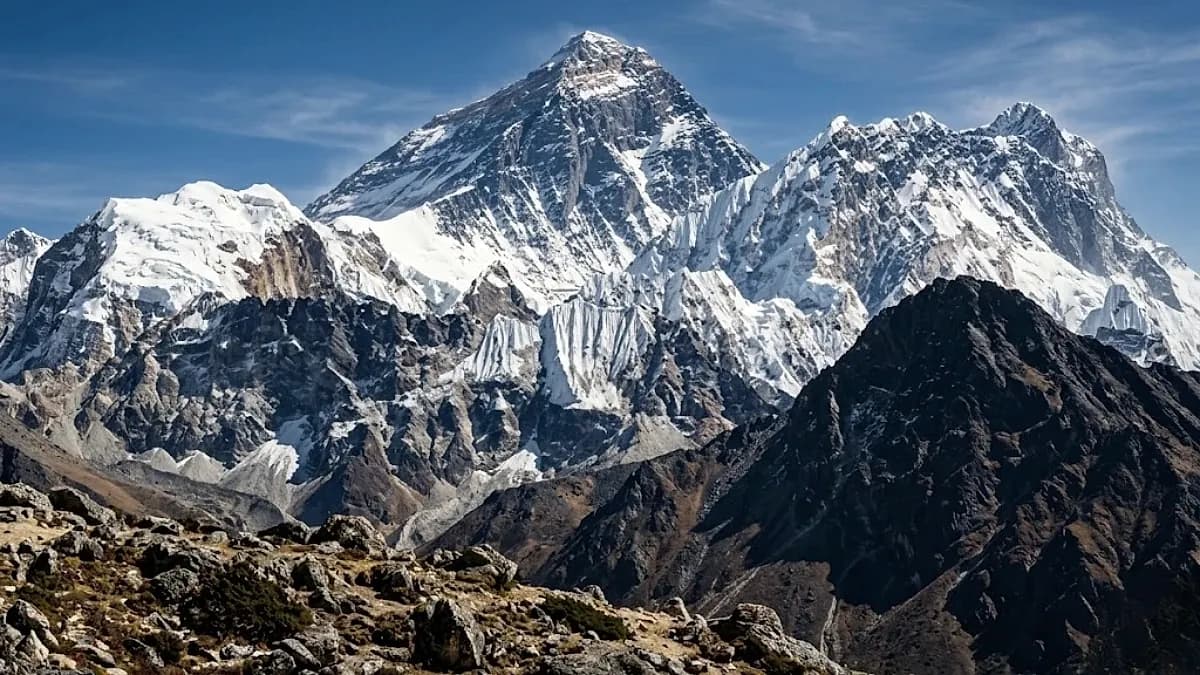
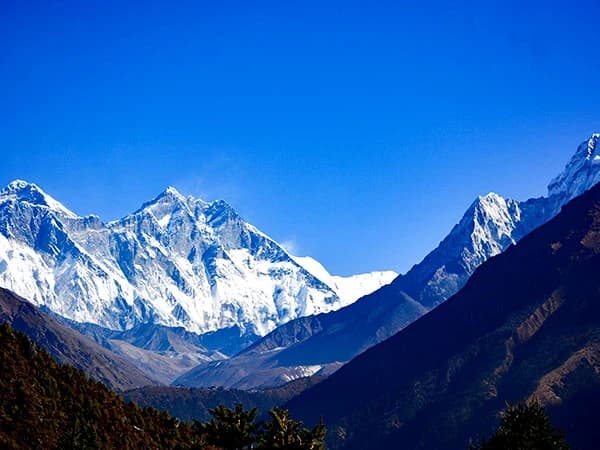
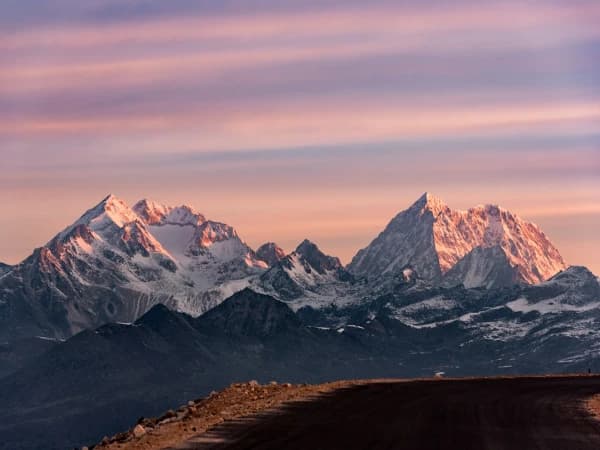
There's a moment on the trail to Everest Base Camp, somewhere between Namche Bazaar and Tengboche, when the clouds part and you see it for the first time. Not in a photograph, not on a screen, but right there, impossibly high above everything else, with a plume of snow streaming off its summit like a white flag. That's Sagarmatha. That's Chomolungma. That's Everest.
At 8,849 metres, Mount Everest is the highest point on Earth. It sits on the border between Nepal and Tibet, straddling the Mahalangur Himal range of the Himalayas. For Nepal, it's not just a mountain; it's a source of national pride, a spiritual presence, and the reason millions of trekkers and climbers from around the world find their way to this small country every year.
If you're planning the trek to Base Camp, thinking about a summit attempt, or just want to understand this mountain, this guide covers what you need to know.
Where Exactly Is Mount Everest?
Everest sits in the Khumbu region of northeastern Nepal, within Sagarmatha National Park, a UNESCO World Heritage Site since 1979. The mountain's summit marks the border between Nepal's Solukhumbu District and Tibet's Tingri County.
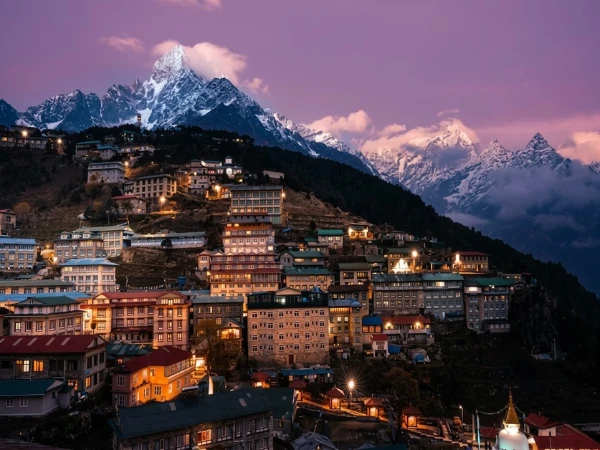
The nearest town of any size is Namche Bazaar (3,440m), the Sherpa capital and main trading hub of the Khumbu Valley. The gateway to the region is Lukla (2,860m), home to Tenzing-Hillary Airport, one of the most dramatic runway landings in the world.
From Kathmandu, you can fly to Lukla in about 30 minutes (weather permitting), or take the longer overland route via Jiri or Phaplu, which adds several days but gives you better acclimatisation and a deeper experience of Sherpa culture along the way.
A Brief History of Everest
The mountain was first identified as the world's highest peak in 1856 by the Great Trigonometrical Survey of India. It was named after Sir George Everest, the British Surveyor General, though he never actually saw the mountain and reportedly objected to having it named after him.
The Nepali name Sagarmatha means "Goddess of the Sky." The Tibetan name Chomolungma translates as "Mother Goddess of the World." Both names carry far more weight than the colonial one, and locals use them with reverence.
The first confirmed summit was achieved on 29 May 1953 by New Zealander Edmund Hillary and Nepali Sherpa Tenzing Norgay, via the South Col route from Nepal. Since then, over 6,000 people have reached the top, though the mountain continues to demand respect and claim lives every season.
Everest Base Camp Trek
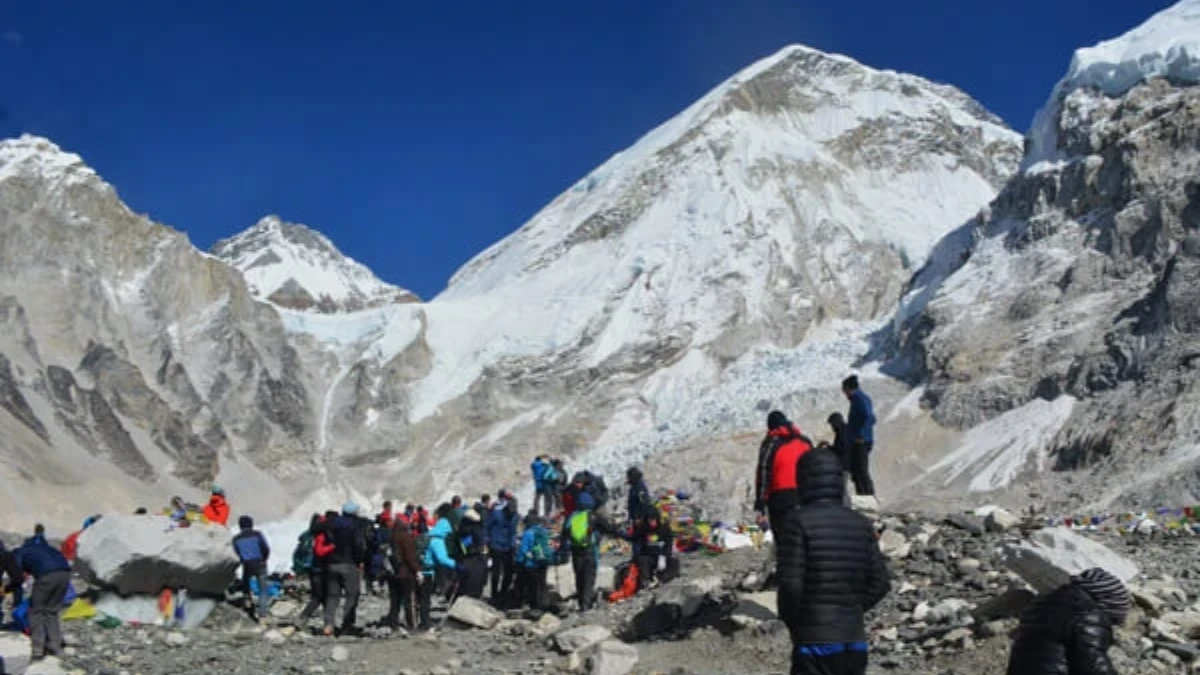
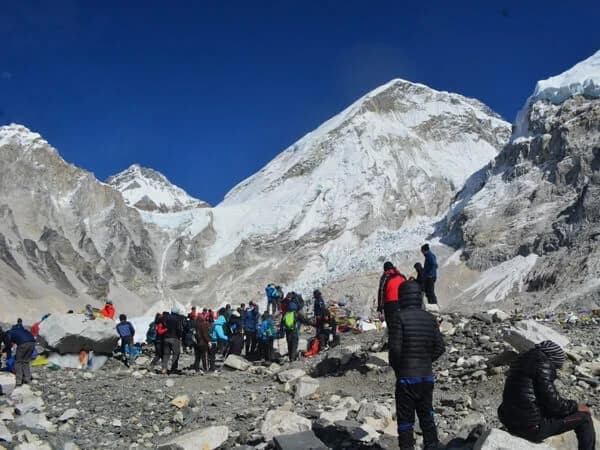
You don't need to be a mountaineer to see Everest. The Everest Base Camp (EBC) Trek is Nepal's most famous trekking route and one of the greatest walks on Earth. It takes you through Sherpa villages, ancient monasteries, and increasingly dramatic mountain scenery until you're standing at 5,364 metres, looking up at the Khumbu Icefall and the mountain itself.
The Route
- Duration: 12-14 days round trip from Lukla
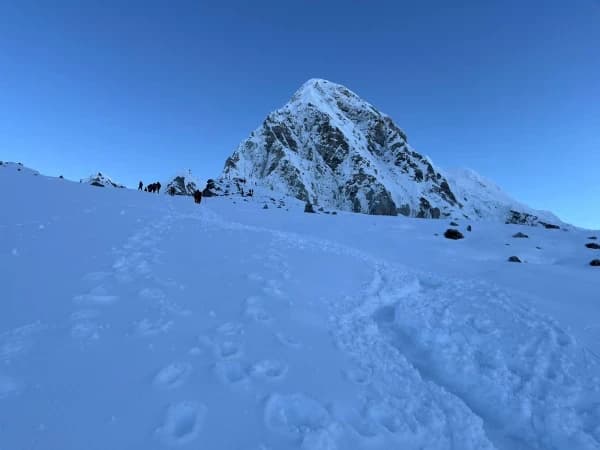
- Highest point: Kala Patthar (5,545m) for the best Everest views, plus Base Camp (5,364m)
- Difficulty: Moderate to challenging, no technical climbing, but altitude is a serious factor
- Best seasons: March-May (spring) and September-November (autumn)
- Permits: three are required, Sagarmatha National Park entry, NPR 3,000 for foreign nationals and NPR 1,500 for SAARC nationals, the Khumbu Pasang Lhamu Rural Municipality permit at NPR 3,000, and a TIMS card at NPR 2,000 for foreign nationals and NPR 1,000 for SAARC nationals.
A TIMS card is the third Everest permit, alongside the park entry and the Khumbu Pasang Lhamu permit, and it is required. TIMS registers who is on the trail and which route they are walking. That is exactly the information that matters if a party does not arrive where it should. We buy the TIMS card in Kathmandu before the trek, and your guide buys the Khumbu permit on the trail at Lukla or Monjo.
The trail follows the Dudh Kosi river valley, climbing gradually through rhododendron forests, past mani walls and prayer flags, and into the high alpine zone above the treeline. Key stops include Namche Bazaar (acclimatisation day), Tengboche Monastery (the spiritual heart of the Khumbu), Dingboche, Lobuche, and Gorak Shep, the last settlement before Base Camp.
What to Expect
The trek is not technically difficult, but altitude makes it physically demanding. Above 3,500 metres, you'll feel the thin air. Headaches, breathlessness, and disturbed sleep are common. The key is to ascend slowly, stay hydrated, and listen to your body. Most itineraries include acclimatisation days at Namche and Dingboche, don't skip them.
Teahouse accommodation is available along the entire route. Rooms are basic but clean, a bed, a pillow, and thick blankets. Meals are hearty: dal bhat, noodle soup, fried rice, and endless cups of tea. Don't expect hot showers above Namche (or if you find them, expect to pay extra).
Climbing Mount Everest
For those with the experience, fitness, and budget, summiting Everest remains the ultimate mountaineering achievement. Here's what's involved:
Routes
- South Col (Nepal): The most popular route, used by Hillary and Tenzing. Starts from Lukla, ascends through Base Camp, the Khumbu Icefall, Western Cwm, Lhotse Face, South Col, and the summit ridge.
- North Ridge (Tibet): Starts from the Tibetan side. Less technical in some sections but more exposed and colder. Currently requires Chinese permits, which have been inconsistent in recent years.
Season
The spring climbing window is typically mid-April to early June, with most summit attempts concentrated in a 1-2 week window in late May when the jet stream briefly lifts off the summit. Autumn attempts are rare due to post-monsoon snow and unstable weather.
Cost
A guided Everest expedition from the Nepal side costs between USD $30,000 and $100,000+ depending on the operator, level of support, and supplemental oxygen. This includes the Nepal government climbing royalty, which rose to USD 15,000 per person for the spring season on 1 September 2025, the first increase since 2015. Autumn is USD 7,500 and winter or monsoon USD 3,750. The figure is set by the Department of Tourism, not by the operator, so you can check it yourself. On top of the royalty the price covers Sherpa support, logistics, camps, food, oxygen, and rescue insurance.
Requirements
- Previous high-altitude climbing experience (6,000m+ peaks recommended)
- Excellent physical fitness, months of dedicated training
- Valid mountaineering insurance covering helicopter rescue to the summit altitude of the peak, with mountaineering and climbing included
- A licensed expedition operator registered with the Nepal Mountaineering Association
The Sherpa People
No guide to Everest is complete without talking about the Sherpa community. The Sherpas are an ethnic group who migrated from eastern Tibet to the Khumbu region around 500 years ago. They are Tibetan Buddhists, and their culture, language, and traditions are deeply intertwined with the mountains they live among.
When we say "Sherpa" in the context of climbing, we're referring to the high-altitude guides and support climbers who make Everest expeditions possible. They fix ropes, carry loads, set up camps, and often summit multiple times in a single season. The current record holder, Kami Rita Sherpa, reached the summit for the thirty-second time on 17 May 2026, at the age of fifty-six. Their contribution to mountaineering is immeasurable, and their bravery is extraordinary.
If you visit the Khumbu, take time to learn about Sherpa culture, visit the monasteries, attend a puja ceremony if invited, and respect local customs. Remove your shoes before entering homes and temples. Walk clockwise around mani walls and stupas. And always pass mani stones on your left.
Sagarmatha National Park
Established in 1976 and designated a UNESCO World Heritage Site in 1979, Sagarmatha National Park covers 1,148 square kilometres of dramatic mountain terrain. The park protects not just Everest but several other 8,000-metre peaks including Lhotse (8,516m) and Cho Oyu (8,188m).
Wildlife in the park includes Himalayan tahr, musk deer, snow leopard (rarely seen), and over 150 bird species including the Himalayan monal, Nepal's national bird, with its iridescent plumage that flashes emerald, copper, and purple in the sunlight.
The park entrance fee is NPR 3,000 for foreign nationals and NPR 1,500 for SAARC nationals, roughly twenty and ten US dollars at current rates, and it is set by the Department of National Parks and Wildlife Conservation rather than by us. You'll pay this at the checkpoint in Monjo, just below Namche Bazaar.
When Is the Best Time to Trek to Everest?
- March to May (Spring): The most popular season. Rhododendrons bloom below 4,000m, temperatures are moderate, and skies are generally clear. This is also the main climbing season.
- September to November (Autumn): Clear skies after the monsoon, excellent visibility, and stable weather. Slightly cooler than spring, especially at altitude. The busiest trekking season.
- December to February (Winter): Cold and quiet. Fewer trekkers, lower teahouse prices, and sharp clear skies, but temperatures can drop below -20°C at Base Camp. Not recommended for inexperienced trekkers.
- June to August (Monsoon): Heavy rain, leeches below 3,000m, and obscured mountain views. The Khumbu is less affected by monsoon than other regions, but trails can be slippery and flights to Lukla are frequently cancelled.
What Should You Know Before Trekking to Everest?
- Acclimatise properly: Spend at least 2 nights at Namche Bazaar and take the day hike to the Everest View Hotel or Khumjung village. Your body needs time to adjust.
- Carry cash: ATMs don't exist above Lukla. Carry enough Nepali rupees for the entire trek (budget NPR 2,000-3,000 per day for food, drinks, and charging).
- Pack light: a porter carries your main bag and you carry a daypack with water, snacks, camera and warm layers. Booked through us a porter is USD 25 per day; hired independently on the trail expect NPR 2,000 to 2,500, which is the porter’s wage before his own food and lodging.
- Stay hydrated: Drink 3-4 litres of water daily. Garlic soup and ginger tea are local remedies that genuinely help with acclimatisation.
- Insurance: the trek tops out at Kala Patthar, 5,545 metres, so cover must be rated above that, not level with it: a helicopter has to fly higher than you are standing in order to reach you. Ask your insurer to confirm in writing that emergency helicopter evacuation is covered up to 6,000 metres. Read the wording, not the summary page.
- Guides: A licensed guide is required in most trekking areas under the Nepal Tourism Board rule from April 2023. The Everest (Khumbu) region does not enforce it locally, but we always trek with a licensed guide. We can arrange experienced, English-speaking Sherpa guides who know the Khumbu intimately.
- Connectivity: Wi-Fi is available at most teahouses (paid, gets slower and more expensive as you go higher). Ncell and NTC have patchy coverage up to Namche; above that, satellite is your only option.
Why Trek Everest with The Everest Holiday?
We're a Nepal-based trekking company run by people who grew up in the shadow of these mountains. Our guides are local Sherpas and experienced mountaineers who know every trail, every teahouse, and every weather pattern in the Khumbu. We handle permits, logistics, accommodation, and airport transfers, you just focus on putting one foot in front of the other and taking in the most spectacular scenery on the planet.
Whether it's a 12-day Base Camp trek, a helicopter tour for those short on time, or a full expedition to the summit, we'll build the right itinerary for you.
Ready to see Everest for yourself? Chat with Shreejan on WhatsApp: +977 9810351300 or email [email protected]
Mount Everest is the destination of our Everest Base Camp Trek (12 days). See it from the air on the EBC Helicopter Tour, or combine trekking and flying with the EBC with Helicopter Return.
Want to stand at Everest Base Camp? Our Everest Base Camp Trek (12 Days) is private (your group only, no strangers), 2027 dates open, From USD $1399. WhatsApp us for tailored 2027 dates and current departures.
 Chat with Shreejan