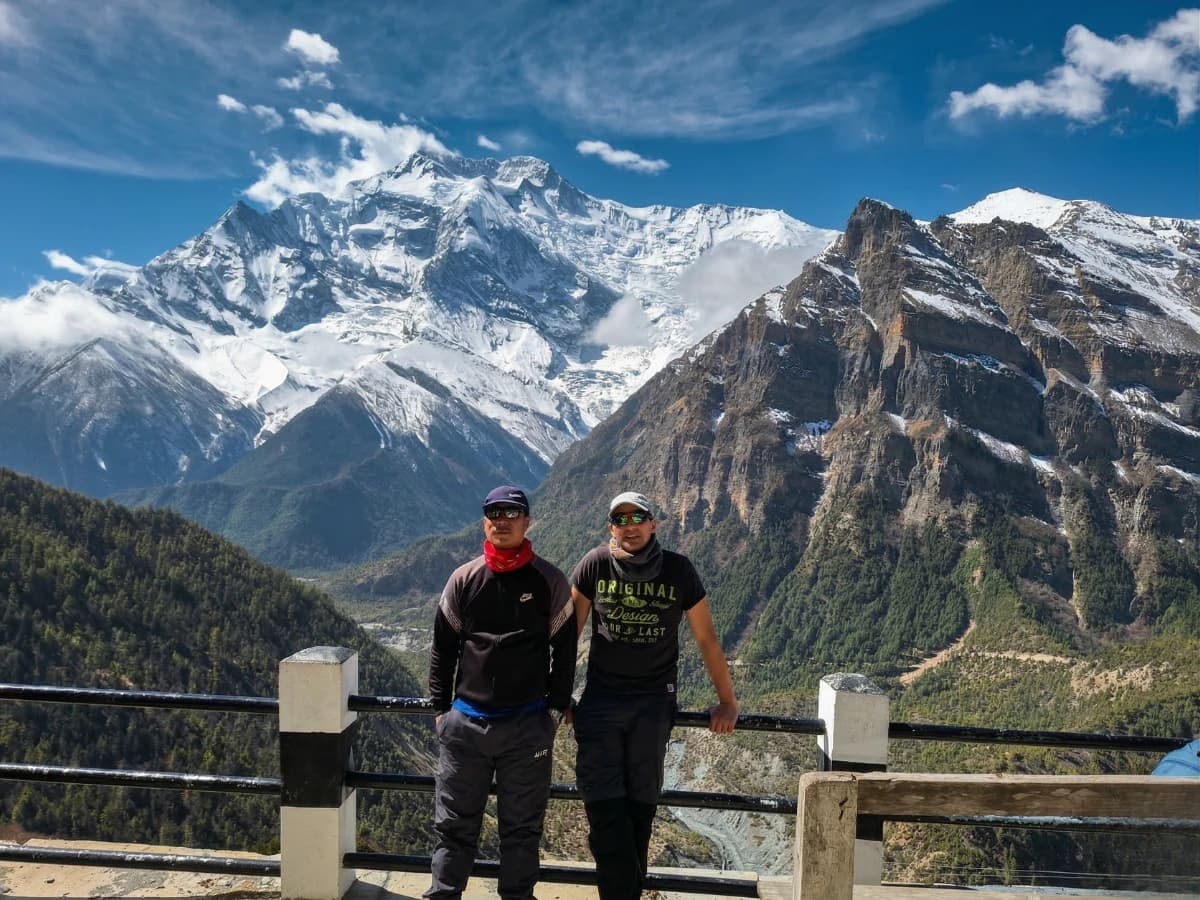
Annapurna Circuit Trek with Tilicho Lake

Annapurna Circuit Trek with Tilicho Lake - 16 Days

Annapurna Circuit + Tilicho Lake 16-day trek. Thorong La (5,416m), Tilicho (4,919m), Muktinath. 3rd-gen guides. Over 300 reviews. 10% deposit. 2027 dates open.

Duration
16 days
Grade
Strenuous
Highest point
5,416m / 17,769ft
Group size
1 to 20
Starts and ends
Kathmandu
Best time
Sep to Nov and Mar to May

Govt RegdTAAN #1586300+ ★ reviews

  • Three generations of family guides in the Himalayas, independent since 2016
  • Government-licensed Nepal trekking company (Reg 147653)
  • TAAN Member #1586
  • 300+ reviews
  • Secure payment via Himalayan Bank
  • Four-time TripAdvisor Travellers' Choice winner (2019, 2020, 2023, 2024)

Overview

From US$1,1955.0 from 2 reviewsUpdated Sep 21, 2026

Trek Highlights

  • 16-day private trek combining the Annapurna Circuit with the side trip to Tilicho Lake (4,919m), one of the highest accessible lakes in the world.
  • A rest day in Manang and a short day to Tilicho Base Camp build in time to acclimatise before the lake and the Thorong La crossing.
  • The full classical AC route: Jagat to Manang to Thorong La (5,416m) to Muktinath to the Mustang-side descent. The Tilicho extension adds the lake to the route.
  • A private trek with your own licensed guide. Porters by tier: none on Budget, one for every two trekkers on Standard, one each on Luxury.
  • 10% deposit to lock dates, balance paid in person in Kathmandu.
  • Every booking helps fund our Nagarjun Learning Center work at Saldum, where 70 children are taught by one dedicated teacher.

Why I built this trek the way I did

I am Shreejan, the founder of The Everest Holiday. The 16-day AC plus Tilicho is the route I send people on when they have already decided to do the Annapurna Circuit and want the most rewarding side trip on the route. Tilicho Lake at 4,919m is one of the highest lakes in the world, and the side trip from Manang takes three days.

The Tilicho side trip also doubles as acclimatisation for the Thorong La (5,416m) crossing 3 days later. Sleeping at Tilicho Base Camp (4,150m) and the day hike up to the lake at 4,919m gives your body more time at height before the Thorong La day.

We follow the standard anti-clockwise direction (Jagat to Muktinath) because the descent on the Mustang side is gentler than the reverse. The road that now reaches Manang has shortened parts of this route, and we drive to Jagat on day 1 and start walking from there the next morning. The 16-day shape gives you a rest day in Manang before the climb to Tilicho.

We run this as a private trek by default, and we never add strangers to your booking. If you would rather have company on the trail, you can choose to join one of our fixed departures instead. Either way the price per person is the same. Your guide is with you whether you are one person or twenty. Porters depend on the tier: none on Budget, one for every two trekkers on Standard, one each on Luxury.

Every booking on this trip helps us pay the teacher’s salary at our Nagarjun Learning Center in Saldum, where 70 children get free education. The salary is currently funded out of my own pocket. Your trek is what makes that sustainable.

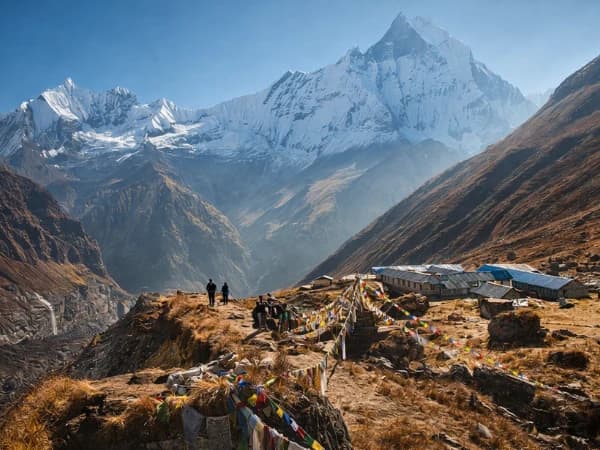
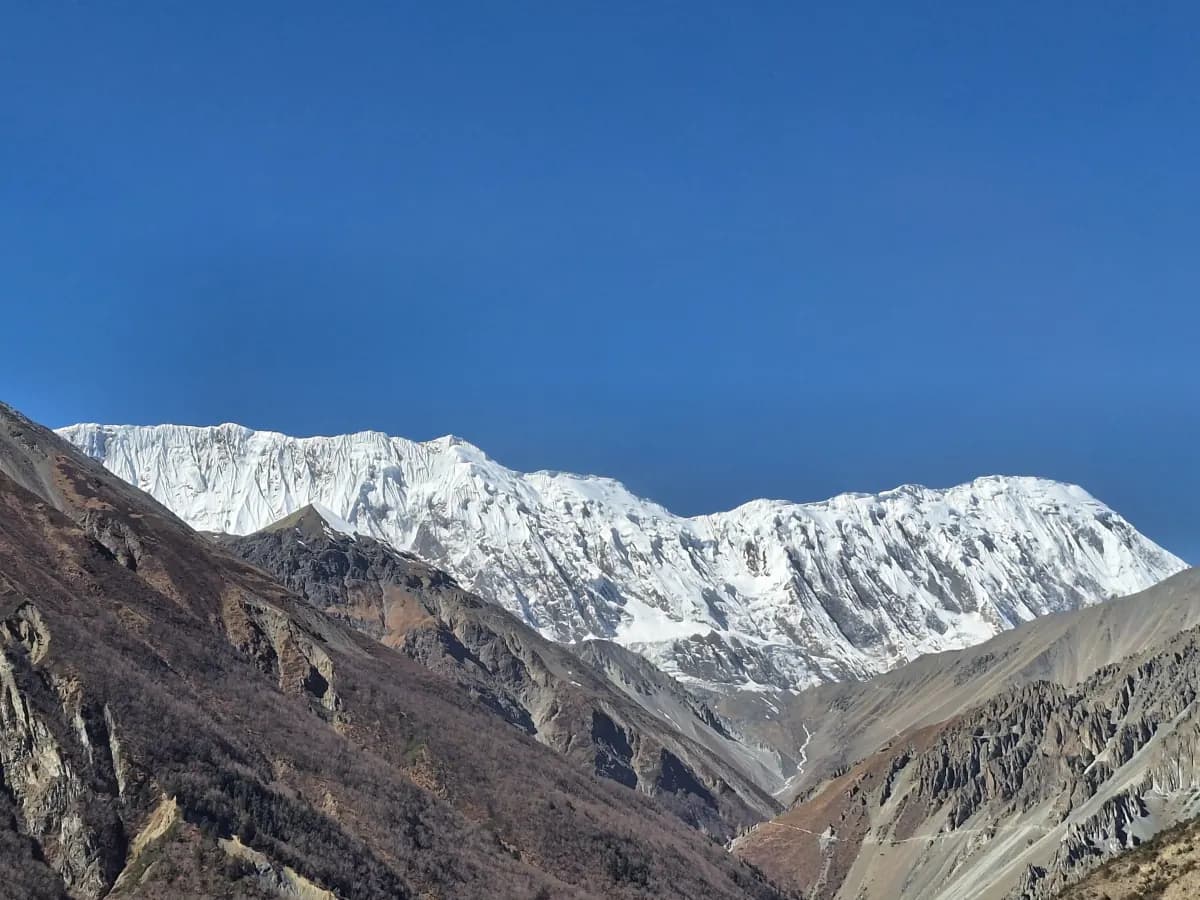
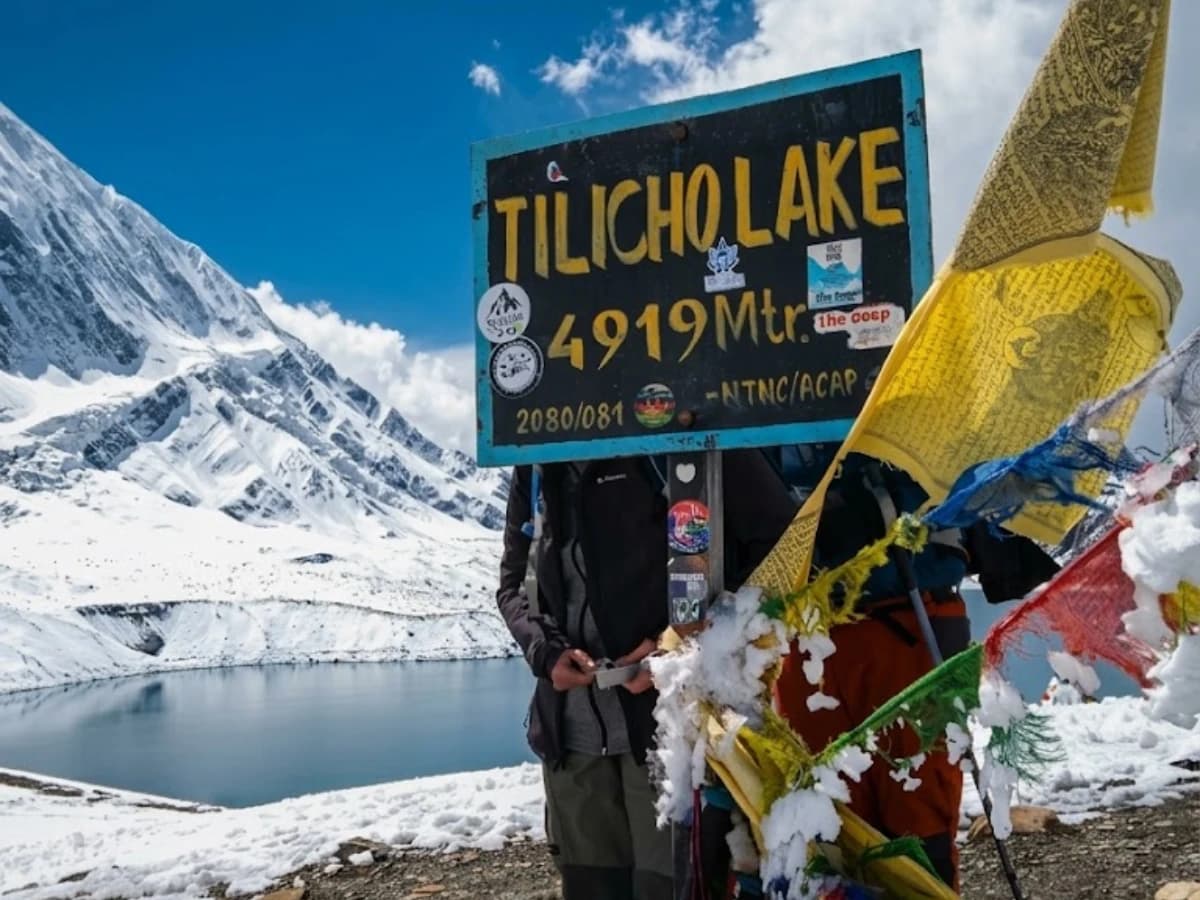
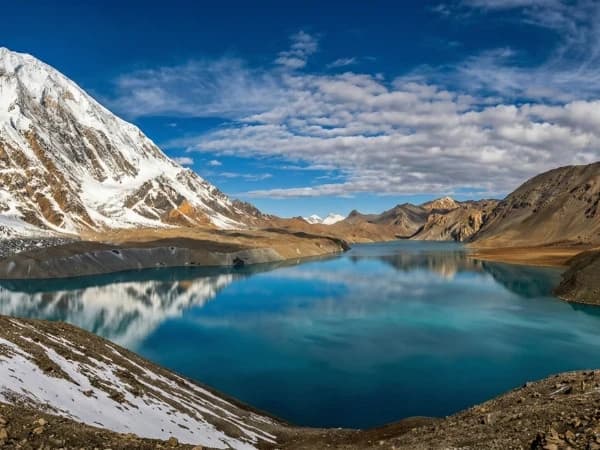
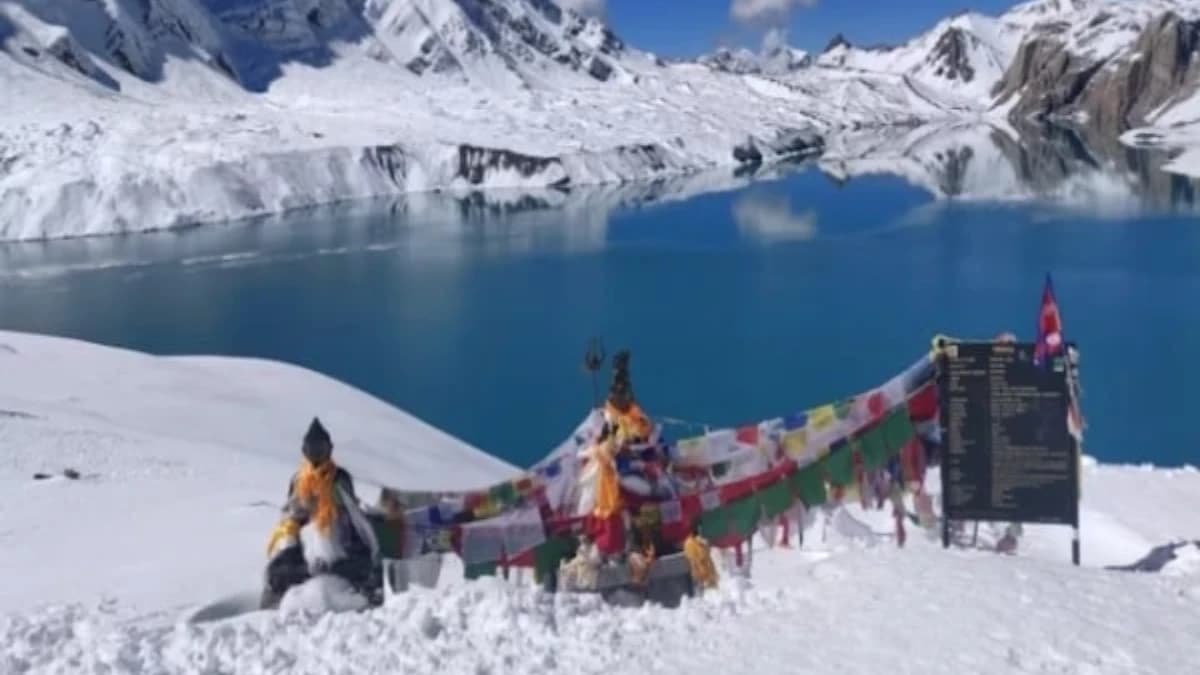
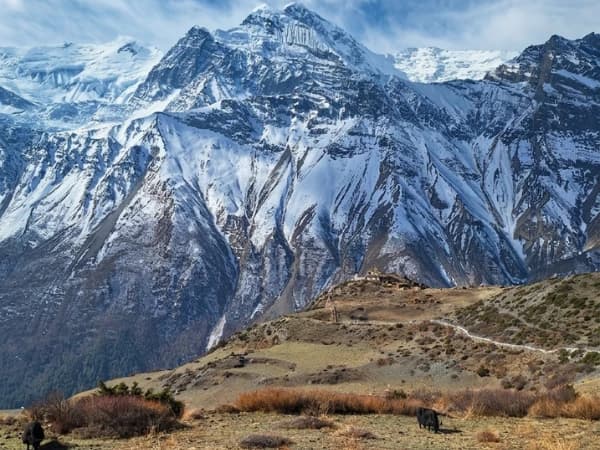
The lake appears without warning. You crest the final moraine ridge above Tilicho Base Camp, lungs working hard in the thin air at 4,919 metres, and there it is: a vast sheet of frozen turquoise wedged between sheer limestone cliffs and the north face of Tilicho Peak. No trees. No sound except wind scraping across ice. At nearly 5,000 metres, Tilicho Lake is one of the highest lakes in the world. Three days later, you’ll be climbing again, this time toward Thorong La Pass at 5,416 metres (17,769 ft), the highest point of the Annapurna Circuit and one of the great Himalayan crossings. Two high-altitude milestones in a single trek. This trek is the Annapurna Circuit with Tilicho Lake.

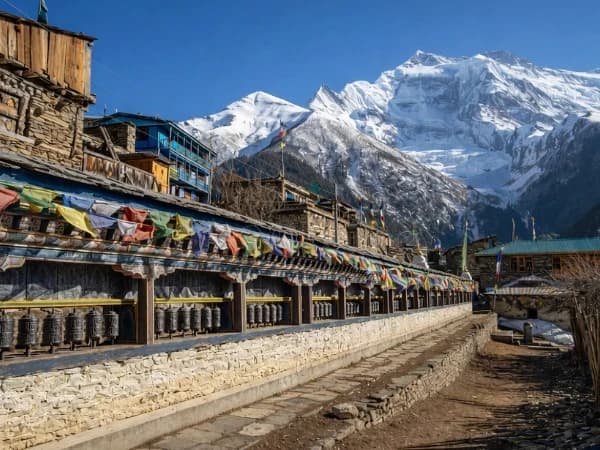
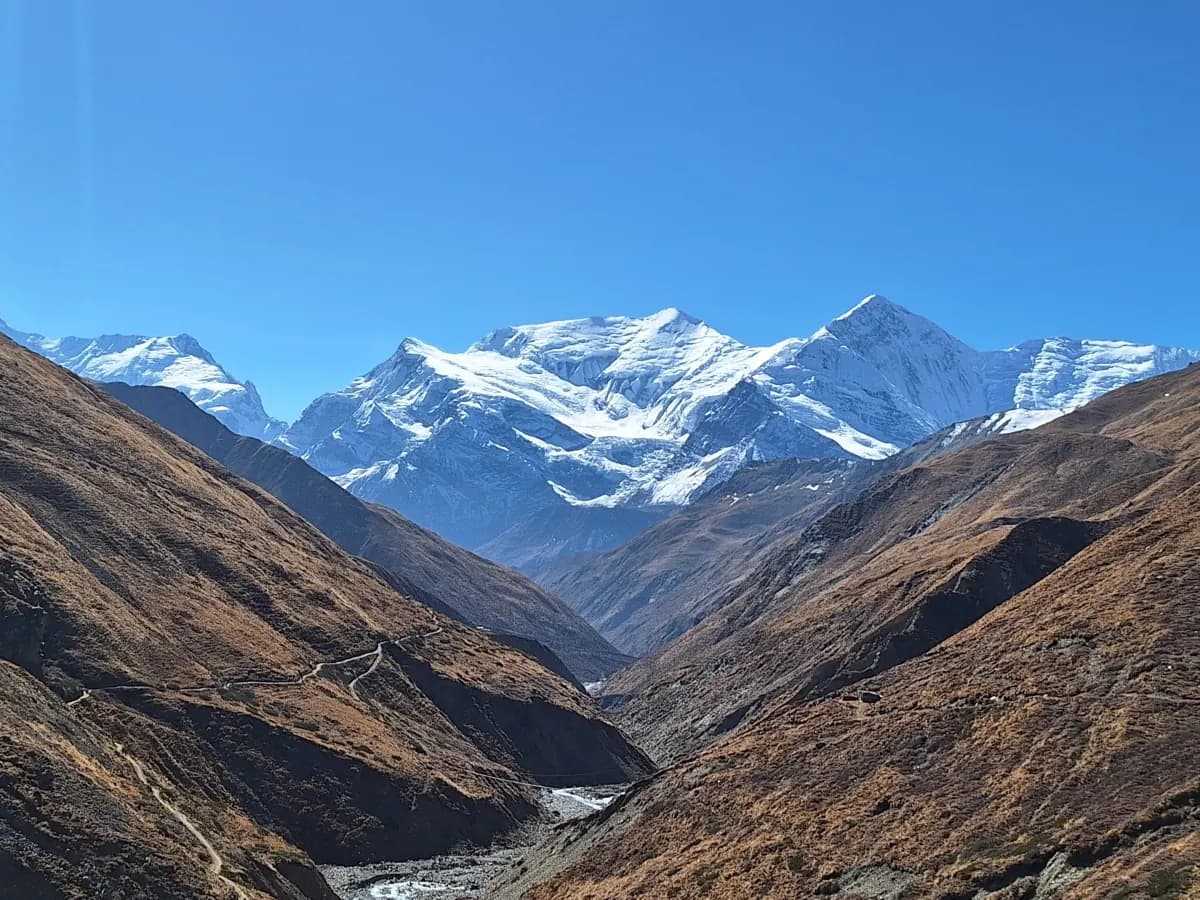
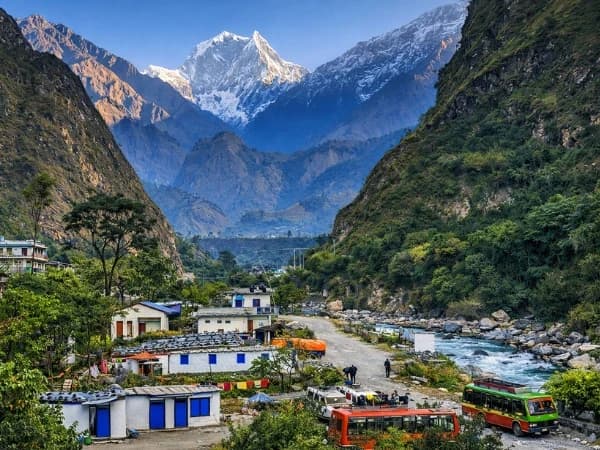
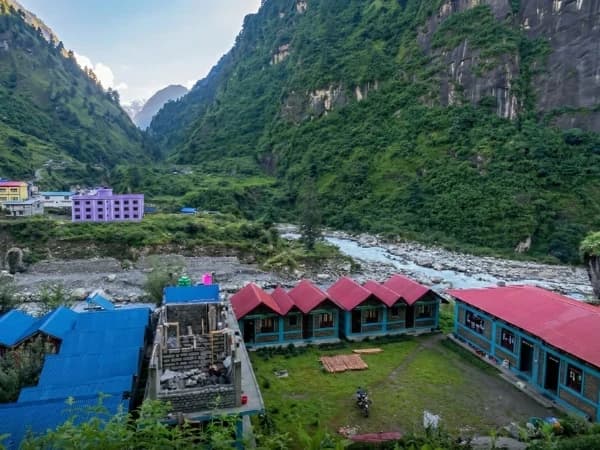
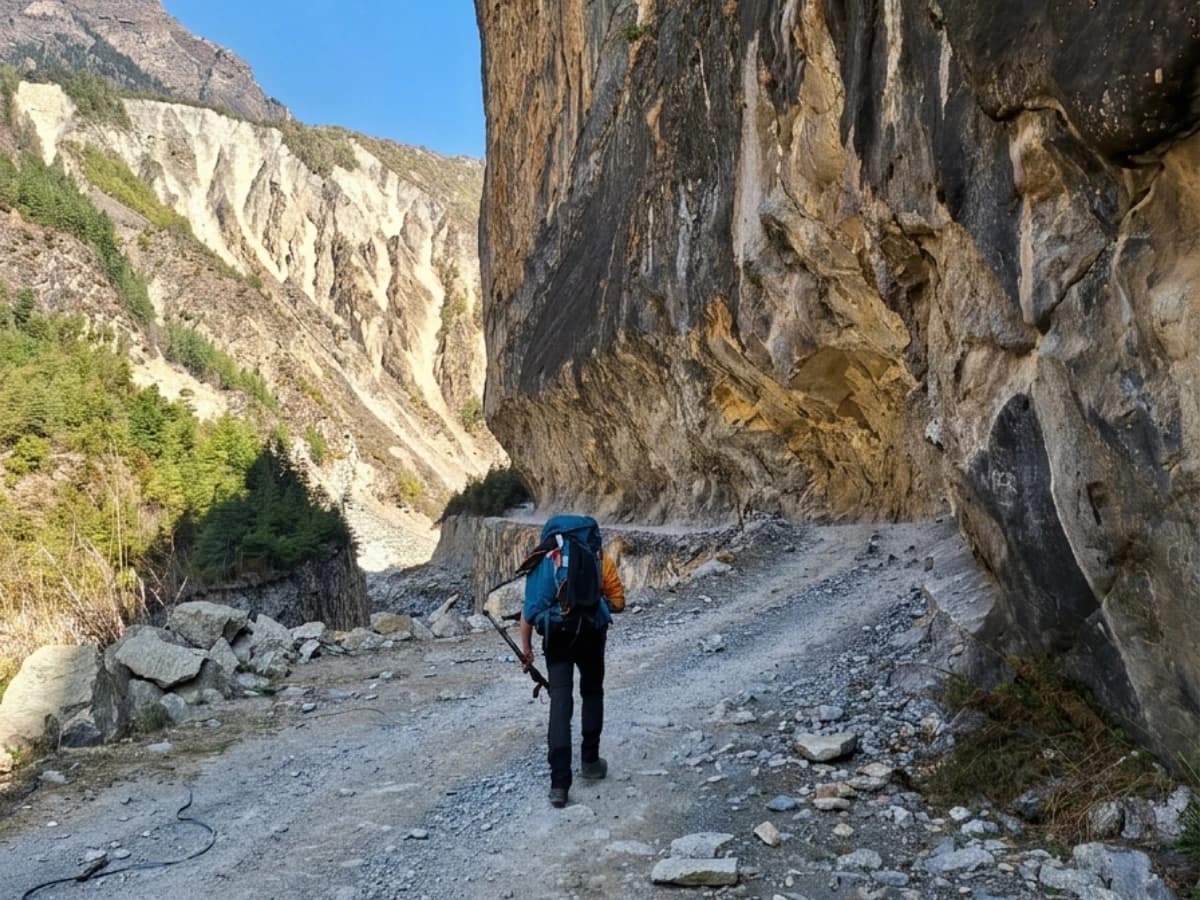
This 16-day itinerary takes the classic Circuit route and adds a detour to Tilicho Lake. You'll walk from the subtropical lowlands at Jagat, past Chame and through pine forests and apple orchards, past ancient Buddhist gompas and Gurung and Magar villages, up into the stark high-altitude desert of Manang, then branch off to Tilicho before rejoining the Circuit for the crossing of Thorong La. On the other side, the sacred temple of Muktinath and the wind-carved Kali Gandaki gorge await, with Jomsom and the apple-brandy village of Marpha on the road down to Tatopani. After the hot springs you walk up to Ghorepani and Poon Hill before the drive back to Pokhara. Every night, we spend time in a teahouse, eating dal bhat and local dishes that families have cooked for generations in these lodges. Shreejan Simkhada personally designed the itinerary, and his family has guided people through these mountains for three generations.

What Makes This Trek Special

  • Stand on the shore of Tilicho Lake at 4,919 metres (16,138ft), one of the highest lakes in the world, surrounded by 7,000-metre walls of rock and ice that few trekkers ever see up close
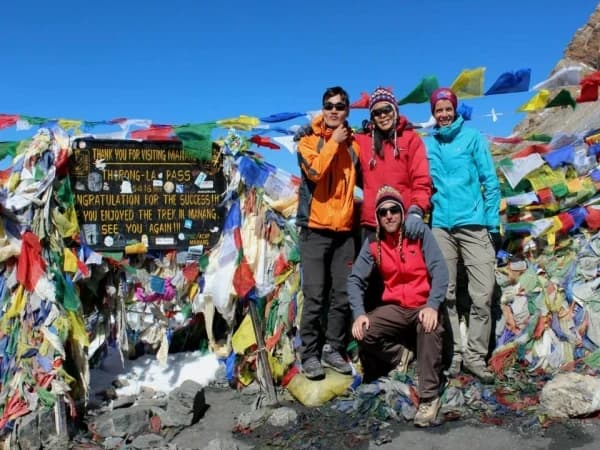
  • Cross Thorong La Pass at 5,416 metres (17,769ft), the highest point of the Annapurna Circuit
  • Experience two major high-altitude milestones in a single trek, something the standard Circuit alone cannot offer
  • Walk through the full climate spectrum of Nepal: subtropical forests, terraced rice paddies, pine and rhododendron woodland, alpine meadows, and high-altitude desert above the treeline. The best months are October to November and March to April
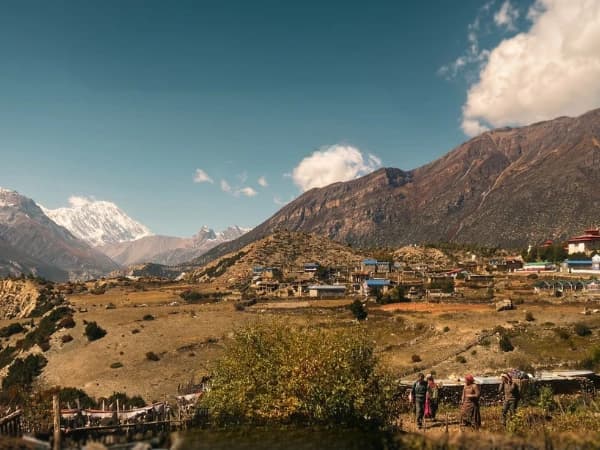
  • Explore Manang, the ancient trading village at 3,540 metres, where acclimatisation days let you wander past Buddhist monasteries, yak pastures, and ice-lake viewpoints
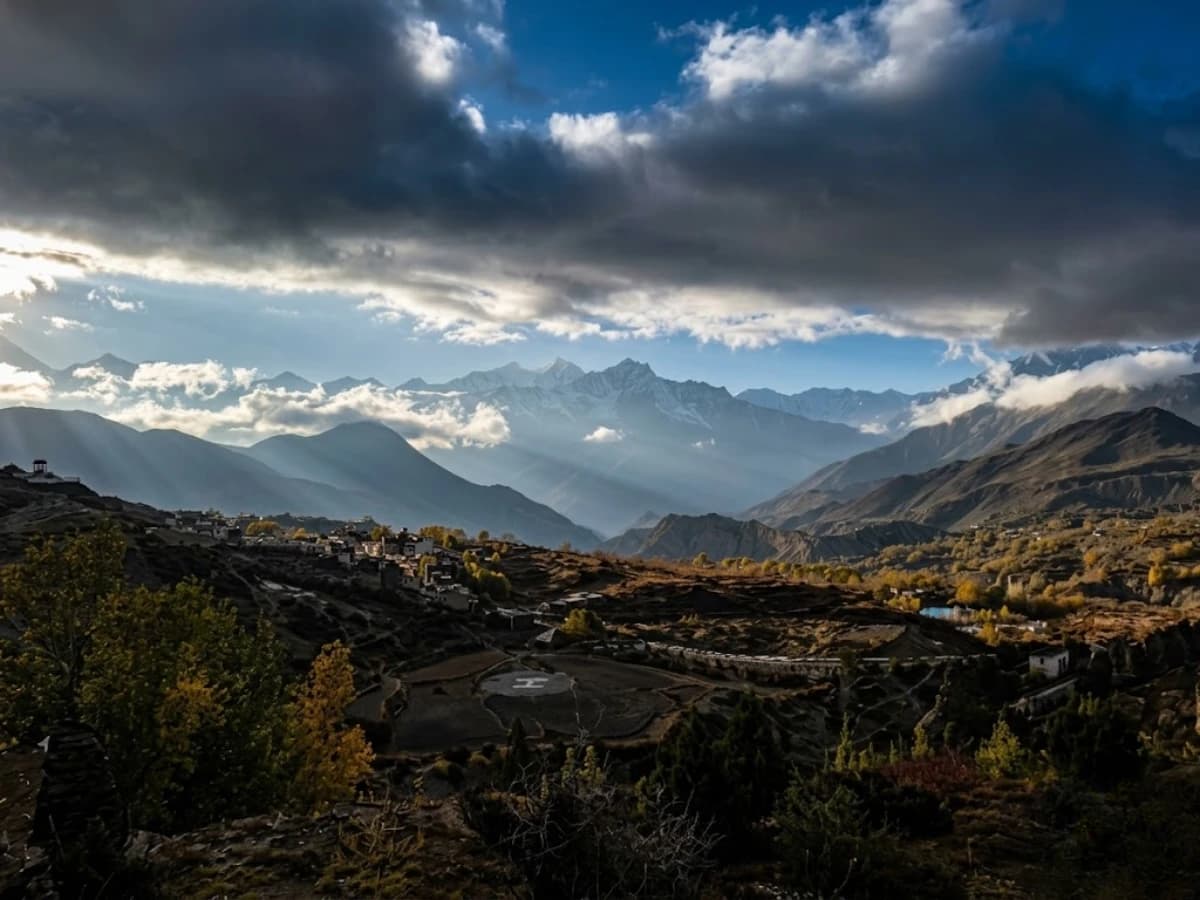
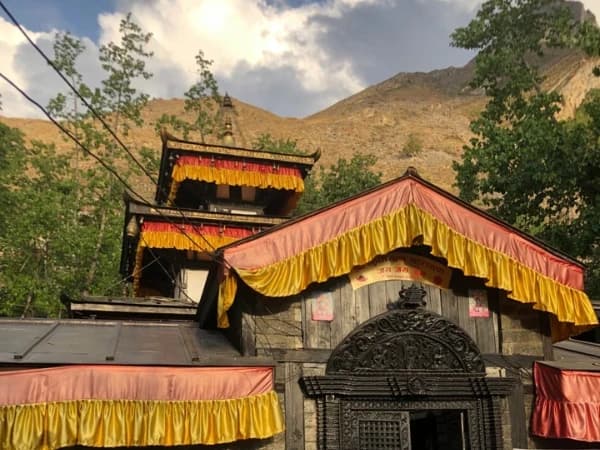
  • Visit the sacred temple of Muktinath (3,710m), a pilgrimage site for both Hindus and Buddhists, with its 108 water spouts and eternal flame burning from natural gas beneath the rock
  • Walk through Marpha, the whitewashed apple-brandy village in the Kali Gandaki gorge, and Jomsom, the gateway to Upper Mustang
  • Travel down the deepest gorge in the world (Kali Gandaki, between Annapurna and Dhaulagiri), with 8,000-metre peaks rising on both sides. Bring your camera for this stretch
  • All permits included (ACAP and TIMS), so you don't spend a day in Kathmandu queuing at government offices
  • Small groups of 1 to 20, always with a Nepal government-well-trained guide who knows this trail intimately and monitors your health with a pulse oximeter daily
  • Three tiers (Budget, Standard, Luxury) allow you to choose your comfort level. Read about luxury trekking or our budget tips to find your fit
  • Every booking supports education for 70 children in rural Nepal through the Nagarjun Learning Center

16-Day Overview

Your journey begins and ends in Kathmandu, but the trek itself starts from Jagat, which is reached by a long drive from Kathmandu via Dumre and Besisahar. From Jagat, the trail climbs steadily through rice terraces and river gorges. The first days follow the Marsyangdi River valley through Chame and into the increasingly dry plains approaching Manang, where you'll spend an acclimatisation day before the Tilicho detour. The trail to Tilicho Lake branches northwest from Manang, climbing through Siri Kharka and Tilicho Base Camp before the final steep ascent to the lakeshore at 4,919 metres. After returning to Manang, the main Circuit resumes: Yak Kharka, Thorong High Camp, and the pre-dawn crossing of Thorong La at 5,416 metres. The descent to Muktinath takes you into the rain shadow of the Annapurna range. From there you drive down the Kali Gandaki, through Jomsom and Marpha, to Tatopani. After crossing Thorong La and visiting Muktinath, this itinerary continues through Tatopani and its famous hot springs, then climbs to Ghorepani for the classic Poon Hill sunrise before descending to Nayapul and driving back to Pokhara, then Kathmandu.

Before You Arrive

Please arrive in Kathmandu the day before your trek starts. This gives you time to recover from your international flight, meet your guide, and do any last-minute gear shopping in Thamel if needed. We arrange your airport transfer, so you can step off the plane knowing we have sorted everything. Make sure your Nepal visa and trekking insurance are in order before you fly. Your insurance must cover up to 5,500 metres and include helicopter evacuation. A helicopter cannot land on the Thorong La itself; rescues are made from lower ground on either side. This trek reaches 5,416 metres at Thorong La and 4,919 metres at Tilicho Lake.

Online Briefing

After you book, we schedule a video call to walk you through everything: what to wear, what to pack, what the teahouses are really like, how acclimatisation works on this route (especially important given the double high-altitude exposure at Tilicho and Thorong La), and anything else on your mind. This stage is also when you share your hotel preferences in Kathmandu and Pokhara, so we can match the right accommodation to you. No question is too small. We'll also share advice on layering for the altitude range and whether to buy gear in Kathmandu or bring it from home.

Transport

All three tiers travel the same route. Outbound: Kathmandu to Jagat by road on Day 1, a long drive of around 9–10 hours via Dumre and Besisahar. Return: drive from Muktinath via Jomsom to Tatopani on Day 13, then trek through Ghorepani and Poon Hill (Days 14–15), descend to Nayapul and drive to Pokhara on Day 15, then drive from Pokhara to Kathmandu on Day 16. The difference between the tiers is the type of vehicle. Budget trekkers travel in a local shared vehicle, used by Nepalis and travellers alike. Standard trekkers ride in a shared tourist vehicle. Luxury trekkers get a private luxury vehicle. There are no internal flights on this itinerary; everything is by road, which keeps costs down and gives you more of Nepal's countryside. Read our budget trekking tips or our full breakdown of what trekking in Nepal actually costs.

Your Trek, Your Way

Every trek we run is arranged privately for your group. You won't be paired with strangers unless you choose to join a public departure. Whether you book as a solo trekker, a couple, or a group of friends, this itinerary is yours. Want to add an extra acclimatisation day in Manang? Spend longer exploring Muktinath? Should we skip the Tilicho detour and stick to the standard Circuit? We can adjust. Our three tiers (Budget, Standard, and Luxury) give you genuine choice over accommodation, meals, porter support, and transport without affecting the route itself. The guides and safety standards are the same on every tier. Read more about what the price difference actually buys or explore our budget trekking guide.

Difficulty

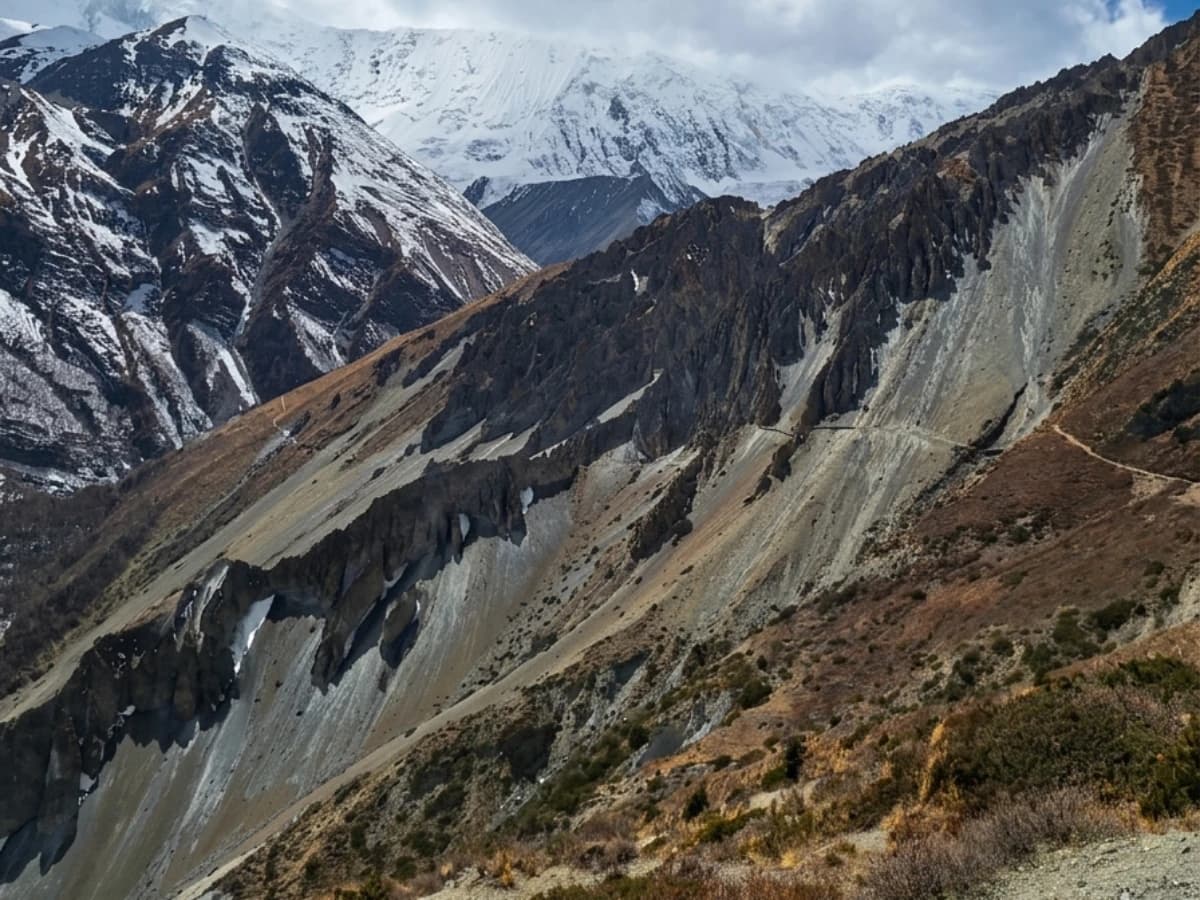
We rate this trek Strenuous. That rating reflects the combination of extreme altitude, long trekking days, remote terrain, and the double high-altitude exposure that sets this itinerary apart from the standard Circuit. You'll reach 4,919 metres at Tilicho Lake and 5,416 metres at Thorong La, both well above the threshold where altitude sickness becomes a serious concern. The Tilicho trail involves exposed sections along steep scree slopes with significant drop-offs, and the Thorong La crossing starts before dawn with a relentless climb through snow and loose rock. Daily walking ranges from 5 to 8 hours over varied terrain, and the overall distance covered across 16 days demands genuine cardiovascular fitness. Our guides carry a pulse oximeter and monitor your oxygen levels daily. We build the itinerary with a steady altitude gain profile and include acclimatisation time in Manang. We also recommend consulting your doctor about Diamox before departure. If you can comfortably walk 6-8 hours a day on hilly terrain and have done some altitude hiking before, you can do this trek. If you have concerns, read our beginner's guide to Nepal trekking.

Annapurna Circuit with Tilicho Lake at a glance

Duration16 days, Kathmandu to Kathmandu
Highest pointThorong La pass, 5,416 m (Tilicho Lake 4,919 m)
RegionAnnapurna Conservation Area
DifficultyStrenuous, no technical climbing
PermitsAnnapurna Conservation Area (ACAP) and TIMS card
Best monthsOctober to November and March to April

Best time to trek Annapurna Circuit with Tilicho Lake

SeasonMonthsWhat it is likeVerdict
AutumnOctober to NovemberClearest and most reliable; the main seasonBest overall
SpringMarch to AprilWarm, rhododendron lower down, a little more hazeGreat, second season
WinterDecember to FebruaryVery cold; Thorong La can be snowed shut, so we watch conditions closelyOnly with care
MonsoonJune to mid-SeptemberRain, leeches and cloud on the viewAvoid

Permits

This is an ordinary Annapurna route, so there is no restricted-area permit. You need the two below, and we arrange both and include them in your trek price.

PermitForeignerSAARC
Annapurna Conservation Area (ACAP)NPR 3,000NPR 1,000
TIMS cardNPR 2,000NPR 1,000

Trekking as a group?

Bring your own group — friends, family, a club, a university society, your workplace, or a cause you are raising money for — and any of the three comfort levels can run as a private group on your own dates. Private or group, the price per person is the same; we never put strangers in your group. The more of you there are, the less each person pays:

Group sizeBudget (per person)Standard (per person)Luxury (per person)
1 personUS$1,835US$2,660US$5,295
2-4 peopleUS$1,195US$2,005US$3,340
5-8 peopleUS$1,115US$1,865US$3,215
9-12 peopleUS$1,055US$1,765US$2,985
13-20 peopleUS$1,005US$1,685US$2,885

The organiser treks free. Get fourteen or more paying trekkers together and whoever organised the group joins the trek free. The one thing the organiser still pays is their own flights and permits, since those are fixed costs we pay out for every person and cannot absorb, and we cover the rest. Your departure is guaranteed on your own dates — from a solo traveller up to a group of twenty, and we never merge you into another trip.

Planning a group? Message me on WhatsApp with the trek, roughly when, and how many of you, and I will send you a price and a plan.

Book your 2027 trek early: a free Kathmandu night

Pay the 10% deposit between 21 October and 31 December 2026 and I will add one night in a Kathmandu hotel to your trek, free. It is a twin room with breakfast, in a Thamel-area 3-star hotel that we choose. You pick which night: the night you arrive, or the night after the trek.

Two more things come with it:

  • Your 2027 price is held. If the government changes a permit or park fee, we pass on only that change, at cost.
  • Free rescheduling, as always: tell us at least 72 hours before (7 days for restricted areas) and move to any date within one year.

Airport pickup, a sleeping bag and a down jacket are already part of every trek, so there is nothing to add there.

Limited to the first 30 bookings, counted by deposit received. Treks only, new bookings only. Message me on WhatsApp +977 9810351300 and I will send your deposit link. (Shreejan)

Terms

  1. Applies to new treks booked for 2027 dates, once the 10% deposit is received between 21 October and 31 December 2026. Not Kailash or Tibet, and not tours (tours already include Kathmandu accommodation).
  2. Limited to the first 30 bookings, counted by deposit received, not by enquiry.
  3. One free Kathmandu hotel night per room (one twin room with breakfast, in a Thamel-area 3-star hotel that we choose), on the night before your trek or the night after it, your choice. Extra nights, meals and upgrades are charged separately.
  4. Not combinable with any other offer. Airport pickup, sleeping bag, down jacket and duffel are already included and are not extra gifts.
  5. Price hold: the 2027 website price stays. Government permit or park fee changes are passed on at cost.
  6. The 10% deposit is non-refundable. Free rescheduling at least 72 hours before departure (7 days for restricted areas), to any date within one year. If we cannot run the trip, we refund what you paid less taxes, bank or card charges and money already spent.

Compare Our Three Packages

Feature Budget Standard Luxury
Price from USD $1,195 USD $2,005 USD $3,340
Meals on trek Not included (order and pay at teahouses) 3 meals daily + tea/coffee with meals, seasonal fruits, 2L hot water per day All meals and all drinks (except alcohol), fruits, and dry nuts with every meal
Meals in Pokhara Breakfast only at the hotel Breakfast only at the hotel Breakfast only at the hotel
Room Shared teahouse room Private twin with attached bathroom (where available) Private deluxe with bed heater and attached bathroom (where available)
Porter Not included 1 porter per 2 trekkers (max 20kg, 10kg each) 1 porter per trekker (up to 20 kg, you carry a daypack)
Guide 1 guide up to 8 trekkers (assistant from 9) 1 guide per 6 trekkers (assistant at 7+) 1 guide per 2 trekkers, plus an assistant guide for every 2 more
Transport Local bus / shared vehicle Shared tourist vehicle Luxury private vehicle
Sleeping bag & down jacket Provided (safety requirement) Provided (safety requirement) Provided (safety requirement)
Best for Backpackers and independent travellers Comfort trekkers, couples, families Premium experience seekers

Himalayas for Every Budget. You will receive the same guides and the same safety, but with three different comfort levels. Every tier includes all permits (ACAP and TIMS), a well-trained Nepal government guide, airport transfers, a sleeping bag and down jacket, and 24/7 emergency support. The only things that change are the comfort details. Note: in Pokhara, only breakfast is included at your hotel across all tiers; other meals in Pokhara are at your expense and choice, giving you the freedom to explore the city's lakeside restaurants. Meals during the drive between Kathmandu and Pokhara are not included. At high altitudes near Tilicho and Thorong La, accommodation options are limited, and all tiers receive the best available rooms at each stop. Check our guide on WiFi and charging on the trail so you know what to expect above Manang. Explore our luxury trekking guide if you want to understand what premium service looks like at altitude.

The longer the route, the larger the contribution.

Tilicho is one of the highest lakes in the world, and adding it to the Annapurna Circuit adds four extra trekking days. Those four days also add to what we forward to the Nagarjun Learning Center, the village school in Saldum that my family has been running since 2019. Seventy children attend free of charge and eat two hot meals there each school day. The center is registered with the Nepal authorities, and verified and listed on the UN Partner Portal.
Why book with The Everest Holiday

  • Three generations of family guidesFamily-run since 2016 with three generations of guiding heritage. Not an agency — the family that runs the company leads your trek personally.
  • Private group, no strangersEvery trek we run is private. Your group only. We never combine bookings or add strangers to your party. If you book solo, you walk with a guide; if you book as four friends, your group stays four.
  • Nagarjun Learning Center givebackA fixed share of every booking funds the Nagarjun Learning Center — 70 children, 7 community centres, 3 full-time teachers, 600+ medical interventions, 275+ women supported. You can visit the centre before or after your trip; we arrange the visit separately.
  • Government registered, TAAN memberGovt Regd. No. 147653/072/073. Trekking Agency Licence 2090/072, Travel Agency Licence 2838/072. TAAN Member #1586. Over 300 reviews on TripAdvisor, Google and Trustpilot. We are a real, audited Nepal company — not a booking-platform middleman.

Day by day

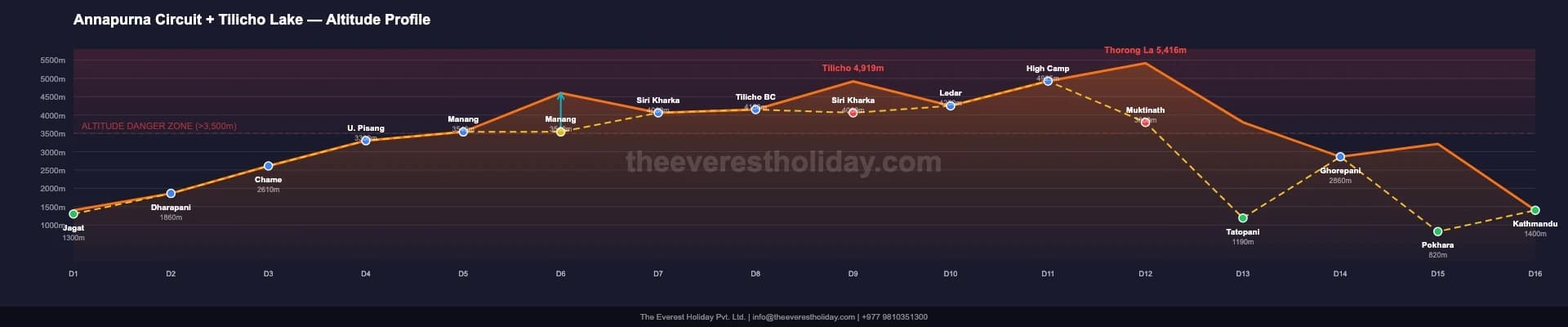
1,0002,0003,0004,0005,0006,000Day 1: 1,300 mDay 2: 1,860 mDay 3: 2,670 mDay 4: 3,300 mDay 5: 3,540 mDay 6: 3,540 mDay 7: 4,060 mDay 8: 4,150 mDay 9: 4,919 mDay 10: 4,250 mDay 11: 4,900 mDay 12: 5,416 mDay 13: 1,190 mDay 14: 2,860 mDay 15: 3,210 mDay 16: 1,400 m12345678910111213141516Highest 5,416 mDay
Altitude in metres: the highest point named in each day’s plan. Hollow dots are rest and acclimatisation days.

Couldn’t find what you’re after? Reach out to our travel experts.

Customise trip

Interactive route map

Altitude chart

Annapurna Circuit Trek with Tilicho Lake - 16 Days

Prices

The Annapurna Circuit Trek with Tilicho Lake - 16 Days with The Everest Holiday costs $1,195 (Budget), $2,005 (Standard), or $3,340 (Luxury) per person for the 16-day trip. Allow about $20 a day for personal expenses, and buy your travel insurance at home before you travel. Book with a 10% deposit; the balance is payable in Kathmandu.

Budget price by group size
Travellers in your groupPrice per person
1US$1,835
2 to 4US$1,195
5 to 8US$1,115
9 to 12US$1,055
13 to 20US$1,005

Discounts are determined exclusively by the size of your group. We do not add additional members to your group.

Book Budget

Himalayan Bank logoSecure payment by Himalayan Bank.

What is included

On the Budget level.

Included

Transportation

  • Airport Pickup and drop-off from Tribhuvan International Airport to the hotel of your choice.
  • Transportation from Kathmandu to Jagat (Day 1, 9–10 hours via Dumre and Besisahar), from Muktinath via Jomsom to Tatopani (Day 13), from Nayapul to Pokhara (Day 15), and from Pokhara to Kathmandu (Day 16), all by local shared vehicle.

Accommodations and food

  • Accommodation in Pokhara at a tourist hotel with breakfast. 
  • No meals are provided on the long drive from Kathmandu to Jagat (Day 1), the Muktinath to Tatopani drive (Day 13), the Nayapul to Pokhara drive (Day 15), or the Pokhara to Kathmandu drive (Day 16).
  • You will stay in a hotel and lodge in a shared room during the duration of the trek.

Guide and porter

  • An English-speaking, Nepal government well-trained guide is provided (one guide for your group). For groups of more than 8 trekkers, an additional assistant guide is included.
  • Porter is not included, only the guide.

Permits and Expenses

  • Annapurna Conservation Area Permit (ACAP) Fee.
  • Trekkers Information Management System (TIMS) card fee.
  • All government taxes and official expenses.

Medical Assistance

  • First aid kits are provided, including an oximeter to check blood oxygen levels at high altitudes.
  • Arranging rescue operations in case of an emergency health condition (funded by the trekker's travel insurance)

Complimentary

  • Company's T-shirt and Cap before the trek.
  • At the end of your trip, you'll have a farewell meal at a restaurant in the area. At the farewell dinner after the Annapurna Circuit Trek with Tilicho Lake — 16 Days, we will provide you a certificate of achievement for successful completion of the trek. 

Benefits

  • Sleeping bags and down jackets: if you do not have your own, please inform us either at your online briefing or after the arrival briefing in Kathmandu before your trek so we can provide you with one for your use during the trek.
  • Free Excess luggage storage at The Everest Holiday store for the duration of the trek.
  • We will arrange a SIM Card for every individual trekker upon arrival in Kathmandu and teach them how to get budget internet packages and top up their services.

Not included

Food and Drinks

  • No food or drinks are included in the Budget package. All meals and beverages during the trek are at your own expense. You will order and pay directly at teahouses along the trail.

International Flight

  • International flight cost.

Nepali Visa

  • At Tribhuvan International Airport, you can pay the following fees upon arrival: $30 for a 15-day visa, $50 for a 30-day visa, and $125 for a 90-day visa. Alternatively, you can apply for and receive a Nepal visa from the Nepalese embassy or consulate in your country.

(Note: Anyone having a visa before arrival has an express exit through the immigration line. To obtain a visa upon arrival at TIA Kathmandu, you must have the necessary funds in US dollars.)

Accommodation

  • Accommodation in Kathmandu before and after the trek will not be included in this package. So, please let us know your preferences, budget, and standard of the hotel you would like to stay in Kathmandu during the online meeting. So we can arrange it for you accordingly.

Guide and Porter

  • Tip for guides and porters. (Recommended)

Other expenses

  • Excess luggage charges for an extra porter to carry luggage and also any extra cost charged by the airline for extra luggage, as there is no porter in the budget service package; any extra porter service will be charged extra. 
  • All non-alcoholic drinks like bottled water, hot water, soft drinks, juice, tea, coffee and alcoholic drinks are not included, etc.
  • Additional costs due to delays caused by circumstances out of our control, like landslides, unfavourable weather, itinerary modification due to safety concerns, illness, changes in government policies, strikes, etc.

Add-ons and trip extensions

Extra Kathmandu hotel nightUS$45 per person-night

One extra night in a Kathmandu hotel matching your tier, twin-sharing, for example before the trek or after you return. Choose the number of person-nights: two guests for one night is 2. A solo traveller pays for a single room, so choose 2 for one night.

Additional airport transfer (arrival pick-up and departure drop are already included)US$15 per vehicle transfer

One extra vehicle run between Tribhuvan International Airport and your Kathmandu hotel, for example an arrival on a different day from the trek start or a separate flight. Your arrival pick-up and departure drop are already included. Price is per vehicle per transfer, not per person: choose the number of transfers.

Extra acclimatisation night on the trail (if needed)US$55 per person-night

One more night on the trail for rest and acclimatisation. Covers your guide and shared lodging; meals are not included on the Budget tier, as on the trek itself. Priced as one extra day of the trip. Choose the number of person-nights: two guests for one night is 2.

Dates

Your trek, your choice, your price. Choose the style that suits you. Book a private departure on any date with just your party, or join a fixed group departure and trek with fellow adventurers from around the world. Same routes, same guides, same quality — 3 comfort tiers on both options. Per-person price follows our group-discount tiers based on YOUR party size (a couple pays less per pax than a solo trekker, 5+ pays less again) — the same tiers apply on both booking types.

Private departure

  • Any date you choose
  • Just your party + dedicated guide
  • 3 comfort tiers (Budget, Standard, Luxury)
  • Per-pax price tier set by YOUR party size

Fixed group departure

  • Scheduled dates (see below)
  • Join other trekkers from around the world
  • 3 comfort tiers (Budget, Standard, Luxury)
  • Per-pax price tier set by YOUR party size (same tier as Private)
Prefer email? Send a question and we will reply within a few hours.

Peak season (Sep–Nov) — our guides book up fast. Get in touch 6–8 weeks ahead to secure your preferred dates.

  • Apr 05, 2027 to Apr 20, 2027OpenUS$1,195Book
  • Apr 12, 2027 to Apr 27, 2027OpenUS$1,195Book
  • Apr 19, 2027 to May 04, 2027OpenUS$1,195Book
  • Apr 26, 2027 to May 11, 2027OpenUS$1,195Book

You can trek privately on any date you choose, with your own party only. The fixed departures listed are dates we have already committed to run, for anyone who would like company. Best months: October to November and March to April. WhatsApp: +977 9810351300.

Other dates

Need a different date? Other dates are available on request. Contact us or message Shreejan on WhatsApp.

Fixed departures are dates we have already committed to run. Your party still treks as its own private group with its own guide; we never merge bookings or add strangers, and solo trekkers are welcome on any date. Private departures on any other date you choose are also available. On both, the per-person price is set by the size of your own party.

Shreejan Simkhada, Director of The Everest HolidayShamjhana Basukala, Co-founder of The Everest Holiday

Shreejan and Shamjhana plan every trek personally

Your hosts since 2016. Ask us anything; we reply within hours.

Ask Shreejan on WhatsApp

Equipment list

Only pack what’s needed for the trek to travel light and comfortably. You can store your excess luggage at The Everest Holiday for free. Porters will carry your main trekking bag, but the weight limit is 10 kg for each trekker. Since one porter carries the luggage for two people, we suggest that you and a trekking partner share one large duffel bag (over 60 litres).

Head
  • Sun hat (wide-brimmed)
  • Beanie (for warmth)
  • A neck gaiter or buff (for warmth and sun protection)
  • Sunglasses with UV protection
Hands
  • Insulated gloves or mittens (for cold weather)
  • Waterproof gloves (for wet conditions)
Foot Wear
  • A thick-wool or synthetic pair of moisture-wicking socks
  • waterproof hiking boots with ankle support and excellent traction
  • Sandals (for camp use or river crossings)
  • Gaiters (for ankle protection in snow and scree)
Upper Body
  • Moisture-wicking t-shirts (short and long sleeves)
  • Thermal base layer (for colder conditions)
  • Fleece jacket and down jacket (Mandatory)
  • Lightweight puffy jacket (for extra warmth)
  • Waterproof and windproof jacket (Gore-Tex or similar)
  • Raincoat
  • Lightweight, breathable long-sleeve shirt
  • Polypropylene underwear (four)
Lower Body
  • Quick-drying pants/trousers (convertible or full-length)
  • Insulated pants (for colder conditions)
  • Lightweight cotton pants
  • Long underwear or thermal leggings (for cold conditions)
  • Two pairs of thermal/trekking trousers (pants)
Toiletries
  • Biodegradable bar soap
  • Toothbrush and toothpaste
  • Medium-sized drying towel
  • Wet wipes or hand sanitisers
  • Toilet paper (store in a Ziplock bag)
  • Feminine hygiene products
  • Travel-sized shampoo
  • Nail clippers
  • Small mirror
Bag Packs
  • A duffel bag with a capacity of over 60 litres is intended for porters, with one duffel bag for every trekker.
  • An individual's daypack or backpack with a 20- or 30-litre capacity should be plenty.
Personal Accessories
  • Adjustable and lightweight poles (preferably collapsible)
  • A two-litre water bladder or bottle (with a protective cover for cold climates)
Extra Items
  • Camera/smartphone (extra memory cards and batteries)
  • A portable charger, spare batteries, or a battery pack
  • Two-pin charging plug
  • Personal medications (inhalers, allergy meds, etc.)
  • Few passport-size photos
  • Passport photocopies
  • Notebook and pen
  • Binoculars
Sun Stuffs
  • Sunglasses with UV protection (Category 3 or 4 lens)
  • Sunscreen SPF 50+ (apply every 2 hours above 2,500m)
  • Lip balm with SPF 30+
  • Wide-brimmed sun hat or cap with neck cover
  • Buff or bandana for face protection in wind
Eating & Drinking
  • Reusable water bottle or 2-litre hydration bladder
  • Water purification tablets, filter bottle or UV filter (Annapurna trail has Safe Drinking Water Stations from Besisahar to Manang for refills)
  • Energy bars and snacks (more above Manang where shop prices climb)
  • Lightweight spork or spoon (optional)
  • Insulated mug for hot tea
Medical/First Aid
  • Basic first aid kit (band-aids, antiseptic wipes, pain relievers)
  • Diamox (for altitude sickness prevention and relief, especially important for the double-altitude exposure at Tilicho and Thorong La)
  • Personal medications (inhalers, allergy meds, etc.)
  • Hand sanitiser
  • Insect repellent (lower altitudes)
  • Rehydration salts
Miscellaneous
  • Lightweight headlamp (with adjustable brightness)
  • Face wipes
  • An extra pair of batteries

Essential information

Annapurna Circuit Trek with Tilicho Lake 16-day information

Welcome, Arrival, and Start of the 16-day Trek

When you arrive at Tribhuvan International Airport, our representative will be there to greet you. They will be holding a sign with your name on it and will welcome you with a traditional marigold garland or Khada. Afterward, they will drive you to your hotel in a private car. To prepare, arrive in Kathmandu at least a day before your trek. Day 1 is a long drive from Kathmandu to Jagat via Dumre and Besisahar, around 9–10 hours: a local shared vehicle on Budget, a shared tourist vehicle on Standard and a private vehicle on Luxury.

Lodging

You spend your nights in traditional teahouses and lodges along the Annapurna Circuit, plus one night in a Pokhara hotel near the end of the trek. Rooms at lower elevations are more comfortable with attached bathrooms; above Manang and around Tilicho or Thorong High Camp, options narrow and we secure the best available rooms regardless of tier.  Charging and Wi-Fi are available in most lower teahouses but may cost extra above Manang. Your Kathmandu hotel before and after the trek is not included in this package; we will arrange it during the online briefing.

Food

On Standard and Luxury tiers we provide three meals daily throughout the trek. On Budget tier you order and pay for your own meals at teahouses. The menu changes with altitude; at higher elevations there are fewer choices. We suggest different teas, garlic soup, and fresh veggies because it's crucial to stay hydrated at high elevations. For your health, we suggest that you stay away from dairy, meat, and drinks that have alcohol or caffeine in them. On Budget no drinks are included. Standard includes a cup of tea or coffee with each meal and 2 litres of warm water a day, and Luxury adds fruit, nuts and unlimited soft drinks. Alcohol and snacks are not included on any tier.

Baggage

Pack light. On Standard tier one porter carries luggage for every two trekkers (max 10 kg per trekker, 20 kg per porter). On Luxury tier each trekker has their own porter, who carries up to 20 kg of your bag. Budget has no porter, so you carry your own bag, and if you book Standard alone your guide carries up to 10 kg of it. Your main luggage goes in a duffel bag of at least 60 litres. On Standard and Luxury you only need to bring a small daypack with you that has water, a camera, sunscreen, and a warm jacket for the day.

Important Things and Facilities

Water

You can buy bottled water from shops along the trekking route or drink boiled or filtered water provided at the lodges. We strongly recommend bringing a reusable water bottle and refilling it with boiled water to help reduce plastic waste. Avoid drinking untreated tap, river, or well water, as it may cause sickness. For added safety, carry water purification tablets or buy them at local shops on the trail. To avoid altitude sickness and keep your energy up on your walk, drinking plenty of water at high altitudes is essential.

Each tier (Budget, Standard, Luxury) includes different levels of accommodation, meals, and extras. See the What's Included section for the full breakdown.

Communication

We will provide you with a Nepali SIM card in Kathmandu and show you how to top up credit and add data, but mobile signals may be weak at higher altitudes. For your safety, our lead guide keeps daily contact with all trekking teams via mobile. We are fully prepared to handle emergencies, and our guides are trained to provide assistance whenever needed.

Travel Essentials

Visa

Foreigners require a visa to enter Nepal, but Indians don't. Most people can get a visa when they arrive at Tribhuvan International Airport in Kathmandu. The current fee is USD 50 for 30 days, payable in cash. Citizens of China and SAARC countries receive a free visa. We also recommend registering your trip with your home country's embassy or consulate before you fly. 

Travel insurance

This trek is rated Strenuous, with two sustained periods above 4,500 metres at Tilicho Lake and Thorong La Pass. Travel insurance is mandatory. Your policy must cover medical expenses and emergency helicopter rescue up to 5,500 metres, which covers the Thorong La Pass at 5,416 metres and the Tilicho Lake altitude of 4,919 metres. A helicopter cannot land on the Thorong La itself; rescues are made from lower ground on either side. We ask our clients to provide detailed insurance information within a week of booking. In case of an emergency, we will use your insurance details to arrange a quick evacuation and transfer to medical facilities. 

Currency Exchange

The Nepali Rupee (NPR) is the country's official currency; one US dollar is equivalent to around 150 NPR.  In Kathmandu, you may find banks and approved money exchange centres where you can exchange major foreign currencies. ATMs are widely available to withdraw NPR, but extra service fees may apply. Make sure your notes are new and undamaged, as old or torn bills may be refused. Indian travellers can now use UPI and other Indian payment apps at many Kathmandu shops and trekking lodges. For physical cash, only the 100 INR note from India is officially exchanged in Nepal. It’s best to exchange money in Kathmandu before heading to trekking regions, as exchange options in remote areas are limited.

Extra Expense

While our package covers most of your expenses during the trek, you will need to budget for some personal items like meals and accommodation in Kathmandu, visa fees, snacks, hot showers, personal equipment, tips for the crew, etc. We recommend you budget approximately $20 USD per day for these personal expenses during the trek.

Trek Season and the Weather

The best months are October to November and March to April. Winter is cold, and Thorong La can be snowed shut, so we watch conditions closely. June to mid-September is monsoon, with rain, leeches and cloud on the view. The month-by-month table above has the detail.

A Typical Day on the Hike

Around 7 AM, you get a big breakfast to start your day. A typical trekking day on this route is 5 to 8 hours of walking with a lunch break along the way. The Tilicho approach and the Thorong La crossing day are longer. You can rest or explore in the evenings and then have supper and a briefing on the next day's plans.

Reservations and Rules

Personal trek

Your trek is private by default, so you only trek with your own party. Fixed departures are there if you would like company. We never add strangers to a private booking. All the treks are customisable per your schedule.

Solo and group bookings

Our treks run from one person. If you are travelling alone, you trek privately with your own guide. If you would like company on the trail, you can choose to join one of our fixed departures instead. The price per person follows the size of your own party.

Trust trek booking

The Everest Holiday is a registered and bonded trekking operator, ensuring a secure booking process. We are members of the Trekking Agency Association of Nepal (TAAN) and the Nepal Mountaineering Association (NMA). Shreejan's father, Ganesh Prasad Simkhada, has held senior positions in the Nepal Tourism Board and served as General Secretary of the NMA. To confirm your booking, we require a 10% advance payment.

You pay the deposit online by card through the Himalayan Bank portal on our website. The balance is paid in Kathmandu in US dollars or euros, in cash or by card (card payments carry a 3.5% bank charge). After you arrive in Kathmandu, you can pay the remaining balance. Please send us your important travel documents, such as a passport copy, within one week of booking. Please make sure your passport has a minimum of 6 months of validity remaining at your arrival date in Nepal.

Last-minute booking

We recommend booking your trek in advance. However, we also offer a last-minute booking option, which requires full payment 24 hours before departure. For the last-minute booking, please contact Shreejan at +977-9810351300 or email us at [email protected]. Please note that last-minute treks may face delays due to circumstances beyond our control. 

Flexible Schedule

Our trip schedule is determined by your travel date, and you can make any changes to it. If our scheduled trek dates don't work for you, please let us know, and we will be happy to arrange a trip according to your time and schedule.

Trip Extension

You can easily extend your stay with other adventures. We can arrange exciting activities for you, such as a jungle safari (Chitwan and Bardiya), bungee jumping (Pokhara, Bhote Koshi, and Kushma), rafting (Bhote Koshi, Trishuli, and Seti River), kayaking (Trishuli and Pokhara), paragliding (Pokhara and Kathmandu), zip-flying (Kathmandu, Pokhara, and Kushma), canyoning (Pokhara and Sukute Beach), and hot ballooning (Pokhara), according to your interests. We can also set up sightseeing tours around the Kathmandu Valley if you're interested in culture and history.

These tours will take you to UNESCO World Heritage sites like Bhaktapur Durbar Square, Patan Durbar Square, Kathmandu Durbar Square, Swayambhunath (Monkey Temple), Boudhanath  Stupa,  Changunarayan  Temple,  and  Pashupatinath  Temple.  We  suggest  a  trip  to Nagarkot  and  Dhulikhel,  hill  stations  just  outside  of  Kathmandu,  around  sunrise  for  a  serene getaway. We can also set up spiritual trips for Buddhists and Hindus that take you to temples, stupas, monasteries, and meditation centres. When you're booking a trip, please have a look at our ADD-ON package for an amazing adventure during the trek.

Ecotourism practices

We request that you join our eco-friendly trekking practice as part of our strong commitment to protecting the high desert above Manang and the Tilicho lake basin. Every guest will get their own eco-waste bag at the beginning of our trip. Please use this bag to collect all of your personal trash that can't be composted, like snack wrappers, plastic bottles, and batteries. Please don't leave anything on the trail. Instead, carry this bag with you as we go down, and our guides will show you where to find the public trash cans and recycling bins where you can properly dispose of it. We need your help to keep the Himalayas clean and beautiful for future generations.

Why Book With Us

We are a family company, started in 2016, and my family has guided in the Himalayas for three generations. We believe that all of our employees and teams are family. Our professional and experienced guides and Sherpas will be with you the whole time to make sure your trek is safe and memorable. They are trained in wilderness first aid, high-altitude safety, and crisis management. They also speak good English. They are from the upper Himalayas, so they know the area well. We take care of their insurance, food, housing, and medical. Please treat our workers like family, and don't hesitate to ask for help or have questions at any time.

End of the Trek

Farewell Dinner

We will celebrate our successful trek with a goodbye supper in Kathmandu after the trek. This is a great opportunity to share stories from your adventure and provide us with your feedback. We will  also  present  you  with  a  certificate  of  achievement  to  recognise  your  incredible accomplishment. 

Departure

To arrange your airport transfer, please let us know your hotel name, room number, and flight departure details. We will take you from your hotel to Tribhuvan International Airport so you may catch your flight home. We sincerely hope you had an amazing journey and hope to see you again soon for another trip in Nepal. 

Tipping

Tipping is a common practice in Nepal. We recommend giving a group tip to your guide and porters at the end of the trek. The amount is up to you and can depend on the quality of service, trip length, your budget, and the overall cost of the trek.

Questions people ask

How much does the Annapurna Circuit Trek with Tilicho Lake cost?

The 16-day Annapurna Circuit Trek with Tilicho Lake costs from US$1,195 per person on our Budget tier for two guests, with the full-board Standard tier at US$2,005. A solo traveller pays US$1,835 Budget and US$2,660 Standard. The price includes your licensed guide, the ACAP permit and TIMS card, teahouse rooms and ground transport, and it covers the Tilicho Lake side trip as well as the Thorong La crossing. Meals are not included on the Budget tier — budget US$15–25 a day at the teahouses, a little more around Tilicho Base Camp. You book with a 10% deposit and pay the balance in Kathmandu.

How does this hike compare to other high-altitude treks, like the EBC?

The Annapurna Circuit, including Tilicho Lake, has a wider range of scenery, including valleys, alpine deserts, and lakes. The EBC, on the other hand, is primarily focused on glacier terrain and Sherpa culture. Both go above 5,000 m. This trek has two high days, Tilicho Lake and Thorong La, so acclimatising properly matters.

Are there ways to get out in case of an emergency?

Yes, there are a few exits like Manang, Jomsom, and Muktinath, where trekkers may go back to Pokhara or Kathmandu by road or air. Most of the time, guides know the best ways to get out of a place.

How far do people walk on average per day?

Most trekkers hike between 12 and 20 kilometres a day, which is around 5 to 8 hours of steady hiking. The distance varies with your height and the number of days you have to adjust.

What kinds of activities are good for going up and down steep hills?

Squats, lunges, step-ups, and hill sprints are all great ways to build leg strength and stamina. Adding weight to your hikes makes them more like genuine hiking.

How can I check how fit I am before the trek?

Try carrying a heavy backpack on a full-day trip with a 1,000m elevation rise. If you can finish it without getting too tired, you're usually ready.

Do you have any food advice for getting ready for a trek?

A balanced diet with a lot of protein for muscle repair and complex carbohydrates for long-lasting energy is important. Staying hydrated and cutting back on processed meals before the hike will help you last longer.

If necessary, can permits be extended?

You can't officially extend your permit, but you may reapply if your hike takes longer than you thought it would. Most travel plans have enough days to prevent this.

What papers do I need to take with me when I go trekking?

Always have your passport, permits (ACAP and TIMS), and a couple of passport-sized pictures with you. You should also have a copy of your travel insurance.

Are there places along the way that are off-limits?

The Annapurna Circuit itself is not off-limits; however, areas such as Upper Mustang and Nar Phu are restricted and need special permits. This trek does not enter them.

Is it possible to acquire a visa before going to Nepal?

You can apply for an e-visa online or at Nepalese embassies in other countries. Most travellers, on the other hand, choose Visa on Arrival in Kathmandu.

What would happen if I lost my passport on the hike?

Tell the police at the local station, then call your embassy in Kathmandu. Your trekking company can assist you in getting emergency travel documents.

What languages can guides speak?

All our guides speak English. If you would like a guide who speaks another language, ask before you book and I will tell you what we can arrange.

Is it possible for me to ask for a female guide?

Ask ahead of time and we will tell you whether a female guide is available for your dates. They both have the same level of training and experience.

Is it safe for people to travel alone to teahouses?

Yes, teahouses are usually safe, because the hosts are kind and used to travellers from other countries. People who travel alone regularly meet other people and eat with them in shared eating rooms.

What is the standard for food hygiene?

Hygiene is minimal but getting better, especially in busier areas. Sticking to prepared meals and staying away from raw food is the best way to stay healthy.

Is there Wi-Fi on the way?

Yes, most teahouses have Wi-Fi for a cost ($2–$5), although the connections are slower and less dependable as you go higher up.

Are there gluten-free diet options?

There aren't many gluten-free alternatives, although rice-based foods like Dal Bhat are acceptable. Tell your guide and the teahouse staff in advance so they can improve your meals.

What do teahouses do about food allergies?

If you let them know ahead of time, most teahouses can handle common allergies, although there is a danger of cross-contamination. If you have serious allergies, bring extra food.

Is it easy to find bottled water?

Yes, practically every hamlet sells bottled water, but the farther up you go, the more it costs. It's better for the environment and cheaper to use a filter or purification tablets.

How cold does Tilicho Lake become in the autumn?

At night in the autumn, the temperature at Tilicho Lake may dip below -10°C. The weather is warmer throughout the day, with temperatures between 0 and 5 degrees Celsius.

Are there months when trekking is good during the monsoon?

The monsoon (June to mid-September) isn't the best time to go because of the rain and landslides, but places like Manang and Mustang that are in the rain shadow stay reasonably dry and are good for trekking.

What gear do you need for winter attempts?

You need a four-season sleeping bag, a down jacket, crampons, gaiters, and thermal layers. Extra buffer days are also very important in the winter.

What kinds of medical kits do guides have?

Most of the time, guides have first aid kits with bandages, painkillers, Diamox, and oximeters in them. The trekker is in charge of getting higher-quality things.

How do people in remote locations talk to one another about emergencies?

Guides use cell phones in places that are easy to get to and sometimes satellite phones in places that are hard to get to. Agencies also have local connections on hand for quick evacuation.

Are there hospitals along the way?

There are basic health posts in regions like Manang, although Pokhara and Kathmandu have superior ones. Helicopter evacuation is needed for serious cases.

Do domestic flights have weight limits?

Yes. On the Pokhara to Jomsom flight, Tara Air and Yeti Airlines both publish an allowance of 10 kg checked baggage plus 5 kg hand carry. Extra luggage is charged by the kilogram at the airport, and other airlines set their own limits, so check with us before you fly.

What kind of backpack is best for this hike?

A 60–70L duffel for the porters and a 30–40L daypack for your important things are perfect. Check for straps that are cushioned and strong back support.

How can I keep my gadgets safe from the cold?

Batteries and devices should be kept near your body, especially at night. In cold weather, insulated bags and extra power banks can aid.

Can I change the schedule?

Yes, you can change things based on your fitness level, hobbies, and schedule. Tell me if you want an extra rest day in Manang or want to skip the Tilicho side trip.

How do you deal with adjustments at the last minute?

Agencies change the route if there are problems with the weather, health, or the roads. If you want extra days in hand, ask us when you book.

What help is there along the trek?

Guides help you find your way, keep an eye on your health, and learn about the local culture. Agencies take care of permits, logistics, and emergencies.

How long does it take to travel from Jomsom to Pokhara?

Depending on the state of the roads, the journey takes 8 to 10 hours by jeep. On this trek you only drive part of that road: from Muktinath via Jomsom to Tatopani, then you walk up to Ghorepani. On this trek you do not take that road: from Muktinath we drive to Tatopani, then walk up to Ghorepani. If the weather is good, many trekkers would rather take the short flight.

Are seat allocations on airlines always guaranteed?

Most of the time, boarding is first-come, first-served, so seats aren't always allotted ahead of time. Agencies do, however, strive to get window seats when they can.

What happens if travel by road is stopped?

Our company will set up other forms of transportation, such as jeeps or rerouting through surrounding towns. It is best to be flexible and have additional days.

Can I cancel or reschedule my trek?

Plans change? What we offer is free rescheduling: give us 72 hours' notice and we move your trek to any date within a year at no charge. Your 10% deposit is not refunded if you cancel. The balance is paid in Kathmandu. If we have to cancel, you get your money back, less taxes, bank and card charges, and anything already spent on your behalf such as permits and flights. If your plans change, message me and we will find new dates together.

Is the Tilicho Lake side trip worth adding to the Annapurna Circuit?

If you have the time, I think so. The side trip adds Tilicho Lake at 4,919 m and a night at Tilicho Base Camp (4,150 m), and it works as high-altitude preparation before the Thorong La crossing. From Manang it takes three days (Siri Kharka, Tilicho Base Camp, then the lake and back to Siri Kharka) before you rejoin the main trail at Ledar. The 16-day trek starts from USD 1,195 per person for 2 to 4 people on Budget, against USD 995 for the 12-day Circuit.

Is the trail to Tilicho Lake dangerous?

It is quieter and more exposed than the main Circuit. The trail follows the Tilicho valley through barren ground and passes beneath cliffs where rockfall is possible, and your guide knows the safe line and keeps the group moving through the exposed sections. The lake is reached by an early morning climb from Tilicho Base Camp and is often partly frozen even in autumn. Ask us for the current trail status before you book.

How many nights do I sleep above 4,000 m on the Annapurna Circuit with Tilicho Lake?

Five: Siri Kharka (4,060 m) on days 7 and 9, Tilicho Base Camp (4,150 m) on day 8, Ledar (4,250 m) on day 10 and Thorong High Camp (4,900 m) on day 11. Before that you rest a day in Manang at 3,540 m, and on day 9 you return from the lake to sleep lower at Siri Kharka. Your guide checks your oxygen levels with an oximeter, and your travel insurance must cover emergency helicopter rescue at the altitude you reach.

Does the Annapurna Circuit with Tilicho Lake finish with Poon Hill and hot water?

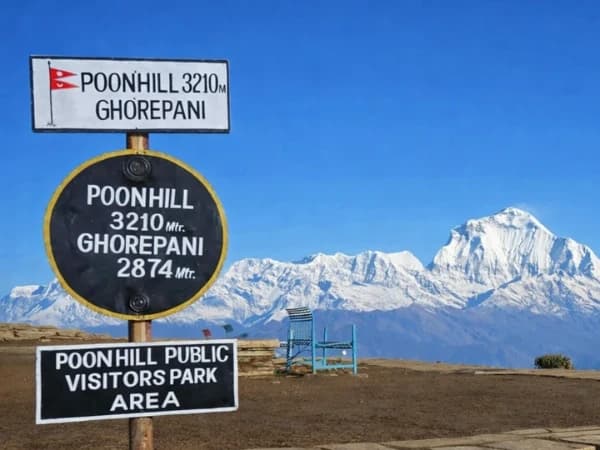
Yes. After Thorong La you reach Muktinath on day 12 and drive through Jomsom to Tatopani (1,190 m) on day 13, a village whose name means hot water. Day 14 is a steep climb of over 1,600 m to Ghorepani, and on day 15 you climb Poon Hill (3,210 m) for sunrise before walking down to Nayapul and driving to Pokhara. Day 16 is the drive back to Kathmandu.

What are the lodges like at Tilicho Base Camp and Thorong High Camp?

Basic and remote. The teahouse at Tilicho Base Camp (4,150 m) is one of the most remote on the Circuit, built for the small number of trekkers who make the detour, and Thorong High Camp (4,900 m) is exposed and basic, with stone walls, a metal roof and wind. Above Manang the choice of rooms is narrow, so we secure the best available rooms regardless of tier. Charging and wifi are available in most lower teahouses but may cost extra above Manang.

From, per personUS$1,195