

In short: the Ghorepani Poon Hill trek suits first-timers, families and anyone short of time who wants a Himalayan sunrise without a big climb. It runs 6 days from Kathmandu, reaches Poon Hill at 3,210 m and is graded easy. Prices start from USD 499 per person on Budget, USD 749 on Standard and USD 1,235 on Luxury.
Trek Highlights
- 6-day private trek to Poon Hill (3,210m), the famous Annapurna sunrise viewpoint. The most popular first-time Himalayan trek in Nepal for good reason: short, low altitude, accessible.
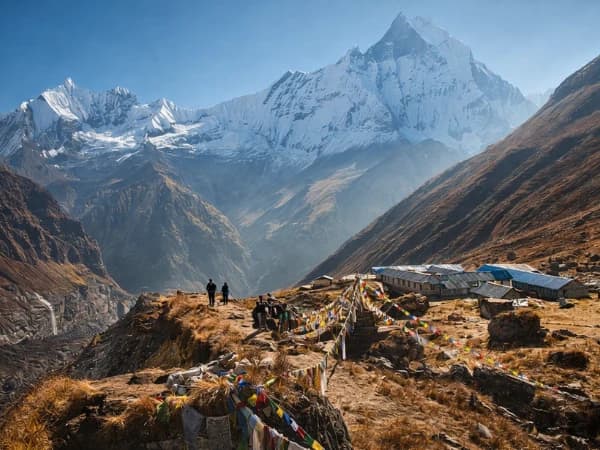
- Sunrise from Poon Hill shows the Annapurna massif (Annapurna South, Hiunchuli, Machapuchare, Annapurna I), the Dhaulagiri range, and the Nilgiri ridge across the Kali Gandaki gorge. The widest single-viewpoint Himalayan panorama you can reach in under a week.
- Low altitude (max 3,210m), short walking days (4 to 6 hours), accessible to first-time trekkers and fit older walkers. No serious AMS risk on this route.
- Private guide and porter ratio that does not change based on group size. No shared-group surcharge gimmicks.
- 10% deposit to lock dates, balance paid in person in Kathmandu. No full prepayment required to a foreign trekker you have never met.
- Every booking helps fund our Nagarjun Learning Center work at Saldum, where 70 children are taught by one dedicated teacher.
Why I built this trek the way I did
I am Shreejan, the founder of The Everest Holiday. The Poon Hill trek is what I recommend to people who want a first Himalayan trekking experience without committing two or three weeks. The route stays below 3,300m, the walking days are short (4 to 6 hours), and the trail is well-maintained by Annapurna Conservation Area Project funds. AMS is not a serious concern for healthy walkers on this route.
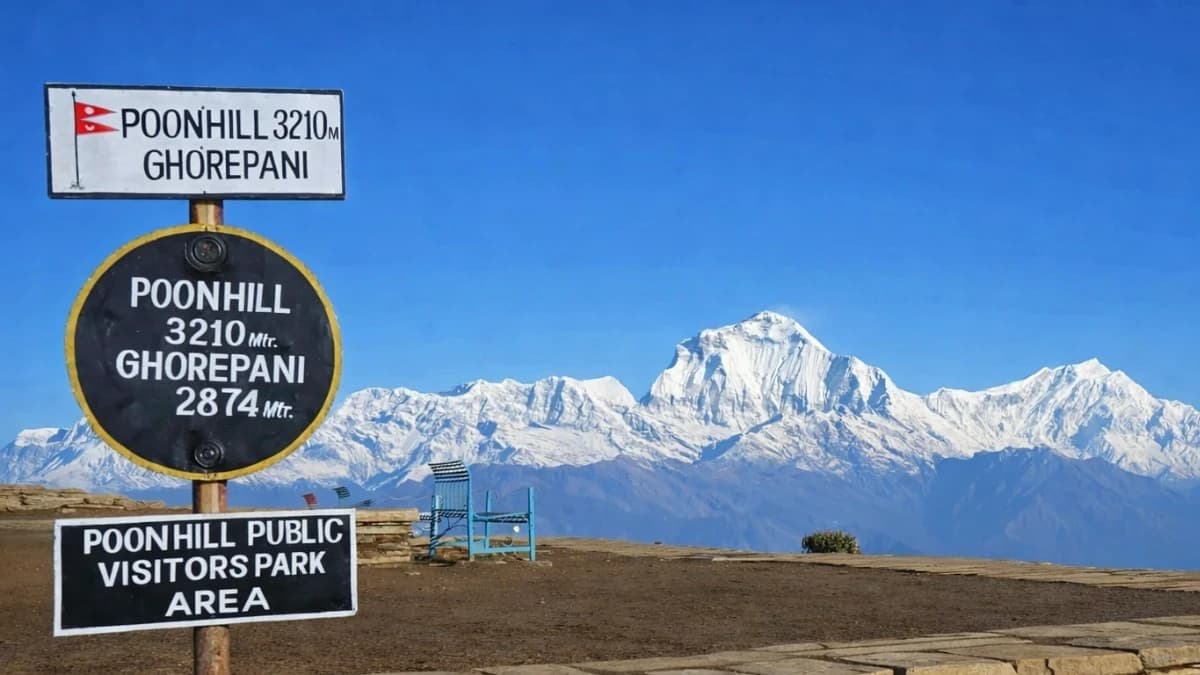
The Poon Hill sunrise is the reason people walk this route. From the summit at 3,210m you see the Annapurna massif spread across the eastern sky, the Dhaulagiri range to the west, and the Kali Gandaki gorge dropping away in between. It is the widest single-viewpoint Himalayan panorama you can reach on a 6-day trek, and the reason this route has been one of Nepal’s most-walked treks for 30 years.
We run this as 6 days because that is what the route actually requires for a comfortable pace. Operators selling 4-day versions skip Ghandruk and Ghorepani lodging quality, walk longer days, and rush the descent through Tadapani. Our 6-day schedule keeps the walking days at 4 to 6 hours, which is what makes the trek accessible to first-time walkers and fit older trekkers.
We run this as a private trek by default, and we never add strangers to your booking. If you would rather have company on the trail, you can choose to join one of our fixed departures instead. Either way the price per person is the same. Your pace, your rest days, your conversations at dinner. We do not change the guide-to-porter ratio when the group is smaller. Your guide and porter are with you whether you are two people or six.
Every booking on this trip helps us pay the teacher’s salary at our Nagarjun Learning Center in Saldum, where 70 children get free education. The salary is currently funded out of my own pocket. Your trek is what makes that sustainable.
“Arjun is very good guide and he helped us everything for the whole trip on Annapurna route and Pool hill [Poon Hill].”
— Janenut S · TripAdvisor, May 2023 · ★★★★★
The sky is still dark when you leave the teahouse at Ghorepani. Torchlight bounces off stone steps ahead of you as other trekkers climb the same trail in the pre-dawn cold, breath rising in thin white clouds. Forty-five minutes later, you reach the summit of Poon Hill (3,210m / 10,531ft) and the eastern horizon is already burning orange. Then the sun breaks. Dhaulagiri (8,167m) catches the first light and turns gold. Annapurna South follows, then Annapurna I, then the entire chain of peaks strung across the northern sky—Machhapuchhre, Hiunchuli, Annapurna III, and Annapurna IV — all lit from below as if someone had set fire to the snow. The 360-degree panorama from this modest hilltop viewpoint is one of the most photographed sights in the Himalayas, and it takes less than a week to reach it.
This 6-day trek is one of Nepal's easiest high-altitude routes, designed for anyone who wants mountain views without extreme altitude or punishing daily distances. From Pokhara, you drive to Nayapul, climb through terraced farmland and rhododendron forest past Ulleri to the ridgeline village of Ghorepani, wake early for the Poon Hill sunrise, then descend through the trail villages of Tadapani and Ghandruk—one of Nepal's most beautiful Gurung settlements—before returning to Pokhara. You'll sleep in family-run teahouses, eat dal bhat cooked over wood fires, walk beneath prayer flags strung between ancient trees, and feel the warmth of communities that have welcomed travellers for generations. It is the perfect introduction to the Himalayas, designed by Shreejan Simkhada, whose family has been guiding people through these mountains across three generations.
What Makes This Trek Special
- Watch sunrise from Poon Hill (3,210m / 10,531ft), a 360-degree viewpoint with uninterrupted views of Dhaulagiri, the full Annapurna massif, and Machhapuchhre (Fishtail)—widely considered one of the finest mountain sunrises on earth
- Complete one of Nepal's top treks in just 6 days, making it ideal for travellers with limited annual leave or those seeking a short trek that still reaches proper mountain country
- Rated Easy, with no technical sections, no glacier crossings, and a maximum altitude well below the danger threshold—perfect for first-time trekkers, families with children, and trekkers over 50
- Walk through the Gurung village of Ghandruk, where stone houses with slate roofs sit among terraced fields, and the Gurung and Magar cultural heritage is palpable in the architecture, the food, and the people
- Trek through rhododendron forests that explode into crimson, pink, and white blooms between March and May, one of the most spectacular spring displays in the Annapurna Conservation Area
- Stay in genuine family-run teahouses along the trail, eating home-cooked Nepali food and meeting hosts who know every peak by name
- All permits included (ACAP and TIMS), so you don't spend a day in Kathmandu queuing at government offices
- Small groups of 1 to 20, always with a Nepal government-well-trained guide who knows this trail intimately
- Three tiers (Budget, Standard, Luxury) let you choose your comfort level without compromising on safety, expertise, or the route itself
- Every booking supports education for 70 children in rural Nepal through the Nagarjun Learning Center
6-Day Overview
Your journey begins and ends in Kathmandu, but the trek itself starts from Pokhara, Nepal's lakeside adventure capital, reached by a scenic drive through the middle hills. From Pokhara, a shorter drive takes you to Nayapul, the traditional trailhead on the western edge of the Annapurna Conservation Area. The first day climbs steadily through Tikhedhunga and Ulleri, where the stone staircase is the steepest sustained climb of the entire trek. By evening, you're in the rhododendron belt, and by the following morning, you've reached Ghorepani, the ridgeline village from which the pre-dawn climb to Poon Hill begins. After sunrise, the trail descends eastward through oak and rhododendron forest to Tadapani, a quiet settlement with evening views of Machhapuchhre. The final trekking day takes you down through terraced farmland to Ghandruk, one of Nepal's most photogenic Gurung villages, before you return to Nayapul and then Pokhara. By the end of day six, you're back in Kathmandu with mountain memories that will stay with you for years.
Before You Arrive
Please arrive in Kathmandu the day before your trek starts. This gives you time to recover from your international flight, meet your guide, and do any last-minute gear shopping in Thamel if needed. We arrange your airport transfer, so you can step off the plane knowing everythwe have sorted. Ensure your Nepal visa and trekking insurance are in order before you fly, and bring enough Nepali rupees for personal spending on the trail.
Online Briefing
After you book, we schedule a video call to walk you through everything: what to wear, what to pack, what the teahouses are really like, and anything else on your mind. This meeting is also when you share your hotel preferences in Kathmandu and Pokhara, so we can match the right accommodation to you. No question is too small. We'll also cover the layering system for this altitude range, how much cash to carry, and what to expect in terms of WiFi and charging on the trail.
Transport
All three tiers travel the same route: Kathmandu to Pokhara by road (approximately 6-7 hours), then Pokhara to Nayapul (about 1.5 hours) to reach the trailhead. The return follows the same route in reverse. The difference between the tiers is the type of vehicle. Budget trekkers travel by local tourist bus or shared vehicle, which is comfortable, safe, and well-used by Nepalis and travellers alike. Standard trekkers ride in a shared tourist vehicle with more legroom and air conditioning. Luxury trekkers get a premium private vehicle with extra comfort for the long drive. There are no flights on this itinerary; everything is by road, which keeps costs down and gives you more of Nepal's countryside to enjoy through the window. For a full breakdown of what trekking in Nepal actually costs, see our complete cost guide.
Your Trek, Your Way
We arrange every trek privately for your group. You won't be paired with strangers unless you choose to join a public departure. Whether you book as a solo trekker, a couple on your honeymoon, a family with children, or a group of friends, this itinerary is yours. Want to add a rest day in Ghorepani? Extend to include a visit to Fewa Lake in Pokhara or a sunrise drive up to Sarangkot? We can adjust. Our three tiers (Budget, Standard, and Luxury) give you genuine choice over accommodation, meals, porter support, and transport without affecting the route itself. Same expert guides. Same safety standards. Three comfort levels. Read more about what the price difference actually buys or explore our budget trekking guide.
Difficulty
We rate this trek Easy. The maximum altitude is 3,210 metres (10,531ft), which is well below the threshold where altitude sickness becomes a serious concern. There are no glacier crossings, no exposed ridgelines, and no technical sections. The toughest stretch is the stone staircase from Tikhedhunga to Ulleri on day one, roughly 3,300 steps climbing through the forest, but you'll be fresh, and your guide will set an easy pace. Daily walking ranges from 4 to 6 hours over well-maintained trails, and our day-by-day breakdown of Poon Hill distances and difficulty gives you the exact numbers. The trail passes through villages every hour or two, so you're never far from a teahouse, a cup of tea, and a place to rest. If you can walk 5-6 hours a day on hilly terrain, you can do this trek. It's a favourite with beginners, families, and anyone wanting a genuine Himalayan experience without the demands of higher-altitude routes.
Ghorepani Poon Hill at a glance
| Duration | 6 days, Kathmandu to Kathmandu |
|---|---|
| Highest point | Poon Hill, 3,210 m |
| Region | Annapurna Conservation Area |
| Difficulty | Easy |
| Permits | Annapurna Conservation Area (ACAP) and TIMS card |
| Best months | October to November and March to April |
| Group size | 1 to 20 people. Solo is welcome, and every trek is private |
| Starts and ends | Kathmandu, with the drive to Pokhara, the walk from Nayapul to Ghandruk, and the drives back |
| Walking per day | 4 to 6 hours, mostly on stone steps |
| From price | USD 499 Budget, USD 749 Standard, USD 1,235 Luxury (2 to 4 people). A solo traveller pays USD 960 on Standard and USD 1,930 on Luxury |
Best time to trek Ghorepani Poon Hill
| Season | Months | What it is like | Verdict |
|---|---|---|---|
| Autumn | October to November | Clearest and most reliable; the main season | Best overall |
| Spring | March to April | Warm, and the rhododendron forest below Ghorepani is at its best | Great, second season |
| Winter | December to February | Cold but low enough to walk, clear skies and empty trails | Cold but often clear |
| Monsoon | June to mid-September | Rain, leeches and cloud on the view | Avoid |
Month by month: when to go
| Month | Rain at Pokhara (mm) | Poon Hill before dawn, average night low (C) | On the trail | Our view |
|---|---|---|---|---|
| January | 21.6 | -6 | Coldest months. Dry, bright and very quiet, with snow possible above Ghorepani | Only with a proper winter set-up |
| February | 35.1 | -5 | Cold, dry and quiet. Ghorepani is about 6 C by day and -3 C at night | Only with a proper winter set-up |
| March | 63.7 | -2 | Sunniest month. The rhododendron starts to colour between Ulleri and Ghorepani, and afternoons can turn hazy | Yes, with warm layers for the sunrise climb |
| April | 141.7 | 2 | The easiest month for cold sleepers. Flowers are at their best, with more afternoon haze | Yes, if flowers matter more than a razor-sharp skyline |
| May | 354.7 | 5 | Warm, but rain rises sharply and views become a morning gamble | Choose April or October instead |
| June | 648.2 | 9 | Monsoon. Cloud and rain hide the peaks, and the forest is wet and slippery | Only on fixed dates, with spare days |
| July | 941.0 | 10 | Monsoon. The wettest month | Only on fixed dates, with spare days |
| August | 839.4 | 10 | Monsoon | Only on fixed dates, with spare days |
| September | 635.0 | 9 | Monsoon in practice, with a wet trail and leeches | Late September at the earliest |
| October | 159.2 | 5 | The dry season arrives. The first week can still feel like the monsoon, so late October is safer | Yes, late October |
| November | 17.2 | 1 | Bright, dry and getting cold. Early to mid-November has some of the clearest skies of the year | Yes, the clearest days |
| December | 11.5 | -2 | Cold, clear and dry. Early December is a gentle way to try winter trekking | Yes, early December |
Rain is the Pokhara record (1991 to 2020), and the temperatures are 2015 to 2024 averages from a weather model, so treat them as a guide to how the sunrise climb feels. The trek runs all year; what changes is rain, sunshine and cold. Read Poon Hill best time, month by month, Poon Hill in spring and Poon Hill in autumn.
Permits
Poon Hill is an ordinary Annapurna route, so there is no restricted-area permit. You need the two below, and we arrange both and include them in your trek price.
| Permit | Foreigner | SAARC |
|---|---|---|
| Annapurna Conservation Area (ACAP) | NPR 3,000 | NPR 1,000 |
| TIMS card | NPR 2,000 | NPR 1,000 |
What the price covers, and what it does not
You need two permits: the Annapurna Conservation Area Permit (ACAP, NPR 3,000) and a TIMS card (NPR 2,000), so NPR 5,000 per foreign trekker. Poon Hill is not a restricted area. We arrange both and include them in your price.
Not in the price: your international flights, your Nepal visa (USD 50 for 30 days on arrival), travel insurance bought at home, your Kathmandu hotel, tips for your team, and on Budget your meals (about USD 15 to 25 a day).
A 10% deposit (about USD 50 on Budget) confirms your dates. You pay it by card through Himalayan Bank's secure gateway, and you pay the balance when you arrive in Kathmandu, in US dollars or euros, in cash or by card (card payments carry a 3.5% bank charge). If your plans change we move your trip to any date within a year, free, with 72 hours' notice. The deposit itself is not refunded if you cancel. If we cannot run the trip ourselves, we refund what you have paid, less taxes, bank and card charges and any money already spent for you on permits and flights.
Getting there
No flights are needed. Day 1 is the drive from Kathmandu to Pokhara (820 m). On day 2 you drive to Nayapul (about 1.5 hours from Pokhara) and walk to Ulleri. After the Poon Hill sunrise you walk down via Tadapani to Ghandruk, drive back to Pokhara on day 5 and on to Kathmandu on day 6. Budget travels by local vehicle, Standard by shared tourist vehicle and Luxury by private vehicle. If you are already in Pokhara, our 4-day version from Pokhara skips the two long drives. See the Nayapul trailhead guide and the 4 and 5 day options.
Safety and altitude
Poon Hill is 3,210 m, and you sleep no higher than Ghorepani at 2,860 m, so serious altitude sickness is unlikely. Mild headaches can still happen, and your guide carries a pulse oximeter. The real work is the stone steps, about 3,300 of them between Tikhedhunga and Ghorepani over 3 to 4 hours. Go slowly, use poles and take your time on the descent to Ghandruk, which is hard on the knees. The pre-dawn climb is cold, so keep your gloves and hat handy. Your insurance should cover trekking and medical evacuation. See Poon Hill distance and difficulty.
Packing basics
Waterproof boots you have already walked in, a fleece and a down jacket for the pre-dawn climb, a rain jacket, a warm hat and gloves, sunglasses, sun cream, a head torch and a refillable bottle. Poles help on the steps. If you do not own a sleeping bag or down jacket, tell us at your online briefing and we will lend you ones. We send the full list when you book.
Budget, Standard or Luxury: what actually changes
| Budget | Standard | Luxury | |
|---|---|---|---|
| Porter | None. You carry your own bag | 1 porter for every 2 trekkers | 1 dedicated porter for every trekker |
| Meals on the trek | Not included, you pay at the teahouse | All meals | All meals, fruit and nuts, and unlimited soft drinks |
| Rooms | Shared | Private | Private deluxe with ensuite bathroom |
| Transport | Local vehicle | Shared tourist vehicle | Private vehicle |
If you are going alone, Luxury still gives you your own dedicated porter. On Standard there is no porter, because porters are shared one between two trekkers, so your guide carries up to 10 kg of your bag instead. Budget never has a porter. You can add a porter of your own on any tier for USD 25 per day, plus 13% VAT and the 3.5% bank charge on top. A solo traveller pays USD 960 on Standard and USD 1,930 on Luxury.
Kathmandu hotel nights are not included in any trek tier, so tell us your budget at the online briefing and we will book them for you. We name your guide once you have booked.
Trekking as a group?
Bring your own group — friends, family, a club, a university society, your workplace, or a cause you are raising money for — and any of the three comfort levels can run as a private group on your own dates. Private or group, the price per person is the same; we never put strangers in your group. The more of you there are, the less each person pays:
| Group size | Budget (per person) | Standard (per person) | Luxury (per person) |
|---|---|---|---|
| 1 person (solo) | US$499 | US$960 | US$1,930 |
| 2-4 people | US$499 | US$749 | US$1,235 |
| 5-8 people | US$449 | US$699 | US$1,090 |
| 9-12 people | US$399 | US$649 | US$1,070 |
| 13-20 people | US$349 | US$599 | US$1,060 |
The organiser treks free. Get fourteen or more paying trekkers together and whoever organised the group joins the trek free. The one thing the organiser still pays is their own flights and permits, since those are fixed costs we pay out for every person and cannot absorb, and we cover the rest. Your departure is guaranteed on your own dates — from a solo traveller up to a group of twenty, and we never merge you into another trip.
Planning a group? Message me on WhatsApp with the trek, roughly when, and how many of you, and I will send you a price and a plan.
Compare Our Three Packages
| Feature | Budget | Standard | Luxury |
|---|---|---|---|
| Price from | USD $499 | USD $749 | USD $1,235 |
| Meals on trek | Not included (order and pay at teahouses) | 3 meals daily, tea, seasonal fruits, and 2L of hot water | All meals and all drinks (except alcohol), fruits, and dry nuts |
| Meals in Pokhara | Breakfast only at the hotel. | Breakfast only at the hotel. | Breakfast only at the hotel. |
| Room | Shared teahouse room | Private twin with attached bathroom (where available) | Private deluxe with bed heater and attached bathroom (where available) |
| Porter | Not included | 1 porter per 2 trekkers (max 20kg, 10kg each) | 1 porter per trekker (carry nothing yourself) |
| Guide | 1 guide per group (assistant at 8+) | 1 guide per 6 trekkers (assistant at 7+) | 1 guide per 2 trekkers, plus an assistant guide for every 2 more |
| Transport | Local tourist bus / shared vehicle | Shared tourist vehicle | Luxury private vehicle |
| SIM & Data | SIM card only | SIM with limited data | SIM with unlimited data (see our SIM card guide) |
| Best for | Backpackers and independent travellers | Comfort trekkers, couples, families | Premium experience seekers |
Himalayas for Every Budget. You will receive the same expert guides and safety, with three comfort levels to choose from. Every tier includes all permits, a well-trained Nepal government guide, airport transfers, and 24/7 emergency support. The only things that change are the comfort details. Read our full comparison of what the price difference actually buys, or explore luxury trekking in Nepal. Note: in Pokhara, only breakfast is included at your hotel across all tiers; other meals in Pokhara are at your own expense and choice, giving you the freedom to explore the lakeside restaurants, try Nepali street food, and find your favourites. Meals during the Kathmandu-Pokhara drive are also not included, for the same reason. Check our guide on WiFi and charging on the trail so you know what to expect on the Poon Hill route.
Even our shortest route gives back.
The Poon Hill loop is the cheapest way into the Annapurna foothills and the lowest-cost trek on our site, but it still funds part of a child’s year at the Nagarjun Learning Center—the school my family runs in Saldum village in rural Nepal. Seventy children attend on free places, and the school provides two hot meals a day. We are registered with both the Nepalese government and the UN Partner Portal. Even a budget six-day trek puts something into a child’s school year — that’s the point.