
April turns the trail to Poon Hill into a tunnel of pink and red rhododendrons. Add the sunrise over Annapurna and Dhaulagiri, and you have the perfect short trek.
Govt Regd. No.: 147653/072/073
Travel Agency Licence: 2838/072
Poon Hill Trek in Spring: When Rhododendrons Meet the Sunrise

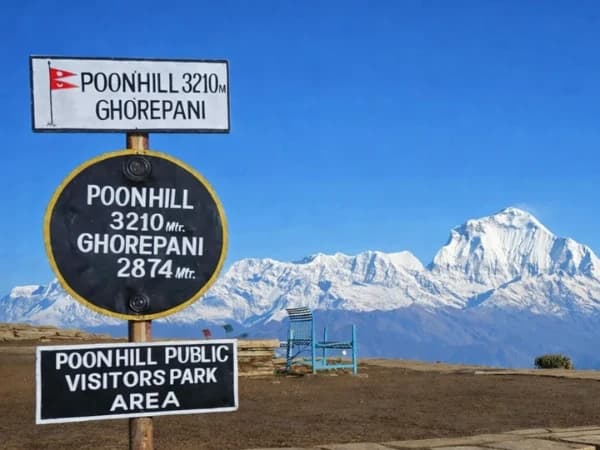
Short answer: Spring is the colourful season on the Poon Hill trek. In late March and April the rhododendron forests between Tikhedhunga and Ghorepani are in full bloom, and the sunrise from Poon Hill at 3,210 m looks over Dhaulagiri and the Annapurnas. There is no high altitude and no technical walking, so it suits beginners. Walk it on our Poon Hill trek.
I have watched the sunrise from Poon Hill more times than I can count. Every time, it stops me. The line of light creeping across the Annapurna range, Dhaulagiri catching the first golden rays, Machhapuchhre turning pink. But there is one version of this sunrise that stands above the rest, and it happens in April, when the entire hillside below you is on fire with blooming rhododendrons.
The Poon Hill trek in spring is, quite simply, the most beautiful short trek in Nepal. Five days. No extreme altitude. No technical difficulty. Just forests, villages, mountains, and flowers so vivid they look unreal. If you have limited time in Nepal and want something that delivers maximum impact in minimum days, this is it.
Why is spring the best time for the Poon Hill trek?
Poon Hill is a year-round trek, and autumn gets most of the attention for its clear skies. But spring, particularly March and April, brings something autumn cannot: the rhododendron bloom.
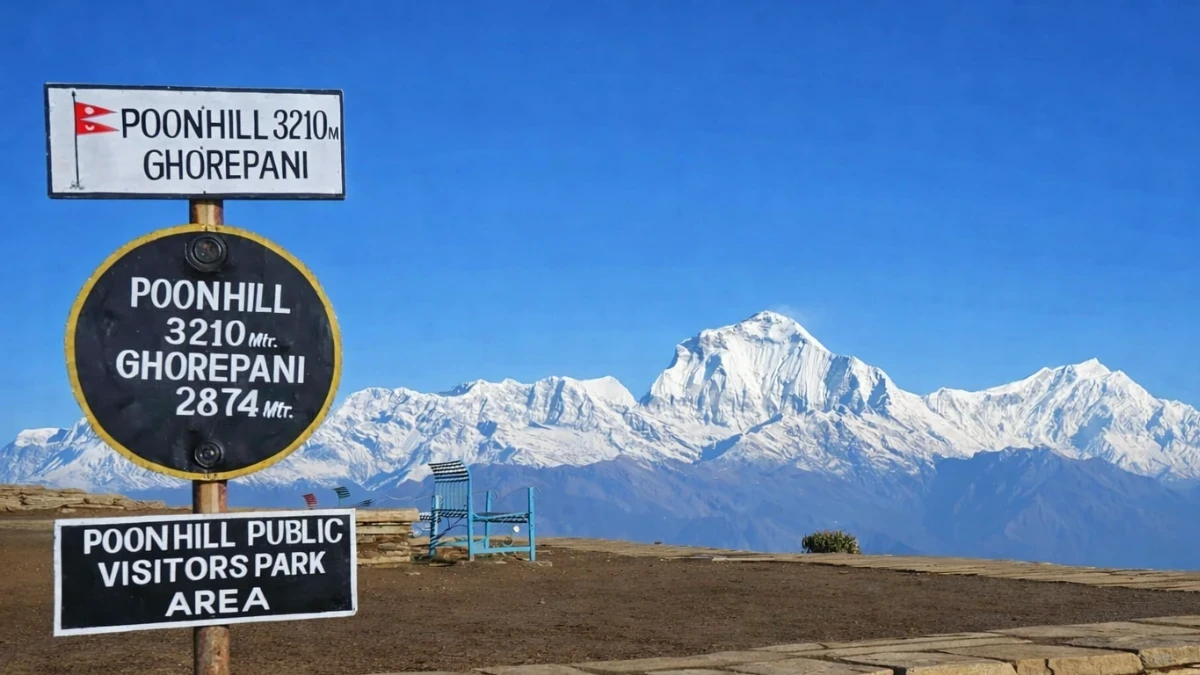
Nepal's national flower, the rhododendron (locally called lali gurans), grows in dense forests between 2,000 and 4,000 metres. The Poon Hill trail passes through some of the most spectacular rhododendron forests in the country, especially on the section between Tikhedhunga and Ghorepani. In late March and April, these forests erupt into colour. Red, pink, white, and magenta blooms cover the hillsides. The effect, combined with snow-capped peaks in the background, is genuinely extraordinary.
I say this as someone who has spent most of his adult life in the mountains and is not easily impressed by scenery: the rhododendron forests on the Poon Hill trail in April are among the most beautiful things I have ever seen.
What is the Poon Hill rhododendron forest trail like?
Tikhedhunga to Ulleri
The climb from Tikhedhunga (1,540m) to Ulleri (2,070m) is the steepest section of the entire trek. More than 3,300 stone steps wind up through terraced farmland and into the edge of the forest zone. In spring, the lower sections are bright with wildflowers, marigolds, and mustard. The stone steps can be knee-punishing, but the views behind you, down into the Modi Khola valley, are a good excuse to stop and rest.
Ulleri to Ghorepani
This is where the magic happens. Above Ulleri, the trail enters dense rhododendron and oak forest. The trees are ancient, twisted, and covered in moss and orchids. In April, the rhododendrons are in peak bloom. The canopy becomes a tunnel of colour. Red blossoms the size of your fist hang in heavy clusters. Fallen petals carpet the trail in pink and crimson. Sunlight filters through the blooms and creates dappled patterns on the ground.
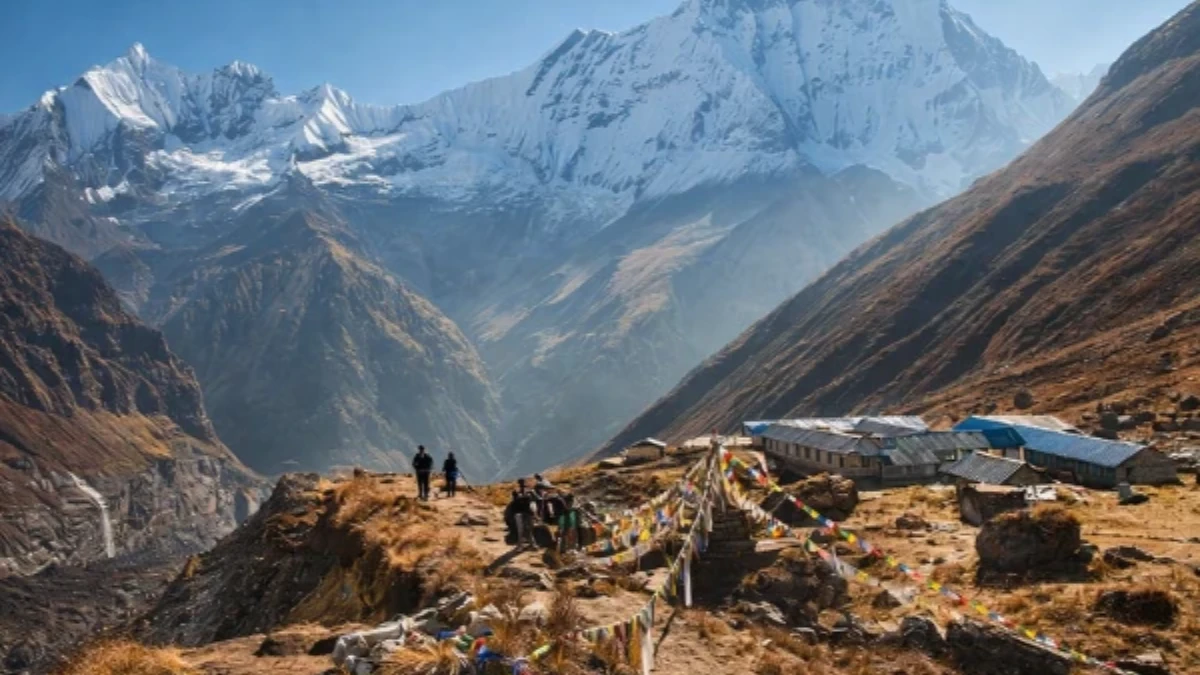
The walk from Ulleri to Ghorepani takes four to five hours and gains about 800 metres of elevation. It is a steady uphill through this forest the entire way. Many trekkers describe it as one of the highlights of their entire Nepal trip. In spring, I would go further: it is one of the highlights of trekking anywhere in the world.
Ghorepani (2,860m) is a busy trekking village with excellent teahouses. It sits at a junction of several trails and is the staging point for the pre-dawn climb to Poon Hill. In spring, the village is surrounded by blooming rhododendrons, and the evening light on the Dhaulagiri range from the village itself is spectacular.
What peaks can you see from Poon Hill at sunrise?
The alarm goes off at 4:30am. You pull on every layer you have. You step out of the teahouse into cold darkness. And you start climbing.
The trail from Ghorepani to the Poon Hill viewpoint takes about 45 minutes to an hour. It is a well-maintained stone path with steps, and in spring, you climb through the upper edge of the rhododendron forest by headlamp. By the time you reach the viewing platform at 3,210 metres, the eastern sky is already turning orange.
What happens next depends on the weather, and spring mornings are generally cooperative. The sun rises behind the Annapurna range and illuminates the peaks one by one. Dhaulagiri (8,167m), the world's seventh highest mountain, stands enormous to the west. Annapurna I (8,091m) and Annapurna South (7,219m) dominate the north. Machhapuchhre (6,993m) appears as a perfect pointed triangle, the reason it is called the Fishtail.
On a clear April morning, you can count more than twenty peaks above 6,000 metres from this single viewpoint. Below you, the rhododendron forests drop away in waves of colour. It is a view that rewards every step of the climb.
Our Poon Hill Trek package is designed around catching this sunrise, with the itinerary timed to give you the best possible chance of clear morning skies.
What is the 5-day Poon Hill trek itinerary?
Here is the itinerary we recommend for a spring Poon Hill trek, with tips specific to the season.
Day 1: Kathmandu to Pokhara (Drive or Flight)
The journey from Kathmandu to Pokhara takes about six to seven hours by tourist bus or 25 minutes by plane. We recommend the morning flight for the mountain views, but the drive along the Prithvi Highway is scenic in its own right. Spring weather makes both options reliable. Arrive in Pokhara, settle into a lakeside hotel, and prepare for the trek.
Spring tip: If you arrive in Pokhara by early afternoon, walk along Phewa Lake. The afternoon light on the Annapurna range reflected in the lake is a classic Nepal photograph, and spring haze is minimal compared to winter.
Day 2: Pokhara to Tikhedhunga (Drive + Trek)
A one and a half hour drive from Pokhara to Nayapul, followed by a gentle three to four hour walk to Tikhedhunga. The trail follows the Modi Khola river through lowland farmland. In spring, rice paddies are being prepared for planting, and the terraces are a patchwork of brown earth and bright green shoots.
Spring tip: Start early. Spring afternoons can bring brief showers or cloud build-up, especially from mid-April onwards. Morning walking is drier and cooler.
Day 3: Tikhedhunga to Ghorepani (Trek)
The big day. The 3,300-step climb to Ulleri, then the long, beautiful ascent through rhododendron forest to Ghorepani. Five to six hours of walking, 1,300 metres of elevation gain. It is a full day, but the forest makes every hour worthwhile.
Spring tip: Carry at least two litres of water. The climb is sustained and you will sweat. Leeches can appear on the lower sections after rain, particularly in late April. Tuck your trousers into your socks and apply salt or insect repellent to your boots. Your guide will know the current leech situation.
Day 4: Poon Hill Sunrise, then Ghorepani to Tadapani (Trek)
Pre-dawn climb to Poon Hill for sunrise. Return to Ghorepani for breakfast. Then trek to Tadapani (2,630m), which takes about four to five hours through more rhododendron forest and past the Gurung village of Ban Thanti. The descent from Deurali to Tadapani passes through particularly dense rhododendron stands.
Spring tip: After the sunrise, do not rush back. Spend time at the viewpoint as the light changes. The mountains look different at 6:00am, 6:30am, and 7:00am. Some of the best photographs happen twenty minutes after everyone else has left.
Day 5: Tadapani to Nayapul, Drive to Pokhara
A long descent from Tadapani through forest and Gurung villages to Ghandruk, then down to Nayapul. Five to six hours of walking, almost entirely downhill. The trail passes through Ghandruk, one of the most picturesque Gurung villages in Nepal, with stone houses, slate roofs, and an incredible Annapurna panorama.
Spring tip: Walking poles save your knees on this descent. The stone steps are unforgiving on the way down. Borrow a pair from us if you do not have your own.
For details on everything you need to bring, check our complete packing list.
What are the Gurung villages on the Poon Hill trek like?
One of the joys of the Poon Hill trek is the cultural dimension. The trail passes through several Gurung villages, and spring is a particularly lively time to visit them.
The Gurung people are one of Nepal's major ethnic groups, with a rich military tradition (many serve in the British and Indian Gurkha regiments) and a distinct culture centred on music, dance, and communal farming. In spring, the villages are busy with agricultural activity. Fields are being ploughed, seeds are being sown, and the communal spirit is high.
Ghandruk is the largest Gurung village on the route and has a small museum dedicated to Gurung culture. Stop in, have a cup of local tea, and talk to the villagers. Most speak some English and are happy to share stories about life in the mountains.
Understanding local customs helps you get more from these interactions. Our guide on tipping in Nepal covers the etiquette that matters most.
What is the weather like on the Poon Hill trek in spring?
Spring weather on the Poon Hill route follows a fairly predictable pattern.
March: Cool mornings, warm afternoons, clear skies. The rhododendrons are just starting to bloom at lower elevations. Higher up, buds are forming but not yet open. March is excellent for trekking, with the driest conditions of the spring season.
April: The peak rhododendron month. Temperatures are warmer across the board. Mornings are usually clear, but cloud can build in the afternoons. Brief rain showers are possible, especially in the second half of April. These rarely last more than an hour. April is the month I recommend for the best combination of flowers and views.
May: Warmer and more humid. The pre-monsoon heat makes the lower sections (below 2,000m) uncomfortable. Rhododendrons are past their peak at lower elevations but still blooming higher up. Cloud cover increases, and afternoon thunderstorms become more frequent. Views from Poon Hill are less reliable. I would choose March or April over May.
| Location | Altitude | March Daytime | March Night | April Daytime | April Night |
|---|---|---|---|---|---|
| Nayapul | 1,070m | 22 to 26°C | 10 to 14°C | 26 to 30°C | 14 to 18°C |
| Tikhedhunga | 1,540m | 18 to 22°C | 8 to 12°C | 22 to 26°C | 12 to 16°C |
| Ghorepani | 2,860m | 10 to 14°C | 0 to 4°C | 14 to 18°C | 4 to 8°C |
| Poon Hill Summit | 3,210m | 6 to 10°C | N/A (pre-dawn) | 8 to 12°C | N/A (pre-dawn) |
| Tadapani | 2,630m | 12 to 16°C | 2 to 6°C | 16 to 20°C | 6 to 10°C |
Note: the pre-dawn temperature at Poon Hill summit in April is typically 0 to 4 degrees Celsius. It feels colder because you are standing still. Bring a warm hat, gloves, and your down jacket for the sunrise viewing.
Is Poon Hill Right for You?
The Poon Hill trek is the most accessible major trek in Nepal. Here is who it works best for.
First-time trekkers: If you have never trekked at altitude before, Poon Hill is the perfect introduction. The maximum altitude of 3,210 metres is low enough that altitude sickness is rare, and the daily walking distances are manageable for anyone with basic fitness.
Families: We regularly take families with children aged ten and above on this trek. The trail is well marked, the teahouses are comfortable, and the distances are not excessive. Children love the rhododendron forests and the pre-dawn adventure of climbing to Poon Hill.
Trekkers with limited time: Five days is enough for the full Poon Hill experience. Add the travel days to and from Kathmandu and you are looking at a week total. That fits neatly into a ten-day Nepal holiday with time to spare for Kathmandu sightseeing and a Pokhara day.
Photographers: Spring Poon Hill is a photographer's dream. The combination of mountain light, flower colour, and cultural scenes makes it one of the most photogenic treks in the Himalayas.
If you want something longer and more challenging, consider the Annapurna Base Camp trek, which shares some of the same trail sections but goes deeper into the mountains. Or for a different region entirely, the Everest Base Camp trek is the classic Himalayan experience.
What are teahouses and food like on the Poon Hill trek?
Spring is high season on the Poon Hill route, and teahouses are fully operational. The standard of accommodation is good by Nepal trekking standards. Most lodges between Tikhedhunga and Ghorepani offer private rooms with twin beds, clean bedding, and attached or shared bathrooms. Hot showers are available at most stops.
Food is plentiful and varied. Dal bhat, the Nepali staple of rice, lentils, and vegetables, is available everywhere and is freshly cooked. Spring menus often include seasonal vegetables from local gardens. At Ghorepani, several teahouses offer surprisingly good baked goods, including apple pie and cinnamon rolls.
Read our detailed guides on teahouse reality and food on Nepal treks so you know exactly what to expect before you arrive.
Is the Poon Hill trek safe?
Poon Hill is one of the safest treks in Nepal. The maximum altitude is well below the danger zone for serious altitude sickness. The trail is wide, well maintained, and clearly marked. Teahouses are close together, so you are never far from shelter.
The main spring-specific risks are minor. Leeches appear after rain in April and May but are harmless, just unpleasant. Afternoon thunderstorms can occur from mid-April, so plan your walking for the morning. And the stone steps can be slippery when wet, so good trekking boots with ankle support and grip are important.
For a broader view of safety in Nepal, read our honest safety guide. It covers everything from political stability to wildlife to road travel.
Frequently Asked Questions
When exactly do rhododendrons bloom on the Poon Hill trail?
The bloom depends on altitude and varies slightly each year. At lower elevations (2,000 to 2,500m), blooming typically begins in mid-March and peaks in early April. Higher up (2,500 to 3,000m), blooming starts in late March and peaks in mid to late April. For the best chance of seeing full bloom at all elevations, aim for the second or third week of April.
How fit do I need to be for Poon Hill?
If you can walk uphill for three to four hours without stopping, you are fit enough. The hardest day involves about 1,300 metres of elevation gain over five to six hours, with plenty of rest stops. Regular walking, stair climbing, or light jogging in the weeks before your trip is sufficient preparation. You do not need to be an athlete.
Will I get altitude sickness on Poon Hill?
It is unlikely. The highest point is 3,210 metres, which is below the threshold where most people experience significant altitude symptoms. Some trekkers feel mild breathlessness or a slight headache at the summit, but serious altitude sickness at this elevation is rare. Our guide on acclimatisation explains the science behind it.
Can I do the Poon Hill trek without a guide?
A licensed guide is required on the Poon Hill route under the Nepal Tourism Board rule from April 2023. Beyond the requirement, a guide enhances the spring trek enormously. They know the best viewpoints for rhododendron photography, they can identify bird species in the forest, and they have personal relationships with teahouse owners that ensure you get the best rooms during the busy spring season.
Is spring or autumn better for Poon Hill?
Both are excellent. Autumn (October and November) gives you the clearest skies and best mountain visibility. Spring (March and April) gives you warmer temperatures and rhododendron forests in full bloom. If you care most about mountain views, choose autumn. If you want the complete sensory experience of mountains plus flowers plus cultural vibrancy, choose spring. Personally, I choose spring every time.
How do I book a spring Poon Hill trek?
Our Poon Hill Trek package covers everything: Pokhara transport, permits, guide, porter, meals, and teahouse accommodation. Spring departures are popular, and the best teahouses at Ghorepani fill up weeks in advance. Book early to secure your spot.
Reach us on WhatsApp at +977 9810351300 or email [email protected]. We respond within hours, not days.
About the Author: Shreejan Simkhada is the CEO of The Everest Holiday and a third-generation Himalayan guide. The Everest Holiday is a TAAN member (#1586), and he has been leading treks in Nepal since his teenage years. He considers the spring rhododendron forests of the Annapurna region to be one of Nepal's greatest natural wonders.
Spring Poon Hill is when the rhododendrons bloom. Our Ghorepani Poon Hill Trek (6 Days) is private (your group only, no strangers), 2027 dates open, From USD $499. WhatsApp us for tailored 2027 dates and current departures.
Planning a trip to Nepal?
Drop us your details and tell us what you have in mind. We will put together a personalised plan and get back to you.
Not sure which Nepal trek is right for you?
Take our free 2-minute quiz and get personalised recommendations based on your fitness, experience, and travel style.
Find Your Perfect Trek →Need Help? Call Us+977 9810351300orChat with us on WhatsApp
Related Trek Packages
 US$1,020
9 DaysMax 20
Ghorepani Poon Hill Yoga Trek - 9 Days Itinerary and Costs
Starts From
ExploreUS$1,020
Latest Travel Blogs
Christmas and New Year Treks from Pokhara 2026/27: 3 to 5 Days
<p>Short treks from Pokhara for Christmas and New Year 2026/27: Panchase 3 days, Poon Hill 4 days and Mardi Himal 5 days. Weather, snow, what is open, and prices by group size.</p>
Read More
Thamdanda and Surke: The Road Head for Everest Base Camp by Road
Thamdanda is the road head where our Everest Base Camp trek by road starts and ends on foot. How to get there from Phaplu and what the first walk to Paiya is like.
Read MorePoon Hill Trek Permits 2027: ACAP, TIMS, Cost and What You Need
Poon Hill needs two permits: ACAP at NPR 3,000 and a TIMS card at NPR 2,000. Who arranges them, where they are checked, SAARC rates and the 2027 trek prices.
Read More Chat with Shreejan