
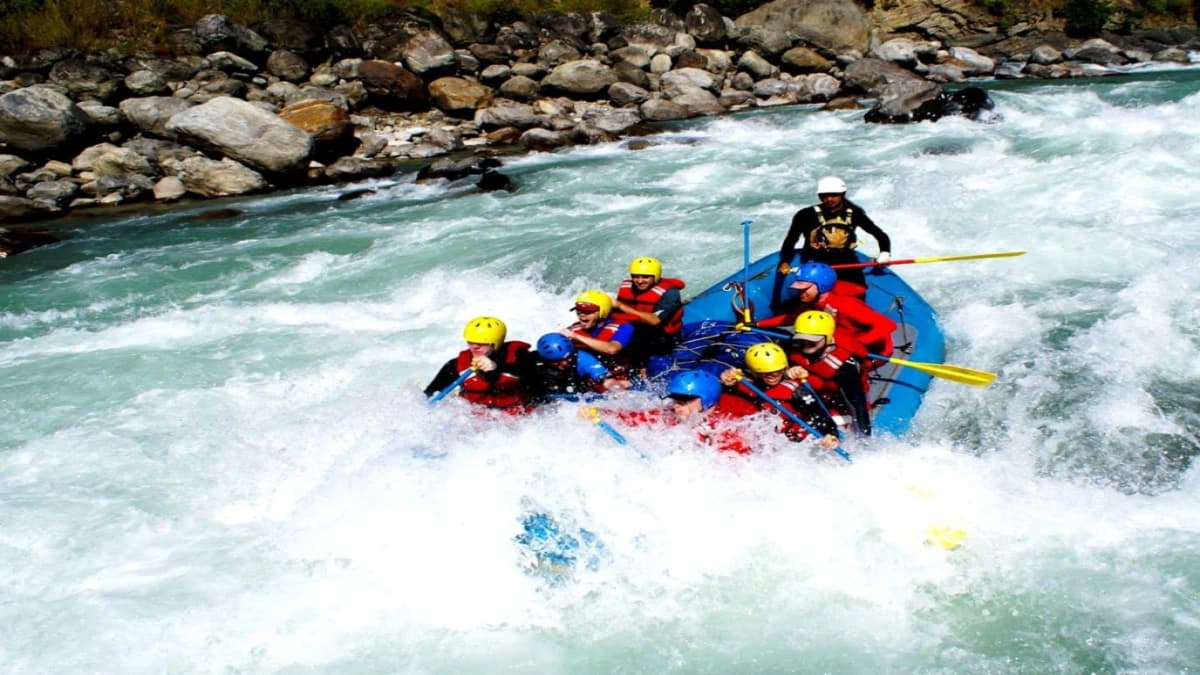
Trishuli River Rafting 1 - Day

From US$1491 Days
Quick Overview
Duration1 Days
Trip GradeModerate
CountryNepal
Group Size1 - 6
StartsCharaudi
EndsKurintar
ActivitiesRafting
Best TimeSpring and Autumn

Highlight

  • Most accessible and popular rafting river in Nepal

  • Perfect one-day adventure from Kathmandu or on the way to Pokhara or Chitwan

  • Exciting Class III rapids suitable for beginners and first-time rafters

  • Scenic river journey with views of hills, villages, and river beaches

  • Professional rafting guides with full safety equipment

  • Opportunity for swimming and photography during calm sections

  • Ideal for families, groups, and corporate outings

  • Available in most seasons of the year

Overview

Rafting on the Trishuli River is considered one of the easiest adventure activities to access in Nepal. The river lies in the central part of the country and flows alongside the busy highway that connects Kathmandu with Pokhara, which makes it a convenient stop for travelers heading toward Pokhara or Chitwan National Park.

The Trishuli River is usually classified as Class III, offering moderate rapids that provide a good level of excitement without being too challenging. This makes the trip suitable for beginners as well as those who have some rafting experience. Along the way, rafters can enjoy views of green hills, river valleys, and small villages, while navigating a mix of lively rapids and calmer sections. Thanks to its location and manageable difficulty level, this rafting trip has become one of the most popular choices in Nepal, and it can comfortably be done within a single day.

Most rafting trips begin with a drive of about three hours from Kathmandu to Charaudi, which serves as the usual starting point. After arriving, participants receive a safety briefing and instructions from the guide before heading onto the river. The rafting itself generally lasts around three hours, followed by a lunch break near the riverbank. Because the schedule is short and straightforward, many travelers include this activity as a quick adventure during their journey.

A key benefit of rafting on the Trishuli River is how easily it fits into travel plans. Those traveling to Pokhara, known as the gateway to trekking routes in the Annapurna region, can join the rafting trip along the way without adding extra time to their itinerary. Similarly, visitors on their way to Chitwan for a wildlife safari can stop for rafting since the road follows the river for much of the journey.

Rafting on the Trishuli River operates in most seasons of the year, making it a reliable and enjoyable option for travelers who want to experience a short but memorable outdoor adventure while visiting Nepal.

Itinerary

Day 01: A day rafting in a Trishula River
Expand All
Couldn't find what you're after?Reach out to our travel experts.
Customise Trip

Pricing & What's Included

Book your own private small group trip
No. of travellers
Price per person
1 - 4 pax
US$149
5 - 8 pax
US$124
9 - 12 pax
US$109
13 - 20 pax
US$99

Discounts are determined exclusively by the size of your group. We do not add additional members to your group.

Book Now
hbl logo
Secure Payment by Himalayan Bank.
Cost Includes
  • Transportation by tourist bus or shared tourist-standard vehicle (as per package)

  • Professional rafting guide

  • All rafting equipment (helmet, life jacket, paddle)

  • Safety briefing and first aid support

  • Government taxes and service charges

Cost Excludes
  • Riverside lunch
  • Personal expenses (drinks, snacks, etc.)
  • Travel insurance
  • Tips for guide and driver
  • Additional services not mentioned in the includes section

Dates & Booking

Your trek, your choice, your price

Choose the style that suits you. Book a private departure on any date with just your group, or join a fixed group departure and trek with fellow adventurers. Same routes, same guides, same quality — 3 comfort tiers on both options. The more people in your group, the lower the per-person price.

Private Departure

  • Any date you choose
  • Just your party + dedicated guide
  • 3 comfort tiers (Budget, Standard, Luxury)
  • Price drops with larger groups

Fixed Group Departure

  • Scheduled dates (see below)
  • Join other trekkers from around the world
  • 3 comfort tiers (Budget, Standard, Luxury)
  • Price drops as more people join

Spring season (Mar–May) — clear skies and rhododendron blooms. Book 4–6 weeks ahead for the best guide availability.

Questions about this trek?

Chat directly with Shreejan — our founder replies personally within minutes

WhatsApp Shreejan

Essential Information

Best Time for Rafting on the Trishuli River

Rafting on the Trishuli River is possible for most of the year, but the experience can vary depending on the season, water level, and weather conditions. In general, the river offers reliable rafting conditions and is suitable for both beginners and experienced rafters.

September to November (Autumn)

This is considered the best season for rafting. The weather is stable, the skies are usually clear, and the river conditions are ideal. Water levels are balanced, providing exciting but manageable rapids. It is also the most popular time for travelers visiting Nepal.

March to June (Spring and Early Summer)

Another excellent period for rafting. Temperatures are warmer, and the river flow is steady due to melting snow from the mountains. This season is especially good for travelers combining rafting with trips to Pokhara or wildlife activities in Chitwan National Park.

December to February (Winter)

Rafting is still possible during winter, and the river is usually calmer. The main consideration is the colder temperature, especially in the morning and when getting wet. Fewer crowds can make the experience more peaceful.

July to August (Monsoon)

Rafting continues during the monsoon season, but water levels are higher and the rapids can be stronger. Trips may depend on daily weather and river conditions. This time is generally better suited for people looking for a more adventurous experience.

Meals & Food on the Trishuli River Rafting Trip

Wondering what you'll eat during your rafting adventure? We're happy to share that our Trishuli River Rafting Package includes a delicious and satisfying menu designed to keep you energized throughout the day. Our meals feature a variety of popular Nepalese dishes, carefully selected to give every guest a flavorful taste of local cuisine while offering excellent value for the price of your package. All meals are served buffet-style, so you're welcome to enjoy as much as you like until you're fully satisfied.

Throughout the day, light snacks such as fresh fruits, biscuits, and nuts are provided to keep you refreshed between rafting sessions. At lunchtime, you'll be treated to a freshly prepared hot meal cooked right on the riverbank, typically featuring rice, noodles, lentils, seasonal vegetables, and meat. Vegetarian options are always available, and we're happy to accommodate other dietary needs as well.

If you have any food allergies, dietary restrictions, or special preferences, please let us know in advance so our team can make the necessary arrangements to ensure your comfort and safety during the trip.

Here's a paraphrased version of your text, rewritten in clearer, more polished language while keeping all the original information intact:

Travel Insurance Requirements for Trishuli River Rafting

We strongly recommend that all participants have valid travel insurance before joining a Trishuli River Rafting trip. A comprehensive policy will protect you against emergency medical costs, evacuation expenses, trip cancellations, and other unexpected situations that may occur during your adventure. When choosing a travel insurance plan, please make sure it covers the following:

  • Adventure Sports Coverage: Your policy must clearly state that it covers adventure activities, including white-water rafting.
  • Emergency Medical Expenses: Coverage should include medical treatment and hospital care in case of any injury or illness sustained during the rafting trip.

  • Emergency Evacuation: In the event of a serious emergency, evacuation by helicopter or other means may be required. Your policy should fully cover these evacuation costs.

  • Trip Cancellation: If you need to cancel your trip due to unforeseen events such as sudden illness or injury, your policy should reimburse cancellation-related expenses.

  • Personal Belongings: Your insurance should also protect against the loss, theft, or damage of personal items such as cameras, phones, and other valuable equipment.

Before your trip, take the time to carefully review the terms and conditions of your policy to confirm it meets your needs. Remember to carry a printed or digital copy of your insurance documents along with your provider's emergency contact details during the rafting trip.

Safety Tips for Trishuli River Rafting

Rafting on the Trishuli River is an exhilarating experience, but staying safe is essential for a smooth and enjoyable trip. Please keep the following safety tips in mind:

  • Always wear your life jacket and helmet throughout the rafting activity.

  • Pay close attention to your guide's briefings and follow their instructions at all times.

  • Avoid alcohol and drugs both before and during the trip.

  • Stay alert to river conditions, including strong currents, rocks, and rapids.

  • Keep your hands inside the raft while passing through rapids to prevent injury.

  • If you fall into the water, stay calm — float on your back with your feet pointing downstream, then swim toward the riverbank.

  • Use sunscreen, sunglasses, and a hat to shield yourself from the sun.

  • Inform your guide in advance about any medical conditions, allergies, or concerns.

  • Dress appropriately for the weather and choose comfortable clothing that allows easy movement.

Packing List, Gear & Equipment for Trishuli River Rafting

Proper packing helps ensure both your comfort and safety on the river. Here's a recommended list of essentials to bring along:

  • Dry Bag (Water-Resistant Bag): Essential for keeping your personal belongings safe and dry throughout the rafting trip.

  • Swimwear: You'll definitely get wet, so pack swimwear that's comfortable and allows free movement.

  • Rashguard or Quick-Dry Shirt: Protects your skin from sunburn and adds extra warmth during cooler weather.

  • Shorts or Quick-Dry Pants: Lightweight, fast-drying bottoms are best for staying comfortable after getting splashed.

  • Sunscreen: Apply generously to protect your skin from harsh UV rays, especially while on the open water.

  • Water Shoes or Sturdy Sandals: Footwear with good grip is recommended for stability on slippery surfaces.

  • Quick-Dry Towel: Useful for drying off quickly after the rafting session.

  • Insect Repellent: Helpful in areas where mosquitoes and other insects may be present.

  • Personal Medication: Carry sufficient supplies of any prescribed medication for the entire trip.

  • Camera or Waterproof Camera: Capture stunning landscapes and unforgettable moments along the river.

  • Travel Insurance Documents: Always bring a printed or digital copy of your insurance policy along with the emergency contact information of your provider.

If you'd like specific suggestions based on your travel dates, season, or trip duration, our team is happy to share additional packing tips tailored to your needs.

FAQs

Q: Where is the Trishuli River located?

The Trishuli River flows through central Nepal, running alongside the main highway that connects Kathmandu with Pokhara. Its convenient location makes it one of the most accessible rafting destinations in the country, perfect for travelers heading toward Pokhara or Chitwan National Park.

Q: How difficult is rafting on the Trishuli River?

The Trishuli River is generally classified as Class II to Class III, offering moderate rapids that are exciting yet manageable. This makes it suitable for beginners, first-time rafters, families, and those with some rafting experience alike.

Q: How long is the rafting trip?

The rafting itself lasts approximately 3 hours, with a relaxing lunch break on the riverbank. Including the drive from Kathmandu (about 3 hours to Charaudi) and the return journey, the full experience is comfortably completed in a single day.

Q: Where does the rafting start?

Most trips begin at Charaudi, located about three hours by road from Kathmandu. The journey ends near the Jholungepul suspension bridge, which marks the final rapid of the trip.

Q: What can I expect during the rafting trip?

You'll enjoy:

  • A series of fun, named rapids ranging from Class II to Class III

  • Scenic views of green hills, river valleys, and traditional villages

  • A riverside lunch on a sandy beach with unique rock formations

  • The thrilling Trishuli Gorge, where cliffs rise steeply and rapids become more energetic

  • Glimpses of Majhi fishermen setting traditional traps along the riverbanks

  • A memorable finish at the Jholungepul rapid near the suspension bridge

Q: Is the Trishuli rafting trip suitable for beginners?

Yes. The Trishuli River is one of the best beginner-friendly rafting rivers in Nepal. Professional guides provide a full safety briefing and paddling instructions before you enter the water, making it ideal for first-time rafters.

Q: Can I combine rafting with other trips?

Absolutely. Because the river runs along the highway between Kathmandu, Pokhara, and Chitwan, many travelers combine the rafting trip with:

  • Trekking adventures in the Annapurna or Pokhara region

  • Wildlife safaris in Chitwan National Park

  • Sightseeing tours between Kathmandu and Pokhara

It fits seamlessly into most itineraries without adding extra travel time.

Q: When is the best time for rafting on the Trishuli River?

Rafting is available year-round, but each season offers a different experience:

  • September to November (Autumn): The best season — stable weather, clear skies, and ideal water levels.

  • March to June (Spring/Early Summer): Warm temperatures and steady river flow from melting mountain snow.

  • December to February (Winter): Calmer river, fewer crowds, but cold mornings.

  • July to August (Monsoon): Higher water levels and stronger rapids — best for thrill-seekers.

Q: Is Trishuli River rafting safe?

Yes. All trips are led by professional, licensed rafting guides with full safety equipment, including helmets, life jackets, and first-aid support. A complete safety briefing is provided before the activity begins.

Q: Do I need previous rafting experience?

No prior experience is required. The river's moderate difficulty and the guide's pre-trip instructions make it suitable for first-time rafters.

Q: Is travel insurance required?

Travel insurance is highly recommended for all participants. Your policy should cover:

  • Adventure sports (specifically white-water rafting)

  • Emergency medical expenses

  • Emergency evacuation (including helicopter rescue)

  • Trip cancellation

  • Loss or theft of personal belongings

Please carry a printed or digital copy of your insurance documents and your provider's emergency contact details during the trip.

Q: What safety precautions should I follow?

  • Always wear your life jacket and helmet

  • Listen carefully to your guide's instructions

  • Avoid alcohol and drugs before and during rafting

  • Keep your hands inside the raft during rapids

  • If you fall in, float on your back with feet pointing downstream and swim to the riverbank

  • Inform your guide of any medical conditions or allergies in advance