

Trek Highlights
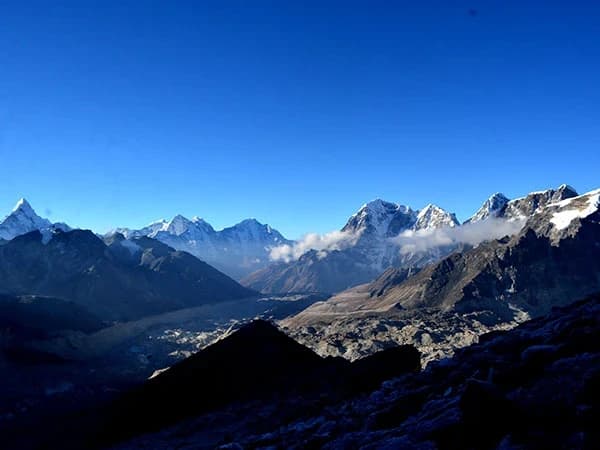
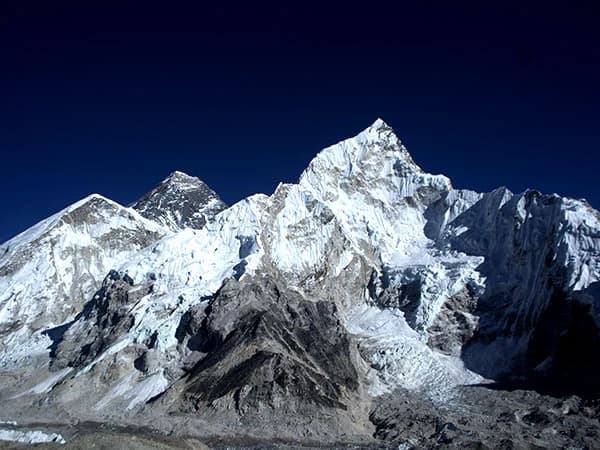
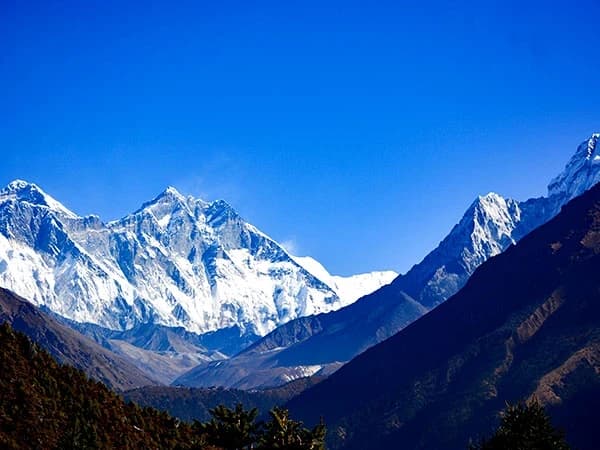
- The view said to have been Sir Edmund Hillary's favourite of Everest, from the 4,065m summit of Pikey Peak
- Everest, Makalu, Kanchenjunga, Numbur and Thamserku on one skyline at sunrise
- No Lukla flight to cancel - we drive in from Kathmandu, so it runs when the mountain flights are grounded
- One of the few high viewpoints that is genuinely good in winter, and empty in every season
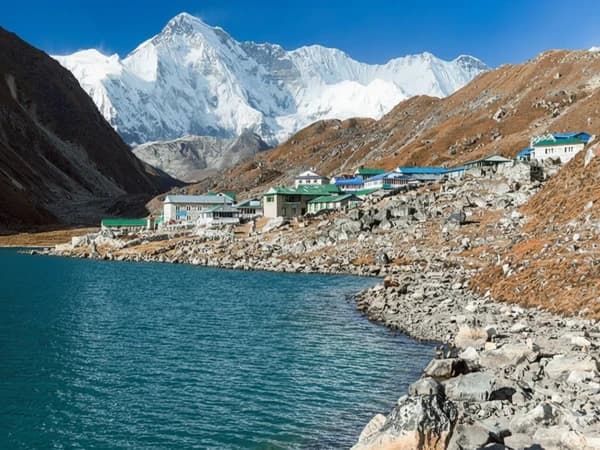
- Rhododendron forest, old Buddhist chortens, and the Sherpa and Rai villages of the lower Solu
- A night at Junbesi, one of the prettiest Sherpa villages in Nepal, and its Thubten Chholing monastery
- Moderate, low-altitude and short - a real Himalayan trek that a first-timer can manage
Overview
Pikey Peak is the trek I send people on when they want the Everest view without the Everest crowds, or the Lukla flight. It sits in the lower Solu, the foothills below the Khumbu, and from the top at 4,065 metres you get the same skyline the famous treks queue for - Everest, Makalu, Kanchenjunga, Numbur - with almost nobody else on the ridge. This is said to have been Sir Edmund Hillary's favourite view of Everest, and he had seen most of them.
We drive in from Kathmandu, so there is no flight to cancel and no airport to gamble on. That is why this one works so well in winter, and in the shoulder weeks when the high trails are cold or fully booked. It is a real trek - four days on foot through rhododendron forest, past chortens and prayer flags, into Sherpa and Rai villages - but it is a kind one. You are never very high, the days are short, and a reasonably fit walker manages it comfortably. If you have wanted to stand in front of Everest but a two-week trek at altitude felt like too much, this is the one I would start you on.
Is Pikey Peak right for you?
Yes, if you want the big Himalayan view on a short, honest budget of days, if you are travelling in winter when the high routes are cold, or if this is your first trek and you would rather build up than throw yourself at Everest Base Camp. It is moderate: the climb to the summit on the fourth morning is the hardest part, and you do it slowly in the dark for sunrise. You do not need previous trekking experience, but you should be comfortable walking five to six hours a day on hill trails.
It is probably not the one for you if you specifically want to walk into Everest Base Camp itself and stand under the icefall - that is a different, longer trek, and we run it. Pikey gives you the view, not the base camp.
How high, how hard
The high point is the summit of Pikey Peak at 4,065 metres, which you reach on foot and come straight back down from, so you spend very little time high up. The rest of the trek sits between roughly 2,700 and 3,640 metres. Altitude sickness is far less of a worry here than on the high Khumbu or Annapurna routes, but we still walk at a sensible pace and your guide watches everyone. Graded moderate.
Pikey Peak at a glance
| Duration | 6 days from Kathmandu |
|---|---|
| Highest point | Pikey Peak summit, 4,065 m |
| Highest night | Pikey Base Camp, 3,640 m |
| Start and finish | Drive to Dhap (2,850 m); walk out from Junbesi |
| Difficulty | Moderate, no technical climbing |
| Getting there | By road, no Lukla flight |
| Permits | TIMS card and Gaurishankar Conservation Area permit |
| Best months | October to December and March to April; also good in winter |
Best time to trek Pikey Peak
October to early December is the most reliable - clear air, sharp mountains, cold but bright. March to April is the second season, when the rhododendron forest on the way up to base camp is in flower. What makes Pikey unusual is that it is genuinely worth doing in the depths of winter, late December through February: the days are short and the nights are properly cold, but the skies are often the clearest of the year and you will have the ridge to yourself. We avoid the monsoon, June to mid-September, when cloud sits on the view.
| Season | Months | What it is like | Verdict |
|---|---|---|---|
| Autumn | October to early December | Clear air, sharp mountains, cold but bright | Best overall |
| Winter | Late December to February | Short cold days, often the clearest skies, empty trail | Great; Pikey stays low enough to be safe |
| Spring | March to April | Warm, rhododendron in flower on the climb | Second best |
| Monsoon | June to mid-September | Cloud sits on the view, rain on the trail | Avoid |
Itinerary
This is our standard six-day trek, Kathmandu to Kathmandu. We build in a night at Junbesi so you actually see the village and its monastery, rather than tagging the summit and driving straight out. If you are short on time we also run a five-day version that skips the Junbesi day - ask us.
Day 1 - Kathmandu to Dhap (2,850m)
A long but scenic drive east out of the valley and through the middle hills to the roadhead at Dhap. You spend the day watching Nepal go by - terraced hillsides, river gorges, small bazaar towns - and arrive in the late afternoon. Night in a simple lodge.
Day 2 - Dhap to Jhapre (2,935m), 4 to 5 hours
An easy first day on foot to find your legs, through terraced fields and small villages with the first mountain views opening up ahead. Night in Jhapre.
Day 3 - Jhapre to Pikey Base Camp (3,640m), about 5 hours
Up through rhododendron and pine forest, past Buddhist chortens and lines of prayer flags, climbing steadily to the base camp below the peak. This is the day the big mountains start to fill the horizon. Night in a lodge at base camp.
Day 4 - Sunrise on Pikey Peak (4,065m), then down to Junbesi (2,700m), 6 to 7 hours
A pre-dawn start and a slow climb in the cold to be on the summit for first light. On a clear morning the reward is the full sweep - Everest, Lhotse, Makalu, Kanchenjunga away to the east, Numbur and Thamserku closer in. We take our time up there, then descend the far side through forest and pasture to Junbesi, one of the loveliest Sherpa villages in Solu.
Day 5 - Junbesi, monastery and valley
A gentle day to enjoy Junbesi properly and walk up to the Thubten Chholing monastery above the village, home to a large community of monks and nuns. No rush, no big climb - the kind of day that makes people glad they did not book the five-day version.
Day 6 - Junbesi to Kathmandu
The long road back to the city, arriving in the evening. We drop you at your hotel.
Permits
Pikey Peak does not enter Sagarmatha National Park, so there is no park fee - despite what some operators write. You need a TIMS card, and the route is covered by the Gaurishankar Conservation Area permit. We arrange both for you; they are included in the trek price. A small local municipality fee may also be collected on the route, and these local charges change from time to time.
| Permit | Foreigner | SAARC |
|---|---|---|
| TIMS card | NPR 2,000 | NPR 1,000 |
| Gaurishankar Conservation Area | NPR 3,000 | NPR 1,000 |
| Local municipality fee | small, collected locally (varies) | same |
Trekking as a group?
Bring your own group — friends, family, a club, a university society, your workplace, or a cause you are raising money for — and any of the three comfort levels can run as a private group on your own dates. Private or group, the price per person is the same; we never put strangers in your group. The more of you there are, the less each person pays:
| Group size | Budget (per person) | Standard (per person) | Luxury (per person) |
|---|---|---|---|
| 1 person | US$699 | US$849 | US$2,290 |
| 2-4 people | US$549 | US$849 | US$1,499 |
| 5-8 people | US$499 | US$749 | US$1,299 |
| 9-12 people | US$449 | US$699 | US$1,199 |
| 13-20 people | US$449 | US$699 | US$1,199 |
The organiser travels free. Get fourteen or more paying people together and whoever organised the group joins the trip free. The one thing the organiser still pays is their own flights and permits, since those are fixed costs we pay out for every person and cannot absorb, and we cover the rest. Your departure is guaranteed on your own dates — from a solo traveller up to a group of twenty, and we never merge you into another trip.
Planning a group? Message me on WhatsApp with the trip, roughly when, and how many of you, and I will send you a price and a plan.
Compare our three packages
| Feature | Budget | Standard | Luxury |
|---|---|---|---|
| Price from | USD $549 | USD $849 | USD $1,499 |
| Meals on trek | Not included (order and pay at the lodges) | Breakfast, lunch and dinner, with tea and coffee | All meals with seasonal fruit, tea and coffee |
| Room | Shared room in lodges and teahouses | Private rooms where available | The best available lodges, private rooms |
| Porter | Not included (on a solo booking the guide carries some of your luggage) | 1 porter per 2 trekkers | A dedicated porter for each trekker |
| Guide | Licensed English-speaking mountain guide | 1 guide per 6 trekkers (assistant at 7+) | 1 licensed guide per 2 trekkers, plus an assistant guide for every 2 more |
| Transport | Local vehicle, Kathmandu to Dhap and Junbesi to Kathmandu | Comfortable local vehicle | Private tourist vehicle, just your group |
| Free gear | Down jacket and sleeping bag | Down jacket, sleeping bag and duffel bag | Down jacket, sleeping bag and duffel bag |
| Best for | Independent trekkers happy to carry their own bag | Couples, friends and small groups | Trekkers who want the most comfort |
Why book this trek with us
We are a Kathmandu company, registered in 2016, TAAN member 1586, and three generations of my family have guided in these hills. The price you see is the price you pay - a 10% deposit holds your trek and you settle the rest in Kathmandu. Every booking helps fund our Nagarjun Learning Center. If you have a question, the fastest way to me is WhatsApp on +977 9810351300.