
At 4,065m, Pikey Peak offers a wider Everest panorama than Kala Patthar. 7 days, no Lukla flight, no crowds. The trek Sir Edmund Hillary called his favourite view.
Govt Regd. No.: 147653/072/073
Travel Agency Licence: 2838/072
Pikey Peak Trek: The Best Everest View Nobody Talks About

Short answer: Pikey Peak (4,065 m) is a hilltop in the Solukhumbu district with one of the widest Himalayan views in Nepal, from Kanchenjunga in the east to Dhaulagiri in the west, with Everest in the middle. It is much quieter than the Everest Base Camp trail and lower, so altitude is less of a worry. Sunrise is the moment to be on top. Walk it on our Pikey Peak trek.
Pikey Peak Trek: The Best Everest View Nobody Talks About
Sir Edmund Hillary, the first person to summit Everest, once said the view from Pikey Peak was his favourite view of the mountain he climbed. Think about that. The man who stood on the top of the world preferred looking at Everest from a relatively modest 4,065-metre hilltop in the Solukhumbu district.
When I first heard that story from my father, I didn't believe it. I was seventeen and had already been to Everest Base Camp twice as a porter's son. How could a viewpoint at barely 4,000 metres compete with Kala Patthar at 5,545 metres? Then I went to Pikey Peak. Standing on that summit at sunrise, watching the entire eastern Himalayan chain light up from Kanchenjunga to Dhaulagiri in a single unbroken sweep, I understood exactly what Hillary meant.
Pikey Peak gives you the wide-angle lens. Kala Patthar gives you the close-up. Both are magnificent. But if I'm being honest, the sheer width of the Pikey panorama, stretching across nearly 300 kilometres of the world's highest mountains, is something I've never seen matched from any other trekking viewpoint in Nepal.
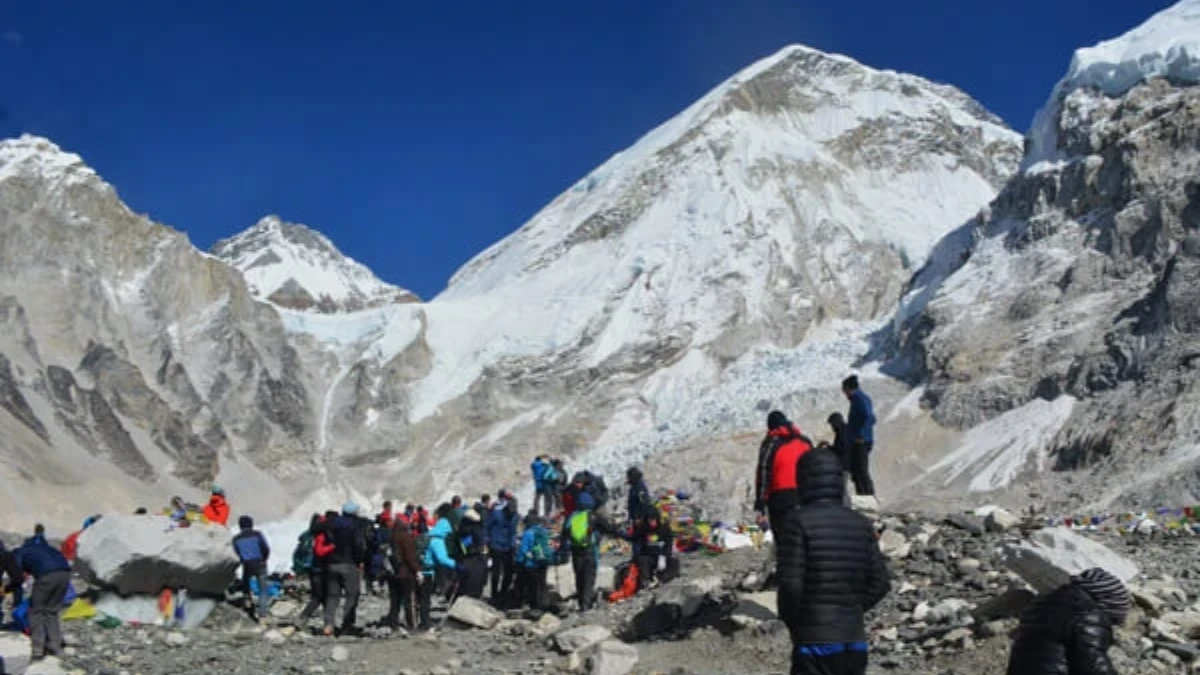
Is the Pikey Peak trek worth it?
Here's the simple truth: the Everest region has a bottleneck problem. Tens of thousands of trekkers fly into Lukla each autumn and spring. They walk the same trail to Namche, Tengboche, Gorak Shep. They stand on the same viewpoints. The trip is still extraordinary, but the trail between Lukla and Base Camp is, in peak season, a highway.
Pikey Peak solves this. The trek starts from Jiri or Phaplu: no Lukla flight needed. You walk through genuine Sherpa villages where tourism hasn't reshaped daily life. The teahouses are simple. The trail is quiet. On our October 2024 trek, we counted seven other trekkers in seven days. On the Everest Base Camp route, you'd pass seven people in seven minutes.
What is the Pikey Peak trek day-by-day itinerary?
Day 1: Kathmandu to Dhap (Drive, 2,750m)
An early-morning drive east from Kathmandu takes you through the Sindhuli Highway and into the Solukhumbu district. The journey is 8-10 hours depending on road conditions. It's long, no question. But the drive itself passes through spectacular hill country: terraced rice paddies, suspension bridges, and small Tamang and Sherpa settlements clinging to the ridgelines. We stop for lunch at a local roadside restaurant where the dal bhat is better than anything you'll find in Thamel.
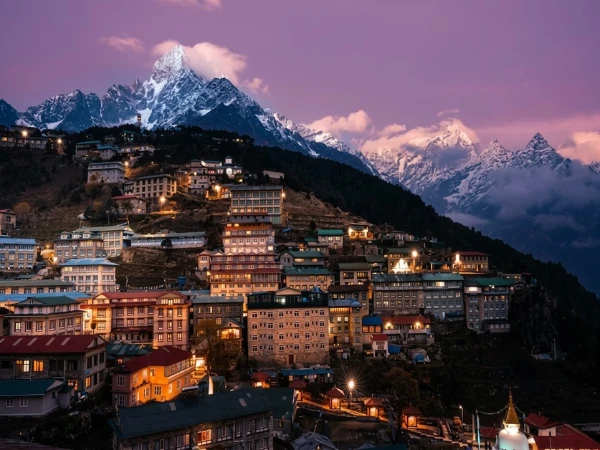
Dhap is a small village where you'll spend your first night in a basic but clean teahouse. The host family will likely serve you homemade raksi (millet alcohol) if you're interested, and strong milk tea if you're not.
Day 2: Dhap to Jhapre (2,750m to 3,150m)
Today's trek takes you through rhododendron forest and Sherpa farming villages. The trail is gentle by Himalayan standards, gaining about 400 metres over 5-6 hours with some undulation. You'll pass through farmland where families grow potatoes, barley, and buckwheat, the staples of Sherpa cuisine for centuries.
This is the day you'll start noticing how quiet the trail is. No other trekking groups. No mule trains. Just birdsong, cowbells, and the sound of your own breathing.
Day 3: Jhapre to Pikey Peak Base Camp (3,150m to 3,640m)
The forest thickens. Rhododendrons tower overhead, and during spring (March-May), the blooms paint the canopy in reds and pinks. The trail climbs steadily through a mix of forest and alpine meadow. You'll pass several small cheese factories: a Swiss development project introduced cheese-making to the Solukhumbu Sherpas decades ago, and the tradition continues.
Base camp is a simple teahouse on a cleared ridge with mountain views already starting to reveal themselves. If the evening is clear, you'll catch your first glimpse of the Everest massif glowing in sunset light. It's a preview that will make sleeping difficult.
Day 4: Summit Day: Pikey Peak (3,640m to 4,065m and back)
The alarm goes off at 4 a.m. Nobody complains. You'll climb in darkness for 90 minutes through sparse forest and boulder fields, headlamp cutting through the cold mountain air. The temperature at the summit before dawn can drop to -10°C in November, so layer up.
Then sunrise happens.
The eastern sky turns orange, then gold, then white. The first peak to catch the light is Kanchenjunga (8,586m) far to the east. Then, one by one, the summits ignite: Makalu, Lhotse, Everest, Cho Oyu, Gauri Shankar, Langtang, Manaslu, and finally the Annapurna and Dhaulagiri ranges to the west. I've guided hundreds of sunrises in Nepal. The Pikey Peak sunrise ranks in my top three, alongside Kala Patthar and Poon Hill.
After soaking in the views (most people stay 1-2 hours), you'll descend back to base camp for breakfast and then continue down to a lower camp.
Day 5-6: Descent via Junbesi
The descent takes you through Junbesi, a prosperous Sherpa village with a famous monastery. This is the original Everest approach route: before the Lukla airstrip was built in 1964, every expedition walked through Junbesi. You're literally following in Hillary and Tenzing's footsteps.
Junbesi is worth a half-day stop. The monastery is beautiful, the bakery serves surprisingly good apple pie, and the people are warm. Several community lodges offer comfortable accommodation with hot showers.
Day 7: Drive back to Kathmandu
From Phaplu (the district's small airport town), you can either drive back to Kathmandu (8-10 hours) or take a short domestic flight if available. Most of our clients opt for the drive, which allows stops at scenic viewpoints and local lunch spots along the way. Related: Junbesi, Solukhumbu: The Sherpa Village on the Old Everest Trail.
Which is better, Pikey Peak or Everest Base Camp?
| Factor | Pikey Peak | Everest Base Camp |
|---|---|---|
| Duration | 7 days | 12-14 days |
| Maximum altitude | 4,065m | 5,364m (EBC) / 5,545m (Kala Patthar) |
| Everest view | Panoramic (entire chain visible) | Close-up (Khumbu face) |
| Lukla flight needed | No | Yes (unless trekking by road) |
| Crowds | Minimal (5-20 trekkers per day) | Heavy (200-500+ per day in season) |
| Altitude sickness risk | Low | Moderate to high |
| Teahouse quality | Basic | Good to excellent |
| Cultural immersion | High (authentic Sherpa villages) | Moderate (tourism-adapted) |
| Cost | $500-700 | $1,200-1,800 |
| Physical difficulty | Moderate | Challenging |
Neither trek is "better." They serve different purposes. If you want to stand at the foot of the world's highest mountain and feel its physical presence, go to Everest Base Camp. If you want the widest Himalayan panorama in Nepal with a fraction of the crowds, come to Pikey Peak.
For trekkers who've already done EBC, Pikey Peak is the ideal return trip. You'll see Everest from a completely different perspective, experience Solukhumbu without the crowds, and walk the historic approach route that predates the Lukla era.
Who Is Pikey Peak For?
- First-time trekkers who want a Himalaya trip without extreme altitude
- Photographers seeking the widest panorama in Nepal
- Budget-conscious travellers avoiding the Lukla flight cost
- Repeat visitors who've done the classic treks and want something quieter
- Older trekkers or those with altitude concerns (4,065m is manageable for most)
- Short-schedule visitors with only 7 days for a trek
If you can handle the Poon Hill trek, and most reasonably fit adults can, you can handle Pikey Peak. The altitude is slightly higher (4,065m vs 3,210m) but the acclimatisation profile is gentler.
When Is the Best Time for Pikey Peak?
| Season | Conditions | Views | Verdict |
|---|---|---|---|
| October-November | Cool, dry, perfect trekking weather | Exceptional clarity | Peak season, book early |
| December-February | Cold (below freezing at summit), possible snow | Crystal clear when not snowing | Excellent if you handle cold |
| March-May | Warming, rhododendrons in bloom | Good mornings, hazy afternoons | Beautiful for flowers |
| June-September | Monsoon, rain, leeches, muddy trails | Rare clear moments | Not recommended |
What Should You Pack for the Pikey Peak Trek?
- Warm down jacket (summit mornings are cold)
- Good hiking boots with ankle support
- Sleeping bag rated to -10°C (teahouses provide blankets but they're thin)
- Headlamp for the pre-dawn summit push
- Trekking poles
- 3 litres water capacity
- Sunscreen and lip balm with SPF
- Camera, this is a photography trek
- Cash in Nepali rupees (no ATMs on the trail)
- Basic first aid and any personal medication
Can you combine Pikey Peak with other treks in Nepal?
Pikey Peak works brilliantly as a standalone trek, but it also pairs well with other Everest region adventures:
Pikey Peak + Namche Bazaar: After summiting Pikey, continue east to Phaplu and then walk to Lukla and Namche Bazaar. This gives you both the wide panorama and the close-up Khumbu experience in about 12 days.
Pikey Peak + Gokyo Lakes: For ambitious trekkers, combine Pikey with the Gokyo Lake trek for a full Everest region experience away from the main Base Camp trail.
Pikey Peak + Everest Three Passes: If you're a strong trekker wanting the ultimate Khumbu experience, start with Pikey for acclimatisation, then tackle the Everest Three Pass trek.
For those who prefer different mountain ranges entirely, the Annapurna Circuit, Langtang Valley, Mardi Himal, Annapurna Base Camp, and Manaslu Circuit offer equally compelling alternatives.
A Guide's Confession
I'll tell you something I don't often share with clients. After twenty years of guiding in the Himalayas, the treks that move me most aren't the famous ones. They're the quiet ones. Pikey Peak is a quiet trek.
My assistant guide Dawa is from Junbesi, one of the villages on the Pikey Peak route. When we trek through his village, his mother insists on feeding the entire group. She makes the best Sherpa stew I've ever tasted, potato, yak meat, and local herbs in a cast iron pot over a wood fire. We sit on her porch and watch the sun set behind Numbur Himal while she tells stories about the old days when Hillary used to stop in Junbesi on his way to build schools in the Khumbu.
Those moments don't happen on the main Everest trail anymore. Too many teahouses, too many trekkers, too much commerce between you and the culture. On Pikey Peak, the commerce hasn't arrived yet. The culture is just life being lived. And the mountains, the mountains are the same ones Hillary looked at and called his favourite view.
How much does the Pikey Peak trek cost?
| Item | Cost |
|---|---|
| TIMS card | NPR 2,000 |
| Guide fee (7 days) | $25-30/day |
| Porter (optional) | $20-25/day |
| Teahouse accommodation | $5-10/night |
| Meals (3 per day) | $10-15/day |
| Transportation (Kathmandu-Dhap-Kathmandu) | $100-150 (shared jeep) |
| Total budget estimate | $500-700 per person |
Compare that with the Everest View trek which includes Lukla flights, and Pikey Peak is significantly more affordable while delivering an arguably wider mountain panorama.
Frequently Asked Questions
Is Pikey Peak difficult?
It's moderate. The maximum altitude is 4,065 metres, which is below the threshold where serious altitude sickness typically begins. You need basic trekking fitness, the ability to walk 5-7 hours per day on mountain trails for a week. If you can handle the Poon Hill trek, you can handle Pikey Peak.
Can I really see Everest from Pikey Peak?
Yes. On a clear day, Everest is clearly visible to the northeast. What makes Pikey special isn't just Everest, it's seeing Everest as part of a 300-kilometre panorama that includes Kanchenjunga, Makalu, Lhotse, Cho Oyu, Manaslu, Annapurna, and Dhaulagiri. No other viewpoint in Nepal shows this many major peaks at once.
Do I need the Lukla flight for Pikey Peak?
No. The trek starts and ends with road transport from Kathmandu. This eliminates the Lukla flight, which costs roughly $420 to $510 return per person and is frequently delayed or cancelled due to weather. It's one of Pikey Peak's biggest practical advantages.
Are the teahouses comfortable?
They're basic. Expect simple twin rooms with thin mattresses and shared toilets. Hot water may or may not be available. Electricity for charging is limited. This is part of the charm, you're staying in genuine Sherpa family homes, not trekking hotels. Bring a good sleeping bag and manage your expectations.
Can I do Pikey Peak in fewer than 7 days?
A fast 5-day version is possible by driving further to Phaplu on day one and taking a more direct route. However, rushing defeats the purpose. The quiet, unhurried pace is what makes Pikey Peak special. We recommend the full 7 days to allow proper acclimatisation and cultural experiences.
Ready for the View Hillary Called His Favourite?
Pikey Peak won't be quiet forever. Word is spreading, and in five years this trek may have the infrastructure and crowds of more popular routes. Right now, it's still a lesser-known spot in the truest sense. If you want the widest Himalayan panorama in Nepal, the original Everest approach route, and a trek that feels like the Nepal of thirty years ago, this is it.
Contact us to plan your Pikey Peak trek:
- WhatsApp: +977 9810351300
- Email: [email protected]
- Website: theeverestholiday.com
Written by Shreejan Simkhada, third-generation Himalayan guide and founder of The Everest Holiday. Licensed trekking operator, TAAN member #1586. Pikey Peak is where I take friends who ask, "Where should I really go in Nepal?"
Pikey Peak Trek is our 7-day Everest viewpoint alternative. Our Everest Base Camp Trek (12 Days) is private (your group only, no strangers), 2027 dates open, From USD $1399. WhatsApp us for tailored 2027 dates and current departures.
Planning a trip to Nepal?
Drop us your details and tell us what you have in mind. We will put together a personalised plan and get back to you.
Not sure which Nepal trek is right for you?
Take our free 2-minute quiz and get personalised recommendations based on your fitness, experience, and travel style.
Find Your Perfect Trek →Need Help? Call Us+977 9810351300orChat with us on WhatsApp
Latest Travel Blogs
Christmas and New Year Treks from Pokhara 2026/27: 3 to 5 Days
<p>Short treks from Pokhara for Christmas and New Year 2026/27: Panchase 3 days, Poon Hill 4 days and Mardi Himal 5 days. Weather, snow, what is open, and prices by group size.</p>
Read More
Thamdanda and Surke: The Road Head for Everest Base Camp by Road
Thamdanda is the road head where our Everest Base Camp trek by road starts and ends on foot. How to get there from Phaplu and what the first walk to Paiya is like.
Read MorePoon Hill Trek Permits 2027: ACAP, TIMS, Cost and What You Need
Poon Hill needs two permits: ACAP at NPR 3,000 and a TIMS card at NPR 2,000. Who arranges them, where they are checked, SAARC rates and the 2027 trek prices.
Read More Chat with Shreejan