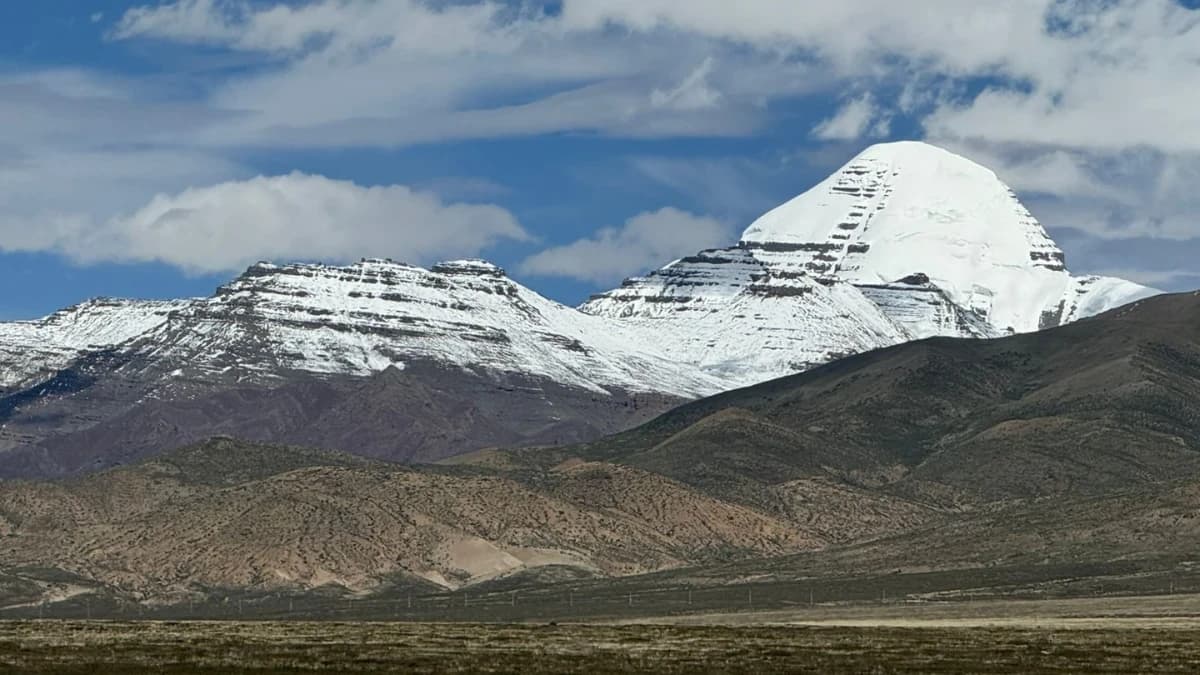
Kailash Trek via Simikot: 20 - Day Sacred Pilgrimage & Adventure

237 reviews
Kailash Trek via Simikot
Quick Overview
Duration20 Days
Trip GradeModerate
CountryTibet
Maximum Altitude5,630m / 18,471ft
Group Size2-20
StartsKathmandu
EndsKathmandu
ActivitiesAdventure and Trekking
Best TimeMay to Oct

The twin-engine plane drops through a gap in the mountains and suddenly the Simikot airstrip appears below — a narrow shelf carved into the hillside above the Humla Karnali river gorge. You step onto the tarmac and the air hits differently up here: dry, thin, scented with juniper. This is Nepal's far west, a region most trekkers never see. The villages ahead are connected by foot trails, not roads. The people speak languages that don't appear in any guidebook. And the trail you're about to walk — through terraced barley fields, across swaying suspension bridges, over the Nara La Pass into Tibet — is the same route that salt traders and pilgrims have used for centuries. Mount Kailash is still days away, but the pilgrimage has already begun.

This 20-day route is the adventurer's path to Kailash Mansarovar. While the standard overland tour drives from Kathmandu to the Kerung border, this route flies you to Simikot in the remote Humla district and treks through some of Nepal's wildest country before crossing into Tibet at Hilsa. You'll walk for days through landscapes that feel untouched by the modern world, cross into Tibet on foot, and then complete the same sacred 52 km Kora around Mount Kailash, crossing the Dolma La Pass at 5,636 m. It's longer, harder, and more rewarding. If the standard route is the pilgrimage, this is the pilgrimage and the adventure combined.

What Makes This Pilgrimage Unforgettable

  • Trek through Nepal's remote Humla district — one of the least-visited regions in the entire country, where ancient villages, juniper forests, and the Humla Karnali river gorge create a landscape that feels like stepping back in time.
  • Cross the Nara La Pass on foot and watch the landscape transform from Nepal's green slopes to Tibet's vast, windswept plateau. This is one of the most dramatic border crossings in the Himalayas.
  • Complete the sacred 3-day Kora around Mount Kailash — 52 km on foot, crossing the Dolma La Pass at 5,636 m, sacred to Hindus, Buddhists, Jains, and Bon followers alike.
  • Stand on the shores of Lake Mansarovar (4,590 m), one of the highest freshwater lakes on earth. Perform rituals, take a holy dip, or meditate in the silence of the Tibetan Plateau.
  • All permits handled by us: China Group Visa, Tibet Travel Permit, Alien Travel Permit, Military Permit, and the special Humla restricted-area permit. We coordinate everything so you don't have to.
  • Camp alongside the trail in Nepal's Humla region with our full camping crew — cook, kitchen staff, mules for luggage, and all camping equipment provided. Your meals are prepared fresh on the trail.
  • Experience the Saga Dawa Festival if your dates align — the most sacred Buddhist festival of the year, celebrated at the foot of Mount Kailash with the raising of the great prayer flag at Tarboche.
  • This is the shortest physical distance to Mount Kailash from Nepal — and the most culturally immersive. You'll pass through villages that still trade with Tibet as they have for generations.
  • Horse and porter support available during the Kora for pilgrims who need assistance. Emergency oxygen supplied in Tibet.

20-Day Kailash Trek via Simikot Overview

This route has been open since 1993 and remains the most adventurous way to reach Mount Kailash. It begins with a flight from Kathmandu to Nepalgunj, an overnight stay, and then a small-plane flight to Simikot — a spectacularly scenic journey over the western Himalayan foothills. From Simikot, you trek for several days through the Humla Karnali river valley, passing through villages where Tibetan Buddhist culture blends with Hindu traditions and where the daily rhythm of life hasn't changed for centuries.

The trek crosses into Tibet at Hilsa, a small border settlement on the banks of the Karnali. From there, you'll drive across the Tibetan Plateau to Lake Mansarovar and Darchen, where the Kora begins. The three-day walk around Mount Kailash is the spiritual heart of the journey — through the Lha Chu valley with Kailash towering above, over the Dolma La Pass at 5,636 m, and back to Darchen through the eastern valley. After the Kora, the route returns via the Kerung border crossing to Kathmandu.

If you're concerned about altitude, this route actually provides excellent natural acclimatisation. The trekking days in Nepal's Humla region gradually increase your altitude before you ever reach the Tibetan Plateau. Our guides monitor your health daily with pulse oximeters and carry altitude-sickness medication.

Before You Arrive

We recommend arriving in Kathmandu by 4:00 pm the day before departure. This gives you time for a final gear check, trip briefing with your guide, and to ensure everything is ready.

Your Online Briefing

After you book, we'll send you an email with available times for a video call. We'll go through the itinerary day by day, discuss fitness requirements, packing lists, dietary needs, and answer every question. The Simikot route has specific logistics (internal flights, camping gear, border crossing procedures) that we'll explain clearly so there are no surprises.

Simikot Flight Information

There are no direct flights from Kathmandu to Simikot. You'll fly Kathmandu to Nepalgunj (about one hour), stay overnight, and then take a small Dornier or Twin Otter aircraft to Simikot (40-50 minutes) early the next morning. These flights are weather-dependent and delays can occur. We build buffer days into the itinerary for exactly this reason, and The Everest Holiday handles all flight bookings and transfers.

China Group Visa and Permits — We Handle Everything

Travelling to Tibet requires a China Group Visa, Tibet Travel Permit, Alien Travel Permit, and Military Permit. The Humla trekking section also requires a special restricted-area permit. We handle all of this. You send us your passport details in advance, we coordinate with the Chinese Embassy in Kathmandu and our partner agency in Tibet, and everything is ready before you reach the border.

Compare Our Packages

  Standard Luxury
Price from USD 4,299 USD 5,499
Meals All meals included throughout All meals included (premium quality)
Kathmandu Hotel 3-star hotel (BB basis) 4-star hotel (BB basis)
Nepal Camping Full camping with cook and crew Full camping with cook and crew (luxury equipment)
Tibet Hotels Best available guesthouse/hotel Best available hotel
Transport (Tibet) Van/minibus Van/minibus
Internal Flights All flights included (KTM-Nepalgunj-Simikot) All flights included (KTM-Nepalgunj-Simikot)
Kora Support Porters for luggage, emergency oxygen Porters for luggage, emergency oxygen
Permits Included Chinese visa, all Tibet and Humla permits Chinese visa, all Tibet and Humla permits
Best for Adventurous pilgrims seeking the full experience Maximum comfort on the adventurous route

Two comfort levels, one extraordinary adventure — the route that combines serious trekking with sacred pilgrimage.

Your Pilgrimage, Our Family

When Hari Lal Simkhada helped international travellers experience the Himalayas in the 1960s, he could not have imagined his grandson would still be doing the same thing six decades later. His son, Ganesh Prasad Simkhada, went on to hold senior positions in Nepal's tourism and mountaineering institutions. Today, Shreejan Simkhada carries that legacy forward as CEO of The Everest Holiday, personally designing every itinerary and coordinating the complex logistics that the Simikot route demands.

For this trek, you'll have a Nepali team leader fluent in English and Hindi who stays with you from Kathmandu through the Kora, plus a local Tibetan guide and a full camping crew in the Humla region. Shreejan briefs every team personally before departure.

Need anything? WhatsApp Shreejan directly: +977 9810351300.

Why Travellers Trust Us

  • 320+ Reviews Across TripAdvisor, Google, and Trustpilot — 4.9 out of 5 stars, TripAdvisor Travellers Choice 2024
  • TAAN Certified — Member #1586, Government Reg: 147653/072/073
  • Secure 10% Deposit — pay just USD 430 to reserve your Standard tour, via Himalayan Bank
  • All Permits Handled — China Group Visa, Tibet Travel Permit, Alien Travel Permit, Military Permit, and Humla restricted-area permit all arranged by us
  • Three Generations — family guiding in the Himalayas since the 1960s
  • Simikot Route Specialists — we've operated this exact route multiple times and know every village, every border official, and every contingency plan

Solo Travellers Welcome

Many of our Kailash pilgrims travel alone — and the Simikot route creates an especially strong sense of camaraderie. Days of trekking together through remote country, sharing camp meals under Himalayan stars, and completing the Kora side by side forge friendships that last. Group size ranges from 1 to 20 pilgrims.

If you're a solo traveller, we'll match you to the next available group departure. The shared adventure of the Simikot route means you'll never feel like an outsider — these groups become families.

Difficulty: Strenuous (5 out of 5)

This is the most demanding of our three Kailash routes. You'll trek for several days at altitude in Nepal's Humla region before even reaching Tibet, then complete the 52 km Kora with the Dolma La Pass at 5,636 m. Total trekking days are significantly more than the overland route, and the terrain in Humla is rugged — river crossings, steep ascents, and high passes. You need good cardiovascular fitness and experience walking 6-8 hours a day over uneven ground. That said, our camping crew handles all the logistics, mules carry your main luggage, and our guides are with you every step. We recommend a minimum of eight weeks of altitude preparation and hill walking before departure. If you're unsure whether this route is right for you, talk to Shreejan — he'll give you an honest assessment and may suggest the 15-day overland route as an alternative if needed.

Trek With a Purpose — Changing Lives, One Pilgrimage at a Time

In 2019, Shreejan Simkhada and Shamjhana Basukala founded the Nagarjun Learning Center to give back to the communities that shaped their family. Today, 70 children receive free education and hot meals daily at the flagship centre in Saldum Village, Dhading District. The centre has expanded to 7 locations across Nepal, provided free medical care to over 600 people, and brought internet access to 65 children for the first time in their village's history.

A portion of every booking with The Everest Holiday supports the Nagarjun Learning Center, which is verified and listed on the UN Partner Portal. When you walk the trail to Kailash, your journey helps change a life.

You Might Also Like

Interactive Tour Map

Follow the trekking route from Simikot through Humla to Mount Kailash on our interactive map. [Google My Maps link to be added when map is created.]

Short Itinerary
Day 01: Arrival in Kathmandu and Transfer to the Hotel
Max Altitude: 1400m
Day 02: Reserve day for group Visa - Kathmandu Sightseeing.
Max Altitude: 1400m
Day 03: Reserve day for group Visa - Rudraabhishek, Puja, and Hawan at Pashupatinath Temple, and get prepared for Yatra.
Max Altitude: 1400m
Day 04: Flight to Nepalgunj or Drive (150 m)
Max Altitude: 150 m
Day 05: Flight to Simikot (2,970m / 9,744 ft) and Trek to Dharapuri (2,349m / 7,706 ft).
Max Altitude: 2,349m / 7,706 ft
Day 06: Trek to Kermi (2,650 m) – 4–5 Hours, Overnight Tented Camp
Max Altitude: 2650 m /
Day 07: Trek to Yalbang Monastery (3107 m)
Max Altitude: 3107 m /
Day 08: Trek to Tumkot Khola (3031m)
Max Altitude: 3031 m /
Day 09: Trek to Thado Dhunga (4050m)
Max Altitude: 4050 m
Day 10: Trek to Nara La pass (4548m), and Hilsa (3650 m). Drive to Purang (3885 m)
Max Altitude: 3885 m
Day 11: Drive to Manasarovar Lake (4565 m), Tirthapuri.
Day 12: Drive to Darchen (4647m), about 40 km, stay in a guesthouse for the night.
Max Altitude: 4,647m
Day 13: Rest Day. During the season of May Saga Dawa Festival
Day 14: Morning drive to Tarboche and trek to Dirapuk (5077 m).
Max Altitude: 5,077 m
Day 15: Trek to Juthulpuk (4807 m) crossing Dolma La pass (5640 m).
Day 16: A short trek to Darchen, then drive to Saga (3502 m)
Day 17: Drive to Kerong (2900m)
Max Altitude: 2,900 m
Day 18: Cross the Tibet immigration of Kerung and continue to drive to Kathmandu.
Max Altitude: 1,400 m
Day 19: Free day in Kathmandu
Max Altitude: 1,400 m
Day 20: Transfer to Airport (back to Home Country)
Expand
Detailed Itinerary
Day 01:

The aircraft banks over the Kathmandu Valley and the city spreads beneath you in a patchwork of ancient and modern — golden pagoda spires rising between concrete apartment blocks, narrow lanes threading through neighbourhoods that have existed since the Licchavi dynasty, and the great white dome of Boudhanath visible even from the air. Touch down at Tribhuvan International Airport, clear immigration, and step outside into Nepal's thick, warm air. Our team is waiting with a vehicle to drive you to your hotel, weaving through Kathmandu's cheerful pandemonium of rickshaws, motorbikes, sacred cows, and street vendors selling everything from marigold garlands to SIM cards.

Check in, set down your bags, and take a moment. The journey you're about to begin is the most adventurous route to Mount Kailash — 20 days through Nepal's remote western highlands, across the Tibetan border on foot, and around the most sacred mountain on earth. Unlike the overland route that drives directly from Kathmandu to Tibet, your path leads through the Humla district, one of Nepal's least-visited regions, where the villages are connected by foot trails rather than roads and the culture has remained largely unchanged for centuries. You'll earn every kilometre of this pilgrimage with your own two feet, and the depth of the experience reflects the effort.

This evening, your Nepali team leader will deliver a thorough trip briefing. The Simikot route involves internal flights (Kathmandu to Nepalgunj, Nepalgunj to Simikot), several days of camping in the Humla wilderness, a border crossing at Hilsa, and then the standard Kailash logistics on the Tibetan side. There's a lot to coordinate, and we've done it many times. The briefing covers everything: flight schedules, altitude precautions, camping equipment, daily trekking distances, border procedures, and the all-important China Group Visa. Your passport must have been submitted at least 25 days in advance, and a minimum of five travellers is required for the group visa.

If you've arrived early enough, step outside and explore Thamel's winding streets. The neighbourhood is a traveller's dream — trekking gear shops, thangka galleries, rooftop cafes, the smoky perfume of incense drifting from corner shrines. Pick up any final supplies: a headtorch with spare batteries, blister plasters, electrolyte sachets. The shops in Humla stock very little, and once you leave Simikot, resupply is essentially impossible.

2026 is the Year of the Fire Horse in the Tibetan calendar — a once-in-twelve-years event. A single Kora around Mount Kailash this year is believed to carry the merit of twelve Koras in an ordinary year. And if your dates align with the Saga Dawa Festival on 31 May 2026, you'll witness the holiest day of the pilgrimage season at the foot of the mountain itself. The timing couldn't be more significant.

Ensure your travel insurance covers high-altitude helicopter evacuation up to 6,000 m. Nepal visa on arrival is available for most nationalities.

Meals: Welcome drink. Dinner at own arrangement.

Max Altitude: 1400mAccommodation: Hotel
Day 02:

Kathmandu rewards early risers. By 7:00 am the temples are already alive — monks chanting at Boudhanath, sadhus arranging offerings at Pashupatinath, pigeons wheeling above the carved wooden balconies of Durbar Square. After breakfast, your guide collects you for a full day of cultural immersion that doubles as spiritual preparation for the journey ahead.

Start at Pashupatinath Temple, Nepal's holiest Hindu shrine, set on the banks of the Bagmati River. The temple complex is a sprawling labyrinth of pagodas, cremation ghats, and sadhu shelters. As a pilgrim heading to Mount Kailash — the earthly abode of Lord Shiva — beginning your journey at Shiva's most sacred Nepali temple carries deep resonance. Watch the cremation fires on the stone ghats. Observe the sadhus in their ochre robes, faces streaked with ash. The cycle of life, death, and renewal that plays out daily at Pashupatinath is the same cycle that the Kailash Kora symbolises in its grandest form.

Next, Boudhanath Stupa — the spiritual heart of Kathmandu's Tibetan Buddhist community. Maroon-robed monks orbit the whitewashed dome, spinning prayer wheels and murmuring mantras. The stupa's all-seeing painted eyes gaze in four directions, and the atmosphere is one of concentrated devotion. Walk the kora (circumambulation) here. It's a gentle rehearsal for the great Kora at Kailash, and a reminder that the circular path of devotion begins long before you reach the mountain.

Continue to Swayambhunath, the Monkey Temple crowning a hill above the valley. The 365-step climb is rewarded with a panoramic sweep from Ganesh Himal to Langtang Lirung. Finally, Kathmandu Durbar Square — where the prayer flags, woodcarvings, and ancient palace architecture showcase the extraordinary craftsmanship of the Malla dynasty.

While you explore, our office processes the final visa documentation. The China Group Visa, Tibet Travel Permit, Alien Travel Permit, and the special Humla restricted-area permit all require meticulous coordination between our Kathmandu team, the Chinese Embassy, and our Tibetan partner agency. We handle every detail — you arrived in Kathmandu at least one week before departure, as Chinese regulations require, and your passport was submitted 25 days in advance. Everything is on track.

Return to the hotel by late afternoon. Tomorrow morning, you fly west to Nepalgunj — the gateway to Nepal's remote far-western highlands. The adventure shifts gear from here.

Meals: Breakfast at hotel.

Max Altitude: 1400mMeals: BreakfastAccommodation: Hotel
Day 03:

Kathmandu rewards early risers. By 7:00 am the temples are already alive — monks chanting at Boudhanath, sadhus arranging offerings at Pashupatinath, pigeons wheeling above the carved wooden balconies of Durbar Square. After breakfast, your guide collects you for a full day of cultural immersion that doubles as spiritual preparation for the journey ahead.

Start at Pashupatinath Temple, Nepal's holiest Hindu shrine, set on the banks of the Bagmati River. The temple complex is a sprawling labyrinth of pagodas, cremation ghats, and sadhu shelters. As a pilgrim heading to Mount Kailash — the earthly abode of Lord Shiva — beginning your journey at Shiva's most sacred Nepali temple carries deep resonance. Watch the cremation fires on the stone ghats. Observe the sadhus in their ochre robes, faces streaked with ash. The cycle of life, death, and renewal that plays out daily at Pashupatinath is the same cycle that the Kailash Kora symbolises in its grandest form.

Next, Boudhanath Stupa — the spiritual heart of Kathmandu's Tibetan Buddhist community. Maroon-robed monks orbit the whitewashed dome, spinning prayer wheels and murmuring mantras. The stupa's all-seeing painted eyes gaze in four directions, and the atmosphere is one of concentrated devotion. Walk the kora (circumambulation) here. It's a gentle rehearsal for the great Kora at Kailash, and a reminder that the circular path of devotion begins long before you reach the mountain.

Continue to Swayambhunath, the Monkey Temple crowning a hill above the valley. The 365-step climb is rewarded with a panoramic sweep from Ganesh Himal to Langtang Lirung. Finally, Kathmandu Durbar Square — where the prayer flags, woodcarvings, and ancient palace architecture showcase the extraordinary craftsmanship of the Malla dynasty.

While you explore, our office processes the final visa documentation. The China Group Visa, Tibet Travel Permit, Alien Travel Permit, and the special Humla restricted-area permit all require meticulous coordination between our Kathmandu team, the Chinese Embassy, and our Tibetan partner agency. We handle every detail — you arrived in Kathmandu at least one week before departure, as Chinese regulations require, and your passport was submitted 25 days in advance. Everything is on track.

Return to the hotel by late afternoon. Tomorrow morning, you fly west to Nepalgunj — the gateway to Nepal's remote far-western highlands. The adventure shifts gear from here.

Meals: Breakfast at hotel.

Max Altitude: 1400mMeals: BreakfastAccommodation: Hotel
Day 04:

The flight from Kathmandu to Nepalgunj takes about an hour and drops you from the cool Kathmandu Valley into the sweltering heat of Nepal's Terai lowlands. Nepalgunj sits at just 150 m above sea level, and the temperature difference is immediate — step off the plane and the air hits you like a warm, damp blanket. This is Nepal's mid-western commercial hub, a busy border town where the Himalayan foothills meet the flat Gangetic plain. Hindi, Nepali, Tharu, and a dozen other languages mingle in the markets, and the food stalls serve everything from samosas to buffalo curry to crispy sel roti.

Nepalgunj serves a purely logistical purpose on this itinerary: it's the transit point between Kathmandu and Simikot. There are no direct flights from the capital to Simikot, so all travellers must overnight here before catching the early-morning mountain flight tomorrow. The hotel is comfortable with air conditioning — a welcome luxury given the lowland heat — and all meals today are included.

Use the afternoon to rest, organise your trekking gear, and mentally prepare for the transition ahead. Tomorrow's flight to Simikot is one of Nepal's most dramatic — a small twin-engine Dornier or Twin Otter aircraft threading through mountain valleys at close range, with views of snow peaks that seem within arm's reach. The flight is weather-dependent, and delays can occur. We build buffer time into the itinerary for exactly this reason, so there's no need to worry. Our team monitors conditions and keeps you informed.

This evening, your team leader will confirm tomorrow's flight details and remind the group of the packing rules for mountain flights: strict weight limits apply, and excess baggage is charged per kilogramme (approximately NPR 100-140 per kg). Pack only what you need for the trek in your main bag and keep valuables in your daypack. Our cargo service handles cooking equipment and group gear separately.

Nepalgunj at sunset has its own charm — the call to prayer from local mosques mixing with Hindu temple bells, the last light turning the Terai dust haze to gold, fruit bats lifting from the trees in the hotel garden. Tomorrow, you trade all of this for the thin, cool air of the high western Himalayas. The contrast couldn't be sharper, and that's precisely what makes this route so memorable.

Meals: Breakfast, lunch, dinner.

Max Altitude: 150 mMeals: Breakfast, Lunch, and DinnerAccommodation: Hotel
Day 05:

The alarm goes before dawn. Mountain flights depart early, when the air is calmest and the thermals haven't yet started building. You'll drive to Nepalgunj's small domestic airport in the pre-dawn grey, board a Dornier or Twin Otter aircraft, and lift off into one of the most visually spectacular short flights in the world. Within minutes of takeoff, the flat Terai gives way to green foothills. Then the hills get steeper, the valleys deeper, and suddenly the western Himalayan giants appear — Api (7,132 m), Saipal (7,031 m), and the snow-draped ridgeline of the Humla ranges. The aircraft flies remarkably close to these mountains, and the views from the window are staggering.

After 40 to 50 minutes, the pilot descends toward Simikot — a narrow airstrip carved into a hillside above the Humla Karnali river gorge. The approach is steep and dramatic: the plane drops through a gap between ridges and touches down on a strip that seems far too short for the speed you're travelling. Welcome to one of the most remote airports in Nepal. Step off the tarmac and the air hits you differently up here — cool, thin, scented with juniper and woodsmoke. At 2,985 m, Simikot is already at moderate altitude, and you'll notice the change immediately.

Simikot itself is a small, sprawling settlement of stone houses and government buildings perched above the river gorge. It's the district headquarters of Humla — one of Nepal's most isolated and least-developed districts, accessible only by air or by foot trails that take days to walk. The people here are a mix of Tibetan Buddhist and Hindu communities, and the architecture reflects both traditions: flat-roofed stone houses with prayer flags fluttering from rooftop poles alongside Hindu shrines at crossroads.

This afternoon is your first proper acclimatisation stop. Walk slowly through the village, visit the local gompa (monastery), and let your body adjust to the altitude. Our camping crew has arrived ahead of you (they flew in yesterday with the cooking equipment and supplies) and your camp is already set up. Tonight's dinner is freshly prepared by our cook — the first of many trail meals that will fuel your trek through the Humla wilderness.

From here, there are no more flights, no more vehicles. Everything ahead is on foot — through one of the wildest and least-visited landscapes in the entire Himalayan range. The salt-trader trails that you'll follow tomorrow have been walked for centuries. You're about to walk them too.

Meals: Breakfast, lunch, dinner. Overnight in camp/guesthouse in Simikot.

Max Altitude: 2,349m / 7,706 ftMeals: Breakfast, Lunch, and DinnerAccommodation: Tent Camp
Day 06:

The trek begins with a descent. From Simikot's hilltop perch, the trail drops steeply into the Humla Karnali river gorge, switchbacking through terraced barley fields and scattered hamlets where flat-roofed stone houses cling to the hillside like barnacles on a cliff. The morning air carries the scent of cooking fires and freshly harvested grain. Women in colourful woven aprons sort barley on sun-warmed rooftops. Children wave from doorways. Dogs stretch lazily across the trail, unmoved by your approach. This is rural Nepal at its most authentic — a world that feels decades removed from Kathmandu.

The Humla Karnali river runs far below, its turquoise-green water carving a deep gorge through the western hills. The trail follows the riverbank in places, crosses tributary streams on log bridges and swaying suspension bridges, and climbs over ridges that offer sweeping views of the valley. Vegetation here is lush: pine forests, walnut groves, wild cannabis growing in roadside tangles. The bird life is excellent — Himalayan bulbuls, laughing thrushes, and occasionally a lammergeier (bearded vulture) soaring on the thermals above the gorge.

You'll pass through several small villages where the daily rhythm of life revolves around agriculture and animal husbandry. Mules carrying supplies from Simikot share the trail with you — this is the only supply route for the communities deeper in the Humla valley, and pack animals are the lorries of this region. The mule trains are led by whistling muleteers who've walked these trails their entire lives, their animals laden with rice, cooking oil, tarpaulins, and occasionally a satellite dish or solar panel being carried to a village that's only just getting connected to the wider world.

Lunch is prepared by our camping cook at a scenic riverside spot. The food is fresh and nourishing — dal bhat, vegetables, chapati, tea — and after a morning of walking, it tastes extraordinary. Afternoons in the Humla gorge can be warm, especially at lower elevations, so carry water and sun protection. The trail from Simikot to Dharapori loses about 700 m of altitude, which means your acclimatisation schedule is actually working in reverse today — you're dropping to a lower elevation that will let your body consolidate before the gradual climb begins in earnest over the coming days.

Dharapori is a small settlement on a river terrace, surrounded by terraced fields and backed by pine-forested hills. Camp is set up near the village, and the evening is yours. Sit by the river, watch the light fade on the valley walls, and listen to the sound of the Karnali — a deep, constant roar that will be your soundtrack for the next few days. The remoteness of this place is not an absence. It's a presence — a quality of silence and simplicity that the modern world has largely forgotten.

Meals: Breakfast, lunch, dinner. Overnight in camp.

Max Altitude: 2650 m /Meals: Breakfast, Lunch, and DinnerAccommodation: Tented Camp
Day 07:

Today's trail continues along the Humla Karnali gorge, climbing gradually through a landscape that grows more dramatic with every hour. The valley narrows in places, the river funnelling between sheer rock walls where the spray hangs in the air and rainbows form in the sunlight. In other sections, the valley opens into broad, fertile terraces where barley, buckwheat, and potatoes grow in neat rows. The transition between the two — from wild gorge to cultivated terrace and back — gives the day a rhythm that keeps the walking interesting even on the longer stretches.

The trail passes through several Humla villages, each with its own character. Some are predominantly Hindu, with painted shrines and trident-topped temples at the village entrance. Others are Tibetan Buddhist, with flat-roofed houses, mani walls carved with the mantra Om Mani Padme Hum, and prayer flags strung between rooftops. The boundary between the two traditions is fluid here — many families practise elements of both, and it's not uncommon to see a Buddhist prayer wheel mounted beside a Hindu shrine in the same household courtyard. This cultural blending is one of Humla's most fascinating features, and it mirrors the religious pluralism you'll encounter at Mount Kailash itself.

Around midday, you may reach the hot springs near Kermi. Natural hot springs are scattered throughout the western Himalayas, heated by geothermal energy from deep within the earth's crust. The Kermi springs are basic — stone-lined pools fed by a stream of naturally heated water — but after hours of walking, lowering yourself into warm, mineral-rich water while snow peaks tower above you is one of the simple, unforgettable pleasures of this trek. The water temperature varies, and some pools are hot enough to redden your skin. Find one that suits you and soak.

Kermi village sits on a sunny terrace above the river, backed by pine forest and cliff faces. The flat rooftops are stacked with firewood for the coming winter, and yak-wool blankets hang on lines in the afternoon sun. Camp is set up in a clearing near the village, and our cook prepares another trail dinner. The altitude today has climbed modestly — from 2,270 m to 2,670 m — a gentle gain that your body absorbs easily. Tomorrow, the climb continues, and the landscape begins its transformation toward the high, dry terrain that characterises the approach to Tibet.

Sit outside after dinner. The stars in the Humla gorge, far from any electric light, are magnificent. The Milky Way arcs over the valley like a bridge between the ridgelines. You've been walking for two days, and already the noise and hurry of Kathmandu feels like another lifetime. That's the Humla effect — a slowing down that happens gradually, almost without your noticing, until one evening you realise that the pace of this valley has become your own.

Meals: Breakfast, lunch, dinner. Overnight in camp.

Max Altitude: 3107 m /Meals: Breakfast, Lunch, and DinnerAccommodation: Tented Camp
Day 08:

The trail from Kermi continues its gradual ascent along the Humla Karnali, and today the landscape begins its slow metamorphosis. The subtropical vegetation of the lower gorge thins out. Pine forests give way to juniper, birch, and scrubby bushes that cling to the dry, sun-baked hillsides. The air is noticeably drier, the sunlight more intense. You're approaching the rain shadow of the Himalayan crest — the zone where monsoon moisture from the south can no longer penetrate, and the terrain starts to resemble the high-altitude desert of the Tibetan Plateau ahead.

Today's walking takes you through some of the most culturally rich sections of the Humla trail. The villages here are predominantly Tibetan Buddhist, with whitewashed chortens (stupas) at the trailside, long mani walls inscribed with mantras, and gompas perched on hillside ledges. Yalbang Monastery is one of the highlights — a centuries-old gompa with painted murals depicting the life of the Buddha, butter-lamp-lit shrines, and monks who welcome visitors with genuine warmth. If the timing is right, you may witness morning prayers: the deep, rhythmic chanting of sutras, the clash of cymbals, and the low vibration of long bronze horns that seem to resonate with the valley itself.

The people in these villages are Humli — ethnically Tibetan, Buddhist by tradition, and remarkably self-sufficient. They grow barley and potatoes in the thin soil, herd yaks and goats on the high pastures, and trade with Tibetan communities across the border as they have for centuries. The ancient salt trade that once defined this region — Tibetan salt exchanged for Nepali grain — has diminished but not disappeared entirely, and mule trains still carry goods between the two countries along the very trail you're walking. You're following in the footsteps of traders, monks, and pilgrims who've used this route for generations.

Lunch is on the trail, prepared by our cook in a spot with views down the gorge. The food continues to impress — fresh chapati, dal, seasonal vegetables, and always plenty of tea. Afternoon walking takes you through more of the transitional landscape: dry riverbeds, prayer-flag-festooned bridges, and the occasional herd of goats being driven along the trail by a Humli shepherd whose weathered face tells its own story of life at altitude.

Yalbang (3,020 m) is your overnight stop — a small settlement with the monastery at its heart. Camp is set up in a clearing nearby, and the evening is quiet. At this altitude, nights are cool, and you'll want a warm sleeping bag. The acclimatisation is progressing well: three days of gradual climbing have given your body time to adjust, and you should feel reasonably comfortable at 3,000 m. The real altitude gains begin in the days ahead, as you approach the Nara La Pass and the Tibetan border.

Meals: Breakfast, lunch, dinner. Overnight in camp.

Max Altitude: 3031 m /Meals: Breakfast, Lunch, and DinnerAccommodation: Tented Camp
Day 09:

The trail from Yalbang to Tumkot is one of the gentlest days on the trek — moderate distances, minimal altitude gain, and a landscape that rewards slow walking and quiet observation. The Humla Karnali continues to carve its way through the valley, the water running clearer and greener as you move upstream. Tributary streams join from side valleys, crossed on narrow log bridges or stepping stones. The vegetation is sparse and beautiful in its austerity: juniper trees twisted by wind into sculptural shapes, wild rose bushes growing in sheltered hollows, lichens in brilliant orange and yellow plastered across the boulder faces.

Today's walking passes through several more Humli villages, each one smaller and more remote than the last. Tumkot itself is a tiny hamlet of stone houses arranged around a central threshing floor, where barley is still separated from chaff by hand using wooden flails. Children play with homemade toys — wooden wheels on sticks, catapults made from forked branches. Women weave on back-strap looms set up in sunny doorways, producing the distinctive striped woollen fabric that Humli people wear as aprons and shawls. There's a simplicity and self-sufficiency to life here that's both humbling and strangely reassuring.

The cultural richness of the Humla trail is often described as one of its greatest assets, and days like today illustrate why. You're not walking through wilderness — you're walking through a living, breathing community that has maintained its traditions in spite of (or perhaps because of) its isolation. The children in Tumkot are curious and friendly. If you've brought small gifts — pencils, notebooks, coloured crayons — they'll be received with delight. However, cash or sweets are discouraged, as they can create dependency patterns that harm the community in the long run.

Lunch is trail-side again, and the cook outdoes himself with fresh momos (dumplings) filled with seasonal vegetables. The afternoon stretch is gentle, following the river on a well-worn trail through alternating sun and shade. By mid-afternoon, you reach camp, and the rest of the day is yours. Some trekkers use the time to wash clothes in the river. Others sit on boulders and write in journals. A few simply stare at the valley walls, watching the shadows lengthen, letting the pilgrimage seep deeper into their consciousness.

The sound of the river is your constant companion. It has been since Simikot, and it will be until you cross the divide into Tibet. Enjoy it while it lasts — the silence of the Tibetan Plateau, when it comes, will be a different kind of beautiful entirely.

Meals: Breakfast, lunch, dinner. Overnight in camp.

Max Altitude: 4050 mMeals: Breakfast, Lunch, and DinnerAccommodation: Tented Camp
Day 10:

Today the trail climbs in earnest, and the landscape completes its transformation from green Nepal to the dry, windswept terrain that foreshadows Tibet. The altitude gain is significant — over 600 m — and you'll feel it in your lungs and legs by mid-afternoon. But the walking is spread across a full day, and the grade is steady rather than steep, giving your body a fair chance to keep up with the altitude.

The morning section follows the river through a narrowing valley where the cliffs press in from both sides and the sky becomes a thin blue strip overhead. The rock faces here are spectacular — layers of sedimentary stone folded and tilted by tectonic forces, striped in bands of red, grey, and ochre. Geologists would recognise these as the same Tethys Sea sediments that form the upper layers of the Himalayan range, laid down hundreds of millions of years ago when this entire region was an ocean floor. Now they tower above you at 3,500 m, a reminder of the timescales that shaped this landscape.

By midday, the valley opens and the vegetation thins dramatically. The trees are gone. The bushes are sparser. The ground is stony and dry, dotted with tough grasses and small, hardy wildflowers. You've crossed the climatic divide — the monsoon rain shadow line — and from here to Tibet, the landscape is high-altitude steppe: brown, gold, and vast. Prayer flags appear more frequently, strung between cairns and across ravines, their colours bleached by sun and wind. The Buddhist influence deepens with every step north.

Yari is one of the last significant settlements before the Tibetan border, and it feels like a frontier village in every sense. Flat-roofed stone houses huddle together against the wind. Yak and goat pens surround the hamlet. The people are hardy, weathered, and welcoming — Tibetan in ethnicity and culture, living at the very edge of Nepal's administered territory. Your camping crew sets up near the village, and the cook prepares a hearty dinner. At 3,700 m, the air is noticeably thinner, and the temperature drops sharply after sunset.

This evening, take a slow walk around the village. Mani stones line the paths. Smoke rises from flat-roofed kitchens. The sound of chanting drifts from a small gompa. You're approaching the altitude zone where careful acclimatisation becomes critical. Drink plenty of water. Avoid alcohol. Walk slowly. Sleep with your head slightly elevated. Tomorrow, the trek reaches its highest point in Nepal before descending to the border.

From Yari, you can see the ridge that marks the Nara La Pass — the gateway to Tibet. It looks impossibly high from here, but you'll cross it. Thousands of pilgrims and traders have crossed it before you, on foot, for centuries. You're part of that lineage now.

Meals: Breakfast, lunch, dinner. Overnight in camp.

Max Altitude: 3885 mMeals: Breakfast, Lunch, and DinnerAccommodation: Hotel / Guesthouse
Day 11:

This is the day you cross from Nepal into Tibet — and the landscape makes sure you feel every metre of it. The morning starts early, climbing steadily from Yari toward the Nara La Pass (4,580 m), the highest point on the Nepal side of this route. The trail ascends through dry, treeless terrain — brown scree slopes and stubborn grasses bending in the wind. The air is thin and cold at this altitude, and every step requires measured breathing. But the scenery rewards the effort exponentially.

As you climb, the views behind you expand to take in the entire Humla valley system — a labyrinth of gorges, ridgelines, and distant snow peaks that you've walked through over the past five days. It's a remarkable perspective. From up here, the villages you stayed in are invisible, swallowed by the vastness of the landscape. The scale of what you've walked is humbling, and it gives you a visceral understanding of why the Simikot route to Kailash is considered the most immersive: you've earned every kilometre, and the land has slowly prepared you — physically, psychologically, spiritually — for what lies ahead.

At the pass, prayer flags stream in the relentless wind. The transition is dramatic and instantaneous. On the Nepal side: green (if fading) valleys, birdsong, the faint sound of the Karnali. On the Tibet side: a vast, dry, almost lunar expanse of brown and ochre, stretching to a horizon that seems unreachably distant. The Tibetan Plateau begins here, and the change is so sudden it takes your breath away — which, at 4,580 m, it already has.

The descent from the Nara La to the border settlement of Hilsa is steep and long. The trail switchbacks down through a dry gorge, the ground crumbling underfoot. Hilsa sits on the banks of the Karnali River, which here forms the border between Nepal and China. It's a tiny, dusty settlement — a few buildings, a checkpoint, and a bridge. The border formalities are handled by our team: passport checks, customs declarations, the handover to your Tibetan guide and driver. From this point forward, you're in the Tibet Autonomous Region.

The drive from Hilsa to the first Tibetan town involves a winding road carved into the cliff face above the Karnali gorge. The road is spectacular and occasionally terrifying — narrow, unpaved in sections, with drops that your rational mind would prefer not to calculate. But the driver knows every curve, and the views into the gorge below are extraordinary. By late afternoon, you'll reach your first Tibetan accommodation — a guesthouse in Taklakot (Purang), a small town with shops, restaurants, and considerably more infrastructure than anything you've seen since Simikot.

You crossed the border on foot, the same way traders and pilgrims have done for centuries. That matters. The Kailash Mansarovar Yatra is a journey of physical and spiritual accumulation, and today you added the most dramatic transition of all.

Meals: Breakfast, packed lunch, dinner. Overnight in guesthouse in Taklakot (Purang).

Meals: Breakfast, Lunch, and DinnerAccommodation: Hotel / Guesthouse
Day 12:

After days of trekking through Nepal's remote highlands and a demanding pass crossing yesterday, your body needs time to consolidate. Taklakot — known to Chinese authorities as Purang — sits at 3,800 m, and today is deliberately structured as a rest and acclimatisation day. The altitude gains of the past week have been gradual, which is the best approach, but the jump from 3,650 m at Hilsa to the higher elevations ahead (Mansarovar at 4,590 m, the Kora at 4,500-5,636 m) requires a proper pause. Our guides will check oxygen levels with pulse oximeters and monitor for signs of altitude sickness. Drink water continuously. Walk slowly. Rest when tired.

Taklakot itself is an ancient trading town at the confluence of three countries — Nepal, India, and Tibet. For centuries, it has been a crossroads where goods, languages, and cultures mingle. Indian pilgrims on the Kailash Yatra pass through here, as do Nepali traders and Tibetan herders bringing yak wool and salt to market. The town has a frontier feel: dusty streets, Chinese-run shops selling everything from thermals to instant noodles, small restaurants serving noodle soup and momos, and a few monasteries that predate Chinese administration.

If you're feeling well, a short walk to explore the town is encouraged. Visit Simbiling Monastery and Korjak Monastery, both of which offer glimpses into the Tibetan Buddhist heritage that once dominated this region before the Cultural Revolution. The monasteries have been partially restored, and the monks who maintain them are quietly proud custodians of a tradition that has survived extraordinary adversity. The murals inside — depicting the Buddha's life, Tibetan deities, and the mandala of Mount Meru — are worth studying closely.

The view from above Taklakot looks south toward the Himalayan wall — the great barrier that separates the Indian subcontinent from the Tibetan Plateau. On clear days, you can see the snow peaks of Nepal's western ranges, including Gurla Mandhata (7,694 m), one of the highest peaks in the region and a mountain sacred to both Hindu and Buddhist traditions. To the north, the plateau stretches away in rolling waves of brown grassland. Somewhere beyond the horizon, Kailash waits.

Lunch and dinner are at the guesthouse or a local restaurant. The food in Taklakot is a mix of Tibetan and Chinese — noodle soups, stir-fried vegetables, rice dishes, and the inevitable yak-butter tea. It's functional and warming, which is exactly what your body needs right now. This is also a good time to exchange any remaining Nepali Rupees for Chinese Yuan if you haven't already. Cash is essential in Tibet — ATMs are virtually non-existent along the route, and credit cards aren't accepted.

Sleep well tonight. Tomorrow, the road leads to Lake Mansarovar — and the sight of Mount Kailash for the first time.

Meals: Breakfast, lunch, dinner.

Max Altitude: 4,647mMeals: Breakfast, Lunch, and DinnerAccommodation: Hotel / Guesthouse
Day 13:

The drive from Taklakot to Lake Mansarovar crosses the high Tibetan steppe, and the sense of scale is unlike anything you've experienced — even after days of trekking through the Humla wilderness. The plateau is flat, immense, and almost featureless. The grassland runs to every horizon, broken only by the occasional herd of wild kiang (Tibetan wild ass), a lone raptor circling on the thermals, or a nomad's black yak-hair tent pitched in the shelter of a shallow depression. The sky here occupies roughly 80% of your visual field. It's not a ceiling — it's an ocean overhead, and you're floating through it.

After a few hours, the road crests a low pass, and there it is: Lake Mansarovar. The first sight of the lake stops everyone in the vehicle. It lies spread before you like a sheet of hammered lapis lazuli — impossibly blue, impossibly still, edged with white sandy shores and backed by the brown plateau and, if the air is clear, the snow-capped pyramid of Mount Kailash floating above the haze to the north. At 4,590 m, Mansarovar is one of the highest freshwater lakes on Earth, and it looks nothing like any lake you've seen before. The colour comes from the extreme purity of the water combined with the intense ultraviolet light at this altitude, and it changes throughout the day — turquoise at dawn, sapphire at noon, pewter at dusk.

For the pilgrims on this trek, Mansarovar carries layers of meaning that deepen with the effort taken to reach it. You didn't drive here from Kathmandu in a couple of days. You flew to Simikot, trekked for a week through the Humla wilderness, crossed the Nara La Pass on foot, and drove across the Tibetan Plateau. Every step and every kilometre has been an act of devotion, and standing on the shore of this sacred lake after all of that feels different from arriving any other way. The lake earned through effort is not the same lake glimpsed from a bus window.

Hindus believe Mansarovar was created by the mind of Lord Brahma. Buddhists hold that Queen Maya, the Buddha's mother, was bathed here by the gods before giving birth. The Puranas, the Ramayana, and countless Tibetan texts mention Mansarovar as a place of spiritual purification. Pilgrims perform rituals on the shore — puja ceremonies, offerings of flowers and incense, the lighting of butter lamps. Some take a ceremonial dip in the freezing water (3-5°C), a practice believed to wash away the karma of a thousand lifetimes.

Visit Chiu Monastery, perched on a rocky outcrop above the lake's western shore. The gompa commands views across the entire lake, with Rakshas Tal (the "demon lake") visible to the west and Kailash rising in the distance. Inside, the shrine room smells of juniper incense and yak butter, and the silence is complete. This is one of those places where the boundary between the physical and the spiritual feels tissue-thin.

Tonight, sleep near the lake. The wind drops after sunset, and the silence that replaces it is extraordinary — not the absence of noise, but a positive quality of stillness that fills the air like a substance. Mansarovar at night, under the stars, is a memory that doesn't fade.

Meals: Breakfast, lunch, dinner.

Meals: Breakfast, Lunch, and DinnerAccommodation: Hotel / Guesthouse
Day 14:

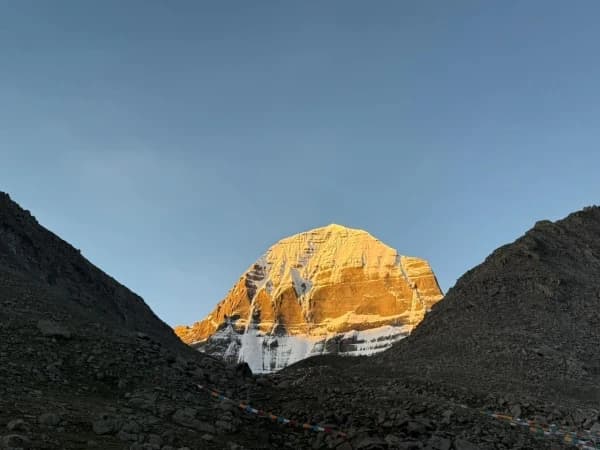
A final morning at Mansarovar. The lake at dawn is at its most luminous — the surface glass-still, reflecting the pre-dawn sky in shades of rose and violet, with Kailash's snow cap catching the first horizontal light and glowing gold while everything else remains in shadow. If you've been on this trek long enough to feel the rhythm of the Himalayan day, you'll know that these few minutes of alpenglow are among the most beautiful phenomena in the natural world. Take a photograph if you want. But also put the camera down and simply look. Some things are better remembered than recorded.

After breakfast, there's time for one last ritual at the lakeside. Many pilgrims collect small bottles of Mansarovar water to bring home for family members who couldn't make the journey. Others perform a final puja, offering incense and marigolds to the lake that four faiths hold sacred. The depth of feeling at Mansarovar, especially for those who've trekked through Humla to reach it, is often overwhelming. You've spent a week walking toward this place. Now, as you leave it, you carry something of it with you.

The drive to Darchen takes about two hours, skirting the northern shore of Rakshas Tal — Mansarovar's twin lake, darker and more brooding, representing the demonic forces that balance the cosmic order. The two lakes were once connected by a natural channel called Ganga Chu, which Tibetans regard as highly auspicious. Seeing them side by side — one turquoise and radiant, the other grey and wind-churned — is a striking visual metaphor for the dualities at the heart of Hindu and Buddhist philosophy.

Darchen (4,575 m) is the gateway to the Kailash Kora. It's a small, wind-battered settlement of guesthouses, tea shops, and pilgrim hostels clustered at the southern foot of the mountain. Functional rather than beautiful, but the view more than compensates. Mount Kailash fills the northern sky — a 6,638 m pyramid of layered rock and ice with four sheer faces, each aligned roughly with a cardinal compass direction. No photograph does it justice. The mountain has a presence — a gravitational pull on your attention — that you feel before you can articulate it.

This afternoon, your guide delivers the Kora briefing: what to carry, what the yaks will transport, overnight stops, the Dolma La Pass strategy, horse support options. You've been trekking for over a week already, so the physical demands of the Kora are nothing new to you. In fact, the gradual altitude gain through Humla has given you better acclimatisation than pilgrims who drove straight from Kathmandu. Your body is ready. The difference, for those who've earned their approach through the Simikot route, is that the Kora feels like a culmination rather than a beginning. You didn't just show up at Darchen — you arrived.

Rest well. Tomorrow, you walk around the mountain that called you here.

Meals: Breakfast, lunch, dinner.

Max Altitude: 5,077 mMeals: Breakfast, Lunch, and DinnerAccommodation: guesthouse
Day 15:

You've walked for nine days through the wilds of western Nepal to reach this morning. You've crossed the Nara La on foot, driven across the Tibetan Plateau, stood on the shores of Mansarovar. And now, stepping out of the guesthouse in Darchen under a sky that's still black with stars, you begin the walk that all of it was leading to: the sacred Kora around Mount Kailash. The cold is sharp. The air is thin. Prayer flags snap in the pre-dawn wind. Yak handlers load gear in the darkness, and your group moves out in a single file of headtorch beams, heading west across the open plain.

The first section follows a broad, flat valley strewn with mani stones and small cairns. Within the hour, you reach Tarboche, the ceremonial flagpole site where the great prayer flag is raised during Saga Dawa. If you're walking in late May 2026, you may witness this — thousands of pilgrims gathered for the holiest day of the Saga Dawa Festival on 31 May, the flagpole rising to the sound of horns and chanting. Even when the festival isn't underway, Tarboche radiates accumulated devotion. The stones here have been walked over by millions of feet. The prayer flags above have been strung by millions of hands.

Past Tarboche, the valley narrows and the Lha Chu valley opens before you — the western approach to Kailash. And here the mountain reveals itself in its full, terrifying grandeur. The western face is a wall of horizontally layered rock and ice, rising thousands of metres above the valley floor with an almost architectural geometry. The strata run in clean parallel lines, giving Kailash the appearance of a temple carved by divine hands rather than tectonic forces. Having walked for days through Nepal's wild valleys to reach this moment, the impact is visceral. You don't just see the mountain. You feel it.

The trail follows the river upstream, climbing gradually through a valley filled with pilgrims of every faith. Tibetan Buddhists prostrate full-length on the ground. Hindu sadhus chant Lord Shiva's names. Jain pilgrims walk in meditative silence. Bon followers circle counter-clockwise, as their tradition prescribes. The diversity of devotion is extraordinary, and the atmosphere is one of shared purpose. Every person on this trail, regardless of faith, is here for the same reason: to complete the circuit around the most sacred mountain on earth.

By late afternoon, you reach Dirapuk Monastery, directly opposite Kailash's legendary north face. The north face is split by a vertical ice channel and crossed by a horizontal snow band that together form a shape resembling a swastika — the ancient symbol of auspiciousness sacred to all four Kailash faiths. As sunset colours the face from gold to crimson to deep violet, you sit wrapped in every layer you own and watch. After a week and a half of walking, you're finally here. The mountain is no longer a destination. It's a presence. And tomorrow, you cross its highest pass.

Meals: Breakfast, lunch, dinner. Overnight in guesthouse/tented camp near Dirapuk.

Meals: Breakfast, Lunch, and DinnerAccommodation: Guesthouse
Day 16:

Three o'clock. The alarm is unnecessary — most pilgrims have been lying awake, listening to the wind. You dress in the dark, pulling on every warm layer, and step outside into a cold that feels absolute. Headtorches bob along the trail ahead — Indian pilgrims who started at midnight, Tibetan devotees moving with the sure-footed confidence of people who've done this before. You join the procession, and the Kora's hardest, holiest day begins.

The path from Dirapuk heads east, climbing steeply through a boulder-strewn moraine valley. The footing is treacherous: loose stones, frozen earth, patches of black ice. Every step demands full attention. Your breathing is loud in the silence — short, deliberate puffs. At 5,000 m, the oxygen content is barely half of sea level, and your body works overtime to compensate. But you've been at altitude for ten days now, trekking through Humla, sleeping at progressively higher camps. Your red blood cell count has climbed. Your lungs have adapted. You're better prepared for this pass than pilgrims who drove directly to Darchen, and you'll feel the difference.

Dawn breaks over Shiva Tsal, the "Place of Death." Here, Tibetan tradition holds that pilgrims symbolically die and are reborn. Clothing, shoes, and personal items are left on the ground as symbolic offerings — a landscape of surrender that's both eerie and profoundly moving. Whether you take the symbolism literally or metaphorically, this is the Kora's psychological midpoint. Everything before was approach. Everything after is transformation.

The final ascent to Dolma La Pass (5,636 m) is relentless. The trail switchbacks up a steep, boulder-choked slope, and the last 200 vertical metres feel infinite. Lungs burning. Legs heavy. Ten steps, pause, breathe. Ten more. And then — prayer flags everywhere, exploding in every colour, snapping and roaring in the ferocious wind. You're at the top. Pilgrims embrace strangers. Tears and mantras mingle in the thin air. In the Year of the Fire Horse, this single crossing carries the merit of twelve. You've earned every step of it. The weeks of trekking through Humla, the pass crossings, the camping nights — all of it was preparation for this summit moment, and the spiritual weight of it reflects the physical journey that brought you here.

Just below the eastern side lies Gauri Kund, an emerald-green glacial lake sacred to Hindus as Parvati's bathing place. The descent from Dolma La is steep and long — roughly 700 m of altitude lost over rocky terrain that punishes tired knees. By late afternoon, you'll reach Zuthul Puk Monastery (4,790 m), where the cave of the great yogi Milarepa still bears his handprint in the ceiling.

You're exhausted. You're elated. The hardest day of the entire 20-day journey is behind you. Sleep deeply. Tomorrow, you complete the circle.

Meals: Breakfast, packed lunch, dinner. Overnight in guesthouse/tented camp near Zuthul Puk.

Meals: Breakfast, Lunch, and DinnerAccommodation: Hotel
Day 17:

The final morning of the Kora is gentle — a kindness after yesterday's intensity. The trail from Zuthul Puk follows the Dzong Chu river valley south for about 10 km, mostly downhill, over ground that feels easy after the Dolma La. Your body is tired in a way that goes deeper than muscle fatigue. It's the tiredness of sustained effort at extreme altitude, compounded by the emotional weight of what you've just accomplished. But it's a good tiredness — the kind that comes with completion.

The eastern face of Kailash is visible to your left as you walk — more rounded than the dramatic north and west faces, softer in the morning light. The plateau stretches away to your right in rolling waves of brown grass. The river braids across a stony floodplain, silver where the sunlight hits the shallows. After three days above 4,800 m, the descent to 4,575 m feels like breathing underwater after weeks of breathing in the clouds.

What makes this final stretch different for pilgrims who came via Simikot is the accumulated weight of the journey. You didn't fly to Darchen and start the Kora fresh. You walked for ten days through one of Nepal's most remote regions, crossed the Nara La Pass, drove across the plateau, stood at Mansarovar, and then walked the Kora. The circuit you're completing now is the culmination of twenty days of sustained physical and spiritual effort. Every pilgrim who walks the Kora has their own experience of its depth. But those who came via the Humla trail carry something extra — a deeper connection forged through longer effort, a slower burning devotion that had more time to take root.

By mid-morning, Darchen appears on the horizon. The final kilometres are flat and easy. You pass groups just starting their Kora — fresh, excited, slightly nervous — and exchange knowing smiles. You were them. Now you're different. The Kora changes people in ways that reveal themselves slowly, over weeks and months, in quiet moments when the memory surfaces unbidden. You walked around the most sacred mountain on earth. You crossed the Dolma La at 5,636 m. In the Year of the Fire Horse, your merit is multiplied twelvefold.

Back in Darchen, the guesthouse feels like a palace. Hot water. Clean sheets. Food that isn't trail rations. Your group gathers for a celebratory meal — stories traded, blisters compared, laughter that comes easily after shared hardship. The Kailash Kora is complete. The bonds formed over the past two weeks — through shared camping nights in Humla, shared pass crossings, shared wonder at Mansarovar — are now reinforced by the shared triumph of the circumambulation. These friendships tend to last.

Meals: Breakfast, lunch, dinner.

Max Altitude: 2,900 mMeals: Breakfast, Lunch, and DinnerAccommodation: Hotel
Day 18:

The return journey begins. The drive from Darchen back to Saga retraces the Tibetan Plateau route, but you'll see it with different eyes after the Kora. The grasslands that seemed empty on the outward journey now reveal subtle textures — the way light ripples across them in waves, the distant silhouettes of yak herds, the tiny wildflowers pushing through dry earth. Your perception has been sharpened by twelve days of walking. You notice things you missed before.

The drive takes roughly seven hours, with stops for tea and photographs. The mood in the vehicle is quiet but contented. Many pilgrims write in journals, processing the experiences of the past two weeks. Others doze, making up for the altitude-disrupted sleep of the Kora nights. A few stare out the window at the vast, rolling plateau and try to fix it in memory — the particular shade of brown-gold that the grass turns in afternoon light, the colour of the sky at the horizon line, the way a single cloud casts a shadow the size of a village across the land.

Along the way, you'll pass nomadic drokpa encampments — black yak-hair tents pitched in sheltered hollows, herds grazing on the sparse grass. The nomadic way of life has persisted on this plateau for millennia, and seeing it in the context of your pilgrimage — a journey that has also persisted for millennia — creates a resonance between the transient and the eternal. The nomads move. The mountain stays. The pilgrims circle. The land endures.

Lunch is at a roadside settlement — noodle soup, rice, tea. Simple, warming, welcome. By mid-afternoon, the familiar outline of Saga appears on the plateau. You've been here before, on the outward journey. The same guesthouse, the same thin air, the same staggering night sky. But you're not the same person who passed through two weeks ago. The Kora, the Humla trek, the border crossing, the Mansarovar rituals — they've accumulated into something that will take time to fully understand.

One more night on the high plateau. Tomorrow, the road descends toward Nepal.

Meals: Breakfast, lunch, dinner.

Max Altitude: 1,400 mMeals: Breakfast, Lunch, and DinnerAccommodation: Hotel
Day 19:

The drive from Saga toward the Kerung border is a gradual descent from the high plateau, and your body celebrates every metre of altitude lost. By mid-morning, the first changes appear: scrubby bushes replace bare grassland, then sparse trees appear, and eventually the pine-and-juniper forests that line the approach to the border valley come into view. The air thickens. Breathing eases. The persistent headache that many travellers carry above 4,500 m begins to dissolve. The transition feels almost physical — the landscape gently lowering you back toward the oxygen-rich world you left nearly three weeks ago.

The bus passes through small Tibetan towns that you recognise from the outward journey. They look friendlier on the return — familiar landmarks in a landscape that once seemed alien. The tea house where you had your first yak-butter tea. The bridge over the gorge. The monastery on the hill. The outward journey was all anticipation and discovery. This return is integration and reflection. Your mind is processing the extraordinary experiences of the past seventeen days and weaving them into a narrative that will sustain you for years.

Lunch is in one of the larger Tibetan settlements. The menu is more varied here than near Kailash — dumplings, stir-fries, rice dishes — and after nearly three weeks of trail and guesthouse food, the variety feels luxurious. Several of your group will express the same sentiment: food tastes better after the Kailash Yatra. Everything tastes better after the Kailash Yatra.

By early afternoon, the bus enters the Kerung valley, and the landscape completes its transformation back to green. Waterfalls cascade down cliff faces draped in moss and ferns. Birds call from the trees. The sensory richness after the plateau's austerity is almost overwhelming — like switching from a pencil sketch to a watercolour painting. The river gorge below is deep and dramatic, its walls lush with subtropical vegetation that looks almost tropical.

Arrive in Kerung by late afternoon. This is your last night in Tibet. The guesthouse sits at 3,800 m, and after spending more than two weeks above 4,000 m, you feel noticeably better at this elevation. Sleep will be deep and restorative. Exchange contact details with your Tibetan guide — these men and women are quietly remarkable, deeply knowledgeable about Tibetan history and culture, and devoted to the safety and wellbeing of every pilgrim. A tip is customary and warmly received.

Change any remaining Chinese Yuan into small denominations. Once you cross into Nepal tomorrow, Yuan becomes difficult to exchange.

Meals: Breakfast, lunch, dinner.

Max Altitude: 1,400 mMeals: Breakfast and DinnerAccommodation: Hotel
Day 20:

The border crossing back into Nepal is your final transition — from the dry, wide silence of Tibet to Nepal's green, humid, noisy embrace. Clear Chinese immigration, cross the border zone, and step back into a country that you left nearly three weeks ago. The change is instantaneous and almost overwhelming: birdsong replacing wind, the scent of earth and vegetation filling your lungs, the green so vivid it looks artificial after seventeen days of brown plateau. Nepal feels like breathing colour.

The drive from the border to Kathmandu follows the spectacular Trisuli River gorge road. The descent passes through several climate zones in a few hours: cool border valley to temperate forest to subtropical jungle to the warm Kathmandu Valley. The terraced hillsides, the waterfalls, the moss-draped cliffs — after the austerity of the Tibetan Plateau, every detail seems hyper-real, saturated with colour and life. Several pilgrims will press their faces to the bus window, drinking in the greenness as if they've been thirsty for it.

Lunch is at a riverside restaurant. Nepali dal bhat, fresh vegetables, pickles, and sweet tea. After three weeks of Tibetan and Chinese food and trail rations, the flavours of Nepal taste extraordinary. The drive continues through the afternoon, and by late afternoon the outskirts of Kathmandu appear. The traffic, the horns, the chaos — a sensory assault after the silence of Tibet and the solitude of Humla. But there's comfort in returning to a city you now know, a hotel you've stayed in before, a bed that doesn't need inflating.

Tonight is the farewell dinner — a final meal together with your group, your Nepali guide, and the camping crew who fed and supported you through the Humla wilderness. There will be speeches, laughter, and probably tears. You'll receive your certificate of achievement recognising completion of the Kailash Kora via the Simikot route. This is the most demanding of the three Kailash itineraries, and finishing it is a genuine accomplishment. The bonds formed over twenty days of shared trekking, camping, border crossings, and spiritual experiences don't break easily. Exchange contact details. Stay in touch. These people are your Kailash family now.

After dinner, wander Thamel one last time. The neighbourhood that seemed foreign three weeks ago now feels like a warm, familiar room. Buy a singing bowl. Eat a momo. Light a butter lamp at the corner shrine. Let the city hold you gently as you decompress from the most extraordinary journey you've ever taken.

Meals: Breakfast, lunch, farewell dinner.

Couldn't find what you're after?Reach out to our travel experts.
Customize Trip
Availability
Book your own private small group trip
No. of traveler
Price per person
2 - 4 pax
US$4299
5 - 8 pax
US$4199
9 - 12 pax
US$3999
13 - 20 pax
US$3899

Discounts are determined exclusively by the size of your group. We do not add additional members to your group.

Book Now
hbl logo
Secure Payment by Himalayan Bank.
Cost Includes
  • Private vehicle for airport pickup and drop-off in Kathmandu

  • Comprehensive Kathmandu sightseeing tour: Pashupatinath, Boudhanath, Kathmandu Durbar Square, and Swayambhunath

  • Transfers to and from Nepalgunj airport

  • Hotel accommodation in Kathmandu on a bed-and-breakfast basis

  • 1 night in a hotel in Nepalgunj with all meals included

  • Flight or drive from Kathmandu to Nepalgunj

  • Return flights from Nepalgunj to Simikot

  • Nepali guide's flight from Nepalgunj to Simikot

  • Cook's overland transfer to Nepalgunj and flight to Simikot (arrives the day before)

  • Cargo service for trekking and cooking equipment

  • Mules and three kitchen crew members from Simikot

  • All meals (breakfast, lunch, and dinner) plus tea, coffee, or hot water while camping in Nepal

  • Full camping equipment: tents, mattresses, table, chairs, and cooking gear

  • Special Humla restricted-area permit

  • Humla community fee

  • Chinese visa fee with Nepali guide assistance

  • Local community camping fees

  • One bus for pickup at the Kerung border

  • Health insurance for guides and cook

  • Accommodation in local guesthouses, camp tents, or motels with meals in Tibet

  • Rain-protective luggage duffel bag

  • Hilsa border-crossing fee (local community)

  • All trek accommodation included as per the programme

  • All Tibet entry and driving permits

  • Local Tibetan English-speaking guide

  • Ground transportation in Tibet (one van)

  • All monastery and site entrance fees in Tibet

  • Porters for the Kailash Kora

  • Daily breakfast with snacks in Tibet, plus lunch and dinner in hotels and restaurants

  • Kailash and Mansarovar environmental protection fee

  • National grassland protection fee

  • Emergency oxygen supply in Tibet

  • First-aid kit (a personal kit is also recommended)

  • All staff wages, insurance, food, and accommodation

  • Farewell dinner in Kathmandu at the end of the tour

Cost Excludes
  • International airfare

  • Nepal visa fee

  • Helicopter charter from Nepalgunj to Simikot in case of flight cancellation due to weather

  • Extra hotel nights in Nepalgunj due to weather-related flight cancellations

  • Alcoholic beverages, soft drinks, bottled mineral water, and snacks during the trek

  • Lunch and dinner in Kathmandu

  • Excess baggage fees (Kathmandu to Nepalgunj to Simikot), approximately NPR 100-140 per kg

  • Restaurant meals during camping if dining outside planned meals

  • Personal medical or evacuation expenses (travel insurance strongly recommended)

  • Extra porter for personal day backpack

  • Horse or yak riding along the trek or during the Kailash Kora

  • Expenses arising from political disturbances or blockades

  • Extra costs arising from natural disasters

  • Sleeping bag (available for hire)

  • Tips for staff and drivers

  • Any other expenses not listed under Cost Includes

Essential Information

Tibet Visa and Permit Requirements

Travelling to the Tibet Autonomous Region requires a China Group Visa, processed through the Chinese Embassy in Kathmandu. A minimum of five travellers is needed to form a visa group. Your passport must be submitted at least 25 days before departure. American and Canadian passport holders pay an additional surcharge (currently USD 90 on top of the standard visa fee). In addition, you'll need a Tibet Travel Permit, an Alien Travel Permit, and possibly a Military Permit — all coordinated through our licensed Tibetan partner agency. The Simikot route also requires a special Humla restricted-area permit, which we arrange on your behalf.

Arrive in Kathmandu One Week Early

Chinese regulations require all travellers to arrive in Kathmandu at least one week before the tour departure date. This allows time for passport collection, visa processing, and final briefings. We strongly recommend booking your international flight to arrive several days before the mandatory date. During this waiting period, we arrange your hotel on a bed-and-breakfast basis.

2026: Year of the Fire Horse

In the Tibetan calendar, 2026 is the Year of the Fire Horse, occurring once every twelve years. Tibetan Buddhist tradition holds that completing a single Kora during a Horse Year carries the merit of twelve Koras in an ordinary year. This makes 2026 an exceptionally significant year for the Kailash pilgrimage. Early booking is essential.

Saga Dawa Festival: 31 May 2026

The Saga Dawa Festival, commemorating the birth, enlightenment, and death of the Buddha, is the holiest Buddhist celebration of the year. Its climax takes place at Tarboche near Kailash, where a giant prayer flagpole is raised before thousands of pilgrims. In 2026, Saga Dawa falls on 31 May. Contact us for departure dates that align with this extraordinary event.

Best Time to Visit

The Kailash trek via Simikot operates from May to September. May and June offer the clearest skies and coincide with Saga Dawa. July and August are warmer but may bring occasional monsoon-influenced moisture. September provides crisp visibility and autumn colours in the Humla valley.

Simikot Flight Information

There are no direct flights from Kathmandu to Simikot. You'll fly Kathmandu to Nepalgunj (1 hour), overnight, then take a Dornier or Twin Otter to Simikot (40-50 minutes). Flights are weather-dependent — delays can occur, and we build buffer days into the itinerary accordingly. All flights are booked and managed by The Everest Holiday.

Fitness and Altitude

This is the most physically demanding Kailash route. You'll trek for several days in Nepal's Humla region at progressively higher altitudes before reaching Tibet, then complete the 52 km Kora with the Dolma La Pass at 5,636 m. Good cardiovascular fitness is essential. We recommend at least eight weeks of hill-walking preparation, covering 8-10 km daily. Our guides carry pulse oximeters and Diamox, and the gradual altitude gain through Humla provides excellent natural acclimatisation. Horse and porter support is available during the Kora. Read our altitude sickness guide for detailed preparation advice.

Food and Accommodation

In Kathmandu, you'll stay in a hotel on a bed-and-breakfast basis. In Nepalgunj, accommodation is in a hotel with all meals. During the Humla trek, accommodation is in camping tents with full camping crew — cook, kitchen staff, and mules for luggage. All meals are freshly prepared on the trail. In Tibet, accommodation is in guesthouses or hotels with meals. During the Kora, accommodation is in guesthouses or tented camps.

Currency

In Nepal, the Nepali Rupee (NPR) is used. In Tibet, the Chinese Yuan (CNY) is required. Exchange currency in Kathmandu or at the border. ATMs are virtually non-existent on the Kailash route, and credit cards are not accepted. Carry sufficient cash in small denominations.

Safety

Our guides are government-licensed, trained in high-altitude first aid, and carry emergency oxygen and medical supplies. The Humla trekking section is supported by a full camping crew. Pulse oximeters are used daily. Travel insurance covering helicopter evacuation to 6,000 m is strongly recommended.

Farewell Dinner and Certificate

Upon return to Kathmandu, we host a farewell dinner where you'll share stories and receive a certificate of achievement. We value your feedback and look forward to hearing about your experience.

Tipping

Tipping is customary in both Nepali and Tibetan culture, though never obligatory. We recommend giving tips collectively to the crew at the journey's end. The amount should reflect the quality of service and the length of the tour.

FAQs