
Rara Lake Trek - 9 Days: Explore Nepal's Largest & Most Pristine Lake

2 reviews
Rara Lake Trek - 9 Days: Explore Nepal's Largest & Most Pristine Lake
Quick Overview
Duration9 Days
Trip GradeModerate
CountryNepal
Maximum Altitude3585m/11761ft
Group Size2-20
StartsKathmandu
EndsKathmandu
ActivitiesTrekking
Best TimeSep to Nov and Mar to May

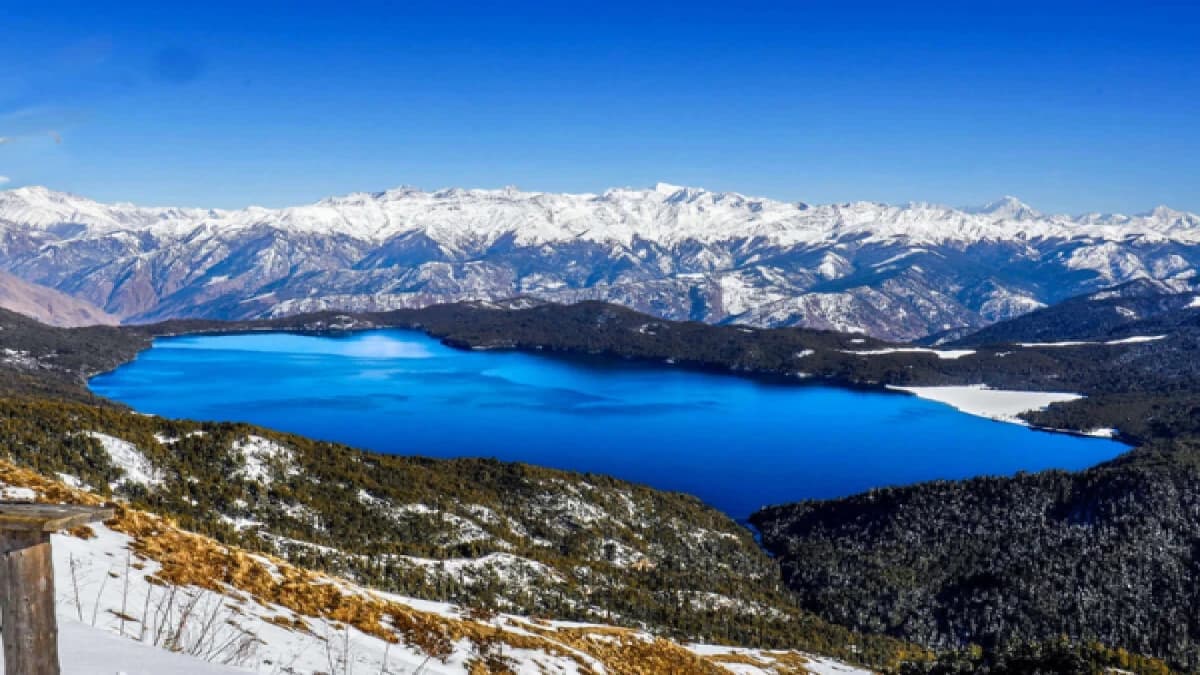
Known as the “Queen of Lakes,” Rara Lake (2,990 m/9,810 ft) is Nepal’s largest lake, stretching about 13 km² in the remote Karnali region. Surrounded by Rara National Park, it offers pristine alpine scenery, snowcapped peaks, pine and juniper forests, and rare wildlife like musk deer. Himalayan black bear and red panda.

What Makes This Trek Unforgettable

  • Visit Rara Lake (2,990 m / 9,810 ft)—the largest and most pristine lake in Nepal.

  • Enjoy panoramic Himalayan views of Api–Saipal, Kanjiroba, and Tibetan peaks.

  • Explore Rara National Park, home to red pandas, musk deer, black bears, and 200+ bird species.

  • Discover the ancient Sinja Valley, birthplace of the Nepali language and former capital of the Khasa Kingdom.

  • Cross scenic high passes like Jaljala (3,580 m), Ghurchi Lagna (3,460 m), and Danphe Lagna (3,690 m).

  • Experience the authentic culture of the Thakuri, Magar, and Tibetan-influenced mountain communities.

  • Trek through diverse landscapes—pine, oak, and rhododendron forests, alpine meadows, and rivers.

  • Spend peaceful nights by the lake, with starlit skies reflecting on the still waters.

Overview Rara Lake—9 Days 

The Rara Lake Trek offers a rare chance to walk along the untouched trails of western Nepal, far away from the crowded trekking routes. The journey starts with a short exploration of the UNESCO World Heritage Sites in Kathmandu before flying to Nepalgunj and onward to Jumla, the gateway of the trek. From Jumla, the trail gradually leads you toward Rara Lake, situated at an altitude of  3,010  m  (9,875  ft).  It is the highest and largest lake in Nepal,  surrounded by tranquil forests and snow-capped peaks. 

Along the way, you enter Rara National Park, one of Nepal’s most beautiful and well-protected parks, home to rare wildlife such as musk deer, Himalayan black bears, leopards, and Himalayan goral. The park is also a haven for birdwatchers, with over 200 species of birds thriving in its peaceful ecosystem.

Beyond its natural beauty, the trek also offers insight into the rural lifestyle of the mountain communities that live in this remote part of the country. Their simplicity, traditions, and warm hospitality give you a glimpse of life untouched by modernity. The combination of breathtaking mountain views, diverse wildlife, dense forests, and the magical blue waters of Rara makes the whole trek an unforgettable adventure for those seeking both solitude and natural wonders.

9-Day Rara Lake Trek Overview

Before You Arrive

For a smooth and stress-free start, we highly recommend arriving in Kathmandu by 4 PM the day before we leave. This gives you enough time for a final gear check, a trip briefing with your guide, and to make sure you have everything you need before heading to the trek. 

Online Briefing

This is like our first coffee before the trip, but online!  This online meeting is our chance to show you everything that will happen on the trip.  We'll talk about everything from what gear to bring to what each day on the route will be like and how it will feel, and we'll answer any questions you have.  After you book, we'll send you an email with a couple of times when we can talk. We'll set up the meeting after the booking process is completed. Also, our trek itinerary does not include your hotel stay in Kathmandu. So while in the online meeting, please let us know your preferences, budget, and standard of the hotel you would like to stay in in Kathmandu. We will arrange it for you accordingly. 

Your Trek, Your Way

Experience the Himalayas on your terms. We create personal, intimate treks for groups of two or more. Whether you select our Budget, Standard, or Luxury package, your adventure will be exclusively for you and your companions, ensuring a comfortable and personal journey from start to finish.

Kathmandu Accommodation

Your hotel in Kathmandu is not included in the trek package. During the online briefing before your trek, we will ask about your preferences and budget — whether you want a simple guesthouse or a five-star hotel — and help you arrange it. Your trek package begins when you leave Kathmandu for the mountains.

Compare Our Three Packages

  Budget Standard Luxury
Price from USD 699 USD 1,699 USD 2,499
Meals Choose your own (approx. USD 15-25/day) 3 meals + tea + fruits + 2L water daily All meals + all drinks anytime (except alcohol)
Room Shared teahouse Private twin w/ bathroom Private deluxe w/ bed heater
Porter Not included 1 per 2 trekkers 1 per trekker (carry nothing)
Guide 1 guide, assistant at 8+ 1 guide per 6, assistant at 6+ 1 guide per 2 trekkers
Transport Local vehicle Private tourist vehicle Luxury private vehicle
SIM data SIM only Limited data Unlimited data
Best for Backpackers and independent travellers Comfort trekkers, couples, families Premium experience seekers

Himalayas for Every Budget — same expert guides, same safety, three comfort levels.

Your Trek, Our Family

Shreejan Simkhada doesn’t just run a trekking company — he comes from three generations of Himalayan expertise. His grandfather arranged expeditions in the 1960s. His father served at the Nepal Tourism Board. Shreejan personally designs every itinerary and hand-picks the guide for your group.

Your guide will be one of our Nepal government well-trained professionals — qualified mountaineering experts, all with years of Himalayan experience. Shreejan briefs every guide personally before your trek begins.

Need anything? WhatsApp Shreejan directly: +977 9810351300.

Why Trekkers Trust Us

  • 197+ TripAdvisor Reviews — 4.9 out of 5 stars, TripAdvisor Travellers Choice 2024
  • 108+ Google Reviews — 4.9 out of 5 stars
  • TAAN Certified — Member #1586, Government Reg: 147653/072/073
  • Secure 10% Deposit — pay just $88 to reserve, via Himalayan Bank
  • Himalayas for Every Budget — breakfast, lunch, and dinner throughout the trek
  • Three Generations — family guiding in the Himalayas since the 1960s

Solo Trekkers Welcome

Most of our trekkers join solo — you will be part of a small group of like-minded adventurers from around the world. Our groups are kept small (2-20 people) so you get a personal experience, not a conveyor belt. Many of our solo trekkers tell us the group becomes like a second family by day three.

You also have the option to book the trek privately for yourself. If you choose to make it a public group, we will list your dates as fixed departures on our website so other solo travellers can join you.

Difficulty: Challenging (4/5)

A restricted area trek to the hidden Tsum Valley — a living museum of Tibetan Buddhist culture. You will walk 5-7 hours per day through remote villages untouched by modernity.

Trek With a Purpose — Changing the World, One Step at a Time

A portion of every booking supports the Nagarjun Learning Center, founded by our family in 2019. Today, 70 children receive free education and hot meals daily at our flagship centre in Saldum Village, Dhading District. We have also provided free medical care to 600+ people and reached 275+ women through empowerment programmes. The centre is verified and listed on the UN Partner Portal.

When you trek with us, you are not just climbing mountains — you are building futures. Trek With a Purpose.

Itinerary

Day 01: In Kathmandu for trek preparation and flying to Nepalgunj (150 m/492 ft).
Day 02: Fly to Jumla (2,540 m/8,334 ft), trek to Chauriya Chaur (3,055 m/10,022 ft)—04 hrs.
Max Altitude: 3,055 m/10,022 ft
Day 03: Trek on route Bota via Jaljala pass at 3,585 m/11,761 ft—06 hrs.
Max Altitude: 3,585 m/11,761 ft
Day 04: Trek to Bota (2,680m/8,792ft) via Sinja Khola (2,440 m/8,005 ft)—06 hrs.
Max Altitude: 2,680 m/8,792 ft
Day 05: Trek to Ghorasinga (3,050 m/10,006 ft) near Rara Lake—06 hrs.
Max Altitude: 3,050 m/10,006 ft
Day 06: Trek to Rara Lake (2,990 m/9,810 ft)—06 hrs.
Max Altitude: 2,990 m/9,810 ft
Day 07: At Rara Lake, a rest day for an excursion around the lake.
Day 08: Trek to Talcha village (2,260 m/7,414 ft)—05 hrs.
Max Altitude: 2,260 m/7,414 ft
Day 09: Fly to Kathmandu via Nepalgunj and transfer to the hotel.
Expand All
Couldn't find what you're after?Reach out to our travel experts.
Customise Trip

Interactive Route Map

Altitude Chart

Rara Lake Trek - 9 Days: Explore Nepal's Largest & Most Pristine Lake

Availability

Book your own private small group trip

Discounts are determined exclusively by the size of your group. We do not add additional members to your group.

hbl logo
Secure Payment by Himalayan Bank.

Equipment Lists

We advise you to carry only the clothing and equipment that are absolutely required for the trek. The Everest Holiday office has complimentary luggage storage for those who have more than they need. Porters are available to assist with your additional luggage; however, it is important to be aware that the weight limit is established at 10 kg per trekker. Since one porter carries the luggage for two people, we suggest that you and a trekking partner share one large duffel bag (over 60 Liters).

  • Sun hat (wide-brimmed)
  • Beanie (for warmth)
  • A neck gaiter or buff (for warmth and sun protection)
  • Sunglasses with UV protection
  • Insulated gloves or mittens (for cold weather)
  • Waterproof gloves (for wet conditions)
  • A thick-wool or synthetic pair of moisture-wicking socks
  • waterproof hiking boots with ankle support and excellent traction
  • Sandals (for camp use or river crossings)
  • Gaiters protect from mud, water, and debris.
  • Moisture-wicking t-shirts (short and long sleeves)
  • Thermal base layer (for colder conditions)
  • Fleece jacket and down jacket (Mandatory)
  • Lightweight puffy jacket (for extra warmth)
  • Waterproof and windproof jacket (Gore-Tex or similar)
  • Raincoat
  • Lightweight, breathable long-sleeve shirt
  • Polypropylene underwear (four)
  • Quick-drying pants/trousers (convertible or full-length)
  • Insulated pants (for colder conditions)
  • Lightweight cotton pants
  • Wear long underwear or thermal leggings when it is cold.
  • Two pairs of thermal/trekking trousers (pants)
  • Biodegradable bar soap
  • Toothbrush and toothpaste
  • Medium-sized drying towel
  • Wet wipes or hand sanitizers
  • The toilet paper is stored in a Ziplock bag.
  • Feminine hygiene products
  • Travel-sized shampoo
  • Nail clippers
  • Small mirror
  • A duffel bag with a capacity of over 60 liters is intended for porters, with one duffel bag for every trekker.
  • An individual's daypack or backpack with a 20- or 30-liter capacity should be plenty.
  • Adjustable and lightweight poles (preferably collapsible)
  • A two-liter water bladder or bottle (with a protective cover for cold climates)
  • Use water purification methods such as purification tablets, filter bottles, or UV filters.
  • Camera/smartphone (extra memory cards and batteries)
  • A portable charger, spare batteries, or a battery pack
  • Two-pin charging plug
  • Basic first aid supplies include band-aids, antiseptic wipes, pain relievers, and Diamox (which is used to prevent or lessen symptoms related to mountain sickness).
  • Personal medications (inhalers, allergy meds, etc.)
  • Few passport-size photos
  • Passport photocopies
  • Notebook and pen
  • Binoculars
  • Water purification (tablets, filter bottle, UV filter)
  • Energy bar
  • Basic first aid kit (band-aids, antiseptic wipes, pain relievers, etc.)
  • Diamox (for altitude sickness prevention/relief)
  • Personal medications (inhalers, allergy meds, etc.)
  • Lightweight headlamp (with adjustable brightness)
  • Face wipes
  • An extra pair of batteries

Essential Information

Rara Lake Trek (9 Days) — What You Need to Know

Arrival and Welcome

When you land at Tribhuvan International Airport, our representative will be waiting with a sign showing your name. You'll be welcomed with a traditional marigold garland or khada and driven to your hotel in a private car. Please arrive in Kathmandu at least one day before your trek, allowing time to prepare and review the details. On the first day, we'll fly to Nepalgunj after picking up any final gear and equipment in Kathmandu.

Accommodation

The Rara Lake Trek includes eight nights in comfortable teahouses along the trail — standard twin-sharing rooms with toilets, hot water, and laundry facilities. Rooms at lower elevations may have attached bathrooms. Most teahouses provide charging points and Wi-Fi, though these services may cost extra in some places. Kathmandu accommodation and meals aren't included in the 9-day package.

Meals

At altitude, your body works harder and needs proper fuel — plenty of carbohydrates, protein, and hydration. The menu changes depending on elevation, with fewer choices higher up. We strongly recommend garlic soup, fresh vegetables, green tea, hot lemon, and ginger tea. For a hearty, filling meal, try the local favourite: Dal Bhat Tarkari (lentil soup, rice, and vegetable curry). Personal extras like alcohol, snacks, and drinks between meals aren't included.

Luggage

We provide one porter for every two trekkers. Each person's luggage allowance is 10 kg, so a porter carries no more than 20 kg total — we never overload our porters. Pack your gear in a duffel bag of over sixty litres and team up with a fellow trekker. You'll still carry a small daypack for your valuables, water, and camera. Extra bags can be stored free at your hotel or our Kathmandu office.

Facilities and Essentials

Water

You can buy bottled water from shops along the trail or drink boiled or filtered water at lodges. We strongly recommend bringing a reusable bottle and refilling it with boiled water — this cuts down on plastic waste and saves money. Never drink untreated tap, river, or well water. For extra safety, carry water purification tablets (available at shops along the trail).

Communication

We'll provide you with a SIM card in Kathmandu and show you how to set up data and top up credit. Mobile signal can be patchy at higher altitudes — and in far-western Nepal around Rara, coverage is particularly limited. Our lead guide stays in daily contact with all trekking teams. For emergencies, we carry walkie-talkies and satellite phones in areas with no mobile coverage.

Travel Essentials

Visa

All foreign nationals need a visa to enter Nepal (Indian citizens are exempt). Most nationalities can get a visa on arrival at Kathmandu airport — the current fee is USD 50 for 30 days, payable in cash. Citizens of China and SAARC countries receive free visas. We also recommend registering your visit with your country's embassy or consulate in Nepal.

Travel Insurance

Travel insurance is mandatory for this trek. Your policy must cover medical expenses and emergency helicopter rescue up to 4,500 metres. Please send us your insurance details within a week of booking — in an emergency, we'll use them to arrange rapid evacuation and hospital transfer.

Currency Exchange

The Nepali Rupee (NPR) is the local currency. ATMs are available in Kathmandu, Pokhara, and major towns. Credit cards are accepted at larger hotels and restaurants but not at smaller shops or on remote trails.

We recommend carrying cash in NPR for daily expenses. USD, GBP, EUR, and AUD can be exchanged at banks and money changers in Kathmandu.

Extra Expenses

While the package covers most trek costs, you'll need to budget for some personal items: meals and accommodation in Kathmandu, visa fees, snacks on the trail, hot showers, personal gear, and tips for the crew. We recommend roughly USD 30 per day for these extras during the trek.

Trek Season and Weather

The Rara Lake Trek is best from March to May and September to November. Spring (March–May): The ideal season — clear skies, blooming rhododendrons, and views of the surrounding Himalayan peaks reflected in Rara Lake. Daytime temperatures range from 18–24°C, dropping to -4°C at night. Autumn (September–November): Stable weather and beautiful mountain views, with temperatures from 15–25°C during the day and nighttime lows around -6°C. Winter (December onwards): Snow increases, making the higher trails difficult and cold.

A Typical Day

A big breakfast kicks off each morning around 7 am. The day's trekking normally lasts four to six hours, with a lunch break along the way. In the evenings you can rest or explore, then enjoy dinner and a briefing on the next day's plans.

Booking Your Trek

Private Treks

Every trek we run is private — you'll only walk with your own group. We never add strangers to your trip. All itineraries are fully customisable to suit your schedule.

Solo Trekkers and Group Bookings

Our treks run with a minimum of two people. If you're travelling alone and don't have a companion, we can set up a group trek open to others — once you confirm, it goes on our website so other trekkers can join. This way, every trip becomes your own personal holiday in the Himalayas.

Secure Booking

The Everest Holiday is a registered and bonded trekking operator — proud members of the Trekking Agency Association of Nepal (TAAN) and the Nepal Mountaineering Association (NMA). Shreejan's father, Ganesh Prasad Simkhada, has held senior positions at the Nepal Tourism Board and the Nepal Mountaineering Association. To confirm your booking, we require a 10% advance payment.

Payment options include the Himalayan Bank online portal (on our website), major credit cards, bank transfers, Wise, and Western Union. You can pay the remaining balance after arriving in Kathmandu. Please send us a copy of your passport within one week of booking, and make sure it has at least six months' validity from your arrival date in Nepal.

Last-Minute Bookings

We recommend booking in advance, but we do accept last-minute bookings with full payment required 24 hours before departure. For last-minute treks, contact Shreejan directly at +977-9810351300 or email info@theeverestholiday.com. Please note that last-minute trips may face delays due to circumstances beyond our control.

Our Team

We're a family business with three generations in Nepal's tourism industry. We started as porters and now run the agency — and we still treat every team member like family. Your guides and porters are experienced professionals from the upper Himalayas who know these mountains intimately. They're trained in wilderness first aid, altitude safety, and speak good English. We cover their insurance, meals, accommodation, and medical care. Don't hesitate to ask them anything — they're there for you.

Flexible Schedule

Your trip dates are entirely up to you. If our listed departure dates don't work, let us know and we'll arrange a trek that fits your schedule.

Trip Extensions

Want to see more of Nepal? We can add activities like a jungle safari in Chitwan or Bardiya, bungee jumping in Pokhara, Bhote Koshi, or Kushma, white-water rafting on the Bhote Koshi, Trishuli, or Seti rivers, kayaking in Trishuli, paragliding over Pokhara or Kathmandu, zip flying in Kathmandu, Pokhara, or Kushma, canyoning at Pokhara or Sukhuta Beach, or hot air ballooning in Pokhara.

For culture and history, we arrange guided tours of the Kathmandu Valley's UNESCO World Heritage Sites — Bhaktapur Durbar Square, Patan Durbar Square, Kathmandu Durbar Square, Swayambhunath (the Monkey Temple), Boudhanath Stupa, Changunarayan Temple, and Pashupatinath Temple. Sunrise trips to Nagarkot and Dhulikhel are also popular. We can arrange spiritual visits to temples, stupas, monasteries, and meditation centres too. Check our ADD-ON packages when you book.

Ecotourism

We take the health of these mountains seriously. At the start of your trek, every guest receives an eco-waste bag. Please use it for all non-compostable rubbish — snack wrappers, plastic bottles, batteries. Carry it with you as you walk; our guides will show you where to dispose of waste properly at designated collection points. Help us keep the Rara and Karnali region clean for the people who live here and the trekkers who come after you.

After the Trek

Farewell Dinner

Back in Kathmandu, we'll host a farewell dinner where you can share stories from the trail and give us your honest feedback. You'll also receive a certificate of achievement to mark what you've accomplished.

Departure

Let us know your hotel name, room number, and flight details, and we'll arrange your transfer to Tribhuvan International Airport. We hope you'll come back to Nepal for another adventure.

Tipping

Tipping is appreciated in Nepal but never obligatory. The amount should reflect the quality of service, the length and difficulty of the trek, and your overall experience. We recommend tipping the crew collectively at the end of the trek.

FAQs

What is the Rara Lake Trek?

It's in the far northwestern region of Nepal, in Rara National Park. The best part of the walk is 
Rara Lake, which is 2,990 meters (9,810 ft) above sea level. The lake is the biggest in Nepal, and 
its turquoise waters and the evergreen trees that surround it are well-known.

How challenging is it to trek to Rara Lake?

Most people think of it as a moderate to difficult trip. The physical effort is moderate, and most 
days have climbs and descents that are easy to handle. The main problem is that it is far away. 
Access is longer, the amenities are simpler, and you are far from large hospitals. You need to be 
fit and able to take care of yourself.

How long does the hike take?

A usual trekking route lasts 10 to 12 days, with 5 to 7 of those days spent trekking. You need 
more time for flights or long drives to the trailhead on the way there.

Do I need a guide and a porter?

Guide: Yes, a guide is really helpful and nearly necessary. The route is in a secluded area, and 
while it's not hard to hike on, it can be hard to find your way at times. A guide makes sure you 
stay  safe,  takes  care  of  the  practicalities  in  a  region  with  few  amenities,  and  makes  the  trip 
better by sharing their local expertise.

It is highly recommended that you hire a porter. Because it's so far away, lugging a hefty load for 
several days without help is really difficult. It also gives those in this area who don't get a lot of 
visitors' important jobs.

When is the greatest time to go on the Rara Lake Trek?

The two finest times of year are
September to November is the best time of year.   The air is fresh, the sky is clear, and the 
views of the mountains are amazing.  The weather is nice and steady.

Spring (March to May): This is another great season to go, with mild weather for hiking 
and spectacular rhododendron blooming in the woods.

Winter  (December  to  February): It  is  doable,  but  very  cold.  Heavy  snow  frequently 
blocks the high passes, such as the Chuchemara Danda, making the path impossible to 
reach.

Monsoon (June to August): Not a good time. The area gets a lot of rain; the trails are 
muddy and full of leeches, and flights to Nepalgunj/Jumla are sometimes canceled.

What kinds of permissions do I need?
  A: You need two permits:
  You may get a Rara National Park Entry Permit in Kathmandu or at the park entry.
  You need a Trekker's Information Management System (TIMS) Card for all treks in Nepal.

Can I receive permits while I'm on the trail?
You may occasionally get the Rara National Park Permit at the entrance, although this is not always the case.
You can't get the TIMS Card on the path. You should get both permits in Kathmandu before you 
go to prevent any problems.

How do I get ready for this trek?

To  get  stronger  legs,  do  things  like  hikes,  squats,  and  lunges.  To  get  better  at  running  and 
cycling, and doing things like running and cycling. The best way to prepare for the journey is to go on 
lengthy, full-day treks with a backpack on different types of terrain.

How likely is it that you may get Altitude Sickness?

The danger is minimal to moderate. Rara Lake's highest point is merely 2,990m, which is below 
the usual high-risk zone. But the journey does take you over the Chuchemara Danda pass at 
about  3,600  meters,  where  some  hikers  may  have  moderate  symptoms.  Still,  proper 
acclimatisation is needed.

What do I need to bring?

Because it's so far away, it's really important to pack the right way. Some important things are:
 Footwear: Hiking boots that are strong and have been worn in nicely.
 Clothes: A  comprehensive  layering  system  for  changing  weather,  including  a  warm 
insulated jacket for cold mornings and evenings.
 Accessories:  Headlamp,  thick  hat,  gloves,  and  sunglasses  are  some  of  the  things  you 
need.
 Essentials: You need water purification pills or a filter, a full first-aid kit (medical care is 
far away), high-energy food, and a lot of cash (Nepalese Rupees). There are no ATMs 
after Nepalgunj/Jumla.

What are the accommodations like at the tea house?
  A: Tea houses are quite simple. They are basic places to stay that offer a bed, a blanket, and 
meals made at home. There will be communal outdoor restrooms and no heat in the rooms. You 
shouldn't expect to get hot showers very often. The infrastructure is not as good as it is in the 
Everest or Annapurna areas.

What about food and drink?

Food:  There  aren't  many  options  on  the  menu,  but  they  usually  have  Dal  Bhat,  noodles, 
Spaghetti and potatoes. Dal Bhat is the best choice since it fills you up and is safe. It's a good 
idea to have some extra food on hand.
Water: It's hard to get bottled water, and it's bad for the environment. You can purify, tap, or 
spring water using water purification pills or a filter. Tea establishments will provide you with 
boiling water, if you ask.

Is there power and internet?

Power: Some  tea  establishments  at  lower  elevations  have  it,  although  it's  frequently 
solar-powered  and  not  very  dependable.  There  could  not  be  any  electricity  further  up,  or  it 
might only be provided for a few hours in the evening at a cost.  It is difficult to charge gadgets.
Internet: For  much  of  the  walk,  mobile  data  (NTC/Ncell)  is  very  poor  or  not  available  at  all.  
Don't anticipate Wi-Fi. Think of this as a real digital detox.

How does Rara Lake stack up against Annapurna Base Camp (ABC) or Everest?

Rara Lake is far less busy than the teahouse routes of ABC and Everest, and it gives a real nature 
and cultural experience.

Infrastructure: The facilities for the Rara Lake Trek are simpler. You should be ready for things to 
be simple and not have many luxuries.

Instead of tall, ice peaks, Rara has a beautiful alpine lake surrounded by peaceful forests and 
undulating hills, with views of the snow-capped Himalayas in the distance.

Access:  Getting  to  the  Rara  trailhead  involves  a  flight  and/or  a  long  drive,  which  makes  it  a 
considerably greater logistical task.

What is the Rara Lake Trek?
A 9-day trek to Nepal's largest and deepest lake, Rara (2,990m), in the remote Mugu district of far-western Nepal. The lake is surrounded by dense pine and juniper forests with the Himalayas reflected in its crystal-clear blue water. This is one of Nepal's least-visited and most pristine trekking destinations.

Why is Rara Lake special?
Rara is the largest lake in Nepal — 10.8 sq km of turquoise water at nearly 3,000m. It sits inside Rara National Park, home to red pandas, Himalayan black bears, and over 200 bird species. Unlike popular treks, you may see only a handful of other trekkers the entire trip.

How difficult is this trek?
Moderate. The maximum altitude is around 3,700m on the ridge passes. Daily walking is 5-7 hours on forest trails. The remoteness is the main challenge — facilities are basic and the trail is less developed than Everest or Annapurna routes.

What permits do I need?
Rara National Park entry permit and a special restricted area permit for Mugu district. Both are included in our package and arranged in Kathmandu.

Is a guide mandatory?
Yes. A guide is required by Nepal law and is especially important on the Rara trek as the trail is remote with limited signposting. Our guides know the area well and ensure your safety in this wilderness region.

Will there be porters?
Yes for Standard and Luxury packages. Porters are essential on this trek as resupply points are limited — they carry food and camping supplies along with your luggage.

Where do I sleep?
In basic local lodges and homestays along the trail. Near Rara Lake, there is a small lodge and camping options. Facilities are much more basic than on popular treks — expect simple rooms, shared toilets, and limited hot water. This is part of the authentic wilderness experience.

When is the best time?
Spring (March-May) when rhododendrons bloom and autumn (September-November) for clear skies. Winter brings snow to the passes and can make the trail impassable. The monsoon (June-August) makes trails muddy and leeches are common.

How do I get there?
Fly from Kathmandu to Nepalgunj, then a short flight to Talcha airstrip near Rara. Alternatively, you can drive to Jumla and trek from there (adds 2-3 days). We arrange all domestic flights and transfers. Flight schedules in far-western Nepal are weather-dependent — buffer days are recommended.