Manaslu with Nar Phu Valley Trek - 21 Days | Hidden Himalayan Jewel

The Manaslu with Nar Phu Valley Trek
Quick Overview
Duration21 Days
Trip GradeTechnically Challenging
CountryNepal
Maximum AltitudeKang La (5,306 m / 17,405 ft).
Group Size2-20
StartsKathmandu
EndsKathmandu
ActivitiesManaslu trekking
Best TimeMar, April, May, June, Sep, Oct, & Nov

The second pass is harder than the first. You crossed Larkya La three days ago, 5,160 metres of frozen scree and glacier with Manaslu's south face so close you could count the crevasses. That felt like the summit of your trek. It was not. Now you are climbing Kang La at 5,306 metres, higher than anything on the Manaslu Circuit, and the wind is tearing across the col with enough force to stagger you sideways. Your guide ropes the steep section. You plant your trekking poles and push. And then you crest the pass and the Nar Phu Valley opens below you: a vast, arid terrain of red rock and golden scrub that looks more like Ladakh or Mustang than Nepal. Prayer flags snap overhead. A herd of blue sheep watches from a ridge. You have just entered one of the most remote inhabited valleys in the entire Himalaya, and there is not another trekker in sight.

The 21-day Manaslu + Nar Phu Valley Trek is the most comprehensive restricted-area itinerary in Nepal. It combines the full Manaslu Circuit (following the Budhi Gandaki river through Soti Khola, Jagat, Namrung, Shyala, Sama Gaon, Samdo and over Larkya La) with a detour into the Nar Phu Valley, accessed via Kang La Pass (5,306m / 17,408ft). Two restricted areas. Two high passes above 5,000 metres. Three weeks of walking through landscapes and cultures that most trekkers will never see. It is designed by Shreejan Simkhada for experienced Himalayan trekkers who have done the standard circuits and want something that tests them in every way.

What Makes This Trek Unforgettable

  • Cross TWO high passes above 5,000 metres: Larkya La (5,160m / 16,929ft) on the Manaslu Circuit and Kang La (5,306m / 17,408ft) connecting to the Nar Phu Valley, the highest trekking pass in this region
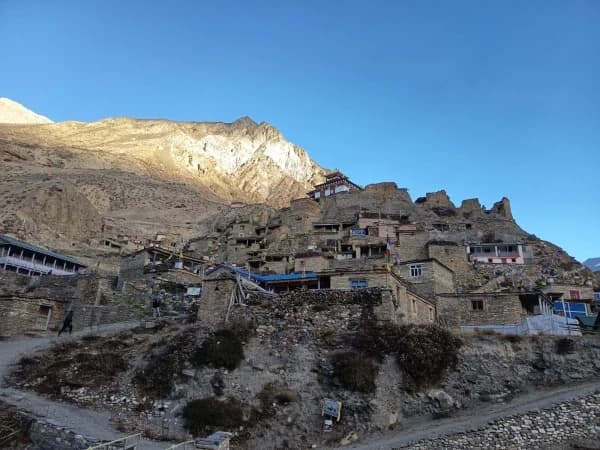
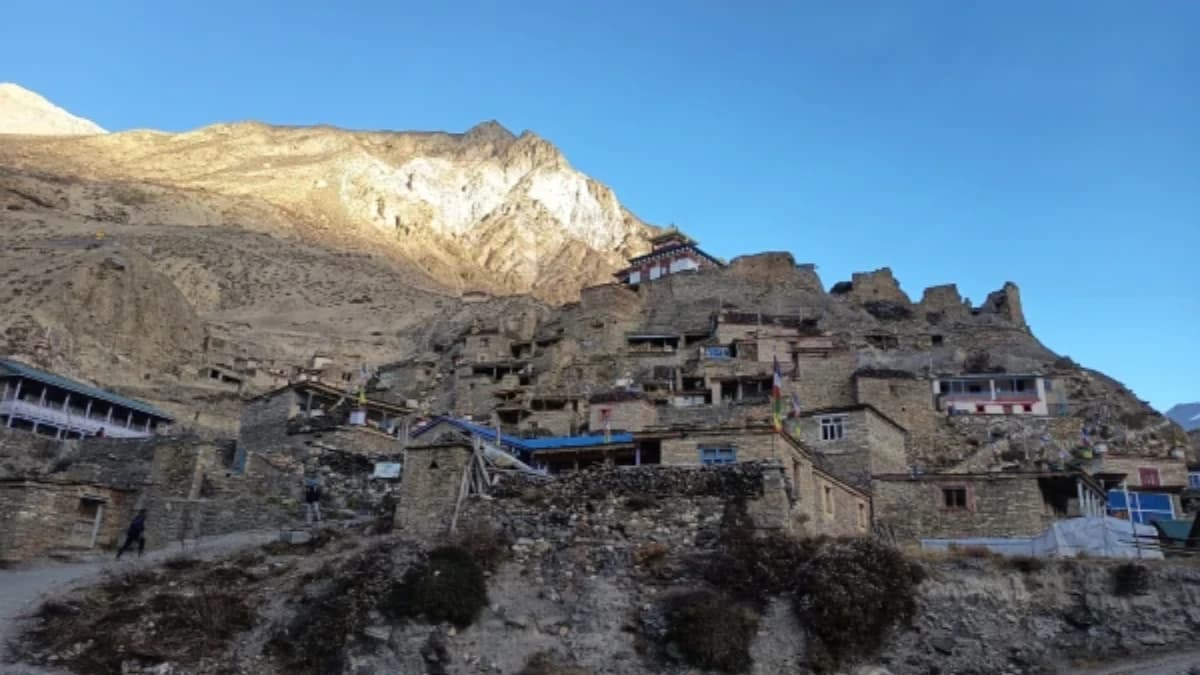
  • Enter the Nar Phu Valley, one of Nepal's most remote restricted areas, where the semi-arid terrain resembles the Tibetan Plateau and the Lo-Pa people have maintained their Tibetan Buddhist traditions in near-total isolation
  • Trek through TWO restricted areas (Manaslu and Nar Phu), each requiring special permits and each offering a completely different cultural and geographic experience
  • Visit Nar Village (4,110m) and Nar Phedi Monastery, perched on a cliff above the valley where monks still perform daily pujas and the gompa's murals have survived centuries of wind and snow
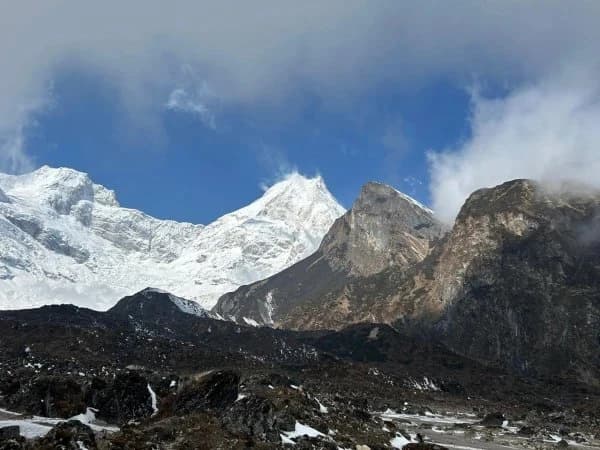
  • Trek beneath the massive south face of Manaslu (8,163m) from Sama Gaon, close enough to hear the ice calving from hanging glaciers, before pushing over Larkya La at dawn
  • Walk through Bhimtang's alpine meadows after the Larkya La crossing, then continue through Ngawal and other Annapurna Conservation Area villages as you complete the Nar Phu section
  • Complete the longest and most challenging trek in the Manaslu region: 21 days of walking through subtropical gorges, Tibetan Buddhist villages, glacial moraines, and high-altitude desert, with two pass crossings that test every skill you have developed as a Himalayan trekker

21-Day Manaslu + Nar Phu Valley Trek Overview

Twenty-one days. Two restricted areas. Two high passes. This is the expedition-grade trek for trekkers who have done Everest Base Camp, the Annapurna Circuit, or the standard Manaslu Circuit and want something that pushes them further. The route combines Nepal's two most remote restricted valleys into a single journey that covers more cultural and geographic ground than any other trekking itinerary in the country.

The first section follows the classic Manaslu Circuit: a drive from Kathmandu to Soti Khola, then walking up the Budhi Gandaki gorge through Jagat, Namrung, Shyala, Sama Gaon and Samdo. You spend time acclimatising beneath Manaslu's south face, hiking to Birendra Tal and exploring the Tibetan border settlements. The culture here is Nubri, with Tibetan Buddhist gompas, mani walls and prayer wheels at every turn. The Larkya La crossing (5,160m) comes next: a long, cold day that starts before dawn and ends in the alpine meadows of Bhimtang.

From Bhimtang, instead of descending to Dharapani and heading home, you continue to the Kang La base. The Kang La crossing (5,306m / 17,408ft) is the crux of this trek: steeper and more technical than Larkya La, with sections of fixed rope and a demanding descent into the Nar Phu Valley. The landscape on the other side is startlingly different. Where the Manaslu side is green, glacial and forested, the Nar Phu side is dry, rocky and windswept. The villages of Nar and Phu sit in a landscape that looks like it belongs in the trans-Himalayan rain shadow of Mustang. The people here are Lo-Pa, ethnically Tibetan, with their own dialect, their own festivals, and a way of life that has barely changed in centuries.

After exploring the Nar Phu Valley, including Nar Phedi Monastery and the ancient village of Nar, you descend through the Annapurna Conservation Area via Ngawal and the Marshyangdi Valley to Besisahar, where you drive back to Kathmandu. The acclimatisation profile of this itinerary is excellent: the Manaslu Circuit section gradually builds your altitude tolerance, and by the time you face Kang La (the higher of the two passes), your body has been above 4,000 metres for over a week.

Arrive by 4:00 PM on Day One

Please arrive in Kathmandu by 4 PM the day before your trek. This gives you time for a final gear check, a comprehensive briefing with your guide covering both the Manaslu and Nar Phu sections, and a good night's rest before the drive to Soti Khola.

Online Trip Briefing

After you book, we schedule a video call to walk you through every section of this 21-day itinerary: the Manaslu Circuit approach, the Larkya La crossing, the Kang La crossing (including what technical sections to expect), what the accommodation is like in the Nar Phu Valley (very basic), and how the two restricted-area permits work. This is also when you share your Kathmandu hotel preferences.

Note to Hikers

Both the Manaslu and Nar Phu areas are restricted zones. You must travel with an organised group (minimum two trekkers) and hold special permits for each area, which we arrange as part of your package. The Kang La crossing may require crampons and rope depending on conditions. Our guides carry all necessary technical equipment. All treks are private, your group only, no strangers added without your permission.

Kathmandu Accommodation

Your hotel in Kathmandu is not included in the trek package. During the online briefing, tell us what you prefer and we will arrange it. Your trek package begins the moment you leave Kathmandu for the mountains.

Compare Our Three Packages

Feature Budget Standard Luxury
Price from USD $1,438 USD $2,135 USD $2,300
Meals Not included (order and pay at teahouses) 3 meals daily + tea, fruits and 2L water All meals + all drinks (except alcohol)
Room Shared teahouse room Private twin with attached bathroom Private deluxe with bed heater
Porter Not included 1 porter per 2 trekkers 1 porter per trekker (carry nothing)
Guide 1 guide per group (assistant at 8+) 1 guide per 6 trekkers (assistant at 6+) 1 guide per 2 trekkers
Transport Local vehicle Private tourist vehicle Luxury private vehicle
SIM & Data SIM card only SIM with limited data SIM with unlimited data
Best for Experienced backpackers with high-altitude experience Seasoned trekkers wanting full support on a 3-week expedition Premium experience seekers who want to carry nothing

Himalayas for Every Budget. Same expert guides, same safety, three comfort levels. Every tier includes all permits (Manaslu Restricted Area Permit, Nar Phu Restricted Area Permit, ACAP, TIMS), a Nepal government well-trained guide, airport transfers and 24/7 emergency support. Note: accommodation in both the upper Manaslu Circuit and the Nar Phu Valley is the most basic available on any standard trekking route in Nepal. Above Samdo and throughout Nar Phu, all tiers share the best available lodge. Hot showers and electricity may be unavailable for several consecutive days. Carry a good sleeping bag even in Luxury tier.

Your Trek, Our Family

The Everest Holiday is not a faceless agency. It is a family.

Hari Lal Simkhada, Shreejan's grandfather, arranged logistics and supported Himalayan expeditions in the 1960s and 1970s, when reaching Nepal's most remote valleys meant weeks of approach marching through uncharted terrain. Ganesh Prasad Simkhada, Shreejan's father, has held senior positions in Nepal's tourism and mountaineering institutions, helping build the regulatory systems that protect restricted areas like Manaslu and Nar Phu today.

Today, Shreejan Simkhada runs The Everest Holiday as CEO and third-generation guide. For a 21-day trek with two high-pass crossings and two restricted areas, guide selection is the single most important decision he makes. Your guide must have crossed both Larkya La and Kang La multiple times, must know how to read weather windows above 5,000 metres, must carry technical equipment for the Kang La rope sections, and must know every teahouse and water source across three weeks of trail. Shreejan personally briefs your guide before departure. Shamjhana Basukala, co-founder of The Everest Holiday, manages the complex dual-permit logistics required for this itinerary.

Have a question right now? WhatsApp Shreejan directly: +977 9810351300. No sales team. No chatbot. The person who designed your trek answers personally.

What Trekkers Say About This Trek

“The Manaslu with Nar Phu extension was the best three weeks of my life. Crossing Larkya La at 5,160m was challenging but our guide had us perfectly acclimatised. The Nar Phu Valley is stunning — Tibetan villages, ancient walls, and hardly another trekker in sight.”

James Patterson — United States, TripAdvisor

“This trek combines two restricted areas in one journey. The logistics could be complicated but The Everest Holiday handled every permit and every detail. Our porters were strong, our guide was exceptional, and the teahouses along the Manaslu Circuit were better than expected.”

Sarah Chen — Singapore, Trustpilot

Why Trekkers Trust Us

  • 320+ verified reviews across TripAdvisor (4.9/5, Travellers Choice 2024), Google (4.9/5) and Trustpilot
  • TAAN Certified, Member #1586, Government Registration: 147653/072/073
  • Three generations of Himalayan guiding since the 1960s
  • MATKA 2026 exhibitor, representing Nepal at Northern Europe's largest travel trade fair in Helsinki
  • Secure 10% deposit processed through Himalayan Bank Limited
  • No strangers added to your group, ever. Every trek is private.

Solo Trekkers Welcome

Both restricted-area permits require a minimum of two trekkers. If you are travelling alone, we regularly pair solo travellers with other experienced trekkers heading into the same area. A 21-day trek creates bonds that last well beyond the trail. By the time you cross your second high pass together, the person who started as a stranger will feel like family.

Our groups are small, 2 to 20 people. If you want to trek completely privately, you can. If you prefer company, tell us and we will list your dates as a fixed departure so other solo travellers can find you and join.

Difficulty: Very Challenging (5 out of 5)

This is the most demanding standard trekking route in the Manaslu region. You will cross two high passes above 5,000 metres (Larkya La at 5,160m and Kang La at 5,306m), walk for 21 consecutive days, and spend extended periods above 4,000 metres. The Kang La crossing is steeper and more technical than Larkya La, with sections that may require crampons and fixed rope depending on conditions. Both pass days start before dawn in freezing temperatures.

The length alone makes this trek serious. Twenty-one days of sustained effort at altitude requires exceptional cardiovascular fitness and mental resilience. The trail includes narrow gorge sections between Jagat and Deng, glacial moraine above Samdo, and exposed rocky terrain above Nar Village. Altitude sickness is a serious concern. Our guides carry pulse oximeters, technical equipment and first aid supplies, and they monitor your condition every day. Previous high-altitude trekking experience is essential. You should have completed at least one trek above 5,000 metres before attempting this itinerary. Travel insurance with helicopter evacuation cover is mandatory.

Trek With a Purpose — Changing the World, One Step at a Time

In 2019, Shreejan and Shamjhana founded the Nagarjun Learning Center in Saldum Village, one of the most remote communities in Nepal's Dhading District. Today, 70 children receive free education and hot meals every school day. The centre has grown to 7 learning centres across Nepal, providing healthcare for over 600 people, internet access for 65 children, and support programmes for more than 275 women.

A portion of every trek you book funds this work directly. The Nagarjun Learning Center is verified and listed on the United Nations Partner Portal.

On a 21-day trek through two of Nepal's most remote restricted areas, you will see communities that survive on subsistence farming, where the nearest hospital may be days of walking away. You will understand why education and healthcare access matter so profoundly. Your trek with us ensures that 70 children in Dhading District have both.

Short Itinerary
Day 01: Trek starts by a drive from Kathmandu (1,324 m/4,344 ft) to Machha Khola (890 m/2,965 ft), usually around 8-10 hours.
Day 02: After breakfast, the trek begins with 22 km from Machha Khola (870 m/2,854 ft) to Jagat (1,400 m/4,593 ft), usually around 5 -6 hours with a total elevation change of 530m - 1739 ft.
Max Altitude: 1,400 m / 4,593 ft
Day 03: Trek starts with a 6.5 km walk from Jagat (1,400 m/4,593 ft) to Deng (1,860 m/6,101 ft), usually around 6 hours with a total elevation change of 460m – 1508 ft.
Max Altitude: 1,860 m / 6,101 ft
Day 04: Trek starts with a 6.5 km walk from Deng (1,860 m/6,101ft) to Namrung (2,630 m/8,628 ft), usually around 6 hours with a total elevation change of 770 m—2,527ft.
Max Altitude: 1,860 m / 6,101 ft
Day 05: Trek starts 12 km / 7.5 miles walk from Namrung (2,630 m/8,628 ft) to Sama Gaun (3,530 m/ 11,581 ft), usually with a total elevation change of 490m / 1,608 ft.
Max Altitude: 3,530 m/ 11,581 ft
Day 06: Accommodation in Samagaon (3,530 m/ 11,581 ft).
Day 07: Trek starts with an 8.2 km walk from Sama Gaun (3,530 m/11,581 ft) to Samdo (3,875m / 12,713ft), usually around 3 hours with a total elevation change of 345m – 1132 ft.
Max Altitude: 3,875m / 12,713ft
Day 08: Trek starts with an 8 km / 5 mile walk from Samdo (3,875m / 12,713ft), to Larke La Phedi (4,460 m / 14,632 ft), usually around 4-5 hours with a total elevation change of 770 m / 2,526 ft.
Max Altitude: 4,460 m/14,632 ft
Day 09: Trek starts with a 24.7 km walk from Dharamsala (4,480m / 14,698ft) by crossing the Larkya La Pass (5,160m / 16,929ft) to Bhimtang (3,720m / 12,205ft), usually taking around 8 hours with a total elevation change of 1,440 m / 4,724 ft.
Max Altitude: 5,160 m/16,929 ft.
Day 10: Trek starts with a 20 km walk from Bhimtang (3,720m / 12,205ft) to Dharapani (1,910m / 6,266ft), usually around 8 hours with a total elevation change of 1,810 m / 5,939 ft.
Max Altitude: 3,720m / 12,205ft
Day 11: Trek from Dharapani (1,860 m / 6,102 ft) to Koto (2,600 m / 8,530 ft), approximately 15 km / 9.3 miles, usually around 6–7 hours, with a total elevation gain of 740 m / 2,428 ft.
Max Altitude: 2,600 m / 8,530 ft
Day 12: Trek from Koto (2,600 m / 8,530 ft) to Meta (3,560 m / 11,680 ft), approximately 18 km / 11.2 miles, usually around 7–8 hours, with a total elevation gain of 960 m / 3,150 ft.
Max Altitude: 3,560 m / 11,680 ft
Day 13: Trek from Meta (3,560 m / 11,680 ft) to Phu Gaon (4,080 m / 13,386 ft), approximately 12 km / 7.5 miles, usually around 5–6 hours, with a total elevation gain of 520 m / 1,706 ft.
Max Altitude: 4080 m/13386 ft
Day 14: Acclimatisation day at Phu gaon
Day 15: Trek from Phu Gaon (4,080 m / 13,386 ft) to Nar (4,200 m / 13,780 ft) via Nar Pass (5,306 m / 17,405 ft), approximately 14 km / 8.7 miles, usually around 8–9 hours, total elevation gain 1,226 m / 4,022 ft, total descent 1,132 m / 3,714 ft.
Max Altitude: 5,306 m / 17,405 ft
Day 16: Exploration to Nar Village
Day 17: Trek from Nar Village (4,200 m / 13,780 ft) to Ngawal (3,660 m / 12,008 ft) via Kang La Pass (5,306 m / 17,405 ft), approximately 15 km / 9.3 miles, usually around 8–9 hours, total elevation gain 1,106 m / 3,629 ft, total descent 1,646 m / 5,397 ft.
Max Altitude: 5,306 m / 17,405 ft
Day 18: Trek from Ngawal (3,660 m / 12,008 ft) to Pisang (3,200 m / 10,498 ft), approximately 12 km / 7.5 miles, usually around 5–6 hours, total descent 460 m / 1,509 ft.
Max Altitude: 3,200 m / 10,498 ft
Day 19: Trek from Pisang (3,200 m / 10,498 ft) to Dharapani (1,860 m / 6,102 ft), approximately 18 km / 11.2 miles, usually around 7–8 hours, total descent 1,340 m / 4,396 ft.
Max Altitude: 1,860 m / 6,102 ft
Day 20: Trek from Dharapani (1,860 m / 6,102 ft) to Jagat (1,300 m / 4,265 ft), approximately 14 km / 8.7 miles, usually around 5–6 hours, total descent 560 m / 1,837 ft.
Max Altitude: 1,300 m / 4,265 ft
Day 21: Drive from Jagat (1,300 m / 4,265 ft) to Kathmandu (1,350 m / 4,429 ft), approximately 135 km / 84 miles, usually around 8 hours by local jeep and bus, minimal elevation change.
Expand
Detailed Itinerary
Day 01:

The drive from Kathmandu to Machha Khola, the starting point of the Manaslu Circuit, is about 160 km and takes 8–10 hours. The road is a mix of paved sections and rough off-road terrain, which can be challenging, especially during the monsoon. You'll pass through terraced farmland, lush hillsides, and traditional Magar and Gurung villages.

You will see terraced fields, the Trishuli River, and typical Nepali villages along the journey. On clear days, the majestic Annapurna, Manaslu, Langtang, and Ganesh Himal ranges will leave you inspired to explore more of Nepal. After reaching Machha Khola, you’ll settle into a lodge or hotel for the night. 

View the full interactive route map:Manaslu + Nar Phu Valley — 21 Day Route Map

Duration: 8-10 hoursDistance: 160 km/99.4 miles
Day 02:

You will hike upstream from Tharo Khola to Kholabeni, seeing beautiful rock formations and waterfalls along the way. The trail takes you through landslide-affected areas and across a bridge to reach Kholabesi. Ahead, you’ll find the hot springs of Tatopani, where you can take a short break. 

After leaving, you'll continue on a mix of stone stairways, rocky footpaths, and forested sections, gradually ascending through villages like Dhovan, where you’ll stop for rest or lunch. At Jagat, the entrance to the Manaslu Conservation Area, we will register our permits at a local police checkpoint.

Max Altitude: 1,400 m / 4,593 ftMeals: Breakfast, Lunch, and DinnerAccommodation: Teahouse or LodgeDuration: 5-6 hoursDistance: 22 km/13.7milesElevation: 530m - 1739 ft.
Day 03:

After breakfast in Jagat, we hike along a jeep route to Ghatte Khola, and then we go to Philim. When we get to Philim, we will show our permits at the Manaslu Conservation Area gate. After that, you will pass several suspension bridges and navigate through dense pine and bamboo forests.

The walk then goes through Chisapani, Eklibhatti, and Nyak onward; the trail descends slightly before beginning a final ascent alongside the Deng Khola, a tributary of the Budhi Gandaki, following the Deng River till we reach Deng.

Max Altitude: 1,860 m / 6,101 ftMeals: Breakfast, Lunch, and DinnerAccommodation: Teahouse or LodgeDuration: 6 - 7 hrsDistance: 6.5 km / 4 milesElevation: 460m – 1508 ft
Day 04:

We go from Deng to Rana Village (1,910 m), which is surrounded by calm scenery, peaceful settlements by terraced fields, and rolling green hills. The trail goes through green valleys and over Serang Khola before ending in Bhiphedi (2,130 m). We walk through bamboo and rhododendron forests, cross rivers, and climb difficult slopes to get to Ghap (2,160 m).

You may also pass ancient mani walls, Tibetan prayer flags, and small Buddhist shrines (chortens), which are the entryway to the Nupri region of the Himalayas. After reaching Namrung, you will see a gateway to the upper Manshu region

Max Altitude: 1,860 m / 6,101 ftMeals: Breakfast, Lunch, and DinnerAccommodation: Teahouse or LodgeDuration: 6-7 hrsDistance: 6.5 km / 4 milesElevation: 770 m—2,527ft.
Day 05:

After a morning of admiring the Himalayan scenery, the trail ascends through lush forests to the traditional village of Lihi. Passing through the remote settlements of Sho, Lho, and Shyala, you’ll be treated to stunning cultural charm and mountain views along the way. The mighty Mt. Manaslu, the eighth-highest peak in the world, first comes into view from Lho.

Shyala is surrounded by a dramatic panorama, with Himal Chuli and Peak 29 to the left, Manaslu and its glacier straight ahead, and Ganesh Himal to the right, the Ganesh Himal range stands tall. Walking through this dramatic landscape feels like being in the very heart of the Himalayas. Finally, after around seven hours of trekking, you reach Sama Gaon, one of the largest and most significant villages of the region.

Max Altitude: 3,530 m/ 11,581 ftMeals: Breakfast, Lunch, and DinnerAccommodation: Teahouse or LodgeDuration: 6 -7 hoursDistance: 12 km / 7.5 milesElevation: 490m / 1,608 ft.
Day 06:

At Samagaon, we take a day to acclimatize to the higher altitude and thinner air. During this time, we explore the village and learn about local life and Buddhist culture. Trekkers also have the option to hike to Manaslu Base Camp or visit Birendra Lake (Tal) and climb the ridge to Pungyen Monastery.

Pungyen Monastery, located south of Samagaon, is about a 4- to 5-hour hike and offers spectacular views of the surrounding glaciers. Birendra Tal, a glacial lake at 3,450 m, is famous for the dramatic sight of ice blocks falling into it.

Meals: Breakfast, Lunch, and DinnerAccommodation: Teahouse or LodgeDuration: 4- to 5-hour
Day 07:

Today’s trek is relatively easier as we walk mostly on flat terrain. The trail passes through open pasture areas and gradually ascends into the valley. We trek through juniper and birch forests before reaching the Budhi Gandaki River, which we cross on a wooden bridge.

Expect to see yak caravans, prayer flags, and chorten.  Along the way, trekkers can enjoy stunning mountain views, especially of Manaslu, before arriving at Samdo, a Tibetan refugee village.

Max Altitude: 3,875m / 12,713ftMeals: Breakfast, Lunch, and DinnerAccommodation: Teahouse or LodgeDuration: 3 - 4 hrsDistance: 8.2km / 5milesElevation: 345m – 1132 ft.
Day 08:

We begin our trek along the edge of fields and past old Mani walls, then cross a wooden bridge over the Budhi Gandaki River to enter a valley. The trail continues past the Athahra Syar River and then the Larke River. Along the way, trekkers will see many Mani walls and colorful prayer flags, reflecting the local Buddhist culture.

After crossing two streams, trekkers are rewarded with an impressive view of Larkya Glacier. Continuing along the Salkha Khola valley, the trail climbs again to reach a stone shelter at 4,450 m, known as Dharamsala or Larkya La Phedi. This is not a lodge but a basic shelter where trekkers can rest before continuing their journey.

Max Altitude: 4,460 m/14,632 ftMeals: Breakfast, Lunch, and DinnerAccommodation: Teahouse or LodgeDuration: 3 - 4 hrsDistance: 8 km/5 miElevation: 770 m / 2,526 ft
Day 09:

Today is an exciting day as we cross Larkya La Pass (5,160 m). We leave Dharamsala, trek over the moraine, and descend to a small lake. The trail becomes rough and steep as we navigate the south side of a grassy slope.

The trail follows the moraine to a point marked by two landmarks, with prayer flags guiding our way as we descend past four frozen lakes. We then climb again to reach Larkya La Pass (5,160 m / 16,929ft), which offers breathtaking views of Himlung, Cheo, Kang Guru, and Annapurna II.

After enjoying the views from Larkya La Pass, we follow the moraine west along steep, rough bends. The trail then descends more gently into a small meadow. As the valley widens, we pass many walls and small houses before arriving at Bhimtang

Max Altitude: 5,160 m/16,929 ft.Meals: Breakfast, Lunch, and DinnerAccommodation: Teahouse or LodgeDuration: 7 - 8 hrsDistance: 24.7km / 15.3 milesElevation: 1,440 m / 4,724 ft
Day 10:

"After a quick breakfast in Bhimtang, we hike the moraine down to the Dudh Khola's headwaters and cross it on a wooden bridge." The path goes through forests of pine and rhododendron before reaching Hompuk (3,430 m). The trail lets you see Phungi, Manaslu, Manaslu North, Cheo Himal, and Himlung Himal.

We walk through forests for 30 minutes to get to the Sangore Kharka meadow. Then we cross a landslide and hike up a steep hill to a ridge before coming back down to the riverbank at Gho (2,575 m). The path goes up and down and past farmland and some pine forests. We get to Tilije, a village with people from many different ethnic groups, after a short walk through fields and clumps of rhododendron and oak trees.

We take a rest at Tilije and cross the Dudh Khola and walk along its bank, dropping down through scrub woodland. As we get closer to Dharapani, the walls of the Marsyangdi Valley get higher. We cross a lengthy suspension bridge over the Marsyangdi River to go to Dharapani. To get there, we go through Thonje via a wooden bridge and a chorten-shaped arch.

Max Altitude: 3,720m / 12,205ftMeals: Breakfast, Lunch, and DinnerAccommodation: Teahouse or LodgeDuration: 7-8 hrsDistance: 20km / 13.6 milesElevation: 1,810 m / 5,939 ft.
Day 11:

Leaving Dharapani, the trail to Koto gradually climbs along the banks of the Marshyangdi River. The walk is pleasant and scenic, passing through the charming village of Bagarchhap, where you’ll catch your first clear views of the snow-covered peaks. All along the way, you’re surrounded by dense pine and rhododendron forests, with the sound of the river flowing beside you adding to the peaceful atmosphere.

As you go higher, the views get better and better. You can see the Annapurna II range rising in the distance, the Manaslu range standing tall, and other snow-capped peaks shining above the valley. Eventually, you arrive at Koto, a small, traditional settlement where the Gurung people form the main community.

Max Altitude: 2,600 m / 8,530 ftMeals: Breakfast, Lunch, and DinnerAccommodation: Teahouse or LodgeDuration: 6–7 hoursDistance: 15 km / 9.3 milesElevation: 740 m / 2,428 ft.
Day 12:

On the twelfth day of the trek, the adventure takes a new turn as you leave the Manaslu trail and officially enter the hidden Nar Phu Valley. The path leads you through enchanting pine forests, alongside rivers, waterfalls, and sparkling mountain streams. After passing the checkpoint and crossing a suspension bridge, the trail opens into the remote Nar Phu region, a place far less traveled and filled with raw Himalayan beauty.

As you continue, the thick forests gradually thin out near Dharamshala, and the climb becomes steeper. The effort is soon rewarded as you reach Meta, a stunning village perched high in the valley.

Max Altitude: 3,560 m / 11,680 ftMeals: Breakfast, Lunch, and DinnerAccommodation: Teahouse or LodgeDuration: 7–8 hoursDistance: 18 km / 11.2 milesElevation: 960 m / 3,150 ft.
Day 13:

The trail begins with a series of gentle ups and downs, winding its way through the valley. Along the route, you cross several suspension bridges that hang high above glacial streams, making the walk both adventurous and scenic. After several hours of trekking, you reach Kyang, a place known for the ancient ruins of the Khampa settlement. These crumbling forts tell stories of the Khampa refugees from Tibet who once made their home in this remote region, giving the area a sense of history and mystery.

From Kyang, the path becomes more rugged as it follows the banks of the Phu Khola. The dramatic landscape, combined with the raw and untouched surroundings, creates a true sense of being in the wild Himalayas. Eventually, you arrive at Phu Gaon, a beautiful and culturally rich village where traditional stone houses are set against towering cliffs and snowy peaks.

Max Altitude: 4080 m/13386 ftMeals: Breakfast, Lunch, and DinnerAccommodation: Teahouse or LodgeDuration: 6-7 hrsDistance: 12 km/7.5 milesElevation: 520 m / 1,706 ft
Day 14:

Your rest day in Phu Valley is far from ordinary, as it includes an exciting excursion to explore the hidden corners of this remote region. After breakfast, we hike up the valley toward Ngoru, a traditional Kharka (summer grazing village). The trail takes about three hours and passes by an old gompa, offering both cultural and scenic highlights along the way. 

Phu itself is a remarkable village, rich in history and Himalayan tradition. As you wander through its narrow stone alleys, you’ll see locals busy spinning wool from yak and sheep, continuing practices that have been passed down for generations

Meals: Breakfast, Lunch, and DinnerAccommodation: Teahouse or Lodge
Day 15:

The trail today begins with a descent to the river before circling back through Junam Kharka, a traditional grazing area. From there, the path climbs steadily, leading across an old bridge that once spanned a dramatic, narrow gorge. The walk itself is full of character, blending history, culture, and adventure. On the way toward Nar Gate, the route is lined with beautifully painted chortens topped with bamboo poles, along with a striking multi-tiered chorten that marks the entrance to the village.

As you turn the final bend at the top of the hill, Nar comes into sight—set against a breathtaking backdrop of snow-capped peaks, with the Annapurna and other Himalayan giants towering in the distance. The combination of mountain scenery and the warm, traditional setting of Nar makes today’s arrival especially memorable.

Max Altitude: 5,306 m / 17,405 ftMeals: Breakfast, Lunch, and DinnerAccommodation: Teahouse or LodgeDuration: 8–9 hoursDistance: 14 km / 8.7 milesElevation: 1,226 m / 4,022 ft, total descent 1,132 m / 3,714 ft.
Day 16:

Nar Village has a livelier and more vibrant atmosphere compared to Phu. Throughout the village, daily life unfolds in full view. Villagers can be seen printing prayer flags, crafting wooden items, collecting firewood from the surrounding forests, tending to crops, caring for yaks, sheep, and goats, and spinning the prayer wheels in the square.

On your rest day in Nar, you have the chance to explore the village, observe these traditional practices, and even try your hand at some of the unique skills that have been passed down through generations. It’s an immersive cultural experience that offers insight into the life and traditions of the Nar community, all set against a stunning Himalayan backdrop.

Day 17:

Today marks a major highlight of the Manaslu Nar Phu Valley trek—the crossing of the third and final mountain pass. After a hearty breakfast in Nar, the trail begins its climb toward Kang La Pass. While the ascent is generally manageable, progress can be slower if snow blankets the path, adding an element of challenge to the trek. Reaching the summit of Kang La Pass is truly rewarding.

From this vantage point, you are treated to sweeping views of the surrounding Himalayan giants, including Annapurna II, Mt. Gangapurna, Tilicho Peak, and several other nearby snow-capped summits. The panorama is unforgettable, making the effort to reach the pass one of the most memorable moments of the journey. After enjoying the scenery and taking photos, the trail gradually descends, leading you toward the next village and a well-deserved rest.

Max Altitude: 5,306 m / 17,405 ftMeals: Breakfast, Lunch, and DinnerAccommodation: Teahouse or LodgeDuration: 8–9 hoursDistance: 15 km / 9.3 milesElevation: 1,106 m / 3,629 ft, total descent 1,646 m / 5,397 ft.
Day 18:

Descending from Ngawal to Pisang brings a noticeable change in the environment. The air feels warmer, and the valley becomes greener as you move lower from the high-altitude Kang La Pass, dropping over 2,000 meters. The trail winds gently through terraced fields, forests, and small settlements, offering glimpses of local life along the way.

The day begins with a hearty breakfast in Ngawal to fuel your trek and ends in Pisang, where you can relax and enjoy a traditional Nepali dinner after a rewarding day of walking. Along the route, the surrounding mountains continue to impress, with Pisang Peak and Annapurna II visible in the distance, making this descent as scenic as it is refreshing.

Max Altitude: 3,200 m / 10,498 ftMeals: Breakfast, Lunch, and DinnerAccommodation: Teahouse or LodgeDuration: 5–6 hoursDistance: 12 km / 7.5 miles,Elevation: total descent460 m / 1,509 ft.
Day 19:

As our Manaslu with Nar Phu Valley trek draws to a close, today’s hike takes us downhill from Pisang to Dharapani. The trail winds through lush valleys, terraced fields, and small settlements, offering a final chance to enjoy the changing landscapes of the region. Dharapani, located in the Manang district, sits at the junction between the Annapurna and Manaslu regions.

It is a significant village for trekkers, often serving as the starting point for the Annapurna Circuit and the endpoint for the Manaslu Circuit. Arriving here marks the end of an incredible journey, where you can reflect on the majestic mountains, remote villages, and unforgettable experiences of the past days.

Max Altitude: 1,860 m / 6,102 ftMeals: Breakfast, Lunch, and DinnerAccommodation: Teahouse or LodgeDuration: 7–8 hoursDistance: 18 km / 11.2 milesElevation: total descent 1,340 m / 4,396 ft.
Day 20:

Today marks the final day of the trek. After enjoying a hearty breakfast in Dharapani, we set off on the last stretch toward Jagat. The trail gently descends through forests, small villages, and cultivated fields, offering a sense of returning to more populated areas while still surrounded by scenic beauty.

Jagat, a charming village, is where the trek concludes. Arriving here brings a sense of accomplishment after days of walking through remote valleys, high mountain passes, and traditional Himalayan settlements. It’s the perfect place to reflect on the journey, enjoy the local hospitality, and celebrate the end of an unforgettable adventure.

Max Altitude: 1,300 m / 4,265 ftMeals: Breakfast, Lunch, and DinnerAccommodation: Teahouse or LodgeDuration: 5–6 hoursDistance: 14 km / 8.7 milesElevation: total descent 560 m / 1,837 ft.
Day 21:

Today is a travel day. After an early breakfast, we leave Jagat for Besishar by local jeep or bus. The scenic 4–5 hour drive passes traditional villages, the Marsyangdi River, and Bhulbhule town. To stay on schedule, we should reach Besisahar before 3 pm to catch the last bus to Kathmandu.

If we miss it, the trip will need to be extended by a day. The bus travels along the Prithivi Highway, following the Marsyangdi and Trisuli rivers, returning us to Kathmandu, where the journey began.

Interactive Route Map

Explore the full trek route on our interactive Google Map. Click markers for altitude details at each stop.

Open Full Route Map in Google Maps

Couldn't find what you're after?Reach out to our travel experts.
Customise Trip
Route Map
Manaslu with Nar Phu Valley Trek Route Map Nepal
Altitude Chart
Manaslu with Nar Phu Valley Trek - 21 Days | Hidden Himalayan Jewel
Availability
Book your own private small group trip
No. of travellers
Price per person
2 - 4 pax
US$1438
5 - 8 pax
US$1375
9 - 12 pax
US$1340
13 - 20 pax
US$1299

Discounts are determined exclusively by the size of your group. We do not add additional members to your group.

Book Now
hbl logo
Secure Payment by Himalayan Bank.
Cost Includes

Transportation

  • Airport Pick-up and Drop-off from Tribhuvan International Airport to the Hotel of your choice.
  • Transportation from Kathmandu via Machha Khola (trek start point) and from jagat (trek end point) to besisahar and then back to Kathmandu by local transportation. 

Accommodation and food

  • During the trek, Food or drinks are not included. 
  • You will stay in a local teahouse and lodge in a shared room during the duration of the trek.

Guide and porter

  • An English-speaking, Nepal government well-trained guide is provided (one guide for your group). For groups of 8 or more trekkers, an additional assistant guide is included. For more than 8 trekkers, 1 assistant guide is added.
  • Porter is not included, only the guide.

Permits and Expenses

  • Manaslu Special permit with Conservation Area Permit.
  • Annapurna Conservation Area Permit (ACAP) fees.
  • Nar Phu Valley Special Permit.
  • Trekkers Information Management System (TIMS) card fee.
  • All government taxes and official expenses.

Medical Assistance

  • First aid kits are provided, including an oximeter to check blood oxygen levels at high altitudes.
  • Arranging rescue operations in case of an emergency health condition. (funded by travel insurance of the trekker)

Complimentary

  • Company's T-shirt and Cap before the trek.
  • At the end of your trip, you'll have a farewell meal at a restaurant in the area. At the farewell dinner after the Manaslu with Nar Phu Valley Trek—21 Days, we will give you a certificate of achievement for successful completion of the trek. 

Benefits

  • Sleeping bags and down jackets: if you do not have your own, please inform us either at your online briefing or after the arrival briefing in Kathmandu before your trek so we can provide you with one for your use during the trek.
  • Free Excess luggage storage at The Everest Holiday store for the duration of the trek.
  • We will arrange a SIM Card for every individual trekker upon arrival in Kathmandu and teach them how to get budget internet packages and top up their services.
Cost Excludes

International Flight

  •  International flight cost.

Nepali Visa

  • At Tribhuvan International Airport, you can pay the following fees upon arrival: $30 for a 15-day visa, $50 for a 30-day visa, and $120 for a 90-day visa. Alternatively, you can apply for and receive a Nepal visa from the Nepalese embassy or consulate in your country.

(Note: Anyone having a visa before arrival has an express exit through the immigration line. To obtain a visa upon arrival at TIA Kathmandu, you must have the necessary funds in US dollars.)

Accommodation

  • Accommodation in Kathmandu before and after the trek will not be included in this package. So, please let us know your preferences, budget, and standard of the hotel you would like to stay in Kathmandu during the online meeting. So we can arrange it for you accordingly.

Guide and Porter

  • Tip for guides and porters. (Recommended)

Other expenses

  • Excess luggage charges for an extra porter to carry extra luggage and also any extra cost charged by the airline for extra luggage. (A porter carries 20 kg in standard package with 10 kg per person, as he carries for two people but in luxury package you are provide with a porter each for a 20 kg weight limit, and for budget package no porter is provided, only a guide who cannot carry loads for you.)
  • All non-alcoholic drinks like bottled water, hot water, soft drinks, juice, tea, coffee and alcoholic drinks are not included, etc.
  • Additional costs due to delays caused by circumstances out of our control, like landslides, unfavourable weather, itinerary modification due to safety concerns, illness, changes in government policies, strikes, etc.

Equipment Lists

We advise you to carry only the clothing and equipment that are absolutely required for the trek. You can store your excess baggage at The Everest Holiday for free. Porters are available to assist with your additional luggage; however, it is important to be aware that the weight limit is established at 10 kg per trekker. Since one porter carries the luggage for two people, we provide one duffel bag for every trekker. The total weight limit for the porter is 20 kg, which means each trekker has a 10 kg luggage allowance.

  • Sun hat (wide-brimmed)
  • Beanie (for warmth)
  • A neck gaiter or buff (for warmth and sun protection)
  • Sunglasses with UV protection
  • Insulated gloves or mittens (for cold weather)
  • Waterproof gloves (for wet conditions)
  • A thick-wool or synthetic pair of moisture-wicking socks
  • waterproof hiking boots with ankle support and excellent traction
  • Sandals (for camp use or river crossings)
  • Gaiters protect from mud, water, and debris.
  • Moisture-wicking t-shirts (short and long sleeves)
  • Thermal base layer (for colder conditions)
  • Fleece jacket and down jacket (Mandatory)
  • Lightweight puffy jacket (for extra warmth)
  • Waterproof and windproof jacket (Gore-Tex or similar)
  • Raincoat
  • Lightweight, breathable long-sleeve shirt
  • Polypropylene underwear (four)
  • Quick-drying pants/trousers (convertible or full-length)
  • Insulated pants (for colder conditions)
  • Lightweight cotton pants
  • Wear long underwear or thermal leggings when it is cold.
  • Two pairs of thermal/trekking trousers (pants)
  • Biodegradable bar soap
  • Toothbrush and toothpaste
  • Medium-sized drying towel
  • Wet wipes or hand sanitizers
  • The toilet paper is stored in a Ziplock bag.
  • Feminine hygiene products
  • Travel-sized shampoo
  •  Nail clippers
  • Small mirror
  • A duffel bag with a capacity of over 60 litres is intended for porters, with one duffel bag for every trekker.
  • An individual's daypack or backpack with a 20- or 30- litre capacity should be plenty.
  • Adjustable and lightweight poles (preferably collapsible)
  • A two-litre water bladder or bottle (with a protective cover for cold climates)
  • Use water purification methods such as purification tablets, filter bottles, or UV filters.
  • A warm covering to the sleeping bag (ideally between -10 and -15 degrees)
  • Camera/smartphone (extra memory cards and batteries)
  • A portable charger, spare batteries, or a battery pack
  • Two-pin charging plug
  • Basic first aid supplies include band-aids, antiseptic wipes, pain relievers, and Diamox (which is used to prevent or lessen symptoms related to mountain sickness).
  • Personal medications (inhalers, allergy meds, etc.)
  • Few passport-size photos
  • Passport photocopies
  • Notebook and pen
  • Binoculars
  • Water purification (tablets, filter bottle, UV filter)
  • Energy bar
  • Basic first aid kit (band-aids, antiseptic wipes, pain relievers, etc.)
  • Diamox (for altitude sickness prevention/relief)
  • Personal medications (inhalers, allergy meds, etc.)
  • Lightweight headlamp (with adjustable brightness)
  • Face wipes
  • An extra pair of batteries
Essential Information

Manaslu with Nar Phu Valley Trek (21 Days) — What You Need to Know

Arrival and Welcome

When you land at Tribhuvan International Airport, our representative will be waiting with a sign showing your name. You'll be welcomed with a traditional marigold garland or khada and driven to your hotel in a private car. We ask that you arrive in Kathmandu by 4 pm the day before your trek departs — this gives us time for final preparations. On trek day, we'll collect you from your hotel and drive to Maccha Khola, the starting point of your twenty-one-day journey through the Manaslu and Nar Phu regions, according to your package tier.

Budget: You'll travel by tourist bus or jeep — a cost-effective way to cover the route while still taking in the scenery.

Standard: You'll travel in a private jeep, giving you a more comfortable and flexible journey.

Luxury: You'll travel in a private luxury vehicle, with added comfort, privacy, and personalised service throughout.

Accommodation

Over twenty-one days, you'll stay in lodges and teahouses along the trail. Most offer private bathrooms and standard rooms where available. Electricity for charging devices, Wi-Fi, and hot showers are generally available in most lodges, though they may come at a small extra cost. You'll need at least two nights in Kathmandu before and after the trek, which aren't included in the package.

Budget: Shared rooms in local teahouses or lodges. Facilities vary — some have electricity and hot water, others don't. It's part of the authentic mountain experience.

Standard: Private twin rooms in standard lodges, with attached bathrooms wherever available.

Luxury: The best available rooms — private deluxe rooms with attached bathrooms in high-quality teahouses and lodges wherever available. All extras (hot showers, charging, bed heaters, Wi-Fi) are fully covered.

Meals

At altitude, your body works harder and needs proper fuel — plenty of carbohydrates, protein, and hydration. Menus vary with altitude; options narrow the higher you go. We strongly recommend garlic soup, fresh vegetables, green tea, hot lemon, and ginger tea. For a hearty, filling meal, try the local favourite: Dal Bhat Tarkari (lentil soup, rice, and vegetable curry). At higher altitudes, we recommend avoiding heavy meat dishes, dairy, and alcohol. Personal extras like alcohol, snacks, and drinks between meals aren't included.

Budget: Meals are not included. You'll eat at teahouses along the trail, choosing your own food at local prices.

Standard: Three meals a day (breakfast, lunch, and dinner), plus a cup of tea or coffee with each meal and seasonal fruits at breakfast.

Luxury: Three meals a day with seasonal fruits, dry fruits, and nuts at every sitting. Tea, coffee, juices, cold drinks, and mineral water available whenever you like — everything except alcohol. All extras (hot showers, phone charging, bed heaters, Wi-Fi) are fully covered.

Luggage

We provide one porter for every two trekkers. Each person's luggage allowance is 10 kg, so a porter carries no more than 20 kg total — we never overload our porters. You'll still carry a small daypack for your valuables, water, and camera. Pack only what you need; extra bags can be stored free at your hotel or our Kathmandu office. All luggage and gear will be checked before the trek begins.

Budget: No porter included — you'll carry your own backpack throughout the trek.

Standard: One porter for every two trekkers, carrying up to 20 kg (10 kg per person).

Luxury: Your own personal porter. You carry nothing but your daypack.

Facilities and Essentials

Water

You can buy bottled water from shops along the trail or drink boiled or filtered water at lodges. We strongly recommend bringing a reusable bottle and refilling it with boiled water — this cuts down on plastic waste and saves money. Never drink untreated tap, river, or well water. For extra safety, carry water purification tablets (available at shops along the trail). Staying well hydrated is one of the most important things you can do at altitude.

Budget: Bring your own refillable bottle. You can buy bottled water or pay for boiled water at lodges, but these aren't included.

Standard: Two litres of warm water provided daily, keeping you safely hydrated without buying bottled water. Additional drinks are at your own expense.

Luxury: Unlimited mineral water, coffee, tea, juices, and cold drinks whenever you want — everything except alcohol. No need to carry or purify water yourself.

Communication

We'll provide you with a SIM card in Kathmandu and show you how to set up data and top up credit. Mobile signal can be patchy at higher altitudes, but our lead guide stays in daily contact with all trekking teams. For emergencies, we carry walkie-talkies and satellite phones in areas with no mobile coverage.

Budget: SIM card provided and set up for you, but data costs are not included.

Standard: SIM card with a limited data package, ready to use from day one.

Luxury: SIM card with an unlimited data package — stay connected with family, share your journey, and check maps without worrying about running out.

Travel Essentials

Visa

All foreign nationals need a visa to enter Nepal (Indian citizens are exempt). Most nationalities can get a visa on arrival at Kathmandu airport — the current fee is USD 50 for 30 days, payable in cash. Citizens of China and SAARC countries receive free visas. We also recommend registering your visit with your country's embassy or consulate in Nepal.

Travel Insurance

This is a long, high-altitude trek through remote terrain. Travel insurance is mandatory. Your policy must cover medical expenses and emergency helicopter rescue up to 5,000 metres. Please send us your insurance details before the trek begins — in an emergency, we'll use them to arrange rapid evacuation and hospital transfer.

Currency Exchange

The Nepali Rupee (NPR) is the local currency. ATMs are available in Kathmandu, Pokhara, and major towns. Credit cards are accepted at larger hotels and restaurants but not at smaller shops or on remote trails.

We recommend carrying cash in NPR for daily expenses. USD, GBP, EUR, and AUD can be exchanged at banks and money changers in Kathmandu.

Extra Expenses

While the package covers most trek costs, you'll need to budget for some personal items: meals and accommodation in Kathmandu, visa fees, snacks on the trail, hot showers, personal gear, and tips for the crew. We recommend roughly USD 20 per day for these extras during the trek.

Trek Season and Weather

The Manaslu Circuit Trek is open from March to May and September to November — these are the safe seasons for trekking. Spring (March–May): Ideal conditions, with clear skies, blooming rhododendrons, and views of Mt. Manaslu. Daytime temperatures range from 18°C to 24°C, dropping to -4°C at night. Autumn (September–November): Stable weather and beautiful mountain views, with temperatures from 15°C to 25°C and nighttime lows around -6°C. Snow increases from December, making Larkya La Pass difficult to cross.

A Typical Day

An early breakfast kicks off each morning. The day's walking is split into two parts: three to four hours in the morning, a one-hour lunch stop, then a shorter afternoon stretch to your lodge. Dinner is served around 7 pm, when your guide will brief you on the next day's plan. The rest of the evening is yours — relax, explore the settlement, or swap stories with fellow trekkers.

Booking Your Trek

Private Treks

Every trek we run is private — you'll only walk with your own group. We never add strangers to your trip. All itineraries are fully customisable to suit your schedule.

Solo Trekkers and Group Bookings

Our treks run with a minimum of two people. If you're travelling alone and don't have a companion, we can set up a group trek open to others — once you confirm, it goes on our website so other trekkers can join. This way, every trip becomes your own personal holiday in the Himalayas.

Secure Booking

The Everest Holiday is a registered and bonded trekking operator — proud members of the Trekking Agency Association of Nepal (TAAN) and the Nepal Mountaineering Association (NMA). Shreejan's father, Ganesh Prasad Simkhada, has held senior positions at the Nepal Tourism Board and the Nepal Mountaineering Association. To confirm your booking, we require a 10% advance payment.

Payment options include the Himalayan Bank online portal (on our website), major credit cards, bank transfers, Wise, and Western Union. You can pay the remaining balance after arriving in Kathmandu. Please send us a copy of your passport within one week of booking, and make sure it has at least six months' validity from your arrival date in Nepal.

Last-Minute Bookings

We recommend booking in advance, but we do accept last-minute bookings with full payment required 24 hours before departure. For last-minute treks, contact Shreejan directly at +977-9810351300 or email info@theeverestholiday.com. Please note that last-minute trips may face delays due to circumstances beyond our control.

Our Team

We're a family business with three generations in Nepal's tourism industry. We started as porters and now run the agency — and we still treat every team member like family. Your guides and porters are experienced professionals from the upper Himalayas who know these mountains intimately. They're trained in wilderness first aid, altitude safety, and speak good English. We cover their insurance, meals, accommodation, and medical care. Don't hesitate to ask them anything — they're there for you.

Flexible Schedule

Your trip dates are entirely up to you. If our listed departure dates don't work, let us know and we'll arrange a trek that fits your schedule.

Trip Extensions

Want to see more of Nepal? We can add activities like a jungle safari in Chitwan or Bardiya, bungee jumping in Pokhara or Kushma, white-water rafting on the Bhote Koshi or Trishuli, paragliding over Pokhara, or canyoning at Sukhuta Beach.

For culture and history, we arrange guided tours of the Kathmandu Valley's UNESCO World Heritage Sites — Bhaktapur Durbar Square, Patan Durbar Square, Swayambhunath (the Monkey Temple), Boudhanath Stupa, Changunarayan Temple, and Pashupatinath Temple. Sunrise trips to Nagarkot and Dhulikhel are also popular. We can arrange spiritual visits to temples, monasteries, and meditation centres too. Check our ADD-ON packages when you book.

Ecotourism

We take the health of these mountains seriously. At the start of your trek, every guest receives an eco-waste bag. Please use it for all non-compostable rubbish — snack wrappers, plastic bottles, batteries. Carry it with you as you walk; our guides will show you where to dispose of waste properly at designated collection points. Help us keep the Manaslu and Annapurna region clean for the people who live here and the trekkers who come after you.

After the Trek

Farewell Dinner

Back in Kathmandu, we'll host a farewell dinner where you can share stories from the trail and give us your honest feedback. You'll also receive a certificate of achievement to mark what you've accomplished.

Departure

Let us know your hotel name, room number, and flight details, and we'll arrange your transfer to Tribhuvan International Airport. We hope you'll come back to Nepal for another adventure.

Tipping

Tipping is appreciated in Nepal but never obligatory. The amount should reflect the quality of service, the length and difficulty of the trek, and your overall experience. We recommend tipping the crew collectively at the end of the trek.

Typical Day and Contingencies

Flight Delays

Domestic flights in Nepal depend on the weather and can sometimes be delayed or cancelled. If your flight is cancelled, a helicopter is a possible alternative. A helicopter flight usually costs between USD 500 and USD 1,000 per person, depending on weather and group size. We highly recommend adding one or two extra days to your travel plans just in case there are any flight delays.

Trek Booking

Trek Booking

To confirm your trek booking, we require a 10% advance payment. Payment is processed securely through Himalayan Bank Limited’s online portal on our website. We also accept bank transfer via Wise. The remaining balance is due at least 60 days before your departure date.

Personal Trek

Every trek with The Everest Holiday is designed as a private experience. You will not be merged with strangers unless you choose to join a group departure. Your guide, porter, and itinerary are dedicated to you and your group.

Individual to Group Booking

Our treks are organised with a minimum of 2 people. If you are travelling alone, we can organise a group trek open to all. Once you confirm, your group trek will be posted on our website so others can join. This is our policy to make every trek your own personal holiday in the Himalayas.

Trust Trek Booking

The Everest Holiday is a registered and bonded trekking operator, ensuring a secure booking process. We are proudly members of the Trekking Agency Association of Nepal (TAAN) and the Nepal Mountaineering Association (NMA). Ganesh Prasad Simkhada, Shreejan’s father, has held senior positions in Nepal’s tourism and mountaineering institutions. To confirm your booking, we require a 10% advance payment.

Payment options include the Himalayan Bank online portal (on our website), major credit cards, or bank transfer via Wise. The remaining balance is due at least 60 days before your departure.

TEH Family

TEH Family

The Everest Holiday is more than a trekking company — it is a family. Founded in 2016 by Shreejan Simkhada and Shamjhana Basukala, the company carries forward three generations of Himalayan expertise.

Shreejan’s grandfather, Hari Lal Simkhada, arranged logistics and supported Himalayan expeditions in the 1960s and 1970s. His father, Ganesh Prasad Simkhada, has held senior positions in Nepal’s tourism and mountaineering institutions.

When you trek with us, you are joining this family tradition.

Trip Conclusion

Trip Conclusion

At the end of your trek, we host a farewell dinner at a local restaurant in Kathmandu. It is a relaxed evening to share stories, swap photos, and give us your feedback. You will also receive a certificate of completion to mark your journey. On your departure day, we transfer you to Tribhuvan International Airport in good time for your flight.

FAQs

Q1. What is the Manaslu with Nar Phu Valley Trek like?
The Manaslu with Nar Phu Valley Trek is a challenging yet incredibly rewarding adventure. It takes you through lush forests, remote Gurung, Manangi, and Tibetan-influenced villages, high mountain passes, glacial valleys, and some of Nepal’s most spectacular landscapes. Along the way, you’ll enjoy incredible views of Mt. Manaslu (8,163 m/26,781 ft.), Annapurna II, Annapurna III, and other towering peaks, as well as immerse yourself in the rich Himalayan culture.

Q2. What is the maximum altitude of the trek?
The highest point is Kang La (5,306 m/17,405 ft). The itinerary includes acclimatisation days to reduce the risk of altitude sickness.

Q3. Can beginners attempt this trek?

This trek is considered strenuous and is recommended for trekkers with some previous high-altitude experience. Beginners can attempt it with strong fitness, mental determination, and proper preparation, but we strongly advise trekking with an experienced guide.

Q4. How difficult is the Manaslu with Nar Phu Valley Trek?

The trek is graded as challenging. Expect 6–8 hours of trekking per day, long ascents and descents, and multiple high passes such as Larkya La (5,106 m / 16,752 ft) and Kang La (5,306 m / 17,405 ft). Stamina, a steady pace, and proper acclimatisation are essential.

Q5. Do I need any permits for this trek?
Yes, you’ll need the following permits:
* Manaslu Restricted Area Permit (RAP): Required because the trek passes through a restricted region.
* Manaslu Conservation Area Permit (MCAP): Required to support conservation and trekking activities in the region.
Your trekking agency typically arranges these permits before the trek begins.

Q6. Do I need travel insurance?
Yes. Insurance is essential and must cover trekking above 5,500 meters, helicopter evacuations, accidents, and medical emergencies.

Q7. Do I need a visa for Nepal?
Most travelers require a tourist visa, available on arrival at Tribhuvan International Airport in Kathmandu or in advance from a Nepalese embassy.

Q8. Can I hire guides and porters for this trek?
Yes, and it is highly recommended. The Manaslu and Nar Phu regions are remote, and trekking with a registered guide is mandatory. Porters can also be hired to carry luggage, making the trek easier and more enjoyable.

Q9. Are the guides and porters experienced?
Absolutely. Local guides and porters know the terrain, culture, and weather of the Manaslu region well. Most guides speak good English and have years of trekking experience, ensuring your safety and comfort.

Q10. What kind of accommodation is available?
You will mostly stay in teahouses along the route. These provide simple rooms with twin beds, blankets, and shared toilets. Facilities in remote villages are basic but sufficient, with warm meals and a cozy place to rest.

Q11. Is camping required?
No, this trek is organized as a teahouse trek. However, in very remote areas, facilities are simple and may not include hot showers or electricity.

Q12. When is the best time to do the Manaslu with Nar Phu Valley Trek?
The best seasons are:
* Spring (March–May): Mild temperatures, rhododendrons in bloom, and clear mountain views.
* Autumn (September–November): Stable weather, crisp skies, and excellent visibility.
Winter (December–February) can be very cold with snow at high passes, while summer/monsoon (June–August) brings heavy rain and slippery trails.

Q13. What food is available on the trek?
Teahouses serve simple but filling meals. The staple is Dal Bhat (rice, lentils, and vegetables). Other options include noodles, momos, eggs, potatoes, soup, and occasionally pasta or chapati. Food choices become limited at higher altitudes.

Q14. Can I drink water along the trek?
Do not drink untreated stream or tap water. Carry purification tablets or a filter, or buy boiled water from teahouses. Bottled water is available in lower villages but becomes more expensive at higher elevations.

Q15. What should I pack for this trek?
Essentials include sturdy trekking boots, layered clothing for warm and cold weather, a down jacket, a sleeping bag (-15°C comfort), trekking poles, gloves, a hat, a headlamp, a water bottle, and personal medicines.

Q16. Are trekking poles useful?
Yes. They provide extra stability on steep ascents and descents, reduce knee strain, and help maintain balance on rocky trails.

Q17. How do I book the trek?
You can book through a trekking agency in Kathmandu or online in advance. A deposit is usually required to confirm your spot, with the balance payable on arrival in Nepal.

Q18. How can I pay for the trek?
Payments can be made via bank transfer, credit card, or in cash (USD or NPR) in Kathmandu. Online payment platforms such as Wise or Western Union are also accepted. Note that credit card payments may include a small surcharge.

Q19. How do I reach the starting point of the trek?
The trek starts in Machhi khola. From Kathmandu, you can take a local bus or private vehicle to the starting point. It is approximately an 8- to 10- hour drive, depending on road conditions.

Q20. How do I return to Kathmandu after the trek?
From Jagat, you take a local jeep to Beshishar and then a bus back to Kathmandu. The journey takes around 8 hours, passing through beautiful valleys and hills before arriving in the capital.