Everest Three Passes Trek - 17 Days

1 review
Everest Three Passes Trek - 17 Days
Quick Overview
Duration17 Days
Trip GradeVery Strenuous
CountryNepal
Maximum Altitude5,545m / 18,192ft
Group Size2 to 20 Pax
StartsKathmandu Airport
EndsKathmandu Airport
ActivitiesTrekking
Best TimeSep to nov and Mar to May

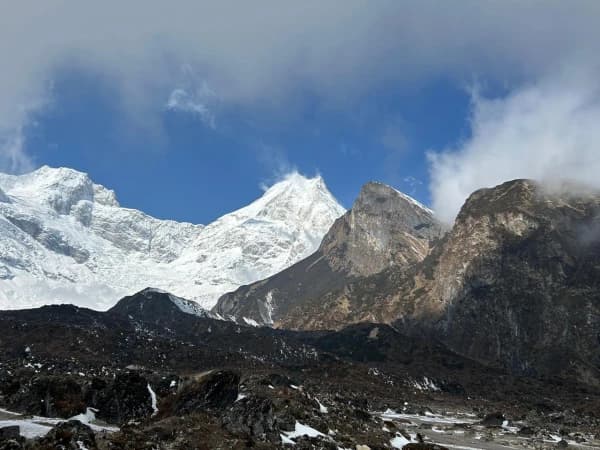
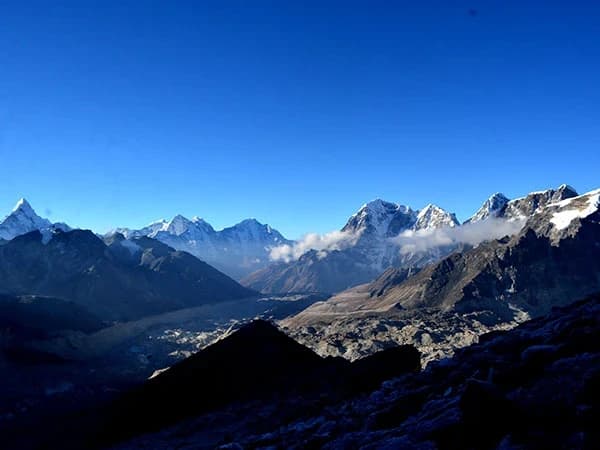
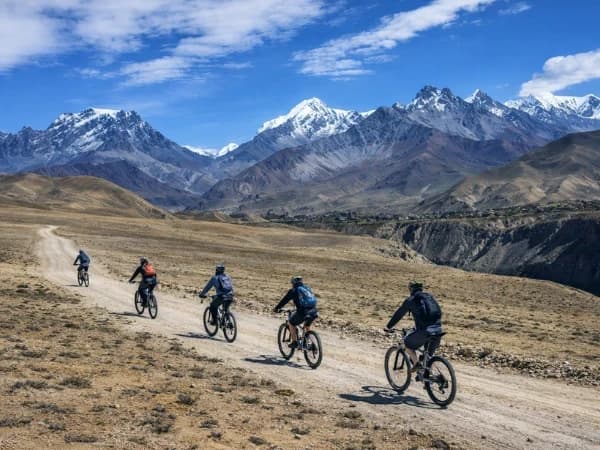
Three passes. Three glacier crossings. Three mornings where you stand above 5,300 metres and watch the sun ignite an entirely different wall of the Khumbu. The Everest Three Passes Trek is not a variation of the Base Camp route, it is the complete circuit, connecting every major valley in the Everest region into a single continuous loop through the highest inhabited landscape on earth.

Over seventeen days you will cross Renjo La (5,360m / 17,585ft), Cho La (5,420m / 17,782ft), and Kongma La (5,535m / 18,159ft), three glacial passes that link the western Khumbu, the Gokyo Valley, the Everest Base Camp corridor, and the Imja Valley into one unbroken journey. You will stand at Kala Patthar (5,545m / 18,192ft) at sunrise, climb Gokyo Ri (5,357m / 17,575ft) above turquoise glacial lakes, walk to Everest Base Camp (5,364m / 17,598ft) on the edge of the Khumbu Icefall, sleep in teahouses where Sherpa families have lived for centuries, and eat dal bhat at altitudes where the air holds barely half the oxygen you are used to. By the time you land back at Lukla, you will not just have visited Everest. You will have walked a full circle around the highest corner of the earth.

What Makes This Trek Unforgettable

  • Cross three glacial passes above 5,300 metres, Renjo La (5,360m), Cho La (5,420m), and Kongma La (5,535m), the most demanding and rewarding high-pass circuit in the Himalayas
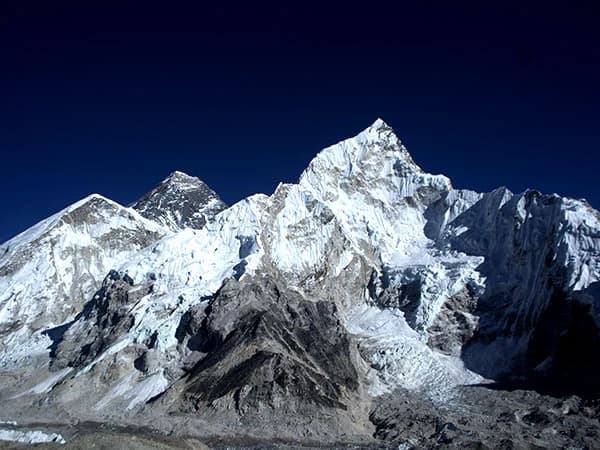
  • Stand at Kala Patthar (5,545m / 18,192ft) at sunrise, the most famous viewpoint of Everest, where four of the world’s highest peaks surround you
  • Climb Gokyo Ri (5,357m / 17,575ft) at dawn, where Everest, Lhotse, Makalu, and Cho Oyu line the horizon above turquoise glacial lakes
  • Walk to Everest Base Camp (5,364m / 17,598ft) across the Khumbu Glacier, where the world’s greatest mountaineering expeditions begin
  • Trek through Thame, the quiet western Sherpa trading village most Everest trekkers never reach
  • See the sacred Gokyo Lakes, five turquoise pools fed by the Ngozumpa Glacier, the longest glacier in the Himalayas
  • Descend into the Chhukung Valley after Kongma La, with Island Peak, Ama Dablam, and the southern wall of Lhotse filling the horizon
  • Visit Tengboche Monastery, the spiritual heart of the Khumbu, with Everest framed behind it
  • Walk a near-complete circuit of the Khumbu, almost never retracing your steps, every day revealing new terrain
  • Acclimatise in Namche Bazaar (3,440m / 11,286ft), the Sherpa capital with markets, bakeries, and the best apple pie in the Himalayas
  • Land at Lukla (2,860m / 9,383ft), one of the world’s most dramatic airports, where the runway ends at a mountain wall

17-Day Everest Three Passes Trek Overview

Seventeen days. Three passes. Two summit viewpoints. One complete circuit of the Khumbu. This is the trek for people who find the classic Everest Base Camp route insufficient, who want to see every face of the mountain, cross every major valley, and walk a route where almost no two days follow the same trail.

The route begins at Lukla and climbs through Phakding (2,610m / 8,563ft) to Namche Bazaar (3,440m / 11,286ft), where your first acclimatisation day lets your body adjust. Instead of heading north toward Tengboche, you turn west to Thame, a quiet trading village in the western Khumbu that most trekkers never see. From Thame, you climb to Lungden and cross Renjo La (5,360m / 17,585ft), where the entire Gokyo lake system spreads out below you in shades of turquoise and emerald, with Everest, Lhotse, Makalu, and Cho Oyu standing on the horizon.

You descend into the Gokyo Valley, climb Gokyo Ri (5,357m / 17,575ft) at dawn for a panorama that many trekkers say is even more spectacular than Kala Patthar, then push east to Thangnak and cross Cho La (5,420m / 17,782ft), the most technical of the three passes, involving glacier travel, steep rock, and sometimes fixed ropes. On the far side, you drop into Dzongla and join the classic Everest corridor through Lobuche and Gorak Shep to Everest Base Camp. The following morning, you climb Kala Patthar (5,545m / 18,192ft) before dawn and watch the sun hit the south face of Everest.

The final pass, Kongma La (5,535m / 18,159ft), is the highest and most remote. You climb through boulder fields and across a small glacier, with Island Peak and the southern wall of Lhotse filling the view. The descent into Chhukung and then Dingboche feels almost gentle after what you have crossed. From there, you walk south through Tengboche and Namche back to Lukla, familiar villages where teahouse owners now greet you by name.

Before You Arrive

Please arrive in Kathmandu by 4 PM the day before your trek. This gives you time for a final gear check, a briefing with your guide, and a good night’s rest before the early morning start.

Your Online Briefing

Think of this as our first coffee together, but online. After you book, we schedule a video call where we walk you through every detail: what to pack, what each day on the trail looks like, how the altitude will feel, the glacier crossings at Cho La and Kongma La, and anything else on your mind. No question is too small.

This is also when we learn about you. Our trek itinerary does not include your hotel in Kathmandu, during the briefing, share your preferences and budget, and we will arrange accommodation that fits. Whether you want a simple guesthouse in Thamel or a five-star hotel, we will set it up for you.

Lukla Flight — What You Need to Know

The flight to Lukla is one of the most dramatic in the world, a short ride between mountain peaks that ends on a runway carved into a hillside at 2,860m (9,383ft). From Kathmandu, it takes about 40 minutes. From Manthali, it takes about 20 minutes. It is also weather-dependent. Flights can be delayed by fog, cloud, or wind, sometimes for a full day. This is normal in the Himalayas and nothing to worry about, but it is something to plan for.

We strongly recommend keeping two buffer days at the end of your trip before your international flight home. This protects your connection if weather delays your return from Lukla.

During peak trekking season (March–May and October–November), flights to Lukla operate from Manthali Airport (Ramechhap) instead of Kathmandu, to reduce congestion on Kathmandu’s single runway. If your flight departs from Manthali, we will pick you up from your hotel around midnight and drive you there (4–6 hours).

For your return, you fly from Lukla back to Kathmandu or Manthali. If your return flight lands at Manthali, we drive you back to Kathmandu (4–6 hours). All ground transportation is included in every package.

Your Trek, Your Way

Every trek we run is private, your group only, no strangers added. Whether you choose Budget, Standard, or Luxury, the mountains are yours and your companions’ alone. This is not a conveyor belt. This is your personal Himalayan experience.

Your hotel in Kathmandu is not included in the trek package, and that is intentional. Kathmandu has everything from USD 10 guesthouses in Thamel to five-star hotels with rooftop views of the city. During the online briefing, tell us what you prefer and we will arrange it for you. Your trek package begins the moment you leave Kathmandu for the mountains.

Difficulty: Very Challenging (5 out of 5)

This is the hardest standard trek we offer in the Everest region. You will walk 5-9 hours a day over mountain trails, crossing three glacial passes above 5,300 metres with significant altitude gain on consecutive days. The Cho La crossing involves glacier travel, steep ascents on loose rock, and possible fixed ropes. Kongma La involves boulder fields and a small glacier. Previous high-altitude trekking experience is strongly recommended, along with good cardiovascular fitness and comfort on uneven, technical terrain. Two acclimatisation days are built into the itinerary, at Namche Bazaar and Gokyo, and our guides monitor your condition with pulse oximeters daily.

Compare Our Three Packages

  Budget Standard Luxury
Price from USD 1,180 USD 1,590 USD 3,199
Meals Choose your own (approx. USD 15-25/day) 3 meals + tea + fruits + 2L water daily All meals + all drinks anytime (except alcohol)
Room Shared teahouse Private twin w/ bathroom Private deluxe w/ bed heater
Porter Not included 1 per 2 trekkers 1 per trekker (carry nothing)
Guide 1 guide, assistant at 8+ 1 guide per 6, assistant at 6+ 1 guide per 2 trekkers
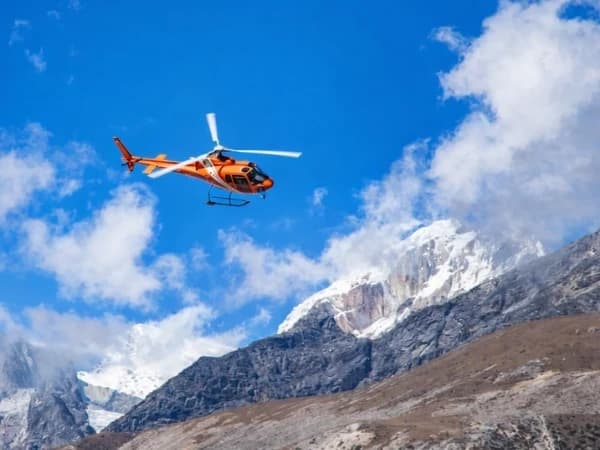
Transport Bus/jeep to Manthali + flight to Lukla Private vehicle + flight to Lukla Helicopter Kathmandu–Lukla both ways
SIM data SIM only Limited data Unlimited data
Best for Experienced backpackers Comfort trekkers, couples, families Premium experience seekers

Himalayas for Every Budget, same expert guides, same safety, three comfort levels.

Your Trek, Our Family

In the 1960s, Shreejan’s grandfather Hari Lal Simkhada helped international travellers experience the Himalayas for the first time, arranging logistics, finding routes, building trust with people who had come halfway around the world on a dream. His son Ganesh went on to hold senior positions at the Nepal Tourism Board and the Nepal Mountaineering Association. And now Shreejan, the third generation, designs every itinerary you see on this website.

This is not a company that was started in a boardroom. It was started on a mountain trail, three generations ago.

Shreejan hand-picks the guide for your group from our team of TAAN-certified mountaineering professionals, people who grew up in these mountains and know every trail, every teahouse owner, and every weather sign. For a trek like this, with three glacial pass crossings and five days above 5,000 metres, the guide assignment matters more than on any standard route. He briefs your guide personally before your trek begins, because your safety and experience are not something we delegate to a system.

Have a question right now? WhatsApp Shreejan directly: +977 9810351300. No sales team. No chatbot. The person who designed your trek answers personally.

Our Credentials

  • 196+ TripAdvisor Reviews, 4.9 out of 5 stars, TripAdvisor Travellers Choice 2024
  • 108+ Google Reviews, 4.9 out of 5 stars
  • TAAN Certified, Member #1586, Government Reg: 147653/072/073
  • Secure 10% Deposit, pay just $118 to reserve, via Himalayan Bank
  • Himalayas for Every Budget, from $1,180 to $3,199, same guides, same safety
  • Three Generations, family guiding in the Himalayas since the 1960s

Solo Trekkers Welcome

You do not need a travel partner to trek in Nepal. Most of the people who book with us come alone, and by day three on the trail, they are sharing meals, swapping stories, and watching sunrises together like old friends.

Our groups are small, 2 to 20 people, because the Himalayas deserve more than a crowd. You book your trek, and it is yours. We will never add strangers to your group without your permission.

If you want to trek completely privately, you can. If you prefer company, tell us and we will list your dates as a fixed departure on our website so other solo travellers can find you and join. Either way, the trek is built around you.

Difficulty: Very Challenging (5 out of 5)

This trek earns a 5 out of 5 rating because of the three consecutive glacial pass crossings, sustained high altitude over seventeen days, and five summit days above 5,000 metres. You need to be comfortable walking 5-9 hours per day over uneven, sometimes technical terrain with significant altitude gain. The Cho La crossing involves glacial ice, fixed ropes, and steep descents on loose rock. Kongma La involves boulder fields and a small glacier crossing. Renjo La is the most scenic but still demands a steep, sustained climb through loose rock and patchy snow.

Previous high-altitude trekking experience is strongly recommended, this is not a beginner’s route. Cardiovascular training for at least 10-12 weeks before departure will make a meaningful difference. We build two acclimatisation days into the itinerary (Namche Bazaar and Gokyo) and our guides monitor altitude sickness symptoms with pulse oximeters daily. If conditions on any pass are unsafe, heavy snow, ice instability, or poor visibility, your guide will take an alternative route. We will never risk your life for a pass.

Trek With a Purpose — Changing the World, One Step at a Time — Changing the World, One Step at a Time

In 2019, Shreejan and Shamjhana founded the Nagarjun Learning Center in Saldum Village, one of the most remote communities in Nepal’s Dhading District, where children had no school after hours, no computers, and limited healthcare. Today, 70 children receive free education and hot meals every school day. The centre has grown to 7 learning centres across Nepal, providing healthcare for 600 people, internet access for 65 children, and support programmes for over 275 women.

A portion of every trek you book funds this work directly. The centre is verified and listed on the United Nations Partner Portal.

When you walk these mountains with us, every step you take helps change a life in rural Nepal. That is what we mean by Trek With a Purpose — Changing the World, One Step at a Time.

What Trekkers Say About This Trek

"The Simkhada family treated us like their own. Every detail was taken care of and our guide knew the region inside out. We felt safe and well looked after throughout."

— TripAdvisor Review, 5 stars

Read all 320+ reviews →

Short Itinerary
Day 01: Fly to Lukla (2,850m / 9,350ft), Trek to Phakding (2,650m / 8,694ft)
Max Altitude: 2,850 m/9,350ft
Day 02: Phakding to Namche Bazaar (3,440m / 11,286ft)
Max Altitude: 3,440 m/11,285 ft
Day 03: Acclimatisation Day in Namche Bazaar
Max Altitude: 3,440m / 11,285ft
Day 04: Namche Bazaar to Thame (3,820m / 12,533ft)
Max Altitude: 3,750m/12,303ft
Day 05: Thame to Lungden (4,500m / 14,764ft)
Max Altitude: 4.500m/14,764ft
Day 06: Lungden over Renjo La Pass (5,360m / 17,585ft) to Gokyo (4,790m / 15,715ft)
Max Altitude: 5,446m/17,867ft
Day 07: Acclimatisation Day — Gokyo Ri Sunrise (5,357m / 17,575ft)
Max Altitude: 5400m/17,814ft
Day 08: Gokyo to Thangnak (4,700m / 15,420ft)
Max Altitude: 4,790m/15,584ft
Day 09: Thangnak over Cho La Pass (5,420m / 17,782ft) to Dzongla (4,855m / 15,928ft)
Max Altitude: 5,420m/17,783ft
Day 10: Dzongla to Lobuche (4,930m / 16,175ft)
Max Altitude: 4,910m/16,175ft
Day 11: Lobuche to Everest Base Camp (5,364m / 17,598ft) via Gorak Shep
Max Altitude: 5,185m/ 17,010ft
Day 12: Kala Patthar Sunrise (5,545m / 18,192ft), Return to Lobuche
Max Altitude: 5,555m/ 18,208ft
Day 13: Lobuche over Kongma La Pass (5,535m / 18,159ft) to Chhukung (4,730m / 15,518ft)
Max Altitude: 5,535m/ 18,159ft
Day 14: Chhukung to Tengboche (3,855m / 12,648ft)
Max Altitude: 4,730 m/ 15580ft
Day 15: Tengboche to Namche Bazaar (3,440m / 11,286ft)
Max Altitude: 3,855m/ 12,850ft
Day 16: Namche Bazaar to Lukla (2,850m / 9,350ft)
Max Altitude: 3,440m/ 11,285ft
Day 17: Fly Lukla to Kathmandu, Transfer to Hotel
Expand
Detailed Itinerary
Day 01:

The alarm goes off at an hour that barely qualifies as morning, but the anticipation that's been building for weeks makes it easy to swing your legs out of bed. After a short transfer from your Kathmandu hotel, you'll arrive at the domestic terminal — a place humming with the quiet excitement of trekkers about to trade city noise for mountain silence. The flight to Lukla is one of those experiences that stays with you long after you've returned home. If you're departing from Manthali (Ramechhap), the drive starts even earlier, winding through the green middle hills before the aircraft climbs above terraced farmland and into the high country. Either way, the final approach is unforgettable: the runway at Tenzing-Hillary Airport appears on its famous hillside shelf, the pilot commits, and within seconds you're standing on the tarmac at 2,850 meters with cooler air filling your lungs like a promise.

Lukla is a compact town built around the needs of trekkers and the lives of the Sherpa families who call it home. Your guide will organize the porters, distribute loads, and walk you through the first few minutes of what will become a familiar rhythm: boots on trail, one foot in front of the other, eyes drawn upward. The path out of Lukla drops gently through pine forest and past small settlements where prayer wheels line the trail. You'll hear the Dudh Koshi River long before you see it—a milky torrent fed by glaciers far above that will be your companion for several days. The walking today is deliberately gentle, a first handshake between your body and the altitude that will define the coming fortnight and beyond.

By mid-afternoon, you'll reach Phakding, a village strung along the riverbank at 2,650 meters. It's a modest place, a handful of teahouses with colorful corrugated roofs, a few small shops selling biscuits and bottled water, and a suspension bridge that sways just enough to remind you how far from home you are. Your teahouse room will be simple but clean, and dinner will likely be your first encounter with dal bhat, the Nepali staple that trekkers either love immediately or grow to love by day three. Take the evening slowly. Sit on the terrace if the weather's kind, watch the river churn below, and let the reality settle in: you're about to cross three of the highest trekking passes in the Himalaya, and every step starts here.

There's a temptation on the first day to charge ahead, to prove something to yourself or your fellow trekkers. Resist it. The veterans on this trail, the guides who've done this route dozens of times, the Sherpa porters who move through these valleys like water through a streambed, they all walk at a pace that looks almost lazy. That's the secret. The Three Passes Trek doesn't reward speed; it rewards patience. Tonight in Phakding, your body begins the invisible work of acclimatisation, producing extra red blood cells that will carry you over Renjo La, Cho La, and Kongma La in the days to come. Trust the process, drink plenty of water, and sleep well. Tomorrow the trail climbs, and it won't really stop climbing until you're standing on a 5,535-meter pass with the Himalayas spread out before you in every direction.

Max Altitude: 2,850 m/9,350ftMeals: Breakfast, Lunch, and DinnerAccommodation: Tea House/LodgeDuration: 3 hoursDistance: 6.2km/ 3.8miles
Day 02:

You'll wake to the sound of the Dudh Koshi and the clatter of teahouse kitchens firing up for breakfast. The trail from Phakding follows the river north, crossing it twice on suspension bridges strung with prayer flags that snap in the valley breeze. Each bridge is an event in itself—the steel cables groan under the combined weight of trekkers, porters, and the occasional mule train, and looking down through the mesh you'll see blue-green water churning over boulders fifty meters below. The path climbs and drops through settlements you'll forget the names of by tomorrow, but the rhythm of the walking is addictive: the crunch of gravel, the distant roar of water, and the occasional jangle of a yak bell from around the next bend.

About two hours in, you'll reach the entrance to Sagarmatha National Park, where your guide handles the permits while you rest on a bench and study the park's information boards. This is a UNESCO World Heritage Site, home to snow leopards, Himalayan tahr, and the elusive musk deer—though you're far more likely to spot a Danphe pheasant, Nepal's national bird, flashing iridescent plumage in the undergrowth. Beyond the checkpoint, the valley narrows, the forest thickens with blue pine and rhododendron, and the trail begins its serious work. The final climb to Namche is the stuff of trekking legend: a relentless zigzag up the valley wall that gains over 600 meters in roughly three hours. Your thighs will burn, your breathing will quicken, and every few minutes you'll stop to let a laden porter pass, marvelling at the loads they carry with nothing more than a headstrap and decades of practice.

Halfway up this climb, if the clouds cooperate, you'll catch your first proper glimpse of Everest. It appears between two ridges, just the dark pyramid of the summit, barely distinguishable from the surrounding peaks unless you know where to look. Your guide will point, and for a moment the exhaustion vanishes. That's the mountain you'll stand beneath in ten days' time, after crossing two frozen passes to reach it. It's a view that turns the abstract idea of this trek into something visceral and real, and it'll carry you up the remaining switchbacks with something close to ease.

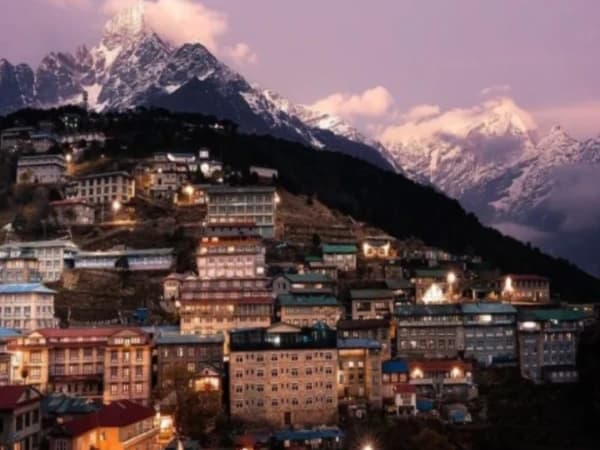
Namche Bazaar opens up suddenly, a horseshoe of buildings clinging to the inside of a natural amphitheater at 3,440 meters. It's the largest settlement in the Khumbu, and after the quiet trail it feels almost urban: bakeries selling fresh cinnamon rolls, gear shops with name-brand jackets hanging outside, and a Saturday market where Tibetan traders lay out turquoise jewelry on blankets. You'll spend two nights here, so there's no rush. Find your teahouse, claim a seat by the dining room stove, and order something hot. The altitude may give you a mild headache tonight, that's normal. Drink plenty of water, skip the beer, and let your body do its work. Namche is the gateway to everything that comes next, and by morning you'll already feel the difference a good night's rest at altitude can make.

Max Altitude: 3,440 m/11,285 ftMeals: Breakfast, Lunch, and DinnerAccommodation: Tea House/LodgeDuration: 6 hoursDistance: 7.5 km / 4.6 miles
Day 03:

There's a reason the itinerary holds you in Namche for a second night, and it isn't sentimentality. At 3,440 meters, your body is still catching up to the altitude, and the golden rule of Himalayan trekking—climb high, sleep low—means today's excursion is designed to push your ceiling upward before bringing you back down to rest. After breakfast, you'll set out on a trail that climbs steeply above the village, winding through juniper scrub and past a small army post before reaching the ridge at Syangboche. The air is noticeably thinner here, and you'll feel it in your lungs, but the reward is waiting just ahead: the Everest View Hotel, perched at 3,880 meters with a terrace that faces the most famous mountain panorama on earth.

On a clear morning, the view from the hotel terrace is the kind that makes you put your camera down because no lens can do it justice. Everest, Lhotse, Nuptse, Ama Dablam, Thamserku, Kongde Ri, the names roll off your guide's tongue while you stand there trying to absorb a horizon that's more ice than sky. If you're lucky with the light, the early sun catches the summit plume of Everest and turns it gold against a cobalt sky. It's worth ordering a pot of tea here, not for the quality of the brew but for the excuse to sit and stare. The hotel was built in the 1970s with Japanese investment, intended as a luxury lodge for tourists who'd fly in by helicopter. It never quite achieved that vision, but its location remains unmatched, and on a still morning with the peaks lit up, you'll understand why someone thought it was worth trying.

Back in Namche, the afternoon is yours. This is the place to sort out anything you've forgotten, the gear shops here stock everything from trekking poles to down jackets, and while the prices are higher than in Kathmandu, the convenience is worth it. Wander through the narrow lanes, visit the Sherpa Culture Museum if it's open, and watch the mule trains arrive loaded with supplies for the villages above. There's a monastery at the top of the village with views down the valley, and the weekly market, if your timing's right, is a wonderful collision of cultures: Sherpa traders, Tibetan merchants, and trekkers from twenty countries all haggling over the same yak cheese.

Tonight, pay attention to how you feel. A mild headache, some loss of appetite, and difficulty sleeping are all normal at this elevation, your body is manufacturing extra red blood cells and adjusting the chemistry of your breathing. Serious symptoms like persistent vomiting, confusion, or a staggering gait are not normal, and your guide knows the difference. The altitude sickness protocols on this trek are well established, and every good guide carries a pulse oximeter and checks readings twice daily. Drink at least three liters of water today; eat well even if you're not hungry; and avoid the temptation of the Irish pub at the bottom of the village, alcohol and altitude are poor companions. Tomorrow you leave Namche heading west toward Thame, and you'll notice something immediately: the crowds thin out, the trail quiets, and the Three Passes Trek begins to feel like the adventure it truly is. The teahouse menus will start getting simpler the further you go from the main Everest highway.

Max Altitude: 3,440m / 11,285ftMeals: Breakfast, Lunch, and DinnerAccommodation: Tea House/Lodge
Day 04:

This is the morning the Three Passes Trek separates itself from the standard Everest Base Camp route. While most trekkers leave Namche heading north toward Tengboche, you'll turn west, following a trail that contours high above the Bhote Koshi valley toward the quieter, deeper reaches of the Khumbu. The difference is immediate. The crowded highway to base camp fades behind you, and within an hour you're walking through scattered Sherpa settlements where the only sounds are birdsong, the creak of prayer wheels, and the occasional bleat of a yak grazing on the hillside above. This is the old trade route between Nepal and Tibet, used for centuries by Sherpa merchants carrying salt, wool, and grain across the Nangpa La.

The trail rolls gently through juniper and rhododendron forests, passing mani walls inscribed with mantras that have been carved and recarved over generations. Your guide will remind you to keep these walls on your right as you pass—a small act of respect that Buddhists follow as a form of walking prayer. The valley opens and closes around you, offering glimpses of Kongde Ri's ice face to the south and the snow-plastered peaks guarding the Tibetan border to the north. There's a rhythm to this walking that feels different from the busy trail to Namche: slower and more contemplative, as if the landscape itself is asking you to pay closer attention.

By early afternoon, you'll arrive in Thame, a village that sits at 3,820 meters in a broad, windswept valley beneath the Nangpa La pass. Thame has a significance that goes beyond its modest size. This is the birthplace of Tenzing Norgay Sherpa, the man who stood on the summit of Everest with Edmund Hillary in 1953, and the village's monastery—perched on a rocky promontory above the settlement, is one of the most important gompas in the Khumbu. If you arrive with energy to spare, the short climb to the monastery is worth every step. The views down the valley are extraordinary, and the quiet courtyard with its fluttering prayer flags offers a stillness that's hard to find on the busier trails.

Your teahouse in Thame will likely be quieter than Namche, fewer trekkers pass through here, and the dining room conversations tend to be between people attempting the same ambitious circuit you are. Swap notes, compare fitness levels, and listen carefully to anyone who's come from the other direction over Renjo La. Their descriptions of the pass will range from glorious to grueling depending on conditions and temperament, but all of them will agree on one thing: the view from the top is worth whatever it takes to get there. Tonight, top up your water bottles, organize your warm layers so they're easy to reach, and get to bed early. The next two days push you higher than you've ever been, and the work starts at dawn.

Max Altitude: 3,750m/12,303ftMeals: Breakfast, Lunch, and DinnerAccommodation: Tea House/LodgeDuration: 6 HoursDistance: 6.8km/ 4.2miles
Day 05:

The trail out of Thame heads north into one of the most remote valleys on the entire Three Passes circuit. Within an hour of leaving the village, the last traces of cultivation disappear, and you're walking through a landscape stripped to its essentials: grey rock, thin soil, scattered cushion plants, and the vast sky of the high Himalayas pressing down from above. The Bhote Koshi River, which you've been following since Namche, has shrunk to a glacial stream, and the valley walls have closed in, funneling the wind into gusts that can stop you mid-stride. Pull your hood up, lean into it, and keep moving. Your body knows what to do by now.

The trail climbs steadily but not steeply, gaining altitude through a series of broad yak pastures where stone walls mark the boundaries of summer grazing. In the warmer months, Sherpa herders bring their animals here to feed on the sparse grass, and you might pass a few stone huts with smoke curling from their chimneys. In autumn and spring, these pastures are empty — just you, your group, and the mountains. The solitude is extraordinary. On the standard Everest route, you're rarely out of sight of another trekker; here, you can walk for an hour without seeing another soul. It's a quality that makes the Three Passes Trek feel like the Khumbu must have felt decades ago, before the trail to base camp became one of the most popular walks on earth.

Lungden appears at 4,500 meters—a tiny settlement of just a few stone buildings tucked into a sheltered hollow below the moraine that guards the approach to Renjo La. If Thame felt quiet, Lungden feels like the edge of the inhabited world. The teahouse is basic, thin walls, cold rooms, and a dining area where the stove is the center of all life, but the hospitality is genuine, and the food is hot. Dal bhat is the wisest choice tonight: it's the most calorie-dense option, it's freshly cooked, and your body needs every bit of energy it can store for tomorrow's climb.

After dinner, step outside and look up. At 4,500 meters, with no light pollution and air so thin it barely scatters, the stars here are staggering. The Milky Way arches overhead like a river of spilt light, and you can pick out constellations that are invisible from lower elevations. It's a reminder of how far you've come, and how high you'll go tomorrow. Renjo La, at 5,360 meters, is the first of your three pass crossings, and the alarm will ring well before dawn. Make sure your headtorch batteries are fresh, your acclimatisation feels solid, and your warmest layers are within arm's reach. Sleep won't come easily at this altitude, periodic breathing is normal and harmless, but even lying still with your eyes closed lets your body rest. Tomorrow is one of the defining days of this trek, and it starts in the dark.

Max Altitude: 4.500m/14,764ftMeals: Breakfast, Lunch, and DinnerAccommodation: Tea House/LodgeDuration: 6 hoursDistance: 8.2km/ 5miles
Day 06:

The headtorch clicks on before the sun has any intention of showing itself. Breakfast is quick—porridge, tea, whatever your stomach will accept at 4,500 meters in the cold dark of pre-dawn—and then you're on the trail, following your guide's lamp up the moraine toward the first pass of the Three Passes circuit. The initial climb from Lungden is steep and relentless, switchbacking up a rocky slope where the footing demands attention and the thin air makes every upward step feel like two. Your breathing will be loud in your own ears, and you'll settle into a rhythm of ten steps, pause, ten steps, pause. That's not weakness, that's strategy. Every experienced high-altitude trekker moves this way above 5,000 meters.

As dawn arrives, the landscape around you transforms from monochrome grey into a palette of amber and rose. The snow on the surrounding peaks catches the first light while you're still climbing in shadow, and for a few minutes the world looks painted rather than real. The trail steepens further as you approach the pass itself, scrambling over boulders and patches of old snow. And then, quite suddenly, the climb is over. You're standing on Renjo La at 5,360 meters, with prayer flags snapping in the wind and a view that justifies every burning muscle in your legs. To the east, the turquoise lakes of Gokyo are laid out below you like jewels set in grey stone. Behind them, the Ngozumpa Glacier, the longest in Nepal, flows south in a river of debris-covered ice. And there, unmistakable on the horizon, Everest rises above everything else, its dark pyramid trailing a plume of spindrift in the jet stream.

The descent from Renjo La into the Gokyo Valley is long and steep, dropping over 500 meters on a trail that zigzags through loose rock and occasional snow patches. Your knees will feel every meter of it, and trekking poles earn their weight in gold on this section. As you drop lower, the lakes appear one by one, each a different shade of turquoise depending on the light, the glacial sediment, and whatever alchemy the Himalayas use to make their water impossibly beautiful. The third lake, the largest, sits beside the village of Gokyo, and by the time you reach its shore your legs will be telling you in no uncertain terms that seven or eight hours of mountain walking is quite enough for one day.

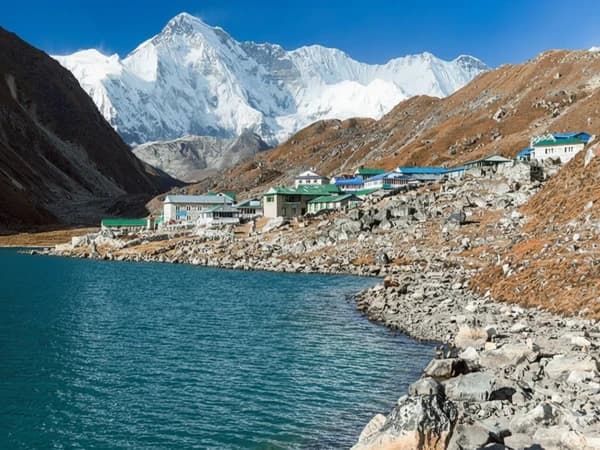
Gokyo sits at 4,790 meters on the shore of its lake, a handful of teahouses backed by the immense wall of Cho Oyu to the north. It's a place of extraordinary beauty, the kind of place where you sit on the terrace of your teahouse and simply stare, too tired and too moved to reach for your camera. Dinner tonight will taste better than anything you've eaten in days, partly because your body is desperate for calories and partly because you've earned it. You've just crossed your first pass. Two remain. Tomorrow is a rest day, and in the pre-dawn darkness you'll climb Gokyo Ri for what many trekkers call the single finest viewpoint in the entire Everest region. For now, drink your tea, eat your dal bhat, and let the satisfaction of the day settle over you like a warm blanket.

Max Altitude: 5,446m/17,867ftMeals: Breakfast, Lunch, and DinnerAccommodation: Tea House/LodgeDuration: 8 hoursDistance: 9km/ 5.6miles
Day 07:

The alarm goes off at four in the morning, and everything in your body protests. Your muscles ache from yesterday's pass crossing, the air in your teahouse room is cold enough to see your breath, and the idea of climbing another 567 vertical metres in the dark sounds like a punishment rather than a privilege. But you'll get up anyway, because Gokyo Ri at sunrise is one of those experiences that changes the way you think about mountains, and your guide wouldn't wake you this early if it weren't worth it. A quick cup of tea, a couple of biscuits, headtorch on, and you're out the door into a darkness so complete the stars look close enough to touch.

The trail up Gokyo Ri is steep from the start and stays steep all the way to the summit at 5,357 metres. There are no switchbacks to ease the gradient — just a direct line up the ridge with cairns marking the way and the occasional false summit that tests your resolve. You'll stop frequently, hands on knees, breathing hard, watching the beam of your headtorch illuminate the loose rock beneath your feet. Other trekkers' lamps dot the ridge above and below like a slow-motion string of fireflies. Nobody talks much. The effort is too great and the anticipation too sharp for conversation.

And then you reach the top, and the sun arrives, and nothing you've been told about this moment quite prepares you for it. Four of the world's six highest mountains are visible from Gokyo Ri: Everest, Lhotse, Makalu, and Cho Oyu, all catching the first light in a sequence that turns the horizon from grey to gold to white. Below you, the Gokyo lakes shimmer in shades of turquoise and emerald, and the Ngozumpa Glacier stretches south like a frozen highway. The scale is almost impossible to process — you're standing on a minor bump in a landscape of giants, and in every direction there's a peak that would be the most famous mountain in any other range on earth. Take your photographs, but also take five minutes to put the camera away and simply look. This is what you came for.

The descent back to Gokyo is faster but no less demanding on tired legs, and by mid-morning you'll be back in the teahouse with a second breakfast that you'll eat with the appetite of someone who's earned every calorie. The rest of the day is yours to spend as you wish. Some trekkers walk to the fourth or fifth Gokyo lakes, which sit further up the valley beneath Cho Oyu's enormous west face. Others simply rest, reading, writing in journals, or sitting on the lakeshore watching the light move across the glacier. This is a recovery day by design, and your body needs it: tomorrow you'll trek to Thangnak, and the day after that you'll cross your second pass, Cho La, which is steeper, icier, and more technical than Renjo La. Let your legs rest, keep drinking water, and enjoy the quiet. Gokyo is one of the most beautiful places in the Himalaya, and you've got a whole afternoon to let it sink in.

Max Altitude: 5400m/17,814ftMeals: Breakfast, Lunch, and DinnerAccommodation: Tea House/LodgeDuration: 1/2 hoursDistance: 1.5km/ 0.9miles
Day 08:

After the intensity of Renjo La and the pre-dawn climb of Gokyo Ri, today offers something the trail hasn't given you in a while: a short, relatively gentle walk with time to spare at the other end. The route from Gokyo to Thangnak heads south along the western edge of the Ngozumpa Glacier, following a trail that undulates over moraine ridges and through boulder fields deposited by ice that's been advancing and retreating for millennia. The glacier itself is a strange and compelling sight—not the clean white river of ice you might imagine, but a vast, rubble-strewn conveyor belt of stone, dirt, and hidden crevasses that stretches several kilometers wide. Occasionally you'll hear a deep groan or crack as the ice shifts beneath its burden, and your guide might point out the blue-green walls of a freshly exposed serac.

The walking takes roughly three to four hours, which feels almost indulgent after the seven-hour days you've been putting in. Use the extra time to notice the small things that high-altitude exhaustion often pushes to the margins: the way sunlight hits a glacial pool and turns it electric blue; the precise geometry of frost crystals on a boulder at dawn; and the small alpine flowers—gentians and edelweiss, that somehow cling to life in the thin soil between rocks. The Ngozumpa is the longest glacier in Nepal, and walking alongside it you begin to appreciate the immense timescales at work in this landscape. The moraine you're standing on was deposited when the glacier was larger, perhaps during the Little Ice Age, and the lake at Gokyo behind you was formed as the ice retreated. You're walking through geology in real time.

Thangnak (sometimes written Dragnag) sits at 4,700 meters in a rocky hollow on the glacier's western flank. It's a tiny place, just three or four teahouses huddled together against the wind, and its sole purpose is to serve as the staging post for Cho La. The dining room will be full of trekkers studying the weather forecast, comparing notes with those who've come the other direction, and quietly assessing their own readiness for what many consider the most demanding pass crossing of the three. Listen to the stories, but don't let the dramatic accounts shake your confidence. Cho La is serious, but it's crossed safely by hundreds of trekkers every season, and your guide has been over it more times than they can count.

Tonight is about preparation. Lay out your gear for the morning: warm base layers, down jacket, waterproof shell, gloves, hat, sunglasses, headtorch, and water bottles filled and insulated so they don't freeze. The start will be early, your guide will want to be on the glacier before the sun softens the snow, and there won't be time to rummage through your bag in the dark. Eat well, even if your appetite is muted by the altitude. Dal bhat is the fuel that will carry you over the pass, and tomorrow you'll need every grain of rice. The safety of the crossing depends as much on preparation as fitness, and a well-organized pack and a well-fueled body make all the difference when the trail turns to ice.

Max Altitude: 4,790m/15,584ftMeals: Breakfast, Lunch, and DinnerAccommodation: Tea House/LodgeDuration: 5 hoursDistance: 3.7km/ 2.3miles
Day 09:

This is the day that separates the Three Passes Trek from everything else in the Khumbu. The headtorch goes on before dawn, breakfast is eaten quickly in the cold teahouse kitchen, and then you're out into a darkness that's shot through with stars. The first section of the trail crosses the Ngozumpa Glacier itself—a chaotic surface of loose rock, hidden ice, and glacial pools that your guide navigates with the confidence of someone who's done it a hundred times. Follow their footsteps precisely. The glacier crossing takes about an hour and demands full attention; the rocks are unstable, the ice is slippery, and a misplaced foot can mean a twisted ankle at best. By the time you reach the far side, the sky will be lightening, and the true climb to Cho La begins.

The approach to the pass steepens dramatically, climbing through a narrow rocky gully before emerging onto the glacial headwall. This is the technical section — a steep snow and ice slope that may require fixed ropes depending on conditions. Your guide will assess the surface, decide the safest line, and lead you up step by careful step. Crampons aren't always necessary, but when they are, your guide will have them ready. The altitude hits hard here: at 5,420 meters, the air contains roughly half the oxygen you're used to at sea level, and every upward step requires a conscious effort that goes beyond physical fitness into something closer to willpower. The prayer flags at the top of Cho La appear almost without warning, and when you reach them, the relief is physical, a loosening in the chest, a straightening of the spine, and a grin that you can't suppress.

The view from Cho La is different from Renjo La: less panoramic and more intimate, dominated by the enormous flanks of Cholatse and Taboche that rise on either side like the walls of a cathedral. To the east, the Khumbu Valley opens up, and you can trace the route you'll follow in the coming days, down to Dzongla, across to Lobuche, and eventually to Gorak Shep and Everest Base Camp. It's a moment to pause, breathe, and acknowledge what you've done: two of the three passes are behind you now. The hardest climbing of the day, however, is actually the descent. The far side of Cho La drops steeply over loose rock and scree, and your knees will bear the brunt of every step for the next two hours.

Dzongla sits at 4,855 meters in a barren, wind-scoured valley beneath the towering south face of Cholatse. The teahouses are basic but warm enough, and when you arrive, legs shaking, lungs raw, spirit soaring, you'll drop your pack and feel a satisfaction that's impossible to manufacture any other way. Tonight's dinner will taste extraordinary, not because the kitchen has done anything special but because your body is desperate for restoration. Eat everything you can, drink at least three liters of water, and get horizontal as soon as your body asks. You've crossed the pass that most trekkers talk about at the dinner table for years after they get home. Tomorrow is a short, gentle walk to Lobuche, and your tired body will thank you for the mercy.

Max Altitude: 5,420m/17,783ftMeals: Breakfast, Lunch, and DinnerAccommodation: Tea House/LodgeDuration: 6 hoursDistance: 16km/ 9.9miles
Day 10:

After the intensity of Cho La, today is a gift. The trail from Dzongla to Lobuche is one of the shortest walking days on the entire trek — just three to four hours of relatively gentle terrain that gives your body the recovery time it's been asking for since yesterday's pass crossing. The path descends slightly before contouring east along the valley floor, passing beneath the sheer walls of Cholatse and Taboche that seem close enough to touch. The landscape up here is high alpine desert: bare rock, sparse brown grass, and the occasional hardy cushion plant that's somehow figured out how to survive where almost nothing else can.

About halfway to Lobuche, you'll pass the memorial cairns at Thukla—stone stupas and plaques dedicated to climbers and Sherpas who lost their lives on Everest and the surrounding peaks. The most prominent memorials belong to Scott Fischer and Rob Hall, the expedition leaders who died in the 1996 disaster that Jon Krakauer wrote about in Into Thin Air, but there are dozens of others, some grand with engraved brass plates, some simple stacks of stones with a weathered photograph tucked under a rock. It's a sobering place, and most trekkers pause here in silence, reminded that the mountains you're walking among are beautiful and indifferent in equal measure. Your guide may share stories of people they knew whose names are carved into these stones. Listen. The Khumbu's history is written in human courage as much as geological time.

Beyond the memorials, the trail joins the main Everest Base Camp route, and you'll notice the change immediately. After days of near-solitude on the Thame-Gokyo-Cho La circuit, the trail is suddenly busy with trekkers heading to and from base camp. It's a jarring contrast, but also a reminder of how special the route you've been walking truly is. The path follows the lateral moraine of the Khumbu Glacier, and for the next hour you'll walk along its edge with the glacier's chaotic surface of ice pinnacles and debris-covered seracs stretching out to your right. Occasionally you'll hear a deep groan or crack as the ice shifts, a sound that's equal parts fascinating and unsettling.

Lobuche sits at 4,930 meters, wedged between the moraine and the mountain wall, exposed to every wind that funnels down the valley. The teahouses here are basic but functional: thin walls, cold rooms, and a dining area where everyone crowds together for warmth. You'll share the room with base camp trekkers who haven't crossed a single pass, and there's a quiet satisfaction in knowing what you've already accomplished while they're still looking upward. Use the afternoon to rest completely. Tomorrow you walk to the foot of Everest itself, and the day will be long, high, and emotionally charged in ways that are hard to prepare for. Charge your devices, fill your bottles, and get to bed early. The biggest day of the trek is less than twelve hours away.

Max Altitude: 4,910m/16,175ftMeals: Breakfast, Lunch, and DinnerAccommodation: Tea House/LodgeDuration: 4 hoursDistance: 8.36km/ 5.2miles
Day 11:

This is the day you've been thinking about since you first looked at this itinerary. The trail from Lobuche to Gorak Shep is a two-hour walk across the lateral moraine of the Khumbu Glacier—a stark, beautiful, otherworldly landscape of grey rock and hidden ice that gains altitude so gradually you barely notice until you check your watch and realize you're above 5,100 meters. The air is thin enough now that even flat walking feels like effort, and you'll settle into a rhythm that's become second nature over the past eleven days: slow, steady, one foot in front of the other, stopping when your body asks and starting again when it's ready.

Gorak Shep appears at 5,185 meters—the highest permanent settlement on the route and the staging point for both Everest Base Camp and Kala Patthar. It's a windswept, austere place where the teahouses cling to a sandy flat beside a frozen lake, and the surrounding peaks block the sun for much of the day. You'll drop your heavy gear here, eat a quick lunch, fill your water bottles, and set out for the final walk to base camp. The trail crosses the Khumbu Glacier itself, a surreal maze of ice towers, glacial pools, and rocky debris that looks like the surface of another planet. The path is marked with cairns, but it changes with the glacier's movement, and your guide's experience is essential for finding the safest line.

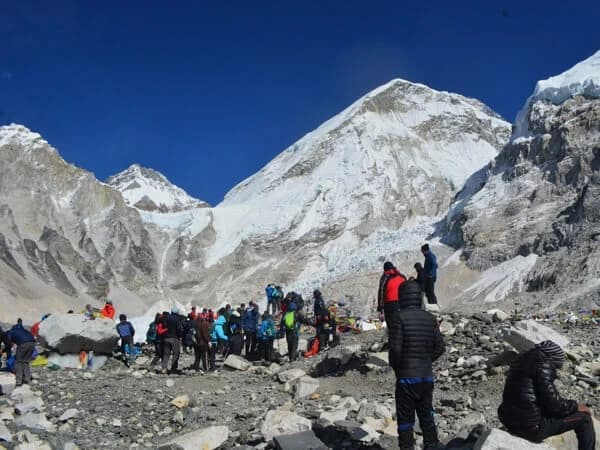
Everest Base Camp sits at 5,364 meters on the glacier's surface, and when you arrive, the first thing you'll notice isn't the mountain, the summit is hidden behind the Khumbu Icefall from this angle. What you'll notice is the icefall itself: a frozen cascade of seracs and crevasses that tumbles down from the Western Cwm like a shattered staircase. In climbing season, you can see the tiny figures of climbers and the dots of expedition tents scattered across the ice. Out of season, the camp is empty, and the icefall stands in magnificent, terrifying silence. Either way, standing here, at the foot of the highest mountain on earth, having crossed two high passes to reach it, is a moment that sits outside ordinary experience. You'll feel it in your chest, a tightness that has nothing to do with altitude.

The walk back to Gorak Shep takes about two hours, and by the time you arrive, the sun will be dropping behind Pumori and the temperature will be plummeting with it. Sleep at 5,185 meters is difficult, the altitude suppresses deep sleep, and you may experience Cheyne-Stokes breathing, where your body alternates between shallow breaths and brief pauses that feel alarming but are actually harmless. Keep your warmest layers within reach, your water bottle inside your sleeping bag to prevent it from freezing, and try to rest even if true sleep doesn't come. Tomorrow morning you'll climb to the highest point of the entire Three Passes Trek, Kala Patthar at 5,545 meters, and you'll want every scrap of energy you can muster.

Max Altitude: 5,185m/ 17,010ftMeals: Breakfast, Lunch, and DinnerAccommodation: Tea House/LodgeDuration: 6-8 hoursDistance: 15 km/ 9.32miles
Day 12:

The headtorch goes on for the third time on this trek, and this time the destination is the highest point you'll reach in seventeen days. The alarm sounds around three-thirty in the morning, and the cold inside the teahouse at Gorak Shep is the kind that makes getting dressed an act of will. But you've been doing hard things for nearly two weeks now, and you know from Gokyo Ri that the pre-dawn suffering is the price of admission for something extraordinary. Tea, biscuits, a headtorch, a door, darkness, stars, and the crunch of frozen ground beneath your boots. The trail up Kala Patthar begins with a steady climb across the sandy flat before steepening onto the ridge that leads to the summit cairn at 5,545 meters.

The climb is unrelenting—roughly 360 meters of vertical gain on a trail that offers no respite and no shortcuts. At this altitude, the air contains less than half the oxygen available at sea level, and your body will protest with every upward step. You'll stop frequently, bent double, hands on knees, watching your breath crystallize in the beam of your headtorch. Other trekkers' lamps string out along the ridge above and below, each one a small act of determination moving slowly upward in the dark. The stars begin to fade as the eastern horizon shifts from black to deep blue to pale gold, and by the time you reach the summit, the show is about to begin.

Sunrise from Kala Patthar is, quite simply, the most celebrated mountain view in the world. Everest stands directly ahead, its dark pyramid catching the first rays of light and turning from shadow to amber to blazing white in a sequence that lasts perhaps ten minutes and feels like ten seconds. Nuptse's vast ridge wall glows beside it, Lhotse's ice face catches the sun a moment later, and in every direction the Himalayas stretch to the horizon in ranks of snow-covered peaks that have no end. You'll take your photographs, and they'll be beautiful, but they won't capture the wind on your face, the ache in your legs, the thinness of the air, or the quiet disbelief that you're actually standing here, higher than you've ever been, looking at the roof of the world.

The descent from Kala Patthar back to Gorak Shep takes about an hour, and then you'll eat the biggest breakfast of the trek before continuing the long walk down to Lobuche at 4,930 meters. The descent feels like a homecoming—each hundred meters of altitude lost returns a little more oxygen to your blood, a little more spring to your step. By the time you reach Lobuche, you'll feel physically better than you have in days, even though your legs will be tired from the long morning. Tonight, savor the dining room warmth, the thicker air, and the knowledge that you've stood at the foot of Everest and on the finest viewpoint above it. Two passes are done. One remains, and Kongma La, waiting for you the day after tomorrow, is the most technical of the three. Rest well. You've earned it, and you'll need it.

Max Altitude: 5,555m/ 18,208ftMeals: Breakfast, Lunch, and DinnerAccommodation: Tea House/LodgeDuration: 3 hoursDistance: 5 km/ 3.10miles
Day 13:

The final pass. After Renjo La's panoramic glory and Cho La's glacial intensity, Kongma La brings something different again: a scrambling, boulder-hopping crossing at 5,535 meters that many Three Passes veterans consider the most demanding of the three. The morning starts early from Lobuche, and the trail heads south before turning east to climb the ridge that separates the Khumbu Valley from the Imja Valley. The initial ascent follows a faint path through rocky terrain, gaining altitude steadily alongside a glacial stream. Within an hour, you've left the last traces of vegetation behind, and you're in a world of pure rock, ice, and sky.

The upper section of the climb is where Kongma La earns its reputation. The trail — if you can call it that — picks its way through a maze of boulders and glacial debris, marked only by occasional cairns and the scuff marks of previous trekkers' boots. There are sections where you'll use your hands for balance, scrambling over rocks the size of cars while the altitude squeezes your lungs and the wind tries to push you sideways. Your guide will choose the line carefully, stopping at each tricky section to show you the footholds and handholds that experience has taught them. This isn't technical climbing, but it's more than walking, and the satisfaction of reaching the prayer flags at the top of the pass is immense, perhaps the deepest of all three crossings, because this one completes the set.

From the summit of Kongma La, the view is a fitting finale. The Imja Valley drops away to the east, with Ama Dablam's ice-fluted spire dominating the skyline and the Island Peak massif filling the southern horizon. Behind you, the Khumbu Glacier and the route to base camp are visible in their entirety, the landscape you've been walking through for days laid out like a relief map. You've now stood above 5,500 meters, crossed three high passes, visited Everest Base Camp, and climbed both Gokyo Ri and Kala Patthar. There isn't a more complete circuit of the Everest region anywhere in the trekking world, and standing here on the third pass, you know that in your bones.

The descent into Chhukung is long, steep, and demanding on tired legs. The trail drops over loose rock and scree before reaching the moraine, then continues down through increasingly gentle terrain as the valley floor approaches. Chhukung sits at 4,730 meters in a wide, open valley beneath the towering walls of Nuptse and Lhotse, and its teahouses feel like luxury after the austere settlements of the high route. Tonight, you can afford a celebration. You've completed the three passes, Renjo La, Cho La, and Kongma La, and everything from here is downhill. Order something from the menu that isn't dal bhat (you've earned it), charge your devices, and let the accomplishment wash over you. The hardest days are behind you now.

Max Altitude: 5,535m/ 18,159ftMeals: Breakfast, Lunch, and DinnerAccommodation: Tea House/LodgeDuration: 6-8 hoursDistance: 10.5 km/ 6.5miles
Day 14:

Waking up in Chhukung with the knowledge that all three passes are behind you changes the quality of the morning entirely. The pressure is off. The descents are ahead. And your body, which has been operating in a state of high-altitude deficit for over a week, begins to recover with almost comical speed as you drop through each hundred meters of elevation. The trail from Chhukung heads west and then south, following the Imja Khola downstream through a valley that gradually softens from barren alpine desert into something greener, warmer, and more alive. The first shrubs appear, then juniper bushes, then actual grass—each new sign of vegetation a small celebration after days of walking through a world made entirely of rock and ice.

You'll pass through Dingboche mid-morning, its stone-walled potato fields and solar-paneled teahouses looking almost luxurious compared to the settlements above. The trail continues to descend, dropping into the main Khumbu valley and following the route that standard base camp trekkers use. Beyond Dingboche, the path enters the village of Pangboche, one of the oldest permanently inhabited settlements in the Khumbu. Its lower gompa is believed to house a yeti relic—a scalp that Edmund Hillary once borrowed for scientific testing, and the ancient stone walls and carved mani stones give the place a weight and permanence that the newer teahouse settlements lack. If your legs allow it, the short detour to the upper monastery is worth the extra minutes.

The descent continues through rhododendron forest that feels almost tropical after the stark grey moonscapes of the high passes. The air thickens with each step, you can feel it filling your lungs properly for the first time in days, and the change in your energy levels is remarkable. By late afternoon, the golden rooftops of Tengboche Monastery appear through the trees, sitting on its broad hilltop with Ama Dablam rising behind it like a natural spire. This is the spiritual heart of the Khumbu, and if you arrive in time for the late-afternoon prayer ceremony, step inside. The low chanting of monks, the smell of juniper incense, and the deep vibration of the long horns create an atmosphere that stays with you long after the sound fades.

Your teahouse at Tengboche sits at 3,855 meters, nearly 1,700 meters lower than Kala Patthar, and the difference is palpable. The air is rich, your appetite returns with force, and sleep tonight will be deeper and more restorative than anything you've managed since Namche. Sit on the terrace as the sun sets and watch Ama Dablam turn from white to gold to pink against the darkening sky. The prayer flags above the monastery flutter in the evening breeze, and somewhere below in the valley the Dudh Koshi continues its endless work. You've done something remarkable on this trek, something that fewer than a fraction of Himalayan trekkers ever attempt, let alone complete. Let that settle in tonight as the monastery bells ring for evening prayers and the Sherpa world turns quietly around you.

Max Altitude: 4,730 m/ 15580ftMeals: Breakfast, Lunch, and DinnerAccommodation: Tea House/LodgeDuration: 5 hoursDistance: 12.9 km/ 8miles
Day 15:

The walk from Tengboche to Namche is one of those days where the trail does most of the work and you simply enjoy the ride. The morning begins with a steep descent through the rhododendron forest below the monastery—the same forest you climbed through on the way up, though it feels entirely different now. In spring, the trees are alight with red and pink blossoms; in autumn, the filtered light through the canopy is warm and golden. Either way, the birdsong is constant, the moss-covered branches drip with old man's beard lichen, and the forest has a cathedral hush that rewards slow walking. Your legs, unburdened of altitude stress and fuelled by a proper night's sleep, feel strong again.

The trail drops to Phunki Tenga at the river crossing, where a water-driven prayer wheel turns endlessly in the current, then begins the long, contouring traverse back toward Namche. This section is one of the finest walks in the Khumbu — a wide path carved into the valley wall high above the Dudh Koshi, with views of Ama Dablam, Thamserku, and Kongde Ri unfolding like a panoramic scroll. You'll pass trekkers heading uphill with clean gear and wide eyes, and there's a temptation to tell them everything that's waiting above, the passes, the glaciers, and the sunrises. Resist the urge to spoil it. They'll discover it all in their own time, just as you did.

Namche Bazaar appears around a bend in the trail, and re-entering its horseshoe of buildings feels like arriving in a major city after weeks in the wilderness. The bakeries, the gear shops, the buzz of multiple languages in the narrow lanes, it's all exactly as you left it, but you're not the same person who walked out of here eleven days ago heading west toward Thame. You've crossed three passes above 5,300 meters, stood at Everest Base Camp, watched the sun rise from Gokyo Ri and Kala Patthar, and walked through some of the most remote and beautiful valleys on earth. Namche feels like a celebration you didn't know you needed.

The afternoon is yours to enjoy. Treat yourself to a proper bakery meal, the cinnamon rolls here are legendary among returning trekkers, and wander the lanes one last time. This is your final chance to buy souvenirs, stock up on snacks for tomorrow, or simply sit in a sunny spot and watch the world go by. If you want to send a message home, the Wi-Fi in Namche is the best you'll find above Lukla, and a video call to show your family where you've been might be worth the connection fee. Tonight, over dinner in the teahouse, your guide will likely produce a bottle of something to toast the completion of the circuit. Raise a glass, to the mountains, to the team who got you through safely, and to yourself for having the courage and the stamina to attempt one of the most demanding treks in the Nepal Himalaya. Tomorrow you walk to Lukla, and the real world begins to reassert itself.

Max Altitude: 3,855m/ 12,850ftMeals: Breakfast, Lunch, and DinnerAccommodation: Tea House/LodgeDuration: 5 hoursDistance: 5.9 km/ 3.6miles
Day 16:

The final full day on the trail, and there's a bittersweet quality to the morning that catches most trekkers off guard. You've spent over two weeks walking through some of the most spectacular mountain scenery on earth, and today you'll walk out of it. The descent from Namche begins with the steep switchbacks you climbed on Day 2—the same trail, the same zigzags, but now taken in reverse with gravity on your side and nearly 600 meters of height to shed before the valley floor. Your knees, which have been remarkably forgiving considering the punishment of three past descents, will remind you one final time that downhill is not the same as easy.

At the bottom of the hill, you'll cross back through the Sagarmatha National Park checkpoint and re-enter the lower valley, where the Dudh Koshi runs wide and fast between forested banks. The suspension bridges that seemed so dramatic on the way up are now old friends—you'll cross them with barely a glance at the churning water below, your body moving with an easy confidence that's been built over seventeen days of mountain walking. The trail passes through the same settlements you walked through on Day 2, but the sense of scale has shifted entirely. On the way in, every prayer wheel and mani stone felt like a signpost pointing toward something vast and unknown. Now they feel like the familiar furniture of a landscape you've made your own.

The six-to-seven-hour walk gives you time to reflect on what you've accomplished, and reflection is one of the quiet gifts of a long trek. The Three Passes circuit is among the most demanding trekking routes in Nepal, three crossings above 5,300 meters, Everest Base Camp, two summit viewpoints, and a total distance that covers virtually every corner of the upper Khumbu. You've slept at altitudes where jet aircraft cruise, eaten dal bhat in teahouses where the kitchen runs on determination and yak dung, and witnessed sunrises that no photograph will ever fully capture. These memories will sharpen rather than fade as the weeks pass, and a year from now you'll remember Cho La's glacial headwall or Gokyo Ri's pre-dawn darkness with a clarity that surprises you.

Lukla arrives in the late afternoon, and the little town that felt so foreign sixteen days ago now feels like a homecoming. The narrow main street bustles with newly arrived trekkers looking nervous and excited, exactly as you did on Day 1, and the teahouses have a celebratory energy that's infectious. Tonight is your final night on the trail, and it deserves to be savored. Your guide and porters will join you for a farewell dinner, and if tradition holds, there'll be singing and dancing that starts quietly and ends with the whole dining room on its feet. Don't be shy. These are the people who carried your gear, found the safest line over three frozen passes, and kept you safe and fed for seventeen days. A generous tip and a heartfelt thank-you are the currency that matters most in the mountains, and tonight is the time to give both.

Max Altitude: 3,440m/ 11,285ftMeals: Breakfast, Lunch and DinnerAccommodation: Local Teahouse or lodgeDuration: 6-8 hoursDistance: 13.5 km/ 8.3miles
Day 17:

The final morning begins with a truth that every Lukla traveller must accept: the flight schedule is at the mercy of the weather, and the weather in the Khumbu answers to no one. If the clouds are low or the wind is wrong, flights are delayed — sometimes by hours, sometimes by a full day. Your guide will have been monitoring the situation since dawn, and the teahouse grapevine will be buzzing with updates. If the planes are flying, you'll walk to the small terminal, check in with the casual efficiency of someone who's been above 5,500 meters this week, and wait for your name to be called. The flight out of Lukla is just as dramatic as the flight in: the runway drops away sharply at its southern end, the pilot releases the brakes, and within seconds you're airborne, banking over the valley you've been walking through for over two weeks.

As the aircraft climbs, press your face to the window. The trail to Namche is visible below—a thin line threading through dark forest beside the silver ribbon of the Dudh Koshi. Further north, if the skies are clear, you can see the white peaks of the upper Khumbu stretching to the horizon. Somewhere up there is the pass where you stood watching the sunrise, the glacier you crossed in the dark, and the base camp where you touched the foot of the highest mountain on earth. It all looks impossibly far away and impossibly close at the same time, shrinking to a map as the plane carries you south toward Kathmandu.

The landing at Tribhuvan International Airport (or Manthali, depending on your route) delivers you back into a world of noise, traffic, and oxygen-rich air that feels almost intoxicating after two weeks above 4,000 meters. Your transfer vehicle will be waiting, and the drive to your hotel cuts through the organized chaos of the Kathmandu Valley, motorcycle horns, street vendors, temple bells, and the sweet smell of incense mixing with diesel. After the silence of the high passes, the city's sensory assault is overwhelming in the best possible way. It's a reminder that Nepal isn't just mountains; it's the whole messy, beautiful, complicated mosaic of a country that's been welcoming travellers for centuries.

At your hotel, a hot shower and a clean bed await, two luxuries you'll never take for granted again. The rest of the day is yours to decompress, and decompression after the Three Passes Trek takes many forms: some trekkers sleep for twelve hours straight; others wander Thamel is in a happy daze, buying last-minute gifts and eating food that isn't dal bhat. Tonight, if the team gathers for a farewell dinner, you'll look around the table at people who were strangers seventeen days ago and feel a connection that's hard to explain to anyone who wasn't there. The mountains do that. They strip away the superficial and leave something honest in its place. You've crossed three passes above 5,300 meters, stood at the foot of Everest, and walked through landscapes that most people only see in photographs. Whatever comes next, you'll carry the Khumbu with you, not as a memory that fades, but as a quiet, permanent shift in what you know you're capable of.

Interactive Route Map

Interactive Route Map

Explore the full trek route on our interactive Google Map. Click markers for altitude details at each stop.

Open Full Route Map in Google Maps

Meals: Breakfast, lunch and Farewell dinnerDuration: 40/20 minutes
Couldn't find what you're after?Reach out to our travel experts.
Customise Trip
Route Map
Everest Three Passes Trek Route Map Nepal
Altitude Chart
Everest Three Passes Trek - 17 Days
Availability
Book your own private small group trip
No. of travellers
Price per person
1 - 4 pax
US$1175
5 - 8 pax
US$1135
9 - 12 pax
US$1105
13 - 20 pax
US$1055

Discounts are determined exclusively by the size of your group. We do not add additional members to your group.

Book Now
hbl logo
Secure Payment by Himalayan Bank.
Cost Includes

Transportation

  • Airport Pickup and drop-off from Tribhuvan International Airport to the hotel of your choice by taxi or local Jeep transfer.
  • Round-trip flight from Kathmandu/Manthali to Lukla. (local   ground transportation to manthali and back to kathmandu.)

Accommodation and food

  • During the trek, Food or drinks are not included. 
  • You will stay in a local teahouse and lodge in a shared room during the duration of the trek.

Guide and porter

  • An English-speaking, Nepal government well-trained guide is provided (one guide for your group). For groups of 8 or more trekkers, an additional assistant guide is included. For more than 8 trekkers, 1 assistant guide is added.
  • Porter is not included, only the guide.

Permits and Expenses

  • Sagarmatha National Park Permits.
  • Khumbu Pasang Lhamu Rural Municipality fees.
  • Trekkers Information Management System (TIMS) card fee.
  • All government taxes and official expenses.

Medical Assistance

  • First aid kits are provided, including an oximeter to check blood oxygen levels at high altitudes.
  • Arranging rescue operations in case of an emergency health condition. (funded by travel insurance of the trekker)

Complimentary

  • Company's T-shirt and Cap before the trek.
  • At the end of your trip, you'll have a farewell meal at a restaurant in the area. At the farewell dinner after the 17-Day, Three Passes Trek, we will give you a certificate of achievement for successful completion of the trek. 

Benefits

  • Sleeping bags and down jackets: if you do not have your own, please inform us either at your online briefing or after the arrival briefing in Kathmandu before your trek so we can provide you with one for your use during the trek.
  • Free Excess luggage storage at The Everest Holiday store for the duration of the trek.
  • We will arrange a SIM Card for every individual trekker upon arrival in Kathmandu and teach them how to get budget internet packages and top up their services.
Cost Excludes

International Flight

  •  International flight cost.

Nepali Visa

  •  Payable on arrival at Tribhuvan International Airport—15 days: $30, 30 days: $50, 90 days: $120.

Accommodation

  • Accommodation in Kathmandu before and after the trek will not be included in this package. So, please let us know your preferences, budget, and standard of the hotel you would like to stay in Kathmandu during the online meeting. So we can arrange it for you accordingly.

Guide and Porter

  •  Tip for guides and porters. (Recommended)

Other expenses

  • Excess luggage charges for an extra porter to carry extra luggage, and also any extra cost charged by the airline for extra luggage. (A porter carries 20 kg in a standard package with 10 kg per person, as he carries for two people, but in a luxury package, you are provided with a porter each for a 20 kg weight limit, and for a budget package, no porter is provided, only a guide who cannot carry loads for you.)
  •  All cold and warm drinks like bottled water, hot water, soft drinks, juice, beer, alcohol, tea, coffee, etc.
  •  Additional costs due to delays caused by circumstances out of our control, like landslides, unfavourable weather, itinerary modification due to safety concerns, illness, changes in government policies, strikes, etc.
Add-Ons and Trip Extension

Take a break from Kathmandu for a day and enjoy the spiritual and natural beauty of Nepal on this rewarding walk. Start with panoramic views of the Himalayas at sunrise from Dhulikhel. Then follow a scenic trail through traditional villages and terraced fields to the holy Namobuddha Stupa, one of Nepal’s most significant Buddhist pilgrimage destinations. Visit the peaceful Thrangu Monastery, hear the extraordinary story of Prince Mahasattva’s sacrifice, and spend the day surrounded by culture, nature, and quiet. This gentle 3–4 hour hike is perfect for anyone who wants a memorable day in the Himalayas.

Major Highlights

  • Himalayan sunrise views from Dhulikhel, with peaks from Langtang to Everest in full view.
  • A sacred pilgrimage to Namobuddha Stupa, one of the most important Buddhist monuments in Nepal.
  • A cultural walking trail through terraced farmland and rural communities.
  • A peaceful visit to Thrangu Tashi Yangtse Monastery.
  • Complete nature immersion in the pristine Himalayan foothills.

Dhulikhel Namobuddha Day Hike

The Dhulikhel Namobuddha day hike is a short day adventure that takes you to the historic town of Dhulikhel, located at 1,550m on the Araniko Highway, approximately 30 km east of Kathmandu. The town is known for its traditional Newari temples and houses, and is home to Newar, Brahmin, Tamang, Chhetri, and Dalit communities. We start at 08:00 with a one-hour drive to Dhulikhel, followed by a 4-hour hike to Namobuddha, returning to Kathmandu in the late afternoon around 4–5 pm.

The pilgrimage site of Namobuddha lies about 40 kilometres (25 miles) from Kathmandu, in the Kavre District. It sits on gently elevated land at 1,750m — a quiet, clean place with fresh mountain air and no pollution. According to Buddhist legend, a young prince named Mahasattva offered his body to a starving tigress and her cubs at this very spot, making Namobuddha one of the holiest sites in Buddhist tradition. The surrounding hillside is famous for terraced farms growing rice, mustard, and millet, which you’ll walk through during the hike.

Dhulikhel Namobuddha Day Hike Detailed Itinerary

Day 1: Morning start with a 40 km / 25 mile drive to Dhulikhel, hike to Namobuddha, and drive back to Kathmandu.

Your day starts with an early morning drive from Kathmandu to the historic town of Dhulikhel. The drive takes you through beautiful valleys and typical Nepalese countryside. From Dhulikhel, you’ll walk through terraced fields and peaceful woodlands to the holy pilgrimage site of Namobuddha. The famous Buddhist stupa is rich in history and offers wonderful views of the Himalayan foothills — a place where spirituality and nature come together naturally.

Namobuddha is a revered Buddhist pilgrimage site in the hills of Kavre District. According to tradition, a previous incarnation of the Buddha gave his body to a famished tigress and her cubs at this spot. An ancient stupa with prayer flags and a stone carving commemorates this act of compassion, drawing pilgrims and visitors from around the world. The Thrangu Tashi Yangtse Monastery stands nearby, where monks study and meditate in peaceful surroundings with views of the Himalayas stretching to the horizon.

After visiting the stupa and taking in the tranquil surroundings, you’ll drive back to Kathmandu through Tamang villages and green countryside. This day excursion is an excellent way to experience Nepal’s rich culture and beautiful views — combining light exercise, spiritual discovery, and stunning views, all within easy reach of the capital city.

Want to add this day hike to your trek? Contact us on WhatsApp or mention it during your online briefing. You can also view the full Dhulikhel Namobuddha Day Hike package for more details and pricing.

Equipment Lists

Pack only what you need for the trek — you can store excess luggage at The Everest Holiday office in Kathmandu for free. The Three Passes Trek demands reliable gear; conditions range from mild in Lukla to well below freezing on the passes with potential ice and snow. Budget trekkers carry their own gear (no porter provided). Standard trekkers share one porter between two — each person gets a 10 kg allowance in the duffel bag we provide. Luxury trekkers have a personal porter each and carry nothing beyond a light day bag; your guide helps with water, camera, and snacks.

Sleeping bags and down jackets are provided on all tiers as a safety requirement for teahouse nights at altitude. If you prefer to bring your own, let us know during the online briefing.

  • Sun hat (wide-brimmed)
  • Beanie or warm wool hat
  • Neck gaiter or buff (for warmth and sun protection)
  • Sunglasses with UV protection (glacier glasses essential for all three pass crossings)
  • Insulated gloves or mittens (for cold weather above 4,000m)
  • Waterproof outer gloves (essential for Renjo La, Cho La, and Kongma La crossings)
  • Thick wool or synthetic moisture-wicking socks (4-5 pairs)
  • Waterproof hiking boots with ankle support (well broken in)
  • Camp shoes or sandals for teahouse evenings
  • Gaiters (highly recommended for snow on all three passes)
  • Moisture-wicking base layer t-shirts (short and long sleeve, 2-3)
  • Thermal base layer top (merino wool or synthetic)
  • Fleece or insulated mid-layer jacket
  • Waterproof and windproof outer shell jacket
  • Down jacket (provided by The Everest Holiday on all tiers as a safety item)
  • Quick-drying trekking trousers (convertible or full-length, 2 pairs)
  • Thermal base layer leggings
  • Waterproof over-trousers (essential for pass crossings)
  • Lightweight shorts (for lower altitude days)
  • Biodegradable bar soap
  • Toothbrush and toothpaste
  • Medium-sized quick-dry towel
  • Wet wipes or hand sanitiser
  • Lip balm with SPF
  • Toilet paper
  • Small ziplock bags for waste
  • Daypack (25-35 litres) for items you need during the day
  • Duffel bag (60+ litres) for porter — one provided by The Everest Holiday
  • Dry bags or bin liners inside your duffel to keep gear dry
  • Luggage padlock
  • Trekking poles (collapsible, adjustable — essential for three pass descents)
  • Two-litre water bottle or hydration bladder
  • Headlamp with spare batteries
  • Notebook and pen
  • Camera with spare batteries and memory cards
  • Portable power bank (10,000mAh minimum)
  • Spare batteries for headlamp and camera
  • Lightweight book or e-reader
  • Earplugs (teahouse walls are thin)
  • Small binoculars (optional)
  • Water purification tablets or filter bottle
  • Energy bars and trail snacks
  • Electrolyte sachets
  • Thermos flask (useful for hot water on cold mornings)
  • Basic first aid kit (plasters, antiseptic wipes, pain relievers, blister treatment)
  • Diamox (acetazolamide) — consult your doctor before the trek
  • Personal prescription medications with copies
  • Oral rehydration salts
  • Imodium or similar for stomach upsets
  • Lightweight headlamp with adjustable brightness (plus spare batteries)
  • Face wipes
  • Duct tape (small roll)
  • Cable ties
  • Spare passport photos (2) and photocopies of passport, visa, and insurance
Essential Information

When you get there, and how you get to the trailhead

Your trip to the Himalayas starts as soon as you step out of Kathmandu's Tribhuvan International Airport and  the busy city. There will be someone from our team to meet you. They will have your name on a sign to make it easy for you to find them. As a sign of welcome into our society, you will be given a Khada/lei made of marigolds. After that, a private, comfy car will take you to your lodging.

Your adventure truly begins on the thrilling journey to Lukla. This flight is more or less useful at different times of the year. Depending on the situation, planes to lukla now leave from Manthali Airport. This is to keep air traffic under control during the busiest trekking months, which are March to May and September to November. Your guide will pick you up at 12:30 AM and drive you to Manthali for five hours. You'll be in a great place for a beautiful 20-minute flight into the mountains at dawn. The process was easier to understand in December. 

You'll be in a great place for a beautiful 20-minute flight into the mountains at dawn. The process is easier to understand from December to February and from June to August, when things are less busy. In Kathmandu, you will have breakfast before we take you to the domestic airport for a beautiful 40-minute ride straight to Lukla.

(Note: 
Budget package: Your flight will be from either Kathmandu or Manthali to Lukla, depending on flight schedules. If the flight is from Manthali, you’ll travel there by local bus or shared jeep. 

Standard package: Your flight to Lukla will also be from Kathmandu or Manthali, but if it’s from Manthali, you’ll be driven there in a private jeep. 

Luxury Package: You’ll travel to and from Lukla by helicopter, which offers stunning views and avoids the risk of flight delays or long road travel.)

Accommodation 

To make your 17-day walk as pleasant as possible, we want you to be cozy. The lodges you will be living in have been carefully picked out to have the best service and facilities in the Everest area. As you make your way up the trail, you will stay in clean, cozy standard rooms with two beds. You have to pay a little extra at most lodges to get things like hot showers, electricity for charging gadgets, and Wi-Fi. Please remember that this package does not include a place to stay or food in Kathmandu. This gives you the freedom to pick from the city's many opportunities.

Each tier (Budget, Standard, Luxury) includes different levels of accommodation, meals, and extras. See the What's Included section for the full breakdown.

Meal on the Trail

We offer a full-board food package for your wonderful holiday, which includes 16 dinners, 17 breakfasts, and 17 lunches. In order to keep you healthy and strong, the cook at the lodge makes all of the food from scratch every day. Menus have many different kinds of food, such as traditional Nepali meals, Asian dishes you may already know, and comfort foods from the West. Vegetables, lentil soup, and rice constitute the nutritious Dal Bhat.

You should also try Momos, which are Tibetan-style dumplings, and Chowmein, which are stir-fried noodles. To stay hydrated, we recommend that you drink a lot of ginger tea, green tea, and garlic soup. These foods are also thought to help you get used to your new surroundings. At high elevations, you shouldn't eat meat, dairy, booze, or too much caffeine because the air quality can change, and these foods can make it harder for your body to adjust. The deal doesn't cover any extra costs for drinks or snacks like coffee, tea, soft drinks, or alcohol.

Service for Luggage and Porters

This pack is meant to give you the freedom and comfort you need to go hiking. One helper is paid for every two trekkers. Your main luggage should be in a duffel bag that can hold at least 60 litres, and the porter will carry it. This backpack is only big enough to hold 10 kg for each trekker and 20 kg for the porter as a whole. You only need to bring a small daypack with you that has water, a camera, sunscreen, and a warm jacket for the day.

(Note: 
Budget package: There are no porters, so you will need to carry your backpack and belongings throughout the trek. 

Standard package: There will be one porter for every two trekkers, who carry up to 20 kg (10 kg per person).

Luxury package: Each trekker has their own personal porter, so you don’t need to carry anything.)

Typical day 

Each day starts with an early breakfast to fuel up for the trek. The day starts with a hot cup of tea/coffee and is usually divided into two parts: a 3–4-hour morning walk, followed by a one-hour lunch break, and a shorter afternoon trek to reach the day’s destination. Along the way, you can enjoy stunning mountain views, take photos, and observe local villages and wildlife. Dinner is served around 7:00 PM, after which your guide will share the plan for the next day. Evenings are free for relaxing, exploring the village, socializing with fellow trekkers, or enjoying some quiet time.

Facilities and Essentials

Water

You can buy bottled water from shops along the trekking route or drink boiled or filtered water provided at the lodges. We strongly recommend bringing a reusable water bottle and refilling it with boiled water to help reduce plastic waste. Avoid drinking untreated tap, river, or well water, as it may cause sickness. For added safety, carry water purification tablets or buy them at local shops on the trail. To avoid altitude sickness and keep your energy up on your walk, it's vitally crucial to drink plenty of water at high altitudes.

Communication

You can buy a local SIM card in Kathmandu, but mobile signals may be weak or unavailable at higher altitudes. For your safety, our lead guide stays in daily contact with all trekking teams. Our guides are trained to manage emergencies and provide help whenever needed. In areas without mobile coverage, we use walkie-talkies and satellite phones to ensure constant communication and quick response in case of any situation.

Things You Need for Travel

Visa

Nepal requires a visa for the majority of foreign nationals. It is conveniently accessible from the airport in Kathmandu. At this time, the cost of a 30-day visa is $50. Make sure your passport is valid for at least six months and has a recent photo that meets passport regulations. Nepal's official immigration website has the most up-to-date and thorough information. People from some countries may have distinct rules.

Travel Insurance

If you wish to go on this expedition, you need to have travel insurance. Medical bills and helicopter transportation up to 6,000 metres in altitude should be covered by your insurance. You should check with your service, not simply their website, about this. When you contact, make sure to inquire if "helicopter rescue from high altitude" is covered. You will need to send us a copy of your coverage before the expedition starts.

Currency Exchange

The national currency is the Nepali Rupee (NPR), and it's the only one usable in hiking areas. Kathmandu is a wonderful destination to exchange big foreign currencies. You can use ATMs in the city, but there are limits on how much money you may take out and the costs. Please bring new, crisp bills if you wish to exchange money. It may not be possible to use old or ripped bills.

Additional Costs

You will have to pay for things that aren't included in the trek with your own money, even though the package covers everything. This includes food and beverages in Kathmandu, extra snacks or drinks on the hike, hot showers, fees, tips for your guide and porter, and any souvenirs you want to buy. It is suggested to carry around $20 each day while hiking.

When is Trek, and what is the weather like?

During the spring (March–May) and fall (September–November), this hike is at its best. The weather is always nice at these times of year, the skies are pure blue, and the vistas of the mountains are out of this world. In the spring, temperatures during the day can reach 20°C at high elevations, but at night, they plunge to roughly -5°C. During the fall, daytime highs will be as high as 25°C and nightly lows will be as low as -10°C. You can go hiking in the summer (June to August) and the winter (December to February), but each time has its unique challenges. The rainy season can make the roads treacherous and cause flights to be late in the summer.

Life on the Trail Every Day

The hike is easy and well worth the time it takes. You'll be on your way by 7 or 8 a.m. after a quick breakfast. The morning walk lasts three to four hours, and then it's time for a well-deserved lunch break. You'll have a break for about an hour, then you'll keep travelling for two to three more hours to reach where you'll be sleeping. In the late afternoon, you can go about town, read, or just relax and take in the sights. Dinner is normally served at 7 to 8 p.m., and then your guide will go over the plans for the next day.

Flight Delays

Flights between Kathmandu and Lukla depend on the weather and can sometimes be delayed or cancelled. If your flight is cancelled, a helicopter is a possible alternative. A helicopter flight usually costs between $500 and $1,000 USD per person; this price depends on weather and flight availability, and this price is based on a group of five people sharing the cost. To be safe, we highly recommend adding one or two extra days to your travel plans just in case there are any flight delays.

Ending your adventure

Farewell Dinner:

We will have supper in Kathmandu to bid you farewell and celebrate your amazing accomplishment. This is a terrific chance for you to share your thoughts and experiences with us. We will also give you a trek achievement award to remember your experience.

Tipping culture

Giving a tip is a common method to say thank you for great service. Tips are not required, although they are encouraged at the end of the walk and are best given as a group gift. The quantity of the gratuity should depend on how good the service was, how much the trek cost, and how long it was.

Personal trek

We can only provide a personal trek, so you will only be trekking with your group. We will never add strangers to your treks. All the treks are customizable per your schedule.

Individual or Group bookings

Our treks are organised with a minimum of 2 people so,If anyone is alone and does not have a friend or family joining them, we can organise a group trek open for all. If you prefer to join a group, we can alsohelp you connect with other trekkers. Once you confirm, your group trek will beposted on our website, so others can join too. 

Trust trek booking

The Everest Holiday is a registered and bonded trekking operator, ensuring a secure booking process. We are proudly members of the Trekking Agency Association of Nepal (TAAN) and the Nepal Mountaineering Association (NMA). Ganesh Prasad Simkhada, Shreejan's father, has held senior positions in Nepal's tourism and mountaineering institutions To confirm your booking, we require a 10% advance payment. Payment options include the Himalayan Bank online portal (on our website), major credit cards, bank transfers, Wise, and Western Union. After you arrive in Kathmandu, you can pay the remaining balance.  Please send us your important travel documents, such as a passport copy, within one week of booking. Please make sure your passport has a minimum of 6 months of validity remaining at your arrival date in Nepal.

Last-minute booking

We recommend booking your trek in advance. However, we also offer a last-minute booking option, which requires full payment 24 hours before departure. For the last-minute booking, please contact Shreejan at +977-9810351300 or email us at info@theeverestholiday.com Please note that last-minute treks may face delays due to circumstances beyond our control.

Flexible Schedule

We have set departure dates for our treks, but we are flexible. If our scheduled dates don't work for you, please let us know, and we will be happy to arrange a trip according to your time and schedule.

Trip Extension

You can easily extend your stay with other adventures. We can arrange exciting activities for you, such as a jungle safari (Chitwan and Bardiya), Bungee jumping (Pokhara, Bhote koshi, Kushma), Rafting (Bhote koshi, Trishuli, and Seti rivers), kayaking (Trishuli and Pokhara), paragliding (Pokhara and Kathmandu), zip flying (Kathmandu, Pokhara and Kushma) Canyoning(Pokhara and Sukhuta Beach), Hot ballon (Pokhara), according to your interest. We can also set up sightseeing tours around the Kathmandu Valley if you're interested in culture and history.

These tours will take you to UNESCO World Heritage sites like Bhaktapur Durbar Square, Patan Durbar Square, Kathmandu Durbar Square, Swayambhunath (Monkey Temple), Boudhanath Stupa, and Pashupatinath Temple. We suggest a trip to Nagarkot and Dhulikhel, a hill station just outside of Kathmandu, around sunrise for a serene getaway. We can also set up spiritual trips for Buddhists and Hindus that take you to temples, stupas, monasteries, and meditation centres. When you're booking a trip, please have a look at our ADD-ON package for an amazing adventure during the trek.

Ecotourism practices

We ask that you join our eco-friendly hiking practice because we are very dedicated to keeping the Everest region's fragile beauty safe. At the start of our excursion, each person will obtain their own eco-waste bag. Please put all of your rubbish that can't be composted, like snack wrappers, plastic bottles, and batteries, in this bag. Don't leave anything on the trail, please. Instead, take this bag with you as we walk down, and our guides will show you where to find the public trash cans and recycling bins where you can throw it away correctly. We need your help to keep the Himalayas clean and lovely for the next generation.

TEH family

We are a family firm that has been in the tourism business in Nepal for three generations. We believe that all of our employees and teams are family. we started as porters and now run an agency. Our professional and experienced guides and Sherpas will be with you the whole time to make sure your trek is safe and memorable. They know how to do first aid in the bush and rock climbing and how to stay safe in the mountains. They also speak good English. They are from the upper Himalayas, so they know the area well. We take care of their insurance, food, housing, and medical. Please treat our workers like familys and don't hesitate to ask for help or have questions at any time.

Trip conclusion 

Farewell Dinner 

We will celebrate your successful trek with a goodbye supper in Kathmandu after it. This is a great opportunity to share stories from your adventures and provide us with feedback. We will also present you with a certificate of achievement to recognise your incredible accomplishment.

Departure 

To arrange your airport transfer, please let us know your hotel name, room number, and flight departure details. We will take you from your hotel to Tribhuvan International Airport so you may catch your trip home. We sincerely hope you had an amazing journey and hope to see you again soon for another trip in Nepal.

Tipping

Tipping is a common practice in Nepal. We recommend giving a group tip to your guide and porters at the end of the trek. The amount is up to you and can depend on the quality of service, trip length, your budget, and the overall cost of the trek.

FAQs

What is the Everest Three Passes Trek?
It’s a 17-day trek in the Everest region that crosses three high passes—Kongma La (5,535m), Cho La (5,420m), and Renjo La (5,360m). The route also covers Everest Base Camp, Kala Patthar, and Gokyo Lakes.

How difficult is this trek?
It’s considered challenging, with long walking days, steep ascents, and high-altitude passes. Only hikers in good physical condition with prior hiking experience should attempt this.

What is the maximum altitude?
The trek reaches 5,555 m at Kala Patthar and more than 5,171 m at Kongma La Pass.

How long do we walk each day?
Expect to trek 6–8 hours daily, with some longer days when crossing passes.
 

What level of fitness do I need?
You should be in good physical shape, able to walk long distances for consecutive days with a backpack.

Do I need trekking experience?
Prior high-altitude trekking experience is recommended but not mandatory if you are well-prepared.

How can I prepare?
Cardio exercises (running, cycling, swimming), stair climbing, and carrying a 5–7kg backpack on practice hikes will help.

Do I need altitude training?
Not required, but hiking at high elevation before the trek can help your body adjust.
 

What permits are required?
You need two permits:

  • Sagarmatha National Park Permits.
  • Khumbu Pasang Lhamu Rural Municipality fees.
  • Trekkers Information Management System (TIMS) card fee.
  • All government taxes and official expenses.

Will my agency arrange permits?
Yes, permits are included in your trekking package and arranged by the agency.

Do I need to carry passport copies?
Yes, you’ll need passport copies and passport-size photos for permits.
 

Is travel insurance mandatory?
Yes, insurance covering trekking above 5,500m and emergency helicopter evacuation is required.

How do I get a Nepal visa?
You can apply online before arrival or get it on arrival at Kathmandu Airport.

What is the visa cost?
A 15-day visa is USD 30, 30 days USD 50, and 90 days USD 125.

Will I have a guide?
Yes, a professional, English-speaking guide will lead the trek.

Are porters provided?
Yes, typically one porter carries luggage for two trekkers (15–20kg limit).

Are guides trained in first aid?
Yes, all guides are licensed and trained in first aid, altitude management, and emergency response.

How many people are in a group?
Group sizes vary but usually range from 2 to 6 for 1 guide, and above 6 there will be added one assistant guide.

What type of service is provided during the trek?
The twins shared a standard room in both lodges and tea houses as part of the standard package.
All luxury packages include a luxury twin room with a heated blanket (room heater) and an attached bathroom in luxury mountain lodges and tea houses, if available. 
For the budget package, accommodations are provided, but a guide is also provided who can guide you into local tea houses and homestays for cheap accommodation and food.   

Are rooms private?
Most rooms are shared, especially at higher altitudes. Some lower-altitude lodges may have private rooms.
(Note:
Budget package: You share a room with other trekkers. 
Standard package: You’ll stay in a standard personal room with twin sharing. 
Luxury package: You’ll stay in private deluxe rooms with attached bathrooms whenever available.

Is electricity available?
There isn't much electricity, and charging may cost more at high altitudes. 
(Note:
Budget package: Electricity (charging) is not provided. 
Standard package: Electricity (charging) will be provided for a certain time on a day.
Luxury package: Unlimited electricity for charging will be provided.  

What kind of food is served? 
Meals include dal bhat, noodles, soups, rice, potatoes, and tea/coffee. Some lodges also offer Western dishes.

Are drinks and snacks part of the trek package?
This trek package does not include drinks (hot, cold, or alcoholic) or food.

(Note:

Budget package: Drinks and Snacks are not included.

Standard package: you will receive 2 liters of warm water daily, and seasonal fruits will be provided with breakfast. 

Luxury package: You will have unlimited access to mineral water, coffee, tea, juices, and cold drinks except for alcoholic beverages, and seasonal fruits will be provided with breakfast, lunch, and dinner.

Are there vegetarian choices?
Yes, there are a lot of vegetarian and vegan foods available. Please tell us what kinds of meals you like.

What is the best time to trek?
For predictable weather and unobstructed mountain vistas, the ideal times to visit are in the spring (March–May) or fall (September–November).

Can I trek in winter?
Yes, but it’s very cold and snow may make the passes difficult to cross.

What about the summer/monsoon season?
Trekking is possible but trails may be wet and views less clear due to rain and clouds.

How cold does it get?
Nights at high passes can drop to -15°C or lower, so warm gear is essential.
 

What if I get altitude sickness?
Your guide will monitor your health, and in case of severe symptoms, you’ll descend immediately or be evacuated by helicopter.

Are first aid kits available?
Yes, guides carry first aid kits, and lodges have basic medical supplies.

Is this trek safe?
Yes, with experienced guides, proper acclimatisation, and following safety rules, it’s safe for well-prepared trekkers.

Are there medical facilities on the trail?
Yes, basic health posts are available in Namche and Pheriche, but serious cases require evacuation.


What should I pack?
Warm layered clothing, trekking boots, a down jacket, gloves, a hat, sunglasses, sunscreen, a water bottle, and a sleeping bag.

Do I need technical climbing gear?
No ropes or crampons are required in normal conditions, but trekking poles are recommended.

Can I rent gear in Nepal?
You may rent or buy trekking gear in Kathmandu.

Should I bring my own sleeping bag?
Yes, a good-quality sleeping bag (rated -10°C to -20°C) is essential.


How can I book the trek?
You can book online through our website or directly in the Kathmandu office.

Is a deposit required?
Yes, a 10% deposit is required to confirm your booking, with the rest payable before the trek.

What is the cancellation policy?
Policies vary, but most agencies offer partial refunds depending on the cancellation notice period.

Can the trek be customized?
Yes, itineraries can often be adjusted depending on your needs and time frame.

How can I get to the trek's beginning point?
The trek begins with a scenic flight from Kathmandu (or Ramechhap in peak season) to Lukla.

Are Lukla flights reliable?
Weather may cause delays or cancellations, so it’s wise to add a buffer day to your schedule.

Is airport transfer included?
Yes, airport pick-up and drop-off in Kathmandu are usually included.

Can I return by helicopter instead of a flight?
Yes, helicopter returns from Lukla or Namche can be arranged at extra cost.