

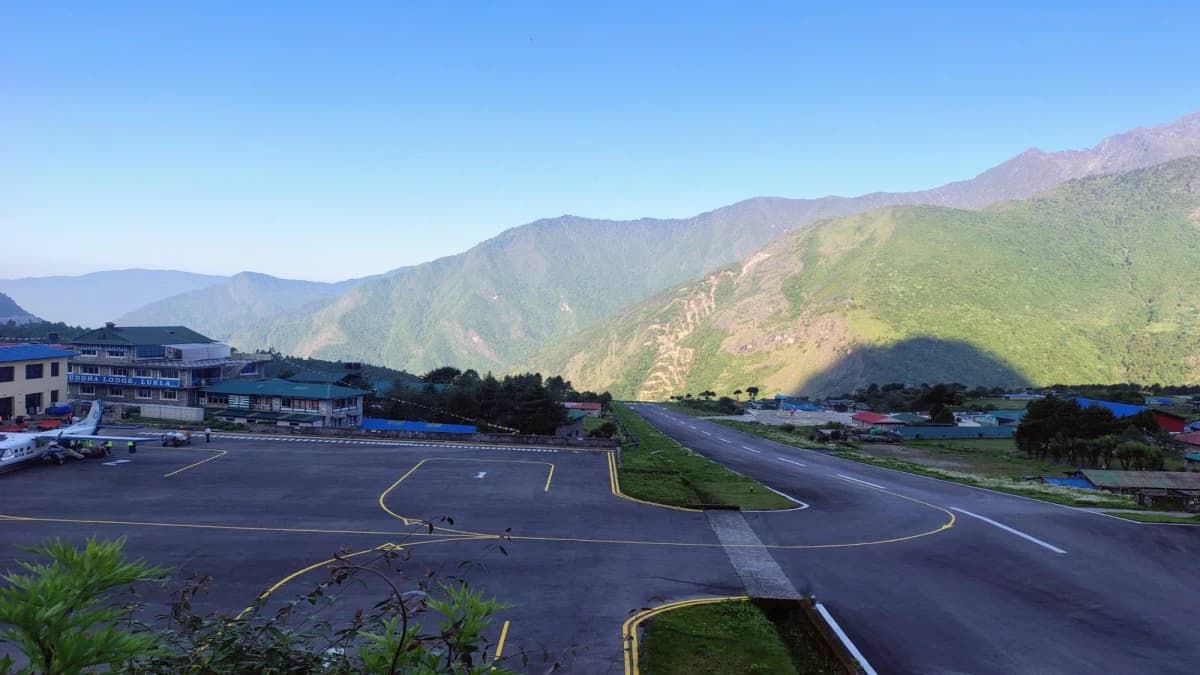
Short answer: Lukla (2,860 m) is where almost every Everest Base Camp trek begins, because Tenzing-Hillary Airport is the quickest way into the Khumbu: a short flight from Kathmandu, or from Ramechhap (Manthali) in the busy seasons, instead of days on the road. Flights run in the morning and are often delayed by weather, so keep a spare day at the end of your trip. Most trekkers walk on to Phakding (2,610 m) the same day, as on our 12-day Everest Base Camp trek.
Written by Shreejan Simkhada, CEO of The Everest Holiday and third-generation Himalayan guide. TAAN Member #1586.
Why Is Lukla the Starting Point for the EBC Trek?
Lukla is a town in the high Himalayas, and its airport is more than just a place. It is the centre of the Mount Everest tourism ecosystem. It is an example of brilliant engineering and a sign of brave human nature. Lukla is a place of real natural beauty and rich cultural history. It is the centre of modern Himalayan adventure, and the moment an airplane lands on its world-famous runway, the balance between humans and gravity begins.
Lukla’s airport, officially Tenzing-Hillary Airport, is operated under Nepal’s Civil Aviation Authority of Nepal, which regulates every flight on the Kathmandu–Lukla sector.
A History Made by Early People Lukla has changed from a remote town in the Himalayas to a name that travellers around the world recognise. This is because of the history of Everest and the dreams of two famous people, Sir Edmund Hillary and Tenzing Norgay Sherpa. After climbing Mount Everest for the first time in 1953, Hillary turned his efforts to making the lives of the Sherpa people better because he was moved by their kindness and strength. His Himalayan Trust, which he set up in the 1960s, was focused on building schools, hospitals, and roads.
These projects had really big logistics problems. It took weeks of hard, costly portering from the nearest roadhead at Jiri, a trek famous as the "long walk in," to get building supplies into the Khumbu area. Hillary envisioned an airport, recognising the need for a more efficient supply line. The chosen spot was a sloping hill above the Dudh Koshi river gorge, close to the village of Lukla.
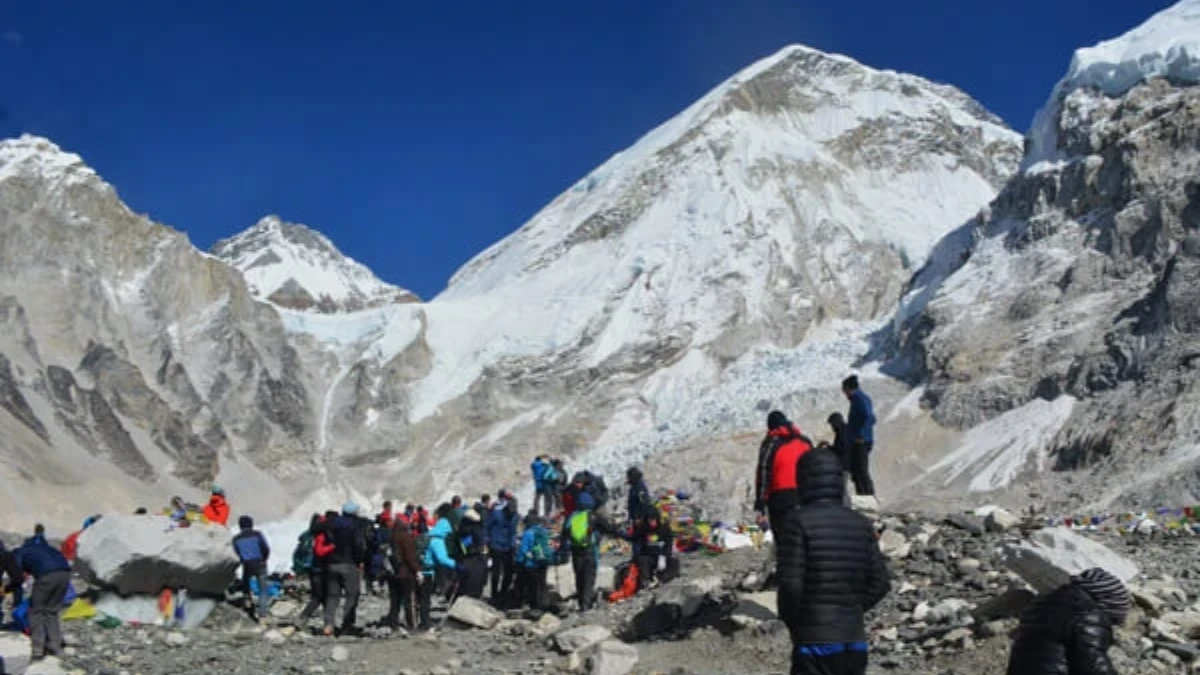
Constructed in 1964 with limited resources and manual labour from the local community, the first strip was a simple grass runway. The first landing was an amazing display of skill and bravery by the early bush pilots who flew small Pilatus Porter aircraft onto the new airstrip. As the global fascination with Everest grew, Lukla transformed from a supply depot into the primary gateway for expeditions and, eventually, the thousands of trekkers seeking to see the world's roof.
How Can I Travel to Lukla?
Flights to Lukla from Ramechhap or Kathmandu
Taking a quick flight from Kathmandu or Ramechhap is the fastest and most common way to reach Lukla. Because of the high altitude and famously short runway, these routes rely on small, specialised airplanes.
In the busy windows, roughly 15 March to 15 May and 25 September to 30 November (set by the Civil Aviation Authority of Nepal), you will likely fly out of Manthali Airport in Ramechhap instead of Kathmandu to avoid heavy airport traffic. Manthali is a four to five-hour drive from the capital, so we collect you from your Kathmandu hotel between midnight and 2 am and drive you there. You do not need to travel the day before.
During the slower winter and summer monsoon months, logistics are a bit easier because flights usually leave directly from Kathmandu. Regardless of when you go, weather is a massive factor for delays. Airlines try to beat the midday clouds by scheduling most flights for the early morning. If the weather holds up, the 20 to 40-minute trip treats you to some unbelievable views of the Himalayas.
What is it like to arrive at Lukla Airport?
Is it safe to fly into Lukla Airport?
Touching down at Lukla Airport is an intense mix of adrenaline and nerves. Thanks to its dramatic mountain setting and wildly unpredictable weather, it has earned a reputation as the most dangerous airport on Earth. However, the reality is that safety standards have drastically improved in recent years.
Today, Nepal’s Civil Aviation Authority enforces strict regulations for anyone sitting in the cockpit. To captain a flight to Lukla, pilots must have specialised training for short takeoff and landing aircraft, alongside a minimum of 100 successful flights into this specific airport. These high standards have significantly cut down on the risk of human error.
The biggest hurdle nowadays is simply the weather. Last-minute cancellations are incredibly common because of sudden fog, high winds, or low clouds. To beat the bad weather, airlines schedule almost all of their flights for the early morning when the skies are clearest. While it's true that the airport has a history of accidents, modern forecasting and stricter flight protocols have made them extremely rare. Ultimately, flying remains the quickest route to the Everest region, and thousands of trekkers land there safely every single year.
The "Classic" Route: Jiri to Lukla
Before the Lukla airport was built in 1964, this was the only way in. It’s often called the "Hillary Step" of trekking because it follows the footsteps of the earliest pioneers.
-
The Journey: You’ll take an 8–10 hour bus or jeep ride from Kathmandu to Jiri (or Shivalaya). From there, it’s a rigorous 6 to 7-day hike to reach Lukla.
-
The Experience: This is "Real Nepal." You’ll pass through Brahmin, Rai, and Sherpa villages that haven't been touched by the massive airport crowds. It’s physically demanding: expect lots of "Nepali flats" (steep climbs followed by steep descents), but you’ll arrive in Lukla with "mountain legs" and zero altitude sickness.
The Modern Shortcut: Salleri to Lukla
In 2026, Salleri has become the go-to alternative for trekkers on a budget or those dodging bad weather.
-
The Drive: You can catch a shared jeep from Kathmandu (Naya Bus Park or Chabil) for about 3,500 to 4,000 NPR ($25–$30 USD). It’s a bumpy 9–11 hour ride.
-
The Trek: Once you reach Salleri, it’s a 3 to 4-day walk to Lukla.
-
The 2026 Update: The "Highway to Everest" has officially extended! You can now take a jeep all the way to Surkhe (just below Lukla). While the road is still a rugged dirt track, it means you can technically reach the Everest trailhead from Kathmandu in about 15–18 hours of driving, completely bypassing the need for a flight.
Which should you choose?
| Feature Flight | Flight(KTM/Ramechhap) | Salleri / Surkhe Road | Jiri "Classic" Trek |
| Time | 40 Minutes (KTM), 20 Minutes (Ramechhap) | 1–2 Days (Drive + Short Walk) | 7–9 Days |
| Cost | $254 USD (KTM), $209 (Ramechhap) | $30–$50 USD | Low (Bus is cheap) |
| Reliability | Low (Weather dependent) | High (Roads usually open) | High |
| Difficulty | Easy | Tiring (Long drive) | Hard (Very steep) |
What Makes Lukla Airport So Dangerous?
Lukla Airport, which was officially renamed Tenzing-Hillary Airport in 2008, is an example of difficult engineering at its best and is always rated as one of the most extreme airports in the world. Its shape is based only on the harsh landscape. The single runway is only 527 metres (1,729 feet) long and 20 metres wide, which is much shorter than the average runway used by commercial flights. It is laid on a very steep 11.7% gradient to make up for its short length and help with stopping and acceleration. For natural slowing down, planes land uphill on Runway 06. For speed gain, they take off downhill on Runway 24. This slope makes a runway look like it goes straight down into the deep valley below.
What to expect when you get to Lukla
Where to Stay in Lukla
Stepping off the plane in Lukla, you will immediately find plenty of spots to drop your bags and catch your breath. Most trekkers crash at traditional tea houses. These are pretty basic but cozy, usually offering a simple room with two twin beds, heavy blankets to beat the mountain chill, and a shared bathroom down the hall.
If you want to ease into your trek (or treat yourself after finishing it), there are a handful of upgraded guesthouses in town. These spots cater to people looking for a softer landing, offering extra creature comforts like en-suite bathrooms, piping hot showers, and decent Wi-Fi connections.
What to Expect for Pricing
-
Nightly Rates: Rooms generally run anywhere from 500 to 2,500 Nepalese Rupees (NPR) a night, depending on how much luxury you are after.
-
The "Free Room" Trick: A lot of tea house owners will actually waive your room fee entirely as long as you agree to buy your dinner and breakfast at their in-house restaurant.
Why People Stay in Town
Even though the goal is to hit the trail, spending a night in Lukla is super common. It gives you a chance to rest after a chaotic travel day before starting the long push toward Everest Base Camp. On the way back down, it is the perfect spot to celebrate your finish, grab a warm meal, or wait out the inevitable flight delays.
While it is definitely a remote mountain village, Lukla is surprisingly built up for tourists. It acts as a busy, energetic hub where almost every major Himalayan adventure kicks off and wraps up.
Can You Buy Gear and Get WiFi in Lukla?
If you realise you forgot something after stepping off the plane, don't panic. Lukla is packed with small shops selling all the last-minute trekking essentials. Whether you need an extra pair of warm socks, heavy gloves, or a rain poncho, you will easily find it. Just keep in mind that much of the merchandise consists of knockoff brands, but it is more than good enough to get you through your time in the mountains.
Renting Gear
If you are trying to keep your flight baggage light, you can also rent bulky items directly in the village. You'll find plenty of places offering heavy down jackets, sleeping bags, and trekking poles. While the overall quality can be a bit hit-or-miss, the prices are very affordable, making it a highly practical option.
ATMs and Cash
While Lukla does have a few currency exchange counters and an ATM, you definitely shouldn't rely on them. Between frequent power outages and the machines simply running out of bills, withdrawing money up there is a massive gamble. Do yourself a huge favour and pull out all the Nepalese Rupees you will need back in Kathmandu before you fly.
Wi-Fi and Cell Service
If you want to let people know you landed safely, local mobile networks like Ncell and NTC actually get pretty decent reception, especially right around the airstrip and the main lodges. Many guesthouses also offer Wi-Fi for an extra fee, though you should expect the speeds to be sluggish and the connection to be spotty at best.
Enjoying the Village
For a lot of trekkers, simply wandering the narrow stone streets, sipping hot tea with the locals, and doing some final gear prep are all part of the fun. Buzzing at the start of your trip or happily worn out on the way home, you will find Lukla is a useful rest stop and a good first look at daily life in the Himalayas.
What to Do in Lukla: Local Gems and Landmarks
Lukla is often seen as just a quick pitstop, but it actually has a few hidden treasures that are well worth your time. If you find yourself with an afternoon to spare, exploring the local cultural sites is one of the most rewarding ways to spend your day.
Visit Kemgon Gompa (Lukla Monastery)
Perched just above the main village, Kemgon Gompa is a sanctuary of peace. Draped in lively prayer flags with a backdrop of jagged peaks, it is an ideal spot to sit and reflect before you begin the long trek upward. Whether you want to meditate or just soak in the spiritual atmosphere, the monastery offers a beautiful glimpse into Sherpa Buddhist traditions.
The Pasang Lhamu Memorial Gate
You can’t miss the Pasang Lhamu Memorial Gate located right near the start of the trail. This iconic stone archway was built to honour Pasang Lhamu Sherpa, the first Nepali woman to reach the summit of Everest. Walking through the gate is a symbolic "rite of passage" for almost every trekker, as it marks the official beginning of the path to Everest Base Camp. It is easily the best photo op in town and a great way to start your journey.
Savoring the Local Flavours: A Taste of Sherpa Life
One of the best ways to see the culture of Lukla is through its food. Sherpa cuisine is built for the mountains: it’s hearty, filling, and designed to keep you warm before a climb and help you recover after one.
Must-Try Dishes
-
Momos: You can't visit Nepal without trying these famous dumplings. In Lukla, they’re often stuffed with vegetables, chicken, or even yak meat. Be sure to dip them in the spicy tomato chutney for that extra kick of heat.
-
Yak Butter Tea (Su-Chya): This is a true mountain staple. It’s a salty, buttery brew that provides quick energy and helps your body handle the cold and altitude. It has a unique flavour that isn't for everyone, but trying it at least once is a essential part of the Himalayan experience.
-
Thukpa & Sherpa Stew (Shyakpa): For real comfort food, grab a bowl of Thukpa (noodle soup) or Shyakpa. These are thick, warming stews loaded with hand-pulled noodles, fresh vegetables, and meat.
Where to Eat
Lukla has a surprisingly lively food scene. If you’re looking for a cozy atmosphere and great mountain views, Everest Coffee Café is a local favourite for a solid brew and fresh pastries. For a more traditional feel, Namaste Lodge is a fantastic spot to enjoy a slow meal and chat with other trekkers. There are also a few tiny bakeries in the hamlet that provide unexpectedly fresh apple pie, which is a great way to end a long day on the route.
Trying the local food isn't just about a meal; it’s one of the most memorable things you can do in Lukla to get a real taste of the Khumbu.
What Is the Weather Like in Lukla?
Sitting at 2,860 metres (9,383 feet), the thin air reduces engine performance and lift, requiring a higher true airspeed for landing. Lukla's weather is also notoriously changeable. Dense fog, cloud cover, and sudden wind shears can quickly make the airport inoperable, causing frequent delays and cancellations.
Operations are typically confined to the clear morning hours, creating a daily logistical ballet of arrivals and departures. These formidable characteristics are not just technical details; they are the source of Lukla’s mystique. The collective deep breath taken by passengers as the plane makes its final turn, the roar of engines at maximum thrust on take off, and the palpable relief or exhilaration upon landing are integral rites of passage for every Everest-bound traveller.
These elements contribute significantly to the story of Lukla. Despite its reputation as merely an airport, Lukla town has transformed into a busy hub. It has the Sir Edmund Hillary Hospital, schools, hotels, restaurants, and gear shops. The Sherpa people have been able to get schooling, healthcare, and job opportunities from this development, which was only possible because tourists could get there. This means that they can directly gain from the world's interest in their home country.
What Should You Know Before Flying to Lukla?
Delays and Cancellations
It’s no secret that Lukla flights are at the mercy of the mountains. Fog, high winds, or sudden cloud cover can ground planes for hours, or even days. The single best tip I can give you is to build at least two buffer days into your itinerary. Don't book your international flight home for the day after you're supposed to fly back from Lukla; you'll likely spend that time stressed out at the airport instead of enjoying your trek.
The Helicopter Alternative
If the planes aren't flying but you're in a rush, helicopters are your best friend. They can often fly in conditions that ground fixed-wing planes.
-
Cost: As a guide, a shared seat costs about USD 640 per person from Kathmandu to Lukla and about USD 710 per person from Lukla to Kathmandu. These prices include government tax, bank charges and the fuel supplement the helicopter operators have added since the Iran oil crisis pushed fuel prices up. Other sectors and full charters are priced on request.
-
Reliability: While much more expensive, they offer a massive peace of mind if a weather window is tight.
Insurance is Non-Negotiable
Make sure your travel insurance explicitly covers "adventure activities" and high-altitude trekking. Specifically, look for policies that cover trip interruptions and helicopter evacuation. Many standard plans stop coverage at 3,000 metres, so double-check the fine print to ensure you're covered for the entire Everest region.
Staying Healthy: Acclimatisation and Altitude
Lukla sits at 2,860 metres (9,383 feet). This is the exact point where the air starts getting thin enough to affect your body. Even if you feel great when you land, the "slow and steady" rule starts the moment you step off the plane.
-
Listen to Your Body: Most people head straight to Phakding, but if you feel a headache or dizziness, don't be afraid to stay a night in Lukla. Acute Mountain Sickness (AMS) can be sneaky, and catching symptoms early is the best way to prevent a serious problem later.
-
The "Golden Trio" of Health: Stay hydrated (3–4 litres of water a day), eat plenty of carbs, and strictly avoid alcohol until you’re back down from the mountains. Alcohol dehydrates you and can mask the symptoms of altitude sickness.
-
Medication: Many trekkers use Diamox (Acetazolamide) to help with acclimatisation. In 2026, you can still easily find it in Kathmandu or Lukla pharmacies for about 150–200 NPR per strip. Just make sure to consult a doctor before you start taking it to understand the dosage and side effects.
Is Lukla Worth the Nerve-Wracking Flight?
You could think of Lukla as merely a busy airport or a quick stop, but it's really the start of your expedition in the Himalayas. It's where the thin mountain air first strikes your lungs and you can finally see how big the Everest region is.
From the odd flight schedules to your first bowl of Sherpa stew and your first sight of the peaks, it all goes better if you arrive prepared. You may trade tension for enthusiasm if you understand the logistics, like the move at Ramechhap and the need of those extra buffer days.
A comfortable arrival in Lukla sets the right tone for the journey ahead, whether you took the swift airplane in or the long, classic hike from Jiri. Your experience on Everest has officially begun. Get off the plane (or the trail), take a deep breath, and enjoy the ride.
Related Treks & Guides
- Ama Dablam Base Camp Trek
- Everest Base Camp Trek By Road Trip
- Everest Heli Photography Tour
- Khare
- Khumbu Glacier, Everest Base Camp Trek Guide
Lukla is where every Everest trek begins and ends. The landing is famous, the runway is short, and the mountains are right there outside the window. I have flown into Lukla more times than I can count, and the butterflies in my stomach are exactly the same every time. That is part of the experience.
We handle all Lukla flights on our Everest Base Camp Trek. If weather delays happen, and they do, we have backup plans including helicopter transfers.
WhatsApp:+977 9810351300
Email:[email protected]
The mental side of trekking matters as much as the legs once you land at Lukla: our mental toughness for Nepal trekking guide covers fear, doubt, fatigue, and the head-game tactics local guides actually use.
Lukla is your gateway to EBC. Our Everest Base Camp Trek (12 Days) is private (your group only, no strangers), 2027 dates open, From USD $1399. WhatsApp us for tailored 2027 dates and current departures.
 Chat with Shreejan