

Khare
There is a spot above the tree line, where the air gets thinner and the mountains get sharper, that is exclusively for people who want to be at the highest points on Earth. Khare sits on a rocky slope at 5,045 metres (16,552 feet) in Nepal's Solukhumbu District. It is a group of stone huts and lodges with tin roofs that serve as the last stop before the serious climbing starts. This place isn't a normal village. No one is born here. No one gets older here. In the traditional sense of the word, no one calls this location home.
Khare is a place where people are going somewhere better, for a reason.
How high is Khare on the Mera Peak trek?
The coordinates put Khare at about 27.84° North and 86.88° East, in the high Himalayas east of Mount Everest. It lies on the way to Mera Peak, which is the highest trekking peak in Nepal at 6,476 metres. From Khare, the mountain fills the northern sky. It is a huge mass of ice and rock that climbers have walked for days to get to.
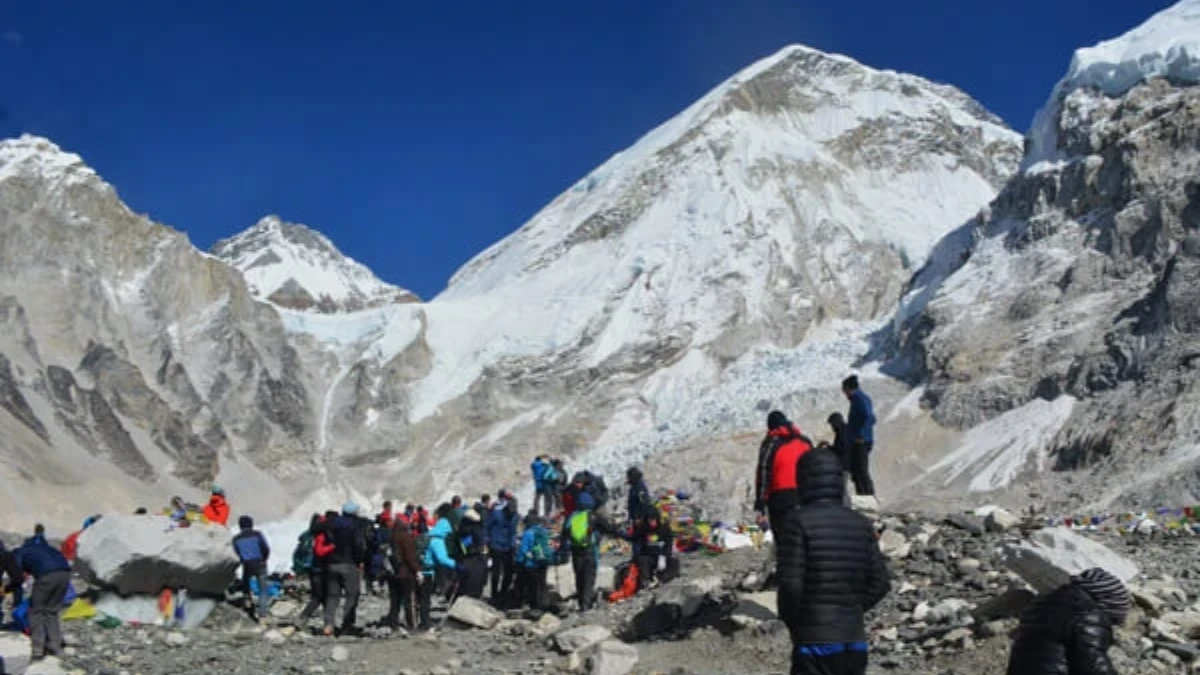
The area here is wild and huge. Glaciers cascade down the mountainside, their surfaces fractured into blue-hued cracks under certain lighting conditions. There are ridges of broken granite that lead to peaks that touch the sky. There is only moss and lichen growing on rocks, and they are still alive against all obstacles. The water comes from snow that has melted. People carry yak dung and bottled gas up from lower valleys on their backs to use as fuel.
The air at 5,045 metres holds only about half the oxygen of air at sea level. Breathing is hard labour. It's challenging to take each step. The body works at its limit, and the mind does too.
Is Khare a permanent village or a seasonal settlement?
There are no permanent residents in Khare. It is a seasonal settlement made up of crude buildings that come to life during the spring and fall climbing seasons. In winter, snow engulfs the trails and lodges. Monsoon clouds cover the summits in the summer, and rain makes the roads dangerous. But Khare is full of people in April and May and again in October and November.
The lodges are simple but necessary. Walls made of stone, roofs made of tin, and benches made of wood. There is a kitchen where a cook consistently prepares pots of tea, plates of dal bhat, and bowls of noodles. There is an eating area where climbers gather in down jackets to discuss routes, check the weather, and share the anxious energy that precedes a big climb.
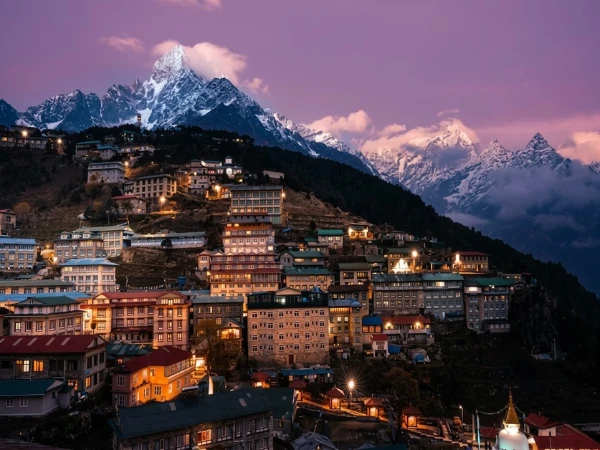
The grid doesn't give forth any power. Solar panels power phones and give off a little light at night. No water runs. The water that comes out of the tap is melted glacier ice, frigid enough to damage your teeth but still safe to drink. The only warmth comes from what you bring or the lodge's one stove.
But for climbers who have been on the trail for days, Khare feels like a luxury. A top. A bed. Food that is hot. Company. When you're cold, exhausted, and facing a mountain, it's the little things that make a big difference.
Who lives and works at Khare in Nepal?
Sherpas, who are part of the ethnic minority that has lived in the high Himalayas for hundreds of years, run Khare's lodges. They leave their families behind in communities lower down, such as Namche Bazaar, Khumjung, and Phortse, to go climbing. They spend weeks or months at high altitudes, breathing thin air, lugging heavy loads, and witnessing foreigners struggle with situations that their bodies are better at handling.
Khare is not an adventure for the Sherpa; it is a place to work. They clean, cook, and transport things. They help climbers up the mountain by mending ropes, destroying the path, and making choices that could mean life or death. Their job is what they do. It pays more than farming or commerce since it delivers money to their family and villages. It's what their people have done for generations.
People from all over the world are climbing. Asia, Europe, North America, and Australia. They bring pricey gear and huge hopes. They came because Mera Peak is well-known. After all, it gives you a real Himalayan climb without the technical challenge of Everest. Standing on a 6,000-metre summit alters something inside a person.
These two worlds come together at Khare. The Sherpa has ascended this mountain several times. The foreigner has never ascended this high up before. They drink tea together, tell stories, and share the space. For a few days, they are travelling together as friends.
How do climbers acclimatise at Khare before Mera Peak?
Climbers usually stay at Khare for two or three nights. The objective is to allow the body to adjust to the altitude before ascending further. The first night is the most difficult. Throbbing heads. Lungs are having a hard time. The body struggles to breathe in between the fragments of sleep.
There are practise climbs on the surrounding ridges during the day. Climbers put on crampons, tie themselves together with rope, and go across snow and ice. They keep checking their gear over and over. They are worried about the cough that could be the first sign of altitude sickness and the headache that could get worse.
The lodge turns into a tiny town. People eat together. People share weather forecasts. People talk about their route plans. People who didn't know each other a week ago become buddies because they all feel chilly, exhausted, terrified, and excited at the same time.
The temperature goes much below freezing at night. The wind gets into every crack in the walls. Even with sleeping bags designed for far colder weather than this, climbers still shiver. They think about the mountain. They don't want to think too much.
The Mountain Overhead
Mera Peak isn't very hard for mountaineers to climb. There is no steep ice, rock climbing, or exposed ridges that need years of practice. But at 6,476 metres, the height makes everything serious. Above about 6,000 metres the body can no longer fully acclimatise, so every hour spent that high takes more out of you than it gives back, and every step costs more than the one before.
The path from Khare goes first to high camp, which sits at about 5,780 metres. There will be another day of climbing and another night of freezing. In the dark before dawn, the push to the top begins. Headlamps cut through the dark. Boots crunch on snow that has frozen. Breath arrives in clouds that freeze right away on balaclavas and goggles.
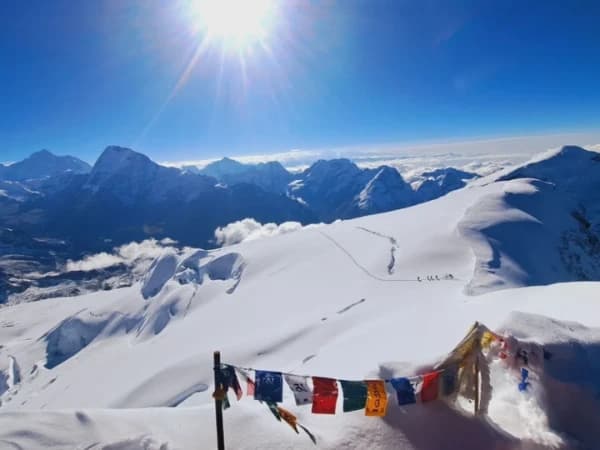
When you get to the top, you can see things that few people have seen before. From this view, you can see three of the six highest peaks in the world: Everest, Lhotse, and Makalu. Kanchanjunga shines in the very east. The Himalayas looked like a frozen ocean, with waves of ice and rock stretching to every horizon.
For a few minutes, climbers stand there, breathing, crying, laughing, and snapping pictures that will never show how they really feel. After that, they had to go down the hill. The mountain does not forgive. It doesn't care about their success.
What Is the Descent from Khare to Base Camp Like?
Climbers go via Khare again on their way down from Mera Peak. Now they are different. Less thick. More tired. Their lives have undergone transformations that they are still struggling to articulate. They stop in the lodges for tea, to rest, and just to enjoy being lower, warmer, and safer.
The Sherpa guides are getting ready for the following group. New climbers are coming in, fresh from the trail, and they are just as scared as the climbers who came back a week ago. The cycle goes on. Khare keeps going. It can't stop. People keep coming to the mountain, and Khare keeps welcoming them.
The season will be over in a few weeks. The last people to ascend will go. The lodges will be closed. Khare will go back to being quiet and covered in snow, and he will wait for spring or fall to bring life back.
Is Khare worth visiting on a Mera Peak expedition?
Most individuals wouldn't call what Khare delivers comfort. It doesn't give any comfort, luxury, or escape from the harsh realities of life. What it gives is something else: a base camp for the soul, a place to be ready for something difficult, and a group of individuals who are all working toward the same goal.
Khare is a place of work for the Sherpa who lives here. It offers climbers a challenge and a chance to change. For both, it gives them the mountain, which is a huge presence that fills every thought, moment, and breath.
This is Khare. Khare serves not as a residence, but rather as a gateway. It is not a destination but rather a beginning. It waits at 5,045 metres in the Solukhumbu for those who want to go higher. It offers what little shelter it can before they continue much higher.
What is Khare like during the winter off-season?
Khare empties when the climbing season is over. The lodges are dark and cold. Snow piles up against their walls. The wind blows the rocks. The only things that move are the rare Himalayan bird or the sound of an avalanche far away on Mera's slopes.
The mountain has owned the settlement for months now. No voices. No tea. There are no headlamps in the dark. There are only rocks, ice, and the sky, patiently waiting for spring, the upcoming season, and the arrival of the next group of climbers, filled with hopes, anxieties, and aspirations of reaching the summit of the world.
And Khare will wake up again when they do. The doors will open. The stoves will start to burn. The tea will get hot. And a new cycle of passing will start on this rocky slope at the edge of the possible.
At a Glance: Khare (Mera Peak)
|
Aspect |
Details |
|
Location |
Solukhumbu District, Nepal |
|
Elevation |
5,045 metres (16,552 feet) |
|
Coordinates |
Approximately 27.84° N, 86.88° E |
|
Primary Role |
Base camp for Mera Peak climbers |
|
Season |
Spring (April-May), Autumn (October-November) |
|
Facilities |
Basic lodges, tea houses |
|
Water Source |
Melted glacier |
|
Access |
Multi-day trek from Lukla |
|
Nearest Peak |
Mera Peak (6,476m) |
|
Population |
Seasonal (climbers, guides, lodge staff) |
|
Permanent Residents |
None |
Related Treks & Guides
- Ama Dablam Base Camp Trek
- Everest Base Camp Trek By Road Trip
- Everest Heli Photography Tour
- Khumbu Glacier, Everest Base Camp Trek Guide
- Sagarmatha National Park
Khare is the last proper settlement before Mera Peak. The lodge here is basic: stone walls, thin mattresses, and a dining room that gets crowded with climbers checking their oxygen saturation on pulse oximeters. But the view of Mera from the lodge steps, with the glacier route clearly visible above, makes your heart beat faster. Tomorrow you climb.
Khare is the high camp on our Mera Peak Climbing expedition. We provide all technical equipment and experienced climbing guides.
WhatsApp:+977 9810351300
Email:[email protected]
Written by Shreejan Simkhada, CEO of The Everest Holiday and third-generation Himalayan guide. TAAN Member #1586.
Khare is the staging camp for Mera Peak. Our Mera Peak Climbing (14 Days) is private (your group only, no strangers), 2026 dates open, From USD $3499. WhatsApp us for tailored 2026 dates and current departures.

 Chat with Shreejan