Everest Base Camp Helicopter Tour - 1 Day detailed guide

1 review
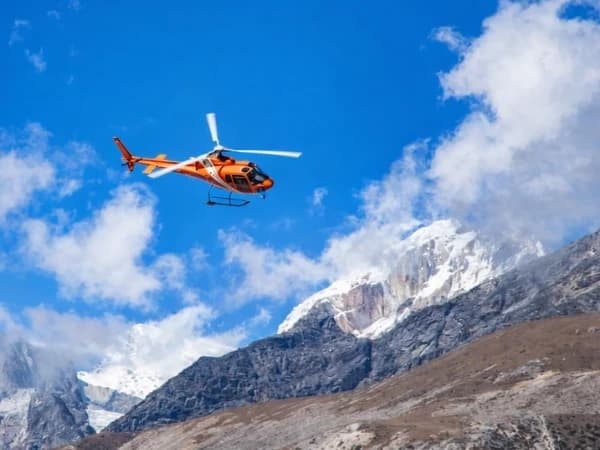
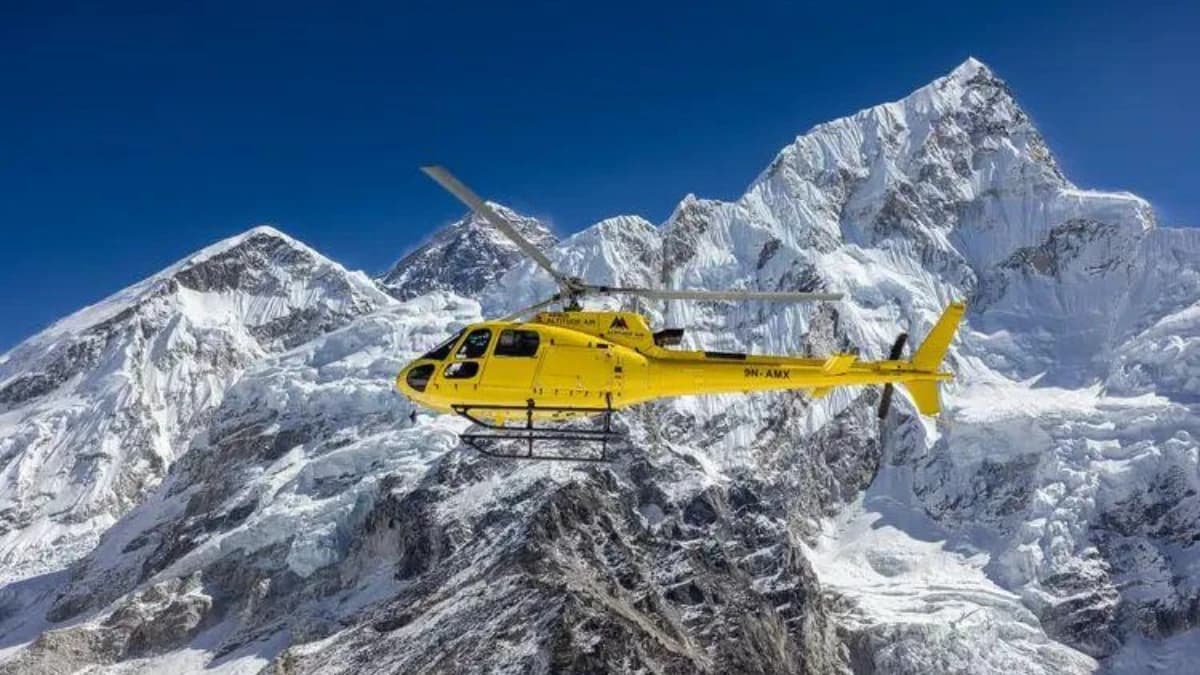
Mountain rescue and transport helicopter at a remote Himalayan landing site.
Quick Overview
Duration1 Day
Trip GradeEasy
CountryNepal
Maximum Altitude5,364m / 17,598ft
Group Size2-20
StartsKathmandu
EndsKathmandu
ActivitiesHeli tour
Best TimeFeb, Mar, April, May, June, Sep, Oct, Nov & Dec

You wake up in Kathmandu. By lunchtime, you are standing at the foot of Everest. By evening, you are back in the city with mountain dust on your jacket and a memory that will outlast anything else you do in Nepal. The Everest Base Camp Helicopter Tour is not a trek , it is a single-day aerial experience that takes you from 1,400 metres to 5,364 metres (17,598ft) and back again in roughly five hours, landing near Everest Base Camp and the Kala Patthar area, with breakfast at the Everest View Hotel on the way down. No walking required. No altitude acclimatisation needed. Just you, a helicopter, and the highest mountains on earth.

This tour exists for people who cannot trek to Everest Base Camp , whether due to physical limitations, injury, age, or simply time. It also exists for those who choose not to trek but still want to see the Khumbu Glacier, the Everest massif, and the Himalayan panorama from close range. Honeymooners looking for a rare experience. Business travellers with one free day between meetings. Parents who want to show their children the roof of the world. Photographers chasing the morning light. Travellers over fifty who want to see Everest without the physical demands of a two-week trek. Anyone who has read about the difficulty of the EBC trek and decided it is not for them, but who still wants to stand on the glacier where history was made. If you can sit in a helicopter, you can do this tour.

What Makes This Tour Special

  • Fly from Kathmandu to Everest Base Camp (5,364m / 17,598ft) and back in a single morning , no trekking, no acclimatisation required
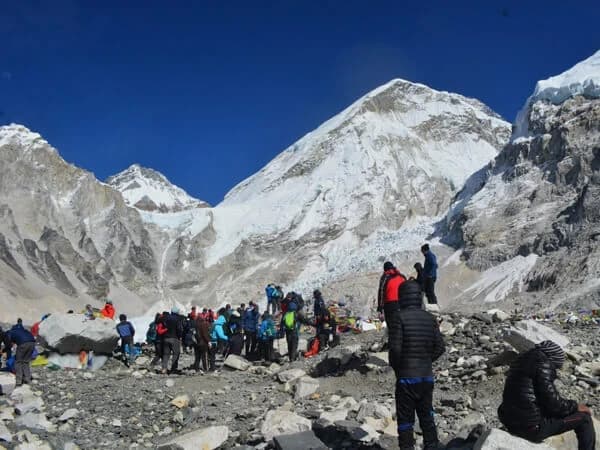
  • Land near Everest Base Camp on the Khumbu Glacier , see the Khumbu Icefall, the Western Cwm, and the full Everest massif from the ground
  • Have breakfast at the Everest View Hotel (3,880m / 12,730ft) , the highest-placed hotel in the world, with the full Himalayan panorama spread before you
  • Fly over Lukla, Namche Bazaar, Tengboche, and the entire Khumbu valley , seeing in minutes what trekkers walk for days
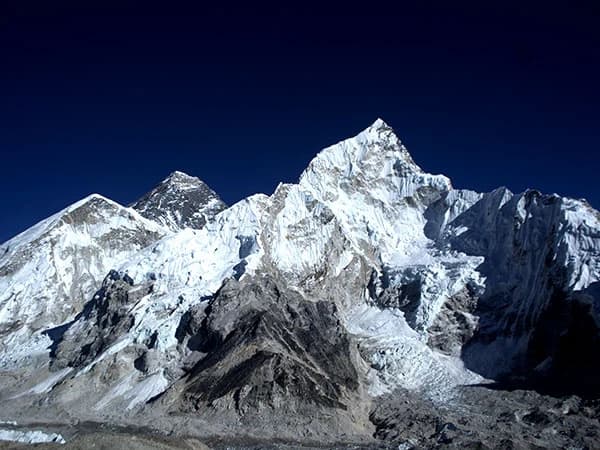
  • See four of the world’s fourteen highest peaks in a single panorama , Everest (8,849m), Lhotse (8,516m), Makalu (8,485m), and Cho Oyu (8,188m)
  • Fly through Sagarmatha National Park, a UNESCO World Heritage Site, seeing from the air what most visitors only see on foot
  • No fitness requirements , suitable for anyone who can sit comfortably in a helicopter, from families with children to travellers in their 70s
  • Back in Kathmandu by lunchtime , perfect for travellers with one free day, honeymooners, or those physically unable to trek
  • Professional pilot experienced in high-altitude Himalayan flying , your safety is managed by experts
  • Combine with Kathmandu sightseeing, a Chitwan safari, or a Pokhara visit for the complete Nepal experience

1-Day Everest Base Camp Helicopter Tour Overview

The helicopter lifts off from Kathmandu’s domestic terminal in the early morning, when the mountain air is clearest and the winds calmest. Within minutes, the city falls away and the foothills rise beneath you , green terraces and scattered villages giving way to deeper valleys and darker forests. Then the white wall of the Himalaya appears on the horizon, and the scale of what you are flying towards becomes suddenly, viscerally real. The best months for flying are March to May and October to November, when skies are clearest.

You fly over Lukla’s famously short runway, follow the Dudh Koshi valley that trekkers walk for days, and pass above Namche Bazaar, the Sherpa capital perched in its mountainside amphitheatre. Tengboche Monastery appears below, its red roof tiny against the vast forest. The terrain grows starker , brown and grey replacing green , as you pass Dingboche, Lobuche, and Gorak Shep. Below you, Phakding and Pangboche pass like miniature villages on a relief map. Then the glacier appears, a frozen river of ice and rubble, and the helicopter descends towards the landing point near Base Camp.

You step out at approximately 5,364 metres. The air is thin , genuinely thin, holding roughly half the oxygen you are accustomed to at sea level. Your guide reminds you to move slowly, breathe deeply, and stay close to the helicopter. The time on the ground is limited (typically fifteen to twenty minutes at this altitude), but it is enough to stand where expeditions begin their push for the summit, to see the Khumbu Icefall tumbling down from the Western Cwm, and to take photographs that no amount of screen-scrolling can replicate. Everest, Lhotse, Nuptse , they are right there, filling the sky.

On the return flight, the helicopter stops at the Everest View Hotel (3,880m / 12,730ft) near Namche , the highest-placed hotel in the world , where you have breakfast on the terrace with the full Himalayan panorama spread before you. The coffee is hot, the morning sun warms the terrace, and the mountain you stood beneath an hour ago now fills the northern horizon. Then it is back in the helicopter and down to Kathmandu by midday. You still have the afternoon free to explore Thamel, visit Bhaktapur, or simply sit on a rooftop terrace and let the morning sink in.

Before You Arrive

Please arrive in Kathmandu the day before your tour. This gives you time to rest after your international flight, meet your guide for a briefing, and be ready for the early morning departure.

Your Online Briefing

After you book, we schedule a video call where we walk you through the tour: what to wear, what to expect at altitude, how the helicopter works, photography tips, and anything else on your mind. No question is too small.

This is also when we learn about you. Your accommodation in Kathmandu is included in your tour package , during the briefing, share your preferences and we will arrange a hotel that fits.

Weather and Flight Safety

The helicopter flight is weather-dependent. The pilot makes the final decision on whether conditions are safe for flying , safety is never negotiable. If conditions are not suitable on your scheduled day, we reschedule to the next available window. We recommend keeping a buffer day in Kathmandu in case of weather delays.

Your Tour, Your Way

Every tour we run is arranged privately , your group only. Whether you choose Budget, Standard, or Luxury, you will not be paired with strangers unless you choose a shared helicopter option to reduce cost.

Your accommodation in Kathmandu is included in this package , this is a tour, not a trek, so we handle your hotel as part of the experience.

Physical Requirements: Minimal

No trekking fitness is required. You need to be able to walk a short distance on uneven ground at the Base Camp landing site (approximately 5-10 minutes). The altitude at 5,364m can cause mild light-headedness, but you spend only 15-20 minutes at this elevation before descending. We recommend having travel insurance in place and obtaining your Nepal visa before arrival. Anyone with severe heart or respiratory conditions should consult their doctor before booking. Bring Nepali rupees for any personal purchases at the Everest View Hotel or in Kathmandu.

Compare Our Three Packages

  Budget Standard Luxury
Price from USD 4,499 USD 6,499 USD 7,499
Meals Breakfast only (at Everest View Hotel) All meals included (company selects restaurants) All meals included (premium restaurants)
KTM Hotel Standard hotel Premium hotel Luxury 5-star hotel
Helicopter Shared (up to 5 passengers) Shared or small group Private helicopter
Guide Experienced tour guide Experienced tour guide Senior guide + personal assistant
Airport transfer Taxi or local vehicle Private tourist vehicle Luxury private transportation
SIM data SIM only Limited data Unlimited data
Best for Budget-conscious with one free day Comfort seekers, couples, honeymooners Private flight, premium experience

Himalayas for Every Budget , same Everest, same views, three comfort levels.

Why Travellers Trust Us

  • 196 TripAdvisor Reviews , 4.9 out of 5 stars, TripAdvisor Travellers Choice 2024
  • 108+ Google Reviews , 4.9 out of 5 stars
  • TAAN Certified , Member 1586, Government Reg: 147653/072/073
  • Secure 10% Deposit , pay just $250 to reserve, via Himalayan Bank
  • Himalayas for Every Budget , Everest in a single day from USD 2,500
  • Three Generations , family guiding in the Himalayas since the 1960s

Solo Travellers Welcome

You do not need a travel companion. Many of our helicopter tour guests book alone , solo travellers, photographers on assignment, business travellers with a free day, and adventure seekers ticking Everest off their list. The Budget option uses a shared helicopter, which means you may fly with other guests (up to five in the cabin), and this often leads to conversations and shared excitement at altitude. Standard and Luxury options offer smaller groups or private flights.

Physical Requirements: Minimal

This is a helicopter tour, not a trek. No walking fitness is needed. You should be able to walk a short distance on uneven ground at the Base Camp landing site and manage the brief exposure to 5,364m altitude. The total time above 5,000m is approximately 15-20 minutes. Travel insurance is recommended. If you have severe heart or respiratory conditions, please consult your doctor and bring a letter from your GP. Everyone else , from children to travellers over 70 , can enjoy this experience.

One day, a meaningful contribution

Even our shortest experience , a single morning flight to base camp , sends a fixed share of the booking price to the Nagarjun Learning Center, the village school my family runs in Saldum. The school feeds and teaches around seventy children for free. It is a registered Nepalese charity and is listed on the UN Partner Portal. A one-day helicopter tour funds about a month of school for one child. The fact that you only spend a few hours in the air does not change what those hours pay for.

Itinerary

Day 01: Helicopter Tour: Kathmandu to Everest Base Camp and Return
Max Altitude: 5555M
Expand All
Couldn't find what you're after?Reach out to our travel experts.
Customise Trip

Interactive Route Map

Altitude Chart

Everest Base Camp Helicopter Tour - 1 Day detailed guide

Availability

Book your own private small group trip
No. of travellers
Price per person
1 - 4 pax
US$3999
5 - 8 pax
US$3499
9 - 12 pax
US$2999
13 - 20 pax
US$2499

Discounts are determined exclusively by the size of your group. We do not add additional members to your group.

Book Now
hbl logo
Secure Payment by Himalayan Bank.
Cost Includes

Transportation

  •  Free airport transfer during arrival and departure

Helicopter Flight

  •  Ride in a helicopter from Kathmandu to Everest Base Camp/Kala Patthar and back.

Insurance

  •  Passenger helicopter insurance

Permits and Expenses

  • Permits and entrance fees for Sagarmatha National Park
  • Domestic airport tax
  • Company t-shirts and caps
Cost Excludes

Visa

  • Nepal's entry visa fee upon arrival at Tribhuvan International Airport, Kathmandu

Accommodation

  •  In Kathmandu, accommodations are included. If you would like any information, we can provide it to you.

Food

  •  Breakfast at the Everest View Hotel (a luxury hotel at the highest altitude in the world)

Expenses

  •  Personal expenses
  •  Anything not listed as "Included in Everest Base Camp Helicopter Tour with Landing" is considered not included.
Add-Ons and Trip Extension

Take a break from Kathmandu for a day and enjoy the spiritual and natural beauty of Nepal on this rewarding walk. Start with panoramic views of the Himalayas at sunrise from Dhulikhel. Then follow a scenic trail through traditional villages and terraced fields to the holy Namobuddha Stupa, one of Nepal’s most significant Buddhist pilgrimage destinations. Visit the peaceful Thrangu Monastery, hear the extraordinary story of Prince Mahasattva’s sacrifice, and spend the day surrounded by culture, nature, and quiet. This gentle 3–4 hour hike is perfect for anyone who wants a memorable day in the Himalayas.

Major Highlights

  • Himalayan sunrise views from Dhulikhel, with peaks from Langtang to Everest in full view.
  • A sacred pilgrimage to Namobuddha Stupa, one of the most important Buddhist monuments in Nepal.
  • A cultural walking trail through terraced farmland and rural communities.
  • A peaceful visit to Thrangu Tashi Yangtse Monastery.

Dhulikhel Namobuddha Day Hike

The Dhulikhel Namobuddha day hike is a short day adventure that takes you to the historic town of Dhulikhel, located at 1,550m on the Araniko Highway, approximately 30 km east of Kathmandu. The town is known for its traditional Newari temples and houses, and is home to Newar, Brahmin, Tamang, Chhetri, and Dalit communities. We start at 08:00 with a one-hour drive to Dhulikhel, followed by a 4-hour hike to Namobuddha, returning to Kathmandu in the late afternoon around 4–5 pm.

The pilgrimage site of Namobuddha lies about 40 kilometres (25 miles) from Kathmandu, in the Kavre District. It sits on gently elevated land at 1,750m — a quiet, clean place with fresh mountain air and no pollution. According to Buddhist legend, a young prince named Mahasattva offered his body to a starving tigress and her cubs at this very spot, making Namobuddha one of the holiest sites in Buddhist tradition. The surrounding hillside is famous for terraced farms growing rice, mustard, and millet, which you’ll walk through during the hike.

Dhulikhel Namobuddha Day Hike Detailed Itinerary

Day 1: Morning start with a 40 km / 25 mile drive to Dhulikhel, hike to Namobuddha, and drive back to Kathmandu.

Your day starts with an early morning drive from Kathmandu to the historic town of Dhulikhel. The drive takes you through beautiful valleys and typical Nepalese countryside. From Dhulikhel, you’ll walk through terraced fields and peaceful woodlands to the holy pilgrimage site of Namobuddha. The famous Buddhist stupa is rich in history and offers wonderful views of the Himalayan foothills — a place where spirituality and nature come together naturally.

Namobuddha is a revered Buddhist pilgrimage site in the hills of Kavre District. According to tradition, a previous incarnation of the Buddha gave his body to a famished tigress and her cubs at this spot. An ancient stupa with prayer flags and a stone carving commemorates this act of compassion, drawing pilgrims and visitors from around the world. The Thrangu Tashi Yangtse Monastery stands nearby, where monks study and meditate in peaceful surroundings with views of the Himalayas stretching to the horizon.

After visiting the stupa and taking in the tranquil surroundings, you’ll drive back to Kathmandu through Tamang villages and green countryside. This day excursion is an excellent way to experience Nepal’s Newari hill towns and terraced farmland — combining light exercise, spiritual discovery, and wide valley views, all within easy reach of the capital city.

Want to add this day hike to your trek? Contact us on WhatsApp or mention it during your online briefing. You can also view the full Dhulikhel Namobuddha Day Hike package for more details and pricing.

Equipment Lists

Pack only what you need for the trek — you can store excess luggage at The Everest Holiday office in Kathmandu for free. Budget trekkers carry their own gear (no porter provided). Standard trekkers share one porter between two — each person gets a 10 kg allowance in the duffel bag we provide. Luxury trekkers have a personal porter each and carry nothing beyond a light day bag; your guide helps with water, camera, and snacks.

Sleeping bags and down jackets are provided on all tiers as a safety requirement for teahouse nights at altitude. If you prefer to bring your own, let us know during the online briefing.

  • Sun hat (wide-brimmed)
  • Beanie (for warmth)
  • A neck gaiter or buff (for warmth and sun protection)
  • Sunglasses with UV protection
  • Insulated gloves or mittens (for cold weather)
  • Waterproof gloves (for wet conditions)
  • A thick-wool or synthetic pair of moisture-wicking socks
  • waterproof hiking boots with ankle support and excellent traction
  • Sandals (for camp use or river crossings)
  • Moisture-wicking t-shirts (short and long sleeves)
  • Thermal base layer (for colder conditions)
  • Fleece jacket and down jacket (Mandatory)
  • Lightweight puffy jacket (for extra warmth)
  • Waterproof and windproof jacket (Gore-Tex or similar)
  • Raincoat
  • Lightweight, breathable long-sleeve shirt
  • Polypropylene underwear (four)
  • Quick-drying pants/trousers (convertible or full-length)
  • Insulated pants (for colder conditions)
  • Lightweight cotton pants
  • Wear long underwear or thermal leggings when it is cold.
  • Two pairs of thermal/trekking trousers (pants)
  • Biodegradable bar soap
  • Toothbrush and toothpaste
  • Medium-sized drying towel
  • Wet wipes or hand sanitizers
  • The toilet paper is stored in a Ziplock bag.
  • Feminine hygiene products
  • Travel-sized shampoo
  • Nail clippers
  • Small mirror
  • An individual's daypack or backpack with a 20- or 30- litre capacity should be plenty.
  • Adjustable and lightweight poles (preferably collapsible)
  • A two-litre water bladder or bottle (with a protective cover for cold climates)
  • Use water purification methods such as purification tablets, filter bottles, or UV filters.
  • Camera/smartphone (extra memory cards and batteries)
  • A portable charger, spare batteries, or a battery pack
  • Two-pin charging plug
  • Basic first aid supplies include band-aids, antiseptic wipes, pain relievers, and Diamox (which is used to prevent or lessen symptoms related to mountain sickness).
  • Personal medications (inhalers, allergy meds, etc.)
  • Few passport-size photos
  • Passport photocopies
  • Notebook and pen
  • Binoculars
  • Water purification (tablets, filter bottle, UV filter)
  • Energy bar
  • Basic first aid kit (band-aids, antiseptic wipes, pain relievers, etc.)
  • Diamox (for altitude sickness prevention/relief)
  • Personal medications (inhalers, allergy meds, etc.)
  • Lightweight headlamp (with adjustable brightness)
  • Face wipes
  • An extra pair of batteries

Essential Information

Everest Base Camp Helicopter Tour (1 Day) , What You Need to Know

Pickup and Departure

We'll collect you from your hotel in Kathmandu between 5:30 and 7:00 AM, depending on weather and flight scheduling. Please be ready early , helicopter departures depend on the morning weather window, and the clearest skies are always first thing.

Budget: Hotel pickup by taxi or local vehicle.

Standard: Hotel pickup by private tourist vehicle.

Luxury: Hotel pickup by luxury private vehicle.

The Flight

The helicopter departs Kathmandu and flies to Lukla for a brief refuelling stop, then continues to Kala Patthar (5,545 m) where you land for 5–15 minutes. From the landing pad, you'll have a full 360-degree panorama of Everest, Lhotse, Nuptse, and Ama Dablam , one of the most extraordinary views on Earth. From there, the helicopter flies over Everest Base Camp before landing at the Everest View Hotel (3,880 m) for breakfast. Total flight time is roughly 4–5 hours including stops.

Meals

Budget: Meals are not included. You can buy your own breakfast at the Everest View Hotel.

Standard: Breakfast at the Everest View Hotel is included, with snacks and refreshments.

Luxury: Full breakfast at the Everest View Hotel with all drinks , tea, coffee, juice, and mineral water. Everything except alcohol.

What to Wear

You'll step out at 5,545 m for a few minutes, where temperatures can be well below freezing even on a sunny day. We recommend a warm down jacket, hat, gloves, sunglasses, comfortable shoes (trekking boots aren't necessary), and sunscreen. If you don't have a down jacket, we can provide one.

Weather and Cancellations

Helicopter tours are entirely weather-dependent. If conditions aren't safe for flying, we'll reschedule to the next available day or provide a full refund. The Himalayan weather window is typically clearest in the early morning , that's why the early start matters.

Altitude Awareness

You'll briefly reach 5,545 m at Kala Patthar, but the exposure is only 5–15 minutes, so altitude sickness is very unlikely. If you have heart conditions or severe respiratory issues, please consult your doctor before booking.

Photography Tips

Bring a fully charged camera or smartphone with a spare battery , cold drains batteries fast at altitude. The best photographs come from Kala Patthar, where you'll have 5–15 minutes on the ground. A wide-angle lens captures the full panorama of Everest and the surrounding peaks beautifully.

Travel Essentials

Visa

All foreign nationals need a visa to enter Nepal (Indian citizens are exempt). Most nationalities can get a visa on arrival at Kathmandu airport , the current fee is USD 50 for 30 days, payable in cash. Citizens of China and SAARC countries receive free visas.

Travel Insurance

Travel insurance covering helicopter evacuation is recommended but not mandatory for this tour, since you're already travelling by helicopter. We do strongly recommend comprehensive travel insurance for any trip to Nepal.

Currency Exchange

Nepal's currency is the Nepali Rupee (NPR) , roughly 130 NPR to one US dollar. Banks and licensed exchange centres in Kathmandu handle all major currencies, and ATMs are widely available. Exchange your money in Kathmandu before the tour.

Booking Your Tour

Secure Booking

The Everest Holiday is a registered and bonded trekking operator , proud members of the Trekking Agency Association of Nepal (TAAN) and the Nepal Mountaineering Association (NMA). Shreejan's father, Ganesh Prasad Simkhada, has held senior positions at the Nepal Tourism Board and the Nepal Mountaineering Association. To confirm your booking, we require a 10% advance payment.

Payment options include the Himalayan Bank online portal (on our website), major credit cards, bank transfers, Wise, and Western Union. For last-minute bookings, contact Shreejan directly at +977-9810351300 or email info@theeverestholiday.com.

Private Tours

Every tour we run is private , your group only. We never add strangers. Solo travellers are welcome, and all tours are fully customisable to suit your schedule.

Flexible Dates

Your tour date is entirely up to you. Tours run year-round, weather permitting. Contact us to choose your preferred date.

Our Team

We're a family business with three generations in Nepal's tourism industry. Our pilots are experienced professionals who fly this route regularly and know the Himalayan weather patterns intimately. Shreejan Simkhada, our CEO and third-generation guide, personally oversees every booking to make sure your experience is safe and memorable.

Water

Bring a reusable water bottle. Water is available at Kathmandu airport and will be provided during the helicopter tour. Stay hydrated, especially at altitude.

Communication

Mobile signal is available during the flight over the Khumbu region. Your pilot and guide are in radio communication with base throughout the tour. We recommend keeping your phone charged for photos.

FAQs

Do I need to be in excellent shape to fly to the base camp of Everest?
You don't have to have worked out a lot before going on the helicopter trip. The best part of the flight is that you don't have to walk much. No, You don't need to be in excellent shape or have any physical fitness to do this tour. 

Does anyone want to fly a helicopter to Everest?
Yes, many people want to, and most people can go on the flying tour. It's a wonderful option for folks who have problems getting around or don't have a lot of time. People with serious heart or lung problems should contact a doctor before they book a room, though.

What is the weather at Base Camp?
Base Camp's weather is full of ups and downs. The weather is most stable during peak times, and the skies are clear. Spring (March to May) and autumn (September to November) are the busiest times.

How high is the base camp of Everest? 
The southern Everest Base Camp in Nepal is very high up, at 5,364 meters (17,598 feet).

Is it safe to take a Helicopter tour of Everest? 
Yes, it is thought to be a very safe way to get around. Helicopter companies use new, well-kept planes driven by pilots who have a lot of experience in mountainous areas. To keep everyone as safe as possible, flights only go ahead when the weather is favorable. 

Is it possible for a helicopter to go to Everest Base Camp? 
Of course. A helicopter tour is a popular and quick way to see the beauty of Mount Everest and the other Himalayan giants without having to make the long walk.

Do I need to get any special permissions before I start my helicopter trip to EBC? 
Yes, you need the basic permits to get into Sagarmatha National Park and Khumbu Pasang Lhamu Rural Municipality. Your tour provider will usually take care of these things.

Do I need insurance to go on the Everest helicopter tour?
You need only medical insurance; if any uncertain change in health issue occurs, a helicopter will immediately bring you back to the city, like Namche, Lukla, or Kathmandu, for treatment.

How do I get a Nepal visa?
Getting a visa is easy for most countries when they arrive at Tribhuvan International Airport in Kathmandu. You will need a valid passport with a minimum of 6 more months remaining before it expires, a few passport-size pictures of yourself, and US Dollars in cash to pay the visa fee.

How much does a chopper ride from Everest Base Camp cost?
The price changes if you book a solo charter or go with a group. A full private tour from Kathmandu, on the other hand, will cost anywhere between 5000 USD to 10000 USD. Our current price for this tour is 2500 per person, with a minimum of two people to book this tour and a maximum of 4 people to book this tour.

Do you think the helicopter trip to Everest is worth it?
Many people think that the chopper tour is a wonderful way to see the area for people who don't have much time or can't do a multi-day hike. It gives you a unique view of the Himalayas from above that you will never forget.

The complete experience takes roughly 4 to 5 hours from Kathmandu, including the flight to Lukla, the scenic flight to Everest Base Camp and Kala Patthar, a landing at Everest Base Camp or Hotel Everest View for photos, and the return flight. You spend approximately 10 to 15 minutes on the ground at the landing site. The helicopter covers in hours what trekkers walk over 12 days.

Yes. We use experienced pilots who fly this route regularly and know the mountain weather patterns well. The helicopters are modern, well-maintained aircraft designed for high-altitude operations. Flights only depart when weather conditions are suitable. If visibility is poor or winds are too strong, the flight is postponed to the next available window. Safety is never compromised for schedule.

October to December and March to May offer the clearest skies and best mountain views. Early morning flights (departing by 7:00 AM) have the calmest air and sharpest visibility. January and February are cold but can produce exceptional clarity. The monsoon months (June to September) have frequent cloud cover and are generally avoided, though brief clear windows do occur.

The risk is low because you spend only 10 to 15 minutes at high altitude. Most passengers feel fine during the brief landing. However, some people notice mild breathlessness or light-headedness at 5,364 metres. The pilot and crew monitor all passengers. If you have a known heart or lung condition, consult your doctor before booking. Staying hydrated and avoiding alcohol the night before helps.

Each helicopter carries a maximum of 5 passengers plus the pilot. For private charters, your group has the aircraft to yourselves. On shared flights, you may fly with other passengers. We recommend booking a private charter for the best experience, as it allows the pilot more flexibility with landing time and photo stops. Window seats are guaranteed for all passengers.

Yes. The helicopter tour requires no walking or physical effort beyond stepping in and out of the aircraft and standing briefly at the landing site. It is suitable for all ages and fitness levels, including elderly travellers, children, and people with mobility difficulties. This is one of the main reasons the tour is so popular. It gives everyone access to Everest regardless of trekking ability.

Dress warmly in layers. At the landing site, temperatures can drop to minus 10 degrees Celsius even on a sunny day. Bring a warm down jacket, gloves, a hat, and sunglasses with UV protection. Comfortable shoes are fine since there is no hiking involved. Avoid loose scarves or hats that could blow away in the rotor wash.

If weather prevents the flight on your scheduled date, we reschedule to the next available day at no extra cost. If rescheduling is not possible because of your travel plans, we offer a full refund. Weather decisions are made by the pilot on the morning of the flight, usually by 6:30 AM. We contact you immediately with any changes.

Absolutely. Photography is one of the highlights. Bring your camera, extra batteries (cold drains them quickly), and plenty of memory cards. A polarising filter helps reduce glare from snow. The helicopter windows are large and offer excellent views from every seat. During the landing stop, you have time to photograph Everest, Nuptse, Lhotse, and the Khumbu Icefall from close range.

The helicopter lands at or near Kala Patthar (5,545m) or at Hotel Everest View (3,880m) depending on weather and conditions. Some flights include a brief stop at Everest Base Camp itself (5,364m) during the climbing season when the base camp area is accessible. The exact landing point is decided by the pilot based on conditions that morning. Every option provides spectacular close-up views of Everest and the surrounding peaks.

We strongly recommend travel insurance that covers helicopter flights at high altitude. While the tour is not a trek, the altitude and the nature of helicopter travel mean insurance is a sensible precaution. Most standard travel policies cover helicopter tours, but check that your policy does not exclude flights above 4,000 metres. We can recommend insurers who cover this type of experience.