
Nepal honeymoon guide for couples. Romantic destinations, honeymoon treks, luxury options, and why the Himalayas are the ultimate romantic escape.
Govt Regd. No.: 147653/072/073
Travel Agency Licence: 2838/072
Nepal Honeymoon Guide: Why the Himalayas Beat the Beach

Short answer: A Nepal honeymoon works best as a mix of Kathmandu's old towns, a few slow days in Pokhara by the lake, a jungle stay in Chitwan, and perhaps a short trek such as Poon Hill for mountain sunrises. Take it as a private trip, so the pace and the rooms are yours. October to November and March to April have the clearest weather. See our Kathmandu, Pokhara and Chitwan tour.
Nepal for Your Honeymoon: Why It Works, What to Expect, and What Nobody Tells You
When couples tell their friends they're honeymooning in Nepal, the reaction is always the same. A pause. A slightly confused smile. "That's... adventurous."
Nepal isn't the Maldives. It's not Bali. There are no infinity pools overlooking rice terraces (well, maybe one in Pokhara). The Wi-Fi is unreliable, the hot water runs out, and your "romantic dinner" might be dal bhat in a teahouse dining room shared with twelve other trekkers.
And yet.
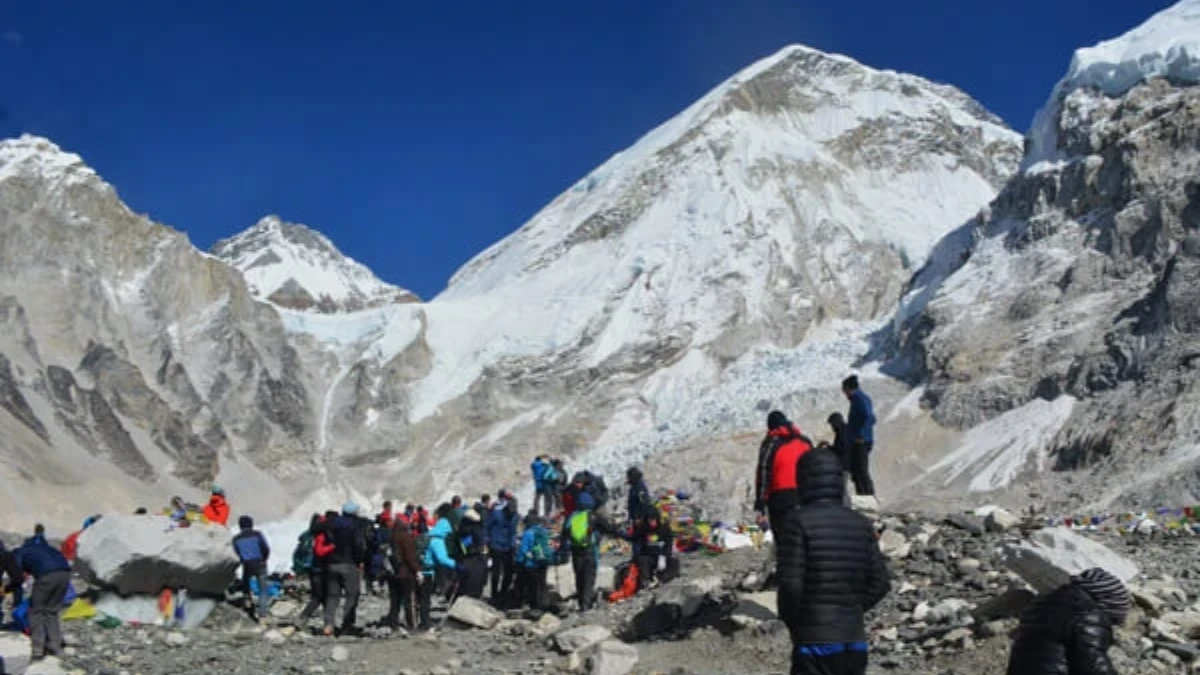
Nepal is one of the most romantic places I know. I'm biased: it's my home. But I've watched hundreds of couples fall deeper in love here, not despite the roughness, but because of it. When you share a sunrise over the Himalayas with your partner, when you're both exhausted and laughing on a mountain trail, when you sit together in a tiny teahouse and the only light is a candle and the stars: that's intimate in a way no luxury resort can manufacture.
My name is Shreejan Simkhada. I've been planning trips through Nepal for over a decade. Here's what a Nepal honeymoon actually looks like.
Why is Nepal a good honeymoon destination for couples?
Three reasons. Adventure, culture, and affordability.
Adventure bonds people. There's research on this: shared adrenaline creates stronger emotional connections. Walking a mountain trail together, navigating a new culture together, even being slightly uncomfortable together builds something that a week on a sunlounger simply doesn't.
Culture gives you stories. You'll visit temples where priests paint tikka on your foreheads. You'll stumble into local festivals with drums and dancing. You'll eat with your hands at a Tharu village in Chitwan. Ten years from now, you won't remember what the hotel lobby looked like. You'll remember the monk who blessed your marriage at Boudhanath Stupa.
Affordability means more trip. A week in the Maldives might cost $5,000-10,000 per couple. In Nepal, that same budget gives you two weeks, including a trek, a cultural tour, domestic flights, and meals. You get twice the honeymoon for half the price. That's not a small thing when you've just paid for a wedding.
What are the downsides of a honeymoon in Nepal?
I'm not going to pretend Nepal is perfect for every couple. If any of the following are deal-breakers, reconsider.
Accommodation is basic on treks. Teahouse rooms have twin beds pushed together, thin walls, shared bathrooms, and intermittent electricity. On the Poon Hill trek, the nicest teahouses are clean and warm but not luxurious. On more remote trails, "basic" is generous.
Privacy is limited. Teahouse dining rooms are communal. Other trekkers will be there. Walls are thin. This is not the place for... let's say, honeymoon activities. Save those for Pokhara or Kathmandu, where you can book a proper hotel room.
It can be physically tiring. If one partner wants adventure and the other wants relaxation, Nepal requires compromise. The good news: you can combine both. Trek for four days, then spend three days at a lakeside hotel in Pokhara recovering.
Stomach issues are common. At least one of you will probably have a dodgy stomach at some point. It's not romantic. It passes. Carry Imodium.
Still interested? Good. Because what Nepal offers is worth all of it.
What are the most romantic places in Nepal for couples?
Pokhara Lakeside
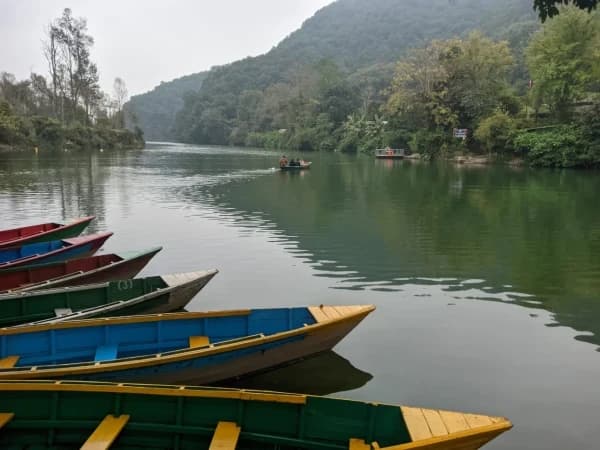
If Nepal has a romantic capital, it's Pokhara. The town sits on the shore of Phewa Lake, with the Annapurna range reflected in the water on clear mornings. The lakeside strip has restaurants, cafes, bars, and hotels ranging from backpacker basic to genuinely lovely boutique properties.
Rent a boat. Just the two of you, rowing across Phewa Lake at sunset, with Machhapuchhre (Fishtail Mountain) turning pink above you. It costs about 500 rupees ($4 USD) for an hour. That's possibly the cheapest romantic experience on earth.
Stay at least two nights. Get massages. Eat lake fish at a rooftop restaurant. Sleep in. Pokhara is where you recharge between adventures.
Nagarkot Sunrise
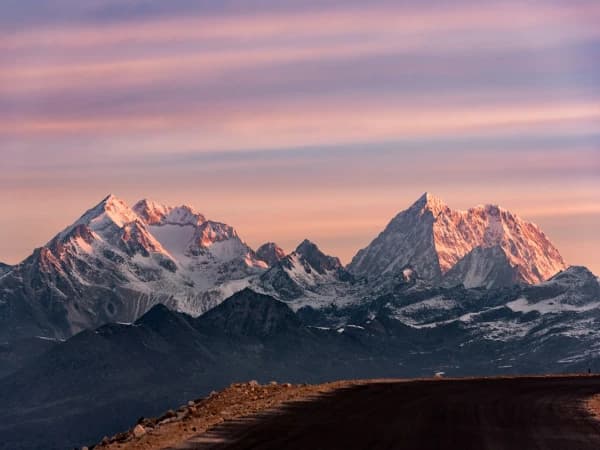
Nagarkot is 32 km from Kathmandu, perched on a ridge at 2,175 metres. On a clear morning, you can see the entire Himalayan range from Dhaulagiri to Everest. Some hotels have rooms with floor-to-ceiling windows facing the mountains. You wake up, and the first thing you see is the sun hitting the Himalayas.
It's a one-night stop, really. The town itself is tiny: a few hotels, a few shops, not much else. But that sunrise is extraordinary. Book a room with a mountain view, open a bottle of wine (bring it from Kathmandu), and watch the sky change colour. That's a honeymoon moment.
Chitwan National Park
Chitwan is Nepal's premier wildlife destination. Jungle lodges here range from basic to genuinely luxurious, some with private balconies overlooking the Rapti River, outdoor showers, and candlelit dinners.
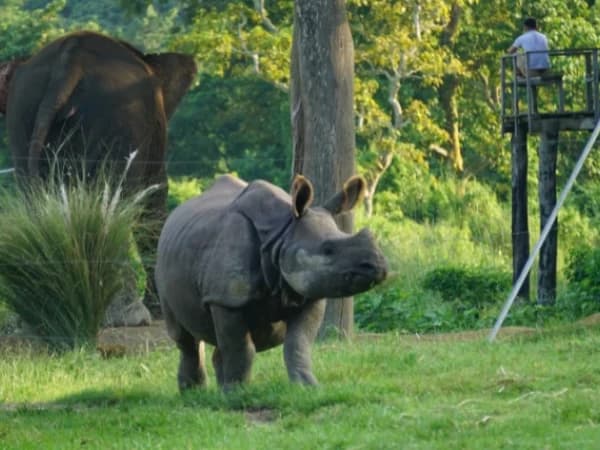
You'll take canoe rides through crocodile territory, go on jeep safaris looking for one-horned rhinos and Bengal tigers, and walk through the forest with a naturalist guide. The jungle sounds at night (crickets, frogs, and occasionally something larger moving through the undergrowth) make sleeping with the windows open genuinely thrilling.
The Kathmandu-Pokhara-Chitwan tour combines all three major destinations into one trip. For honeymoon couples, it's the best all-round package.
Bandipur
Most tourists miss Bandipur. Their loss. This preserved Newari trading town sits on a hilltop between Kathmandu and Pokhara, with cobblestone streets, traditional architecture, and views of the Himalayas from every corner. The Kathmandu-Bandipur-Pokhara-Chitwan tour includes it, and couples consistently tell us it was their favourite stop.
There's a gorgeous old inn in the town centre. Stone walls, wooden beams, a garden with mountain views. The kind of place where you sit with coffee and forget about the rest of the world.
Which treks are best for a honeymoon in Nepal?
Combining a short trek with a cultural tour is the best formula for a Nepal honeymoon. You get the mountain adventure without spending your entire honeymoon sleeping in teahouses.
Poon Hill Trek + Pokhara (7-8 days)
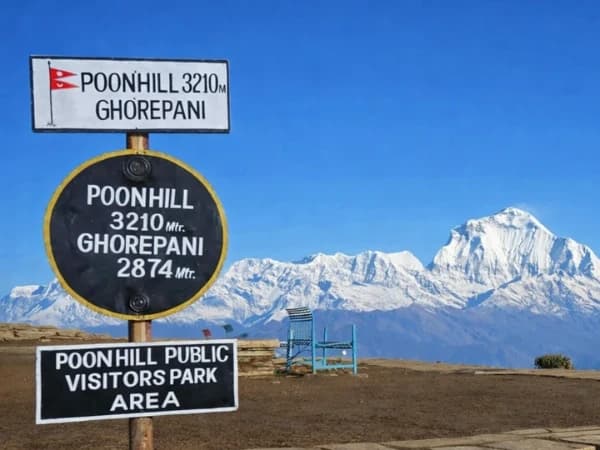
The Poon Hill trek is 4-5 days of walking through rhododendron forests to a 3,210-metre viewpoint with a panoramic Annapurna sunrise. Combine it with 2-3 days in Pokhara, and you've got the perfect mix.
Trek days are 4-6 hours of walking. It's moderate difficulty: you don't need to be athletes, but you should be reasonably fit. The highlight is waking at 4:30 AM on day three, walking to the top of Poon Hill in the dark, and watching the sun rise over Dhaulagiri, Annapurna South, and Machhapuchhre. With your partner beside you. In the cold. Holding hands because there's no one else around who cares.
This is the moment. This is why people honeymoon in Nepal.
Everest View Trek (7 days)
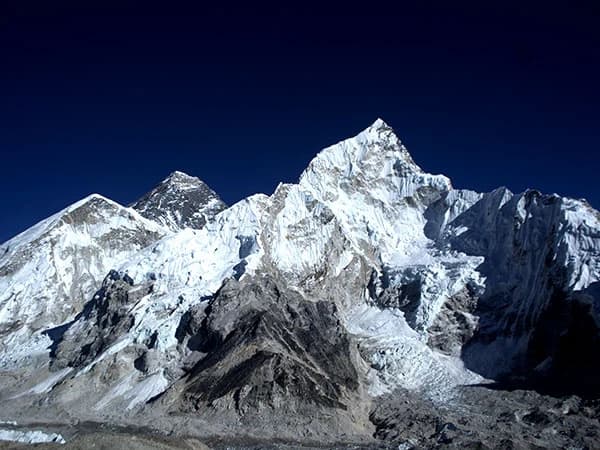
If seeing Everest is on your dream list, the Everest View Trek gets you there without the full 12-day commitment to Base Camp. You fly to Lukla, walk to Namche Bazaar, and see Everest from the viewpoint at Syangboche. The flight itself, into the tiny Lukla airstrip carved into a mountainside, is an experience couples never forget.
The catch: this trek goes to 3,880 metres. You need to be fit, and you need to take altitude seriously. It's not a stroll. But for adventurous couples, it stays with you.
What is a good honeymoon itinerary for Nepal?
Here are three itineraries I regularly recommend, scaled from relaxed to adventurous.
The Relaxed Romance (10 days)
- Days 1-3: Kathmandu. Explore Durbar Square, Boudhanath Stupa, Patan. Stay in a heritage hotel in Thamel or Patan. Get couple's massages. Eat at Krishnarpan (the best Nepali fine dining restaurant).
- Day 4: Drive to Nagarkot. Sunset from the ridge.
- Day 5: Sunrise over the Himalayas. Drive/fly to Pokhara.
- Days 6-7: Pokhara. Lakeside hotel, boating, paragliding (if you're brave), Sarangkot sunrise, World Peace Pagoda hike.
- Days 8-9: Chitwan. Jungle lodge, canoe safari, jeep safari, Tharu cultural performance.
- Day 10: Return to Kathmandu. Last-minute shopping in Thamel.
This is the Kathmandu-Pokhara-Chitwan tour with a Nagarkot addition. No trekking required. Total cost: approximately $1,900-2,700 per couple depending on hotel choices.
The Adventure Balance (12 days)
- Days 1-2: Kathmandu. Heritage sightseeing, cooking class, prepare for trek.
- Days 3-7: Poon Hill trek. 5 days on the trail.
- Days 8-10: Pokhara recovery. Spa, lakeside dining, zip-lining, chill.
- Days 11-12: Chitwan or return to Kathmandu.
This is my most popular honeymoon itinerary. The trek gives you the shared adventure and the mountain moments. Pokhara gives you the relaxation and romance. The balance is right.
The Full Adventure (14 days)
- Days 1-2: Kathmandu.
- Days 3-9: Everest View Trek (fly to Lukla, trek to Namche, see Everest, return).
- Days 10-12: Pokhara. Full recovery mode.
- Days 13-14: Kathmandu. Final explorations, departure.
This is for couples who want bragging rights. You saw Everest on your honeymoon. Not many people can say that. But it's physically demanding, and you need to be honest about whether both of you are up for it. If one partner is reluctant, the trek will create tension, not memories.
Should I pick a luxury or adventure honeymoon in Nepal?
Nepal offers both. But let me manage expectations.
Luxury in Kathmandu and Pokhara: Genuine luxury exists. The Dwarika's Hotel in Kathmandu is one of the finest heritage hotels in Asia. Temple Tree Resort in Pokhara is beautiful. Meghauli Serai in Chitwan (Taj group) is exceptional. You can spend $200-400 per night and stay somewhere special.
Luxury on the trail: This doesn't really exist. There are "luxury lodges" on the Annapurna and Everest trails, but luxury is relative. It means a private bathroom, hot shower, heating, and better food. It doesn't mean room service, king beds, or minibar. The best teahouses on the Poon Hill route are clean, comfortable, and have attached bathrooms. That's luxury at 2,800 metres.
My recommendation: Spend on hotels in the cities, accept simplicity on the trail. The contrast actually makes both better. After four nights in a teahouse, a hot bath in a Pokhara hotel feels like pure heaven.
When Is the Best Time for a Nepal Honeymoon?
Most weddings happen in summer. Most honeymoons follow immediately. That's a problem for Nepal, because June through September is monsoon season: heavy rain, leeches on trails, cloud-covered mountains, and cancelled flights.
The best months:
- October-November: Peak season. Clear skies, perfect temperatures, the best mountain views. Downside: popular trails are crowded, and hotel prices are higher.
- March-April: Spring. Rhododendrons blooming, warming temperatures, fewer crowds. Slightly hazier skies than autumn but still excellent.
- February: Cold but clear. Great for cultural tours. Treks are chilly but doable with proper gear. The upside: very few other tourists.
- December-January: Cold. High-altitude treks are off the table. But Chitwan is perfect (warm and dry), Pokhara is lovely, and Kathmandu is pleasant during the day.
If your wedding is in June, consider a delayed honeymoon in October. Lots of couples do this. The anticipation actually makes it better.
How much does a honeymoon in Nepal cost?
This surprises people. Nepal is genuinely affordable.
- Flights: Return flights from London to Kathmandu are typically $500-800 per person. From the US, $800-1,200.
- Cultural tour (10 days): $600-900 per person with mid-range hotels, all transport, guided sightseeing, meals.
- Poon Hill trek (5 days): $350-500 per person including guide, porter, accommodation, meals, permits.
- Hotel upgrades in Kathmandu/Pokhara: $50-200 per night for boutique/luxury properties.
- Spending money: $20-40 per day per couple covers extras, drinks, tips, souvenirs.
A 12-day honeymoon combining a cultural tour and Poon Hill trek, with nice hotels in the cities, costs roughly $2,500-4,000 per couple. That's flights excluded, everything else included. Try getting that in Europe or Southeast Asia's luxury segment.
What should I pack for a honeymoon in Nepal?
Pack for two trips in one.
For the cultural tour: Normal clothes. Something nice for dinners in Kathmandu. Comfortable walking shoes for temples and streets. A light scarf for women visiting Hindu temples (shoulders covered).
For the trek: Layers. A good pair of walking boots. Waterproof jacket. Warm fleece. Head torch. Sunscreen. The complete trekking packing list is on our website.
Honeymoon extras: Bring a bottle of wine or champagne from duty-free (alcohol in Nepal is expensive and often mediocre). A small Bluetooth speaker for music in your teahouse room. A deck of cards for evenings without Wi-Fi. And honestly, lower your expectations about dressing up: after day three of trekking, you'll both be in the same hiking clothes and you'll love each other anyway.
The Thing Nobody Mentions
A Nepal honeymoon tests you slightly. The travel is sometimes uncomfortable. The food is sometimes repetitive. The power goes out. The flight gets delayed. You'll be tired and sweaty and slightly grumpy at some point.
This is actually good. Marriage is not an infinity pool. It's a partnership that requires patience, humour, and the ability to find joy in imperfect circumstances. A couple that can laugh together when the hot water runs out, share a sleeping bag when the teahouse room is freezing, and still find each other attractive after four days without a proper shower: that couple is going to be fine.
Every couple who's done a Nepal honeymoon with us has told me the same thing. It wasn't what they expected. It was better. Not easier. Not more comfortable. Better.
If that sounds like your kind of honeymoon, we'd love to help plan it. Tell us your dates, your budget, your fitness level, and how adventurous you both want to be. We'll build something that works for both of you.
WhatsApp: +977 9810351300
Email:[email protected]
Shreejan Simkhada is the CEO of The Everest Holiday and a third-generation Himalayan guide. TAAN Member #1586.
Nepal honeymoon? Kathmandu-Pokhara is the romantic loop. Our Kathmandu & Pokhara Tour (7 Days) is private (your group only, no strangers), 2027 dates open, From USD $749. WhatsApp us for tailored 2027 dates and current departures.
Planning a trip to Nepal?
Drop us your details and tell us what you have in mind. We will put together a personalised plan and get back to you.
Not sure which Nepal trek is right for you?
Take our free 2-minute quiz and get personalised recommendations based on your fitness, experience, and travel style.
Find Your Perfect Trek →Need Help? Call Us+977 9810351300orChat with us on WhatsApp
Related Trek Packages
 US$1,565
7 DaysMax 20
Everest View Trek - 7 Days Itinerary & Costs
Starts From
ExploreUS$1,565
 US$949
8 DaysMax 20
 US$749
7 DaysMax 20
Latest Travel Blogs
Christmas and New Year Treks from Pokhara 2026/27: 3 to 5 Days
<p>Short treks from Pokhara for Christmas and New Year 2026/27: Panchase 3 days, Poon Hill 4 days and Mardi Himal 5 days. Weather, snow, what is open, and prices by group size.</p>
Read More
Thamdanda and Surke: The Road Head for Everest Base Camp by Road
Thamdanda is the road head where our Everest Base Camp trek by road starts and ends on foot. How to get there from Phaplu and what the first walk to Paiya is like.
Read MorePoon Hill Trek Permits 2027: ACAP, TIMS, Cost and What You Need
Poon Hill needs two permits: ACAP at NPR 3,000 and a TIMS card at NPR 2,000. Who arranges them, where they are checked, SAARC rates and the 2027 trek prices.
Read More Chat with Shreejan