
Can you trek Nepal over 60? Yes. 10 routes ranked easiest to hardest, with honest advice on altitude, fitness, and what changes as you age. By a local guide.
Govt Regd. No.: 147653/072/073
Travel Agency Licence: 2838/072
Nepal Trekking Over 60: 10 Routes That Prove Age Is Just a Number

Short answer: Many people trek in Nepal in their sixties and seventies. The keys are a slower pace, extra rest days and a route that does not go too high. Good choices are Poon Hill, the 7-day Everest View trek and the Langtang Valley. Tell us about any heart, lung or blood-pressure condition before you book, and check that your insurance covers trekking at your age. A gentle start is our 7-day Everest View trek.
Nepal Trekking Over 60: 10 Routes That Prove Age Is Just a Number
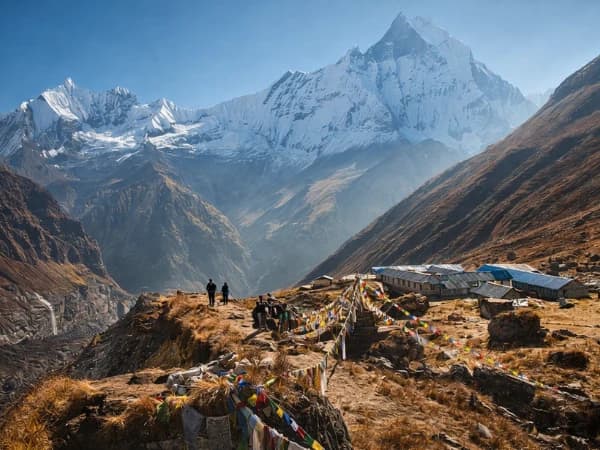
Last October, I guided a 72-year-old retired teacher from Manchester to Annapurna Base Camp. She was slower than the university students on the trail. She also enjoyed it more than any of them. She stopped to talk to every villager. She photographed every prayer flag. She sat in teahouses drinking tea and writing in her journal while the younger trekkers scrolled their phones waiting for WiFi.
She told me at the end: "I wish I'd done this at 40. But I'm glad I didn't, because I wouldn't have appreciated it the way I do now."
I'm Shreejan Simkhada, CEO of The Everest Holiday, and I want to talk honestly about trekking in Nepal if you're over 60. Not the sanitised version. The real one.
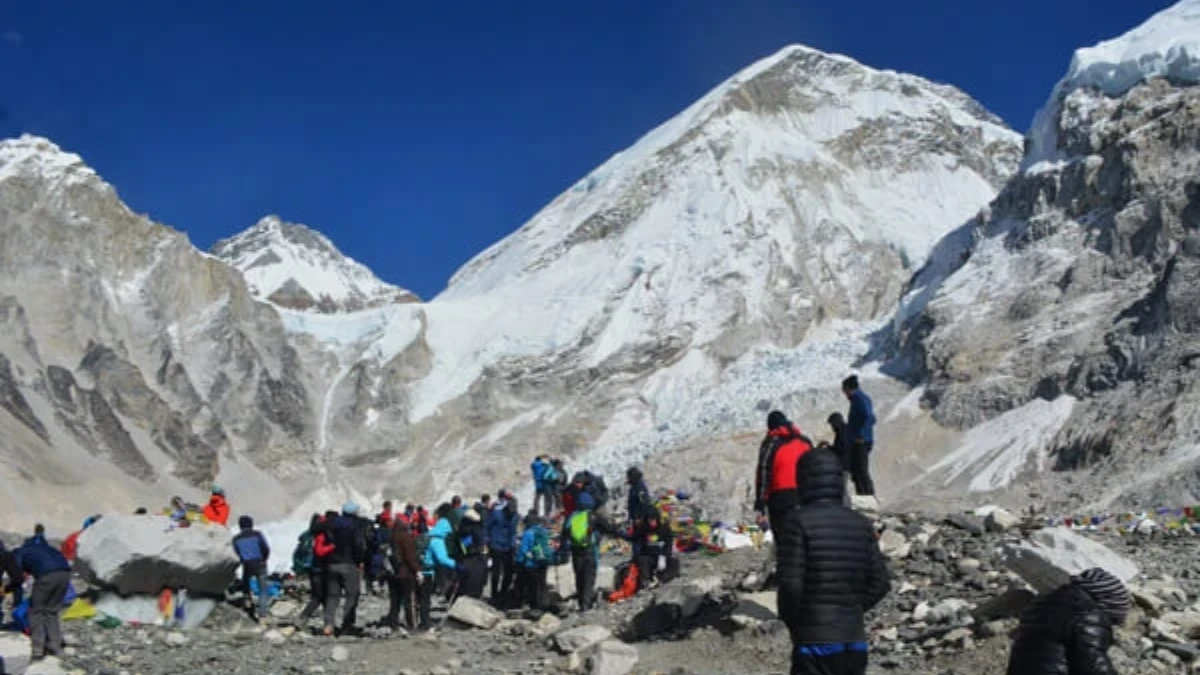
Does altitude sickness get worse with age?
Here's what the medical research actually says: altitude sickness does not discriminate by age. A fit 65-year-old acclimatises at roughly the same rate as a fit 30-year-old. In fact, some studies suggest older trekkers handle altitude marginally better because they're more willing to go slowly, drink water, and listen to their guides. The 25-year-old who races ahead to prove something is statistically more likely to end up with altitude sickness than the 65-year-old who takes it steady.
What age does affect is recovery time, joint health, and cardiovascular endurance. You'll feel the long days more in your legs. You'll sleep less well in teahouses. You'll need longer to bounce back from a tough day. These are real factors, not deal-breakers. They just mean choosing the right trek matters more for you than for someone half your age.
What should over-60s check with their doctor before trekking Nepal?
Before booking, talk to your doctor. Not because Nepal is dangerous for older trekkers, but because altitude affects blood pressure, heart rate, and oxygen saturation. If you take medication for any cardiovascular condition, your doctor should know you'll be spending days above 3,000 metres.
Bring enough medication for the full trek plus a week extra (in case of delays). Carry it in your hand luggage. Tell your guide about any conditions on day one. We're not medical professionals, but we carry a pulse oximeter and we monitor you. Knowing your baseline helps us spot problems early.
What are the best Nepal treks for people over 60?
I've ranked these from easiest to most challenging. Start at the top and work your way down based on your fitness and experience.
1. Dhulikhel Namobuddha Day Hike (1 Day)
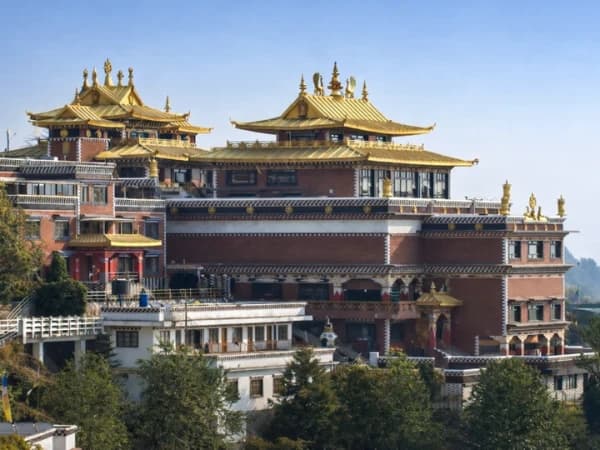
Perfect for testing the waters. Our Dhulikhel Namobuddha hike is a gentle walk through farmland and forest to an ancient Buddhist monastery, just 30km from Kathmandu. No altitude concerns. No overnight bag. Just a beautiful day in the hills with mountain views.
Max altitude: 1,750m | Walking: 4-5 hours | From: $99
2. Kathmandu and Pokhara Tour (7 Days)
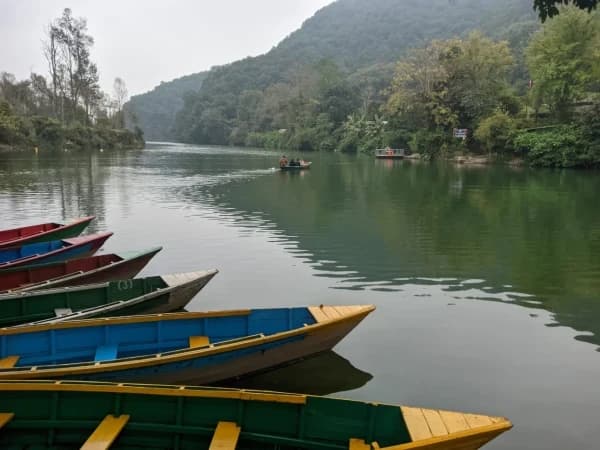
Not a trek at all, but our 7-Day Kathmandu-Pokhara Tour lets you experience Nepal's culture, temples, and mountain views without any strenuous walking. Sunrise over the Annapurna range from Sarangkot. Boat ride on Phewa Lake. Bhaktapur's medieval squares. Perfect if you want Nepal without the physical demands.
Max altitude: 1,592m | Walking: light daily | From: $599
3. Poon Hill Trek (6 Days)
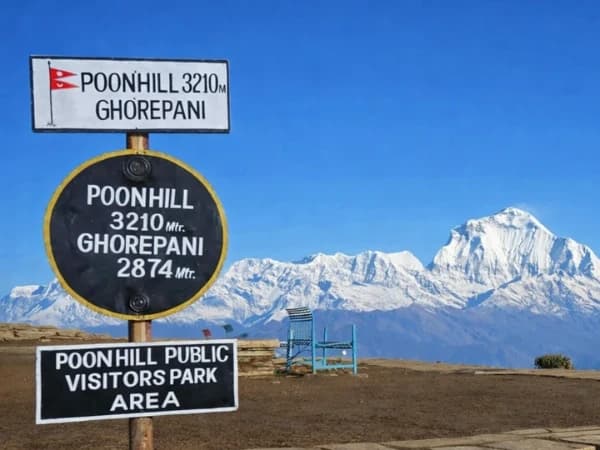
Nepal's most popular short trek and ideal for older trekkers. Our 6-Day Poon Hill Trek takes you through rhododendron forests and Gurung villages to a viewpoint at 3,210 metres with panoramic views of Dhaulagiri and the Annapurna range at sunrise. The altitude is manageable, the trail is well-maintained, and teahouses are comfortable.
Max altitude: 3,210m | Walking: 5-6 hours/day | From: $599
4. Everest View Trek (7 Days)
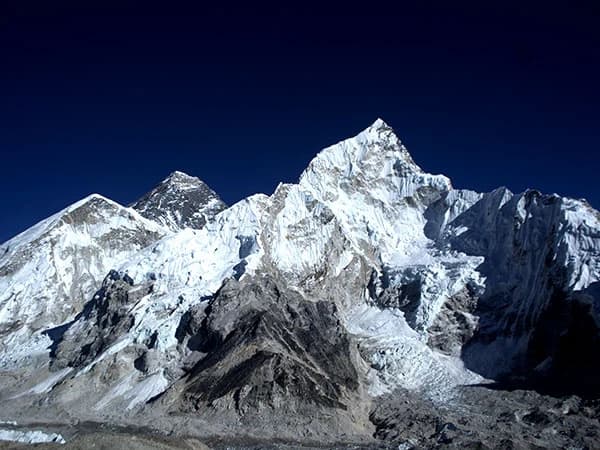
See Everest without going to Base Camp. Our 7-Day Everest View Trek goes to Namche Bazaar (3,440m) and the Everest View Hotel viewpoint (3,880m). You fly to Lukla, cross the famous suspension bridges, and see Everest, Ama Dablam, and the Khumbu peaks. Maximum altitude under 4,000m keeps the altitude risk low.
Max altitude: 3,880m | Walking: 4-6 hours/day | From: $1,565
5. Gosaikunda Trek (5 Days)
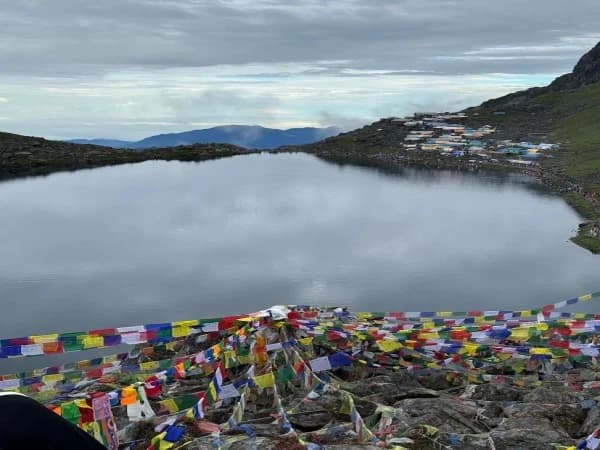
Sacred lakes close to Kathmandu. Our 5-Day Gosaikunda Trek visits 108 alpine lakes sacred to Hindus and Buddhists. No flights needed: drive from Kathmandu. The trek reaches 4,380m so you'll feel the altitude, but it's a short enough trek that you can turn back if needed.
Max altitude: 4,380m | Walking: 5-7 hours/day | From: $499
6. Mardi Himal Base Camp (7 Days)
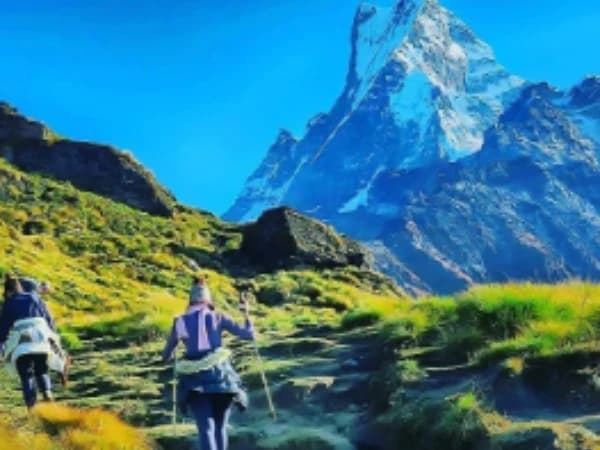
A quieter alternative. Our 7-Day Mardi Himal Trek follows a ridge through forests to a high camp with close-up views of Machhapuchhre (Fishtail). Fewer trekkers than Poon Hill or ABC, and the trail is well-graded.
Max altitude: 4,500m | Walking: 5-6 hours/day | From: $699
7. Langtang Valley Trek (8 Days)
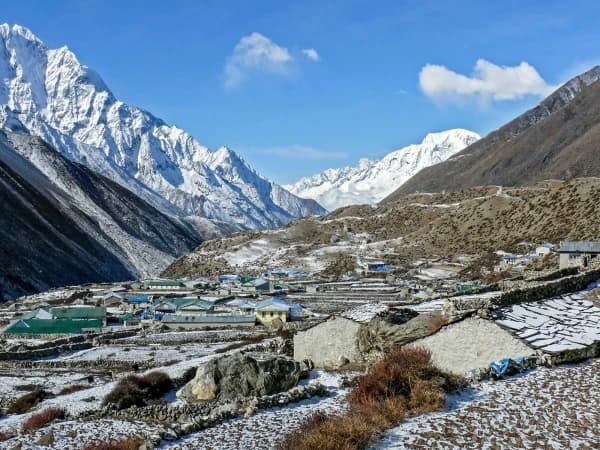
No flights, close to Kathmandu. Our 8-Day Langtang Valley Trek drives from Kathmandu to Syabrubesi and treks through beautiful valley scenery to Kyanjin Gompa (3,870m). The gradual altitude gain works well for older trekkers.
Max altitude: 4,773m (optional Kyanjin Ri) | Walking: 5-6 hours/day | From: $699
8. Annapurna Base Camp (9 Days)
Achievable with decent fitness. Our 9-Day ABC Trek reaches 4,130m and puts you inside a mountain amphitheatre that will stay with you for the rest of your life. The stone steps on the lower trail are hard on the knees: trekking poles are essential.
Max altitude: 4,130m | Walking: 5-7 hours/day | From: $725
9. Gokyo Valley Lakes (10 Days)
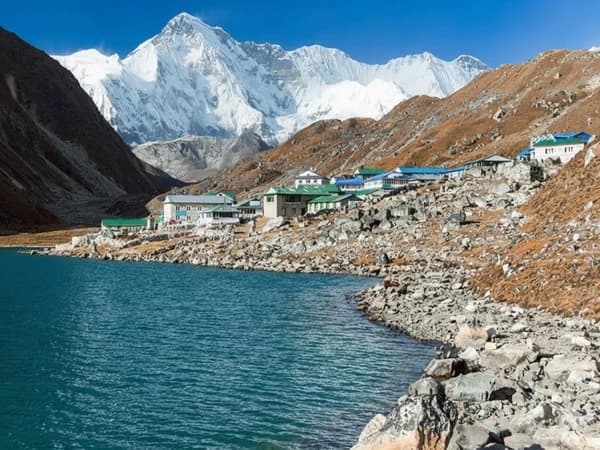
Everest views without Base Camp altitude. Our 10-Day Gokyo Lakes Trek reaches 5,357m at Gokyo Ri: this is high and you'll feel it. But the trail is less busy than EBC and the turquoise lakes are spectacular. Only attempt this if you've already trekked above 4,000m.
Max altitude: 5,357m | Walking: 5-7 hours/day | From: $1,299
10. Everest Base Camp (12 Days)
The big one. Our 12-Day EBC Trek goes to 5,545m (Kala Patthar). Several of our clients over 60 have completed it successfully. The key is proper acclimatisation, honest self-assessment, and a willingness to turn back if your body says no.
Max altitude: 5,545m | Walking: 5-7 hours/day | From: $1,399
How do guided treks accommodate trekkers over 60?
When we know you're over 60, we don't treat you differently as a person. We adjust the logistics:
-
Extra acclimatisation days. We can add an additional rest day at key altitudes. This costs a bit more but dramatically reduces altitude risk.
-
Shorter daily walks. Instead of 6-hour days, we can plan 4-5 hour days by adding an extra night to the itinerary.
-
Private porter. Instead of sharing a porter between two, you get your own. This means you carry nothing but a daypack with water and snacks.
-
Best teahouse rooms. We book private rooms with the most comfortable beds available. Sleep quality matters more as you age at altitude.
-
Daily health monitoring. Your guide checks oxygen levels and heart rate with a pulse oximeter morning and evening. Any concerning changes and we adjust the plan.
None of this is patronising. It's practical. And it works. Age is not a cut-off for Everest Base Camp or Annapurna Base Camp. Preparation and pace matter more.
What gets harder in your fifties and sixties, and what helps?
I would rather be honest than encouraging. The mountain does not care how old you are, but your body notices a few things, and this applies from about 50 onwards.
- Recovery. What a 25-year-old shakes off overnight may take you two days. That is fine when the itinerary has the rest days built in, which is why I add an extra night wherever I can.
- Knees and hips. Descents on stone steps cost more than the climbs. Walk downhill on purpose in training, and use trekking poles from day one, on every section and not only downhill.
- Sleep. Nights above 3,500 m are poor for everyone and often worse for older trekkers. A private room, a sleeping bag a few degrees warmer than the list says, and an easy day after a big climb all help.
- Medicines. Tell your doctor the trek and its highest point, and ask about anything you take every day, including blood-pressure tablets and anything that interacts with Diamox. Carry your own basic kit, because you cannot count on a pharmacy on the trail.
- Boots and support. Well broken-in ankle boots with good cushioning matter more as you get older, and some people like light compression sleeves on the knees for long descents.
Why a private trek suits older trekkers
On a private trek the whole itinerary is built around your pace. If you need an extra rest day at Dingboche you take it. If your knees complain on a descent, the guide finds an easier way. If you want to stand at a viewpoint for twenty minutes, nobody is waiting. Every one of our treks can run as a private departure, for one person or a family.
Our guides have a theory that older trekkers often do better than younger ones, because they listen. They walk steadily, drink when told, rest on the rest days and report symptoms honestly, while the 25-year-olds charge ahead and push through a headache. Walk slowly, eat everything, sleep well and let the mountain come to you.
How should seniors train for a Nepal trek?
Start training three to six months before your trek. Not gym training, walking training. Here's what actually helps:
-
Walk uphill with a pack. Start with a 5kg pack and build to 8-10kg. Find hills or use a stairmaster. The muscle groups you need for Nepal are built on inclines, not flat surfaces.
-
Build to 5 hours. If you can walk for 5 hours with a pack over hilly terrain without needing the next day off, you're ready for most Nepal treks up to ABC level.
-
Strengthen your knees. Stone steps going down are harder on your knees than going up. Squats, lunges, and regular downhill walking prepare your joints.
-
Don't overdo it. The goal is endurance, not speed. You don't need to run marathons. You need to walk at a moderate pace for hours. That's it.
Travel Insurance: Non-Negotiable
This is especially important for older trekkers. Many standard travel insurance policies have age limits or altitude exclusions. Make sure your policy:
- Covers you at the maximum altitude of your trek (check the metre limit)
- Includes helicopter evacuation
- Has no age exclusion or surcharge you haven't accounted for
- Covers pre-existing conditions if you have any
We recommend specialist adventure travel insurers like World Nomads or Campbell Irvine (UK). Standard high-street policies often won't cover trekking above 3,000 metres.
Ready to Start Planning?
Tell me your age, your fitness level, and how many days you have. I'll be honest about what's realistic and what's not. I'd rather design you a trek you'll love than sell you one you'll struggle with.
WhatsApp: +977 9810351300
Email: [email protected]
Request a personalised recommendation
Shreejan Simkhada is the CEO of The Everest Holiday. He designs itineraries for every age and fitness level. TAAN Member #1586.
Trekking over 60? Poon Hill is the right starting point. Our Ghorepani Poon Hill Trek (6 Days) is private (your group only, no strangers), 2027 dates open, From USD $499. WhatsApp us for tailored 2027 dates and current departures.
Planning a trip to Nepal?
Drop us your details and tell us what you have in mind. We will put together a personalised plan and get back to you.
Not sure which Nepal trek is right for you?
Take our free 2-minute quiz and get personalised recommendations based on your fitness, experience, and travel style.
Find Your Perfect Trek →Need Help? Call Us+977 9810351300orChat with us on WhatsApp
Related Trek Packages
 US$1,565
7 DaysMax 20
Everest View Trek - 7 Days Itinerary & Costs
Starts From
ExploreUS$1,565
 US$99
US$991 DayMax 20
 US$749
7 DaysMax 20
Latest Travel Blogs
Thamdanda and Surke: The Road Head for Everest Base Camp by Road
Thamdanda is the road head where our Everest Base Camp trek by road starts and ends on foot. How to get there from Phaplu and what the first walk to Paiya is like.
Read More
Poon Hill Trek Permits 2027: ACAP, TIMS, Cost and What You Need
Poon Hill needs two permits: ACAP at NPR 3,000 and a TIMS card at NPR 2,000. Who arranges them, where they are checked, SAARC rates and the 2027 trek prices.
Read More
Mera Peak Climbing Itinerary 2027: 14 Days, Day by Day
Mera Peak in 14 days, night by night. The Hinku valley, a full rest day at Khare, Mera High Camp at 5,780 m, summit day, 2027 prices and the best months.
Read More Chat with Shreejan