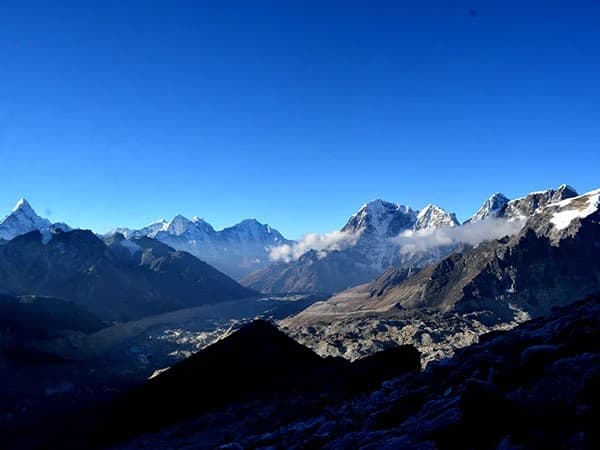
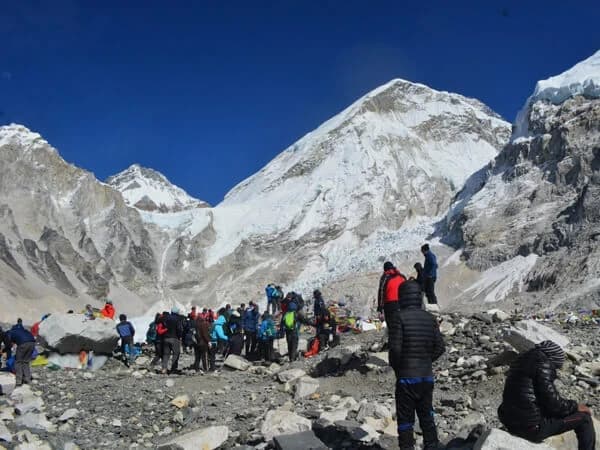
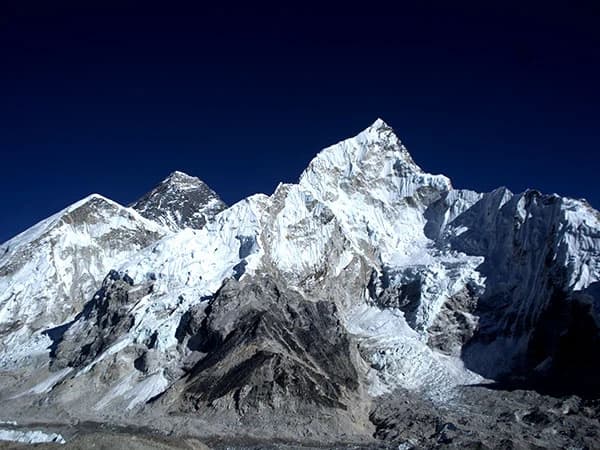
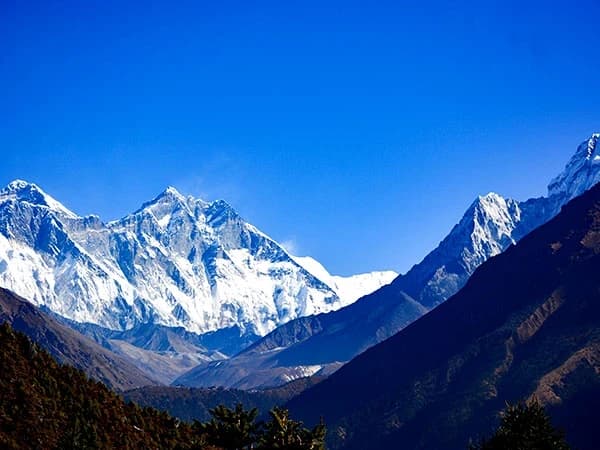
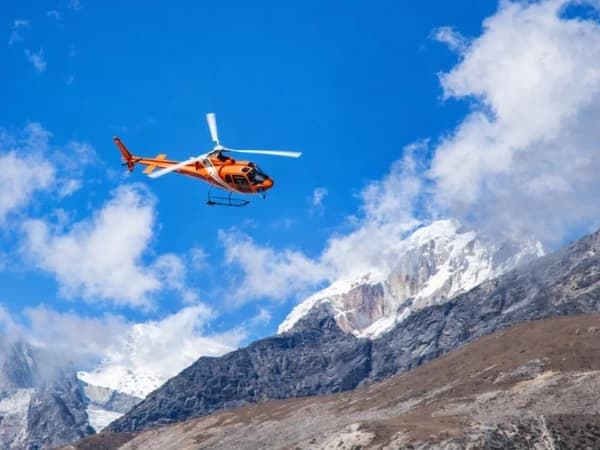
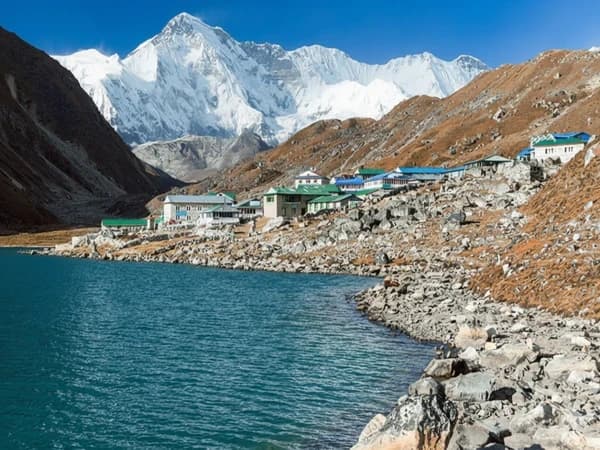
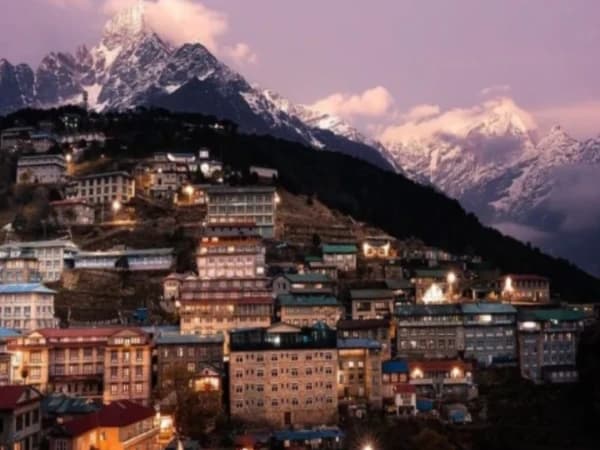
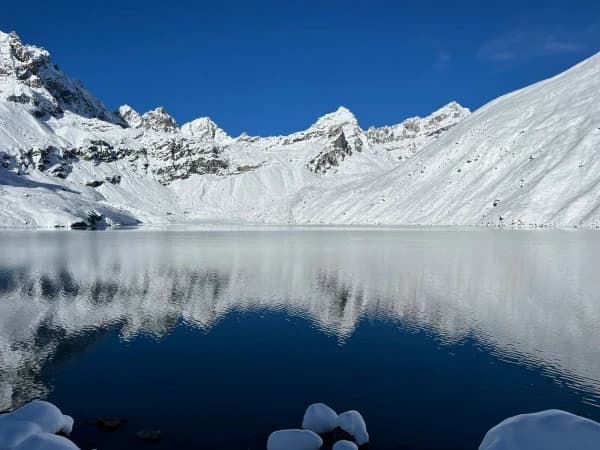
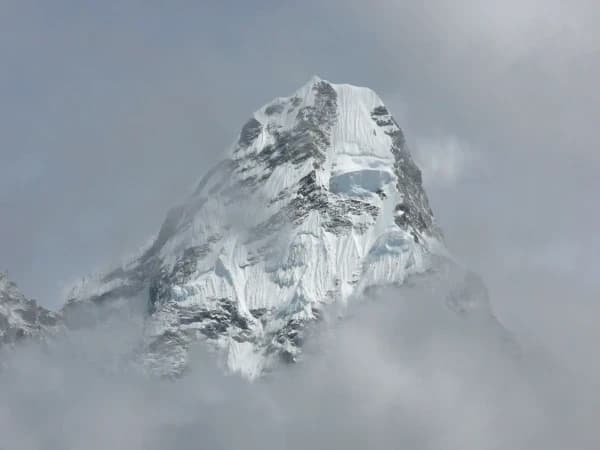
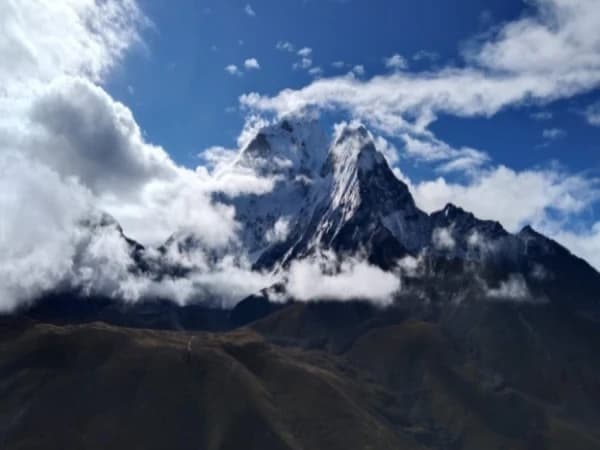
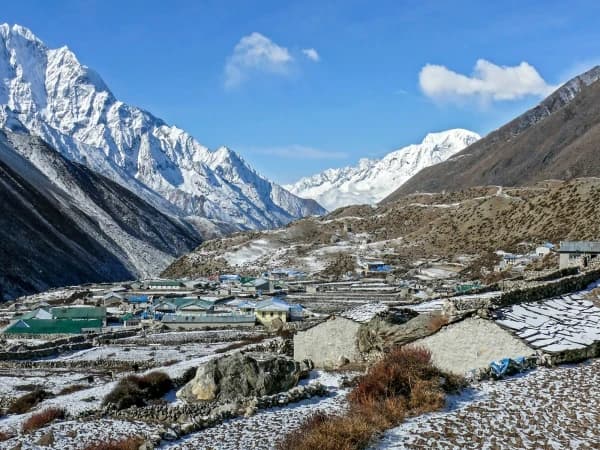
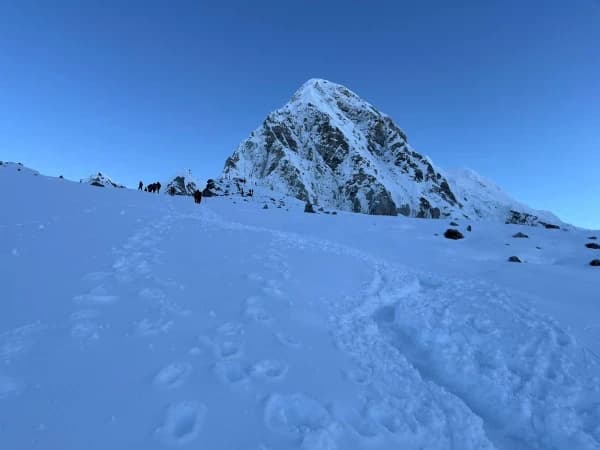
The Everest region is Nepal's most visited trekking area, home to Mount Everest at 8,848.86m and the high passes of the Khumbu. The trails take you through Sherpa villages that have hosted climbers since the 1953 Hillary and Tenzing expedition, past the monasteries of Tengboche and Pangboche, and up to base camps where you stand directly under Everest, Lhotse, Nuptse, and Ama Dablam. The classic routes are the Everest Base Camp trek, the Gokyo Lakes trek with its turquoise glacial lakes, and the demanding Three Passes trek for trekkers who want all of it in one trip.
Why people pick the Everest region
The biggest reason is altitude. At 5,545m on Kala Patthar you stand higher than the summit of Mont Blanc with no technical climbing required. The second reason is Sherpa hospitality. The Khumbu has been hosting trekkers for over 70 years, so the lodges, food, and trail infrastructure are the most developed of any region in Nepal. We run three Everest Base Camp trek variants: the classic 12-day route, a 15-day version that adds Gokyo Lakes via the Cho La pass, and a 17-day Three Passes route for trekkers who already have Himalayan miles in their legs. Every itinerary is built around proper acclimatisation days because we have seen what skipping them does, and our Lukla flight buffer accounts for the delays the airport is famous for. If you want to trek to Everest Base Camp with a Nepali team that has been doing this for two generations, this is the right region for you.
Best Months for Everest Trekking (2026 Guide)
The season you choose will affect your climb up Everest. The clear, calm days of autumn (October to November) show off the traditional Himalayan view with clear skies and bright pathways. In spring (March to May), the temperature gets warmer, the rhododendrons blossom, and Base Camp is full of activity from the expeditions. For experienced adventurers, winter (December to February) offers stark, crowd-free seclusion beneath deep blue skies, although it can be very cold. People usually avoid the monsoon (June to September) due to the rain, treacherous routes, and lack of views. Most trekkers concur that autumn offers the best weather, making it the ideal time to visit.
Cultural Highlights of Khumbu Sherpas
Walking through here is like walking through the living core of Sherpa culture. There are prayer wheels, mani stone walls with Buddhist mantras etched onto them, and colorful prayer flags that send blessings on the wind all along the trail. Each community gives you a glimpse into a deeply spiritual way of life that the mountains have molded.
Namche Bazaar's busy entryway is more than just a place to get used to the altitude. Along its narrow streets, there are traditional stores, bakeries, and the Sherpa Culture Museum. The museum is a wonderful place to learn about the area's history and climbing legacy. The trail goes up higher to holy places like the Tengboche Monastery, which is the spiritual centre of Khumbu. Attending a morning puja at Tengboche, with the monks chanting in low harmonies, juniper smoke drifting through the prayer hall, and Ama Dablam framed in the doorway behind the altar, is one of the moments most trekkers tell us they remember years later.
Staying at teahouses run by families is an important part of cultural exchange. You connect with Sherpa hosts whose hospitality is famous by sharing a warm dhal bhat (lentils and rice) over the stove. You discover that the community works together to keep the paths in excellent shape and that Sherpa guides and porters are just as strong as they are humble and respectful of the mountains they call home. This expedition is a privilege since it lets you walk through a living cultural landscape, not simply a physical one.
How we know the Everest region
We want to be straight about this from the start. Our family is not from Solukhumbu. We are from Gorkha and Dhading on the other side of Nepal, and the people of the Everest region are the Sherpa, who have their own deep history here that nobody else can claim. So when you book an Everest trek with us we are not going to pretend to be from this region. What we can tell you is something different but real.
Our father, Ganesh Prasad Simkhada, was himself a working trekking guide before he moved into the institutional side of Nepal tourism. When he served as general secretary of the Nepal Mountaineering Association from 2005 through 2008, his job was to train and certify the next generation of Nepali mountaineering guides to international standards, including many of the Sherpa guides now working in Solukhumbu. The older Sherpa guides walking foreign trekkers up to base camp today went through programmes that he was running in those years. When he later served on the Board of Executive Directors of the Nepal Tourism Board from 2009 to 2011, he worked directly on the development of the Everest region as a tourism hub, on the regulations that govern the Lukla flights and the permit system, and on programmes to improve the working conditions and benefits of trekking guides, climbing guides, and porters across all of these regions. That is not a brochure claim. That is what was actually in his job description in those years.
Our father has personally walked in every trekking region of Nepal. When we were growing up, the conversation at the dinner table was about trekking routes and porter pay and which lodges in Dingboche were doing right by their staff. By the time my wife Shamjhana and I co-founded The Everest Holiday in 2016, we were not learning the Everest region from scratch. We were inheriting it.
Our team includes guides from Solukhumbu who actually grew up in the shadow of these mountains. When you book an Everest Base Camp trek with us you are getting their on-the-ground knowledge combined with two generations of institutional knowledge from inside Nepal's tourism oversight. That is the honest version of what we offer here, and we think it is a fair trade.