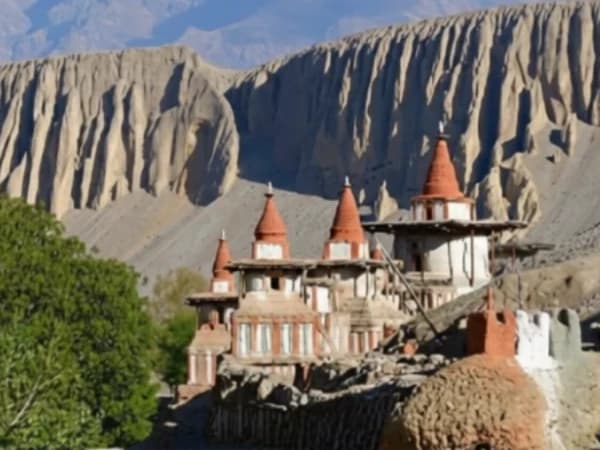
Trekking in Upper Mustang takes you on a rare and amazing trip through a surviving Tibetan kingdom in Nepal, which is commonly termed the "Last Forbidden Kingdom." The journey into a restricted area brings you through a beautiful desert with cliffs carved by the wind, old cave houses, and walled cities from the Middle Ages. It ends in the capital of Lo Manthang. The Upper Mustang trip is different from any other trip in Nepal since it takes you to a place and way of life that hasn't changed much in hundreds of years. You need a special Mustang Restricted Area Permit to go on this trek.
Why should you choose the Upper Mustang Trek?
An Upper Mustang Trek is for the culturally curious traveller who wants to go back in time instead of climbing a high mountain. It allows you to experience a living museum of Tibetan culture that hasn't changed since it was hard to get to and cut off from the rest of the world. The walk goes to altitudes that aren't very high (max ~3,800m) and has beautiful desert canyon scenery. It also goes deep into old Buddhist history, including the enigmatic sky caves of Chhoser. Our authorised packages take care of all the important details for getting special permits, give experienced guides who know the local customs, and make sure you have a respectful, immersive experience in this delicate and amazing area.
The Best Time to Trek in Upper Mustang
Because it is under a rain shadow, the best time to visit Upper Mustang is quite lengthy. The best time is from Spring to Autumn. May and June are quite popular because the weather is lovely, the skies are clear, and you can see the colorful Tiji Festival in Lo Manthang, which lasts for three days and includes prayers and dances. July and August are the best months to visit here, while other parts of the world are dealing with monsoon rains. Upper Mustang is dry and open. September and October have excellent, consistent weather and fewer people. The area is cold and difficult to navigate from November to April, with numerous guesthouses closed.
Cultural and Historical Highlights
The Upper Mustang hike offers a deep dive into Tibetan Buddhist culture. Lo Manthang is the crown jewel of the walled city. It has the old King's Palace, the Thubchen Gompa from the 15th century, and the beautiful ChampaLhakang monastery with its elaborate mandalas. The trail goes through old villages like Ghami and Charang, which have tall Mani walls and a unique way of running things. Exploring the Luri Gumba and Chhoser Cave Complexes reveals centuries-old religious art and ancient human settlements cut into sheer cliffs. These sites give us a glimpse into the region's fascinating past.
Why this region is personal to me
Upper Mustang is the only region on this website that I need to write about in the first person, because for me it is not work. It is pilgrimage.
I am a follower of Tibetan Buddhism, and Upper Mustang sits at the intersection of two things that matter to that tradition. First, it is one of the last places in the world where the old Tibetan Buddhist culture still exists in roughly the form it took before the changes of the twentieth century. The language people speak in Lo Manthang and the surrounding villages, the architecture of the dzongs, the murals inside the monasteries, the way the festivals are run, all of this has continued almost without a break from the medieval period because Mustang was a closed kingdom for centuries and was only opened to foreign visitors in 1992. Second, Mustang holds some of the oldest sacred sites in the entire Tibetan Buddhist world. Ghar Gompa, also known as Lo Gekar, is generally accepted to have been built in the eighth century by Padmasambhava himself, the Indian master who brought Buddhism to Tibet. It is one of the oldest Buddhist monasteries in Nepal and is roughly contemporary with Samye, the first monastery in Tibet, which Padmasambhava also founded. When you stand inside Ghar Gompa and look at the stone reliefs of the buddhas on the walls, you are looking at something almost thirteen hundred years old.
I have walked the Upper Mustang trek many times. I have done it with my wife Shamjhana, with members of our family, and with foreign friends who have become close enough to us over the years that they wanted to come with us on a trip that meant something. It is not the kind of trek you do once and tick off a list. For someone with a connection to this tradition it is the kind of place you keep coming back to.
What this means for you when you book the Upper Mustang trek with us is simple. You are not getting a guide who learned about the monasteries from a guidebook the night before. You are getting people who walk into Ghar Gompa and Chode Gompa and the festivals at Lo Manthang the way you walk into a place that matters to you, with the right respect, and with the kind of background knowledge that turns a visit into something more than a sightseeing stop. If you are interested in the Buddhist side of Mustang we can build the itinerary around it. If you just want the dramatic landscape and the cave systems and the medieval kingdom feeling, we can do that too. Either way you will be walking with someone who actually believes in the place.
A quick note on the practical side. The Nepal government changed the Upper Mustang permit rules in 2025. It is now a fifty us dollar per person per day restricted area permit, paid for the actual number of days you spend inside Upper Mustang, instead of the old five hundred dollar fixed fee for the first ten days. For a typical fifteen day trek this still works out to roughly seven hundred and fifty dollars per person on top of your Annapurna Conservation Area permit, your tims card, and the cost of a licensed guide which is mandatory. Since 22 March 2026 the permit is issued to solo trekkers too, but a licensed guide is mandatory. These are government rules and we cannot change them. But we can make sure every paper is sorted properly before you arrive in Kathmandu, and we can promise you that the money is buying access to a part of the world that genuinely does not exist anywhere else.
 Chat with Shreejan