Everest Base Camp vs Annapurna Circuit: Which Trek Should You Choose?

Written by Shreejan Simkhada, CEO of The Everest Holiday and third-generation Himalayan guide. TAAN Member #1586.
Last updated 4 September 2026. Every price on this page was read from our booking system on that date and holds for 2027 departures.
These are Nepal's two most famous treks, and the question I get asked most is which one to do. I have guided on both more times than I can count, so here is the honest answer with the numbers shown: they are completely different trips, and one of them is almost certainly the better fit for your time, your budget and your knees.
The short answer
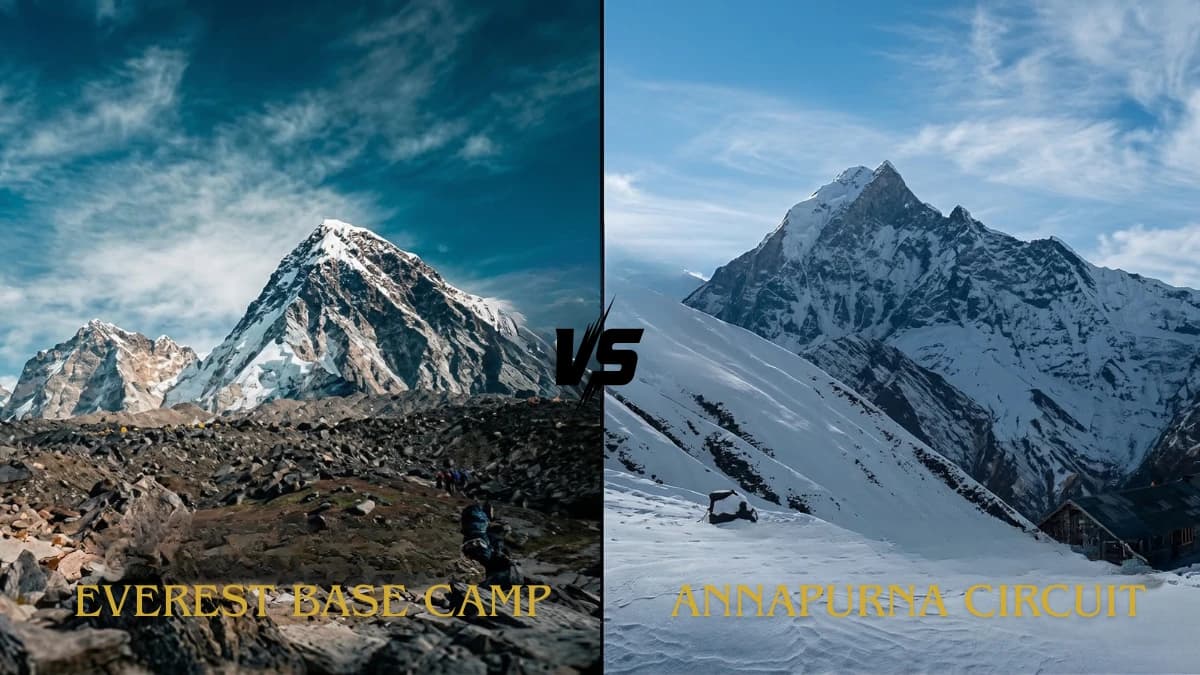
Choose Everest Base Camp if you want to stand at the foot of the highest mountain on earth, you have twelve days, and you are happy to walk in and out by the same trail. Choose the Annapurna Circuit if you want the most varied scenery Nepal can put in one trek, from rice terraces to high desert to a 5,416-metre pass, and you would rather finish somewhere different from where you started. Everest is higher, busier and dearer because of the Lukla flight. Annapurna is cheaper for two or more people, quieter on its northern half, and has one genuinely hard day instead of a week of steady altitude. If it is your first time in Nepal and you can only do one, I usually say Everest. If you have already done a big trek somewhere and want the better walk, I say Annapurna.
If you would rather ask than read, message me on WhatsApp with your dates, your group size and how fit you are, and I will tell you straight which one I would book for you.
What do the two treks actually cost?
Our own prices, per person, for our twelve-day versions of each trek. The tier changes how much is carried, cooked and arranged for you; the route and the guide are the same on every tier.
| Tier | Everest Base Camp, 12 days | Annapurna Circuit, 12 days |
|---|---|---|
| Budget (guide, permits, transport, rooms; you carry your bag and buy your meals) | US$1,399 (US$2,275 solo) | US$995 (US$1,450 solo) |
| Standard (all meals, one porter between two) | US$2,785 (US$3,345 solo) | US$1,575 (US$2,075 solo) |
| Luxury (private rooms, a porter to yourself, helicopter to and from Lukla on Everest) | US$4,999 (US$5,640 solo) | US$2,690 (US$4,350 solo) |
For two to four people Everest is dearer at every tier. The Lukla flight is included in every Everest tier and is worth roughly US$508 return per person, and the Khumbu's lodge and food prices are higher, but on Budget the gap is now only US$224. Annapurna starts with a drive from Kathmandu to Bhulbhule and ends with a drive from Muktinath to Pokhara, so there is no flight to pay for. If the flight is what puts you off, our Everest Base Camp by road route removes it and takes fifteen days.
Both prices drop with group size, and every trip is private, so the discount comes from your own group and never from strangers we add. Per person:
| Group size | EBC budget | EBC standard | Circuit budget | Circuit standard |
|---|---|---|---|---|
| 1 (solo) | $2,275 | $3,345 | $1,450 | $2,075 |
| 2 to 4 | $1,399 | $2,785 | $995 | $1,575 |
| 5 to 8 | $1,299 | $2,520 | $640 | $1,340 |
| 9 to 12 | $1,199 | $2,470 | $490 | $1,280 |
| 13 to 20 | $999 | $2,450 | $420 | $1,260 |
What is not in either price, with us or with anyone: international flights, your visa (US$50 for 30 days), insurance, Kathmandu and Pokhara hotel nights, and tips. The full all-in arithmetic for Everest is in what Everest Base Camp really costs.
Side by side
| Factor | Everest Base Camp | Annapurna Circuit |
|---|---|---|
| Our duration | 12 days, Kathmandu to Kathmandu | 12 days, Kathmandu to Kathmandu |
| High point | 5,545 m, Kala Patthar (Base Camp itself is 5,364 m) | 5,416 m, Thorong La |
| Shape of the route | Out and back on the same trail | A horseshoe: in from Bhulbhule, out through Muktinath and Jomsom |
| Getting to the start | Flight to Lukla (from Manthali in autumn and spring, see below) | Drive from Kathmandu, no flight |
| Acclimatisation days | Two: Namche Bazaar and Dingboche | One: Manang |
| Hardest day | Lobuche to Base Camp and back to Gorak Shep, then Kala Patthar at dawn | Thorong High Camp at 4,900 m over the pass to Muktinath at 3,800 m |
| Scenery | Everest, Lhotse, Nuptse and Ama Dablam at close range; glaciers and moraine above Dingboche | Rice terraces, pine forest, the dry Manang valley, Dhaulagiri and the whole Annapurna range |
| Culture | Sherpa villages, Tengboche monastery | Gurung and Manangi villages, Muktinath temple, Marpha |
| Crowds | Busy in October; one trail for everyone | Quieter, especially between Manang and Muktinath |
| Permits (bought by us, inside the price) | Sagarmatha National Park NPR 3,000, Khumbu Pasang Lhamu NPR 3,000 and a TIMS card | Annapurna Conservation Area permit NPR 3,000 and a TIMS card |
| Best for | A first big trek with a clear goal; the Everest moment | Variety, fewer people, one memorable pass day |
Which is harder?
Neither needs ropes or technical skill; you are walking on trails. The difficulty is altitude and the length of the days. Everest is the more sustained test: from Namche onwards you sleep above 3,400 metres for eight nights and walk six to eight hours a day in thin air, which is why we build in two acclimatisation days and will not cut them. Annapurna is gentler for most of the trek, then throws one very hard day at you: our itinerary sleeps at Thorong High Camp at 4,900 metres and crosses the pass at 5,416 metres before dropping 1,600 metres to Muktinath. If you worry about fitness, Everest's gradual climb is more forgiving. If you worry about one long day, Annapurna's pass is the thing to train for. A full day in the hills at home, done comfortably, is enough for either.
Which has the better views?
This is the honest subjective bit. Everest puts you under the highest mountain on earth, and the morning on Kala Patthar with the summit pyramid catching first light is the reason most people come to Nepal at all. Annapurna gives you more change: you start among rice paddies and banana trees, climb through pine forest, walk the dry brown valley above Manang, and finish in the Kali Gandaki, the deepest gorge in the world, with Dhaulagiri on one side. For the one view you will never forget, Everest. For a trek that looks different every single day, Annapurna.
Which is less crowded?
Everest, in October, is busy: one trail from Lukla to Base Camp, and every lodge in Namche and Dingboche full. Annapurna spreads people out, and the northern side from Manang over the pass to Muktinath is often genuinely quiet. If you want Everest without the October crowds, go in the first half of November or in late March. Better still, take one of the Everest variants that leave the main corridor: Base Camp with Gokyo Lakes via Cho La in 15 days, or the full Three Passes in 17. The Gokyo side carries about a fifth of the traffic of the classic route.
Which has the richer culture?
Everest is Sherpa country: Buddhist, Tibetan in flavour, with Tengboche monastery as the centrepiece and prayer walls on every ridge. Annapurna passes through more than one culture in a week: Gurung villages low down, Manangi and Tibetan-Buddhist villages in the high valley, then the Hindu and Buddhist shrine at Muktinath and the apple orchards of Marpha in the Thakali country beyond the pass. Everest goes deeper into one culture; Annapurna shows you several.
How many days off work?
Both treks are twelve days with us, Kathmandu to Kathmandu. Add a travel day each side and a spare day at the end, so sixteen is comfortable for either. On Everest the spare day matters more, because Lukla weather occasionally holds flights. If you want Annapurna with Tilicho Lake, the highest big lake in the world at 4,919 metres, that version takes sixteen days. If you only have nine or ten, Annapurna Base Camp is the trek that fits, not a shortened Circuit.
When to go, and the Lukla thing nobody mentions
October and late March to April suit both treks. Mid-November into early December is colder, clearer and quieter on both, and often better value. One fact we tell every Everest client before they book: from late September to the end of November, and again from mid-March to mid-May, Lukla flights leave from Manthali airstrip, four to five hours by road from Kathmandu, with a pickup between midnight and 2 am. Helicopters are exempt and fly from Kathmandu year-round, which is one reason the luxury tier uses them. Annapurna has no such surprise; you drive out of Kathmandu after breakfast.
What real trekkers said
Thomas, who trekked with us from Malaysia, wrote on TripAdvisor in January 2021: "The 14 days Trekking was Not easy for us as both of us are in our Fifties. The Guide assigned D.B Rai, was very Helpful & Experience. Step by Step, he helped us All the Way to Top of Kalapathar at 5545 meter." Anna, from Hungary, wrote on TripAdvisor in October 2023 after the Circuit: "We hiked the Annapurna circuit trek from Dhorapani to Kagbeni. Janak, our guide helped a lot not just with finding and reserving accomodation [sic] daily, but scouting out and showing us the best sights during the trek." Both reviews are on our TripAdvisor page, with dates, if you want to read the rest.
Check us before you pay
Do not take any operator's word for any of this, ours included. The Everest Holiday Pvt. Ltd. was registered in Kathmandu on 8 April 2016, company registration 147653/072/073, trekking licence 2090/072, Trekking Agencies' Association of Nepal member 1586. Every legitimate company holds the same paperwork and will send it without being offended that you asked. Any date within a year with 72 hours' notice. The 10 percent deposit itself is not refunded if you cancel. Ask me for a call before you send anything.
The questions I get asked about choosing
Can I do both in one trip? Yes, with about four weeks. Most people do Everest first and come back for Annapurna a year or two later, or the other way round. We have plenty of repeat trekkers who did exactly that.
Is Annapurna Circuit ruined by the road? No, but it has changed. The jeep road reaches Manang on one side and Muktinath on the other, which is why our itinerary drives the low sections and walks the parts worth walking. The trail between Upper Pisang and the pass is still trail.
Which is safer for altitude? Everest reaches higher and stays high longer, so mild altitude symptoms are more common there. Annapurna's risk is concentrated in the pass day. On both, the guide carries a pulse oximeter, checks you every evening, and turns you round if the numbers say so. Your insurance must cover helicopter rescue up to 6,000 metres, which is above the highest point on either trek, not merely to it.
I am travelling alone. Does the price change? On Everest a solo trekker pays more than each person in a pair: US$2,275 on Budget, US$3,345 on Standard and US$5,640 on Luxury, and gets a private guide. On the Annapurna Circuit a solo trekker pays more than each person in a couple, because the guide and the vehicle are not shared: US$1,450 on Budget, US$2,075 on Standard and US$4,350 on Luxury.
What gear do you provide? A down jacket and a sleeping bag rated to minus fifteen Celsius, free on every tier, on both treks.
If you are still torn, write to me on WhatsApp with your dates and I will tell you which one I would book for you and why, including the reasons you might not want to hear. Or go straight to the Everest Base Camp trek or the Annapurna Circuit trek and read the day-by-day itineraries.
Shreejan Simkhada is the CEO and co-founder of The Everest Holiday, a family-run trekking company in Kathmandu, and a third-generation Himalayan guide. TAAN Member #1586. Every booking helps fund our Nagarjun Learning Center.
Planning a trip to Nepal?
Drop us your details and tell us what you have in mind. We will put together a personalised plan and get back to you.
Not sure which Nepal trek is right for you?
Take our free 2-minute quiz and get personalised recommendations based on your fitness, experience, and travel style.
Find Your Perfect Trek →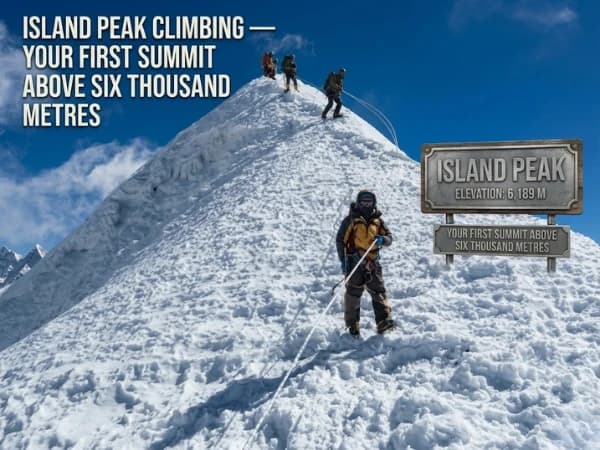
Island Peak Itinerary and Summit Day 2027: 14 Days, Base Camp to the Top
The 14-day Island Peak itinerary day by day, what summit day is like from base camp, where sources disagree on heights, best months and 2027 prices.
Read More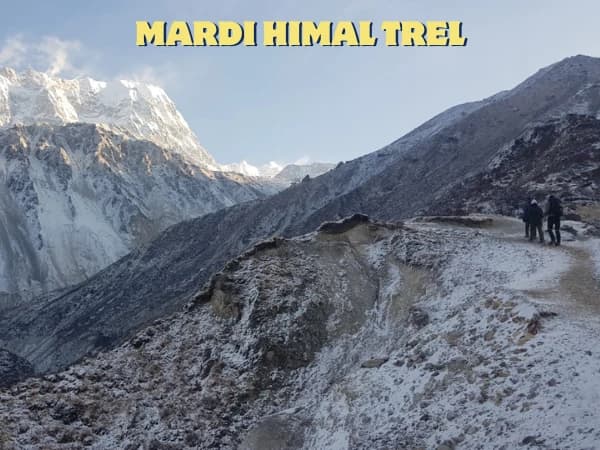
How Difficult Is the Mardi Himal Trek? An Honest Day-by-Day Rating for 2027
An honest day-by-day rating of the Mardi Himal trek: the steep climb to High Camp, the 4,500 m push to Base Camp, altitude risk, who finds it hard and 2027 prices.
Read More
Manaslu Circuit Reopened: What Changed After the 2026 Floods and How to Plan 2027
The Manaslu Circuit over the Larke Pass is open again with extreme caution. What changed in the lower valley after the two 2026 floods, 2027 prices and permits, and how I would plan.
Read More Chat with Shreejan