
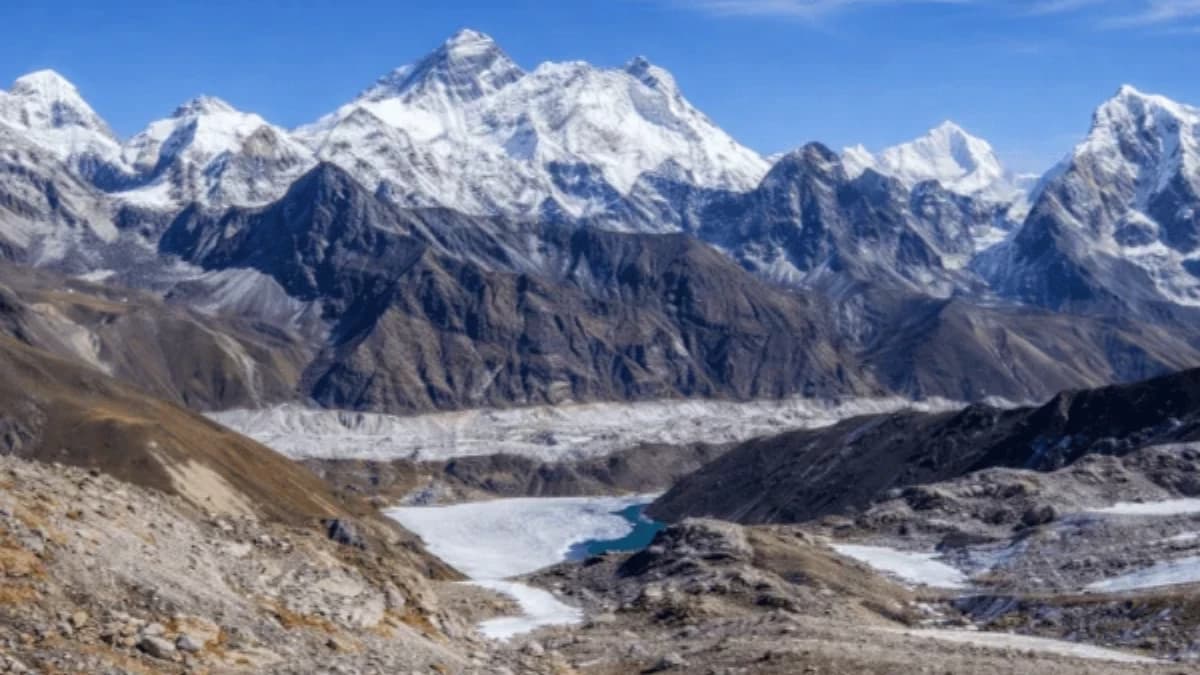
If you have ever seen a photograph of Everest reflected in a turquoise lake with prayer flags in the foreground, that photograph was taken from Renjo La or just below it. Sitting at an elevation of around 5,360 metres (17,585 feet), the pass links the Gokyo Valley with the quiet Bhote Koshi valley and the traditional Sherpa village of Thame. While it is part of the famous How Does Renjo La Compare to the Other Everest Passes?, Renjo La is generally considered less technical than Kongma La and Cho La, making it a popular choice for trekkers who want dramatic mountain views without extreme technical difficulty.
This trek is ideal for those who want to step away from the crowded Everest Base Camp trail and explore a quieter, more remote side of the Khumbu region. Wide-open landscapes, glacier-fed lakes, and towering Himalayan peaks define the experience. Renjo La Pass offers both challenge and beauty, making it a highlight for trekkers seeking a deeper connection with the Everest Himalayas.
Is the Renjo La Pass trek worth doing?
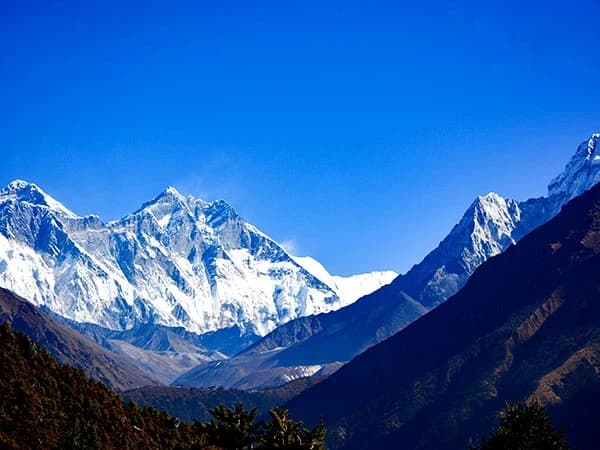
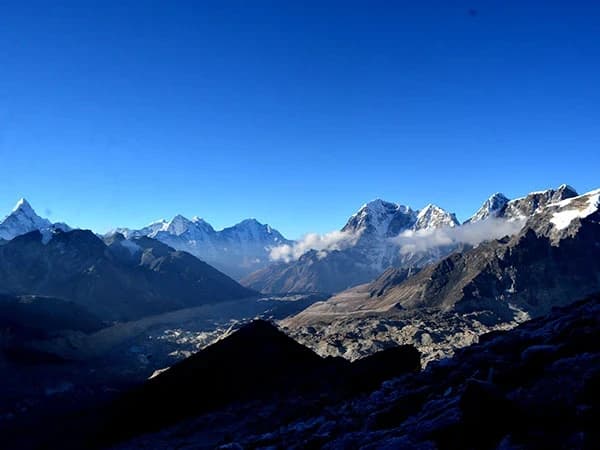
Renjo La Pass is best known for its exceptional scenery. From the top of the pass, trekkers are treated to one of the finest panoramic viewpoints in the Everest region. The view includes Mount Everest (8,849 m), Lhotse (8,516 m), Makalu (8,485 m), and Cho Oyu (8,188 m), along with the dramatic Ngozumpa Glacier and the turquoise Gokyo Lakes below.
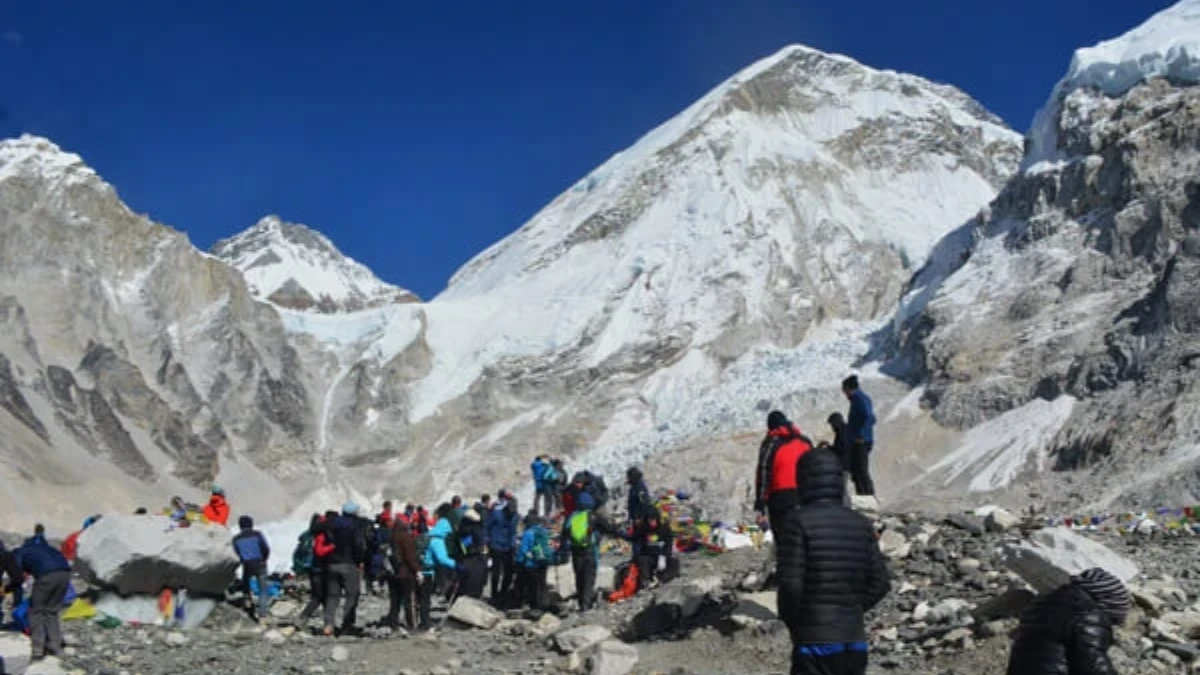
Unlike the busy trails leading to Everest Base Camp, the Renjo La route remains relatively quiet. This peaceful atmosphere allows trekkers to enjoy the landscape at a relaxed pace, making it especially appealing to photographers, nature lovers, and those who prefer solitude on the trail.
How do you get to Renjo La Pass?
Most trekkers reach Renjo La Pass either as part of the Everest Three Passes Trek or as an extension of the Gokyo Lakes Trek.
The adventure begins with a short mountain flight from Kathmandu to Lukla. From Lukla, the trek follows the main Everest trail through Phakding to Namche Bazaar, the cultural and commercial hub of the Khumbu region. An acclimatisation day in Namche is essential before heading higher.
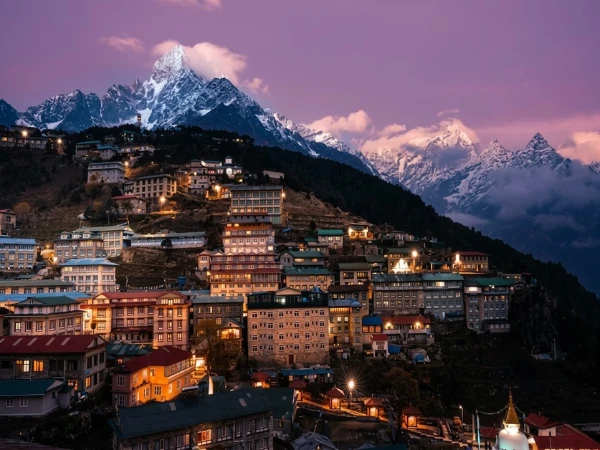
From Namche, the trail branches away from the Everest Base Camp route, leading toward Dole and Machhermo. After several days of gradual ascent, trekkers arrive at Gokyo village, located beside the Gokyo Lakes. Renjo La Pass is most commonly crossed from Gokyo to Thame, which allows for a steady climb and a long but manageable descent. Trekkers usually start early in the morning to avoid strong winds and afternoon cloud cover.
What can you see from the top of Renjo La Pass?
Renjo La Pass is widely regarded as the most scenic of the three high passes in the Everest region. From the summit at 5,360 metres (17,585 feet), trekkers are rewarded with sweeping Himalayan views that stretch across several of the world’s highest peaks. Mount Everest (8,849 metres / 29,031.7 feet), Lhotse (8,516 metres / 27,940 feet), Makalu (8,485 metres / 27,838 feet), and Cho Oyu (8,188 metres / 26,864 feet) rise dramatically above vast glaciers and rugged ridgelines. Below, the Rolwaling and Bhote Koshi valleys open out, while the deep blue waters of the Gokyo Lakes create a striking contrast against the surrounding snow and rock. In clear weather, the panorama from Renjo La Pass is hard to top and easily becomes one of the highlights of the entire trek.
What permits do you need for the Renjo La Pass trek?
Trekking Renjo La Pass requires three official permits. Trekkers must obtain the Sagarmatha National Park Entry Permit, which allows access to the protected Everest region, the Khumbu Pasang Lhamu Rural Municipality Permit, and a TIMS card. We arrange the TIMS card in Kathmandu before the trek, and your guide buys the Khumbu permit on the trail at Lukla or Monjo. These permits are mandatory and are checked at multiple checkpoints along the route. No special climbing or mountaineering permit is required, as Renjo La Pass is classified as a trekking pass rather than a technical climbing route.
How do you prepare for the Renjo La Pass trek?
Although Renjo La Pass is considered less technical than Kongma La or Cho La, it remains a demanding high-altitude trek that requires proper preparation. The pass sits above 5,300 metres, where thin air, cold temperatures, and sudden weather changes can quickly increase the level of difficulty. Trekkers should plan sufficient acclimatisation days, especially in Namche Bazaar and Gokyo, to allow the body to adjust gradually to the altitude.
Good-quality trekking boots with strong ankle support are essential, as parts of the trail involve rocky terrain, loose scree, and occasional snow. Trekking poles help maintain balance during steep ascents and long descents, particularly on the approach to Thame. Warm clothing, including windproof layers, insulated jackets, gloves, and hats, is necessary to protect against strong winds and freezing morning temperatures near the pass.
A basic understanding of altitude sickness symptoms such as headaches, nausea, dizziness, and fatigue is very important. Trekkers should monitor their condition closely and never hesitate to rest or descend if symptoms worsen. Weather in the high mountains can change rapidly, so flexibility in the itinerary is key.
Hiring a licensed and experienced local guide is strongly recommended for the Renjo La Pass trek. A knowledgeable guide assists with route navigation, weather judgment, pace management, and safety decisions. In remote sections of the trail, especially during the pass crossing, having professional support greatly increases both safety and confidence.
Why Choose Renjo La Pass Trek
Renjo La Pass is an excellent option for trekkers seeking a genuine high-altitude Himalayan experience without the extreme technical challenges found on other high passes. The route offers an ideal balance between adventure and accessibility, making it suitable for well-prepared trekkers with prior high-altitude experience.
One of the biggest advantages of the Renjo La Pass trek is its scenery. From the turquoise Gokyo Lakes to sweeping views of Everest, Lhotse, Makalu, and Cho Oyu, the landscape remains impressive throughout the journey. The trail is also noticeably quieter than the Everest Base Camp route, allowing trekkers to enjoy the mountains in a more peaceful setting.
In addition to natural beauty, the trek provides meaningful cultural immersions. Passing through traditional Sherpa villages such as Gokyo and Thame offers insight into local mountain life, monasteries, and centuries-old trekking traditions.
For travellers who want to explore the Everest region beyond the standard routes, Renjo La Pass delivers a scenic, rewarding, and well-rounded trekking experience that combines high-altitude adventure, cultural depth, and some of the finest views in Nepal.
Cross Renjo La on the Everest Three Passes Trek (17 days) or the shorter Two Passes Trek (15 days) that pairs Renjo La with Cho La.
Renjo La at 5,360 metres is the most scenic of the three Everest passes. The view from the top (the turquoise Gokyo Lakes spread below, Everest and Cho Oyu towering above, and the Ngozumpa Glacier winding between them) is one of the finest panoramas in the Himalaya. It is also the quietest of the three passes. Most trekkers do Cho La. The ones who do Renjo La get the better view with fewer people.
Renjo La is on our Everest Three Passes Trek.
WhatsApp:+977 9810351300
Email:[email protected]
Written by Shreejan Simkhada, CEO of The Everest Holiday and third-generation Himalayan guide. TAAN Member #1586.
Renjo La is the third Three Passes summit. Our EBC, Gokyo Lakes & Cho La Pass Trek is private (your group only, no strangers), 2026 dates open, From USD $1699. WhatsApp us for tailored 2026 dates and current departures.
 Chat with Shreejan