
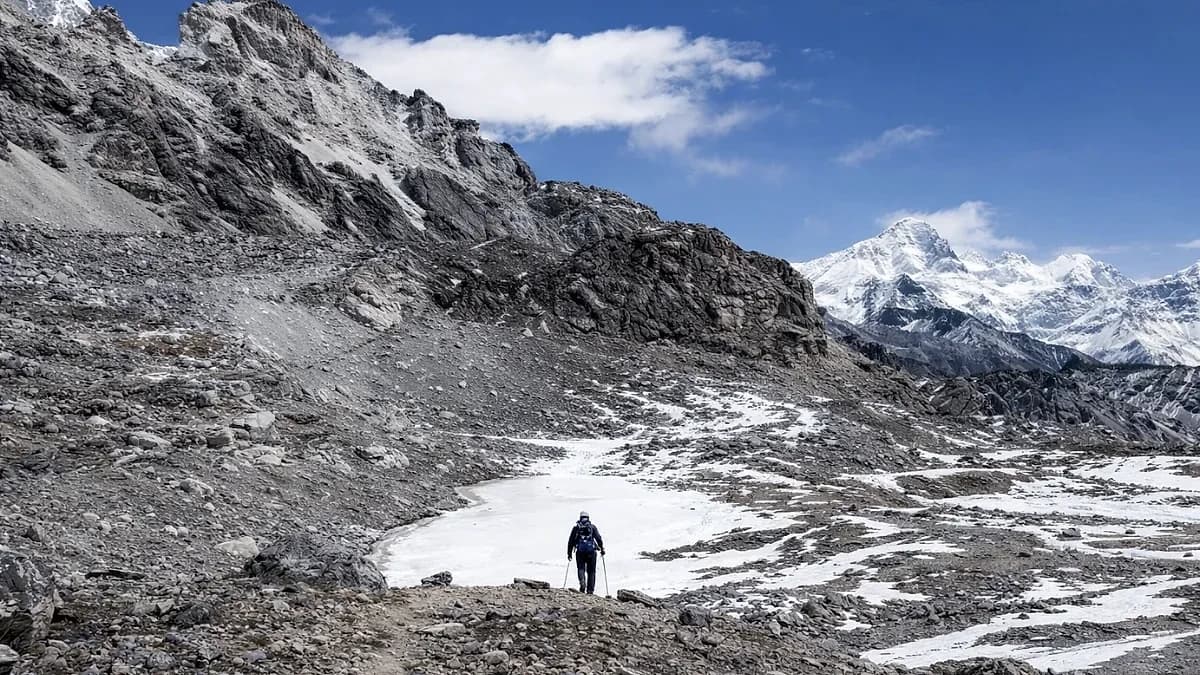
Kongma La is the crossing that separates trekkers from mountaineers. At 5,535 metres, it is the highest of the three Everest passes and the one that makes people question whether they should have stuck to the standard EBC trail. At around 5,535 metres, it is the highest of the three classic Everest passes, alongside Cho La and Renjo La. This remote mountain pass connects Chhukung Valley with Lobuche, cutting across rugged terrain, glaciers, and high alpine landscapes that feel far removed from the busy Everest Base Camp trail.
Because of its elevation and isolation, Kongma La Pass attracts fewer trekkers than other routes in the region. Those who attempt it are rewarded with vast mountain panoramas, dramatic glacier views, and a strong sense of achievement. The pass is best suited for experienced trekkers who want to test their limits and experience a raw side of the Himalayas.
Unlike teahouse-filled trails, Kongma La feels wild and exposed. There are no villages or lodges on the crossing day, which adds to both the challenge and the adventure.
How Should You Prepare for Kongma La Pass?
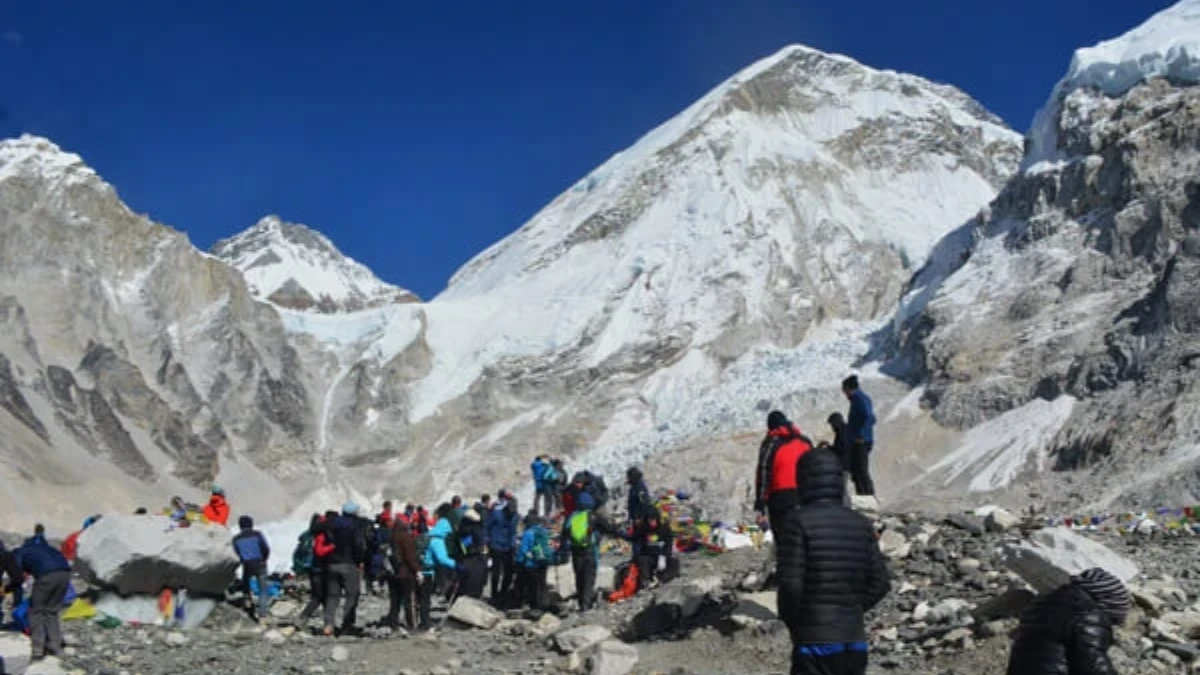
Most trekkers reach Kongma La Pass as part of the Everest Three Passes Trek, though it can also be done as an extension of the Everest Base Camp route.
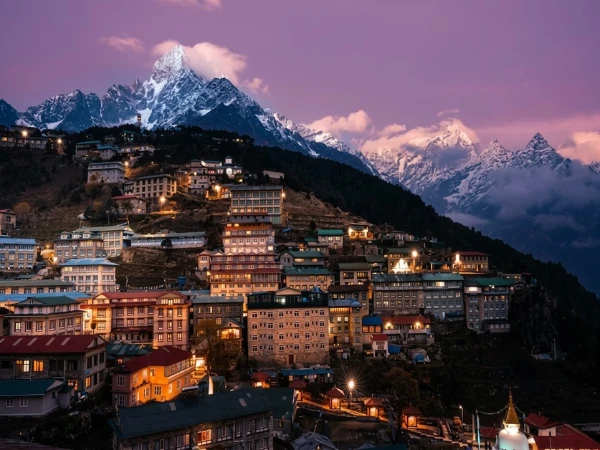
The journey begins with a flight from Kathmandu to Lukla, followed by trekking through Phakding and Namche Bazaar. After proper acclimatisation in Namche, the trail continues to Tengboche, Dingboche, and finally Chhukung, which is the main staging point before crossing the pass.
The pass is most commonly crossed from Chhukung to Lobuche. This direction allows for a more gradual climb and better altitude adaptation. Trekkers usually start before sunrise to avoid afternoon winds and changing weather conditions.
Route for Kongma La Pass
The standard route to Kongma La Pass follows a classic trekking path through the heart of the Everest region. The journey begins with a flight to Lukla and continues on foot to Namche Bazaar, the main trading hub of the Khumbu. After proper acclimatisation in Namche, the trail leads to Tengboche, home to the region’s most famous monastery, and then continues to Dingboche. From Dingboche, trekkers head east toward the Chhukung Valley, which is the main staging point for crossing Kongma La Pass. The crossing itself connects Chhukung with Lobuche, where the trail joins the Everest Base Camp route after a long and demanding day in high alpine terrain. This route is remote, less travelled, and significantly more challenging than the standard Everest Base Camp trek.
As trekkers ascend toward Kongma La Pass at 5,535 metres (18,159 feet), the landscape becomes increasingly dramatic and rugged, surrounded by some of the highest mountains in the world. Along the route and from the pass itself, trekkers are rewarded with spectacular views of Mount Everest (8,849 metres / 29,032 feet), Lhotse (8,516 metres / 27,940 feet), and Makalu (8,485 metres / 27,838 feet) rising above vast glaciers. Nearby peaks such as Nuptse (7,861 metres / 25,791 feet), Ama Dablam (6,812 metres / 22,349 feet), Cholatse (6,440 metres / 21,129 feet), and Thamserku (6,608 metres / 21,680 feet) dominate the skyline, making this crossing one of the most scenic yet intimidating sections of the Everest region.
What Permits Do You Need for Kongma La?
To trek Kongma La Pass, three permits are required. Trekkers must obtain the Sagarmatha National Park Entry Permit, which allows access to the protected Everest region, the Khumbu Pasang Lhamu Rural Municipality Permit, and a TIMS card. We arrange the TIMS card in Kathmandu before the trek, and your guide buys the Khumbu permit on the trail at Lukla or Monjo. These permits are mandatory and are checked at several points along the route. No technical mountaineering permit is required to cross Kongma La Pass, as it is classified as a trekking route rather than a climbing peak.
Although no climbing licence is required, Kongma La Pass is physically demanding and highly remote. The trail involves steep ascents, loose rock, glacier crossings, and long walking hours at extreme altitude. Weather conditions can change rapidly, and route markings are limited in some sections. For these reasons, hiring a licensed and experienced guide is strongly recommended. A guide provides essential support with navigation, weather assessment, altitude management, and overall safety, particularly while crossing glacier and moraine sections between Chhukung and Lobuche. Related: Renjo La Pass Trek: One of the Most Scenic High Passes in the Everest Region.
How Difficult Is Kongma La Compared to the Other Passes?
Kongma La Pass is widely regarded as the most difficult of the three high passes in the Everest region, and it demands serious physical and mental preparation. Standing at 5,535 metres (18,159 feet), the pass pushes trekkers into extreme altitude, where oxygen levels are low and even simple movements require effort. Unlike the Everest Base Camp trail, which has regular villages and teahouses, Kongma La is remote and exposed, with long stretches where there is no shelter, food, or support. This isolation alone adds to the overall difficulty of the crossing.
The terrain is another major challenge. The ascent from Chhukung involves steep climbs over loose scree, large boulders, and uneven rocky slopes. Trail markings can be faint or confusing, especially in poor weather or after snowfall. Near the top of the pass, trekkers often encounter icy sections, frozen ground, and glacier debris, particularly in early spring and late autumn. While technical climbing skills are not required, balance, confidence on rough ground, and experience at altitude are essential.
Physical endurance plays a key role in determining how difficult Kongma La feels. Crossing the pass usually takes a full day of hard trekking, often lasting eight to ten hours, with a long ascent followed by a demanding descent toward Lobuche. The downhill section can be just as exhausting as the climb, as it involves unstable moraine and steep drops that place constant strain on the knees and legs. Fatigue becomes a real factor, especially if acclimatisation has not been handled properly.
Altitude is the most serious difficulty on Kongma La Pass. At over 5,500 metres, the risk of altitude sickness is high if trekkers ascend too quickly. Headaches, nausea, dizziness, and shortness of breath are common warning signs. Proper acclimatisation in Namche Bazaar and Dingboche, along with rest days and slow pacing, is essential. Trekkers who ignore early symptoms or push too hard significantly increase their risk of serious altitude-related illness.
Weather conditions can further increase the difficulty level. Strong winds, sudden snowfall, and rapidly changing visibility are common at this elevation. Even during peak trekking seasons, conditions on the pass can shift quickly, turning a challenging day into a dangerous one. Cold temperatures, especially in the early morning, can affect both energy levels and safety. Related: The Everest Three Passes Trek: Seventeen Days Across the Roof of the World.
How dangerous are Kongma La Pass trails and glacier crossings?
Kongma La Pass is known for its intimidating and exposed terrain. The ascent involves steep climbs over loose boulders, rocky slopes, and faint trails that can be difficult to follow in poor visibility.
Near the summit, trekkers encounter glacier sections and icy ground, particularly in early spring and late autumn. Snow, ice, and strong winds can make conditions challenging and sometimes dangerous. The route markings are minimal, increasing the importance of an experienced guide.
The descent toward Lobuche is long and tiring, crossing unstable moraine and rocky slopes. While ropes are usually not required, trekking poles, proper footwear, and sometimes crampons greatly improve safety.
Is the Kongma La Pass trek worth it?
Kongma La Pass is ideal for trekkers who want a serious high-altitude challenge in the Everest region. It offers dramatic glacier scenery, remote wilderness, and some of the most impressive mountain views in Nepal.
Crossing the highest trekking pass in the Everest region delivers a strong sense of accomplishment and a deeper connection to the Himalayan landscape. For those seeking adventure beyond Everest Base Camp, Kongma La Pass offers a rewarding and demanding experience.
Kongma La is the third and final pass on the Everest Three Passes Trek, a 17-day route that is one of the most challenging treks in the Khumbu region.
Kongma La is the hardest of the three Everest passes. It is not the highest (that is Cho La), but the approach is steeper, the route-finding is less obvious, and the descent to Lobuche is genuinely technical in places. I have seen strong trekkers struggle on this one. I have also seen careful trekkers manage it with good guidance and proper acclimatisation. The view from the top, looking down at the Khumbu Glacier and across to Makalu, makes you forget how hard the climb was.
Kongma La is on our Everest Three Passes Trek. We only send experienced guides on this route.
WhatsApp:+977 9810351300
Email:[email protected]
Written by Shreejan Simkhada, CEO of The Everest Holiday and third-generation Himalayan guide. TAAN Member #1586.
The Kongma La is almost always crossed from Chhukung, the last village in the Imja valley below the pass, where trekkers acclimatise on Chhukung Ri before the climb.
Kongma La is the high pass before EBC on Three Passes. Our EBC, Gokyo Lakes & Cho La Pass Trek is private (your group only, no strangers), 2026 dates open, From USD $1699. WhatsApp us for tailored 2026 dates and current departures.
 Chat with Shreejan