Buddhist circuit tour -7Days

Buddhist circuit tour -7Days
Quick Overview
Duration7 Days
Trip GradeEasy
CountryNepal
Maximum Altitude1350m/4430ft
Group Size2-20
StartsKathmandu
EndsKathmandu
ActivitiesKathmandu-Lumbini Buddhist trail tour
Best TimeFeb, Mar, April, May, June, Sep, Oct, Nov & Dec

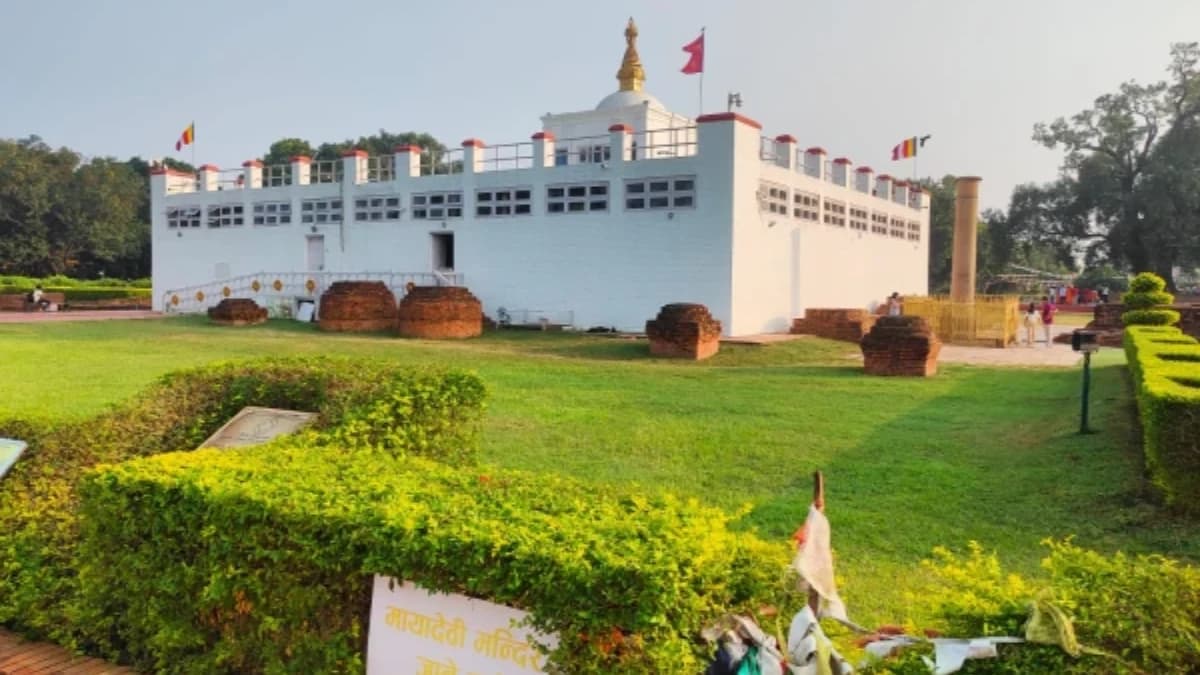
Enjoy a deep Buddhist journey in Nepal, which is a very spiritual trip that follows the life and lessons of Lord Buddha. This deep experience links the most important UNESCO World Heritage Sites. It starts with the peaceful Lumbini visit to the Maya Devi Temple, where Buddha was born. 

In the Kathmandu Valley, you can see the famous Swayambhunath Stupa, which has a Buddha face with eyes looking in every direction, and the huge, colorful Boudhanath Stupa, which is a center for Tibetan Buddhism around the world. The trail goes to famous  places like Namobuddha, a place to remember a sacrifice made in a past life, and Pharping's meditation caves, which are holy to Guru Rinpoche.

 This carefully planned Buddhist heritage tour includes unique meditation experiences, chances to see beautiful Buddhist art and buildings, and opportunities to live like a monk. It is meant for spiritual travelers and combines the chance to think deeply about yourself with visits to ancient temples and calm natural settings where people follow  Buddhist  rituals.

A major highlight of the Buddhist trail tour 

  • Visit the peaceful grounds of Maya Devi Temple, where Lord Buddha was born, and the International Monastic Zone, which has temples from all over the world.
  • Climb  to  this  old  stupa  on  a  mountaintop,  which  has  the  famous  Buddha  eyes  and beautiful views of the valley. It is a mix of Buddhist and Hindu devotion.
  • Walk  around  one  of  the  world's  biggest  stupas  while  pilgrims  chant  in  time  with  the whirling prayer wheels at this impressive UNESCO monument.
  • Travel to this tranquil mountaintop where Buddha showed the ultimate sacrifice in a former life. Now there are stupas and views of the whole area.
  • Visit sacred caverns where Guru Rinpoche found enlightenment. These caves are a holy place for serious meditation and Vajrayana practice.
  • Learn the basics of meditation and Buddhism at this serene monastery on a mountaintop overlooking the Kathmandu Valley.
  • See amazing Buddhist art, such as detailed wood carvings, huge gold statues, colorful Tibetan paintings, and designs for stupas that have been around for a long time.
  • For a real spiritual experience, live as a monk every day by doing things like morning prayers, butter lamp ceremonies, and local pilgrim rites.

Overview of the Kathmandu-Lumbini Buddhist trail tour-7 days

Siddhartha Gautama, the Buddha, was born in Nepal. It is not  simply a nation; it is a living tapestry of Buddhist culture, spirituality, and peaceful scenery. The Buddhist Trail in Nepal takes pilgrims and visitors on a deep journey through sacred locations, old monasteries, meditation centers, and venerated stupas that have supported Buddhism for over 2,000 years.

This path goes through green hills, quiet valleys, and busy towns.The Buddhist Trail connects locations where the Buddha spread his teachings, great masters meditated, and people now gather to pray.It is a trip that combines looking inside yourself with looking outside at history, architecture, culture, and the stunning beauty of nature. The journey begins in the peaceful plains of Lumbini, where Lord Buddha was born. It then goes to the lively monastic centers of Kathmandu Valley, such as Swayambhunath (the Monkey Temple) and Boudhanath Stupa, which is one of the biggest spherical stupas in the world and a center of Tibetan Buddhism.

It goes even farther to remote mountain retreats like Namobuddha, where people tell stories of kindness, and to the cave monasteries of Pharping, where Padmasambhava (Guru Rinpoche) is said to have meditated. But our tour starts from Kathmandu, and we went to Lumbini and then back to Kathmandu. Along the route, there are tranquil woodland walks, prayer flags that flutter in the wind, prayer wheels that spin, and the soft sound of mantras. Each site narrates a story of enlightenment, sacrifice, and dedication.

They also provide places for meditation, studying, and connecting with monastic groups. The Buddhist Trail in Nepal encourages you to walk in the footsteps of the Awakened One and  feel  a  tranquility  that  goes  beyond  time.  Whether  you  are  a  pilgrim  looking  for  blessings,  a meditator looking for solitude, or a visitor interested in spiritual traditions, this is the place for you.

Reminder

For  a  smooth  and  stress-free  start,  we  recommend  arriving  in  Kathmandu  by  4  PM  the  day before we leave. This gives you enough time for a final gear check, a trip briefing with your guide, and to ensure you have everything you need before heading out on the trek. 

Online briefing

This online meeting serves as our first coffee before the trip! This online meeting is your opportunity to learn about everything that will happen on the trip. We'll discuss everything from what gear to bring  to  what  each  day  on  the  route  will  be  like  and  how  it  will  feel,  and  we'll  address  any questions you may have. After you book, we'll send you an email with a couple of times when we can talk. We'll set up our pre-adventure meeting as soon as you submit the papers we need. Also, our tour itinerary  includes your hotel stay in Kathmandu.  During the online meeting, please share your preferences, budget, and the standard of the hotel you would like to stay at in Kathmandu. We will arrange it for you accordingly.

Short Itinerary
Day 01: Arrival in Kathmandu And Transfer to the Hotel of your choice
Day 02: Sightseeing some of the Buddhist sites of Kathmandu.
Day 03: Morning  drive  to  Namoboudha  and  back  to  Kathmandu  by  visiting  the  cave monasteries of Pharping.
Day 04: Drive 287 km/ 178 miles to Lumbing in a private tourist bus
Day 05: Sightseeing in Lumbini
Day 06: Drive Back to Kathmandu
Day 07: Final Departure
Expand
Detailed Itinerary
Day 01:

Namaste and a happy welcome to Nepal! When you get to Tribhuvan International Airport, our representative will welcome you with a beautiful Khada. After that, a private, comfortable vehicle will take you to your lodging. Upon arrival at the hotel, you may rest and acclimate to the lively bustle of Kathmandu.

You may take your time settling in and getting a first look at the city's busy streets in the evening. The Thamel is famed for its colorful markets and pleasant cafes. You might want to check it out.

Meals: Breakfast, Lunch, and DinnerAccommodation: Hotel
Day 02:

Today,  we  leave  our  hotel  and  go  to  the  spiritual  center  of  the  Kathmandu  Valley.  We  are focusing on some of the city's most famous Buddhist temples. We'll spend the day touring old stupas and monasteries, where the air is dense with the smell of incense and the sound of peaceful prayers. You could witness prayer wheels spinning beneath the hands of people who are praying, colorful prayer flags flying in the wind, and maybe even monks in maroon robes doing their daily rituals.

We keep going to the old Swayambhunath Stupa (Monkey Temple), which is impressively placed on a hill that looks out over the valley. There is a legend that this holy place appeared suddenly when the Kathmandu Valley was still a lake. You may find one of Buddhism's oldest temples by climbing 365 stairs with joyful monkeys. At the shrine, Buddha's all-seeing eyes look compassionately across the valley. 

You can feel the spiritual energy here, with prayer flags blowing in the breeze, devotees around the stupa, and the smell of incense in the air. Kapan Gumba is a peaceful Tibetan Buddhist monastery that sits on the lush hills above Kathmandu. It serves as both a holy place for meditation and a major monastic university. The rhythmic chanting of the monks, the spinning of prayer wheels, and the faint smell of butter candles all contribute to the tranquil mood. Visitors are allowed to watch the rites, roam around the  peaceful  grounds  decorated  with  colorful  prayer  flags,  and  soak  up  the  deep  serenity. It gives a real and easy look at life in a monastery, and it's a great place to get away from the city's noise, just a short distance away.

As the light of the afternoon fades, we move on to the Boudhanath Stupa, which is the spiritual center of Tibetan Buddhism. Join the never-ending line of pilgrims walking around the huge mandala and spinning prayer wheels while the Buddha watches over them. The air is filled with the sound of monks singing, prayer flags waving, and the calm beat of devotion. This creates a deep sense of tranquility that has lured spiritual seekers for ages.

Meals: Breakfast, Lunch, and DinnerAccommodation: HotelDuration: 3 to 5 hours
Day 03:

Today, we'll visit two of the most important Buddhist pilgrimage sites in the Kathmandu Valley. We'll start with a beautiful stupa on a hilltop and then go to old power centers carved into the hillside. The Sacred Hill of Namobuddha in the morning We leave Kathmandu after breakfast and drive east for 2 to 2.5 hours, taking in the beautiful scenery. We are going to Namobuddha, a sacred place on a peaceful hilltop.

This place is holy because it honors a very kind act: the story of how the Buddha, who was a prince in a former life, gave his body to a hungry tigress and her cubs. The centerpiece is a gorgeous stupa that is covered with bright prayer flags and detailed artworks that tell the Jataka story. There is a great sense  of  peace  and  dedication  in  the  atmosphere  here.  You  will  have  plenty  of  time  to  go around the stupa with other pilgrims, spin the prayer wheels, and take in the amazing views of the terraced farms and Himalayan foothills below.

The Mysterious Caves of Pharping in the Afternoon  After  our  visit  and  lunch  in  a  local  restaurant  (typically  with  a  view),  we  head  back  to Kathmandu,  stopping  at  the  old  town  of  Pharping  along  the  way.  This  area  is  a  tapestry  of spiritual  energy,  and  it  is  noted  for  its  group  of  holy  caves  and  monasteries.  

We  will  visit important  places  like  the  Asura  Cave,  where  the  renowned  yogi  Padmasambhava  (Guru Rinpoche) is reputed to have found enlightenment, and the Yangleshö Cave, which is another important  place  for  meditation.  The  atmosphere  here  is  real  and  strong,  with  the  sound  of chanting coming from the temple halls and a smell of incense in the air. You will see a lively mix of Tibetan Buddhist and Newari Hindu customs living side by side.

Back to Kathmandu in the evening Our spiritual adventure will end with a drive back to your guesthouse in Kathmandu, where you will  arrive  by  early  evening.  This  full-day  trip  shows  you  the  stark  difference  between Namoboudha's  open,  grand  dedication  and  Pharping's  cave  monasteries,  which  are  more private and mysterious. It gives you a profound and memorable look at Nepal's living Buddhist legacy.

Meals: Breakfast, Lunch, and DinnerAccommodation: HotelDuration: 2 to 2.5 hours
Day 04:

We travel from Kathmandu to Lumbini by private tourist bus. The journey covers 287 kilometers (178 miles) along the picturesque Arniko Highway and typically takes a full day. The drive itself is an  integral  part  of  the  experience. 

We will trace the powerful Sun Koshi River upstream, watching its turquoise waters carve through deep gorges. The  landscape  transforms  steadily outside your window: the city's sprawl gives way to terraced farmlands clinging to steep slopes, picturesque roadside villages with colorful houses, and dense, subtropical forests. We will get to Lumbing, our destination for the night, after 7–8 hours of travel. Lumbini, a UNESCO World Heritage Site in the lowlands of Nepal, is where Siddhartha Gautama was born. 

He eventually became Lord Buddha. The sacred Mayadevi Temple is just there, and next to it is a tranquil pond with an antique stone plaque. Buddhist countries from all over the world have built monasteries in the large Lumbini Garden. Each one has its unique style of building. This beautiful pilgrimage place has a deep sense of serenity that attracts those who wish  to  meditate,  reflect,  and  learn  about  Buddhism's  history.  Not  only  is  it  a  historical landmark, but it is also a living symbol of peace and spiritual progress.

Meals: Breakfast, Lunch, and DinnerAccommodation: HotelDuration: 2-3 hours
Day 05:

Your day of touring in Lumbini will take you to the heart of one of the most important pilgrimage sites in Buddhism. Here is some information about the main sites you will see:

The Temple of Mayadevi 

This structure is the spiritual core of Lumbini, built on top of the ruins of old temples. A glass floor within preserves the precise site designated by a stone slab, which marks the place where Siddhartha Gautama  was  born.  The  holy  Pushkarini  Pond  lies  just  outside  the  temple.  It  is  said  that  his mother, Queen Mayadevi, bathed there before he was born. The calm Sacred Garden, which is full of greenery and ancient Bodhi trees, surrounds the place.

The Pillar of Ashoka

This polished sandstone pillar is one of Lumbini's most famous historical objects. It was built in 249 BCE by the great Indian emperor Ashoka after he became a Buddhist. The writing on the pillar, which is in Brahmi script, is the oldest known proof that Lumbini is the spot where the Buddha was born. It is strong proof of how important the place was in the past and how Ashoka helped spread Buddhism.

The Lumbini Monastic Zone

The Eastern Monastic Zone (Theravada tradition) and the Western Monastic Zone (Mahayana and Vajrayana  traditions)  are the two halves  of  this  large  parkland.You may see  beautiful monasteries established by Buddhist countries here. Each one has its own style of architecture and art. Some of the most important things to see are the beautiful Chinese Monastery, the big white World Peace Pagoda (constructed by  Japanese  Buddhists), the golden Myanmar Golden Monastery, and the Cambodian Temple with its complex artwork. The site is vast and best  explored on foot, by bicycle (available for rent), or via an electric rickshaw. The whole place has a deep sense of tranquility, which is perfect for quiet thought in this living museum of Buddhist beliefs and culture.

Meals: Breakfast, Lunch, and DinnerAccommodation: HotelDuration: 3 hours
Day 06:

It is a full travel day, and the trip back to the capital is beautiful. We will get into our private tourist car for the 275-kilometer (171-mile) journey, which should take around 7 to 8 hours, depending on traffic. The route takes us back across Nepal's varied Terai plains and central highlands, giving us one last chance to think about the scenery.

We'll travel through busy market towns, colorful farms, and back into the twisting slopes. This day is meant for resting, which may include taking a nap to the sound of the road, looking at pictures, and watching the scenery change again. We want to get to Kathmandu by late afternoon. You may spend the evening anyway you like, whether  it's  a  last  walk  through  the  busy  streets  of  Thamel,  some  last-minute  shopping  for souvenirs, or a goodbye meal to celebrate your spiritual journey.

Meals: Breakfast, Lunch, and DinnerAccommodation: HotelDuration: 7 to 8 hours
Day 07:

The day will be free, and before the 3 hours of final departure, you will transfer to Tribhuvan International Airport for your flight back home.

Meals: BreakfastAccommodation: HotelDuration: 3 hours
Couldn't find what you're after?Reach out to our travel experts.
Customize Trip
Essential Information

Customize your tour

The schedule above is simply a suggestion. You may change your vacation to other tour places. You may also reach us by phone or  WhatsApp at  +977- 9810351300 or by email at info@theeverestholiday.com

Food

Most of the time, you will eat at your hotel's restaurant, which serves a mix of Nepali, Indian, and continental cuisines. Because Lumbini  is  a  pilgrimage site, there are many great vegetarian alternatives. We will set up lunch at a well-known local restaurant near the monastery zone for when we are out touring.

Visa and passport

Everyone who isn't Indian needs a visa to get into Nepal. Most people from other countries can get an on-arrival visa, which is good news. You will need a passport-size photo, visa costs (USD50 for a 30-day stay), and a passport that is valid for at least six months to get an on-arrival visa. Go to the immigration website, https://www.immigration.gov.np, to find out the most up-to-date visa rules. Please be aware that people from some countries cannot get an on-arrival visa. Citizens of SAARC and China can acquire free visas, although there are certain rules.

Changing Money

The official money of Nepal is the Nepali Rupee (NPR). 1 USD is around 130 NPR. Banks and money exchanges will let you trade most foreign currencies. To avoid excessive bank costs and long processing times, we suggest using legal money exchanges to swap funds. You may also get Nepali Rupees at ATMs in and around Kathmandu. You can take out up to NRs 35,000 from an ATM for a charge of Rs 500. Please note that only INR notes of 100 and 2,000 are authorized  in  Nepal.  Old,  damaged,  or  faded  foreign  money  will  not  be  accepted  by  Nepali banks. So, be sure to bring fresh, clean bills. You may have to go to Kathmandu to exchange foreign currency, as other towns may not offer this service. We think you will need between 20  to 25 US dollars a day to spend.

Security

The Everest Holiday promises that its clients will be safe, secure, and happy. Your safety is the most important thing to us. Our guides are experienced, have a license from the government, and have had a lot of training in first aid. We will go sightseeing together every day, which will make it much safer. 

Trip conclusion 

Farewell Dinner 

We will have a farewell meal for you in Kathmandu after the tour, remember. This is a great opportunity to share stories from your adventure and provide us with your feedback. We will also present you with a certificate of achievement to recognize your incredible accomplishment.

Departure 

To arrange your airport transfer, please let us know your hotel name, room number, and flight departure details. We will take you from your hotel to Tribhuvan International Airport so you may catch your trip home. We hope you had an amazing time and can't wait to see you back in Nepal for another trek.

Tipping culture

Tipping  is  accepted  in  Nepali  culture,  but  is  not  mandatory.  The  amount  should  reflect  the quality of service, the length, and the cost of the tour. This recommends giving tips to the crew collectively at the end of the tour.

FAQs

1. What time of year is optimal for this tour?
You can visit Lumbini in any season. The best times to visit are in the fall (October to November) and  spring  (March  to  April),  when  the  weather  is  bright,  warm,  and  nice  for  both  touring  in Kathmandu and exploring the plains of Lumbini. In Lumbini, summers can be hot and humid, while winters are mild and dry.

2. How fit do you need to be?
This is mostly a cultural and spiritual excursion with very little hiking.   Walking and touring temple complexes, archeological sites, and monastery zones, which can take several hours each day, is fine for somewhat fit people.

3. What kinds of places to stay might we expect?
You will stay in a pleasant, tourist-standard hotel in Kathmandu, usually in the Thamel region or somewhere like that. Usually, the places to stay in Lumbini are serene, garden-style resorts or hotels near the Sacred Garden that are meant to be peaceful.

4. How do we go from Kathmandu to Lumbini?
The main way to get around is in a private, luxurious tourist car. The travel is long (around 7 to 9 hours each way), but it is beautiful.   If you want to get there faster, you may book domestic flights between Kathmandu and Bhairahawa (near Lumbini) for an extra fee.

5. What do we need to bring?
You should bring modest clothes for temple visits, appropriate shoes for walking, a hat and sunscreen for sun protection, a reusable water bottle, bug repellent for Lumbini, a daypack, and any prescriptions you need.  It's important to wear layers since temperatures might change.

6. Are meals included?
Usually, breakfast is included in the price of your hotel room.   During the trip, lunch and  supper  are  generally  planned  at  nearby  restaurants  or  your  hotel. Please  look  at  the specifications of your package to see the meal plan.

7. Do you need a visa to go to Nepal?
Yes, most people who travel need a visa. You can obtain a tourist visa either upon arrival at Tribhuvan International Airport in Kathmandu or online before your departure. Make  sure  your passport is good for at least six months after you get there.

8. What are the most important things about this tour?
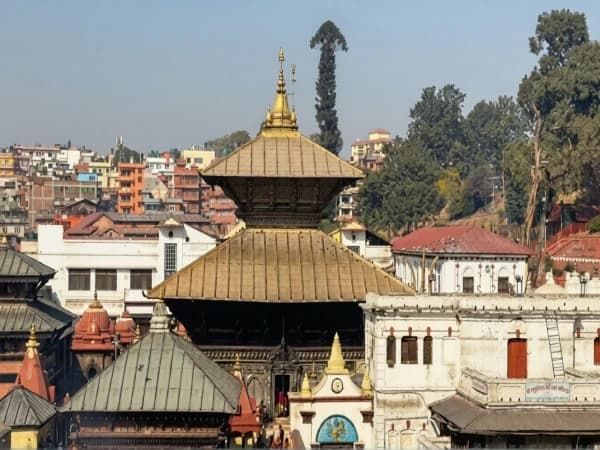
Some of the best parts of the trip are visiting Kathmandu's UNESCO World Heritage Sites, like Swayambhunath and Pashupatinath, driving through Nepal's beautiful countryside, and having a deeply  spiritual  experience  in  Lumbini,  the  birthplace  of  Buddha.  This  includes  the  Mayadevi Temple, Ashoka Pillar, and international monasteries.

9. Is there a guide for the tour?
Yes, the tour comes with a knowledgeable, English-speaking local guide who will share historical, cultural, and spiritual information with you while you travel through Kathmandu and Lumbini.

10. What do we do to keep people safe and healthy?
It's a good idea to have travel insurance. The places you visit are safe, but you should still take certain safety measures. Drink bottled or filtered water, and let your guide know if you have any health problems. If something goes wrong, your travel operator can help.