

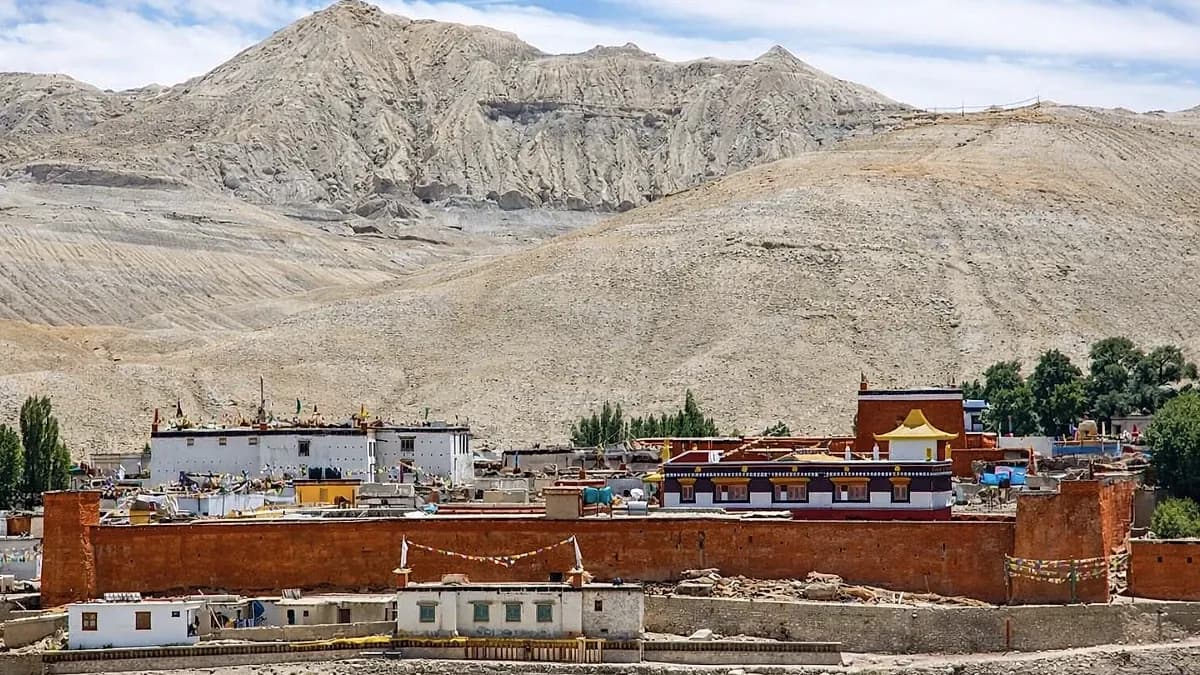
Short answer: Lo Manthang is the walled capital of the former Kingdom of Lo in Upper Mustang, with mud-brick palaces, old monasteries and a Tibetan Buddhist way of life, closed to outsiders until the late twentieth century. Reaching it needs a restricted-area permit and a licensed guide. Visit it on our Upper Mustang trek.
Until the last years of the twentieth century, there was a place on this planet that no one else could see. A kingdom hidden behind the tallest mountains in the world, where monarchs still ruled from mud-brick palaces and the Buddhist faith lived on in ways that were lost everywhere else. It appeared like a myth, yet Lo Manthang was true. It was a real place with real walls and real inhabitants who chose to live away from the fast-paced world of today. It worked for hundreds of years. People outside the kingdom knew it existed, but they couldn't get to it. It wasn't only because of the huge physical barriers; the kingdom itself chose to be alone. When you entered Lo Manthang, you left everything you knew behind and stepped into a realm where time moved differently, where prayer flags whispered secrets to the wind, and where the last echoes of a long-lost Tibet still rang out in narrow alleys.
Where Is Lo Manthang?
Lo Manthang is near the northern end of Nepal, right next to the Tibetan border, where the two landscapes blend. The walled city is in a high valley that is around 3,840 metres (12,598 feet) above sea level. It is bordered by hills that expose their bones through thin soil.
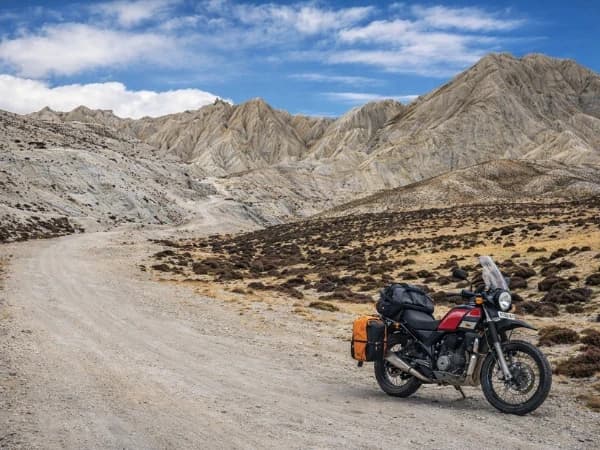
The Annapurna and Dhaulagiri ranges completely shade the Upper Mustang region. This is the core of that region. The geography in this region is stark and unadorned. There are no trees to block the view. There are no lovely fields to rest your eyes on. Instead, the landscape is made up of layers of red, brown, ochre, and grey. These colours fluctuate with the light, but never green.
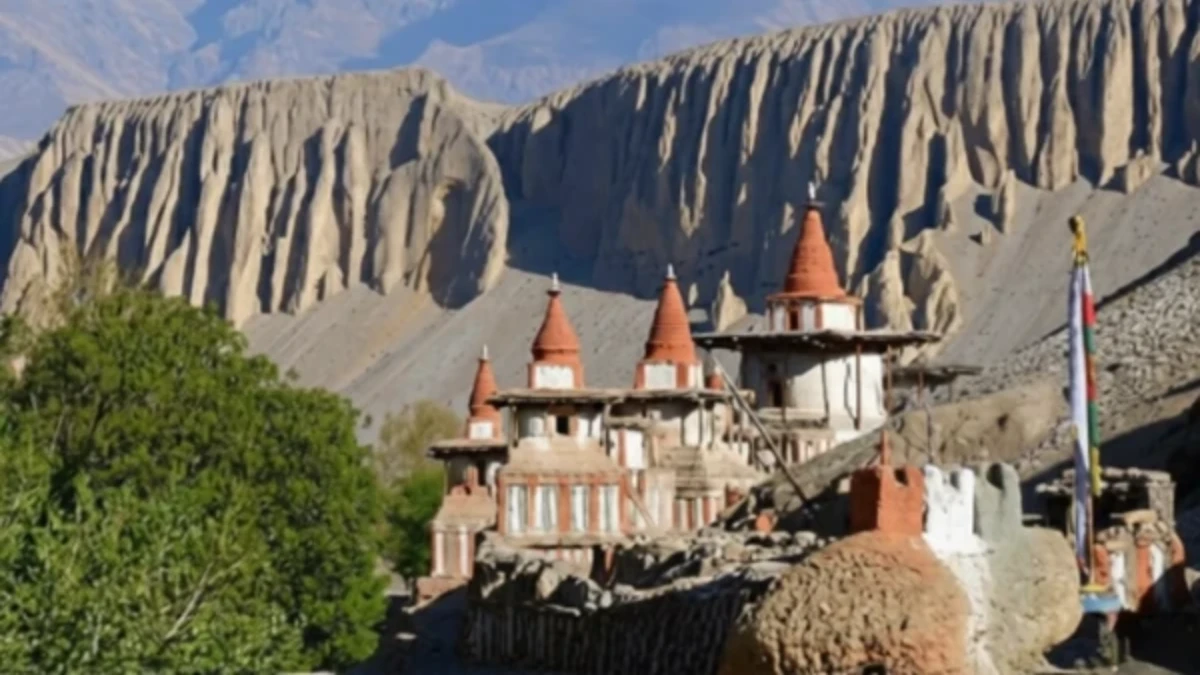
The Kali Gandaki River starts as melting glaciers far to the north and runs somewhere below the city. You can't hear it from inside Lo Manthang's walls. The valley floor is vast here, which makes room for the walled city and the small communities that depend on it. Hills rise on all sides, and the wind and rain have chiseled their slopes into formations that look like fortresses, temples, and sleeping giants.
The country rises slowly to the north toward the Tibetan plateau. The border is not visible, but it is quite real. The valley gets narrower as it goes south, and the trail winds through gorges and cliffs that are more and more dramatic. Lo Manthang is in the middle of this area, like a knot that ties everything together. Related: Chele Village, Upper Mustang: The Gateway Into the Walled Kingdom.
How Do You Get to Lo Manthang?
Reaching Lo Manthang requires determination, time, and a permit that costs more than most plane tickets. The journey itself becomes a pilgrimage.
-
The Permit Barrier: No one enters Lo Manthang without permission. The Upper Mustang Restricted Area requires a special restricted-area permit costing USD 50 per person per day, billed only for the days you are inside Upper Mustang. Travellers must be accompanied by a licensed guide and registered with local authorities. This system preserves what isolation remains.
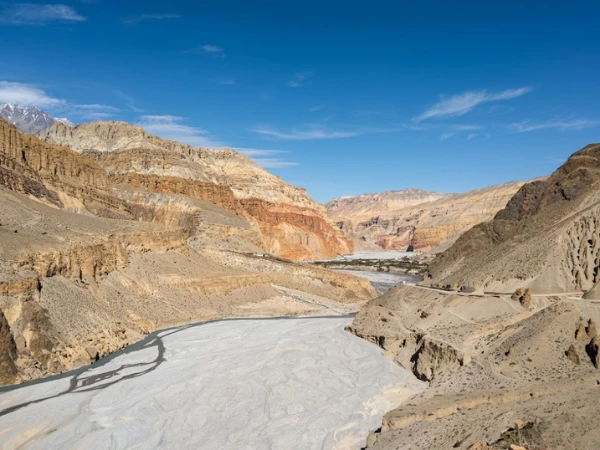
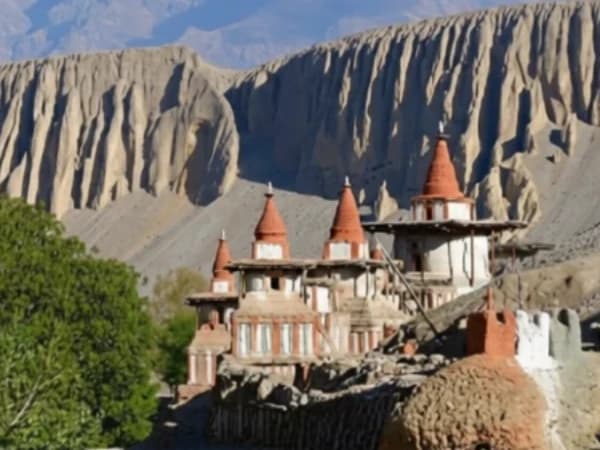
Traditional buildings in Upper Mustang -
The Trekking Approach: The classic route begins in Jomsom, following the Kali Gandaki north through Kagbeni and into the restricted zone. The trail takes approximately eight to ten days round trip, passing through villages that change character with every mile: more Tibetan, more ancient, more separate from the Nepal of the lowlands.
-
The Jeep Option: A rough road now reaches Lo Manthang, carved through cliffs and across passes. Jeeps make the journey from Jomsom in a single long day, bouncing travellers over terrain that feels designed to reject vehicles. This option saves time but sacrifices the gradual immersion of walking.
-
The Seasonal Window: Lo Manthang closes itself with the weather. Winter snows block the passes. Monsoon rains make the trails treacherous. Only spring and autumn offer reliable access, and even then, the wind and cold demand respect.
-
The Feeling of Arrival: However you come, the first sight of Lo Manthang's white walls rising from the brown valley floor creates a moment that stays forever. You have arrived somewhere that few have seen, somewhere that chose to remain unseen for most of human history.
What Facilities Are Available in Lo Manthang?
Lo Manthang offers what is necessary and nothing more. The facilities exist to serve the community first and travellers second.
-
Accommodation: Several basic lodges operate within the walled city, offering simple rooms with thick blankets and shared bathrooms. A few family-run guesthouses provide more intimate experiences. Do not expect attached bathrooms or hot showers on demand.
-
Food and Drink: Tibetan and Nepalese basics like momo, thukpa, dal bhat, and Tibetan bread are made in small kitchens. The ingredients arrive by jeep or porter, which explains the limited menus and occasional shortages. Eat what appears and be grateful.
-
Shops and Supplies: A handful of tiny shops sell necessities: batteries, biscuits, noodles, and the occasional souvenir. Nothing here is imported from anywhere fancy. The stores are there to meet the needs of the people who live there, and travellers benefit from them.
-
The Royal Palace: The king's palace dominates the centre of town, a four-story structure of whitewashed mud brick that has housed Lo's rulers for centuries. Visitors cannot enter freely, but its presence shapes everything.
-
Monasteries and Religious Infrastructure: Several ancient gompas dot the city and its surroundings, their walls covered in murals that predate the arrival of Europeans in the Himalaya. These remain active religious sites, not museums.
-
Electricity and Connectivity: Solar panels provide limited electricity. Phone signals appear and disappear with the weather and time of day. Wi-Fi exists in theory but rarely in practice. Lo Manthang remains, blessedly, difficult to reach even when you have arrived.
Main Attractions
You can't take pictures of Lo Manthang's attractions and forget about them. They slowly seep into you, showing themselves over days of being there without saying anything.
-
The Walled City Itself: The walls around Lo Manthang were built to keep people out, guard against the weather, and keep the outside world from getting too crazy. As you walk on them and run your hands along their old surfaces, you can feel the weight of hundreds of years. The city they surround is only a few hundred metres wide, and every lane has a meaning because the area is so tight.
-
The Royal Palace is four floors high and made of whitish mud bricks. It stands taller than the dwellings around it. The king doesn't rule the city anymore in a political sense, but he still affects it. The palace windows stare out over everything, which is a continuous reminder of how hierarchies worked before modern democracy.
-
The Jampa Lhakhang Monastery: Inside this old temple, there are murals from the 1500s that are still brilliant. For six hundred years, the pictures of Buddhas, bodhisattvas, mandalas, and protectors have been watching over prayers. The low light and the fragrance of butter lamps create an inimitable mood.
-
The Thugchen Gompa is another old monastery. Its courtyard is where monks and villagers would meet during festivals. People who have prayed there over the years have added sculptures and thangkas to the main prayer hall.
-
The Chortens and Mani Walls: There are chortens and long mani walls engraved with prayers on the valley floor outside the city walls. Walking among them, following the path of many pilgrims, makes you feel like you are part of something bigger than yourself.
-
The Cave Dwellings: There are thousands of caverns in the cliffs of Lo Manthang. Some are manufactured by people, while others are natural. Each cave has stories that will never be fully recounted, like ancient burial chambers, meditation retreats, and places to hide from conflicts that are no longer remembered.
-
The Tiji Festival: If you visit in the spring, the Tiji festival changes the city. The festival spans three days, featuring masked dancing, ancient traditions, and a grand celebration honouring the triumph of good over evil. Monks in fancy clothes do dances that have been passed down for hundreds of years.
Things to Do in Lo Manthang
In Lo Manthang, doing and being are the same thing. The tasks are easy, repetitive, and very fulfilling.
-
Walking the Alleys: You can spend hours just walking through the small spaces between dwellings. Every time you turn, you see something new: a youngster playing, an old woman spinning wool, or a door that opens to reveal a courtyard full of prayer flags.
-
Going to the monasteries: Take off your shoes and sit in each gompa. The darkness, the fragrance of butter lamps, the flickering of candles on old murals, and the sound of distant prayer all need time, not checklists.
-
To get to the viewpoints, follow the trails up to the ridges above the city. When you look down on Lo Manthang, you can see that it is a perfect rectangle of white walls in a sea of brown. The mountains in the distance, the valley below, and the feeling that this place shouldn't exist are all part of the experience.
-
Accept requests for tea when you sit with locals. Let gestures and grins do the talking. Watch as ladies carry water, kids chase each other, and monks stroll to pray. These times are more real than any guided tour.
-
Hiking to the rock walls that hold the ancient caverns is a wonderful way to explore them. You can't enter most of them, but standing in front of them and thinking about how people lived in such isolation ties you to the long history of this region.
-
Taking pictures of the light: The light here acts differently. Photographers constantly search for light that shifts minute by minute. The air is clear, the white cliffs reflect light, and the sun is at a different angle in this high valley.
-
Watching the sunset from the walls: As night falls, go up to the city walls and watch the light fade from the valley. The colours change in a way that no camera can capture perfectly. The cold comes swiftly once the sun goes down.
What Makes Lo Manthang So Popular?
Lo Manthang is a special spot in the minds of travellers and historians. It is well-known for being exactly what its namesake says: the Last Forbidden Kingdom.
For hundreds of years, this city with walls stayed apart from the outside world by design. As the rest of Nepal opened up to travellers, Tibet fell under foreign control, and the modern century moved on everywhere else, Lo Manthang stayed the same. It was a Buddhist kingdom ruled by a king, spoke a language that was closer to classical Tibetan than anything spoken in Lhasa today, and practised religions that had died out in other places hundreds of years ago.
Travellers know that this location is the hardest spot to get to in the Nepal Himalaya, not just because of the trip, but also because of the permit system that keeps people out and protects what little remoteness is left.
Lo Manthang is like a living library for people who study Buddhism. The monasteries hold unique murals, statues, and texts. Here, the rites are still done the way they have been done for a long time, even though they were stopped in other places by invasions and modernity.
For others who are just interested, it provides something that could be even more valuable: the ability to stand in a place that feels different, old and entirely its own, not a show for visitors, but a community that has lived the same way for a thousand years. Related: Upper Mustang Trek: Inside the Last Forbidden Kingdom on Earth.
Places to Stay and Tea Houses
When you stay in Lo Manthang, you sleep in history. The walls around you have stood for hundreds of years, and the way people treat guests has remained just as old.
-
Basic Lodges: There are a few modest lodges inside the city walls. There are mattresses with thick blankets in the rooms and maybe a table or a chair. People share bathrooms. When the sun shines on solar panels, hot water comes out of buckets.
-
Family Guesthouses: Some families let guests stay in their homes. These give you more personal experiences, such as eating with the family, having conversations that push your language skills to their limits, and feeling like you're being welcomed instead of hosted.
-
What to expect: No bathrooms attached. No hot showers when you want them. There is no Wi-Fi. No phone signal that you can trust. There is no menu with options. Instead, you get warmth, both real and figurative, and the knowing that you are resting somewhere that most people never get to.
-
The Food: Meals come out when they're ready, not when you order them. You can always get dal bhat, momo, thukpa, Tibetan bread, and tea. The ingredients are few, the cooking is easy, and the taste is amazing.
-
The Atmosphere: At night, travellers get together in the lodge dining rooms to talk about how they got there, what they've seen, and where they're going next. The windows shake in the wind. The stove is toasty. You are part of a group of people who are intrigued for a few hours.
Best time to Visit Mustang
Everything in Lo Manthang depends on the seasons. If you choose wrong, you won't be able to get in.
-
Spring (March to May): The winds start to die down. The weather gets hotter. The passes are open. The celebration brings the city to life during Tiji season. People come from nearby villages to make a pilgrimage. Monks get ready for their dances. The energy is clear.
-
The best time of year is fall (September to November). The air is clear now that the monsoon has passed. The blue in the sky looks almost fake. It's warm enough to walk outside during the day. Nights are cold, but they're not too bad. You can see all the way to the end of the world.
-
The passages are closed from December to February. The pathways are blocked by snow. No planes can land. The city pulls back into itself. Only the most committed and well-prepared tourists try to visit in the winter, and many of them don't make it.
-
Monsoon (June to August): It doesn't rain here very often because the mountains shield it, but the trails from the south become dangerous. The road is closed because of landslides. The water in the river increases. The clouds make it hard to see. This is the peaceful time of year for people who don't mind not knowing what's going to happen.
Weather and Climate
Lo Manthang is in a climate zone that is more like Tibet than Nepal. The rain shadow makes the weather different from anywhere else in the country.
-
The Dryness: Rainfall is measured in millimetres, not centimetres. The air is so dry that lips crack within hours of getting there. Water is valuable; thus, it should be used carefully and brought from far away.
-
The Wind: The wind comes every afternoon. It begins slowly, then picks up speed until it becomes a gale, howling through the night and stopping at sunset. Lo Manthang's walls were built to withstand strong wind, and they are still standing after hundreds of years.
-
Temperature Swings: Without humidity to keep them in check, temperatures can change a lot. On a spring day, the temperature can go from 15 degrees to below freezing in a matter of hours. Days in the fall are similar. The chill of winter gets into everything.
-
The Light: The air at this height is very clear, and the white walls and bare rock reflect light in a way that painters dream of. There are sharp edges in shadows. Colours look brighter here than anywhere else.
-
The Sky: At night, with minimal light pollution and atmosphere, the abundance of stars makes them hard to see. The Milky Way stretches across the sky, and on nights when the moon isn't out, the darkness feels like it might be touched. When the wind blows, prayer flags snap, and you can only see them moving against the stars.
Hotel & Contacts
|
Hotel |
Contacts |
|
Royal Mustang Resort |
+977 9840370337 |
|
Hotel Mystique Himalayan |
+977 9756703006 |
|
Hotel Peace |
+977 9847050154 |
|
Everest Guest House & Restaurant |
+977 9746708386 |
Related Treks & Guides
- Lower Mustang Motorbike Tour
- Upper Mustang Motorbike Tour
- Mustang Mountain Bike Tour
- Kagbeni
- Jomsom Guide
- Ghar Gompa (Lo Gekar) Guide
- Tsarang (Charang) Guide
Lo Manthang is the reason the Upper Mustang trek exists. The walled city, the king's palace, the monks in maroon robes, the wind-carved cliffs: it is Nepal's last piece of old Tibet, preserved by isolation and altitude. When you walk through the city gates for the first time, you understand why people call it the Forbidden Kingdom.
We run the Upper Mustang Trek regularly. The restricted area permit is expensive but we handle everything: permits, transport, accommodation in Lo Manthang.
WhatsApp:+977 9810351300
Email:[email protected]
Written by Shreejan Simkhada, CEO of The Everest Holiday and third-generation Himalayan guide. TAAN Member #1586.
Upper Mustang requires a restricted-area permit on top of the standard trekking permits; full details in our Nepal restricted-area permits guide.
Lo Manthang is the heart of Upper Mustang. Our Upper Mustang Trek (10 Days) is private (your group only, no strangers), 2027 dates open, From USD $1290. WhatsApp us for tailored 2027 dates and current departures.
 Chat with Shreejan