

What is Lake Manasarovar in Tibet?
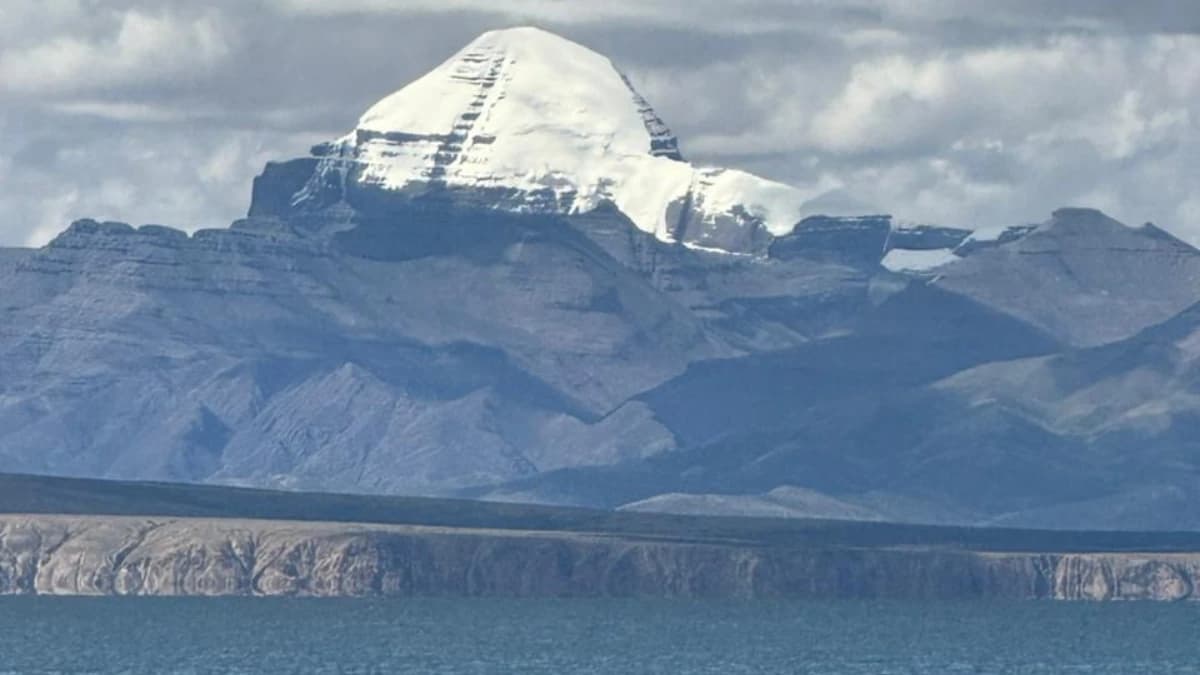
Lake Manasarovar is one of the most famous and intriguing bodies of water in the world. It is in the remote Himalayas of Western Tibet, at the base of Mount Kailash. This high-altitude freshwater lake has drawn pilgrims, spiritual seekers, and adventurers for thousands of years. People consider it to be more than just a point on a map. People perceive it as a manifestation of a living god, a site for purification, and a location where the divine meets the everyday world.
This guide covers what the lake means to pilgrims, what it looks like on the ground and how to plan a visit.
Where is Lake Manasarovar?
Lake Manasarovar is in the Burang County of Ngari Prefecture in the Tibet Autonomous Region of China. It is one of the highest freshwater lakes in the world, at around 4,590 metres (15,059 ft) above sea level.
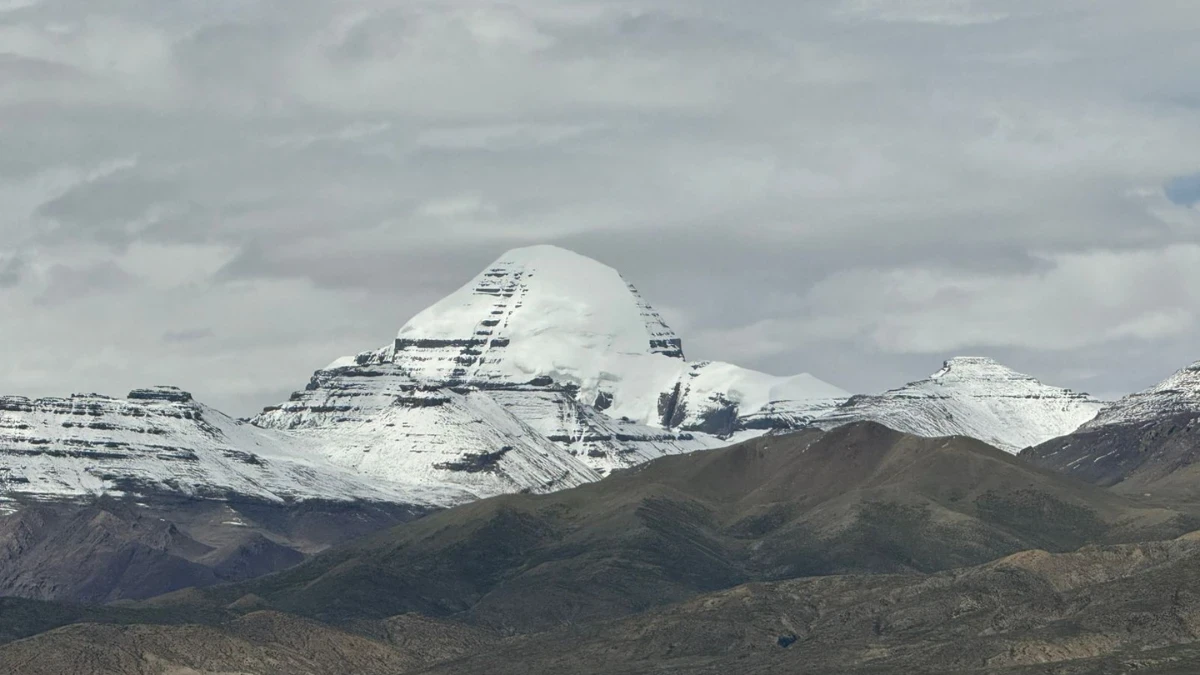
The lake isn't particularly deep; the deepest part is only about 90 metres deep. It takes up around 320 square kilometres of space. The lovely waters come from the glaciers on Mount Kailash and the Himalayas that surround it. The lake is a beautiful turquoise jewel set against hills covered in snow. The scenery is considerably different from the rugged, bleak landscape of the Tibetan plateau. Rakshas Tal (Langak Tso) is a smaller lake that is formed like a crescent and is supposed to be a demon lake in legend. It is adjacent to the western bank of Manasarovar. This makes Manasarovar even more holy.
The Spiritual Meaning: What Makes Lake Manasarovar Sacred?
Hinduism, Buddhism, Jainism, and the old Tibetan Bon tradition all see Lake Manasarovar as a holy place. The name itself has a lot of meaning. "Manasarovar" comes from the Sanskrit words "Manas" (mind or consciousness) and "Sarovar" (lake), which means "Lake of Consciousness and Enlightenment."
In Hinduism
Hindu texts hold Lake Manasarovar in the greatest regard. Brahma, the god who made the universe, is thought to have made it. Brahma wanted a location on Earth to meditate and purify himself, and the lake initially appeared in his imagination before it appeared in the real world.
Pilgrims think that bathing in the holy, cold waters of Manasarovar can wash away the sins of a hundred lives. People also perceive it as a route to get to Lord Shiva's home, which is claimed to be on top of the nearby Mount Kailash, where he meditates. Walking around the lake, called a parikrama, is a very good thing to do since it brings the devotee closer to freedom (moksha).
In Buddhism
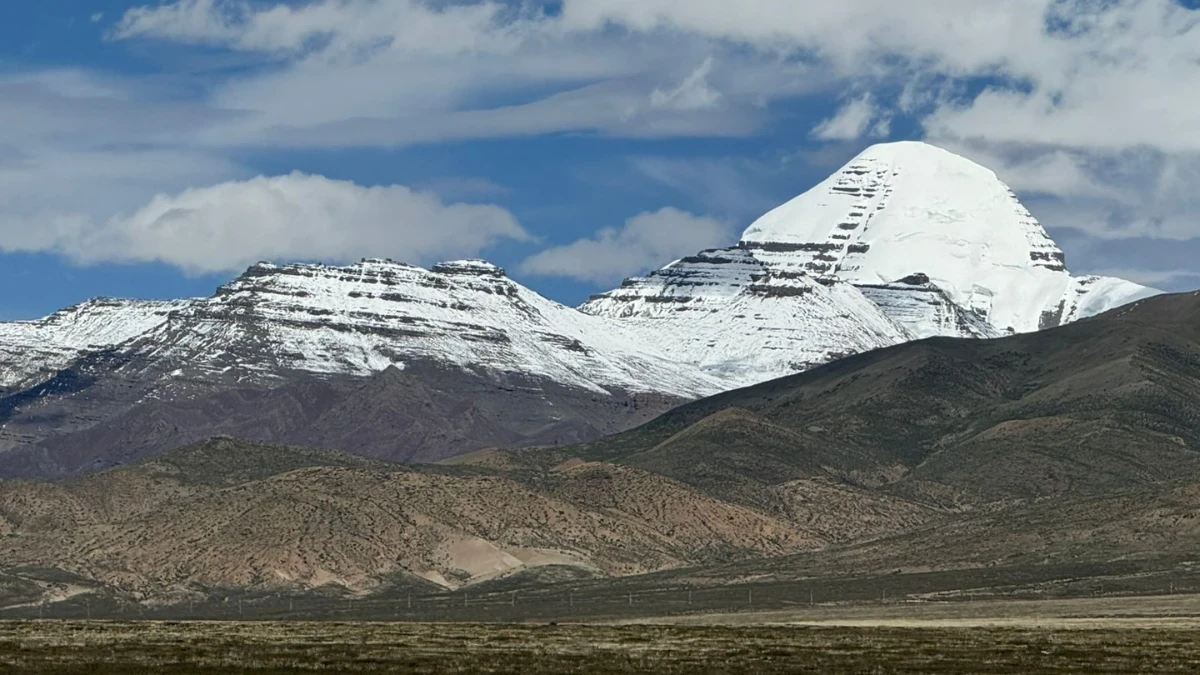
Tibetan Buddhists call the lake Tso Mapham, which means "Unconquered Lake." They connect it to clear awareness and spiritual success. Legend says that Queen Maya, Siddhartha Gautama's (the Buddha's) mother, bathed in this lake before he was born. The lake is a destination where pilgrims can gain a lot of virtue, and the water is thought to give people long life and wash away sins. Mount Kailash is a holy place, and Kang Rinpoche (Precious Snow Mountain) is a component of that holy geography.
In Jainism
For Jains, the location is important since it is where the first Tirthankara, Rishabhanatha, reached nirvana (freedom). In Hindu tradition, Mount Kailash is called Mount Ashtapada, and the lake is part of the holy environment where their spiritual leaders have strolled.
In the Bon Way
The whole area of Tibet, including Lake Manasarovar and Mount Kailash, is considered the spiritual core of the native Bon religion. They think that Lake Mapham Yumtso is the home of a strong deity who protects them. Related: Muktinath Nepal: Complete Guide to the Sacred Himalayan Pilgrimage.
What can you see and do at Lake Manasarovar?
Visiting Lake Manasarovar is not a typical tourist excursion; it is an immersion into raw nature and profound spirituality. Here are the key experiences that await.
1. The Kora (Parikrama): Circumambulating the Lake
The most sacred activity at Lake Manasarovar is performing the kora, walking or prostrating around its perimeter. The full circuit is approximately 90 to 100 kilometres long. Most modern pilgrims and travellers undertake this journey by vehicle over rough dirt tracks, a journey that spans several hours. For devout pilgrims, walking the circuit over three to four days is an act of deep devotion. The route offers ever-changing views of the turquoise water against the stark, high-altitude landscape.
2. The Holy Dip: Purification in Sacred Waters
Taking a bath in Lake Manasarovar is the ultimate act of purification for many pilgrims. The water, fed by glacial melt, is incredibly cold. Despite the freezing temperature, witnessing or taking part in this ritual is a powerful experience. Many pilgrims collect bottles of the water to take home, believing it to be holy and blessed. It is used in ceremonies, given to the sick, and kept as a sacred relic.
3. Trugo Monastery: The Waterfront Sanctuary
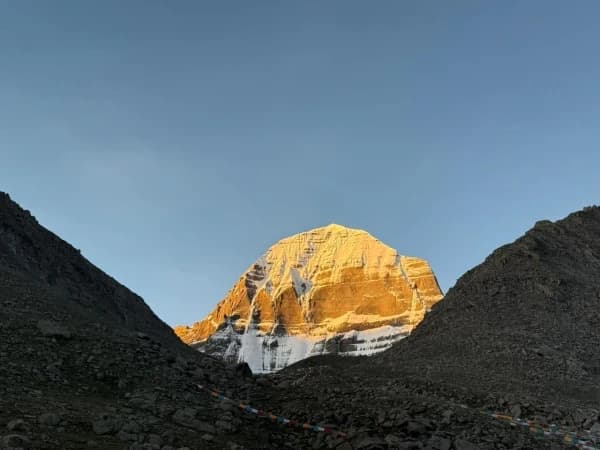
The most important monastery on the lake's shore is Trugo Gompa (also spelled Trugo or Trukgo). It is unique because it is the only monastery that sits directly on the waterfront. This small, serene complex of whitewashed buildings is home to a handful of monks. It offers a place for meditation and prayer and provides an perfect vantage point for watching the sunrise and sunset paint the lake and the distant peak of Mount Kailash in brilliant hues of gold and orange.
4. The View of Mount Kailash
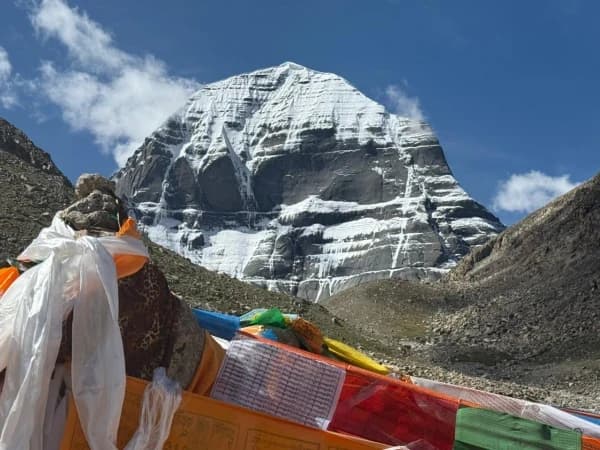
The northern shores of Lake Manasarovar offer one of the world's most iconic views. The sacred, unclimbed peak of Mount Kailash rises sharply behind the deep blue waters of the lake. This vista, with the holy mountain reflected in the holy lake, is the quintessential image of this sacred land and a sight that stays with travellers forever. The sheer scale and beauty of the scene evoke a sense of awe and wonder that is difficult to describe.
5. The Nearby Hot Springs
After the long, dusty journey across the Tibetan plateau, the natural sulphur hot springs near the lake (often near the village of Chiu Gompa) provide a welcome respite. Pilgrims and travellers alike soak in the warm, mineral-rich waters, which are believed to have healing properties. It is a perfect place to rest aching muscles while gazing out at the serene landscape. Related: Best Time to Visit Kailash Mansarovar: Month-by-Month Guide.
What is the best time to visit Lake Manasarovar?
Because of its high elevation and remote position, the weather determines when people can go to Lake Manasarovar.
-
Greatest Time to Visit: The greatest time to go is in late spring and summer, from May to September. Roads in Lhasa and other accessible areas are usually open and simple to drive on. The temperature is rather pleasant (although still cold, especially at night), and the skies are typically bright, which makes it easy to see Mount Kailash.
-
Shoulder Months (May and September to October): These months have excellent weather and fewer people, which makes them a good time to visit. October can be very clear and gorgeous, but the weather gets colder, and snow can start to close the passes.
-
Off-Season (November to April): It's almost impossible to go to Lake Manasarovar during the cold winter. Heavy snow makes it impossible to go over the mountain passes, temperatures drop well below freezing, and all tourist facilities are closed.
Do I need a permit and guide to visit Lake Manasarovar?
A trip to Lake Manasarovar demands careful planning and respect for the culture and nature.
1. Tours and Permits
There are strict rules for going to Lake Manasarovar. People from other countries can't go alone in this area. You have to book your whole vacation through a travel agency in Tibet or China that is registered. They will get all the permits they need, such as
Travel Permit for Tibet
-
Alien's Travel Permit (needed to leave Lhasa)
-
Military Permit (needed just for the Ngari area, which is home to Mount Kailash and Lake Manasarovar)
2. Getting used to the altitude and altitude sickness
The risk of altitude sickness is very significant at over 4,600 metres. The symptoms might be severe.
-
Ensure you spend a few days acclimating to the high altitude in Lhasa (3,650m) before heading to the lake.
-
Drink a lot of water to stay hydrated. Stay away from alcohol and foods that are high in fat and calories.
-
Pay attention to your body. If you get severe headaches, nausea, or dizziness, you should go down to a lower altitude right away.
-
Talk to your doctor about altitude sickness medicine, like Diamox, well before your trip.
3. What to bring
Getting ready for Lake Manasarovar means preparing for severe weather.
-
Clothes: You need to wear warm layers, even in the heat. Bring thermal underwear, fleece coats, a down jacket, a waterproof and windproof outer layer, a warm cap, gloves, and a scarf.
-
Sun Protection: The sun is intense at this height. Bring lip balm with SPF, high-SPF sunscreen, and sunglasses that block UV rays.
-
A good water bottle, munchies, a personal first-aid kit, and a torch or flashlight are all very important.
4. Follow the rules of the area
Millions of people pray in this location every day.
-
When you walk around the lake, monasteries, and other sacred sites, always go clockwise.
-
Don't make the lake or the area around it dirty. Take out all of your trash.
-
Before taking pictures of pilgrims, monks, or anyone from the area, please ask for permission.
-
Wear clothes that aren't too revealing and cover your knees and shoulders.
-
Honour the lake and land; they are sacred to the locals and visitors.
What is the difference between Lake Manasarovar and Rakshas Tal?
At the foot of Mount Kailash, in the remote reaches of western Tibet, two lakes lie side by side. They share the same sky. They are fed by the same glaciers. They exist in the same harsh landscape of snow and stone. And yet, in every way that matters, they could not be more different.
Lake Manasarovar and Rakshas Tal are separated by a narrow isthmus of land, a distance so short you could walk from one to the other in a few hours. But in the spiritual geography of the Himalayas, they are worlds apart. One is the most sacred body of water in Asia, a place of purity, consciousness, and enlightenment. The other is a demon lake, a realm of darkness, demons, and spiritual danger.
This poem is the story of two lakes and the eternal dance between light and shadow that they represent.
The Two Lakes at a Glance
Before getting to what they mean, here is what these lakes are, where they lie and what they look like.
|
Feature |
Lake Manasarovar |
Rakshas Tal (Langak Tso) |
|
Meaning of Name |
Lake of Consciousness (Sanskrit: Manas = mind, sarovar = lake) |
Lake of the Demon (Sanskrit: Rakshas = demon, Tal = lake) |
|
Tibetan Name |
Tso Mapham (Unconquered Lake) |
Langak Tso |
|
Shape |
Round, like the sun |
Crescent-shaped, like the moon |
|
Water |
Fresh, sweet, potable |
Saline, bitter, undrinkable |
|
Altitude |
4,590 metres |
4,575 metres |
|
Depth |
Up to 90 metres |
Shallow |
|
Circumference |
Approximately 90 km |
Approximately 120 km |
|
Spiritual Status |
Sacred, pure, enlightened |
Demonic, impure, dangerous |
|
Religious Significance |
Heaven on Earth, gateway to the gods |
Realm of demons, place of darkness |
Conclusion: The Sacred Lake's Peace That Never Ends
Lake Manasarovar is more than simply a place to go; it's a sensation and something that stays with you forever. The wind and the sound of prayers are the only things that break the deep calm. The lake is as clear as the sky, and the ancient myths of Asia feel very real and current.
A trip to this faraway, holy lake feels like the end of the planet. With unmatched beauty, deep tranquility, and unwavering spiritual strength, it is a true treasure of the Himalayas.
Related Treks & Guides
- Kailash Mansarovar Tour 15 - Days Itinerary and Cost
- Kailash Trek via Simikot: 20 - Day Sacred Pilgrimage & Adventure
- Kailash Mansarovar Helicopter Tour
- Dolma La Pass (5,630m)
- Potala Palace
Lake Manasarovar is the highest freshwater lake in the world that people actually swim in. Not many, and not for long, since the water is glacial even in August, but I have seen pilgrims wade in up to their waists, pour water over their heads, and come out shivering and smiling. The lake sits at 4,590 metres with Kailash rising behind it, and the combination of sacred water and sacred mountain is something no photograph can capture.
We spend a full day at Manasarovar on our Kailash Mansarovar Tour. Time to walk the shore, time to sit, time to understand why this lake has drawn pilgrims for three thousand years.
WhatsApp:+977 9810351300
Email:[email protected]
Written by Shreejan Simkhada, CEO of The Everest Holiday and third-generation Himalayan guide. TAAN Member #1586.
Lake Mansarovar is the spiritual heart of Kailash Yatra. Our Kailash Mansarovar Overland Yatra (14 Days) is private (your group only, no strangers), private departures on your dates, pricing on request. WhatsApp us for tailored 2026 dates and current departures.
 Chat with Shreejan