

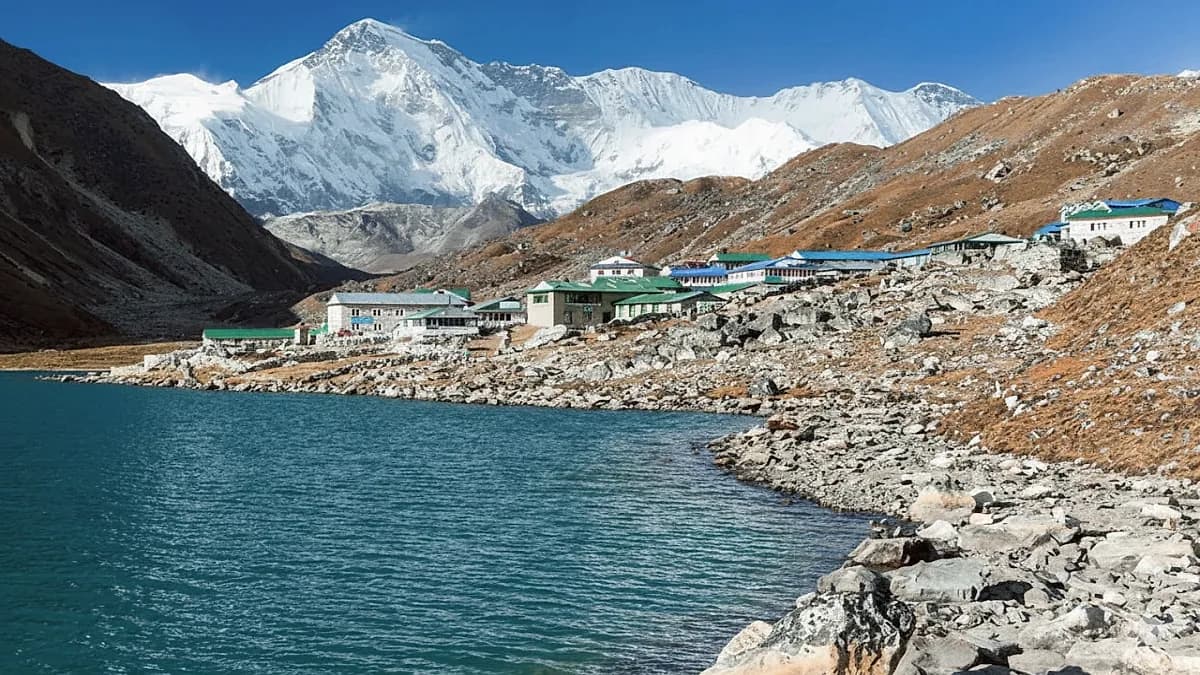
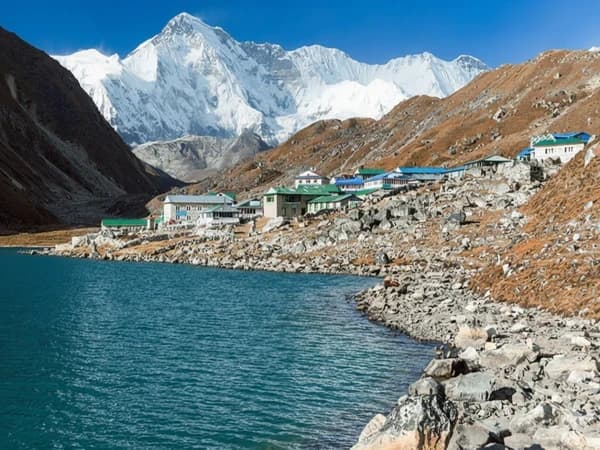
Short answer: Gokyo (4,790 m) is a small lodge village on the shore of the third Gokyo lake, beside the Ngozumpa Glacier and below the Gokyo Ri viewpoint (5,357 m), which gives one of the widest mountain views in the Khumbu, Everest and Cho Oyu included. You reach it on the Gokyo Lakes trek, or by crossing Cho La from the Everest Base Camp side. Walk it on our Gokyo Lakes trek.
Gokyo Valley is a place of almost surreal beauty. Many people think it is the most beautiful side trip in the Everest region. At the top of the valley, there is the Gokyo Ri viewpoint.
It looks out over a string of blue lakes and the Ngozumpa Glacier, which is the largest glacier in Nepal. The route to Gokyo is distinct from the straight, historic push to Everest Base Camp. It is a pilgrimage focusing on beautiful vistas, deep peace, and possibly the most complete view of the mountains in the Khumbu.
How Did Gokyo Go from Summer Pasture to Trekking Destination?
For hundreds of years, the Sherpas from Machhermo and the lower valleys have used Gokyo (around 4,750–5,000 m) as a high summer grazing area (yersa). There were a few stone cottages for herders at the location. Its change is like Lobuche's, but there is one big difference: it was the landscape, not the summit goal, that spurred its growth. As trekkers in the 1970s and 1980s started to go off the main track, stories of its otherworldly lakes and wide-open vistas from Gokyo Ri (5,357m) spread.
To meet this new need, lodges were erected, which led to the creation of the little village of Gokyo on the beaches of the third lake. Its history is limited, but its natural wonders make it a destination in its own right, not merely a stopover.
What Is It Like to Trek to Gokyo?
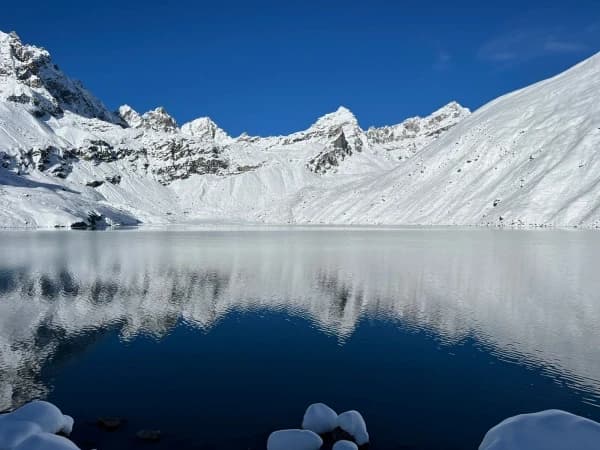
The typical route goes up the Dudh Koshi valley and splits off to the west at Namche Bazaar or Sanasa, heading into Dole and Machhermo before entering the upper valley. The Gokyo Lakes, which are six in all, represent the valley's heart and soul. Their beautiful blue and green colours, which are full of minerals, change with the light and the seasons. They are fed by melting glaciers and are a Ramsar Wetland Site. The third lake, which lies near the settlement, gets the most visitors. The fourth and fifth lakes are farther away and need a half-day trek to get to.
What Can You See from Gokyo Ri?
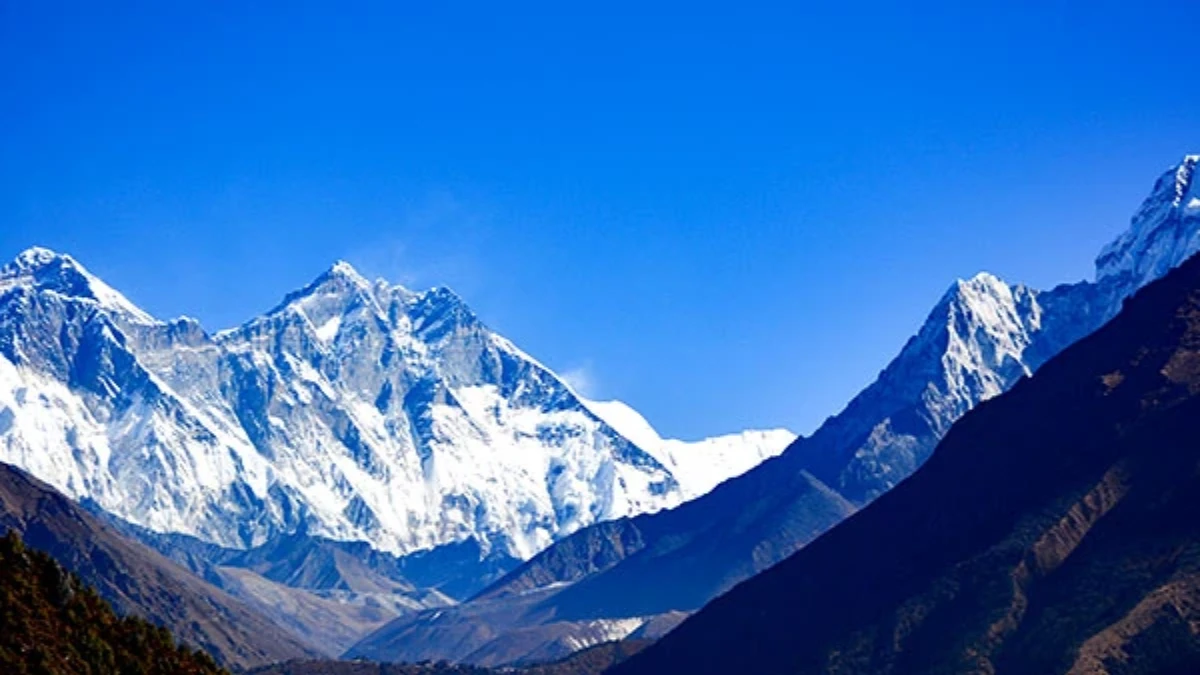
This is the famous peak. Many people think that the 360-degree view you get after a tough climb of 2 to 3 hours from the village is even better than Kala Patthar.From the top, you can see Everest, Lhotse, Makalu, and Cho Oyu right in front of you.You can also see the Ngozumpa Glaciers snake across the valley, with turquoise lakes sparkling below.
The Ngozumpa Glacier and Scoundrel's Viewpoint: A climb across the lateral moraine of the huge, rubble-covered Ngozumpa Glacier takes you to "Scoundrel's Viewpoint" (or Gokyo Fifth Lake Viewpoint), where you can see Cho Oyu and the glacier's huge, messy area spectacularly. Compared to Gorak Shep, Gokyo feels more open, peaceful, and clean. The focus is on thinking and taking pictures of the landscape, with less strain than an adventure like the EBC trek.
Where to Stay in Gokyo
Lodge accommodation in Gokyo Village is included in every Gokyo Lakes and Everest trek package we run. Your guide books your room on arrival, so you do not need to contact lodges directly. The lodges here sit at 4,790 metres beside the third Gokyo lake with twin rooms, hot meals, and a common room heated against the high-altitude cold.
Why Is Gokyo the Best Alternative to the Classic EBC Trek?
The Gokyo Valley trek is the more beautiful option to the Everest Base Camp trek. It gives up the famous Base Camp itself for better views, more natural beauty, and a calmer path. On this route you may see the mountains reflected in clear lakes, hear the roar of avalanches in the distance, and feel a sense of accomplishment, not from reaching a climber's base but from seeing the Himalayan landscape from a unique point of view. It shows that the most renowned road in the Khumbu doesn't necessarily lead to the most amazing things.
Related Treks & Guides
- Ama Dablam Base Camp Trek
- Everest Base Camp Trek By Road Trip
- Everest Heli Photography Tour
- Khare
- Khumbu Glacier, Everest Base Camp Trek Guide
Gokyo is the highlight of the Gokyo Valley Lakes Trek (10 days), a quieter alternative to the classic EBC route. To combine both Gokyo and Everest Base Camp in one trip, see our EBC with Gokyo Lakes Trek via Cho La Pass.
How Do You Acclimatise at Gokyo?
Gokyo sits at 4,790 metres, which is high enough that altitude sickness is a real concern. The standard approach from Lukla takes five to six days, with a rest day at Namche Bazaar (3,440 m) and a night at Machhermo (4,470 m) to help your body adjust. The rest day is where you walk high and sleep low.
On our 10-day itinerary you spend one night at Gokyo, and the Gokyo Ri summit push starts before dawn the next morning. If you would like a second night by the lakes, ask us and we will quote the extra day.
Drink at least three to four litres of water daily once you pass 3,500 metres. Garlic soup, which teahouses serve everywhere in the Khumbu, is a local altitude remedy. Whether the garlic does anything medical is debatable. The hot liquid and salt definitely help.
What Does the Gokyo Trek Cost?
Our 10-day Gokyo Lakes trek costs USD 1,285 per person on Budget, USD 2,965 on Standard and USD 5,015 on Luxury for one traveller, and less per person for groups. Budget covers a guide, accommodation, and permits. It does not include a porter, so you carry your own pack, and meals on the trail are paid as you go. Standard upgrades the lodges and adds equipment. Three permits are required: the Sagarmatha National Park entry, NPR 3,000 for foreign nationals and NPR 1,500 for SAARC nationals, the Khumbu Pasang Lhamu Rural Municipality permit at NPR 3,000, and a TIMS card at NPR 2,000 for foreign nationals and NPR 1,000 for SAARC nationals. We buy the TIMS card in Kathmandu and include it in the price, and your guide buys the Khumbu permit on the trail at Lukla or Monjo.
If you combine Gokyo with Everest Base Camp via the Cho La Pass, the trip is 15 days and costs USD 1,699 on Budget, USD 3,240 on Standard and USD 5,299 on Luxury for one traveller. The Cho La crossing adds a day of genuine mountaineering to the trek, with fixed ropes on the glacier section.
Daily extras on the trail run about USD 10 to 20 for hot drinks, device charging, snacks, and the occasional hot shower. Tips for your guide and porter add another USD 15 to 25 per day between them.
When Is the Best Time to Trek to Gokyo?
October and November are the clearest months. The post-monsoon air is clean, the skies are deep blue, and the mountain views from Gokyo Ri are at their sharpest. Temperatures at 4,790 metres drop to minus ten at night, but the days are dry and still.
March to May is the spring window. Warmer nights, rhododendron blooms in the lower valleys, and longer days. The trade-off is afternoon cloud that can obscure views from Gokyo Ri, so an early morning summit push matters even more in spring.
December through February is possible but cold. The lakes partially freeze, which creates extraordinary photography but demands serious cold-weather gear. Fewer lodges stay open, and the trail can be icy above Machhermo. Only experienced high-altitude trekkers should consider a winter Gokyo trip.
Gokyo is where the Everest region shows you what it looks like when nobody else is around. The turquoise lakes, the Ngozumpa Glacier, and the sunrise from Gokyo Ri (four of the world's six highest mountains in one panorama) make this the one of the most scenic viewpoints in the Khumbu. Most trekkers go to Base Camp. The ones who come here get the better view.
Gokyo is part of our Everest Three Passes Trek or can be done as a standalone Gokyo Lakes trek. Ask us.
WhatsApp:+977 9810351300
Email:[email protected]
Written by Shreejan Simkhada, CEO of The Everest Holiday and third-generation Himalayan guide. TAAN Member #1586.
The last acclimatisation night before Gokyo is at Machhermo (4,470 m). The volunteer rescue post that used to run there closed after the 2019 season, and the nearest Himalayan Rescue Association aid post is at Pheriche.
Gokyo village + Ri are days 7-8 on Three Passes. Our EBC, Gokyo Lakes & Cho La Pass Trek is private (your group only, no strangers), 2027 dates open, From USD $1699. WhatsApp us for tailored 2027 dates and current departures.
 Chat with Shreejan