

Everest Base Camp Photography Trek is a 13-day trek for photographers who want the light, not just the destination. It follows our 12-day Everest Base Camp route and adds a second night at Tengboche for dawn and dusk at the monastery, then reaches Base Camp at 5,364 m and Kala Patthar at 5,545 m for sunrise. It is graded Strenuous. It costs from USD 1,660 per person (Budget, couple). The price per person is the same for a private trip and a group of the same size, and it falls as the group grows.
Everest Base Camp photography trek at a glance
| Duration | 13 days, Kathmandu to Kathmandu, 12 nights, with a rest day at Namche, a second night at Tengboche and a rest day at Dingboche |
|---|---|
| Maximum altitude | 5,545 m / 18,192 ft (Kala Patthar). Highest night Gorak Shep, 5,164 m |
| Grade | Strenuous. 4 to 7 hours of walking a day. High altitude |
| Best months | Mid October to November, and April |
| Group size | 1 to 20, always private |
| Permits | Sagarmatha National Park, Khumbu municipality fee and TIMS. All included |
| Start dates | Any day |
| From price | USD 1,660 per person, Budget, couple. Standard USD 3,020, Luxury USD 5,420 |
Why I built it this way
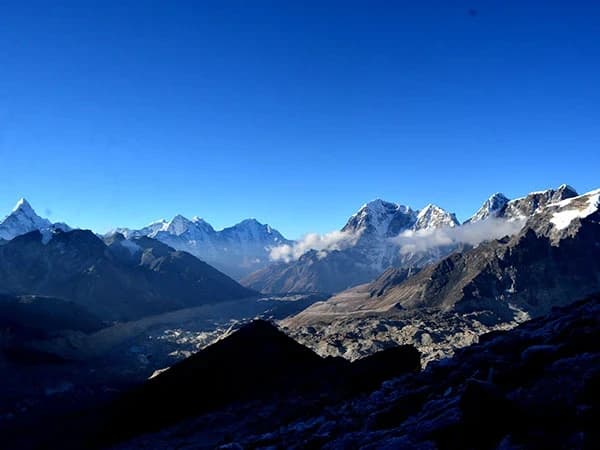
I built this for people who carry a camera and do not want to be rushed past the picture. It is our Everest Base Camp route, day for day, with one change: a second night at Tengboche. The monastery sits at 3,860 m under Ama Dablam, and the light there at dawn and dusk is worth a day of its own. The rest of the plan is the 12-day route you know: Namche, Dingboche, Lobuche, Gorak Shep, Everest Base Camp, and Kala Patthar at sunrise.
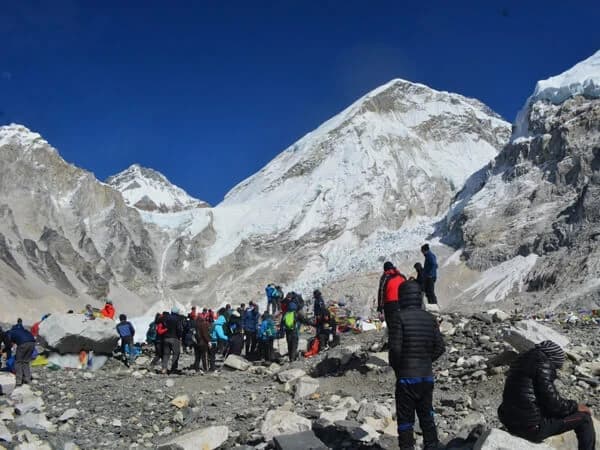
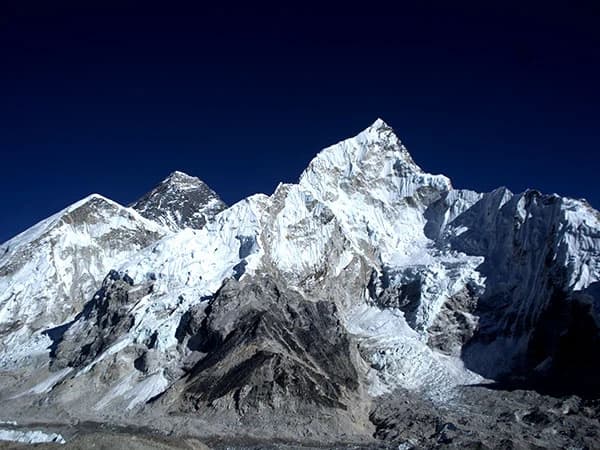
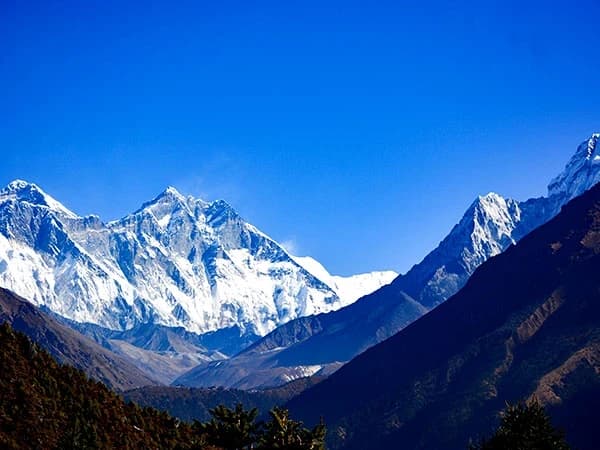
I will be honest about Everest. From Base Camp you cannot see the summit. The picture of the golden pyramid is taken from Kala Patthar, at 5,545 m. And Everest is hard to photograph well: it sits behind other peaks for much of the trek, and Ama Dablam, Lhotse and Nuptse are often better subjects. I wrote about the light and the gear in Photography Trek in Nepal: Routes, Seasons and Camera Tips from a Local Guide and about the viewpoint in Kala Patthar: The Best Viewpoint of Mount Everest.
Carry spare batteries, because cold drains them fast. Luxury flies to Lukla and back by helicopter, which avoids the night drive to Manthali in the busy weeks. A photographer-guide is not included in these prices. If you want a guide who also teaches photography, ask me. Meals in the Everest region now cost more than they did, and the prices on this page include that. Hotel nights in Kathmandu are not included (our family homestay is USD 15 per person per night). Every booking helps pay the teacher's salary at our Nagarjun Learning Center in Saldum.
Best time to go, month by month
Rain and temperatures are published station averages for Lukla and Namche, from our Gokyo month-by-month guide. They are not forecasts, and the view depends on the morning.
| Month | What it is like | My verdict |
|---|---|---|
| January | Coldest. Lukla 15.3 mm of rain. Namche 6.9 C by day and -8.5 C at night. Clear mornings, icy paths. | Only with winter experience |
| February | Lukla 17.2 mm. Namche 6.4 / -6.5 C. Very cold and dry. | Only with winter experience |
| March | Lukla 45.3 mm. Namche 9.6 / -3.0 C. Spring begins. Flights leave from Manthali from about 15 March. | Possible, cold at night |
| April | Lukla 58.7 mm. Namche 12.8 / 0.8 C. Warmer, with more afternoon cloud, and busier. | Good |
| May | Lukla 127.6 mm as the monsoon builds. Namche 14.3 / 3.7 C. Warmer but hazier and wetter. | Early May only |
| June | Monsoon. Lukla gets 324.8 mm and flights are held up often. | No |
| July | Monsoon. Lukla gets 529.8 mm. | No |
| August | Wettest month. Lukla gets 641.8 mm. | No |
| September | Lukla still gets 419.0 mm. The monsoon is clearing. | Late September only, with spare days |
| October | Lukla 102.9 mm. Namche 12.5 / 1.2 C. Clear and the busiest weeks. | Best, from mid month |
| November | Almost dry: Lukla 6.2 mm. Namche 9.1 / -3.8 C. The clearest views, colder every week. | Best, the first half |
| December | Lukla 0.5 mm. Namche 7.6 / -7.1 C. Dry and very cold. | Only with care |
October and November give the clearest views, with the first half of November the pick if you can choose. March and April are the second window, warmer by day but with more afternoon cloud. Light is best in the morning, so we plan early starts.
Starting dates for 2027
These are the windows I would pick for 2027. Festival dates are the expected ones and are confirmed each year. If you want the Mani Rimdu festival at Tengboche, ask me: I will confirm the 2027 dates with the monastery.
| Window in 2027 | What to expect | My advice |
|---|---|---|
| January to February 2027 | Clear and cold, quiet trails. | Possible with winter experience |
| March to May 2027 (Holi expected 22 to 23 March) | Spring: warmer, hazier afternoons. | Good, April is the pick |
| June to mid September 2027 | Monsoon: wet paths, cloud and leeches. | No |
| Mid September to December 2027 (Dashain expected 6 to 10 October, Tihar 29 to 31 October) | The clearest views of the year, and the busiest weeks. | Best |
We run this trek on any date you choose. Tell me your dates and I will tell you what I know for that week.
Permits and costs
We apply for every permit and pay for all of them. You send us your passport details early.
| Permit or fee | Cost | Notes |
|---|---|---|
| Sagarmatha National Park entry | NPR 3,000 (NPR 1,500 SAARC) | Included |
| Khumbu Pasang Lhamu Rural Municipality | NPR 3,000 | Included |
| TIMS card | NPR 2,000 (NPR 1,000 SAARC) | Included, we issue it through our agency |
The price per person falls as the group grows, and a child pays the same as an adult. Private or group, the price per person is the same. Here is the full table. These prices hold for 2027.
| Group size | Budget | Standard | Luxury |
|---|---|---|---|
| 1 guest (solo) | USD 2,465 | USD 3,535 | USD 5,950 |
| 2 to 4 guests | USD 1,660 | USD 3,020 | USD 5,420 |
| 5 to 8 guests | USD 1,410 | USD 2,730 | USD 5,365 |
| 9 to 12 guests | USD 1,300 | USD 2,680 | USD 5,310 |
| 13 to 20 guests | USD 1,205 | USD 2,655 | USD 5,255 |
Not included: international flights, your Nepal visa (USD 30 for 15 days or USD 50 for 30 days, paid in cash on arrival), Kathmandu hotel nights, travel insurance, tips, personal spending, hot showers, laundry and charging, camera battery charging fees, and any extra porter (USD 25 per day plus 13% VAT and the 3.5% bank charge). You pay a 10% deposit to book and the balance in Kathmandu. We take US dollars or euros, in cash or by card, and card payments carry a 3.5% bank charge. We cannot take Nepali rupees from foreign guests.
Getting there and getting back
You fly from Kathmandu to Lukla, a flight of about 40 minutes. Between roughly 15 March and 15 May and 25 September and 30 November the flights may leave from Manthali (Ramechhap) instead, a flight of about 20 minutes, and we include the road transfer. Luxury flies to Lukla and back by helicopter, on a shared seat. A helicopter does not remove weather, but it avoids the Manthali drive. Read our Is the Lukla Flight Safe? An Honest Answer from Someone Who Flies It and Manthali (Ramechhap) Airport: Where Your Lukla Flight Leaves From in Peak Season before you choose your dates.
Visa on arrival is USD 30 for 15 days or USD 50 for 30 days, and your passport must be valid for at least six months. Keep at least two spare days before your international flight.
Safety and altitude
You sleep as high as Gorak Shep, 5,164 m, and climb to 5,545 m. Altitude can affect anyone, whatever their fitness. The rest days at Namche and Dingboche and the extra night at Tengboche are the heart of the plan. Your guide checks everyone's oxygen level every day with a pulse oximeter. If a reading is low or symptoms appear, we do not go higher, and if they worsen we go down. Read Acclimatisation on Nepal Treks: Why Your Body Needs Time and What Happens When You Rush.
Cold drains camera batteries fast, and the Kala Patthar start is in the dark and very cold. Keep batteries inside your jacket. Drink three to four litres of water a day. Buy travel insurance at home that covers trekking to 6,000 m and helicopter evacuation.
What to pack
- Broken-in trekking boots, with spare laces
- A warm sleeping bag, or ask us to lend one
- A down jacket, a fleece, thermal base layers and a windproof shell
- Warm gloves, a warm hat, a buff and sunglasses
- Spare camera batteries, a power bank and a lens cloth
- A sturdy camera bag with a rain cover
- A head torch and spare batteries
- Trekking poles
- Our full list is in What to Pack for Everest Base Camp: The Only List You Actually Need
Budget, Standard or Luxury
All three tiers walk the same route on the same days. What changes is how you sleep, what you eat, who carries your bag and how you get to Lukla.
| Budget | Standard | Luxury | |
|---|---|---|---|
| Rooms | Shared rooms in simple teahouses | Private twin rooms, attached bathroom where the lodge has one | Private deluxe rooms, ensuite where the lodge has one |
| Porter | None. You carry your own pack. An extra porter is USD 25 per day plus 13% VAT and the 3.5% bank charge | One porter for every two trekkers, 20 kg each in total. A solo guest has no porter: the guide carries up to 10 kg | One dedicated porter for every trekker |
| Meals | Not included on the trail | Breakfast, lunch and dinner every day, tea or coffee and seasonal fruit once a day | All meals, fruit and nuts, tea, coffee, soft drinks, juice and water whenever you want |
| Road transport | Fixed-wing, Kathmandu or Manthali to Lukla and back | Fixed-wing, Kathmandu or Manthali to Lukla and back | Round-trip helicopter, shared seat |
| Guide | 1 guide, an assistant at 8 or more | 1 guide for up to 6 trekkers, an assistant at 7 or more | 1 guide for every 2 trekkers |
Read before you book
- Everest Base Camp Trek, 12 Days
- Photography Trek in Nepal: Routes, Seasons and Camera Tips from a Local Guide
- Kala Patthar: The Best Viewpoint of Mount Everest
- Tengboche: The Spiritual Heart & Most Iconic Viewpoint of the Everest Region (3,860m)
- Namche Bazaar: The Gateway to Everest at 3,440 Metres
- Everest Base Camp Weather Month by Month: What the Temperature Actually Feels Like at Five Thousand Metres
The Everest Holiday is a family company founded in 2016, from three generations of guiding in the Himalayas.