Everest Base Camp and Island Peak Climbing, 18 Days

From US$442018 DaysUpdated Oct 9, 2026

At a glance: cost

A fully guided Everest Base Camp and Island Peak Climbing, 18 Days with The Everest Holiday costs $4,420 (Budget), $5,835 (Standard), or $11,670 (Premium) per person for the 18-Days trip. Budget about $20/day for personal expenses; travel insurance is arranged separately.

Everest Base Camp and Island Peak Climbing, 18 Days price by tier
TierPrice (per person)
Budget$4,420
Standard$5,835
Premium$11,670

Book with a 10% deposit; balance payable in Kathmandu. Full inclusions and group-discount tiers are below.

Quick Overview
Duration18 Days
Trip GradeTechnically Challenging
CountryNepal
Maximum Altitude6,189 m / 20,305 ft (Island Peak summit)
Group Size1-20
StartsKathmandu
EndsKathmandu
ActivitiesTrek and peak climbing
Best TimeApr to May and Oct to Nov

Everest Base Camp and Island Peak Climbing, 18 Days is an 18-day trek and climb for fit walkers who want Everest Base Camp and a first 6,000 m summit in one trip. It reaches 6,189 m (Island Peak summit) and is graded Technically Challenging: a long walk on the Everest trail, then a glacier, a fixed-rope headwall and a narrow summit ridge. It costs from USD 4,420 per person (Budget, couple). The price per person is the same for a private trip and a group of the same size, and it falls as the group grows.

Everest Base Camp and Island Peak at a glance

Duration18 days, Kathmandu to Kathmandu (16 days from Lukla to Lukla, one reserve day at base camp, one spare day at Lukla)
Maximum altitude6,189 m / 20,305 ft (Island Peak summit). Kala Patthar 5,545 m, Everest Base Camp 5,364 m
GradeTechnically Challenging. Excellent fitness needed. A glacier, fixed rope and a summit ridge
Best monthsApril and May, October and November
Group size1 to 20, always private
Starts and endsKathmandu. Fly to Lukla (Manthali in the busy weeks), fly back
Walking5 to 8 hours a day on the trail. Summit day is much longer
PermitsNMA climbing royalty, Sagarmatha National Park, Khumbu Pasang Lhamu Rural Municipality, TIMS. All included
Climbing teamA climbing Sherpa for every climber, all technical gear, oxygen, base camp food, USD 500 garbage fee
From priceUSD 4,420 per person, Budget, couple. Standard USD 5,835, Luxury USD 11,670

Why I built it this way

Most people who ask me about Everest Base Camp are really asking two questions. Do I want to see Everest? And do I want to stand on something myself? This trip answers both. You walk the classic trail to Base Camp and Kala Patthar first, then turn east at Dingboche and climb Island Peak, 6,189 m. I did it in this order on purpose.

The order is the point. By the time you reach Chhukung you have slept at 4,410 m, 4,940 m and 5,164 m, and you have been to 5,545 m on Kala Patthar. Your body has had a long, slow lesson in altitude. That is the best preparation I know for a summit day, and it costs you four more days than our 14-day Island Peak climb. If you only want the mountain, our Island Peak climbing guide is shorter. If you want Everest as well, this is the one.

The summit day is a real climb. You cross a glacier in the dark, go up a steep headwall on fixed rope and walk a narrow ridge. You do not need to have climbed before, because your climbing Sherpa teaches you everything at base camp the afternoon before. You do need to be very fit and to have trekked at altitude. Read Can a Beginner Climb Island Peak? Difficulty and Experience Guide and Island Peak Training Plan: How to Prepare for Your First Himalayan Summit before you book, and tell me honestly what you have done.

The royalty, the permits, all the technical gear, the base camp food and the USD 500 garbage fee are in the price. Hotel nights in Kathmandu are not, so you choose your own. Every booking helps pay the teacher's salary at our Nagarjun Learning Center in Saldum. The Everest Holiday is a family company founded in 2016, from three generations of guiding in the Himalayas.
Best time to go, month by month

Rain and temperatures below are published station averages from our Everest weather guide, not forecasts. Above Dingboche there is no station, so I describe the trail from what our guides see.

MonthWhat it is likeMy verdict
JanuaryColdest month. Dingboche lows near -15 C (modelled), strong wind high up, some lodges shut above Dingboche. Clear skies.Only with winter climbing experience
FebruarySame cold as January, a little more daylight. Dingboche lows still about -14 C (modelled).Only with winter climbing experience
MarchCold early, warming through the month. The spring season starts and base camp fills up.Good, with a warm sleeping bag
AprilWarm days, rhododendrons below Namche, stable snow on the summit slope. Busy.Best, with May
MayWarmest month, hazier afternoons, more rain at Lukla (127.6 mm). Start every day early.Best, with April
JuneMonsoon. Lukla gets 324.8 mm of rain, flights are unreliable, snow and avalanche risk on the approach.No
JulyMonsoon. Lukla gets 529.8 mm. Cloud hides the mountains.No
AugustWettest month. Lukla gets 641.8 mm.No
SeptemberThe monsoon is clearing but Lukla still gets 419.0 mm. Late in the month it improves.Late September only, with spare days
OctoberThe first properly dry month, clear and cold, the main autumn climbing season. Very busy. The last week can bring a late storm, so keep spare days.Best, with November
NovemberAlmost no rain, clear and colder. Dingboche lows near -11 C (modelled), and Gorak Shep nights colder still. Quieter as the month goes on.Best, with October
DecemberDry and very cold. Early December is the gentlest of the cold months. Few climbers.Only with care

One price applies all year. The Nepal Mountaineering Association charges USD 350 for Island Peak in spring and USD 175 in autumn, winter and summer, and we cost the spring figure, so you pay the same in any month. See the Best Time to Trek to Everest Base Camp in 2026/2027: An Honest Month-by-Month Guide for more.

Permits and costs

We apply for every permit and pay for all of them. You send us your passport details early, because climbing permits need 48 hours, counted in government working days, so Nepali weekends and public holidays do not count.

Permit or feeCostNotes
NMA climbing royalty, Island PeakUSD 350 spring, USD 175 autumn, winter and summerNepal Mountaineering Association page, read 9 Oct 2026. Included, whatever the season
Sagarmatha National Park entryNPR 3,000 (NPR 1,500 SAARC)Included
Khumbu Pasang Lhamu Rural MunicipalityNPR 3,000Included
TIMS cardNPR 2,000 (NPR 1,000 SAARC)Included, we issue it through our agency
Garbage fee for the climbUSD 500Included on every tier

The price per person falls as the group grows, and a child pays the same as an adult. Private or group, the price per person is the same. Here is the full table.

Group sizeBudgetStandardLuxury
1 guest (solo)USD 6,040USD 6,890USD 12,025
2 to 4 guestsUSD 4,420USD 5,835USD 11,670
5 to 8 guestsUSD 3,775USD 5,620USD 11,150
9 to 12 guestsUSD 3,775USD 5,300USD 10,635
13 to 20 guestsUSD 3,680USD 4,785USD 10,220

Not included: international flights, your Nepal visa (USD 30 for 15 days or USD 50 for 30 days, paid in cash on arrival), Kathmandu hotel nights, travel insurance, tips, personal spending and any extra porter (USD 25 per day plus 13% VAT and the 3.5% bank charge). Our family homestay in Kathmandu is USD 15 per person per night. You pay a 10% deposit to book and the balance in Kathmandu. We take US dollars or euros, in cash or by card, and card payments carry a 3.5% bank charge.

Getting there and getting back

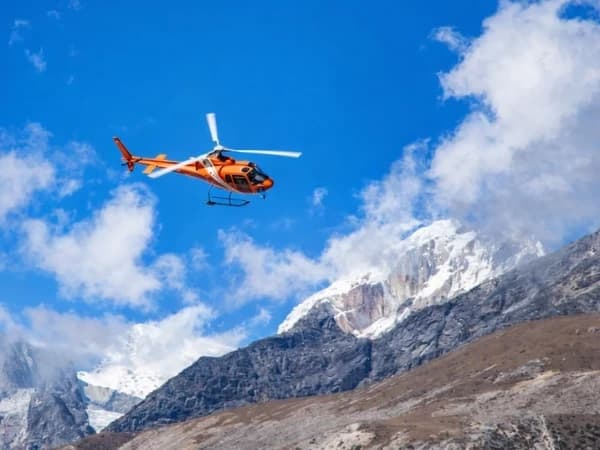
You fly from Kathmandu to Lukla, a flight of about 40 minutes. Between roughly 15 March and 15 May and 25 September and 30 November the flights may leave from Manthali instead, and we include the road transfer. Luxury flies to Lukla and back by helicopter, on a shared seat. Read our Is the Lukla Flight Safe? An Honest Answer from Someone Who Flies It and Manthali (Ramechhap) Airport: Where Your Lukla Flight Leaves From in Peak Season before you choose your dates.

Lukla flights are the weak link, so we build in a spare day at Lukla and ask you to keep at least one more spare day before your international flight. Visa on arrival is USD 30 for 15 days or USD 50 for 30 days, and your passport must be valid for at least six months.

Safety and altitude

This trip goes higher than most people have been. You sleep at Gorak Shep (5,164 m) on day 8, then at base camp (5,087 m). Your guide checks your oxygen level and how you feel every day, with a pulse oximeter. If you are not acclimatising, we do not go higher. The Himalayan Rescue Association aid post at Pheriche is a few hours' walk from the main trail.

On the mountain your climbing Sherpa decides, and his word is final. We rope up on the headwall and turn back for weather, snow conditions or how you feel. Emergency oxygen stays with the climbing team. If you need rescue, it is paid from your travel insurance, so buy a policy at home that covers climbing to 6,200 m and helicopter evacuation. Read Is Island Peak Dangerous? Deaths, Risks, and Safety (Honest Guide) for the full picture.

What to pack

  • Broken-in trekking boots for the trail (double mountaineering boots, crampons, harness, ice axe and helmet are provided)
  • A warm sleeping bag rated to about -15 C, or ask us to lend one
  • A down jacket, a fleece, thermal base layers and a windproof shell
  • Warm gloves plus a thin pair, a warm hat, a buff and sunglasses with side shields
  • Sun cream SPF 50 and lip balm
  • A head torch and spare batteries (cold drains them)
  • Two one-litre water bottles and purification tablets
  • A daypack of about 30 litres. Your duffel goes with the porter
  • Personal medicines and blister care
  • Our full list is in What to Pack for Everest Base Camp: The Only List You Actually Need

Budget, Standard or Luxury

All three tiers climb the same mountain with the same Sherpa, gear and permits. What changes is how you live on the trail and how you get to Lukla.

BudgetStandardLuxury
RoomsShared rooms in simple teahousesPrivate twin rooms, attached bathroom where the lodge has onePrivate deluxe rooms, ensuite where the lodge has one
PorterNone. You carry your own pack. An extra porter is USD 25 per day plus 13% VAT and the 3.5% bank chargeOne porter for every two trekkers, 20 kg each in total. A solo guest has no porter: the guide carries up to 10 kgOne dedicated porter for every trekker
MealsNot included on the trail. All food at base camp and above is includedBreakfast, lunch and dinner every day, tea or coffee and seasonal fruit once a dayAll meals, fruit and nuts, tea, coffee, soft drinks, juice and water whenever you want
Lukla flightFixed-wing, Kathmandu or Manthali to Lukla and backFixed-wing, Kathmandu or Manthali to Lukla and backRound-trip helicopter, Kathmandu to Lukla and back, shared seat
Guide1 guide, an assistant at 8 or more1 guide per 6, an assistant at 7 or more1 guide for every 2 trekkers
Climbing Sherpa1 for each climber1 for each climber1 for each climber
Gear, royalty, garbage fee, oxygenIncludedIncludedIncluded

Read before you book

The Everest Holiday is a family company founded in 2016, from three generations of guiding in the Himalayas.
Why Book This Trek With The Everest Holiday

Three Generations of Family Guides

Family-run since 2016 with three generations of guiding heritage. Not an agency — the family that runs the company leads your trek personally.

Private Group — No Strangers

Every trek we run is private. Your group only. We never combine bookings or add strangers to your party. If you book solo, you walk with a guide; if you book as four friends, your group stays four.

Nagarjun Learning Center Giveback

A fixed share of every booking funds the Nagarjun Learning Center — 70 children, 7 community centres, 3 full-time teachers, 600+ medical interventions, 275+ women supported. You see the impact at the centre on day 1.

Government Registered, TAAN Member

Govt Regd. No. 147653/072/073. Trekking Agency Licence 2090/072, Travel Agency Licence 2838/072. TAAN Member #1586. Over 300 reviews on TripAdvisor, Google and Trustpilot. We are a real, audited Nepal company — not a booking-platform middleman.

Itinerary

Day 01: Fly to Lukla and trek to Phakding
Max Altitude: Lukla 2,860 m / 9,383 ft; Phakding 2,610 m / 8,563 ft
Day 02: Phakding to Namche Bazaar
Max Altitude: 3,440 m / 11,286 ft
Day 03: Acclimatisation day in Namche Bazaar
Max Altitude: 3,440 m / 11,286 ft
Day 04: Namche Bazaar to Tengboche
Max Altitude: 3,860 m / 12,664 ft
Day 05: Tengboche to Dingboche
Max Altitude: 4,410 m / 14,469 ft
Day 06: Acclimatisation day in Dingboche
Max Altitude: 4,410 m / 14,469 ft
Day 07: Dingboche to Lobuche
Max Altitude: 4,940 m / 16,207 ft
Day 08: Lobuche to Gorak Shep and Everest Base Camp
Max Altitude: Gorak Shep 5,164 m / 16,942 ft; Everest Base Camp 5,364 m / 17,598 ft
Day 09: Kala Patthar at sunrise, then down to Pheriche
Max Altitude: Kala Patthar 5,545 m / 18,192 ft; Pheriche 4,250 m / 13,944 ft
Day 10: Pheriche to Chhukung
Max Altitude: 4,730 m / 15,518 ft
Day 11: Chhukung to Island Peak Base Camp, skills session
Max Altitude: Island Peak Base Camp 5,087 m / 16,690 ft
Day 12: Summit day: Island Peak (6,189 m) and back to Base Camp
Max Altitude: 6,189 m / 20,305 ft (summit)
Day 13: Reserve day at Base Camp
Max Altitude: 5,087 m / 16,690 ft
Day 14: Base Camp to Dingboche
Max Altitude: 4,410 m / 14,469 ft
Day 15: Dingboche to Namche Bazaar
Max Altitude: 3,440 m / 11,286 ft
Day 16: Namche Bazaar to Lukla
Max Altitude: 2,860 m / 9,383 ft
Day 17: Spare day in Lukla
Max Altitude: 2,860 m / 9,383 ft
Day 18: Fly Lukla to Kathmandu
Max Altitude: 1,400 m / 4,593 ft
Expand All
Couldn't find what you're after?Reach out to our travel experts.
Customise Trip

Pricing & What's Included

Book your own private small group trip
No. of travellers
Price per person
1 pax
US$6040
2 - 4 pax
US$4420
5 - 8 pax
US$3775
9 - 12 pax
US$3775
13 - 20 pax
US$3680

Discounts are determined exclusively by the size of your group. We do not add additional members to your group.

Book Now
hbl logo
Secure Payment by Himalayan Bank.
Cost Includes

Flights and road

  • Return flight Kathmandu to Lukla (or Manthali to Lukla in the busy weeks, with the road transfer included)
  • Airport pick-up and drop-off at Tribhuvan International Airport

Accommodation and food

  • Shared rooms in simple teahouses on the trail, and tents at base camp and high camp
  • Meals on the trail are not included: you order and pay at the teahouses. All food at base camp and above is included

Guide, Sherpa and porter

  • One licensed guide, and an assistant guide for groups of 8 or more. The guide goes with you to base camp. We confirm names after booking
  • A climbing Sherpa for each climber, who climbs with you from base camp to the summit
  • No porter on the Budget tier: you carry your own pack. An extra porter can be added

Permits and fees

  • Nepal Mountaineering Association climbing royalty for Island Peak, in every season
  • Sagarmatha National Park permit, Khumbu Pasang Lhamu Rural Municipality fee and TIMS card
  • USD 500 garbage fee for the climb
  • All government taxes and official expenses

Climbing equipment

  • All technical climbing gear: double mountaineering boots, crampons, harness, jumar, figure-of-eight descender, ice axe and helmet
  • Tents, cooking crew and food at base camp
  • Emergency oxygen kept with the climbing team

Medical and safety

  • First aid kit and pulse oximeter, checked daily
  • We arrange rescue if needed, paid from your travel insurance

Complimentary

  • Company T-shirt and cap
  • Loan of a sleeping bag and down jacket if you need one, on request
  • Free storage of spare luggage at our Kathmandu office
  • A SIM card on arrival
  • Farewell meal and certificate of completion
Cost Excludes

Not included

  • Meals and drinks on the trail below base camp
  • International flights
  • Nepal visa: USD 30 for 15 days or USD 50 for 30 days, paid in cash on arrival
  • Kathmandu hotel nights before and after the climb (we can book them: see the add-ons)
  • Travel insurance. Buy it at home and check that it covers climbing to 6,200 m and helicopter evacuation
  • Tips for the guide, Sherpa and porters
  • Personal spending, hot showers and charging
  • Any extra porter, USD 25 per day plus 13% VAT and the 3.5% bank charge
  • Extra costs from delays outside our control: flights, weather, landslides, strikes, illness or changes in government rules
Add-Ons and Trip Extension

One extra night in a Kathmandu hotel matching your tier, twin-sharing, for example before the programme or after it. Choose the number of person-nights: two guests for one night is 2. A solo traveller pays for a single room, so choose 2 for one night.

One extra vehicle transfer in Kathmandu or Pokhara, for example a late arrival or a change of hotel. Choose the number of transfers.

Dates & Booking

Your trek, your choice, your price

Choose the style that suits you. Book a private departure on any date with just your party, or join a fixed group departure and trek with fellow adventurers from around the world. Same routes, same guides, same quality — 3 comfort tiers on both options. Per-person price follows our group-discount tiers based on YOUR party size (a couple pays less per pax than a solo trekker, 5+ pays less again) — the same tiers apply on both booking types.

Private Departure

  • Any date you choose
  • Just your party + dedicated guide
  • 3 comfort tiers (Budget, Standard, Luxury)
  • Per-pax price tier set by YOUR party size

Fixed Group Departure

  • Scheduled dates (see below)
  • Join other trekkers from around the world
  • 3 comfort tiers (Budget, Standard, Luxury)
  • Per-pax price tier set by YOUR party size (same tier as Private)

Prefer email? Send a question and we will reply within a few hours.

Peak season (Sep–Nov) — our guides book up fast. Get in touch 6–8 weeks ahead to secure your preferred dates.

Fixed Group Departures

Join one of our scheduled fixed departures and share the trail with other trekkers on the same dates. Choose your preferred tier (Budget, Standard, or Luxury) when booking. Per-person price follows our group-discount tiers based on YOUR party size — a couple pays less per person than a solo trekker, and a party of 5+ pays less again. The same tiers apply on private departures too.

Need a different date? Extra departure dates are available on request. Contact us or message Shreejan on WhatsApp.

Start DateEnd DateSeasonStatusBook a Tier
16 Oct 20262 Nov 2026Autumn 2026Open
26 Oct 202612 Nov 2026Autumn 2026Open
5 Nov 202622 Nov 2026Autumn 2026Open
15 Nov 20262 Dec 2026Autumn 2026Open
25 Nov 202612 Dec 2026Autumn 2026Open
1 Mar 202718 Mar 2027Spring 2027Open
11 Mar 202728 Mar 2027Spring 2027Open
21 Mar 20277 Apr 2027Spring 2027Open
31 Mar 202717 Apr 2027Spring 2027Open
10 Apr 202727 Apr 2027Spring 2027Open
20 Apr 20277 May 2027Spring 2027Open
30 Apr 202717 May 2027Spring 2027Open
10 May 202727 May 2027Spring 2027Open
20 May 20276 Jun 2027Spring 2027Open
30 May 202716 Jun 2027Spring 2027Open
1 Sept 202718 Sept 2027Autumn 2027Open
11 Sept 202728 Sept 2027Autumn 2027Open
21 Sept 20278 Oct 2027Autumn 2027Open
1 Oct 202718 Oct 2027Autumn 2027Open
11 Oct 202728 Oct 2027Autumn 2027Open
21 Oct 20277 Nov 2027Autumn 2027Open
31 Oct 202717 Nov 2027Autumn 2027Open
10 Nov 202727 Nov 2027Autumn 2027Open
20 Nov 20277 Dec 2027Autumn 2027Open
30 Nov 202717 Dec 2027Autumn 2027Open

Fixed departures are dates we have already committed to run. Your party still treks as its own private group with its own guide; we never merge bookings or add strangers, and solo trekkers are welcome on any date. Private departures on any other date you choose are also available. On both, the per-person price is set by the size of your own party.

Questions about this trek?

Chat directly with Shreejan — our founder replies personally within minutes

WhatsApp Shreejan

Essential Information

Before you go

  • Experience: no climbing experience is needed, but you must have trekked at altitude before and be very fit. Tell us what you have done and we will say honestly whether this is the right trip.
  • Fitness: trail days are 5 to 8 hours, and summit day is much longer. Start training 12 weeks ahead, and read How to Train for Everest Base Camp: The Programme That Actually Works.
  • The mountain: your climbing Sherpa decides whether you go on or turn back, and his decision is final. There is no refund for an unclimbed summit, because the permit, the staff and the flights are spent by then.
  • Permits: we apply for the climbing permit, so we need your passport details early. Permits need 48 hours, counted in government working days.
  • Best months: April and May, and October and November. December to February is very cold. June to mid-September has snow, cloud and avalanche risk.
  • Group size and ratios: 1 to 20, all private. We never add strangers to a private booking.
  • Insurance: buy it at home. It must cover climbing to 6,200 m and helicopter evacuation. We do not recommend insurance bought in Nepal.
  • Spare days: keep at least one spare day before your international flight, because the Lukla flight depends on the weather.
  • Never alone: you climb only with your guide team, and you never walk or climb apart from them.
  • Hotels: hotel nights in Kathmandu are not included. We can book them for you, or you can stay at our family homestay (USD 15 per person per night), which supports the learning centre.

FAQs

It is the hardest thing we sell in the Everest region. The trail days are 5 to 8 hours at altitude, and summit day is a glacier crossing, a steep fixed-rope headwall and a narrow ridge. You need excellent fitness and a good record of trekking at altitude. Climbing experience helps but is not essential, because your Sherpa teaches you at base camp.
For a couple, the price per person is USD 4,420 Budget, USD 5,835 Standard and USD 11,670 Luxury. A solo climber pays USD 6,040, USD 6,890 and USD 12,025. The price falls for larger groups, down to USD 3,680, USD 4,785 and USD 10,220 for 13 to 20 guests. The royalty, permits, gear and USD 500 garbage fee are inside the price.
No. Your climbing Sherpa runs a skills session at base camp the afternoon before the climb: fixed-rope ascent with a jumar, descent with a figure-of-eight, crampon technique and ice axe arrest. What you do need is fitness and experience of trekking at altitude. If you have done a glacier course, tell us.
Island Peak (Imja Tse) is 6,189 m. You leave base camp at about two in the morning and cross the glacier in roughly two hours before the headwall. Summit day is a long day and its hours depend on conditions, so your Sherpa sets the pace on the mountain.
Yes, and both are included. A licensed guide leads the trek and goes to base camp, and a climbing Sherpa climbs with you from base camp to the summit, one for each climber. Nepal's rules need a guide on most trekking routes, and nobody climbs alone.
Flights are often delayed, so we build in a spare day at Lukla, and the busy weeks fly from Manthali. If the flight is delayed on the way in, we adjust the first days. Keep at least one more spare day before your international flight.
It is safe when it is run slowly, and this route is. Your guide checks your oxygen level every day, and we do not go higher if you are not acclimatising. Climbing always carries some risk: the Sherpa turns us back for weather, snow or how you feel. You need insurance that covers climbing to 6,200 m and helicopter evacuation.
April and May, and October and November. October and November are clear and cold, and the first half of May is warm but hazier. December to February is very cold and June to mid-September has snow, cloud and avalanche risk. See the month-by-month table on this page.
Yes. The Nepal Mountaineering Association charges USD 350 for Island Peak in spring and USD 175 in autumn, winter and summer. We cost the spring figure, so you pay one price all year and the royalty is inside it.
Then we come down. The Sherpa's decision is final, whatever the reason. There is no refund for an unclimbed summit, because the permit, staff, flights and lodges are spent by then. The reserve day at base camp gives you a second attempt if weather stopped the first.
Nothing technical. We provide double mountaineering boots, crampons, harness, jumar, descender, ice axe and helmet, and we can lend a sleeping bag and down jacket. Bring your own base layers, insulation, gloves, hat, sunglasses and well broken-in trekking boots.
Yes. Solo climbers are welcome, with a guide and a Sherpa. A solo climber pays USD 6,040 on Budget, USD 6,890 on Standard and USD 12,025 on Luxury, because the guide, Sherpa and camp cost the same for one person. We never add strangers to a private booking.
You pay a 10% deposit to book and the balance in Kathmandu before the trip. We take US dollars or euros, in cash or by card. Card payments carry a 3.5% bank charge, cash in Kathmandu carries none. We cannot take Nepali rupees from foreign guests.
If we cannot run your trip, we refund what you have paid, less taxes, bank or card charges and any money already spent on your behalf, or move you to another date. If you cancel yourself, the deposit is not refundable, but you can reschedule free to any date within one year with at least 7 days' notice.
Yes. Buy travel insurance at home, before you travel, and check that it covers climbing to 6,200 m and helicopter evacuation. We do not recommend insurance bought in Nepal.