Written by Shreejan Simkhada, CEO of The Everest Holiday and third-generation Himalayan guide. TAAN Member #1586.
Nepal charges two separate fees for any peak above 5,800 metres: a climbing royalty to the government and a permit fee to the Nepal Mountaineering Association. Most trekking companies bundle both into their package price, which means you never see the breakdown. Here it is.
NMA Trekking Peaks: The 2026 Fee Structure
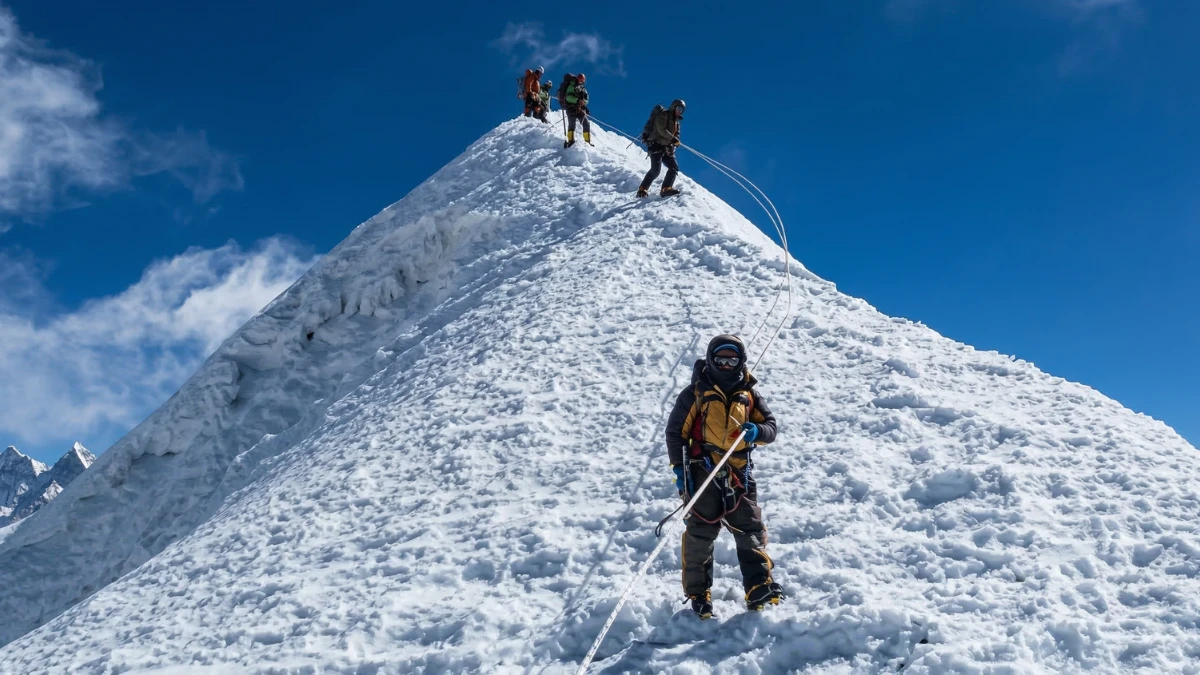
The Nepal Mountaineering Association classifies 27 mountains as "trekking peaks." These are the ones you can climb without a full mountaineering expedition permit. The most popular are Island Peak (6,165m), Mera Peak (6,476m), Lobuche East (6,119m), and Pisang Peak (6,091m).
The fee depends on the season and, for two peaks, on which peak you are climbing. It is charged as a flat amount per climber.
One thing worth understanding before you compare quotes, because a lot of pages get it wrong, including an earlier version of this one. The NMA does not band its fees by a simple altitude cut-off. It publishes a list of named peaks and each peak sits in a fee group. That is why almost every popular peak sits in the same standard band whatever its height, from Island Peak at 6,165 metres to Mera Peak at 6,476 metres, while only two peaks, Chulu East and Singu Chuli, carry the higher fee, and why you cannot work out what you owe from the height alone. The current list is published by the Nepal Mountaineering Association itself, and it is the only source worth checking a figure against.
Spring (March to May) is the most expensive season by a clear margin. Autumn, winter and summer all cost the same as each other, roughly half the spring fee. Fewer companies operate in winter and the monsoon.
How much does an NMA trekking peak permit cost in 2026?
The fee is a flat amount per climber. Almost every popular peak, Island Peak, Mera Peak and Lobuche East included, sits in the standard band; only Chulu East and Singu Chuli carry the higher fee.
| Season | Standard peaks (Island Peak, Mera Peak, Lobuche East and most others) | Chulu East & Singu Chuli |
|---|---|---|
| Spring (Mar–May) | USD 350 | USD 500 |
| Autumn (Sep–Nov) | USD 175 | USD 250 |
| Winter (Dec–Feb) | USD 175 | USD 200 |
| Summer (Jun–Aug) | USD 175 | USD 200 |
The full current list and figures are on the NMA's own service-charges page, the only source worth trusting a figure against.
These fees go to the NMA and cover your climbing permit, which your guide carries and presents at checkpoints.
Are government royalty fees included in NMA peak permits?
On top of the NMA permit, the Nepal government charges a royalty fee. For trekking peaks, this is currently included in the NMA fee structure above. For expedition peaks (above 6,999m, like Ama Dablam or Cho Oyu), royalty fees are separate and significantly higher, running from USD 1,500 to USD 10,000 depending on the peak and team size.
You do not need to worry about expedition peak fees unless you are planning a serious mountaineering trip. Our Island Peak and Mera Peak climbs fall under the trekking peak category.
What extra costs come with peak climbing besides the permit?
The permit is just one cost. A realistic climbing budget also includes:
- Climbing guide fee: Your climbing guide must be certified by the NMA. Our guides are all NMA-certified with multiple summit records. Their fee covers the entire trek plus the climb.
- Equipment rental: Ice axe, crampons, climbing harness, jumar, helmet, and fixed-rope gear. If you do not own these, rental in Kathmandu costs USD 50 to 120 for the full set.
- TIMS card and national park entry: Sagarmatha National Park costs NPR 3,000 (roughly USD 22) for foreign nationals. The TIMS card is NPR 2,000.
- Conservation area permits: Some peaks fall in conservation areas with separate entry fees. Mera Peak is in the Makalu Barun area; Island Peak is in Sagarmatha National Park.
- Insurance: You need a policy that names mountaineering, not trekking, and that covers helicopter evacuation above the summit you are climbing. Standard trekking cover is not sufficient. Expect USD 100 to 250. There is more on this below, and it is the part people get wrong most often.
- Garbage deposit: The NMA requires a garbage deposit of USD 250 to 500 per expedition, refundable when you bring your rubbish back down.
The two insurance mistakes that cost climbers the most
We read our clients' policies before they climb, and the same two faults come up again and again.
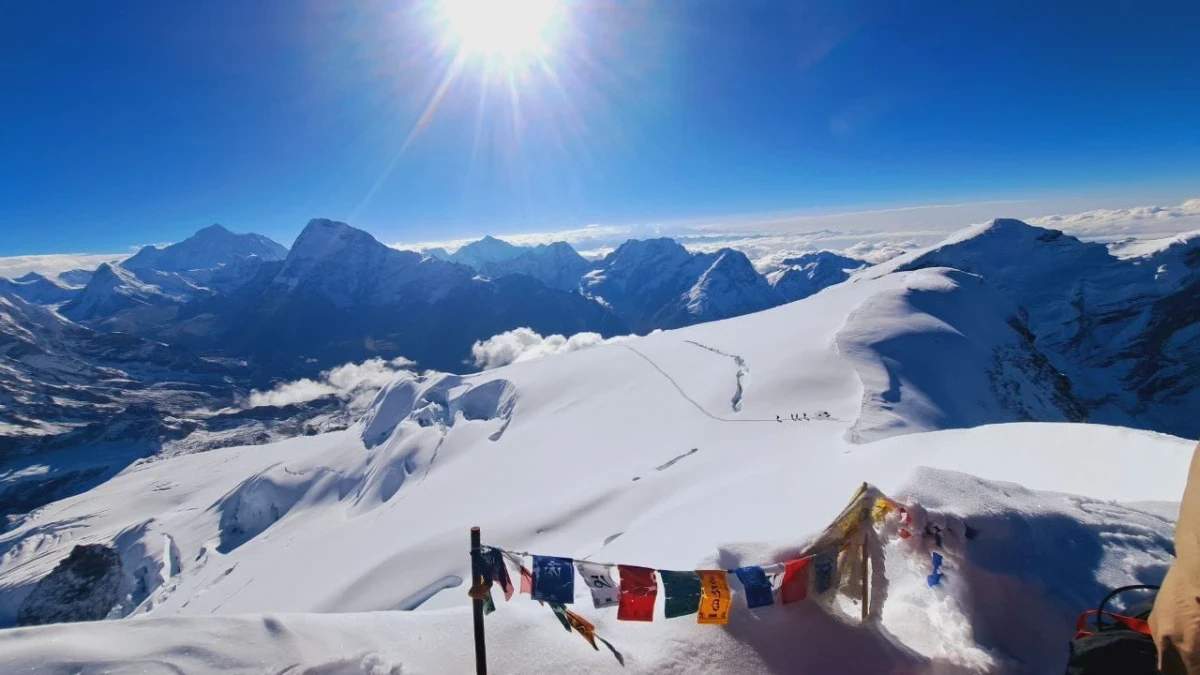
First, cover rated TO your summit is not enough. It has to be rated ABOVE it. A helicopter cannot hover level with you; it has to fly higher than you are standing to reach you at all. So for Mera Peak at 6,476 metres, a policy that says it covers you to 6,000 metres, or even to 6,500, is thinner than it looks. Ask the insurer one closed question in writing: is emergency helicopter evacuation covered at the summit altitude of the peak I am climbing. A yes or a no, in an email.
Second, a mountain rescue membership is not an insurance policy, and the permit needs the policy. Several of the best known rescue services say so plainly in their own terms. They will get you off the mountain, which is worth having, but they pay no hospital bill, no repatriation and no cancellation, and they are not what the NMA paperwork is asking for. Buying one and thinking you are covered is the single most expensive mistake on this page.
One more thing that costs nothing to get right. Most rescue services will only pay for a flight THEY arranged. If your guide rings a Nepali operator directly, which is what happens naturally in an emergency, the claim can be refused. Whoever you buy from, make sure the emergency number is in your guide's phone as well as your own before you leave Kathmandu.
Do your peak climbing packages include the permit fees?
When you book a Mera Peak or Island Peak climb with us, the permit fees are included in your package price. We handle the NMA application, the paperwork, and the fee payment. You do not queue at the NMA office in Kathmandu or fill out forms.
Our Mera Peak 14-day climb starts from USD 3,800 per person for the Budget tier, and our Island Peak 14-day climb from USD 3,900. They fall to USD 3,165 (Mera) and USD 3,225 (Island) per person for a group of 13 or more. Both include the NMA trekking peak permit, national park entry, TIMS card, climbing guide, and all trek logistics.
What we do not include: personal climbing gear (available for rent), personal travel insurance, international flights, and Nepal visa.
Common Questions
Can I get my own permit without a company?
Technically, no. Nepal requires all climbers to go through a registered trekking agency for peak climbing permits. The NMA issues permits to companies, not individuals. Solo permit applications are not accepted.
Do permit fees change every year?
The NMA reviews fees periodically but changes are rare. The current structure has been stable for several years. Any increases are typically announced months in advance.
What happens if I do not summit?
The permit fee is not refundable, summit or no summit. Weather, health, and conditions all play a role. Most well-prepared climbers who get settled weather reach the summit, but not everyone does. Mera Peak is generally the more forgiving of the two.
Is there a permit for climbing without a guide?
No. Nepal requires a licensed climbing guide for all trekking peaks. A licensed guide is also required in most trekking areas under the Nepal Tourism Board rule from April 2023, and has always been required for climbing peaks. Our guides carry your permit documents and manage all checkpoint registrations.
Plan Your Climb
If you are considering Island Peak or Mera Peak, the permit is the smallest part of the cost. What matters is your guide, your preparation, and your acclimatisation plan.
Talk to us. Shreejan has personally designed every climbing itinerary we offer, and our guides have summited these peaks dozens of times.
WhatsApp: +977 9810351300
Email: [email protected]
Peak climbing 2026 NMA rates: locked in our pricing. Our Mera Peak Climbing (14 Days) is private (your group only, no strangers), 2027 dates open, From USD $3800. WhatsApp us for tailored 2027 dates and current departures.
 Chat with Shreejan