
A luxury lodge trek in Nepal costs USD 4,999 to 5,299 per person for twelve to fifteen days, which is roughly twice what the same trek costs on our standard tier. You sleep in a private room with an attached bathroom, you stop paying for every hot shower and every phone charge, and you have a porter to yourself rather than sharing one. The question everyone asks is whether that is worth the difference. Here is the honest answer, with our real prices rather than a range.
What Does a Luxury Lodge Trek Include?
A luxury lodge trek replaces standard teahouses with purpose-built lodges operated by specialist high-altitude lodge operators who have invested in high-altitude hospitality. What you get:
- Private en-suite rooms with proper beds, duvets, and sealed windows. No shared bathrooms. No foam mattresses.
- Hot showers and device charging paid for. On the lower tiers you pay the lodge for each shower and each charge, and higher up the water is solar heated and does run out.
- A heated dining room, and a heated bedroom where the lodge has one. Not every lodge on every route can offer heating in the rooms, and any company promising it everywhere is worth a second question. Where it exists it matters more than anything else on this list.
- Restaurant-quality meals. Three courses at dinner, cooked by trained staff with better ingredients than standard teahouses. Seasonal fruit, dried fruit and nuts are included, and so are unlimited tea, coffee and soft drinks. Alcohol is not included and is paid for at the lodge.
- Private guide with a maximum of two trekkers per guide. Personal attention, flexible pace, customised itinerary.
- Sleeping bag and down jacket provided free on every tier, duffel bag on the Standard and Luxury packages. These are made to our own specification and there is nothing to hire in Kathmandu. Bring your own boots, poles and daypack.
- Porter service so you carry only a light daypack (2 to 3 kg).
Where Can You Do a Luxury Lodge Trek?
Luxury lodges exist on three routes in Nepal:
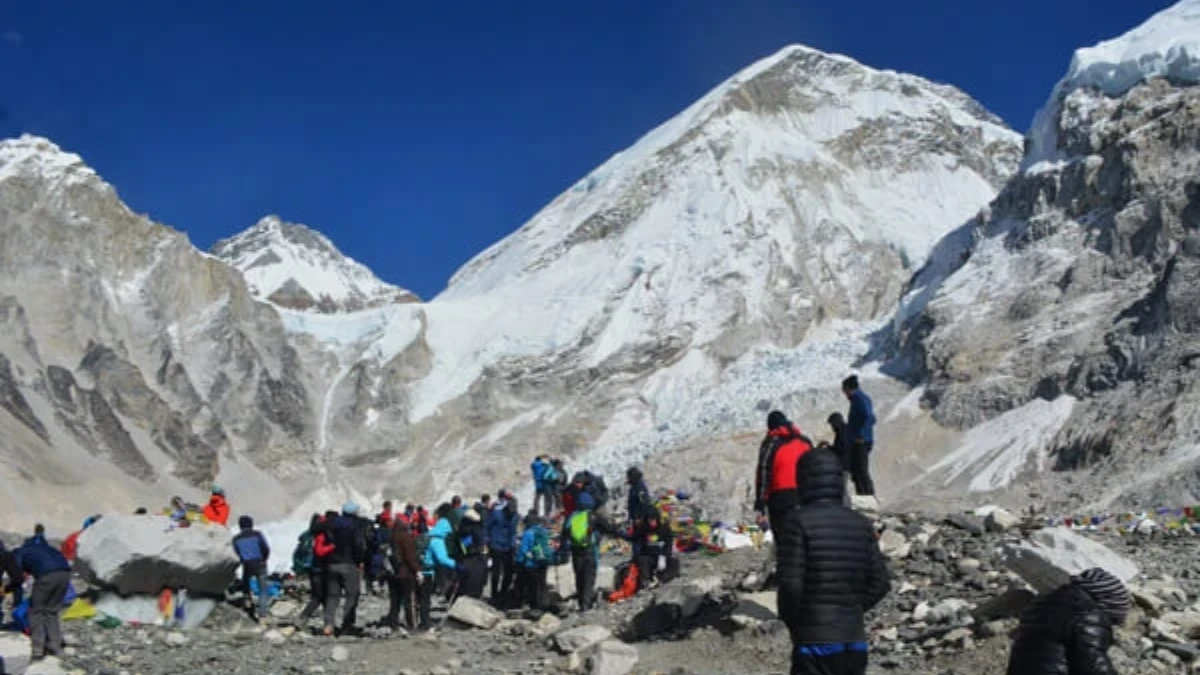
Everest Region: The most developed luxury trek route. Lodges at Phakding, Namche, Tengboche, and Kongde offer the full EBC approach experience with premium accommodation. Our Luxury EBC package uses the best available lodges on each section.
Annapurna Region: Luxury lodges on the Poon Hill and ABC routes. The lodges around Ghandruk and Ghorepani are particularly well-appointed, with mountain-view dining rooms and spa facilities.
Langtang Region: No luxury lodges exist in the Langtang Valley. The teahouses are good quality but standard. If luxury accommodation is non-negotiable, choose Everest or Annapurna.
How Much Does Each Route Cost?
| Route | Duration | Luxury Price | Standard Price | Extra Over Standard |
|---|---|---|---|---|
| EBC 12-Day | 12 days | USD 4,999 | USD 2,499 | +USD 2,500 |
| Poon Hill 6-Day | 6 days | USD 1,235 | USD 749 | +USD 486 |
| ABC 9-Day | 9 days | USD 1,400 | USD 799 | +USD 601 |
| EBC+Gokyo 15-Day | 15 days | USD 5,299 | USD 2,799 | +USD 2,500 |
The step up from standard runs from USD 486 on Poon Hill to USD 2,500 on either of the Everest routes. On the twelve-day Everest trek that is about USD 208 per person per night, and that figure is what surprises people, because they are comparing it to a hotel. It is not a hotel. Every bed, every pane of glass and every litre of heating fuel in a lodge above Namche was carried there on somebody's back or flown in by helicopter, and it is that, rather than the decor, that you are paying for.
One thing the tier does not change is the government charges. National park entry and permit fees are set by the Department of National Parks and Wildlife Conservation and are identical whether you sleep in the best lodge on the trail or the cheapest teahouse beside it. Nobody can discount them, and nobody should be adding a margin to them either.
What the Extra Money Actually Buys
Sleep Quality (the biggest real difference)
At 3,500 metres, sleep quality determines how you feel the next day more than any other factor. The Himalayan Rescue Association, which has run the aid posts on these trails since 1973, treats broken sleep and disturbed breathing at altitude as an early warning sign rather than an inconvenience. A warm room with a sealed window and a proper bed means six to seven hours of genuine rest. A cold standard room with a thin blanket and a draughty window means four to five hours of broken sleep. Over twelve days, the cumulative difference is massive: luxury trekkers arrive at altitude better rested, better acclimatised, and with more energy for the final push.
Bathroom Access (more important than you think)
Getting out of a warm sleeping bag at 3:00 in the morning to walk to a shared squat toilet at minus ten degrees is one of the least pleasant experiences in trekking. An en-suite bathroom with a Western toilet eliminates this entirely. For many trekkers, especially older ones, this single upgrade justifies the cost.
Food Quality and Variety
Standard teahouse food is good: dal bhat is excellent fuel. But after ten days of the same menu, even dal bhat lovers want variety. Luxury lodges offer soups, salads, grilled meats, pasta, and desserts prepared by trained cooks. The difference is noticeable but not dramatic: you are still eating at 4,000 metres, not in a Kathmandu restaurant.
Pace and Flexibility
With a private guide and no obligation to match a group schedule, luxury treks can adjust pace daily. Feeling tired? Walk shorter. Feeling strong? Add a side trip. Want an extra acclimatisation day? Done. This flexibility is particularly valuable for older trekkers or those with health considerations. Related: Budget Trek vs Luxury Lodge Trek in Nepal: What the Price Difference Actually Buys.
Who Should Choose Luxury?
Trekkers over 50 who want the mountain experience without the roughness. Sleep quality at altitude matters more as you age, and the bathroom access alone can be the difference between enjoying the trek and enduring it.
Couples on honeymoon or anniversary trips who want the Himalayas to be romantic, not gritty.
First-timers who are nervous about conditions. Luxury reduces the unknowns and lets you focus on the mountains instead of worrying about cold rooms and shared bathrooms.
Anyone who can afford it and values comfort. The mountains are the same. The sunrise is the same. The sense of achievement is the same. Luxury just means you sleep better and shower more.
Who Should Choose Standard Instead?
Budget trekkers. The USD 1,000+ saving buys another trek. Two standard treks give you more Nepal than one luxury trek.
Social trekkers. The teahouse dining room (crowded, noisy, full of strangers sharing stories) is part of the Nepal trekking culture. Luxury lodges are quieter and more private, which is a feature or a loss depending on your personality.
Experienced trekkers who know they sleep fine in teahouses and do not need the comfort upgrade.
See our EBC Trek or ABC Trek pages for Budget, Standard and Luxury pricing. Or contact us to build a custom luxury itinerary.
WhatsApp:+977 9810351300
Email:[email protected]
Written by Shreejan Simkhada, CEO of The Everest Holiday and third-generation Himalayan guide. TAAN Member #1586.
Ready for the luxury lodge experience? Our EBC Heli Return 10 Days (Luxury tier from USD 6,499) includes premium teahouses with private deluxe rooms, dedicated guide and porter, and helicopter back. Or the EBC 12 Days Luxury tier at USD 4,999. WhatsApp us with questions.
 Chat with Shreejan