Nepal trekking insurance guide. Altitude limits, helicopter evacuation costs, recommended providers by country, pre-existing conditions, how claims work on the trail.
Govt Regd. No.: 147653/072/073
Travel Agency Licence: 2838/072
Nepal Travel Insurance: What Coverage You Actually Need for Trekking

Short answer: For a Nepal trek you need travel insurance that covers medical treatment and helicopter evacuation up to the highest point of your trek. Our rule is to round that height up to the next 500 m, so Everest Base Camp needs cover to 6,000 m. Check the altitude cap in the small print, because a policy capped at 4,000 m will not pay for a rescue near Dingboche. We ask for proof before every trek, including our 12-day Everest Base Camp trek.
Nepal Travel Insurance: What Coverage You Actually Need
By Shreejan Simkhada | April 2026
In 2023, one of our trekkers collapsed at Gorak Shep, the last settlement before Everest Base Camp. Altitude: 5,164 metres. Symptoms: severe headache, vomiting, confusion. Classic signs of high-altitude cerebral oedema, which is a medical emergency.
Our guide called for a helicopter within fifteen minutes. The helicopter arrived in under two hours. The trekker was flown directly to a hospital in Kathmandu, treated, and released three days later. She was fine. She went home with a story and a medical bill.
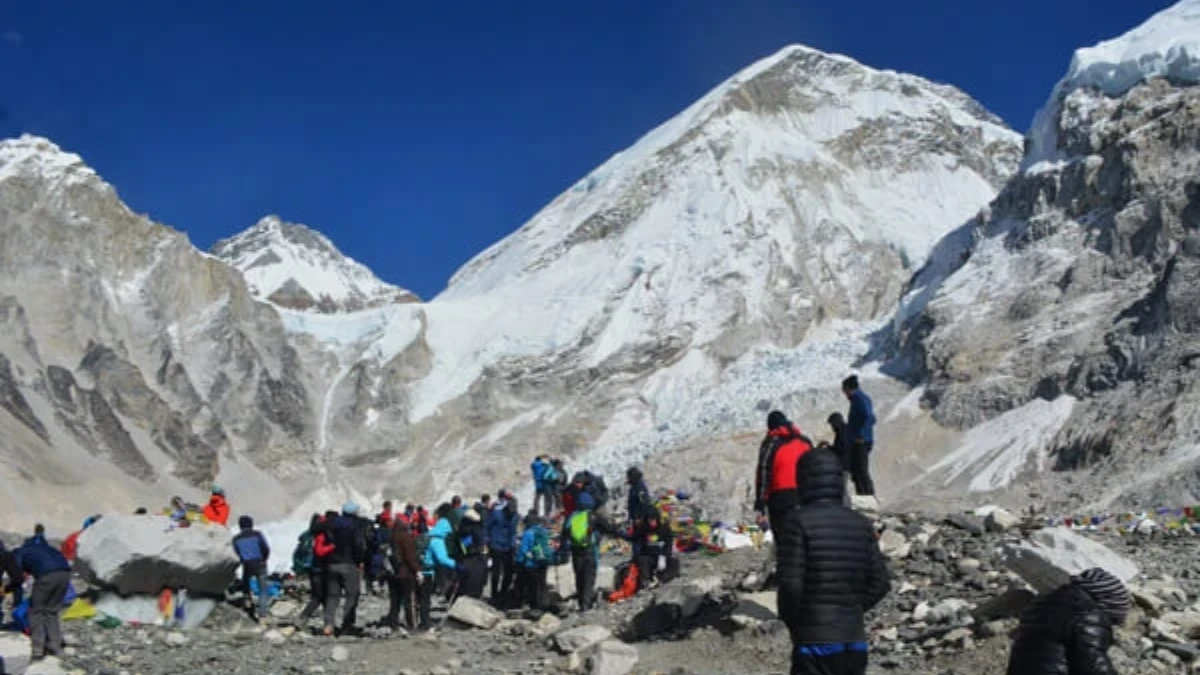
The helicopter cost $4,200. Her insurance covered every cent because her policy specifically included helicopter evacuation up to 6,000 metres. She paid nothing out of pocket except a $100 excess.
Three weeks later, a trekker from another company had a similar incident near Dingboche. His insurance policy had an altitude cap of 4,000 metres. He didn't know this when he bought it. The helicopter still came: you don't refuse someone medical evacuation because their insurance is wrong. But he paid $3,800 himself.
I tell this story to every client. Insurance is not a formality. It's not something you buy because someone made you. It's the difference between a scary experience and a financial disaster. And getting the right policy matters as much as having one at all.
Why We Require Insurance: Not Optional
The Everest Holiday requires all trekkers to provide proof of travel insurance before departure. This is not negotiable. We won't begin a trek without it.
I know that sounds blunt, but I've been doing this long enough to know what happens when someone gets hurt at altitude without coverage. The family panics. The embassy gets involved. There are arguments about who pays for the helicopter. Meanwhile, someone is sick and the focus should be entirely on getting them to hospital, not on money.
When everyone has proper insurance, emergencies are handled calmly. Our guide calls the evacuation. The trekker goes to hospital. The insurance company handles the cost. We handle the logistics. Nobody is stressed about finances during a medical crisis. That's how it should work.
We check your policy before the trek begins. We look at three things: altitude coverage, helicopter evacuation inclusion, and medical treatment and repatriation. If your policy doesn't meet our requirements, we'll tell you before you leave Kathmandu so you can upgrade.
What should Nepal trekking travel insurance cover?
1. Helicopter Evacuation to Your Trek's Maximum Altitude
This is the most important line on your policy. In Nepal, helicopter evacuation is the primary method of emergency rescue above about 3,000 metres. There are no roads in the mountains. There are no ambulances. If you're seriously ill or injured at altitude, a helicopter is the only way out.
Your policy must explicitly state helicopter evacuation coverage, and the altitude limit must exceed the maximum altitude of your trek. For the Everest Base Camp trek, your coverage needs to reach 6,000 metres, which is above Kala Patthar at 5,545m. For the Annapurna Base Camp trek, you need coverage to at least 5,000 metres.
If your policy says "helicopter evacuation included" but doesn't mention altitude, contact your insurer and get the altitude limit in writing. Some policies quietly cap at 3,000m or 4,000m, which is useless for most Nepal treks.
2. Medical Treatment
Hospital treatment in Kathmandu is good but not free for foreigners. A few days in a private hospital with tests, treatment, and observation can cost $2,000-5,000. More complex situations (surgery, ICU stays) can reach $10,000 or more.
Your policy should cover at least $100,000 in medical expenses. Most decent travel insurance policies meet this threshold, but check the fine print. Some cheaper policies have sub-limits on specific treatments.
3. Repatriation
If you're seriously injured or ill and need to fly home with medical support, the cost is extraordinary. Medical repatriation from Nepal to the UK, US, or Australia with a medical escort can cost $30,000-80,000. Your policy must cover this.
Repatriation also covers the worst case. In the event of a fatality in the mountains, bringing someone home involves logistics that are both complex and expensive. Insurance handles this so the family doesn't have to.
4. Trip Cancellation and Interruption
This isn't specific to Nepal but it's worth having. If you get sick before your trip, if a family emergency pulls you home mid-trek, or if weather closes the airports (it happens; Lukla airport closes for weather regularly), trip cancellation coverage reimburses the non-refundable costs. Our booking terms covers our fees, but your flights and other pre-paid expenses are on you without insurance.
The Altitude Problem: Why Standard Policies Fail
This is where most people get caught. Standard travel insurance policies, the ones you buy quickly online before a holiday, are designed for beach resorts, city breaks, and skiing below 3,000 metres. They are not designed for high-altitude trekking.
Common altitude caps on standard policies:
- 2,500 metres: Some budget policies. Useless for anything in Nepal except Kathmandu sightseeing and Chitwan.
- 3,000 metres: Many mid-range policies. Covers Poon Hill and lower Annapurna treks. Doesn't cover Everest region, Annapurna Circuit (Thorong La at 5,416m), Manaslu, Langtang, or any peak climbing.
- 4,000 metres: Better, but still falls short for Everest Base Camp (5,364m), Annapurna Circuit, and several other popular treks.
- 5,000 metres: Covers most trekking routes but not Kala Patthar (5,545m) or the Three Passes trek.
- 6,000 metres: Covers every standard trekking route in Nepal, including Everest Base Camp. We recommend it for treks above about 4,500 metres; 5,000 metres is enough for lower treks like Poon Hill or Annapurna Base Camp.
- Peak climbing: Cover to the summit altitude of the peak, with mountaineering and climbing included, for expeditions (Island Peak, Mera Peak, Lobuche East).
Here's the trap: many policies don't prominently display their altitude cap. You have to read the terms and conditions, often in the section titled "hazardous activities" or "adventure sports." If altitude trekking is listed as an excluded activity, or if there's a maximum elevation buried in the fine print, your policy won't pay when you need it most.
How much does helicopter evacuation in Nepal cost?
Because people ask, and because the numbers are motivating:
- Evacuation from Gorak Shep (5,164m) to Kathmandu: $3,000-5,000
- Evacuation from Annapurna Base Camp (4,130m) to Pokhara: $2,000-3,500
- Evacuation from Manaslu region to Kathmandu: $3,500-5,000
- Evacuation from Upper Mustang to Pokhara: $2,500-4,000
These are approximate costs and vary based on weather, fuel prices, helicopter availability, and the specific pickup location. The bill is presented to you at the hospital in Kathmandu. It must be paid before discharge or the insurance claim process begins.
Without insurance, you pay upfront. Your embassy cannot pay for you. Your trekking company cannot pay for you (and any company that claims they will is being dishonest about their operating margins). The cost is yours.
Which travel insurance companies cover Nepal high-altitude trekking?
I've seen claims processed by all of these companies. They're not the only options, but they're the ones our clients have used successfully.
United Kingdom
- Campbell Irvine: Specialist mountaineering and trekking insurer. They understand altitude, they understand Nepal, and claims are processed without the confusion that general insurers sometimes show. Coverage available to 7,000m+.
- BMC (British Mountaineering Council): Available to BMC members. Excellent trekking and climbing coverage with altitude options up to 7,000m. Good value if you're already a member.
- Snowcard: Another specialist. Clear about altitude limits, responsive on claims, and they don't argue about what "trekking" means versus "mountaineering." Coverage available to 6,000m and above.
United States
- World Nomads: Popular with travellers globally. Their Explorer plan covers trekking to high altitudes. Read the policy carefully for specific altitude limits, as they vary by plan level.
- IMG (International Medical Group): Strong medical coverage and clear about adventure activities. Good claims reputation.
- Global Rescue: Not traditional insurance but a membership-based evacuation service. They coordinate and pay for evacuation anywhere in the world to the nearest appropriate hospital. Many serious trekkers and climbers carry Global Rescue in addition to standard insurance.
Australia
- Cover-More: Offers adventure activity coverage that includes high-altitude trekking. Altitude limits vary by plan, so confirm before purchasing.
- World Nomads: Same as above. The Explorer plan is the one you want for Nepal trekking.
International / Any Country
- SafetyWing: A popular option for digital nomads and long-term travellers. Their Nomad Insurance includes adventure activities but check the altitude limits on the specific plan. Not all plans cover above 4,500m.
Regardless of which provider you choose, call them before purchasing. Tell them exactly where you're going, the maximum altitude, and the duration. Ask them to confirm in writing (email is fine) that your specific trek is covered. This takes ten minutes and eliminates ambiguity.
How do you claim travel insurance while trekking in Nepal?
When something goes wrong at altitude, you're not in a position to ring your insurance company's call centre and work through a phone tree. You're breathless, possibly in pain, and your phone might not have signal.
Here's what actually happens on our treks.
Our guide assesses the situation. If evacuation is needed, the guide contacts our Kathmandu office by satellite phone or mobile (there's surprisingly decent phone signal on the Everest trail up to about 5,000 metres). Our office coordinates the helicopter. The helicopter company contacts you or your emergency contact's insurance company for authorisation.
Most insurance companies have a 24-hour emergency number. Give this number to your guide at the start of the trek, along with your policy number and the name of the policy holder. Write it on a card and keep it in your jacket pocket, not in your backpack that's being carried by a porter two hours behind you.
At the hospital in Kathmandu, you'll need your policy documents to begin the claims process. Keep digital copies on your phone and email them to yourself so you can access them even if your paper copies are lost. The hospital will typically bill the insurance company directly if they have a relationship with your insurer. Otherwise, you may need to pay upfront and claim reimbursement.
Our team helps with all of this. We've coordinated dozens of evacuations and insurance claims. We know which hospitals work with which insurers, what documentation is needed, and how to navigate the process efficiently. This is part of what you get from trekking with a professional company rather than going independently.
Do you need to declare pre-existing conditions for trekking insurance?
Declare everything. Every condition, every medication, every historical issue. I know it feels like it might increase your premium or complicate the application. It might. But an undeclared pre-existing condition is the single most common reason insurance claims are denied.
High-altitude trekking puts stress on your cardiovascular system, your respiratory system, and your joints. If you have a heart condition, asthma, diabetes, a recent knee surgery, or any other ongoing medical issue, your insurer needs to know. Most conditions are coverable with a higher premium or an exclusion for that specific condition. But if you don't declare it and something related happens, your entire claim can be voided.
This applies to mental health conditions too. If you take medication for anxiety or depression, declare it. Altitude can affect mood and medication effectiveness. Your insurer knowing this is protective, not punitive.
Is there an age limit for Nepal trekking insurance?
Some policies won't cover trekkers over 65. Others cover all ages but with higher premiums or reduced coverage limits. If you're over 60, check the age clauses before purchasing.
We regularly guide trekkers in their 60s and 70s on appropriate routes. Age alone doesn't determine your suitability for trekking; fitness, health, and experience matter more. But your insurance needs to match your age, and finding the right policy sometimes requires specialist brokers.
Campbell Irvine (UK) and Global Rescue (US) both cover older trekkers without the restrictions that general insurers impose. If your regular travel insurer won't cover you for high-altitude trekking due to age, these specialists often will.
Do I need an adventure sports rider for trekking insurance?
Insurance policies categorise activities differently, and the categories matter.
Trekking (walking on established trails below 6,000m) is covered by most adventure travel policies, often as a standard inclusion or with a small additional premium.
Mountaineering (climbing peaks, using ropes, crampons, and ice axes) is a separate category that requires specialist coverage. If you're doing Island Peak, Mera Peak, Lobuche East, or any expedition that involves technical climbing equipment, you need a mountaineering-specific policy.
Peak climbing in Nepal occupies a grey area. Some insurers classify peaks like Island Peak (6,165m) as "trekking peaks" and cover them under trekking policies. Others call them mountaineering. Clarify with your insurer exactly which peaks are covered.
If your trek includes an optional summit attempt, which some of our trips do, make sure the summit portion is covered separately, even if the trekking portion is standard.
What Happens When Things Go Wrong
I've been guiding in the Himalayas for over a decade. Things go wrong rarely, but they do go wrong. Here's what a real evacuation looks like.
A client on our Everest Base Camp trek developed symptoms of altitude sickness at Lobuche (4,940m). Headache, nausea, loss of appetite: symptoms that could indicate either mild AMS (altitude mountain sickness) or the beginning of something more serious. Our guide monitored her with a pulse oximeter. Her oxygen saturation dropped to 72% overnight. Normal at sea level is 95-100%, and at this altitude, 80-85% is typical. Below 75% is a concern.
By 6am, she was confused and unsteady on her feet. Our guide made the call to evacuate. He phoned our Kathmandu office, provided her insurance details (which he'd recorded on day one), and the helicopter was dispatched. By 9am, she was in Kathmandu hospital. By the following day, she was sitting up in bed complaining about hospital food, which is how you know someone is recovering.
Her insurance covered the helicopter ($4,100), the hospital stay ($1,800), and the medications ($200). Total cost to her: $0 beyond her policy excess. She flew home on her original return flight four days later.
This is how it should work. This is how it does work when you have the right insurance. Our job is getting you to hospital safely. The insurance's job is paying for it. Both jobs are essential.
A Checklist Before You Trek
Use this before your trip. Print it, screenshot it, or write it on the back of your hand.
- Does my policy explicitly cover helicopter evacuation?
- Does the altitude limit exceed the maximum altitude of my specific trek?
- Does it cover medical treatment to at least $100,000?
- Does it include repatriation?
- Have I declared all pre-existing conditions?
- Do I have the 24-hour emergency number written down and easily accessible?
- Do I have digital copies of my policy on my phone and in my email?
- Have I given my guide my policy number and emergency contact details?
- If I'm doing a peak climb, is the summit specifically covered?
- Does my policy cover trip cancellation and interruption?
If you can answer yes to all ten, you're properly covered. If any answer is no or "I'm not sure," fix it before you fly.
Don't Let Insurance Be an Afterthought
I understand why people leave insurance until the last minute. It's not exciting. It's not the part of trip planning that gets you out of bed in the morning. You'd rather be researching which sleeping bag to buy or which route to take.
But the sleeping bag won't help you if you need a helicopter at 5,000 metres. The route doesn't matter if you're lying in a hospital bed wondering how you'll pay the bill.
Buy the right insurance early. Read the fine print. Call the company and ask questions. It takes an hour, costs a few hundred dollars, and protects you completely against costs that could run to tens of thousands.
Then forget about it and enjoy the mountains. That's the point.
If you have questions about insurance requirements for a specific trek, ask us. We've helped hundreds of trekkers find the right coverage and we're happy to check your policy before you book.
Plan your trek at theeverestholiday.com/plan-your-trip.
WhatsApp: +977 9810351300
Email: [email protected]
Shreejan Simkhada is the CEO of The Everest Holiday and a third-generation Himalayan guide. TAAN Member #1586. He has coordinated more helicopter evacuations than he'd like, and every single one reinforced his belief that proper insurance is the most important thing you pack.
Travel insurance is required: here is our recommendation. Our Everest Base Camp Trek (12 Days) is private (your group only, no strangers), 2027 dates open, From USD $1399. WhatsApp us for tailored 2027 dates and current departures.
Planning a trip to Nepal?
Drop us your details and tell us what you have in mind. We will put together a personalised plan and get back to you.
Not sure which Nepal trek is right for you?
Take our free 2-minute quiz and get personalised recommendations based on your fitness, experience, and travel style.
Find Your Perfect Trek →Need Help? Call Us+977 9810351300orChat with us on WhatsApp
Related Trek Packages
Latest Travel Blogs
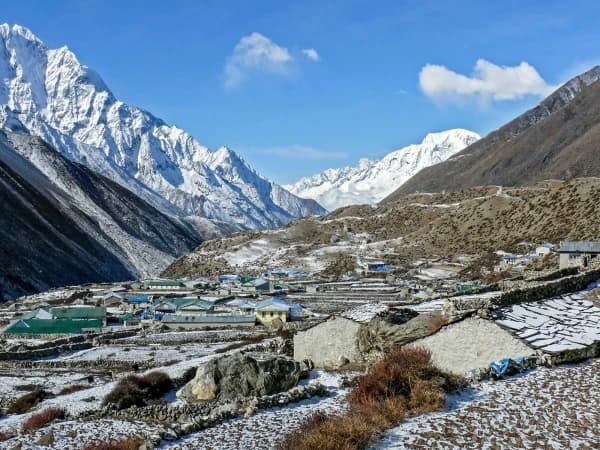
Thamdanda and Surke: The Road Head for Everest Base Camp by Road
Thamdanda is the road head where our Everest Base Camp trek by road starts and ends on foot. How to get there from Phaplu and what the first walk to Paiya is like.
Read More
Poon Hill Trek Permits 2027: ACAP, TIMS, Cost and What You Need
Poon Hill needs two permits: ACAP at NPR 3,000 and a TIMS card at NPR 2,000. Who arranges them, where they are checked, SAARC rates and the 2027 trek prices.
Read More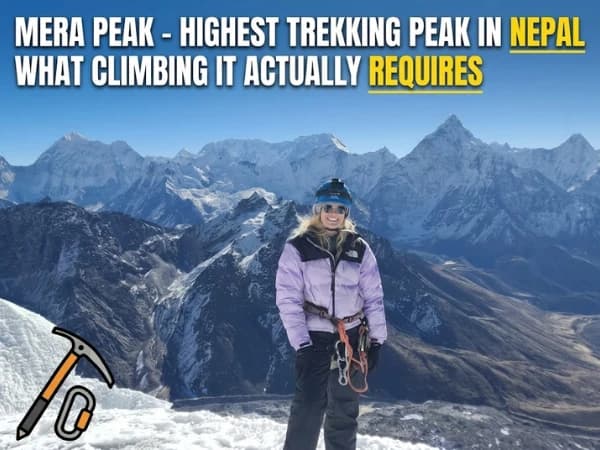
Mera Peak Climbing Itinerary 2027: 14 Days, Day by Day
Mera Peak in 14 days, night by night. The Hinku valley, a full rest day at Khare, Mera High Camp at 5,780 m, summit day, 2027 prices and the best months.
Read More Chat with Shreejan