
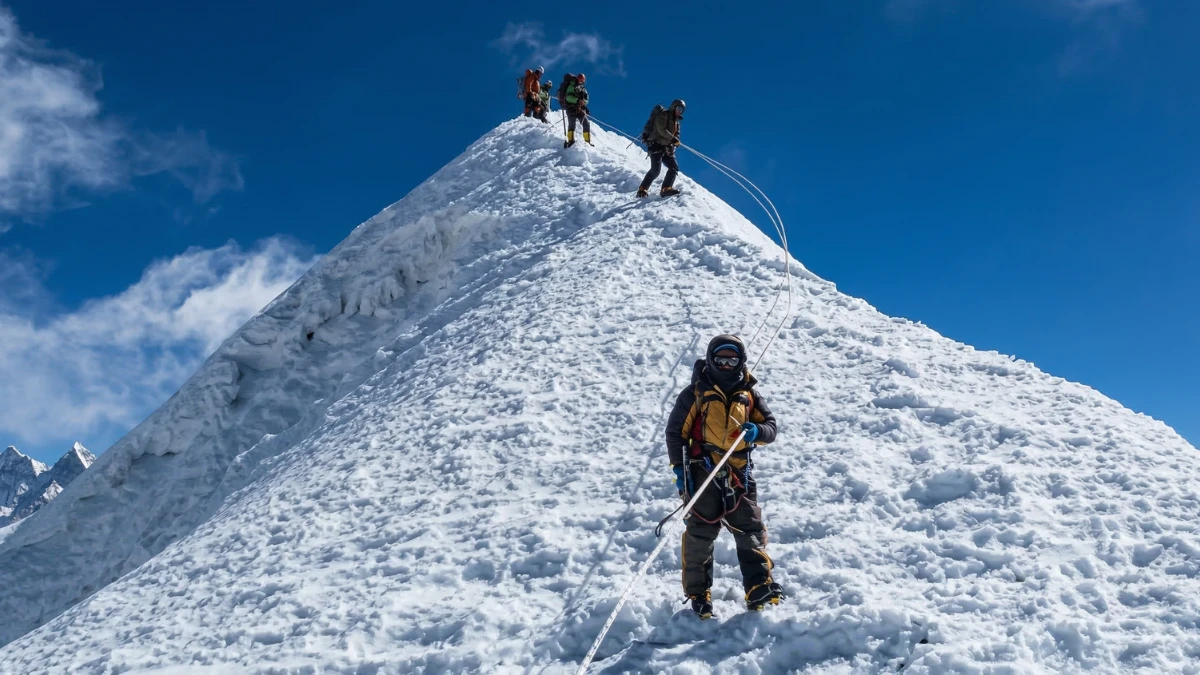
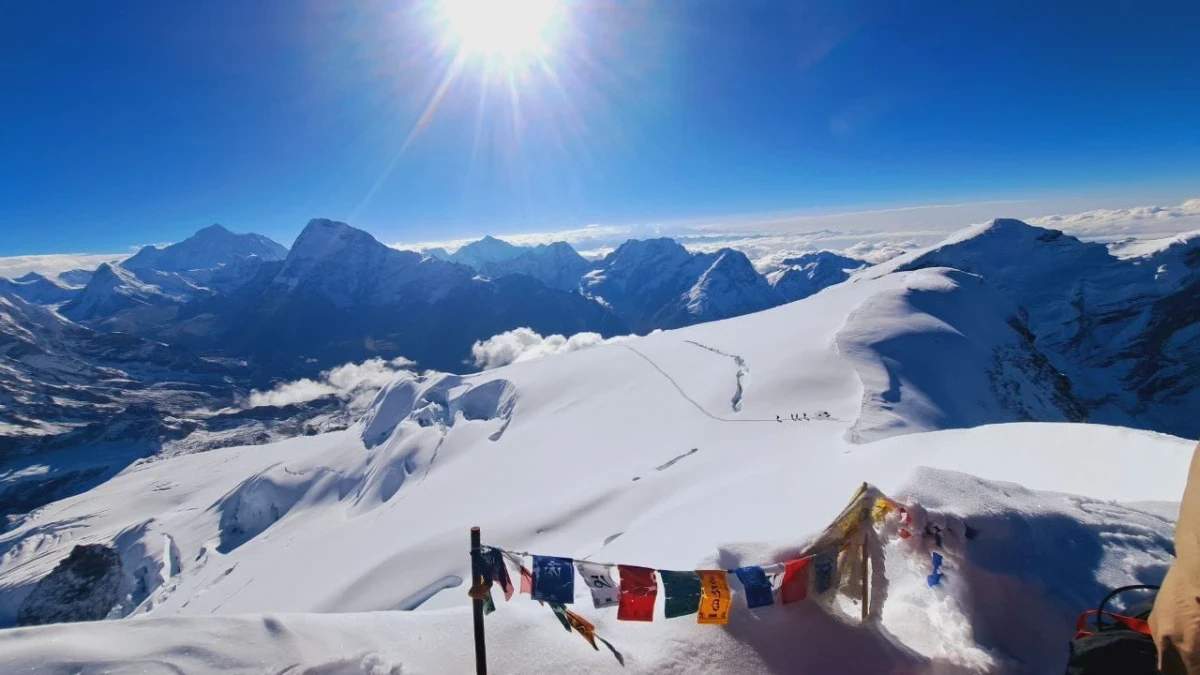
Island Peak is the most-climbed 6,000-metre peak in Nepal, and for good reason. It sits at the centre of the Everest region, the approach follows the classic EBC trail, and the summit gives you a view of Lhotse's south face that no photograph can replicate. It is also more affordable than most people expect for a genuine Himalayan climbing expedition.
But "affordable" is relative when you are flying to Nepal, buying insurance that covers helicopter evacuation to the summit altitude of Island Peak (6,189 metres), with mountaineering and climbing included, and spending two weeks at altitude. Here is every cost you will face, broken down honestly so you can budget with confidence.
May 2026 price note: Nepal's fuel costs have risen sharply due to the ongoing conflict in West Asia. Aviation fuel nearly doubled, directly affecting Lukla flight prices and helicopter evacuation costs. All prices below reflect current 2026 rates.
How Much Does an Island Peak Expedition Cost?
Our fourteen-day Island Peak expedition is priced in three tiers:
Budget: 3,499 USD. Shared teahouse rooms. No meals included (budget 15 to 25 USD per day for food on the trail). No porter. One guide for the group. Local vehicle and Lukla flight included. SIM card only. All climbing gear, permits, and climbing Sherpa included.
Standard: 4,999 USD. Private twin rooms with attached bathroom where available. Three meals daily plus tea, fruit, and two litres of water. One porter per two trekkers. One guide per six trekkers. Private vehicle transport and Lukla flight. Limited data SIM. All climbing gear, permits, and climbing Sherpa included.
Luxury: 9,999 USD. Private deluxe rooms with bed heater. All meals plus seasonal fruit, nuts and unlimited non-alcoholic drinks. One porter per trekker. One guide per two trekkers. Unlimited data SIM. All climbing gear, permits, and climbing Sherpa included.
Those are the per-person figures for a group of one to four, and they are the same whether you climb alone or with three friends. Above four the price steps down: on the Budget tier it is 3,299 USD per person for five to eight climbers, 3,199 for nine to twelve, and 2,999 for thirteen or more. Standard runs 4,799, 4,499 and 3,999 at the same breaks, and Luxury 9,499, 8,999 and 8,599. We never put strangers together to reach a group size, so the discount only applies to people you bring yourself.
One thing worth saying plainly, because it is the most common misunderstanding on a peak-climbing enquiry: Kathmandu hotel nights are not inside any of the three tiers. We quote those separately so you can see what you are paying for, and the worked examples further down include them as a separate line.
Full expedition details on our Island Peak climbing page.
What Every Package Includes
Regardless of tier, every Island Peak expedition with us includes:
- All climbing gear: ropes, harness, crampons, ice axe, helmet, carabiners
- Duffel bag and down jacket provided free of charge
- Expedition-qualified climbing Sherpa (roped to you on summit day)
- Licensed English-speaking trekking guide
- All permits: Island Peak climbing permit, Sagarmatha National Park entry, rural municipality fee, TIMS card
- Lukla flights (Budget and Standard) or helicopter (Luxury)
- Kathmandu airport transfers
- First aid kit, pulse oximeter, and Diamox altitude medication
- Sleeping bag (if you do not have your own, we help you buy one affordably in Kathmandu)
What Is Not Included
- International flights to Kathmandu
- Nepal visa (30 to 125 USD)
- Kathmandu accommodation before and after the expedition
- Travel insurance covering the summit altitude of Island Peak (6,189 metres), with climbing included, and helicopter evacuation (essential)
- Meals on the trail (Budget tier only)
- Tips for guide, Sherpa, and porter
- Alcohol and personal snacks
- Personal trekking gear beyond what we provide
How Much Do Island Peak Permits Cost?
Island Peak requires four permits. All are included in our packages and arranged by us, but here is what they cost individually if you are comparing prices:
- Island Peak climbing permit (NMA): 1,500 USD for a group of up to seven climbers (spring and autumn seasons). This is the biggest single permit cost in Nepal peak climbing and is why Island Peak packages are more expensive than pure trekking.
- Sagarmatha National Park entry: 3,000 NPR (about 20 USD) for foreigners
- Rural municipality fee: 3,000 NPR (about 20 USD)
- TIMS card: 2,000 NPR (about 13 USD), bought by us in Kathmandu
The NMA permit fee is per group, not per person, which is why climbing with a reputable company that fills groups is more cost-effective than organising an independent expedition. For more on Nepal's permit system, see our permits guide.
How Much Do Flights to Lukla Cost?
The Lukla flight is one of the biggest variable costs. Following the 2026 fuel crisis, prices have risen significantly:
- Kathmandu to Lukla return: about 508 USD per person, which is about 254 USD each way on the fare list our ticketing agent works from, effective 3 August 2026. Flying instead from Ramechhap (Manthali) is about 417 USD return, but it means a pickup between midnight and 2 am and a four to five hour drive
- Flights depart from Ramechhap (Manthali), a five-hour drive east of Kathmandu, not from Kathmandu airport. Your package includes transport to Ramechhap.
- Weather cancellations are common, especially in monsoon and winter. Budget one to two buffer days in case your flight is delayed.
Lukla flights are included in all our packages. The Luxury tier replaces flights with helicopter transport, which saves time but costs significantly more after the 2026 aviation fuel increases. For everything about the Lukla flight experience, read our Lukla flight guide.
How Much Does Food Cost on the Island Peak Trek?
Standard and Luxury packages include all meals. Budget trekkers pay as they go at teahouses. Current 2026 trail prices in the Everest region:
- Dal bhat (unlimited refills): 650 to 1,300 NPR (4.50 to 9 USD) depending on altitude
- Pasta, fried rice, noodle soup: 600 to 1,200 NPR
- Tea or coffee: 150 to 350 NPR
- Bottled water (1 litre): 200 to 700 NPR (increases sharply above Namche)
- Beer: 700 to 1,300 NPR
- Chocolate bar: 200 to 500 NPR
Budget trekkers eating three dal bhat meals per day plus tea will spend 25 to 35 USD daily on food. Over fourteen days: 350 to 490 USD. Standard trekkers with meals included should budget 5 to 15 USD per day for extras (beer, snacks, extra water). Read our teahouse food guide for what to expect from the menus.
Travel Insurance
This is non-negotiable and must cover:
- Emergency helicopter evacuation to the summit altitude of Island Peak (6,189 metres)
- Medical treatment abroad (minimum 100,000 USD)
- Mountaineering and climbing activities specifically (standard trekking policies will not cover Island Peak)
- Trip cancellation
A two-week policy with climbing cover to the summit altitude costs 150 to 300 USD depending on your nationality, age, and provider. This is more expensive than standard trekking insurance because climbing carries higher risk than walking. Providers like World Nomads, Global Rescue, and IMG offer suitable plans. Check that "peak climbing" or "mountaineering" is explicitly listed in the policy wording, with cover to the summit altitude of the peak.
What Tips Should You Know?
Your Island Peak team includes a trekking guide, a climbing Sherpa, and (on Standard and Luxury) a porter. Standard tipping:
- Trekking guide: 10 to 15 USD per day (140 to 210 USD for 14 days)
- Climbing Sherpa: 15 to 20 USD per day for summit days, 10 USD for trek days (roughly 150 to 200 USD total)
- Porter: 8 to 10 USD per day (112 to 140 USD for 14 days)
Total tips for Standard tier: roughly 400 to 550 USD. This is higher than a standard trek because the climbing Sherpa's role on summit day is life-critical and deserves recognition. For more context, read our tipping guide.
Flights to Nepal
International return flights to Kathmandu:
- From the UK: 500 to 900 GBP (650 to 1,150 USD)
- From the US: 900 to 1,500 USD
- From Australia: 700 to 1,200 AUD (500 to 850 USD)
- From India: 8,000 to 25,000 INR (95 to 300 USD)
Book three to four months ahead. Autumn (October to November) is peak climbing season, so flights to Kathmandu are most expensive then. Spring departures (April to May) often have cheaper fares.
What Is the Total Budget for Three Scenarios?
Budget Climber from the UK
| Return flights UK to Kathmandu | 700 USD |
| Nepal visa (30 days) | 50 USD |
| Travel insurance (climbing cover to the summit altitude) | 220 USD |
| Budget expedition package | 3,499 USD |
| Food on trail (14 days at 30 USD) | 420 USD |
| Kathmandu accommodation (3 nights at 25 USD) | 75 USD |
| Kathmandu meals and transport | 90 USD |
| Tips (guide + Sherpa only, no porter) | 300 USD |
| Gear and extras | 60 USD |
| Total | 5,414 USD |
Standard Climber from the UK
| Return flights UK to Kathmandu | 750 USD |
| Nepal visa (30 days) | 50 USD |
| Travel insurance (climbing cover) | 250 USD |
| Standard expedition package | 4,999 USD |
| Trail extras (beer, snacks, WiFi, 14 days) | 140 USD |
| Kathmandu accommodation (3 nights at 40 USD) | 120 USD |
| Kathmandu meals and transport | 110 USD |
| Tips (guide + Sherpa + porter) | 480 USD |
| Gear and extras | 70 USD |
| Total | 6,969 USD |
Luxury Climber from the US
| Return flights US to Kathmandu | 1,200 USD |
| Nepal visa (30 days) | 50 USD |
| Travel insurance (premium climbing cover) | 300 USD |
| Luxury expedition package | 9,999 USD |
| Trail extras (14 days) | 100 USD |
| Kathmandu accommodation (3 nights at 70 USD) | 210 USD |
| Kathmandu meals and transport | 150 USD |
| Tips (guide + Sherpa + porter) | 550 USD |
| Gear and extras | 80 USD |
| Total | 12,639 USD |
Gear Costs
We provide all technical climbing gear (ropes, harness, crampons, ice axe, helmet), plus a duffel bag and down jacket at no extra charge. If you need a sleeping bag or other personal trekking items, we help you buy them affordably in Kathmandu's Thamel district before departure.
What you should bring or buy yourself:
- Trekking boots: your most important personal item. They must be well broken in and suitable for crampon attachment. If you do not own mountaineering boots, buy them at home where you can try multiple pairs. Do not rely on finding the right fit in Kathmandu.
- Base layers and thermals: bring from home or buy cheaply in Thamel (10 to 30 USD per item)
- Headlamp: essential for the midnight summit start. Bring a reliable one with spare batteries. Cold drains batteries fast at altitude.
- Sunglasses with side shields: glacier glare causes snow blindness quickly. Category 4 lenses minimum.
- Sunscreen SPF 50+: UV at 5,000 metres is brutal even on cloudy days
Most climbers spend 50 to 150 USD on personal gear in addition to what we provide. If you already own trekking and mountaineering basics, the additional spend can be near zero. For a full checklist, see our packing guide.
Best Time to Climb and Price Variation
Island Peak has two climbing seasons: spring (April to May) and autumn (October to November). Autumn is the most popular season with the clearest skies and highest success rates. Spring is slightly warmer but has more precipitation.
Prices are consistent across both seasons for our packages. The main cost difference is international flights: autumn flights to Kathmandu are typically 10 to 20 percent more expensive because October and November are peak trekking season. If budget is tight, a spring expedition can save you 100 to 200 USD on airfare alone.
Lukla flights are equally expensive in both seasons and equally prone to weather delays. Build one to two buffer days into your Kathmandu schedule regardless of season.
Island Peak vs Mera Peak: Cost Comparison
If budget is a significant factor, it is worth comparing Island Peak with Mera Peak. Both are fourteen-day expeditions. Both include climbing gear and Sherpa. And both are priced identically, tier for tier: 3,499 USD Budget, 4,999 Standard, 9,999 Luxury. Cost is therefore not the thing that separates them.
The total trip cost is the same on both, because they run the same length, require the same Lukla flights and need the same level of insurance. What actually differs is the route and the technical demand: Mera goes south into the remote Hinku valley and is the easier climb on summit day, while Island Peak follows the classic Everest trail and finishes on a steeper headwall with fixed ropes. For a full comparison beyond cost, read our Mera Peak vs Island Peak guide.
Can You Do It Cheaper?
The NMA climbing permit alone costs 1,500 USD per group. This fee is unavoidable and represents the largest fixed cost in any Island Peak expedition. Cutting costs on the package usually means cutting the guide-to-climber ratio, using less experienced Sherpas, or skipping the acclimatisation days. None of these savings are worth the risk on a 6,000-metre peak.
Where you can save legitimately: book flights early, choose Budget tier if you are comfortable carrying your own bag and buying meals, trek in spring when flights are slightly cheaper, and travel with a group of friends to benefit from the per-person rate reduction on the shared permit cost.
How Do You Book an Island Peak Climb?
We require a deposit to secure your place, paid through Himalayan Bank Limited's secure payment gateway. The balance is due before departure. We recommend booking at least two months ahead for autumn departures (October to November) as climbing Sherpa availability is limited during peak season.
If you are unsure whether Island Peak is right for your experience level, read our guide on whether beginners can climb Island Peak, or message us directly for an honest assessment.
Island Peak is not the cheapest way to spend two weeks in Nepal, but it is one of the most rewarding. Standing at 6,189 metres with the Lhotse wall filling your entire field of vision is something that stays with you permanently. And at Standard tier, it costs less than many guided treks in the Alps or Patagonia.
View our Island Peak expedition and secure your spot
Island Peak is the most popular trekking peak in Nepal for a reason. It is achievable for fit trekkers with no prior climbing experience, the views from the summit ridge are among the best in the Himalaya, and standing at 6,189 metres knowing you climbed there yourself is a feeling that stays with you.
Check our peak climbing packages for the full breakdown of what is included, what it costs, and what fitness level you need.
WhatsApp:+977 9810351300
Email:[email protected]
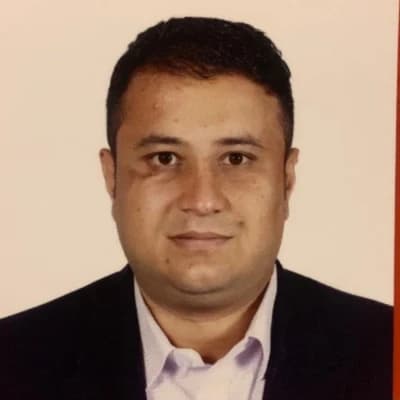
Written by Shreejan Simkhada, CEO of The Everest Holiday and third-generation Himalayan guide. TAAN Member #1586.
Island Peak in 2026: locked pricing. Our Island Peak Climbing (14 Days) is private (your group only, no strangers), 2026 dates open, from USD 3,499 per person. WhatsApp us for tailored 2026 dates and current departures.
 Chat with Shreejan