

This guide is about the Lukla flight only: the Ramechhap window, delays and cancellations, and the airport itself. For other domestic routes, baggage limits and the full fare table, see our Nepal domestic flights guide for trekkers.
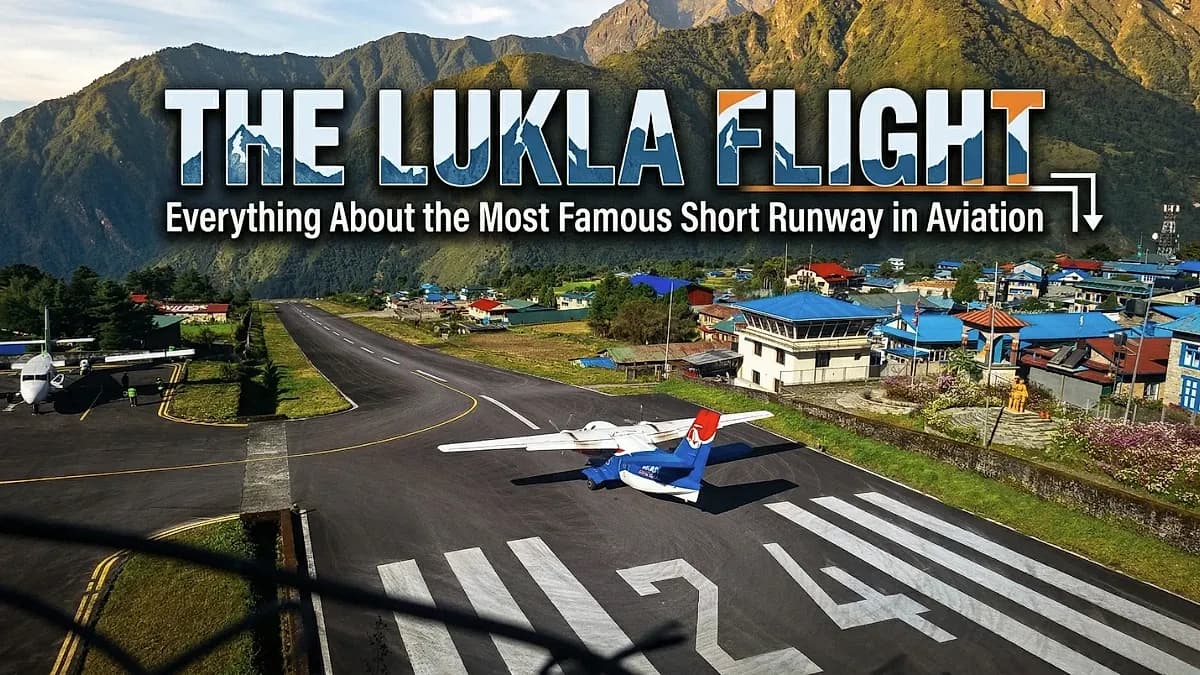
Tenzing-Hillary Airport does not look like an airport. It looks like a mistake: a narrow strip of asphalt tilted at twelve degrees, carved into the side of a valley at 2,860 metres, with a sheer cliff at one end and a vertical drop at the other. The runway is 527 metres long. A typical commercial runway is ten times that length. There are no instrument landing systems, no radar approach, no second chances. The pilot flies by sight, threading between cloud and mountain face, and either lands on the first attempt or goes around and tries again.
It is also the gateway to Everest. Fifty thousand trekkers a year begin their journey here, stepping off a small twin-otter aircraft into thin air and the sound of prayer flags and the beginning of something that will change them.
What is the Kathmandu to Lukla flight actually like?
In the busiest windows you do not fly from Kathmandu at all. Through the peak seasons, roughly mid-March to mid-May and late September to the end of November, Lukla flights are moved to Manthali airport in Ramechhap district, a four to five hour drive east of the capital. Outside those windows some flights still leave from Kathmandu, but you cannot count on it when booking months ahead. The Ramechhap departure means a departure from your Kathmandu hotel between midnight and 2 am, a rattling pre-dawn drive through sleeping towns, and arrival at a small domestic terminal where trekkers queue in the dark with head torches and thermoses.
The aircraft are small: Dornier 228s or de Havilland Twin Otters seating fifteen to twenty passengers. You sit in rows of single seats on each side, knees touching the person opposite, backpacks crammed under seats and in the aisle. The engines are loud. The cabin is not pressurised. It smells of aviation fuel and nervous energy.
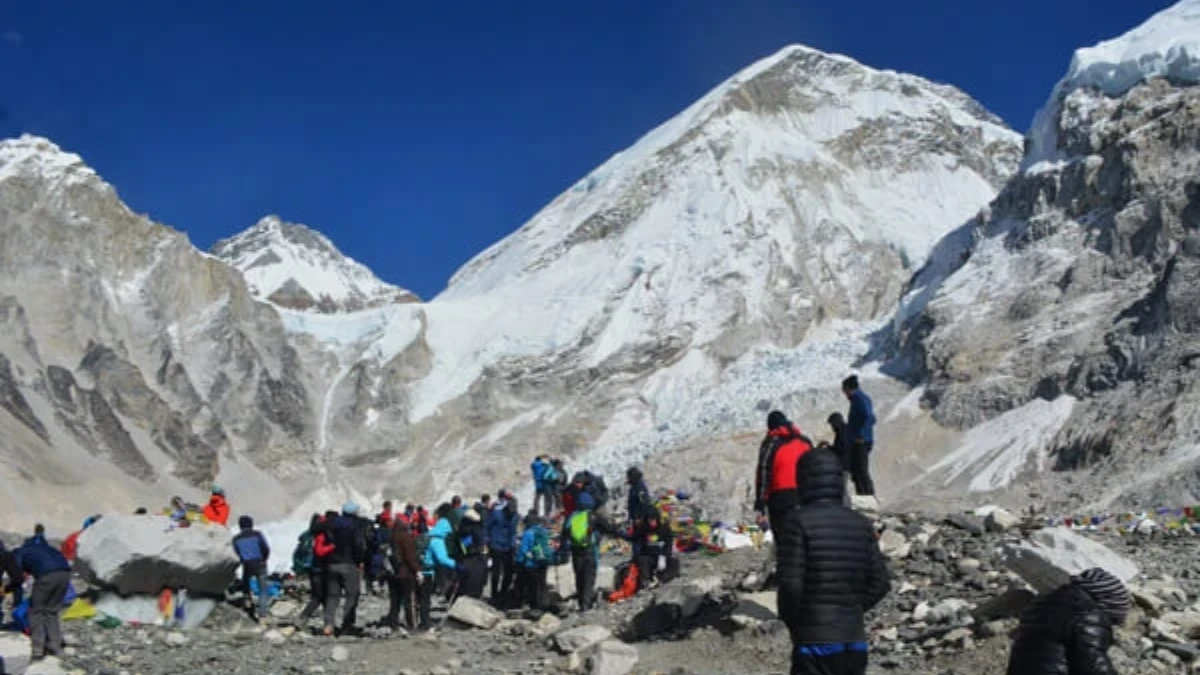
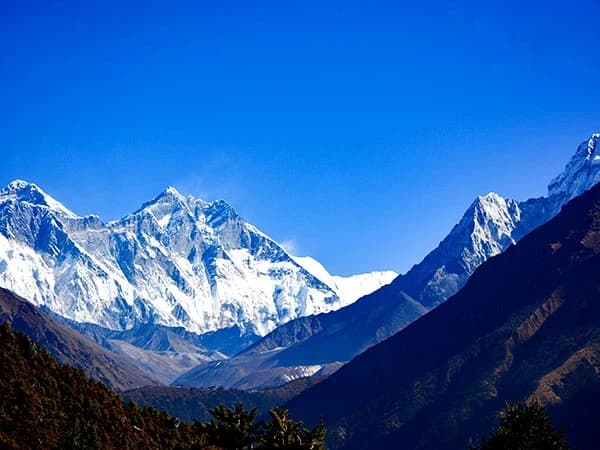
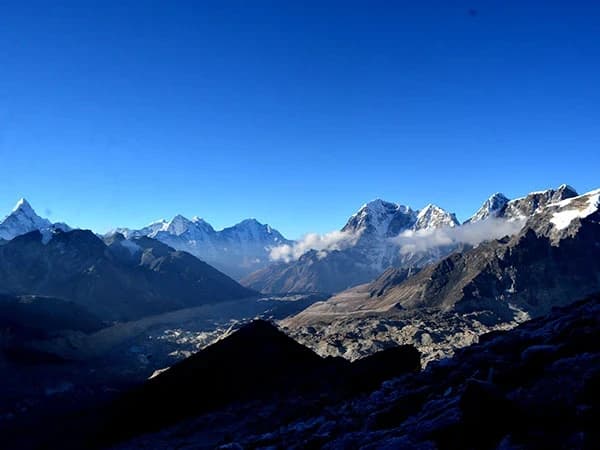
Takeoff from Manthali is unremarkable. But within minutes the Himalayan range appears through the windows, first as a white line on the horizon, then as individual peaks resolving into impossible scale. On a clear day, you can see Everest, Lhotse, Makalu, and Ama Dablam from the left side of the aircraft. The trekkers who did their research sit on the left. The rest crane their necks across the aisle.
The approach to Lukla is when the flight becomes something else entirely. The valley narrows. The pilot descends between ridgelines that seem close enough to touch. The runway appears ahead: a grey tilted strip ending in a stone wall. The aircraft drops, levels, drops again, and touches down with a thump that sends backpacks sliding. Reverse thrust roars. The plane decelerates sharply up the inclined runway and stops thirty metres from the wall.
Twenty-five minutes. Silence. The propellers wind down. Someone exhales loudly. Someone else laughs. You are at Lukla.
How much does the Kathmandu to Lukla flight cost in 2026 and 2027?
A one-way seat from Kathmandu to Lukla costs about USD 254 for a foreign passport holder, which is roughly USD 508 for the return. Flying from Manthali in Ramechhap instead costs about USD 209 each way, roughly USD 417 return, and that difference of around USD 90 is the only reason anyone accepts the middle-of-the-night drive. Those are all-in fares including VAT, the fuel surcharge and airport tax, current at August 2026. Airlines revise them through the year, so treat them as accurate to within a few dollars rather than fixed for the season.
If you find a page quoting USD 180 to USD 210 for this flight, it is describing fares from before the increases of the last two years. It is one of the most commonly repeated stale numbers in Nepal trekking, and it matters, because two people budgeting on the old figure will be short by well over two hundred dollars before they have bought a single meal. The published fare for every domestic sector we use is set out in our Nepal domestic flights guide.
On our own trips the flight sits inside the package price rather than arriving as an extra at the end, so the fare above is what it costs us to put you on the aircraft.
When the Flights Do Not Fly
The same geography that makes the landing dramatic makes it vulnerable to weather. Cloud filling the valley below runway minimums. Fog on the Manthali side. Crosswinds exceeding safe parameters. Reduced visibility from monsoon moisture or winter haze. Any of these and the flights stop. All of them. There is no instrument approach, no bad-weather landing capability. If the pilot cannot see the runway, the plane does not go.
During peak trekking season, October and November, this creates a particular problem. Demand for flights is at its highest precisely when weather disruptions are most consequential. One day of cancellations creates a backlog of three hundred to five hundred trekkers. Two consecutive days and the backlog becomes a logistics crisis. Trekkers waiting to fly in are stuck at Manthali. Trekkers waiting to fly out are stuck at Lukla. Both groups are anxious, tired, and running out of patience.
The airlines manage the backlog on a first-come basis. If your flight cancels today, you go to the top of tomorrow's list. If tomorrow cancels too, you wait again. There is no fast-track, no premium queue, no guaranteed rebooking. Weather is the only authority.
What happens if your Lukla flight is cancelled or delayed?
This is where the quality of your trekking company becomes very visible very quickly. A good guide has contingency plans. They find accommodation, not always easy when hundreds of stranded trekkers are competing for the same teahouse beds. They communicate with the company office in Kathmandu for updated weather forecasts and alternative options. They keep you informed hourly so you are not sitting in uncertainty.
If the delay extends beyond two days, helicopter charter becomes an option. As a guide, a shared seat costs about USD 640 per person from Kathmandu to Lukla and about USD 710 per person from Lukla to Kathmandu. These prices include government tax, bank charges and the fuel supplement the helicopter operators have added since the Iran oil crisis pushed fuel prices up. Other sectors and full charters are priced on request. A helicopter seat costs a good deal more than the fixed-wing flight and can often fly through gaps in the cloud that a small aircraft cannot, although it is not immune to weather. Your guide and our Kathmandu office coordinate this if you choose it. The extra nights in Lukla or Kathmandu and any helicopter are paid by you, as we cannot be liable for the weather or the airline. If you already hold a fixed-wing ticket, we can move its value across to a helicopter seat, less the airline cancellation charge, bank charges and tax, because those are lost once the ticket is cancelled.
The single most important thing you can do about Lukla flight cancellations is plan for them in advance. Build two buffer days into your schedule, arrive in Kathmandu two days before your international departure. This absorbs the delay without jeopardising your flight home. Trekkers who book their international return the day after their scheduled Lukla return are playing a game of roulette with Himalayan weather.
Is there a road alternative to flying Kathmandu to Lukla?
There is a way to reach Everest Base Camp that involves no flight to Lukla, no cancellation risk, and no pre-dawn drive to Manthali. The road route drives directly from Kathmandu to the trailhead at Salleri or Phaplu, eight to nine hours through Nepal's middle hills, and joins the classic EBC trail at Phakding.
The road route adds three days to the trek, fifteen days total instead of twelve, and removes the Lukla flight and its cancellation risk entirely. The trade-off is time for money and certainty. The drive through Nepal's hill country is beautiful in its own right, terraced farmland, river gorges, small towns where children wave from school courtyards.
Roughly thirty-five percent of Everest trekkers now choose the road. The percentage grows every year.
What should you know before flying Kathmandu to Lukla?
Sit on the left side for Himalayan views on the way to Lukla. Sit on the right for views on the return. Bring earplugs, the aircraft cabin is loud enough to make conversation difficult. Eat lightly before the flight, turbulence through the mountain valleys is common and occasionally vigorous. Dress warmly, the cabins are not heated and the temperature at Lukla is significantly colder than at Manthali. Keep your camera accessible, the twenty-five minutes offer some of the most spectacular aerial views you will ever see.
And when you land, take a moment before you shoulder your pack and start walking. Stand at the edge of the runway and look up the valley towards the peaks that brought you here. The mountains have been waiting. They are patient. They will still be there when you arrive.
The Lukla flight is included in our Everest Base Camp Trek package. To skip the flight entirely, the EBC by Road Trip drives to the trailhead instead.
The Kathmandu to Lukla flight is thirty minutes of mountain scenery and controlled anxiety. The runway is short, the approach is steep, and the mountains are close. It is the most exciting flight most people will ever take. Weather delays happen (often), so always build a buffer day into your itinerary. We arrange helicopter backup transfers when flights are cancelled for more than one day, paid by you as set out above.
Lukla flights are included in all our Everest region treks.
WhatsApp:+977 9810351300
Email:[email protected]
Written by Shreejan Simkhada, CEO of The Everest Holiday and third-generation Himalayan guide. TAAN Member #1586.
Kathmandu-Lukla flight 2026 and 2027: handled in our package. Our Everest Base Camp Trek (12 Days) is private (your group only, no strangers), 2026 and spring 2027 dates open, From USD $1399. WhatsApp us for tailored 2026 and 2027 dates and current departures.
What about 2027 fares?
Airlines revise Lukla fares once or twice a year, usually with a few weeks of notice; the August 2026 list above is what we are paying at the counter this autumn, and no 2027 revision has been published yet. We update this page the day one is. Two things will not change with the year: the Manthali operation in peak windows, and the helicopter exemption that lets luxury packages fly Kathmandu to Lukla direct year-round.
Reviewed and updated on 2 September 2026 by Shreejan Simkhada, CEO of The Everest Holiday and third-generation Himalayan guide. TAAN Member #1586.
 Chat with Shreejan