Is Island Peak Dangerous? Deaths, Risks, and Safety (Honest Guide)

Island Peak (Imja Tse, 6,165m) sits in the Khumbu region and draws hundreds of climbers every season. Agencies market it as a “trekking peak,” which is technically correct (the Nepal Mountaineering Association classifies it that way), but that label can be misleading. It is still a serious mountain, and people have died on it.
This guide gives you an honest breakdown of the fatality record, the real risks you will face, and exactly what we do to keep our teams safe.
Island Peak death statistics: what the numbers actually say
Here is the honest answer, and it is not the one you will get on most operator websites. There is no published, verifiable death toll for Island Peak. Nepal keeps detailed expedition records for the higher permitted mountains, but the trekking peaks are not reported in the same way, and no government body publishes a per-season fatality count for Imja Tse. Anyone quoting you a precise number for this mountain has invented it.
What we can tell you truthfully is this. Deaths on Island Peak are rare against the number of people who climb it each season, they are far rarer than on the eight-thousanders, and almost every one traces back to something that was avoidable. That last part is the only statistic that should matter to you, because it is the one you can do something about.
But “low” is not “zero.” Deaths have occurred from:
- Falls on the steep headwall section, particularly when fixed ropes were poorly maintained or climbers were unroped
- Crevasse falls on the glacier approach
- Acute mountain sickness (AMS) progressing to high-altitude pulmonary or cerebral oedema (HAPE/HACE)
- Exhaustion and hypothermia during sudden weather changes
Most incidents share a common thread: inadequate preparation, rushed acclimatisation, or climbing without experienced guides.
What are the main risks of climbing Island Peak?
1. Altitude sickness
At 6,165 metres, you are well into the zone where AMS can strike anyone regardless of fitness. Symptoms start with headaches and nausea and can escalate to life-threatening HAPE or HACE within hours. The single biggest factor is your acclimatisation schedule. Rush it, and you are gambling.
How we mitigate it: Our itinerary builds in two full acclimatisation days before the climb, one at Namche Bazaar (3,440m) and one at Dingboche (4,410m), and then moves up in stages through Chhukung (4,730m) to base camp rather than going straight at the peak. Our guides carry a pulse oximeter in the first aid kit and monitor your SpO2 levels daily. If readings drop below safe thresholds, we adjust the plan.
2. The headwall
The crux of the climb is a steep ice and rock wall. On our itinerary you leave base camp at 5,087 metres in the dark, scramble a rocky gully, cross onto the glacier, and then climb close to 100 metres of fixed rope to reach the summit ridge, using a jumar and crampons. It is exposed, and a fall without proper technique or equipment could be fatal.
The crevasse nobody mentions in the brochure. A substantial crevasse runs along most of the headwall below the summit ridge, and it has turned whole teams back. In 2009 the Nepal Mountaineering Association arranged for ladders to be installed at it, and since the autumn 2016 season the crossing has been made on a fixed aluminium ladder around five metres high. Walking a ladder in crampons, roped, at six thousand metres is the moment most first-time climbers remember. It is entirely manageable. It is not something you want to meet for the first time without having been told it is there.
How we mitigate it: We run a full rope-skills session at base camp before summit day, on real ground with the equipment you will actually use, so that nobody meets a jumar for the first time in the dark. Our climbing guide inspects the fixed line and the ladder before the team commits to them, and every client is clipped in at all times on the headwall. On our Luxury tier you climb with one guide for every two climbers. On the Standard and Budget tiers the ratio depends on your group size, and we will tell you exactly what it will be for your departure before you book rather than after.
3. Crevasse danger on the glacier
The approach to high camp crosses a glaciated area with hidden crevasses, especially late in the season when snow bridges weaken.
How we mitigate it: We rope up teams for the glacier crossing. Our Sherpas probe suspect areas. We schedule our attempts for the optimal weather windows (typically pre-monsoon April–May and post-monsoon October–November) when conditions are most stable.
4. Weather
The Khumbu can turn hostile quickly. Whiteouts, high winds, and sudden temperature drops are all possible above 5,500 metres.
How we mitigate it: We use reliable weather forecasting services and set firm turnaround times on summit day. If the window closes, we wait or turn back. No summit is worth a life.
5. Fatigue and poor fitness
Summit day is long: typically 8–12 hours round trip from high camp. If you arrive already exhausted from the trek, you will not have the reserves to handle the technical section safely.
How we mitigate it: We are upfront about the fitness requirements. You need a solid cardiovascular base built over at least 3–4 months of training. See our Island Peak training plan for a detailed programme.
Who should not attempt to climb Island Peak?
Be honest with yourself. Island Peak is not for you if:
- You have never trekked above 4,000 metres and have no idea how your body responds to altitude
- You are not willing to commit to at least 3 months of physical preparation
- You have a genuine fear of heights: the headwall is exposed and there is significant drop beneath you
- You want to rush the itinerary and skip acclimatisation days
- You have underlying heart or lung conditions that have not been cleared by a doctor for high-altitude activity
There is no shame in choosing a less technical objective. Mera Peak is a superb alternative that reaches 6,476m without the technical headwall.
Is Island Peak safer than other Himalayan peaks?
Context matters. Compared to most peaks above 6,000 metres, Island Peak has genuine advantages:
- Short technical section: Only the headwall and summit ridge require proper climbing skills. The rest is a high-altitude trek.
- Well-established route: The standard south-east ridge has been climbed thousands of times. Route-finding is straightforward in good visibility.
- The route is prepared each season: Fixed lines are re-rigged at the start of each climbing season rather than left to chance, and the headwall crevasse is crossed on a ladder installed under the Nepal Mountaineering Association.
- Proximity to Everest Base Camp infrastructure: Chhukung and the surrounding lodges mean you are never far from shelter and basic medical supplies. Helicopter evacuation to Kathmandu is possible within hours.
- Lower altitude than many alternatives: At 6,165m, it sits below the “death zone” threshold. Your body can still function and recover.
What gear do you need to climb Island Peak?
Summit day needs double mountaineering boots, crampons, an ice axe, a harness, a jumar, a figure-of-eight descender and a helmet. All of it is included on every tier, Budget included, so there is nothing for you to hire in Thamel and nothing to fly out from home. We provide a sleeping bag and a down jacket free of charge on every tier as well, and a duffel bag on the Standard and Luxury packages. Your climbing Sherpa is included on every tier too, and it is the same expedition-qualified Sherpa from the Khumbu whichever tier you book. The tiers change how you sleep and eat on the way in. They do not change who is on the rope with you. Your Island Peak climbing permit, the Sagarmatha National Park entry permit, the Khumbu Pasang Lhamu Rural Municipality fee and your TIMS card are all included in the package price on every tier. Full gear lists are included in your pre-departure pack.
Make sure your travel insurance covers mountaineering and not merely trekking, to the summit altitude of the peak (6,165 metres for Island Peak), and that it names helicopter evacuation in the wording. The ceiling matters more than people expect: a helicopter has to fly higher than you are standing in order to reach you, so ask the insurer to confirm in writing that evacuation is covered at the summit altitude of the peak. Standard travel policies will not cover you at this altitude at all.
How do guides keep Island Peak climbers safe?
We have been guiding in the Khumbu across three generations as a family and operating independently since 2016. Our approach is simple:
- NMA-licensed climbing guides and Sherpas who have worked this route across many seasons
- Conservative acclimatisation schedules: we never rush
- A guide-to-client ratio confirmed in writing before you book: one guide to every two climbers on our Luxury tier
- Satellite phone and emergency communication on every expedition
- Clear turnaround protocols: the mountain will always be there next season
We would rather you come back alive and try again than push through dangerous conditions for a summit photo.
How do I book an Island Peak climb?
If you have read this far and still want to climb, that is a good sign. You are taking the risks seriously, which is exactly the mindset you need.
Check our Island Peak Climbing package for the full itinerary, inclusions, and departure dates. For a cost breakdown, read our Island Peak climbing cost guide. And if you are wondering whether your experience level is enough, start with Can a beginner climb Island Peak?
Have questions about your specific fitness level or medical history? Talk to us directly:
Message us on WhatsApp: we reply within a few hours, and we will give you an honest answer about whether Island Peak is right for you.
Climbing Island Peak with us. Our Island Peak Climbing 14 Days includes a NMA-licensed climbing guide, full technical gear, fixed ropes, summit safety briefing, and proper acclimatisation. From USD 3,499 per person. WhatsApp us for 2027 expedition dates.
Planning a trip to Nepal?
Drop us your details and tell us what you have in mind. We will put together a personalised plan and get back to you.
Not sure which Nepal trek is right for you?
Take our free 2-minute quiz and get personalised recommendations based on your fitness, experience, and travel style.
Find Your Perfect Trek →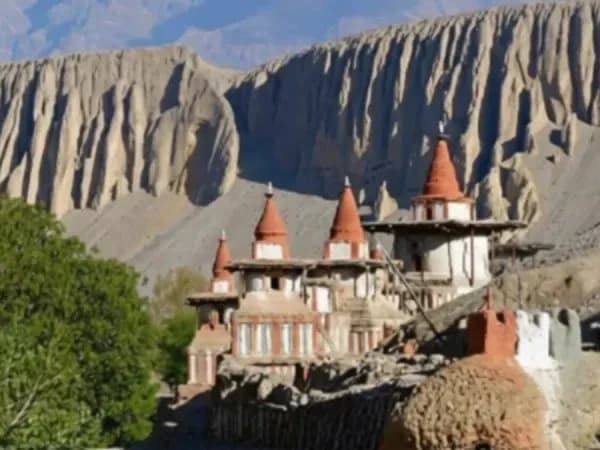
Trekking in Nepal in September 2027: Weather, Best Treks and Departures
Plan a September 2027 trek in Nepal: monsoon-tail weather, why Upper Mustang works, which treks to avoid and our departures on 6, 13, 20 and 27 September.
Read More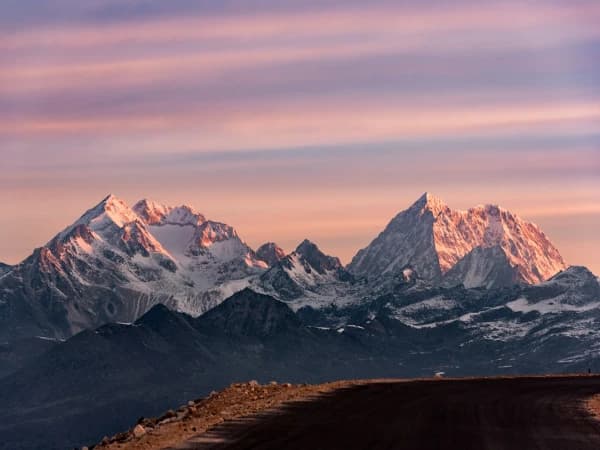
Trekking in Nepal in March 2027: Weather, Best Treks and Departures
Plan a March 2027 trek in Nepal: weather figures, the treks that suit the month, crowds, festivals and our departures on 8, 15, 22 and 29 March.
Read More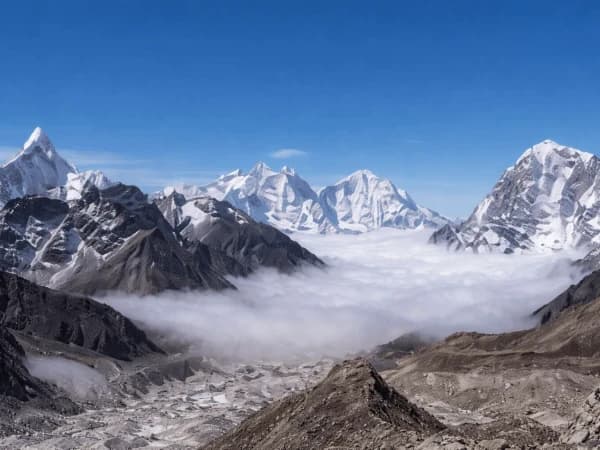
Trekking in Nepal in April 2027: Weather, Best Treks and Departures
Plan an April 2027 trek in Nepal: weather figures, the treks that suit the month, crowds, the Manthali flights and our departures on 5, 12, 19 and 26 April.
Read More Chat with Shreejan