Is Nepal safe to visit in 2026? Crime, altitude, roads, natural disasters, solo female safety. An honest guide from someone who lives and works here.
Govt Regd. No.: 147653/072/073
Travel Agency Licence: 2838/072
Is Nepal Safe to Visit? The Honest 2027 Travel Safety Guide

Last updated 14 October 2026 (the two Annapurna road rows in the table were revised on 14 October; everything else is as read on 7 October). The UK and Canadian advisory pages were re-read on 7 October and still show the dates in the table. The Australian and Irish rows are as read on 4 October. I do not predict what 2027 will be like. I tell you what is true today and how to check it yourself.
The short answer: Nepal is open to visitors and most trips are running, but this has been a hard year and I will not pretend otherwise. Three government advisories this week (Australia, Canada and Ireland) rate Nepal at their second level, "exercise a high degree of caution". The UK page carries no advice against travel, but it flags the 26 August flood. The risk is not spread evenly across the country. It is concentrated in a few river corridors, on certain roads, and in the usual mountain hazards of altitude and weather. Below I explain each one, what is known, what is not, and when I would tell you to wait.
I am Shreejan. I am a third-generation guide. My grandfather and father guided before me, and our company has run since 2016. I have a business interest in you coming to Nepal, so check every number here against the sources at the bottom of the page rather than taking my word for it. If you decide to come, here is our 12-day Everest Base Camp trek with dates and prices for 2027. If you decide to come, here is our 12-day Everest Base Camp trek with dates and prices for 2027.
Is Nepal safe to visit right now?
For most visitors, in most places, yes, with real caveats. Here is what four governments say on their official pages:
| Government | Level or position | Date shown | Main points |
|---|---|---|---|
| UK (FCDO) | No advice against travel in the warnings section I read; flood warning in place | Latest update 1 October 2026 | Flash flood in Rasuwa and the Nepal-China border area (26 August), with Gorkha, Nuwakot and Dhading also named; protests and strikes fairly common; buy insurance covering your itinerary |
| Australia (Smartraveller) | "Exercise a high degree of caution"; "reconsider your need to travel" to named flood-affected districts | Read 4 October 2026 (no update date shown) | Natural disasters and road accidents; districts named near the Bhote Koshi and Trishuli rivers; postpone overland travel between Nepal and Tibet |
| Canada | "Exercise a high degree of caution"; avoid non-essential travel to Rasuwa and Nuwakot districts | Last updated 31 August 2026 | Political fragility, petty theft in tourist areas, altitude, helicopter rescue scams, overnight buses |
| Ireland (DFA) | "High Degree of Caution", level two of four | Updated 26 August 2026; still current at 3 October 2026 | Comprehensive insurance including medical evacuation; check exclusions for your activity |
I have not quoted the US State Department or German Foreign Office levels, so if either is your government, read it yourself before you book. Advisories change, and a level two for the whole country does not mean every district carries the same risk, which is why the regional picture further down matters more than the headline label.
What happened in Nepal in 2025 and 2026, and where do things stand?
Visitors ask me about three separate events. They are different in cause and in effect on a trip, so I keep them apart.
The September 2025 protests
The government banned 26 social media platforms on 4 September 2025. Large protests began in Kathmandu on 8 September, with at least 19 people reported killed that day, and curfews were imposed in Kathmandu and several other towns including Pokhara. Prime Minister K.P. Sharma Oli resigned on 9 September, government buildings were burned, and Tribhuvan International Airport closed for a period before operations resumed. Sushila Karki was sworn in as interim prime minister on 12 September, parliament was dissolved, and the curfew in the Kathmandu area was lifted on 13 September. A Nepal Army report puts the final death toll at 76.
The honest reading for a visitor: this was a serious, violent few days that closed the main airport and put curfews on the cities. It was not aimed at tourists, and the Canadian advisory says that foreigners have not been targeted in politically motivated attacks. But it shows how fast things can change, which is why I ask every client to leave a buffer day at each end of a trip.
The March 2026 election and afterwards
The election was held on 5 March 2026 as scheduled. Turnout was about 59 per cent, and the Rastriya Swatantra Party won 182 of 275 seats, a single-party majority. Balendra (Balen) Shah was sworn in as prime minister on 27 March 2026. I know of no curfews, airport closures or disruption to visitors around the vote. Both the FCDO and Smartraveller still say protests, strikes and demonstrations are fairly common and can disrupt transport, and Smartraveller adds that taking part in a protest breaches visa conditions. My advice is simple: walk away from any gathering, and do not photograph it.
Tourism numbers through it all
Nepal received 1,147,548 visitors in 2024 and 1,158,459 in 2025, a rise of about 0.95 per cent, against 1,197,191 in 2019 (Nepal Tourism Board and immigration data). I do not read a cause into the flat 2025 figure. I only note that visitors kept coming through a year that included the protests.
What did the 2026 floods and landslides do?
This is the biggest practical issue for trekkers this autumn, and two separate events are often mixed up.
26 August 2026. A rock and ice collapse from the Langtang Lirung glacier sent a debris flow down the Bhote Koshi and Trishuli river system near the Nepal-China border, hitting Rasuwa and Nuwakot districts and, in Tibet, Gyirong County (national disaster authority figures). The FCDO page describes "major flooding in Rasuwa district and the Nepal-China border area" that "caused widespread damage". Reported counts of the dead in Nepal sit at about 1,450 as of mid to late September, with thousands recorded as missing, among them several hundred foreign nationals. The counts differ between reports and are still being updated, so treat any single number with caution. The Friendship Bridge at the border crossing was destroyed.
24 to 29 September 2026. A new multi-day rain system hit the country. The Kathmandu Post (27 September) reported floods and landslides in Rupandehi, Chitwan, Kavrepalanchok, Lamjung, Myagdi, Mustang and other districts. Al Jazeera (27 September) reported at least 12 dead in Nepal, and weather.com (28 September) reported 21 dead. I give you the range of 12 to 21 and I am not adding it to the August toll. They are separate disasters with separate counts.
Our dated updates on this, in the order they were written:
- Langtang trek and the Rasuwa flood: status
- Which Nepal treks are open after the Rasuwa flood
- Manaslu Circuit and the flood
- Annapurna trails and the Kimrong Khola landslide
- Is the Annapurna Circuit open? Road versus trail
- Late-September floods and landslides: travel update
Which trekking regions are affected, road or trail?
The most useful distinction I can give you is road versus trail. In several regions the walking trail itself has not been reported damaged, while the road that gets you to the start of it has been cut. The table shows the position as last reported, from reports up to 29 September. Conditions move, so open the dated page for the region you want before you decide.
| Region | Trail | Road or access |
|---|---|---|
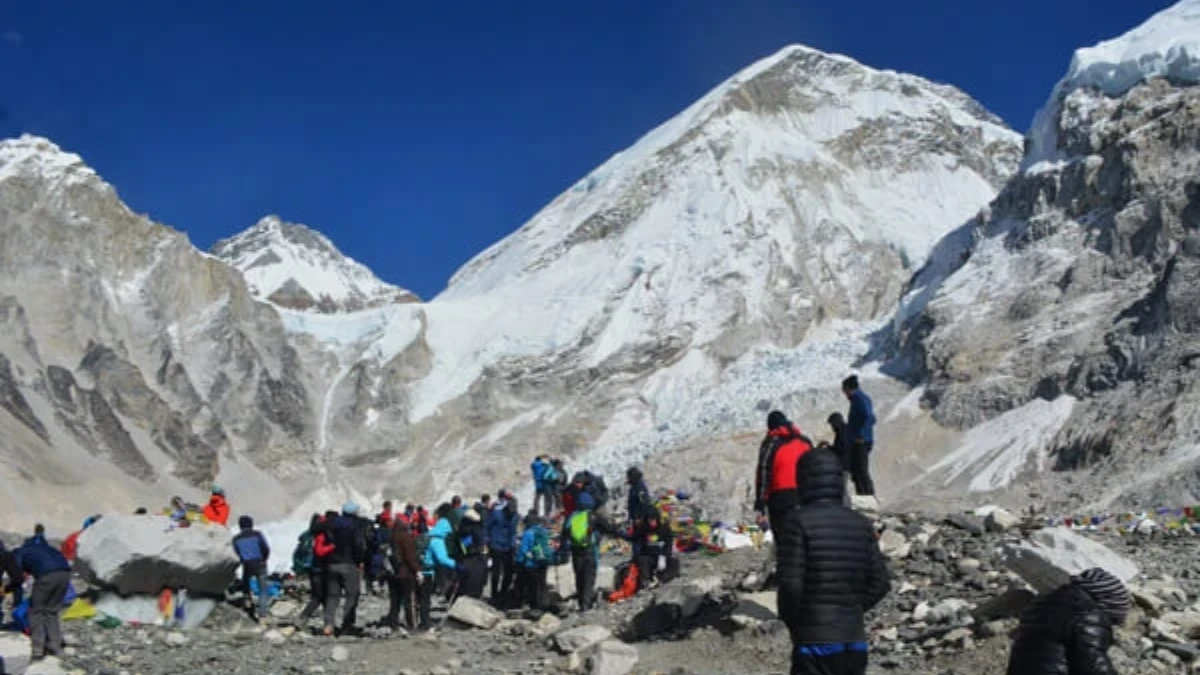
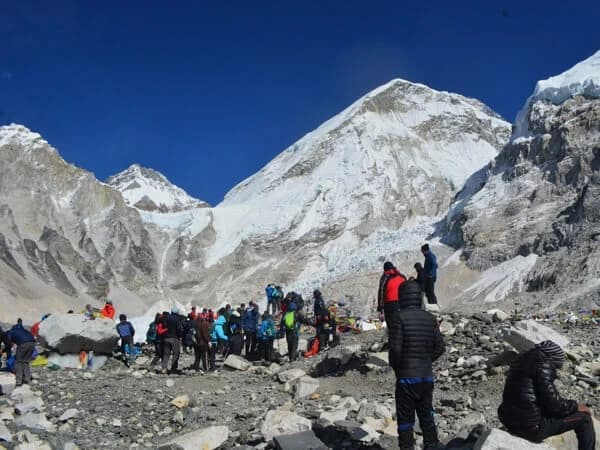
| Everest (Khumbu) | Reported open and unaffected; different river system | Fly-in; Lukla flights are subject to routine weather holds (five airports shut on 25 September for poor visibility, per the Kathmandu Post) |
| Annapurna Circuit | No trail damage reported | Besisahar to Chame road blocked by a landslide on 27 September; repaired and open to vehicles again as of 14 October 2026 |
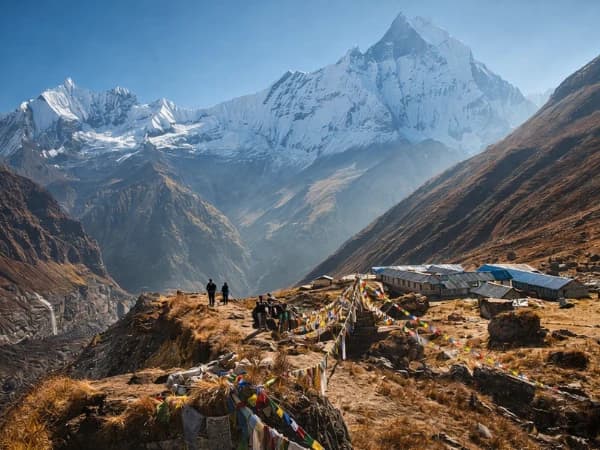
| Annapurna Base Camp and Poon Hill | No new trail damage reported; a 9 September landslide-dam scare cleared within about six hours | Pokhara to Baglung road washed out at Sahasradhara |
| Mustang | No trail damage reported | Beni to Jomsom to Korala road damaged at 46 points (Nepal Press, 28 September); repaired and open to vehicles again as of 14 October 2026 |
| Langtang and Gosainkunda | Road open to Dhunche and Syabrubesi (15 October 2026) | Rasuwa and Trishuli valley road reopened after the August flood; no hotels are running in Syabrubesi yet, so day 1 is a walk on from the road head |
| Manaslu | Closed since 11 October 2026: a second flash flood on the Budhi Gandaki in the early hours of 11 October 2026, with a landslide at Chumchet, destroyed the Soti steel bridge and the Machhakhola and Sirdibas footbridges and cut the Arughat road | No Manaslu or Tsum departures until the route is rebuilt; read what happened on 11 October |
For the far west (Dolpa, Humla, Mugu, Kalikot, Jumla) there are no trail-closure reports either way, but those districts were named among the places hit by the late-September rain, so treat them as unconfirmed, not clear.
One more date matters. Officials told the Kathmandu Post (28 September) they were racing to reopen damaged highways before Dashain, which runs from 11 to 25 October 2026, with the main days around 17 to 23 October. The same piece noted the BP Highway normally carries 4,000 to 5,000 vehicles a day against a projected 9,000 to 10,000 at festival time. If you travel in that window, expect crowded roads, slow transport and full buses. Canada also warns of more petty theft in the festival season, September to November.
Is trekking in Nepal safe?
Trekking is where most of the genuine risk is, and the hazards are well known. The FCDO lists altitude sickness, avalanches, landslides, sudden weather changes and glacier crevasses above 3,000 metres. It says permits and TIMS cards are required, solo trekking is not permitted, and your insurance must cover mountain rescue and helicopter evacuation. That matches how we work: a licensed guide, the correct permits and an evacuation plan on every itinerary.
What worries me most is not a dramatic accident. It is the slow decisions: going up a day too fast, walking in bad afternoon weather to hit a schedule, or skipping a doctor's visit with a heart or lung condition. Those are choices you and your guide control. Monsoon-season hazards are covered in our monsoon trekking guide.
Is altitude sickness the biggest trekking risk?
For most trekkers on the classic routes, yes. The CDC Yellow Book gives these medical points:
- Risk starts for unacclimatised people sleeping above about 2,450 metres. Smartraveller puts the warning at 2,500 metres and says it "can affect anyone, even people who are physically fit".
- Above 3,000 metres, the CDC advises ascending no more than 500 metres per night in sleeping altitude, and adding an extra acclimatisation day for every 1,000 metres gained.
- The CDC cites a prevalence of around 30 per cent among trekkers on Everest-region routes at the higher elevations.
- Acetazolamide (Diamox) can speed acclimatisation when taken as prescribed, and a doctor should decide that with you before you fly.
- Descent is mandatory if symptoms worsen despite treatment, or if there is confusion, loss of balance or breathlessness at rest.
The trade-off, and I will be direct: a slower itinerary with rest days is safer and costs more days. A fast itinerary is cheaper and carries more risk. The honest advice is to take the extra days. Our longer guides are altitude sickness prevention and Diamox and altitude medication.
Is Kathmandu safe, and what about the other cities?
Violent crime against visitors is uncommon. The FCDO says overall crime rates are low. It also warns about pickpocketing at airports, on buses and in tourist areas such as Thamel, and says robbery and assault risks rise in poorly lit areas in the evening. Canada's advisory says the same about petty theft, with more incidents in festival season.
Smartraveller adds a few points I would pass on: travellers have been victims of robbery, assault and drink spiking, so do not accept food or drink from strangers and never leave a drink unattended. It has a specific warning about methanol poisoning from adulterated spirits, so treat cheap cocktails and unlabelled bottles with care. Taxi drivers often refuse to use the meter, so agree the fare first or use a ride-hailing app. Parts of Kathmandu have heavy seasonal smog, so ask your doctor if you have breathing problems. In practice, I tell clients to use ordinary city sense, keep valuables in a hotel safe, and stay off unlit streets alone at night.
Is Nepal safe for solo travellers and women?
Many women travel in Nepal alone and have a good trip, but I will not tell you there is no risk. The FCDO reports sexual assaults in tourist areas, particularly affecting women alone after dark. Smartraveller says women may be harassed on public buses and that overnight buses are especially unsafe because of poor lighting, bad roads and the chance of harassment.
My advice: use a private car or a reputable tourist bus by day, avoid walking alone after dark in the cities, and share your location with someone at home. On the trail, solo trekking is not allowed anyway, so you will have a licensed guide. Our full piece on this is Solo female trekking in Nepal: what it is really like. On LGBTQ+ travel, Smartraveller says same-sex relations are legal but society is conservative, harassment has been reported, and public displays of affection are best avoided.
Is the water and food safe?
Not without care. Smartraveller says waterborne, foodborne and parasitic diseases, including typhoid, cholera and hepatitis, are common, and advises drinking only boiled or bottled water and avoiding raw or undercooked food. It also lists rabies (get medical help straight away after any animal bite or scratch), dengue and Japanese encephalitis (increasingly reported, including in Kathmandu), and malaria risk in the Terai hill districts and Chitwan National Park. Medical facilities are very limited outside Kathmandu, and treatment at high-standard clinics in the capital is expensive. If you are seriously ill or injured, you will need medical evacuation.
See a travel clinic well before you fly, and follow its advice on vaccines and anti-malarial tablets for the areas you will visit.
How dangerous are the roads and domestic flights?
Roads are, in my view, the most underrated risk in Nepal. The FCDO says bus accidents are frequent, with fatalities every year, and names overloading, poor maintenance and speeding. Only drivers are legally required to wear seat belts, so passengers should ask for one. Smartraveller advises avoiding public buses and vans, and Canada discourages overnight bus travel. Monsoon landslides can close a road for days. The Kathmandu Post (26 September) listed multiple blocked highways into the capital in a single weekend.
Domestic flights are weather-dependent. Smartraveller notes several air accidents in Nepal in recent history and tells travellers to research providers and monitor weather. We cover this honestly in Is the Lukla flight safe?. The practical rule: build a spare day around any mountain flight.
How big is the earthquake risk?
Nepal sits in an active seismic zone, and both Canada and the FCDO say so. The 25 April 2015 Gorkha earthquake was magnitude 7.8 to 7.9, killed 8,857 people in Nepal and triggered an avalanche on Everest that killed 22 (USGS data). On 3 November 2023 a USGS magnitude 5.7 quake in Jajarkot killed 153 people and collapsed about 26,550 houses. Reports put the heavy damage down to weak construction and the night-time hour, not size alone.
I cannot tell you when the next one will come, and nobody can. What you can control is small: ask about the building you sleep in, know your exit, and keep your phone charged. The FCDO says emergency resources are limited in remote areas, which is a further reason to travel with insurance and a guide who knows the area.
How do trekking scams work, and how do you avoid them?
I will not name any company or person here, because I cannot prove anyone's case and because naming is not what protects you. A checking framework does:
- Company registration. Is the company registered at the Office of the Company Registrar? Ask for the number and verify it.
- Trade association. Is it a member of the Trekking Agencies' Association of Nepal (TAAN)? We are member 1586. Ask any operator for theirs, and check it with the association.
- Tourism licence. Does the operator hold a licence from the Department of Tourism?
- Money. How do they take payment, and does it follow Nepal Rastra Bank foreign exchange rules? Be wary of anyone asking for payment to a personal account or in an unusual way.
- Tax registration. A PAN or VAT registration and a tax clearance are checkable.
One caution I want to be clear about: even fully licensed operators have been involved in scams. A licence is necessary, not sufficient. Read recent reviews on independent sites, ask for a written itinerary with inclusions, and be wary of any price far below the rest of the market. We have over 300 reviews on TripAdvisor, Google and Trustpilot. Please read them, including the lower ones.
The most dangerous scam for a trekker is the helicopter-rescue one. Canada's advisory warns of documented helicopter rescue scams. We explain how they work in helicopter scams in Nepal trekking, and how a genuine rescue works in helicopter rescue in the Himalayas. The general ground-level scams are in trekking scams: what to watch for. Insurance guidance is in travel insurance for Everest Base Camp up to 6,000 metres with helicopter cover.
What do we do on our treks?
This is what we actually do on our packages.
- A licensed guide on every trek. Solo trekking is not allowed. Our guides carry a pulse oximeter and are trained in first aid.
- Oximeter readings as a prompt, not a verdict. A reading helps start a conversation about how you feel. It never replaces how you look and act.
- A road check within 48 hours of departure. Before any road transfer, we check the road status in the 48 hours before the vehicle leaves.
- Route alternatives. If a road or trail is closed, we propose another region. That is why the road-versus-trail table above exists.
- Insurance is required. We ask every trekker to hold travel insurance that covers emergency helicopter evacuation and medical treatment at the altitude they will reach.
The trade-off for you: our checks can change your plans late. A road may be closed, and we may move you to another trek or shift a day. That costs you flexibility. I think it is better than driving into a landslide. Our Everest Base Camp trek (12 days) and Annapurna Base Camp trek are two of the routes the flood reports have left open at trail level, but check the dated pages above before you commit.
What other guides do not tell you
- The advisory level is not the whole story. A single "level two" label hides the fact that your risk depends on the district, the road and the date. The four advisories differ, and the regional table is more useful than any one of them.
- Two separate disasters, two separate counts. The 26 August flood and the 24 to 29 September rains are different events. Merging their figures, as some posts do, is wrong.
- Dashain crowds the roads. If your dates fall between 11 and 25 October, transport is tight and flood-damaged highways are being repaired in a hurry.
- The risk is on the road to the trail. On several routes the walking path is intact and the road to it is not.
When should you not travel to Nepal?
I would rather lose a booking than send you in at the wrong time. I would tell you to wait or change plans if:
- You cannot get insurance that covers medical evacuation from altitude. Without it, a rescue becomes your bill.
- You want Langtang, Gosainkunda or the Rasuwa valley and cannot accept a changed day 1. The road to Dhunche and Syabrubesi is open again as of 15 October 2026, but no hotels are running in Syabrubesi, and the Australian and Canadian advisories name Rasuwa.
- You plan an overland trip between Nepal and Tibet. Smartraveller advises postponing it, and we cannot promise anything on timing.
- Your dates are in the monsoon and you have no flexibility. The Department of Hydrology and Meteorology had not declared monsoon withdrawal as of 29 September. Its average withdrawal date is 2 October, and the last four years ran 8 to 16 October, as reported in Nepali media.
- You have a heart, lung or blood condition and have not discussed altitude with a doctor.
- Your own government's advice, or your insurer's terms, says no. Always defer to them.
How do you check conditions before you go?
- Read your own government's advice the week you fly: UK, Australia, Canada, Ireland, and the US State Department.
- Ask your operator for the road and trail status for your exact route in the last 48 hours, with the source.
- Check our dated region pages above.
- Save emergency numbers: Nepal Police control is 100 and the toll-free line is 16600141516 (listed on the Nepal Police website). Nepal Police also has a Tourist Police wing under its Crime Investigation Department. Smartraveller lists the Foreign Ministry hotline for families of missing persons at +977 974 444 1227.
- Register with your embassy, buy insurance with evacuation cover, and keep a spare day at each end.
So, is Nepal safe?
Safe enough for the prepared, and not for the casual. Crime against visitors is low, and after a violent September 2025 the country now has a government with a single-party majority, elected on 5 March 2026. The risks that remain are real: floods and landslides cut roads and kill people, the roads are dangerous, altitude catches fit people, and a rescue can be expensive and open to fraud. They are manageable with a licensed local team, slow itineraries, the right insurance and the willingness to change plans.
I would not tell you "Nepal is perfectly safe", and I would not tell you to stay away. If you want to talk through a specific route and date, I will give you my honest view, including "wait".
Start with our Plan Your Trip page, or message me directly.
WhatsApp: +977 9810351300
Email: [email protected]
Sources
- UK FCDO, Foreign travel advice: Nepal, read 7 October 2026 (latest update 1 October 2026)
- Australian Government Smartraveller, Nepal travel advice, read 4 October 2026
- Government of Canada, Nepal travel advisory, read 7 October 2026 (updated 31 August 2026)
- Ireland Department of Foreign Affairs, Nepal travel advice, read 4 October 2026 (updated 26 August 2026)
- Nepal Police, official website, read 4 October 2026 (control number, toll-free line, Tourist Police wing)
- US CDC, Yellow Book: high-altitude travel and altitude illness, read 4 October 2026
- Kathmandu Post, "Relentless rain triggers floods, landslides across Nepal", 27 September 2026
- Kathmandu Post, "Heavy rains cut off key roads to Kathmandu", 26 September 2026, and "Will flood-damaged highways be travel-ready by Dashain?", 28 September 2026
- Kathmandu Post, "Adverse weather disrupts domestic flights as five airports remain closed", 25 September 2026
- Al Jazeera, "Floods and landslides kill at least 56 people in India, 12 in Nepal", 27 September 2026
- weather.com, "21 dead, 300+ landslides amid weeks of heavy rain, flooding in Nepal", 28 September 2026
- Nepal Press, "Besisahar-Chame road blocked", 27 September 2026
Shreejan Simkhada is the CEO of The Everest Holiday and a third-generation Himalayan guide. TAAN Member #1586.
Talking through a route before you book is free. Our Everest Base Camp Trek (12 Days) is private, with your group only. WhatsApp us for the current road and trail position on your dates.
Planning a trip to Nepal?
Drop us your details and tell us what you have in mind. We will put together a personalised plan and get back to you.
Not sure which Nepal trek is right for you?
Take our free 2-minute quiz and get personalised recommendations based on your fitness, experience, and travel style.
Find Your Perfect Trek →Need Help? Call Us+977 9810351300orChat with us on WhatsApp
Related Trek Packages
Latest Travel Blogs
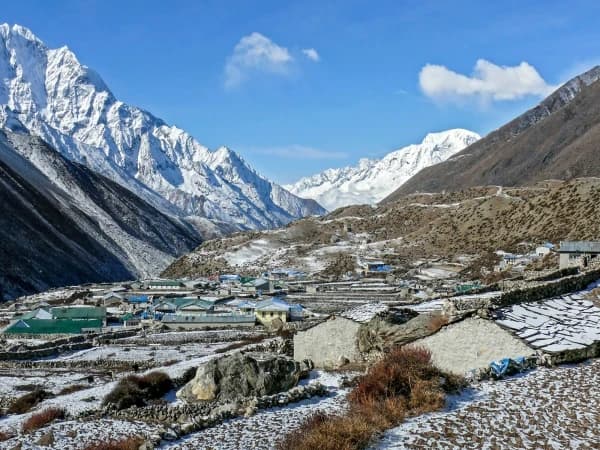
Thamdanda and Surke: The Road Head for Everest Base Camp by Road
Thamdanda is the road head where our Everest Base Camp trek by road starts and ends on foot. How to get there from Phaplu and what the first walk to Paiya is like.
Read More
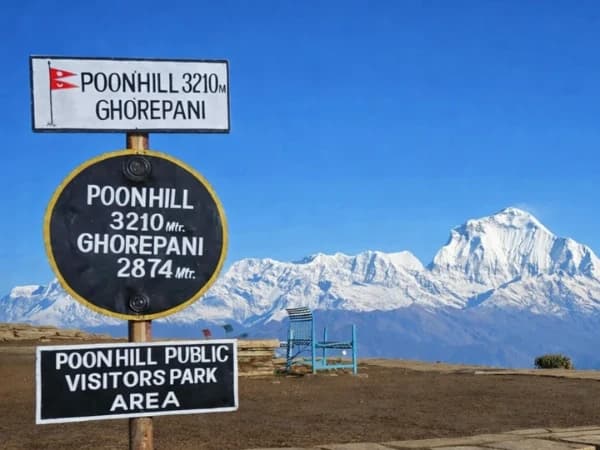
Poon Hill Trek Permits 2027: ACAP, TIMS, Cost and What You Need
Poon Hill needs two permits: ACAP at NPR 3,000 and a TIMS card at NPR 2,000. Who arranges them, where they are checked, SAARC rates and the 2027 trek prices.
Read More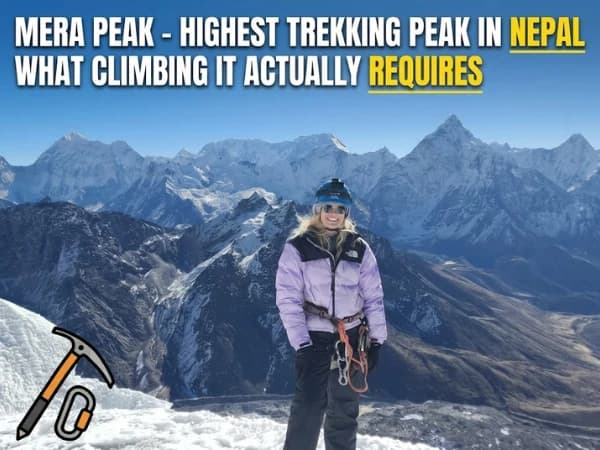
Mera Peak Climbing Itinerary 2027: 14 Days, Day by Day
Mera Peak in 14 days, night by night. The Hinku valley, a full rest day at Khare, Mera High Camp at 5,780 m, summit day, 2027 prices and the best months.
Read More Chat with Shreejan