
There is a ridge on the Annapurna Circuit, somewhere between Manang and Thorong Phedi, where the trail bends around a corner and the entire Annapurna massif opens before you: ice and rock and impossible scale, a wall of white stretching from one edge of your vision to the other, so vast and so silent that for a moment you forget you have legs and lungs and a pack on your back. You just stand there. Breathing thin air and understanding, for the first time, why people come here.
Nepal does this to people. Not once but over and over: a different revelation on every trail, at every altitude, in every season. The country holds eight of the fourteen highest mountains on earth and more trekking routes than any nation, from gentle one-day walks through terraced farmland to month-long expeditions across glaciated passes that test the limits of what a human body can endure.
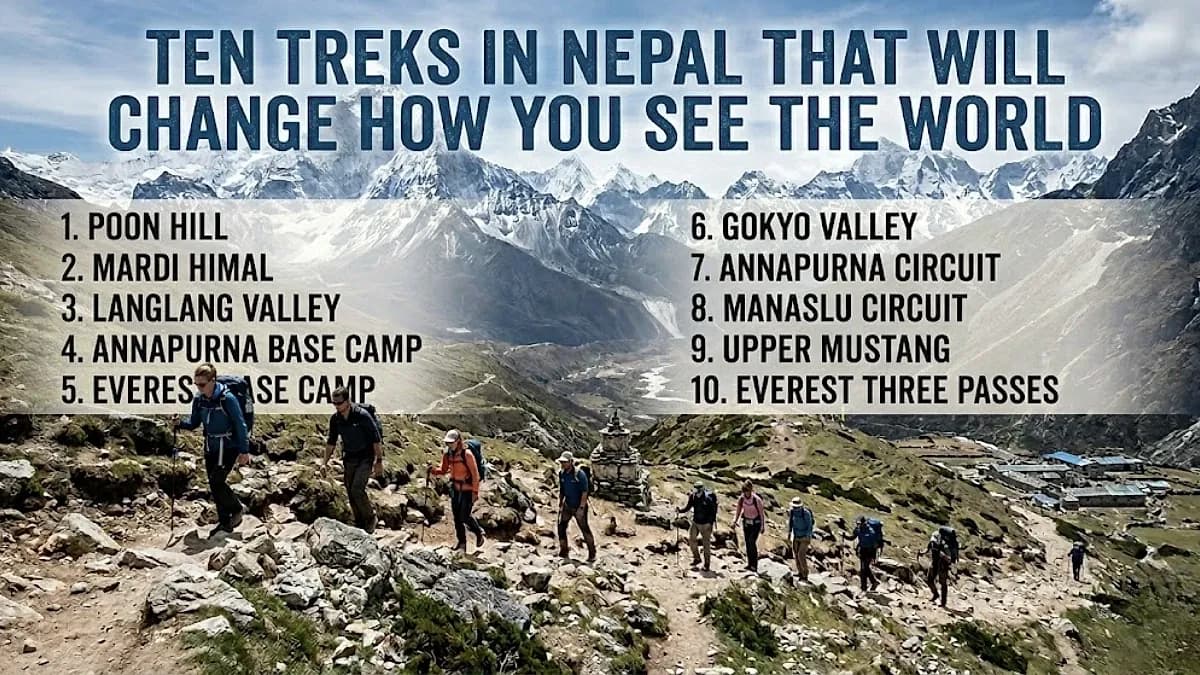
These are the ten we return to most often. Not because they are the most famous (though some are), but because each one offers something the others cannot. They are arranged from the gentlest to the most demanding, because the best trek for you depends not on what impresses other people but on what will bring you alive.
What is the best trek in Nepal?
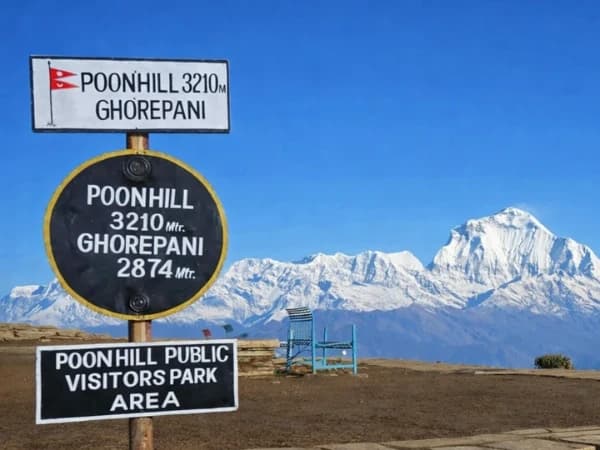
The best trek is the one that fits your days, your fitness and what you want to see. For a first trek with a week to spare, we recommend the Poon Hill trek: 6 days, a maximum altitude of 3,210 metres, from $499.
For mountain views, Annapurna Base Camp (9 days, 4,130 metres, from $499) puts you in a ring of high peaks beneath Annapurna I. If Everest is the dream, take the 12-day Everest Base Camp trek (5,364 metres, from $1,399). For solitude, choose the 12-day Manaslu Circuit (from $799), a restricted area that we walk with a licensed guide. These are Budget tier prices per person, and each trek page shows Standard and Luxury as well.
1. Poon Hill: Where It All Begins
Six days. Maximum altitude 3,210 metres. From $499.
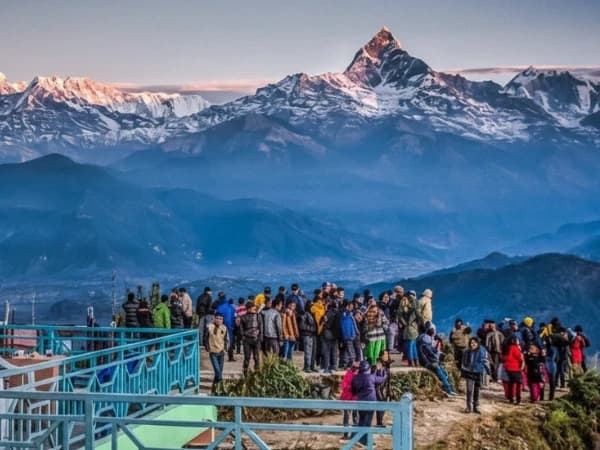
Dawn on Poon Hill is the moment that hooks people on Nepal forever. You climb the stone steps in the dark, torches bobbing in a line of silent trekkers, breath clouding in the cold air. And then the sky ignites. First Dhaulagiri, then Annapurna South, then Machhapuchhre, the sacred Fishtail peak that nobody is permitted to climb, each one catching the first gold light of morning and holding it while the valleys below remain in shadow.
The trek itself is Nepal at its most accessible. Well-maintained stone paths through Gurung villages where rhododendrons bloom pink and crimson in spring. Teahouses every hour with hot showers and dal bhat and cold beer honestly. Children waving from school courtyards. Prayer flags strung between ancient trees.
This is the trek we recommend for first-timers, for families with children over eight, for anyone who has six days and wants to know what the Himalayas feel like without committing to two weeks at extreme altitude. It is also the trek that experienced mountaineers quietly admit moved them more than they expected.
Is the Mardi Himal trek crowded?
Seven days. Maximum altitude 4,500 metres. From $454.
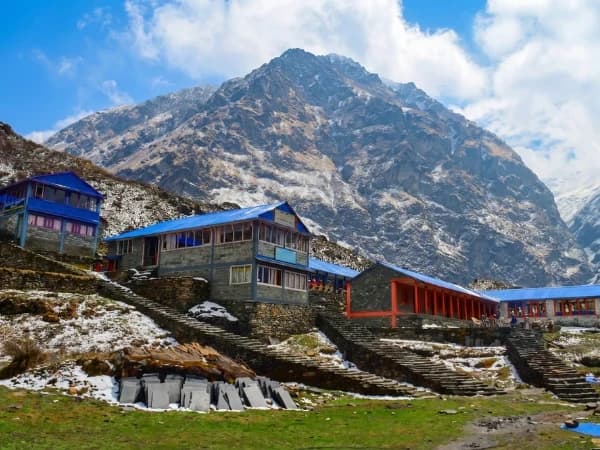
While the crowds file up to Annapurna Base Camp, Mardi Himal sits just to the east, a ridge trail through forest and open alpine meadow that ends with Machhapuchhre so close you feel you could touch it. On most days in shoulder season, you will not see another trekking group. The teahouses are smaller, the trail quieter, and the sense of discovery is genuine.
This trek has risen from obscurity to quiet fame in the past five years, carried by word of mouth from trekkers who chose it on a guide's recommendation and came back calling it the highlight of their Nepal trip. The final viewpoint at Mardi Himal High Camp, with Machhapuchhre's north face filling the sky and Annapurna I visible behind, is one of the most dramatic in the country.
What is the best trek close to Kathmandu?
Eight days. Maximum altitude 3,870 metres. From $365.
Langtang is close enough to Kathmandu to reach by road, no internal flights, no extra cost, no cancellation risk. You drive north for seven hours through terraced hills, the road climbing along a river valley into bamboo forest and eventually into the open alpine terrain of the Langtang Valley itself.
What makes Langtang special is not altitude or difficulty but atmosphere. The Tamang and Tibetan Buddhist communities along the trail have rebuilt their villages with extraordinary resilience after the devastating 2015 earthquake. Prayer wheels turn in the morning light. Yak butter tea is offered by wrinkled hands. The glacier at the head of the valley catches afternoon sun and sends cascades of meltwater through stones polished smooth by a thousand years of flow.
Few tourists, genuine warmth, and the kind of quiet that only exists in places where the nearest road is two days' walk behind you.
How many days is the Annapurna Base Camp trek?
Nine days. Maximum altitude 4,130 metres. From $499.
The Annapurna Sanctuary is a natural amphitheatre, a ring of peaks above seven thousand metres with one narrow entrance through the Modi Khola gorge. Walking into it feels like entering a cathedral. The walls close in, the river roars below, rhododendron forests give way to rocky moraine, and then suddenly the valley opens and you are standing in the middle of a circle of giants. Annapurna I at 8,091 metres. Machhapuchhre. Hiunchuli. Annapurna South. They surround you on every side.
The trail is well-paved with stone steps for most of the route, built by generations of Gurung villagers who maintain the path as part of their community responsibility. The teahouses are comfortable. The food is surprisingly good. And the sense of achievement at base camp is profound, not because it was hard, but because the beauty of where you are standing exceeds anything photographs can convey.
How hard is the Everest Base Camp trek?
Twelve days. Maximum altitude 5,364 metres. From $1,399.
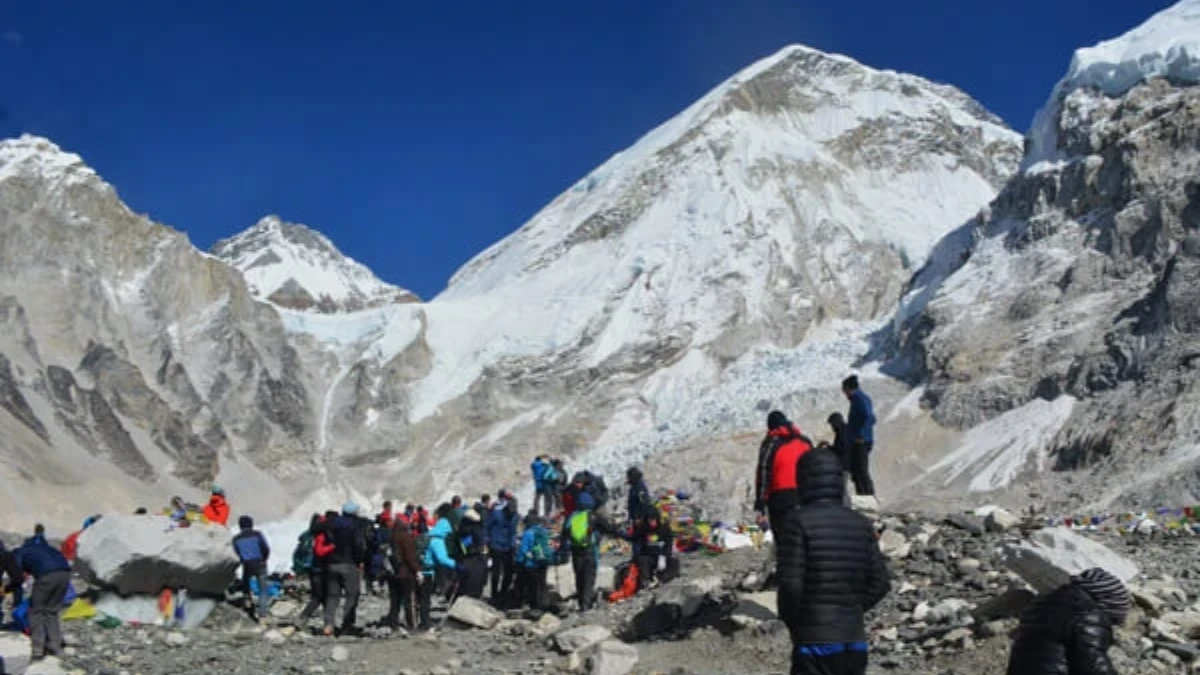
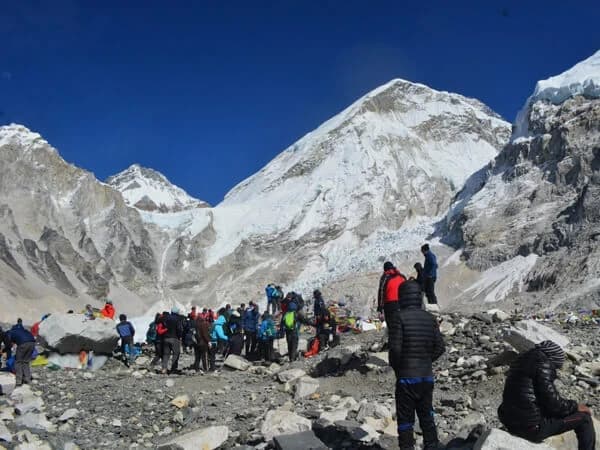
There is a reason so many people attempt this trek every year. It is not just about standing at the foot of the highest mountain on earth, though that moment, when you see the prayer flags and the Khumbu Icefall towering above, is exactly as powerful as you imagine.
It is the whole journey. Crossing suspension bridges that sway over milky glacial rivers. Drinking sweet tea in Namche Bazaar while Kongde Ri catches the evening light. The incense and chanting at Tengboche Monastery. The austere, alien landscape above Lobuche where vegetation disappears and the world becomes rock and ice and sky. And then Kala Patthar at dawn, 5,545 metres, the sun breaking over the summit of Everest in gold and rose and impossible silence.
The trek is challenging but not technical. Tens of thousands of ordinary people complete it every year with proper preparation and an experienced guide. The infrastructure along the route is the best of any high-altitude trek in the world.
We also offer this trek by road instead of the Lukla flight, fifteen days instead of twelve, at the same price, and it removes the risk of flight cancellations altogether.
Is the Gokyo Lakes trek better than Everest Base Camp?
Ten days. Maximum altitude 5,357 metres. From $1,285.
If Everest Base Camp is the stadium concert, Gokyo is the intimate acoustic set in a small room. Same mountain range. Same altitude. But where EBC is busy with trekkers in peak season, Gokyo is quiet. The trail follows a different valley to a chain of turquoise glacial lakes, the colour is not exaggerated in photographs, it really is that blue, and ends with a dawn climb to Gokyo Ri, a viewpoint from which you can see four of the six highest mountains on earth simultaneously.
Trekkers who have done both often say Gokyo was the better experience. Not because EBC was disappointing, it was not, but because Gokyo's solitude allowed the mountains to speak without competition.
How high is the Annapurna Circuit Thorong La pass?
Twelve days. Maximum altitude 5,416 metres. From $720.
No other trek on the planet covers this range of landscape in twelve days. You begin in subtropical forest at eight hundred metres, humid, green, alive with birdsong. You climb through pine forests and terraced farmland to the ancient Tibetan villages of the Manang Valley. You cross Thorong La at 5,416 metres, one of the highest trekking passes in the world, in darkness at four in the morning with prayer flags snapping in wind cold enough to freeze exposed skin in minutes. And then you descend into the arid desert canyons of Mustang, a landscape that looks like Mars transplanted to the Himalayas.
The Circuit has changed since road construction replaced some lower sections with gravel tracks. But the high route through Ngawal, the Manang Valley, the pass itself, and the descent to Muktinath remain untouched and utterly magnificent.
Do you need a permit for the Manaslu Circuit trek?
Twelve days. Maximum altitude 5,160 metres. From $799.
Manaslu is what the Annapurna Circuit felt like twenty years ago, remote, wild, and virtually empty of other trekkers. A restricted area permit keeps numbers low and preserves the authenticity of villages that have barely changed in centuries. Tibetan Buddhist monasteries cling to hillsides. Prayer flags stretch across valleys. The locals greet you with genuine curiosity because they do not see foreigners every day.
The Larkya La pass at 5,160 metres is spectacular and demanding. The trail through the Budhi Gandaki gorge is dramatic. And the feeling of genuine exploration, of being somewhere that mass tourism has not yet reached, is increasingly rare in the Himalayas.
When is the best time to trek Upper Mustang?
Ten days, by road in and out. Overnight at Lo Manthang, 3,840 metres. From $1,290.
Upper Mustang was closed to foreigners until 1992. The kingdom of Lo, its ancient name, sits behind the Annapurna and Dhaulagiri ranges in a rain shadow that makes it the driest place in Nepal. The landscape is Mars: red desert canyons, wind-sculpted cliffs, cave monasteries with paintings that predate anything in Kathmandu.
The walled city of Lo Manthang, with its medieval palace and monastery and labyrinth of narrow alleys, feels like stepping through a portal into the fourteenth century. The annual Tiji festival, if your timing is right, is a three-day Buddhist ceremony of masked dances and horn-blown rituals that few outsiders ever witness.
Upper Mustang can be walked from March to November. It sits in the rain shadow of the Annapurna and Dhaulagiri ranges, so it is one of the few treks in Nepal that works in the monsoon, when it is dry but windy and much quieter. Spring and autumn are the other good seasons, and the Tiji festival falls in May.
How difficult is the Everest Three Passes trek?
Seventeen days. Maximum altitude 5,545 metres. From $1,649.
Three high passes above 5,300 metres. Seventeen days. Every major viewpoint in the Everest region, Kala Patthar, Gokyo Ri, Renjo La, connected by a single continuous trail that traverses the Khumbu from west to east and back again.
This is not a trek for first-timers. It is for people who have trekked at altitude before, who have trained seriously, and who want the definitive Everest experience, everything the region has to offer in a single, relentless, magnificent itinerary. The passes are steep and physically demanding. The days are long. The altitude is sustained and unforgiving.
But the trekkers who complete it, and most who attempt it do, with proper preparation, describe it as the single greatest outdoor experience of their lives. Not because it was easy. Because it was not.
How Do You Choose the Right Nepal Trek?
If this is your first time and you have a week, walk to Poon Hill and watch the sunrise. If you have nine days and want to stand inside a ring of eight-thousand-metre peaks, go to Annapurna Base Camp. If Everest is the dream, take twelve days and go to base camp. If you want the greatest landscape diversity on earth, walk the Annapurna Circuit. If you want solitude, choose Manaslu or Gokyo. If you want something nobody else has done, enter the forbidden kingdom of Mustang.
And if you want all of it, come back. Nepal has a way of making sure you do.
See our picks for the Everest Base Camp Trek, Annapurna Circuit, Manaslu Circuit, and Langtang Trek. Browse all Nepal treks.
These ten treks are the ones I would recommend to anyone visiting Nepal for the first time. They are not the ten easiest or the ten hardest or the ten most Instagrammed. They are the ten that consistently deliver the best combination of mountain scenery, cultural immersion, and personal challenge. I have guided all of them and I would do any of them again tomorrow.
Not sure which one is right for you? Tell us your fitness level, how many days you have, and what matters most to you. We will narrow it down.
WhatsApp:+977 9810351300
Email:[email protected]
Written by Shreejan Simkhada, CEO of The Everest Holiday and third-generation Himalayan guide. TAAN Member #1586.
10 best treks 2026: EBC is the top of the list. Our Everest Base Camp Trek (12 Days) is private (your group only, no strangers), 2026 dates open, From USD $1399. WhatsApp us for tailored 2026 dates and current departures.
 Chat with Shreejan