
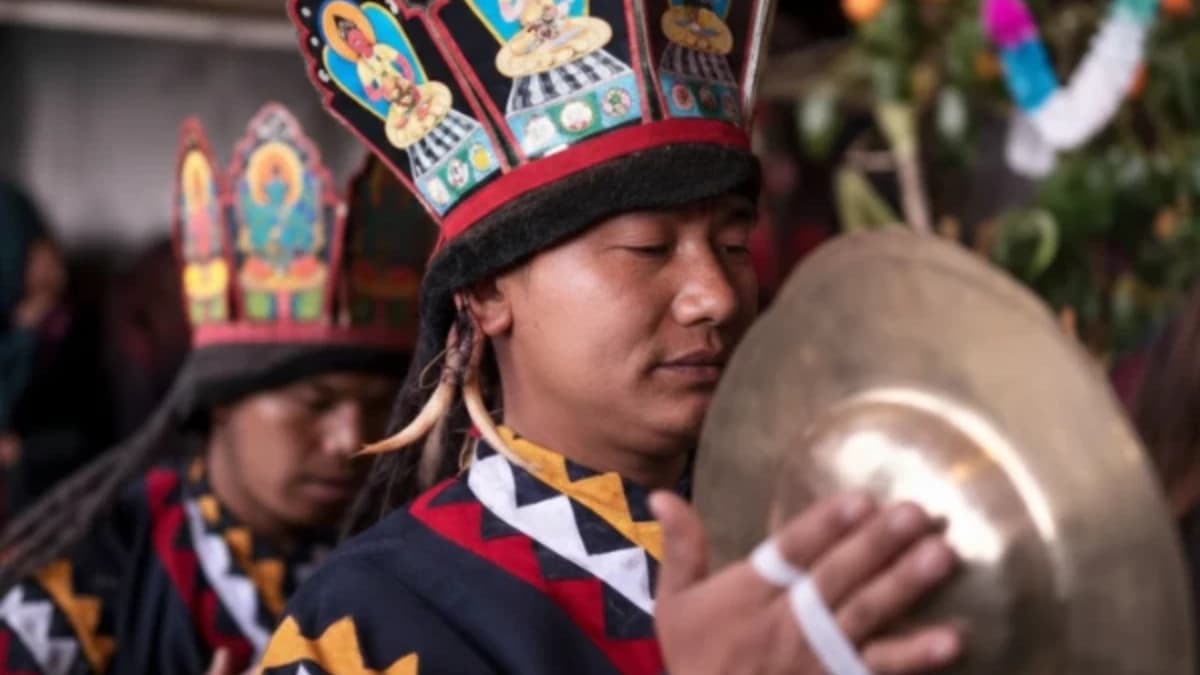
Short answer: The Gurung (who call themselves Tamu) live on the southern slopes of the Annapurna range, in villages such as Ghandruk and Chhomrong. The Magar are Nepal's third largest ethnic group and hold the western hills, including the Ulleri and Ghorepani trail. Both are Tibeto-Burman hill peoples with a long Gurkha tradition, but their languages are not mutually intelligible.
On the second day of our 9-day Annapurna Base Camp trek, the trail climbs through a stone village where the houses have slate roofs, the doorways are low, and an old woman sits on a wooden bench spinning wool with a drop spindle that her grandmother used. She nods as you pass. Namaste. Her face is broad, weathered, and calm in a way that suggests she has watched ten thousand trekkers pass this bench and finds each one mildly amusing. She is Gurung. The village is Ghandruk. And the trail you are walking, from Nayapul to Chhomrong to ABC and back, passes through the heart of the Gurung homeland, a landscape that was theirs for centuries before the first trekker arrived and that remains theirs despite the teahouses, the menu boards, and the trail signs in English.
On the Ghorepani-Poon Hill trek, a different trail crosses a different ridge and enters a different community. The village architecture changes, timber and stone, broader windows, prayer flags mixed with Hindu shrines. The faces change too, rounder, the cheekbones set differently, the eyes carrying a different kind of warmth. These are Magar. The western hills of Nepal, from Ghorepani to Baglung to Palpa, are Magar territory, and the trails that cross this landscape cross through a culture that predates the Hindu kingdom, the Buddhist monasteries, and every other layer of Nepali civilisation that has built upon the foundation that the Magar laid.
If you trek in the Annapurna region, you walk through Gurung and Magar villages. You eat in their teahouses. You sleep under their roofs. You look at their mountains from their trails. And most trekkers pass through without knowing who these people are, where they came from, or why understanding their culture transforms the trek from a scenic walk into a walk through living history.
The Gurung People
The Gurung, they call themselves Tamu, are an indigenous Tibeto-Burman people who have inhabited the southern slopes of the Annapurna range for at least fifteen hundred years. Their homeland centres on the Gandaki river system, the districts of Kaski, Lamjung, Gorkha, Tanahun, and Syangja, and their villages sit at altitudes between 1,000 and 3,500 metres, tucked into the folds of the hills that rise toward the Annapurna massif.
The villages are immediately recognisable. Stone houses with slate roofs arranged in terraces on south-facing hillsides. Narrow stone-paved paths between the houses. A central meeting area, the rodi, where community decisions are made and festivals celebrated. And always, always, the mountains above: Annapurna, Machhapuchhre, Hiunchuli, visible from every doorway as a reminder that the Gurung have lived in the shadow of the world's highest peaks for longer than anyone has been counting.
Religion and spirituality. The Gurung practise a blend of Buddhism, Hinduism, and an older animist tradition that predates both. Their shamans, the paju and the klehbri, perform healing ceremonies and death rituals that incorporate elements from all three traditions. The klehbri chants in an archaic Gurung language that even modern Gurung speakers do not fully understand, reciting narratives that describe the origin of the world and the journey of the soul after death.
The death ritual, the pae, is the most elaborate ceremony in Gurung culture. It can last three days and involves ritual dancing, the sacrifice of animals (traditionally yak or buffalo), and the creation of an effigy that represents the deceased. The pae guides the soul of the dead person to the land of the ancestors, a journey that the klehbri narrates in real time, naming landmarks, rivers, and mountains that the soul must cross. The ceremony is both grief and celebration, a recognition that death is a journey, not an ending.
The Gurkha connection. The Gurung, along with the Magar, form the majority of the soldiers in the British and Indian Gurkha regiments, among the most respected military units in the world. The Gurkha tradition dates to the Anglo-Nepalese War of 1814-1816, when the British were so impressed by the fighting ability of the Nepali hill soldiers that they began recruiting them into the British Indian Army. The name "Gurkha" comes from the town of Gorkha.
The military connection has profoundly shaped Gurung society. Gurkha service provides reliable income, British or Indian pensions, and educational opportunities for children. Many Gurung villages have a distinctly prosperous appearance, better-built houses, more schools, better roads, funded by military pensions from soldiers who served in Hong Kong, Brunei, the Falklands, Iraq, and Afghanistan. The old men in the teahouses sometimes have stories that span continents, the same man who carried a rifle in the jungles of Borneo now carries firewood down the trail to Ghandruk.
Gurung villages on the trekking trail. Ghandruk (1,940 metres) is the most visited Gurung village, a major stop on the ABC trek and the Ghorepani-Poon Hill route. The Gurung Museum in Ghandruk provides a full introduction to the culture. Chhomrong (2,170 metres) is another important Gurung village, perched on a ridge with views of Annapurna South and Machhapuchhre. Sikles (1,980 metres), less visited by trekkers, is one of the largest and best-preserved Gurung villages in Nepal.
The Magar People
The Magar are Nepal's third largest ethnic group and one of its oldest. Archaeological and linguistic evidence suggests they have inhabited the western and central hills for over three thousand years, predating the arrival of Tibeto-Burman peoples from the north and Indo-Aryan peoples from the south. Their heartland is the western middle hills, Palpa, Baglung, Myagdi, Rolpa, Rukum, and parts of Gorkha, and their villages are scattered across the landscape from the Terai foothills to altitudes above 3,000 metres.
The Magar are culturally diverse, the western Magar (Kham Magar) and the eastern Magar have distinct languages and some distinct customs. But they share a core identity: indigenous hill people whose relationship with the land is older than any political boundary, any kingdom, or any religion that has since taken root in Nepal.
Religion and culture. The Magar practise a similar blend to the Gurung, Hinduism and Buddhism layered over an older animist substrate. Their shamans, the dhami and jhankri, perform healing rituals that involve drumming, trance, and communication with spirits. The Magar jhankri tradition is one of the oldest shamanic practices in South Asia and continues to be practised alongside modern medicine in many hill communities.
Magar dance, particularly the Sorathi and Kaura dances, is a distinctive cultural expression. The dances are social, performed at festivals and weddings, and involve call-and-response singing with rhythmic movement. The maruni dance, performed during the Tihar festival, is a male-performed dance in female costume that combines humour, social commentary, and religious devotion.
Military tradition. Like the Gurung, the Magar are heavily represented in the Gurkha regiments. The Magar warrior tradition predates the British connection, the Magar kingdom of Palpa was one of the most powerful in medieval Nepal, and Magar soldiers served in the armies of the Shah dynasty that unified Nepal in the eighteenth century. The word "Gurkha" itself, while named after the town of Gorkha, represents a military tradition in which the Magar are equal partners with the Gurung.
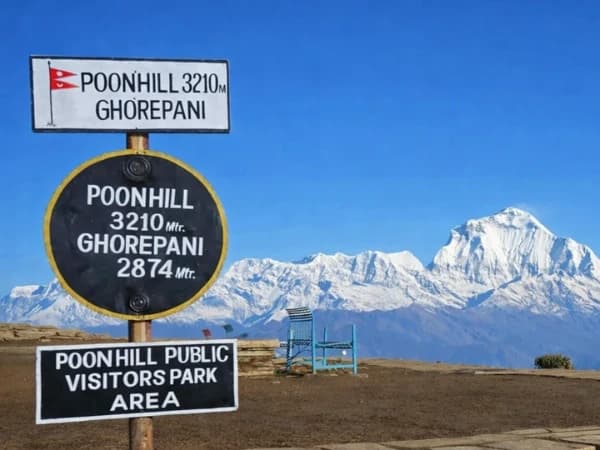
Magar villages on the trekking trail. The Ghorepani-Poon Hill trek passes through several Magar settlements. Ghorepani itself (2,860 metres), famous for the Poon Hill sunrise viewpoint, is a mixed community with strong Magar presence. Tatopani (1,190 metres) on the Annapurna Circuit, known for its hot springs, is a Magar-influenced village. And the western approach to the Annapurna Circuit from Beni and Baglung passes through the Magar heartland.
Gurung vs Magar: Similarities and Differences
To the trekker walking through their villages, Gurung and Magar communities can seem similar, both are hill peoples, both have stone houses, both serve dal bhat, both have sons in the Gurkha regiments. But the differences are significant and reflect two distinct cultural histories that have evolved in parallel for millennia.
| Question | Gurung | Magar |
|---|---|---|
| Own name | Tamu | Magar |
| Homeland | Southern Annapurna slopes: Kaski, Lamjung, Gorkha, Tanahun, Syangja | Western and central hills: Palpa, Baglung, Myagdi, Rolpa, Rukum |
| Villages on our treks | Ghandruk (1,940 m), Chhomrong (2,170 m) | Ulleri (1,960 m on our itinerary), Ghorepani (2,860 m, mixed community) |
| Language | Gurung (Tamu Kyi) | Magar, not understood by Gurung speakers |
| New Year | Tamu Lhosar, typically December to January | Maghe Sankranti, mid-January |
| Gurkha service | Large share of the regiments | Large share of the regiments |
Language. Gurung (Tamu Kyi) and Magar (Magar Kura) are both Tibeto-Burman languages but are not mutually intelligible. Both communities are bilingual or trilingual, speaking their own language at home and Nepali for trade and administration. Younger generations in both communities are increasingly Nepali-dominant, and language preservation is a concern.
Geography. The Gurung homeland is more concentrated, centred on the Annapurna region's south-facing slopes. The Magar homeland is more dispersed, spanning the western hills from the Terai to the high mountains. This geographical difference is reflected in their cultures: Gurung culture has a stronger Buddhist/Tibetan influence (from proximity to Tibet via the Annapurna passes), while Magar culture has more Hindu influence (from proximity to the Indo-Gangetic plain).
Social structure. Both communities have clan systems, but they function differently. Gurung clans (jat) are organised into four main groups with strict marriage rules. Magar clans are more numerous and more flexible in their social organisation. Both communities have traditionally been egalitarian compared to the caste-based Hindu society of the lowlands.
What This Means for Your Trek
Understanding who lives in the villages you walk through changes the trek itself from sightseeing to encounter. When you stop at a teahouse in Ghandruk and the owner tells you her husband served in the British Army in Hong Kong, you understand why the village looks prosperous. When you see prayer flags and Hindu shrines side by side in a Magar village, you understand a religious complexity that predates the neat categories of guidebook religion. When you watch a woman spinning wool on a bench, you see not a photo opportunity but a person in a culture that has been spinning wool on this hillside for fifteen centuries.
Ask your guide about the villages you pass through. A good guide, particularly one who is Gurung or Magar themselves (many are), can tell you stories about the community that no guidebook contains. The history of a specific house. The meaning of a festival. The story of a grandfather who walked to India for the first time to join the army and sent money home to build the school you can see from the trail.
The mountains are why you came to Nepal. The people are why you will remember it. And the Gurung and Magar, who have lived among these mountains for longer than recorded history and who will still be here long after the last trekker has gone home, are the people whose homeland you are walking through. Their hospitality is genuine. Their culture is ancient. And their willingness to share both with strangers who arrive on foot, carrying packs, looking at their mountains, this willingness is the gift that makes trekking in Nepal more than a walk.
Gurung and Magar villages on our treks
These are the villages named in our own day-by-day itineraries, so you know where the culture above sits on the trail.
- Annapurna Base Camp Trek (9 days): day 2 Nayapul to Ghandruk (1,940 m), day 3 Ghandruk to Chhomrong (2,170 m), day 7 Bamboo to Jhinu Danda (1,780 m). Ghandruk and Chhomrong are Gurung villages.
- Ghorepani Poon Hill Trek (6 days): day 2 Nayapul to Ulleri (1,960 m), day 3 Ghorepani (2,860 m), day 4 Poon Hill sunrise (3,210 m) and on to Tadapani (2,630 m), day 5 Tadapani to Ghandruk. Ulleri is a Magar village, Ghorepani is mixed, Ghandruk is Gurung.
- Poon Hill Trek (4 days from Pokhara): the same Ulleri, Ghorepani, Tadapani and Ghandruk line in a shorter form, see the 4-day version.
If you only have time for one cultural stop, make it Ghandruk and give the Gurung Museum 30 to 45 minutes. Our Ghandruk guide and Ulleri guide cover each village in more detail.
Experience Gurung and Magar culture firsthand on the Annapurna Base Camp Trek, which passes through villages like Ghandruk and Chomrong, or the Poon Hill Trek through Ulleri and Ghorepani. The Tamang Heritage Trail is another cultural trek that visits ethnic communities in the Langtang region.
The Gurung and Magar communities are the backbone of Nepal's trekking industry. Most of our guides come from these hill tribes. The hospitality is genuine, the food is extraordinary, and the stories they tell around the fire at night are better than anything in a guidebook. When a Gurung family invites you into their home, say yes.
Our Annapurna region treks pass through Gurung and Magar villages. Our guides often introduce you to their own families along the trail.
WhatsApp:+977 9810351300
Email:[email protected]
Written by Shreejan Simkhada, CEO of The Everest Holiday and third-generation Himalayan guide. TAAN Member #1586.
Gurung and Magar villages dot Annapurna Circuit. Our Annapurna Circuit Trek (12 Days) is private (your group only, no strangers), 2027 dates open, From USD $1,175. WhatsApp us for tailored 2027 dates and current departures.

 Chat with Shreejan