

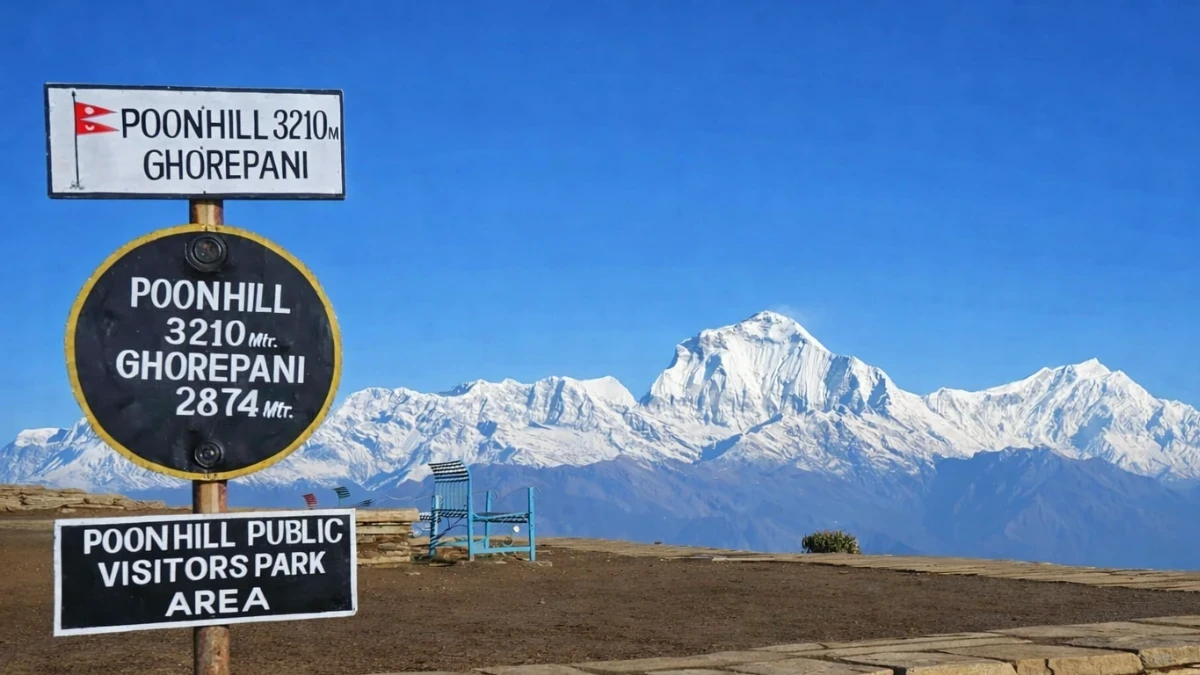
The Poon Hill trek is 50 kilometres over five to six days, with a maximum altitude of 3,210 metres. It is the easiest multi-day trek in Nepal that rewards you with a world-class Himalayan sunrise. No extreme altitude. No technical terrain. No two-week commitment. Just a short, beautiful walk through rhododendron forest and Gurung villages to a viewpoint where Dhaulagiri, Annapurna South, and Machhapuchhre line up against the dawn sky.
How Far Do You Walk Each Day?
| Day | Route | Distance | Altitude | Hours |
|---|---|---|---|---|
| 1 | Nayapul to Tikhedhunga | 8 km | 1,070m → 1,540m | 3-4h |
| 2 | Tikhedhunga to Ghorepani | 11 km | 1,540m → 2,860m | 5-6h |
| 3 | Poon Hill sunrise + Ghorepani to Tadapani | 12 km | 2,860m → 3,210m → 2,630m | 5-6h |
| 4 | Tadapani to Ghandruk | 8 km | 2,630m → 1,940m | 3-4h |
| 5 | Ghandruk to Nayapul | 11 km | 1,940m → 1,070m | 4-5h |
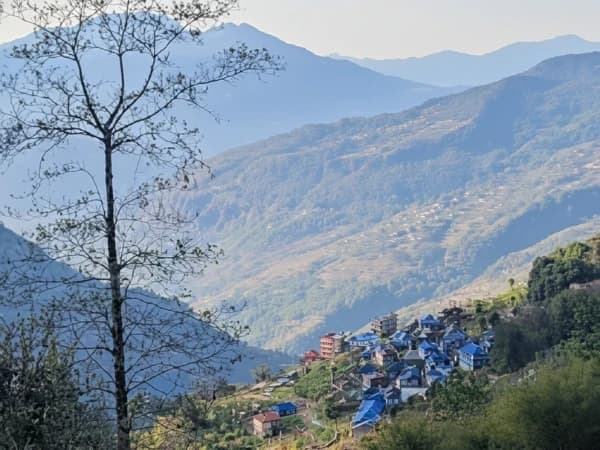
Total: approximately 50 kilometres. Daily average: 10 kilometres. The longest day is Day 2 (11 km with 1,320m altitude gain), and the shortest is Day 4 (8 km, mostly downhill through Gurung villages).
What Is the Difficulty Rating?
We rate Poon Hill at 2 out of 5, easy to moderate. It is the trek we recommend to first-timers, older trekkers, families with teenagers, and anyone who is not sure whether they enjoy multi-day hiking.
- Fitness required: Low-Moderate. If you walk regularly, you are fit enough.
- Altitude: Low for Nepal. Maximum 3,210m, well below the altitude sickness threshold.
- Technical skills: None whatsoever.
- Duration: Short. Five days is manageable for anyone.
- Trail quality: Good. Stone-paved paths through villages, well-marked throughout.
What Is the Hardest Part?
The Stone Steps (Day 2)
Between Tikhedhunga and Ulleri, you climb approximately 3,300 stone steps in two hours. These steps are the single hardest section of the Poon Hill trek and the reason it rates 2/5 instead of 1/5. The steps are steep, uneven, and seem to go on forever. They gain 510 metres of altitude with no flat rest sections.
Everyone gets to the top. Some people take ninety minutes, some take three hours. The trick is to go slowly, stop whenever you need to, and remember that the steps end. After Ulleri, the gradient eases and the trail enters beautiful rhododendron forest that makes you forget the stairs existed.
The Pre-Dawn Poon Hill Climb (Day 3)
You wake at 4:00 in the morning in Ghorepani and climb 350 metres to the Poon Hill viewpoint (3,210m) in darkness. The trail is a wide stone staircase, not as steep as Day 2, but you are walking in the dark with a headlamp, half-awake, in cold air. It takes forty-five to sixty minutes.
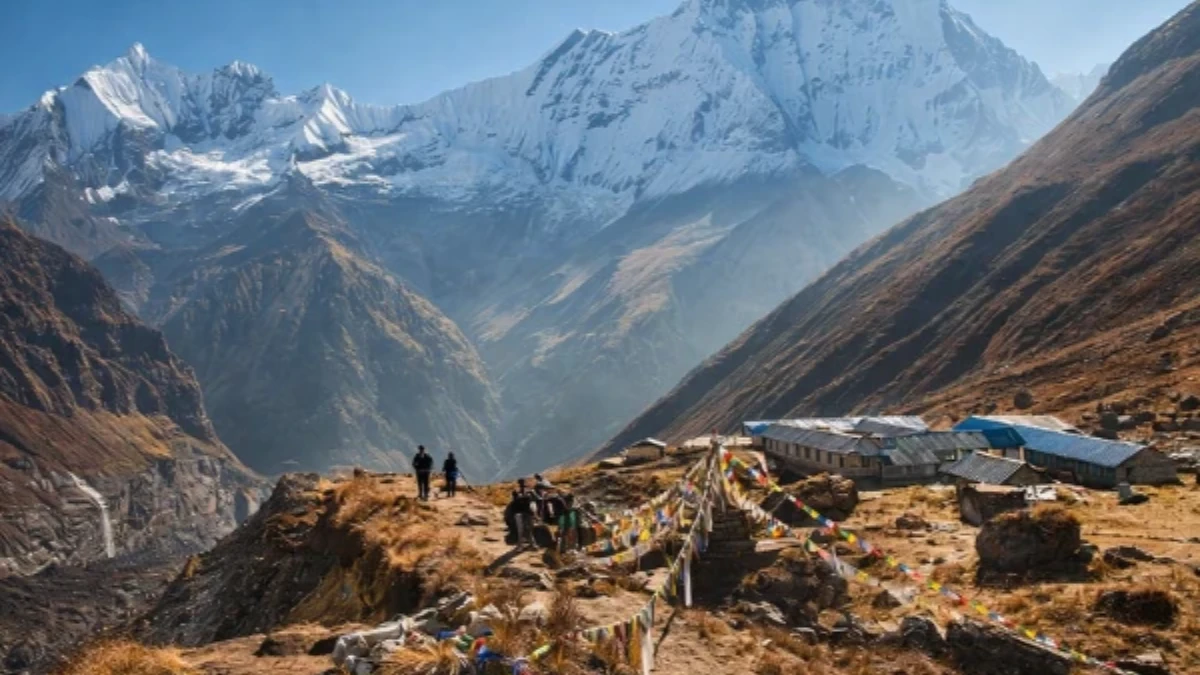
The effort is rewarded with one of the most photographed sunrises in Nepal. As the light hits the Annapurna range, Dhaulagiri (8,167m) turns gold, then pink, then white. Machhapuchhre catches the light next. The entire panorama stretches across 180 degrees of snow peaks. You forget you are cold and tired.
Is Altitude Sickness a Risk on Poon Hill?
No. The maximum altitude of 3,210 metres is below the level where altitude sickness typically affects trekkers. You may feel slightly breathless at Ghorepani (2,860m) or on the Poon Hill climb, but this is normal exertion at altitude, not altitude sickness. No acclimatisation days are needed. No Diamox is required.
This is one of the main reasons Poon Hill is recommended for beginners: it gives you a genuine Himalayan experience without the altitude risks of higher treks like EBC (5,545m) or the Annapurna Circuit (5,416m).
How Does Poon Hill Compare to Other Short Treks?
| Trek | Distance | Days | Max Altitude | Difficulty |
|---|---|---|---|---|
| Poon Hill | 50 km | 6 | 3,210m | 2/5 |
| Mardi Himal | 55 km | 7 | 4,500m | 3/5 |
| Langtang Valley | 80 km | 7-8 | 4,984m | 3/5 |
| ABC | 110 km | 9 | 4,130m | 3/5 |
Poon Hill is the shortest and easiest of Nepal's major treks. Mardi Himal is a good step up, similar distance but 1,300 metres higher with a more exposed trail. Langtang and ABC are both longer and higher but still achievable for fit beginners.
Who Is the Poon Hill Trek For?
First-time trekkers who want to test whether they enjoy multi-day hiking before committing to EBC or the Annapurna Circuit. If you love Poon Hill, you will love the bigger treks. If you find it too much, you have saved yourself from a miserable two weeks at high altitude.
Families with children aged 10+. The daily distances are manageable, the altitude is safe, and the teahouses are comfortable enough for teenagers who expect a bed and a hot meal.
Trekkers over 60 who want Himalayan views without extreme altitude or long duration. The five-day timeframe and 3,210m maximum make this achievable for active older adults.
Time-limited travellers with only a week in Nepal who want to combine Kathmandu sightseeing with a mountain trek. Fly to Pokhara (Day 1), trek for five days (Days 2-6), explore Pokhara lakeside (Day 7).
Spring visitors (March-May) who want to see rhododendron blooms. The forest between Tikhedhunga and Ghorepani is one of the best rhododendron corridors in Nepal, and it peaks in late March to early April. Related: Accessible Trekking in Nepal: Routes for Every Ability.
What Does the Poon Hill Trek Cost?
The Poon Hill trek is the cheapest multi-day trek in Nepal. Our budget package starts at USD 499 per person for six days, and that includes the guide, teahouse accommodation and permits (ACAP + TIMS). There is no porter on the budget tier and you buy your own meals on the trail, which our standard tier at USD 749 covers. A sleeping bag, down jacket and duffel bag come free on either. Add flights to Nepal, Kathmandu-Pokhara transport, insurance, and daily extras, and the total trip cost from the UK is approximately USD 1,400 to 1,800.
For Indian citizens with SAARC rates: the package costs the same, but permits are cheaper and flights from Delhi start at INR 8,000 return. Total trip cost from India: INR 86,000 to 93,000.
See our Poon Hill Trek (6 Days) for the full itinerary, starting from USD 499 per person.
WhatsApp:+977 9810351300
Email:[email protected]
Written by Shreejan Simkhada, CEO of The Everest Holiday and third-generation Himalayan guide. TAAN Member #1586.
Poon Hill distance: 6 days, easy intro. Our Ghorepani Poon Hill Trek (6 Days) is private (your group only, no strangers), 2027 dates open, From USD $499. WhatsApp us for tailored 2027 dates and current departures.

 Chat with Shreejan