
Nepal Travel Guide & Expert Trekking Tips
Everest Base Camp Trek Distance and Difficulty: How Far Do You Walk and How Hard Is It?

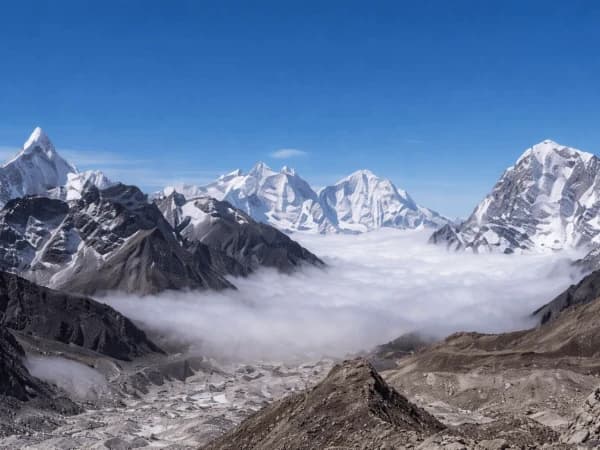
Short answer: The Everest Base Camp trek is about 130 km there and back from Lukla, walked in pieces of roughly 10 to 14 km a day over twelve days. The distance is not what makes it hard. Altitude is: you reach 5,364 m at Base Camp and 5,545 m on Kala Patthar. If you can walk 15 km on hilly ground with a 7 kg pack without being wrecked, you have the fitness for it. Two acclimatisation days, at Namche Bazaar and Dingboche, are built in. Updated 18 October 2026.
The Everest Base Camp trek covers approximately 130 kilometres (80 miles) round trip from Lukla to Base Camp and back. That sounds like a lot until you break it down: you walk an average of 10 to 14 kilometres per day over twelve trekking days, with two rest days built in. Nobody walks 130 kilometres in one go. You walk it in pieces, and most pieces are shorter than a morning hike back home.
What Is the Total Distance of the EBC Trek?
The standard 12-day Everest Base Camp trek covers 62 to 65 kilometres one way from Lukla (2,860m) to Everest Base Camp (5,364m), then the same distance back. The total round trip is 125 to 130 kilometres depending on the exact route variation your guide takes.
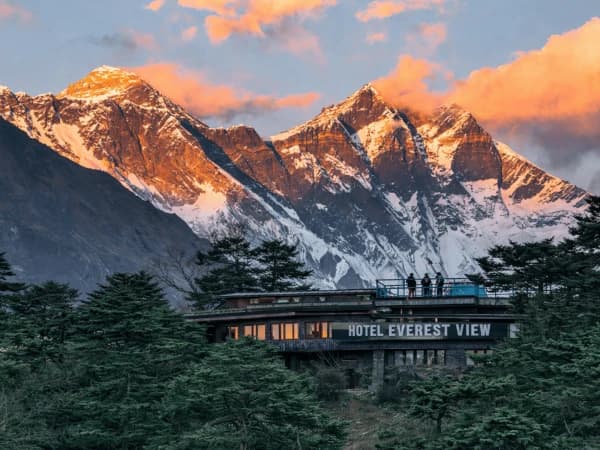
This does not include side trips. If you add the climb to Kala Patthar (5,545m), which every trekker does for the sunrise view, add another 4 kilometres round trip. If you do the acclimatisation hike above Namche Bazaar to the Everest View Hotel, add 6 kilometres. Most trekkers walk 135 to 140 kilometres total by the end of the trek.
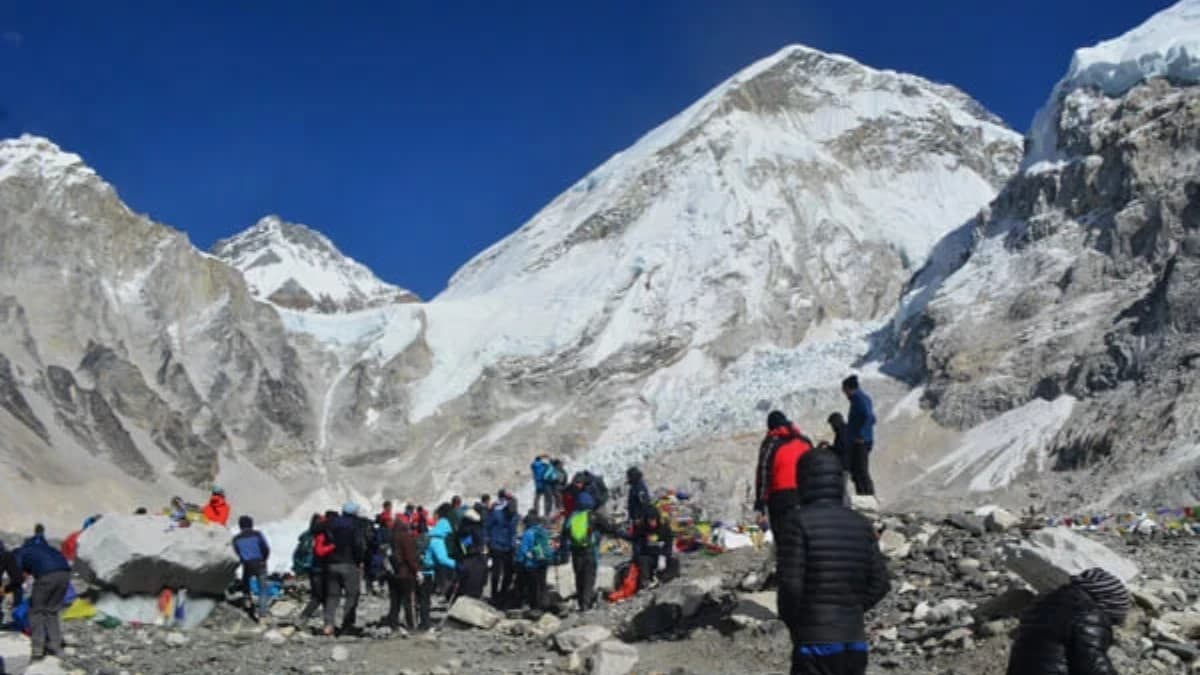
How Far Do You Walk Each Day?
| Day | Route | Distance | Altitude Change | Walking Time |
|---|---|---|---|---|
| 1 | Lukla to Phakding | 6.2 km | 2,860m → 2,610m (-250m) | 3-4 hours |
| 2 | Phakding to Namche Bazaar | 11 km | 2,610m → 3,440m (+830m) | 5-7 hours |
| 3 | Namche rest day (acclimatisation hike) | 5-8 km | 3,440m → 3,880m → 3,440m | 3-4 hours |
| 4 | Namche to Tengboche | 10 km | 3,440m → 3,860m (+420m) | 5-6 hours |
| 5 | Tengboche to Dingboche | 12 km | 3,860m → 4,410m (+550m) | 5-6 hours |
| 6 | Dingboche rest day (acclimatisation) | 5-7 km | 4,410m → 4,800m → 4,410m | 3-4 hours |
| 7 | Dingboche to Lobuche | 9 km | 4,410m → 4,940m (+530m) | 5-6 hours |
| 8 | Lobuche to Gorak Shep to EBC | 13 km | 4,940m → 5,164m → 5,364m | 7-8 hours |
| 9 | Gorak Shep to Kala Patthar, down to Pheriche | 14 km | 5,164m → 5,545m → 4,250m | 7-8 hours |
| 10 | Pheriche to Namche | 18 km | 4,250m → 3,440m (-810m) | 6-7 hours |
| 11 | Namche to Lukla | 19 km | 3,440m → 2,860m (-580m) | 6-7 hours |
Hardest day by distance: Day 11 (Namche to Lukla, 19 km), but it is mostly downhill and feels easy after ten days of trekking.
Hardest day by effort: Day 8 (Lobuche to Gorak Shep to EBC, 13 km): the altitude makes every step heavier. Walking 13 kilometres at 5,000 metres feels like walking 25 kilometres at sea level. Related: EBC vs Everest Three Passes: How Much Harder Is It Really?
How Does Altitude Affect Walking Distance?
At sea level, most fit adults can walk 20 kilometres in a day without difficulty. At 5,000 metres, with roughly half the oxygen available at sea level, your pace drops by 40 to 50 percent. A kilometre that takes twelve minutes at home takes twenty minutes above Lobuche. Your lungs work harder, your legs feel heavier, and you stop more often.
This is why the daily distances decrease as you go higher. Days 1 to 4 average 10 to 12 kilometres. Days 7 to 9 average 9 to 14 kilometres but take the same or more time because of the altitude. The trek is designed to match your decreasing speed with shorter actual distances at higher elevations.
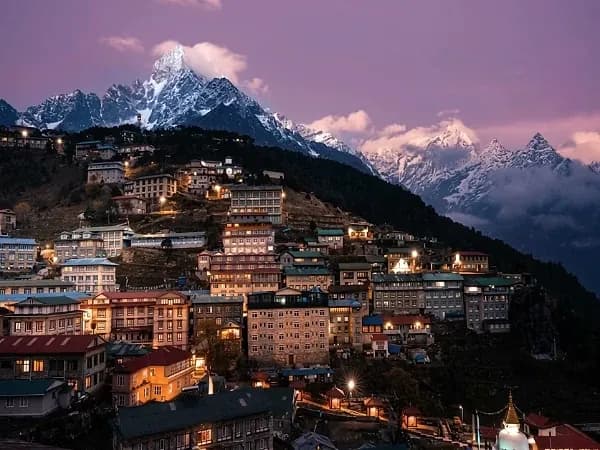
How Many Hours Do You Walk Per Day?
Expect five to seven hours of actual walking per day, with breaks. The longest day is usually seven to eight hours (Day 8 or Day 9). The shortest trekking day is the acclimatisation day at Namche, three to four hours of optional hiking.
Walking hours do not include rest stops, lunch (typically one hour), photo stops, or tea breaks. A six-hour walking day usually means you leave the teahouse at 7:00 or 8:00 in the morning and arrive at the next teahouse between 2:00 and 4:00 in the afternoon.
Is the EBC Trek Distance Hard for Beginners?
The distance itself is not the challenge. Walking 10 to 14 kilometres a day on flat ground is easy. Walking 10 to 14 kilometres a day on mountain trails at increasing altitude with a daypack is moderately hard. The difficulty comes from the combination of distance, altitude gain, and trail conditions: rocky paths, suspension bridges, steep switchbacks, and thin air.
If you can walk 15 kilometres on hilly terrain back home without excessive fatigue, you have enough fitness for the EBC trek. The altitude is the variable that training cannot fully prepare you for, which is why the rest days exist.
How hard is the Everest Base Camp trek?
It is strenuous, but it is not technical. You need no climbing skills. You walk five to seven hours a day for twelve days, on uneven stone paths and suspension bridges, in cold rooms and thin air. The hardest parts are the altitude, the long climb up to Namche Bazaar, and the cold above 4,000 metres. If you can walk uphill for five hours and cope with basic comfort, you can do this trek. The harder question is not fitness. It is how your body reacts to altitude, and that is largely genetic and unpredictable. Athletes get altitude headaches, and some people who never exercise acclimatise perfectly.
Three things make it hard, and most people guess the wrong one.
- Altitude. Near 5,000 metres the air holds roughly half the oxygen you are used to. Walking, eating, sleeping and even thinking clearly take more effort than they should.
- Twelve days in a row. Only two are rest days. Tiredness builds up in a way that weekend hikes do not prepare you for.
- Your head. Around Lobuche, when your legs ache, the teahouse is cold and the food is plain, the trek becomes a mental exercise more than a physical one. The trekkers who finish happiest are not the fittest. They are the ones who expected difficulty and met it calmly.
What does each stage of the trek feel like?
Lukla to Namche Bazaar. Stone steps, dirt paths and suspension bridges over glacial rivers, climbing gently from Phakding to Namche. Most people call these days "a really good hike". The steepest push is the climb up to Namche, and it is the day that catches unfit trekkers out.
Namche acclimatisation day. You hike up towards the Everest View Hotel at 3,880 metres and come back down. This climb-high-sleep-low habit is how your body adapts. A dull headache and a restless night here are normal. It is acclimatisation working.
Tengboche to Dingboche and Lobuche. Above 3,500 metres the altitude has teeth. Conversations get shorter because talking uphill needs oxygen you cannot spare. Dingboche, at 4,410 metres, is where most people first think "this is hard". The second rest day there is not optional.
Gorak Shep, Base Camp and Kala Patthar. Everything is effort, appetite drops and sleep is broken. The walk across the Khumbu Glacier moraine is rough, grey and rocky. Then you see the prayer flags and the icefall and understand where you are standing. Kala Patthar is an early start in the cold, steep and dark, and the sunrise on Everest, Lhotse and Nuptse pays for all of it.
The way down. This is a different trek. Oxygen floods back, the headaches go and your appetite returns. You stop for tea in the same teahouses where you could not eat on the way up.
Is Everest Base Camp suitable for beginners?
Yes, if you are reasonably fit and accept that it is hard. For a first trek I would choose our Standard tier, where a porter is shared between two trekkers, or Luxury, where you have your own porter. On Budget you carry your own bag, which is a lot for a first high-altitude trek. If you are not sure about twelve days at altitude, the shorter and lower Everest View Trek is a good way to see the Khumbu, and the Ghorepani Poon Hill trek is a gentler first trek.
Age is not the barrier people assume. We have guided trekkers in their seventies who trained properly and finished comfortably, and trekkers in their twenties who thought youth was enough preparation and suffered from the middle of the trek onwards. Preparation beats youth every time. Walk slowly, because your guide sets the pace for a reason. Drink plenty of water, eat even when you are not hungry, and tell someone straight away if you feel unwell. Pride has no place above 4,000 metres. Most people who rush the acclimatisation schedule are the ones who turn back, rather than the unfit ones.
Train for eight to twelve weeks beforehand, and stairs with a loaded pack are the best single exercise, because the trail is essentially stairs for twelve days. There is a full plan in how to train for Everest Base Camp, the fitness question across all treks is in how fit you need to be, and the thin-air side is in altitude sickness prevention.
Can You Shorten the Distance?
The EBC by Road trip starts from Salleri instead of Lukla, adding three days but spreading the distance over more days with gentler altitude gain. The helicopter return option flies you from Gorak Shep to Lukla on Day 9, cutting two walking days and about 37 kilometres from the return leg.
You cannot meaningfully shorten the outbound distance. The trail from Lukla to Base Camp follows the only viable route through the Khumbu valley. There are no shortcuts above Namche Bazaar.
What Is the Elevation Profile Like?
The EBC trek is not a steady uphill climb. It goes up and down repeatedly, crossing river valleys and ridgelines. You gain roughly 2,500 metres of altitude from Lukla to Base Camp, but the total ascent including all the ups and downs is closer to 3,200 metres. The total descent on the return is similar.
The steepest single climb is Day 2, the ascent from Phakding (2,610m) to Namche Bazaar (3,440m) gains 830 metres in 11 kilometres, including the famous switchbacks above the Dudh Koshi river. This is the day that catches unfit trekkers off guard. If you can handle Day 2, you can handle the rest.
Above Namche, the gradient becomes gentler but the altitude makes each metre of ascent harder. The section from Lobuche to Gorak Shep is relatively flat but at 4,900 to 5,164 metres, even flat ground feels steep.
How Does EBC Distance Compare to Other Nepal Treks?
| Trek | Total Distance | Days | Daily Average |
|---|---|---|---|
| EBC Classic | 130 km | 12 | 11 km |
| Annapurna Circuit | 200 km | 14-16 | 13 km |
| Annapurna Base Camp | 110 km | 9 | 11 km |
| Manaslu Circuit | 177 km | 12-14 | 14 km |
| Langtang Valley | 80 km | 7-8 | 11 km |
| Poon Hill | 50 km | 5-6 | 10 km |
EBC is mid-range on distance but the highest on altitude. The Annapurna Circuit is longer but never goes above 5,416 metres. Poon Hill is half the distance and stays below 3,210 metres, making it the best option if the EBC distance concerns you.
See our Everest Base Camp Trek (12 Days) for the full day-by-day itinerary with distances and altitude profiles.
WhatsApp:+977 9810351300
Email:[email protected]
Written by Shreejan Simkhada, CEO of The Everest Holiday and third-generation Himalayan guide. TAAN Member #1586.
EBC trek distance on our 12-day route. Our Everest Base Camp Trek (12 Days) is private (your group only, no strangers), 2027 dates open, From USD $1399. WhatsApp us for tailored 2027 dates and current departures.
Ready to start? See our full Everest Base Camp Trek: 12-day guided itinerary, cost from $1,399, daily departures.
Planning a trip to Nepal?
Drop us your details and tell us what you have in mind. We will put together a personalised plan and get back to you.
Take our free 2-minute quiz and get personalised recommendations based on your fitness, experience, and travel style.
Find your trekMore from the travel blog
All stories and guides Nepal Travel Guide & Expert Trekking TipsHow Difficult Is the Gokyo Lakes Trek? Gokyo vs Everest Base Camp Effort for 2027How hard the 10-day Gokyo Lakes trek is: day-by-day effort, the Gokyo Ri climb, sleeping heights against Everest Base Camp, who should not go and what each tier changes.
 Nepal Travel Guide & Expert Trekking TipsBest Time for the Everest View Trek, Month by Month for 2027Month by month weather at Lukla, Namche and Tengboche, Lukla and Manthali flights by season, why winter works on this low trek, Mani Rimdu at Tengboche and 2027 prices.
 Nepal Travel Guide & Expert Trekking TipsHow Hard Is the Gosaikunda Trek? A Plain Rating for 2027A plain rating of the 5-day Gosaikunda trek: the climb to Chandanbari, the 4,380 m lake with no rest day, altitude sickness risk, winter snow, who should skip it and 2027 prices.