
When a Helicopter Evacuation Is Not a Rescue: What We Refused and Why

In August this year a helicopter flew into the Everest region to take one of our clients off the mountain. We did not arrange that flight. We were asked to authorise it and we refused, in writing, the day before it happened. I want to explain why, because the reasoning matters more than the incident does, and because almost nobody in this industry writes any of it down.
I am not going to name the client, the person who arranged the flight, the helicopter company or the insurer. Nobody is served by that. What I want to set out is the shape of the thing, so that the next trekker who finds themselves in the middle of it recognises what is happening.
What actually happened
A client of ours was walking towards a six thousand metre peak with one of our guides and a porter. Partway up he developed a headache. He came down, as you are supposed to, and by the time he was a few hundred metres lower the headache had eased. This is ordinary. It is what acclimatisation looks like when it is working, and descent is the treatment.
He was later seen by a hospital in Kathmandu. The diagnosis was mild acute mountain sickness, already resolving, with normal oxygen saturation and normal observations. He was sent home the same day with a painkiller and an antacid.
I want to be careful here, because this is where people get it wrong in both directions. He was genuinely unwell. Nobody invented anything. A headache at four and a half thousand metres is real and it should be taken seriously every single time. But being unwell and needing a helicopter are two very different things, and the distance between them is where the money is.
Why a helicopter was the wrong answer that week
The flight happened while Nepal was in the middle of a national emergency. A flood had come down out of the north and taken a border crossing with it. Every helicopter in the country had been directed to search and rescue in the affected districts. Our own company had people missing. I had been asked, along with every other operator with rescue experience, not to request an aircraft unless there was a genuine emergency.
That is the part I would ask you to hold on to. In a week like that, a helicopter is not a taxi that happens to be expensive. It is a machine that is needed somewhere else. An aircraft flying a trekker with a resolving headache down from a lodge is an aircraft not flying over a river looking for somebody's father.
I told the family this. I told them there was no medical reason to fly, that the guide had the final say on their son's health and would call for a helicopter the moment he judged one was needed, and that if he did I would organise it myself with government approval. That offer stood the whole time and it was never taken up.
What I actually refused
This is the part worth being precise about, because it is not what people assume.
I never refused to bring the client down. He could have walked out, which is what his guide recommended, or he could have flown out as a commercial charter at cost, which I offered to arrange and price. Either was available to him at any hour.
What I refused was to put my company's name on somebody else's rescue.
A third party who had never spoken to us before contacted us in the early hours, asking us to authorise an evacuation. He wanted our client, our guide's details and our agency name attached to it. He also told us our guide was inexperienced, which is a strange thing to say about a man with a bachelor's degree in mountain studies who has climbed the peak in question. I sent him the guide's qualifications and asked what medical problem the client actually had. I did not get an answer to that question.
So I told him plainly that we would not authorise any rescue, and that if one was conducted anyway we would report it. It went ahead the following morning regardless.
I have no quarrel with anyone arranging a private flight for a friend's son. If he had done it in his own company's name, as a commercial charter, I would have had nothing to say about it at all. My objection was narrow and it was to one thing: the word rescue, and our name underneath it.
Why that word matters so much
In Nepal a helicopter evacuation is not simply a flight you pay for. It is a document. It is filed with an insurer, it involves aviation authorities, and in most cases it involves a hospital admission afterwards, because an insurer paying for a medical evacuation expects to see a medical record at the other end of it.
That document says an operator judged a client's condition serious enough to require an aircraft. If that operator is us, we own that judgement. We own it to the insurer, to the Department of Tourism, to the Civil Aviation Authority, and to anybody who reviews the file afterwards. Signing it when we do not believe it is true is not a favour to a client. It is a statement we cannot stand behind.
And it does not stop with us. A pattern of evacuations that turn out not to have been necessary is precisely what pushes insurers to write tighter policies, raise altitude exclusions and demand more before they pay. Every trekker who comes after pays for that in a higher premium or a narrower clause.
What this can cost the trekker
Most people agree to these flights believing the insurance will simply absorb it. Sometimes it does. Often it does not, and by then the aircraft has already flown.
The clauses that catch people are consistent across the industry. Almost every rescue policy requires that the provider be contacted first and that they arrange the transport themselves. If somebody else books the aircraft, even with the best intentions, the insurer is usually under no obligation to reimburse a single rupee of it. We have read that exact wording in policies belonging to our own clients this season.
Cover is also rated to an altitude, and the altitude a policy names is often lower than people think. A trekker walking at five thousand metres on a policy written to four thousand is uninsured for the part of the trip that matters, and will not discover it until a claim is made.
So the worst version of this is not the argument. It is a trekker who is flown out, admitted to a hospital he did not need, refused by his insurer, and left holding a bill in the thousands for a flight he was told would be free.
How to protect yourself
None of this requires expertise. It requires four questions, asked before you leave home and again if anyone offers you an aircraft on the trail.
Ask your insurer for the altitude in writing. Not "trekking cover" as a phrase, but a number, above the highest point you will sleep at or stand on. A helicopter has to fly higher than you are standing in order to reach you, so cover rated exactly to your summit is not enough.
Ask who is allowed to arrange the flight. Nearly every policy says the assistance company must arrange it themselves. Save that number in your phone before you go, and make sure your guide has it too. The first call is to them, not to the nearest person with an aircraft.
Ask who is signing. If somebody offers you a rescue, ask which company's name is going on the paperwork, and whether it is the company you booked with. If the answer is your operator, ask your operator directly. If it is somebody else, ask why they need your operator's details at all.
Ask what the medical reason is, and expect a specific answer. Not "you look tired" or "the weather might close in". A real evacuation has a reason somebody can name: a saturation reading, a symptom that is getting worse rather than better, a condition that has not improved on descent. If nobody can tell you what is wrong with you, that is worth noticing.
What we do when it is real
I want to be equally clear about the other half of this, because a company that says no in public should also say what it does when the answer is yes.
Our guides carry an oximeter and check oxygen saturation every evening at altitude. The guide, not the office and not the client's family, has the final say on health on the trail. That is written into how we work and I have told clients so in writing. If our guide says a client needs to come down, they come down, and if he says they need an aircraft, I arrange one and argue about the paperwork afterwards. Life first.
We have called for helicopters before and we will again. We have never lost a guest. What we will not do is sign our name to a flight that our own guide, standing next to the client, tells us is not needed.
Why I am writing this at all
Partly because I would rather explain our position once, calmly, than answer it in fragments later. And partly because the pressure in this story did not come from the mountain. It came from a long way away, from people who were frightened and could not see their son, and who were being told by somebody with an aircraft that there was a simple answer.
I understand that fear completely. If it were my child at four thousand metres and I could not reach him, I would want him on the first helicopter too. But the person best placed to judge is the guide who is standing beside him, and the honest answer that week was that he was well, he was in a good lodge, he had two people looking after him, and he could walk.
If you are ever the one on the other end of that phone call, ask the guide what the oxygen reading is. Ask whether the symptoms are better or worse than yesterday. Ask what descending has already done. Those three answers will tell you more than anyone selling you a flight.
Written by Shreejan Simkhada, CEO of The Everest Holiday and third-generation Himalayan guide. TAAN Member #1586.
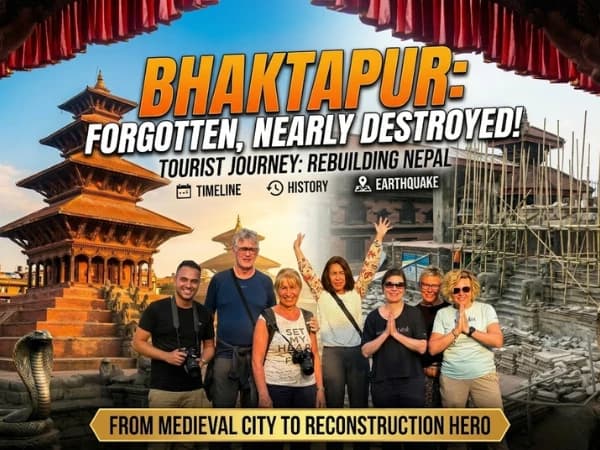
Bhaktapur Day Trip from Kathmandu: Durbar Square, Potters' Square and Changunarayan
Bhaktapur is an old Newar city east of Kathmandu that makes an easy one-day trip. Durbar Square, Nyatapola, the potters' square and Changunarayan, with the order of the day and what to wear.
Read More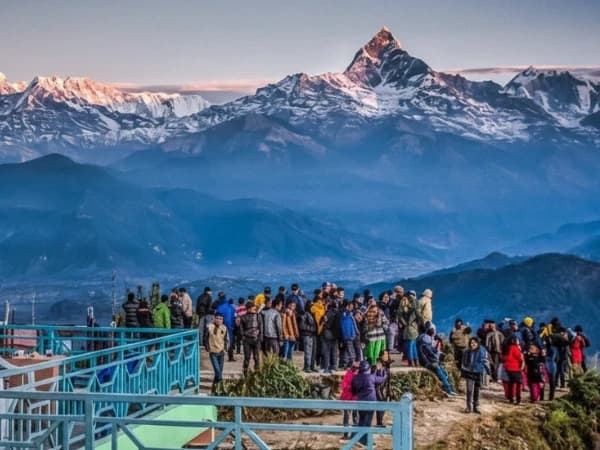
Sarangkot Sunrise or Poon Hill Sunrise: Which One Is Worth the Early Start?
Choose Sarangkot if you have one free morning in Pokhara and Poon Hill if you want to walk to your view. A plain comparison of height, effort, what you see, months and cloudy mornings.
Read More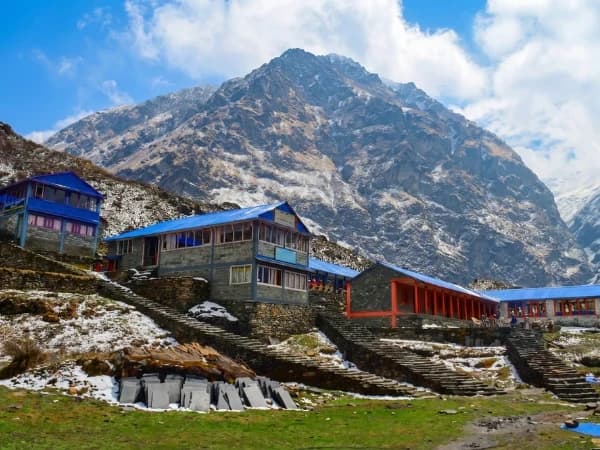
Annapurna Base Camp in 5, 7 or 9 Days: Which Itinerary Should You Choose?
Which Annapurna Base Camp itinerary should you choose: 5, 7 or 9 days? A side-by-side comparison, what each day looks like, how altitude compares and who each one suits.
Read More Chat with Shreejan