How Difficult Is the Gokyo Lakes Trek? Gokyo vs Everest Base Camp Effort for 2027

Updated 28 October 2026.
Short answer: I grade the 10-day Gokyo Lakes trek as strenuous, and I find it about as hard as Everest Base Camp, just hard in different places. You sleep no higher than Gokyo (4,790 m), against 5,164 m at Gorak Shep on the Base Camp route. The hard parts are the fast climb above Namche, with only one rest day, and the Gokyo Ri morning (5,357 m, about 567 m above the village). Our 10-day Gokyo trek is USD 1,225 Budget, USD 2,485 Standard and USD 4,132 Luxury per person for 2 to 4 people.
I am Shreejan. Guests usually ask me which is harder, Gokyo or Base Camp. They are hard in different places. Below I take the Gokyo days one by one, then set them against Everest Base Camp.
How hard is each day of the Gokyo Lakes trek?
This is the plan on our Gokyo Valley Lakes trek, 10 days. Heights, distances and walking hours are from the itinerary on that page. The effort column is my own view from guiding.
| Day | Route | Sleep | Walking | How it feels |
|---|---|---|---|---|
| 1 | Fly to Lukla (2,860 m), walk to Phakding | Phakding, 2,610 m | Short | Easy. You walk down a little |
| 2 | Phakding to Namche Bazaar, 7.5 km | Namche, 3,440 m | About 830 m up | Moderate. The long climb to Namche is the first test |
| 3 | Rest day, walk up to Everest View Hotel (3,880 m) | Namche, 3,440 m | Short | Easy. This is your only rest day |
| 4 | Namche to Dole, 11 km | Dole, 4,110 m | About 6 hours, 670 m up | Hard. Long, and you sleep 670 m higher than the night before |
| 5 | Dole to Machhermo, 7 km | Machhermo, 4,470 m | About 6 hours, 360 m up | Moderate to hard. Short distance, thin air |
| 6 | Machhermo to Gokyo, 5.7 km | Gokyo, 4,790 m | About 4 hours, 320 m up | Moderate. The lakes appear and the day feels short |
| 7 | Gokyo Ri (5,357 m), then on to Machhermo, 11 km | Machhermo, 4,470 m | 6 to 7 hours | The hardest day. Pre-dawn climb, then a long walk down |
| 8 | Machhermo to Namche, 9.6 km | Namche, 3,440 m | About 6 hours, 1,030 m down | Hard on the knees, easy on the lungs |
| 9 | Namche to Lukla, 13.5 km | Lukla, 2,860 m | 6 to 7 hours | Long, but you are breathing well now |
| 10 | Fly Lukla to Kathmandu or Manthali | Your Kathmandu hotel | None | Weather decides this day, not you |
Look at days 4 to 6. In three nights you go from 3,440 m to 4,790 m, which is 1,350 m. The usual guide is not to raise your sleeping height by more than 300 to 500 m a day above 3,000 m, as I explain in my altitude sickness guide. Day 4 is over that on our plan as written. Your guide checks your oxygen reading every evening and slows the plan if you are struggling.
How hard is the Gokyo Ri climb?
Gokyo Ri is 5,357 m. Gokyo village is 4,790 m. That is a climb of 567 m on a steep path with no rope and no ice. It is a walk, but a slow one. You start in the dark, usually around 4 to 4:30 am. It is very cold at that hour.
Nobody agrees on how long it takes. Our Gokyo Ri and Kala Patthar page says about 90 minutes. Many other guides say 2 to 3 hours. I plan on 2 to 3 hours for a normal trekker and tell fast walkers they may do it quicker. Going down takes about 1 to 1.5 hours.
On our 10-day plan you sleep one night in Gokyo, so you get one morning. If cloud sits on the lake that day, there is no second chance unless you add a night. I would always rather you add one.
Gokyo or Everest Base Camp: which is harder?
Here are the two treks side by side, using the itineraries on our Gokyo page and our 12-day Everest Base Camp page.
| Gokyo, 10 days | Everest Base Camp, 12 days | |
|---|---|---|
| Highest point | Gokyo Ri, 5,357 m | Kala Patthar, 5,545 m |
| Highest night | Gokyo, 4,790 m | Gorak Shep, 5,164 m |
| Rest days | 1 (Namche) | 2 (Namche and Dingboche) |
| Climb from bed to summit viewpoint | 567 m | About 381 m |
| Nights above 4,400 m | 3 (Machhermo, Gokyo, Machhermo again) | 3 (Dingboche, Lobuche, Gorak Shep) |
| Trail traffic | Quieter | The busiest trail above Namche |
| Insurance cover needed | To 5,500 m | To 6,000 m |
So which is harder? Gokyo is easier on the sleeping height, because your highest bed is 374 m lower than Gorak Shep. Base Camp is easier on the pace, because it gives you a second rest day and a more gradual rise. Neither wins clearly. The people who struggle most on Gokyo are the ones who take 10 days as a promise that it will be easy. The Kala Patthar side of it is in our Everest Base Camp versus Gokyo page, and I will not repeat it here.
What about the Cho La pass?
It is not on the 10-day trek. You only meet the Ngozumpa glacier up close if you add the pass, because the route from Thangnak to Gokyo runs across it. Our Everest Base Camp with Gokyo and the Cho La, 15 days goes to Base Camp and Kala Patthar first, then crosses the Cho La (5,420 m) with crampons and fixed ropes in places. We grade that one very strenuous. It costs USD 1,699 Budget, USD 3,240 Standard and USD 5,299 Luxury per person, and you need insurance to 6,000 m. If you are unsure whether the pass is for you, read this first.
On the 10-day trek there is an optional half-day side walk to the fifth lake, below the Ngozumpa glacier, if your body is happy on the day. I never add it by default.
Who should not do the Gokyo Lakes trek?
There are people I would not send up this valley without a longer plan or a doctor's agreement first.
If you have had serious altitude sickness before, talk to your doctor and think about a longer plan. The same goes for a heart or lung condition you have not discussed with a doctor. If you cannot walk 6 hours on two days in a row at home, train first. And do not arrive in Kathmandu and fly to Lukla the next morning with no buffer days. Lukla flights get delayed by weather, and our page recommends two spare days before your flight home.
Beginners can do it if they train for it. Tell your guide the moment your head starts to hurt.
How does your tier change the effort?
A lot. Guests tend to forget this part.
Budget has no porter. You carry your own bag, with your guide beside you. Budget meals and drinks are not included, so you pay at the teahouse. The Lukla flights are fixed-wing.
Standard has one porter for every two trekkers. By law a porter carries at most 20 kg, so that is about 10 kg of yours, and you carry a day pack. If you book alone, you have no porter on Standard, because the porter is shared, so the guide carries up to 10 kg for you.
Luxury gives each trekker their own porter, with up to 20 kg of bag, and a helicopter to Lukla and back. It does not remove the altitude.
The tiers change your back and your morning. They do not change the air on day 7.
What does it cost, and what is on top?
Prices for 2 to 4 people, per person, from the live package page: USD 1,225 Budget, USD 2,485 Standard and USD 4,132 Luxury per person for 2 to 4 people. A solo trekker pays USD 2,085, USD 2,965 or USD 5,015. The prices include the Lukla flights, your guide and the three Khumbu permits: Sagarmatha National Park (NPR 3,000), the Khumbu Pasang Lhamu Rural Municipality fee (NPR 3,000) and the TIMS card (NPR 2,000). The Nepal Tourism Board publishes the official fees.
Not included are your international flight, your visa, your Kathmandu hotel, tips and insurance. For Everest region food, plan on about NPR 2,000 per meal in a teahouse, including tea or coffee. Our Gokyo cost page has the full table by group size, with what each tier includes.
Your insurance should cover helicopter rescue and altitude up to the highest point of the trek rounded up to the next 500 m. For this trek that is 5,357 m, so 5,500 m. Buy it at home, not in Nepal. There is more in our insurance guide.
When is the Gokyo trek easiest?
The month changes how hard it feels, mostly through cold. The temperatures below are Namche Bazaar averages (daily high, then daily low, in Celsius) from the FAO, as used in our month-by-month Gokyo guide. Gokyo is 1,340 m higher, so it is colder every night.
- March: 9.6 / -3.0. Cold nights.
- April: 12.8 / 0.8. Warmer, with more cloud as the weeks go on.
- May: 14.3 / 3.7. Warmest of the spring months. Rain starts to rise, with 127.6 mm at Lukla (DHM).
- June to September: monsoon. I would not go.
- October: 12.5 / 1.2. Clear, the best window for the climb.
- November: 9.1 / -3.8. Nearly dry, and colder at night on Gokyo Ri.
- December: 7.6 / -7.1. Very cold. I only send experienced trekkers.
The cold changes how hard the climb feels. A very cold dawn on day 7 makes it feel longer. For a first Himalayan trek I would choose October or April, not December.
Questions people ask about Gokyo difficulty
Is the Gokyo Lakes trek harder than Everest Base Camp?
Not clearly. Your highest bed on Gokyo (4,790 m) is lower than Gorak Shep (5,164 m), but the plan has one rest day and not two. I rate both strenuous.
Can a beginner do the Gokyo Lakes trek?
Yes, if you can walk 5 to 7 hours a day and have trained for it. Our page says no previous trekking experience is required. Start training at least 12 weeks before, and see our 12-week training plan.
How high is the highest point on the Gokyo Lakes trek?
Gokyo Ri, 5,357 m. Our package page also gives 5,350 m as the maximum altitude, which is the same place rounded.
Is Gokyo Ri hard?
It is a steep walk of about 567 m from the village with no technical section. The cold and the thin air make it hard, not the ground. Expect 2 to 3 hours up.
How many days do I need for Gokyo?
I run it in 10 days. I would add one night at Gokyo if you have the time, so a cloudy dawn does not cost you the view.
Do I need a porter for the Gokyo trek?
You do not need one, but it helps. Budget has none, Standard has one per two trekkers, and Luxury has your own. An extra porter is USD 25 a day plus 13 per cent VAT and 3.5 per cent bank charge, so USD 29.24 a day.
Is the Gokyo trek safe in 2027?
The main risk on this trek is altitude sickness. Your guide checks your oxygen every evening and will slow or turn the group back if needed. Rescue depends on your insurance, which is why I ask for a copy before you travel.
What is the next step?
To book, you pay a 10 per cent deposit and the balance in Kathmandu, in US dollars or euros. Card carries 3.5 per cent on the balance, and cash none. The deposit is non-refundable, but I can move your dates free of charge within one year, with at least 72 hours notice. Message me on WhatsApp on +977 9810351300 with your dates, your fitness and any history of altitude trouble, and I will tell you which of the two treks I think suits you.
Written by Shreejan Simkhada, CEO of The Everest Holiday, from a family of three generations of family guides. TAAN Member #1586. WhatsApp +977 9810351300.
Planning a trip to Nepal?
Drop us your details and tell us what you have in mind. We will put together a personalised plan and get back to you.
Not sure which Nepal trek is right for you?
Take our free 2-minute quiz and get personalised recommendations based on your fitness, experience, and travel style.
Find Your Perfect Trek →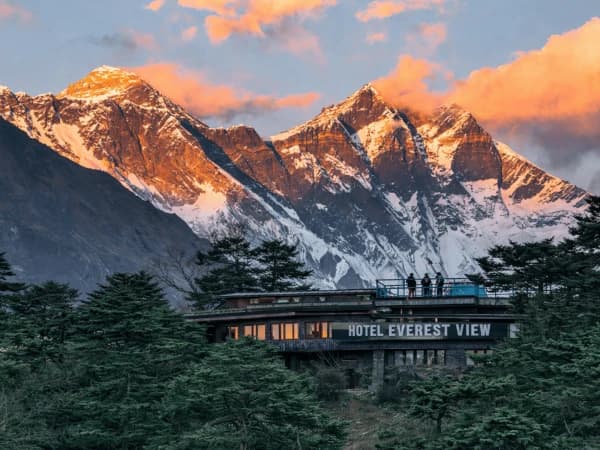
Best Time for the Everest View Trek, Month by Month for 2027
Month by month weather at Lukla, Namche and Tengboche, Lukla and Manthali flights by season, why winter works on this low trek, Mani Rimdu at Tengboche and 2027 prices.
Read More
How Hard Is the Gosaikunda Trek? A Plain Rating for 2027
A plain rating of the 5-day Gosaikunda trek: the climb to Chandanbari, the 4,380 m lake with no rest day, altitude sickness risk, winter snow, who should skip it and 2027 prices.
Read More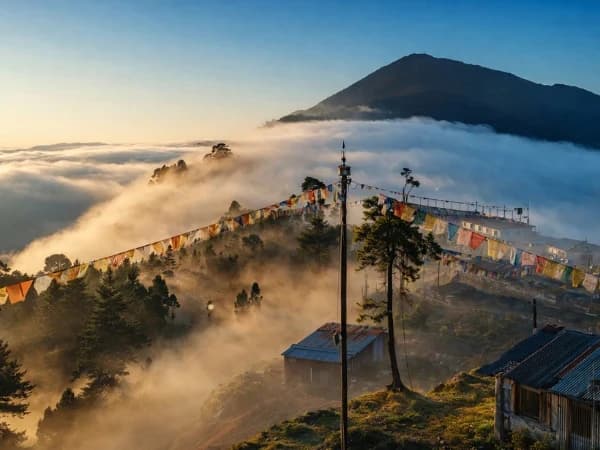
Helambu Trek Cost 2027: What 6 Days Really Costs by Tier and Group Size
What the 6-day Helambu trek costs in 2027 by tier and group size, what is and is not included, the permits, transport, tips and what you will spend on the trail.
Read More Chat with Shreejan