How Much Does the Gokyo Lakes Trek Cost in 2027?
Written by Shreejan Simkhada, CEO of The Everest Holiday and third-generation Himalayan guide. TAAN Member #1586. Prices on this page were read from our live package page on 2 October 2026.
The short answer: our 10-day Gokyo Valley Lakes trek costs US$1,285 to US$4,332 per person for one traveller, and less per person for groups. Budget starts at US$1,285, Standard at US$2,965 and Luxury at US$5,015. Those prices include the Lukla flights (a helicopter both ways on Luxury), the three Khumbu permits and your guide. They do not include your international flight, your Kathmandu hotel, your visa, tips or insurance. Our website prices hold for 2027 departures, so the table below applies to either year.
I wrote this page to show where the money goes, line by line, and to be straight about the two things I can't put a firm number on: the cost of food on the Budget tier, and tips. If you want the case for the route itself, read our Gokyo Lakes trek guide. This page is only about cost.
How much does the Gokyo Lakes trek cost per person?
Pricing is the same for a private trip and a group. What changes the price is how many travellers are in your party. These are the live per-person prices for the 10-day itinerary, in US dollars.
| Travellers | Budget | Standard | Luxury |
|---|---|---|---|
| 1 | 1,285 | 2,965 | 5,015 |
| 2 to 4 | 1,225 | 2,485 | 4,132 |
| 5 to 8 | 1,199 | 2,250 | 4,132 |
| 9 to 12 | 1,149 | 2,210 | 4,055 |
| 13 to 20 | 1,099 | 2,195 | 4,020 |
Source: our Gokyo Valley Lakes package page, group-price table, read 2 October 2026. A solo traveller is welcome; the minimum is one person. We run every trip privately for your group, even if that is one person. We never merge separate private bookings. Related: Mountain Bike Tour Cost in Nepal 2027: From a Day Ride to 19 Days in Mustang.
What is included in each tier?
All three tiers follow the same 10-day route. The tier decides who carries your bag, what you eat, where you sleep and how you reach Lukla.
| Line item | Budget | Standard | Luxury |
|---|---|---|---|
| Airport pick-up and drop-off | Included | Included | Included, private luxury vehicle |
| Flights to and from Lukla | Fixed-wing, included (from Kathmandu or Manthali) | Fixed-wing, included (from Kathmandu or Manthali) | Helicopter, round trip, included |
| Sagarmatha National Park permit, Khumbu Pasang Lhamu fee, TIMS | Included | Included | Included |
| Guide | One guide per group, assistant guide at 8 or more | One guide per 6 trekkers, assistant at 7 or more | One guide per 2 trekkers, plus an assistant for each extra 2 |
| Porter | None. You carry your own bag | One porter per 2 trekkers, 20 kg shared load | One porter per trekker, 20 kg |
| Meals on the trek | Not included | Three meals a day, daily fruit, tea or coffee with meals, 2 litres of warm water | Three luxury meals with fruit, dry fruits and nuts, tea, coffee, soft drinks, juices and mineral water (no alcohol) |
| Rooms | Shared | Twin room, with attached bathroom where possible | Private deluxe room with attached bathroom, hot showers, charging, bed heater and internet covered |
| Sleeping bag and down jacket | Free on request | Free on request, plus duffel bag | Free on request, plus duffel bag |
| First-aid kit with oximeter, T-shirt and cap, farewell meal, certificate, free luggage storage, SIM card | Included | Included, SIM with limited data | Included, SIM with unlimited data |
Source: the inclusions on the live package page, read 2 October 2026. Two points on porters. On a solo booking, Luxury still gets its own porter. Standard does not: porters are shared one for two, so a single Standard trekker has no porter and the guide carries up to 10 kg of the bag. Budget never has a porter. If you want one on Budget, an extra porter costs US$25 a day, plus 13 per cent VAT and 3.5 per cent bank charge on top.
What is not included?
These are the exclusions on the package page, plus the costs that sit outside any trek price.
- Your international flight to and from Kathmandu.
- Your Nepal visa. Our package page lists US$30 for 15 days, US$50 for 30 days and US$125 for 90 days, payable in US dollars on arrival. Confirm these against the immigration department's own page before you travel.
- Kathmandu hotels before and after the trek. Kathmandu hotels are not included in any trek tier, so we quote them separately. Our family homestay is US$15 per person per night, and it supports our learning centre.
- Tips for your guide and porters. They are customary and up to you. I won't print a figure here, because there is no published norm.
- Extra porters and excess luggage, at the rates above.
- Drinks outside your tier. Budget has no food or drinks included, Standard excludes drinks outside meals, and Luxury excludes alcohol.
- Extra costs from delays outside our control, such as landslides, weather, strikes or flight changes. See the Lukla question below.
- Travel insurance. Buy it in your home country, not in Nepal, and make sure it covers trekking and helicopter evacuation up to 5,500 m. That is set above the highest point of the route (Gokyo Ri is 5,357 m) because a rescue helicopter has to fly higher than you are standing in order to reach you. Rescue is funded by your insurance.
What do the permits cost, and are they in the price?
They are in the price, on every tier. For your information, the figures are:
| Permit | Fee for foreigners | Source |
|---|---|---|
| Sagarmatha National Park entry | NPR 3,000 | Nepal Tourism Board park entry fees page (ntb.gov.np), read 4 September 2026 |
| Khumbu Pasang Lhamu Rural Municipality fee | NPR 3,000 | Local fee collected at Lukla or Monjo. There is no official web page for it; the figure is the one our own team pays on the trail, raised from NPR 2,000 in 2024 |
| TIMS card | NPR 2,000 | Nepal Tourism Board, ntb.gov.np TIMS page, read 2 October 2026 |
That is NPR 8,000 per person in total. I have not converted it to dollars, because the rate moves. We buy the TIMS card for every trekker through our agency registration, because TIMS is a safety record that names you, your guide and your route. The permits are a small part of the cost; the flights and the crew are the large part.
How much is the Lukla flight, and what does the helicopter option cost?
On Budget and Standard, the round-trip fixed-wing flight is already in your price. In the Ramechhap season the flight leaves from Manthali, a pre-dawn drive from Kathmandu, and we include that transfer. The civil aviation authority sets the Ramechhap windows, roughly 25 September to 30 November and about 15 March to 15 May, as set out in our domestic flights guide. Outside those windows flights leave from Kathmandu. Lukla's runway has no go-around, so weather holds are routine, and visibility closes the airport for much of the monsoon. There is no published Lukla cancellation rate for the other months.
On Luxury, the price includes a helicopter both ways. If you are on Budget or Standard and want to swap, the shared-seat sell prices we publish in the flights guide are US$640 from Kathmandu to Lukla and US$710 from Lukla to Kathmandu, which is US$1,350 for both legs. Those prices include government tax, bank charges and the fuel supplement, and a shared seat depends on availability and weather. If no shared seat is free, a private flight costs more. If you swap, the value of your fixed-wing ticket can be moved to the helicopter seat, less the airline's cancellation charge, bank charges and tax, so ask us for the net figure for your dates. Gokyo is not on our published helicopter price list, so any helicopter plan that does not start from Kathmandu or Lukla is on request.
If a flight is delayed, the guest pays for the extra nights and for any helicopter that you choose to take. Build in a spare day at the end.
What does food cost on the Budget tier?
This is the one number I can't give you firmly. Budget has no meals included, and there is no published price list for teahouse menus on the Gokyo side. Our package page tells Budget guests to plan about US$20 a day for personal expenses, which covers snacks, showers and small extras, but that is a general planning figure, not a menu price. Prices rise with altitude because everything is carried up, and Gokyo is at 4,790 m. Ask us before you book, and we will tell you what our guides are seeing on the trail that month. If food cost worries you more than the saving, Standard puts all meals into the price. The step from Budget to Standard is US$1,040 for one traveller, and US$1,074 for two to four, and that also buys you a twin room and, for two or more trekkers, a shared porter.
Is Gokyo cheaper than Everest Base Camp?
In total, yes. Per day, no. Gokyo is a shorter trip, so the bill is smaller, but the flights and the first days to Namche cost the same whatever the length. This is my own calculation on live prices for one traveller.
| Trek (one traveller, Budget) | Days | Price (US$) | Price per day (US$) |
|---|---|---|---|
| Gokyo Valley Lakes | 10 | 1,285 | 128.50 |
| Everest Base Camp | 12 | 1,399 | 116.58 |
| Everest Base Camp with Gokyo Ri | 15 | 1,699 | 113.27 |
The Everest Base Camp price is the 1 to 4 band, which is the same for one traveller. The same pattern holds on Standard (US$2,325 for Gokyo, US$2,785 for Everest Base Camp) and Luxury (US$4,332 and US$4,999). So if you choose Gokyo to save money, you save about US$114 on Budget against Everest Base Camp, and you give up Base Camp. If you want both, our Everest Base Camp and Gokyo Ri package is the longer, cheaper-per-day option. The full cost of the other route is in our Everest Base Camp cost guide, and the cost of the biggest circuit is in our Three Passes cost guide.
What does the route look like, and is it hard?
The itinerary on the package page is: fly to Lukla (2,860 m) and walk to Phakding; Namche Bazaar (3,440 m); a rest day in Namche; Dole (4,110 m); Machhermo (4,470 m); Gokyo (4,790 m); Gokyo Ri (5,357 m) and back to Machhermo; Namche; Lukla; fly to Kathmandu. The Gokyo lake system is a Ramsar-listed wetland of 19 lakes between about 4,710 and 4,950 m (Ramsar site record, designated 13 September 2007).
The hard part is the climb from Namche to Dole, which is 670 m in one day. The general guideline in the altitude-sickness literature is to increase your sleeping altitude by no more than about 300 m a day once you are high. Our itinerary has one rest day, at Namche, and our guides check you with an oximeter. If you want a slower schedule, ask us and we will quote an extra day. If you have never been above 3,000 m, read our altitude sickness guide first.
Is the Everest region open right now?
As of 29 September 2026, our flood update listed the Everest region as open and unaffected, and no damage has been reported since. Lukla and four other airports were closed for poor visibility on 25 September, which was a weather hold, not damage (Kathmandu Post, 25 September). We confirm the situation 48 hours before you depart, and if a road or flight is not working we find an alternative.
Who should not book this trek?
Skip it if you cannot manage days of six to seven hours of walking at 4,000 m and above, which this itinerary has on three days. Skip Budget if you want a porter or do not want to organise meals. And if you would rather stand at Base Camp itself, book the Everest Base Camp trek instead. For the seasons, read Everest Base Camp weather month by month and the best time to trek the Everest region; Gokyo shares the Lukla approach, so the weather and flight patterns are the same.
How do the deposit, the balance and cancellation work?
A 10 per cent deposit holds your dates and the balance is paid in Kathmandu. Card payment of the balance carries a 3.5 per cent charge; cash in Kathmandu does not. We take US dollars or card, not Nepali rupees, from foreign clients. If you need to move, you can reschedule free, with at least 72 hours' notice, to any date within one year. The deposit itself is not refunded if you cancel. If we cannot run the trip, we refund what you paid less taxes, bank and card charges and any money already spent on permits or flights.
To get a quote for your dates and group size, message me on WhatsApp or write to [email protected]. Our booking system lists open fixed departures for this trek on 5, 12, 19 and 26 April and 5, 12, 19 and 26 May 2027 (read 2 October 2026), and the Ramechhap pre-dawn transfer applies in the April and early May dates. For any other dates, contact us and I will build the trip around you.
Sources
Sources: our live Gokyo Valley Lakes package page and group-price table (prices, tiers, inclusions, exclusions, itinerary and visa figures); Nepal Tourism Board TIMS page and park entry fees page (ntb.gov.np); Khumbu Pasang Lhamu fee: our own team, confirmed 30 September 2026; no official web page found. Flights and helicopter prices, Ramechhap windows and delay rule: our domestic flights guide. Ramsar Sites Information Service record 1692 (Gokyo lakes). Route status: Kathmandu Post, 25 September 2026, and our flood update of 29 September 2026. Per-day prices are worked out from the live prices.
We are a family company in Kathmandu, three generations of Himalayan guides, registered in 2016 and a member of the Trekking Agencies' Association of Nepal, number 1586. Every booking helps fund our Nagarjun Learning Center at Saldum, where 70 children learn with a teacher I pay for personally.
Planning a trip to Nepal?
Drop us your details and tell us what you have in mind. We will put together a personalised plan and get back to you.
Not sure which Nepal trek is right for you?
Take our free 2-minute quiz and get personalised recommendations based on your fitness, experience, and travel style.
Find Your Perfect Trek →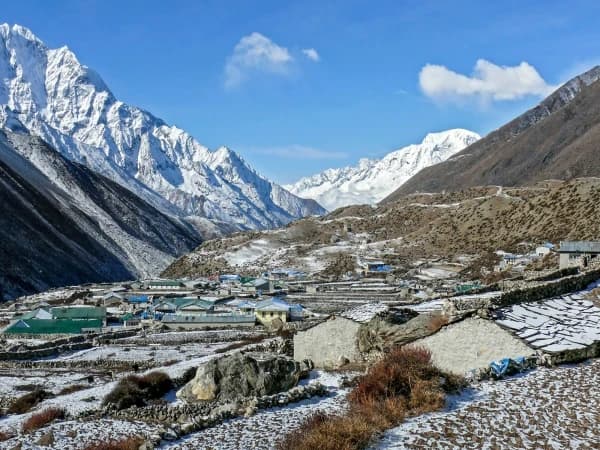
Thamdanda and Surke: The Road Head for Everest Base Camp by Road
Thamdanda is the road head where our Everest Base Camp trek by road starts and ends on foot. How to get there from Phaplu and what the first walk to Paiya is like.
Read More
Poon Hill Trek Permits 2027: ACAP, TIMS, Cost and What You Need
Poon Hill needs two permits: ACAP at NPR 3,000 and a TIMS card at NPR 2,000. Who arranges them, where they are checked, SAARC rates and the 2027 trek prices.
Read More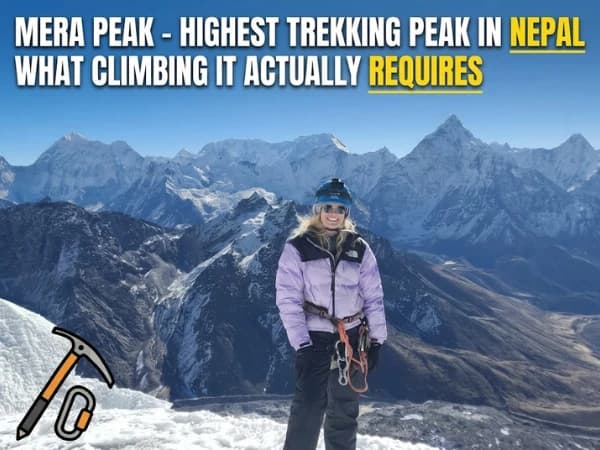
Mera Peak Climbing Itinerary 2027: 14 Days, Day by Day
Mera Peak in 14 days, night by night. The Hinku valley, a full rest day at Khare, Mera High Camp at 5,780 m, summit day, 2027 prices and the best months.
Read More Chat with Shreejan