
Do You Need to Book Teahouses in Advance in October?

Every September my inbox fills with a version of the same worried question: "We're trekking in October, do we need to book teahouses in advance, and what happens if everything is full?" I'm Shreejan Simkhada, founder of The Everest Holiday, and I've been sending trekkers up these trails from Kathmandu since 2016. Here is the honest answer, the one I give my own guests.
The short version: you mostly cannot book teahouses in advance the way you book a hotel, very few take online reservations, and the ones that do rarely honour them if you turn up late. What actually secures your bed in October is either arriving early in the afternoon, or a guide who phones the next lodge every single day. On our treks that phone call is our job. If you'd rather hand the whole problem over, message us on WhatsApp and we'll tell you honestly whether your dates and route need pre-planning or not.
Below is what October genuinely looks like on the ground, where beds run out, where they don't, and what changes in October 2026 because of Dashain.
Do you need to book teahouses in advance in October?
You need a booking system, not a booking website. At the well-known bottleneck stops on the Everest and Annapurna trails, rooms are gone by mid-afternoon through most of October. But "booking in advance" in Nepal does not mean Booking.com. Most teahouses are family businesses with no online presence; reservations are made by phone, lodge-to-lodge, usually the day before, and usually by a guide the owner knows. Independent trekkers manage with early starts and flexibility. Guided trekkers barely notice the problem, because someone else is solving it every afternoon.
So the real question isn't "should I book?" It's "who is going to make thirty phone calls over the next twelve days, me, or someone whose job it is?"
What does October actually look like at the bottleneck stops?
Busy, but concentrated. The crush isn't everywhere, it's at specific villages where the trail narrows to a handful of lodges. Once you know where those are, the whole thing becomes manageable.
Everest Base Camp trail
Namche Bazaar (3,440 m) has dozens of lodges and almost never turns everyone away, but the popular mid-range places fill by early afternoon in October, and you may end up in a colder annexe room. Tengboche (3,860 m) is tighter: a small saddle with limited lodges next to the monastery, and many groups push on to Deboche because of it. The genuine squeeze points are higher. Lobuche (4,940 m) has a limited number of beds for the volume of trekkers coming through, and Gorak Shep (5,164 m) is the worst of all: a handful of lodges at the end of the trail, no village behind them, nowhere else to go. In peak October, trekkers arriving after about 1–2 pm at Gorak Shep regularly end up sleeping on dining-hall benches or mattresses on the floor. I'm not telling you that to frighten you; it happens every season, and pretending otherwise would be dishonest. Our own Everest Base Camp 12-day itinerary is built around reaching these stops early for exactly this reason.
Annapurna Base Camp trail
The Annapurna Sanctuary has the same shape of problem at lower altitude. Chhomrong (2,170 m) is the junction village where every ABC trekker passes in both directions, and the well-known lodges there go early. Above it, the corridor tightens: Deurali (3,174 m), Machapuchare Base Camp (3,700 m) and Annapurna Base Camp itself (4,130 m) each have only a small cluster of lodges, capacity is capped inside the sanctuary, and there is no side valley to overflow into. In late October afternoons, MBC and ABC fill up and latecomers share rooms with strangers or take the dining hall. The Annapurna Base Camp trek is still absolutely worth doing in October, the skies are the clearest of the year, but the sanctuary section rewards people who walk on a plan.
Manaslu: the sharpest bottleneck in Nepal
Dharamsala (4,460 m), the last stop before the Larkya La crossing, is the single most extreme example I know. It isn't a village at all, two to three basic lodges and some seasonal tents, and every single person crossing the pass must sleep there. In peak October it overflows, full stop. Tents, shared dormitories and dining-hall floors are normal. On Manaslu, a restricted-area trek where a guide is mandatory anyway, the guide's advance phone work is the difference between a bed and a very cold night before a 5,160 m pass.
How do independent trekkers cope in October?
They walk early, settle early, and stay flexible. The independent trekkers who do October well all follow the same playbook, and it works:
- Start walking by 7 am. The trekking day in Nepal is front-loaded anyway, mornings are clearer and warmer, and in October the early walkers take the rooms.
- Aim to settle by 2 pm. This is the single most useful rule. At the bottleneck stops, 2 pm is roughly when the music stops. After that you take what's left.
- Stay flexible on the stage. If Tengboche is full, Deboche is twenty minutes on. If Lobuche looks grim, some trekkers sleep at Dzongla or Thukla instead. A rigid itinerary is your enemy.
- Ask your lodge to phone ahead. Owners will often call a cousin's lodge at the next stop for you. It's informal and not guaranteed, but it's the local system, and it beats nothing.
- Accept the occasional rough night. One night on a dining-hall bench at Gorak Shep is a story, not a disaster, provided you have a proper sleeping bag.
None of this is complicated. It just requires energy and decision-making at exactly the altitudes where you have the least of both.
How do guided treks solve the teahouse problem?
The guide phones ahead, every day, lodge to lodge, and in my honest opinion this is the single most underrated thing a guide does. People imagine a guide's value is navigation or safety, and those matter. But in October the daily reality is this: while you eat breakfast, your guide is on the phone to tomorrow night's lodge owner, someone he has sent guests to for years. The owner holds rooms for him because the relationship is worth more than one walk-in. By the time you arrive at 3 pm, tired, your room is waiting. You never see this work happen, which is exactly why nobody talks about it.
On our treks the first two or three nights are typically fixed before you leave Kathmandu, and everything after that is confirmed rolling, a day ahead, so we keep the flexibility to slow down if your acclimatisation needs it. That's deliberate. Pre-booking an entire fixed itinerary sounds safer but removes the one thing that keeps you healthy at altitude: the freedom to add a rest day.
And here is the honesty the sales pages skip: even guides cannot always pre-book Gorak Shep. Capacity there is so tight in peak weeks that some owners simply refuse to hold rooms, guide or no guide. What a good guide does instead is manage around it, an earlier start from Lobuche, a runner sent ahead, or restructuring the day so you visit Base Camp and sleep lower. The outcome is the same: you sleep in a bed. But anyone who promises you a guaranteed pre-booked room at Gorak Shep in the third week of October is telling you what you want to hear.
Which routes don't have the October bed problem?
Plenty, and this is the cheerful part of the answer. The crush is a feature of three or four famous corridors, not of Nepal.
- Langtang. Rebuilt almost entirely after the 2015 earthquake, the Langtang Valley trek now has newer lodges and more capacity than its trekker numbers require, even in October. It gets a fraction of the Everest trail's traffic despite being the closest big valley to Kathmandu. If your dates are locked to peak October and you hate the idea of racing for beds, this is my first suggestion.
- Khopra Ridge. The community lodges on the Khopra Danda route (Annapurna's quiet side) see a trickle of trekkers compared with the ABC corridor a valley away, and the lodge income goes back into local villages.
- The shoulder weeks. Late November has almost the same clarity as October with half the people. Early December is colder but gloriously empty. Even within October, the first week is noticeably calmer than the Dashain-holiday middle.
What's different about October 2026? (Dashain and the transport crunch)
In 2026, Dashain, Nepal's biggest festival, sits squarely in mid-to-late October: Ghatasthapana falls on 11 October and the main tika day, Vijaya Dashami, on 21 October 2026. For trekkers this matters less on the trail and more on the way to it. In the days either side of tika, the whole country travels home: buses and jeeps out of Kathmandu sell out, roads jam, and domestic flights (including the Ramechhap–Lukla runs) are under their heaviest pressure of the year. If you're flying into Kathmandu between roughly 16 and 25 October 2026, book your trail transport well ahead or expect improvisation.
Two more Dashain effects worth knowing. First, some smaller teahouses run on skeleton staff or close briefly so the family can be together for tika, which trims capacity in the exact week demand peaks. Second, it cuts the other way too: many Nepali trekkers use the Dashain holidays to hit the trails themselves, so domestic traffic adds to the international wave. The festival is also, honestly, a wonderful time to be in Nepal, you'll be offered tika and blessings in villages along the way, but plan your logistics around it rather than discovering it at the bus park.
What practical tips make October teahouse life easier?
Lower your expectations for the room and raise your preparation for the night, and October is easy. The specifics:
- Expect twin-share, and be flexible about it. October is not the month to insist on a private single at 4,900 m. Solo trekkers are routinely paired with a stranger at the bottleneck stops. If a single room matters to you, it's realistic lower down and a lottery higher up.
- Bring earplugs. Plywood walls, 5 am departures, and a dining hall below your floorboards. The best sleep aid on the trail costs two pounds.
- Carry cash for the room you get, not the room you wanted. Prices at the high stops are what they are, blankets may cost extra, and nobody up there takes cards. Budget for the night that happens rather than the night you imagined.
- Carry a proper sleeping bag even though teahouses have blankets. If your night turns out to be a mattress in the dining hall, the sleeping bag converts that from miserable to fine.
- Eat where you sleep. Teahouse economics run on dinner, not the room. It's the local custom, it keeps prices low, and lodge owners remember guests (and guides) who respect it.
- Be settled by 2 pm at the pinch points. Worth repeating, because it solves 80% of everything above.
So should you trek in October at all?
Yes. October's mountains are worth every bit of this. The post-monsoon air is the clearest of the year, the days are warm, the passes are open, and there's a reason the whole world shows up. The bed situation is not a reason to avoid October; it's a reason to go with a plan, whether that plan is "walk early and stay flexible" or "let a guide's phone do the work".
If you'd rather it were our problem: book with us and the bed problem becomes our job, not yours. Our guides have walked these trails for years and the lodge owners at Chhomrong, Lobuche and Dharamsala know them by name. Tell us your dates on WhatsApp (+977 9810351300) and we'll tell you, honestly, what October 2026 looks like for your route, including the parts nobody puts in the brochure.
Planning a trip to Nepal?
Drop us your details and tell us what you have in mind. We will put together a personalised plan and get back to you.
Not sure which Nepal trek is right for you?
Take our free 2-minute quiz and get personalised recommendations based on your fitness, experience, and travel style.
Find Your Perfect Trek →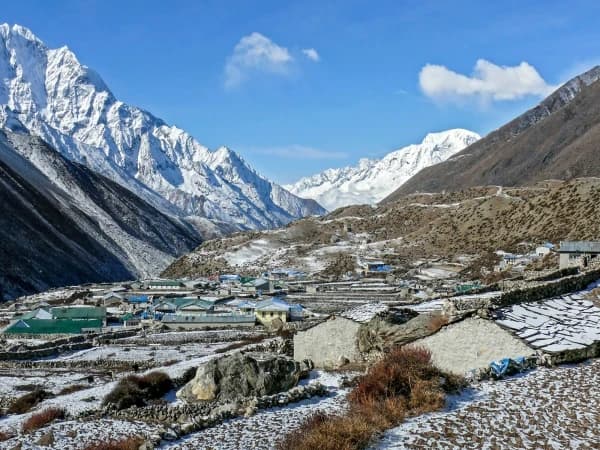
Thamdanda and Surke: The Road Head for Everest Base Camp by Road
Thamdanda is the road head where our Everest Base Camp trek by road starts and ends on foot. How to get there from Phaplu and what the first walk to Paiya is like.
Read More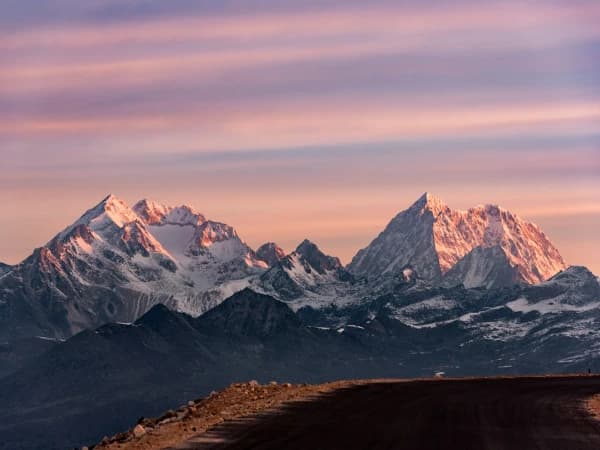
Poon Hill Trek Permits 2027: ACAP, TIMS, Cost and What You Need
Poon Hill needs two permits: ACAP at NPR 3,000 and a TIMS card at NPR 2,000. Who arranges them, where they are checked, SAARC rates and the 2027 trek prices.
Read More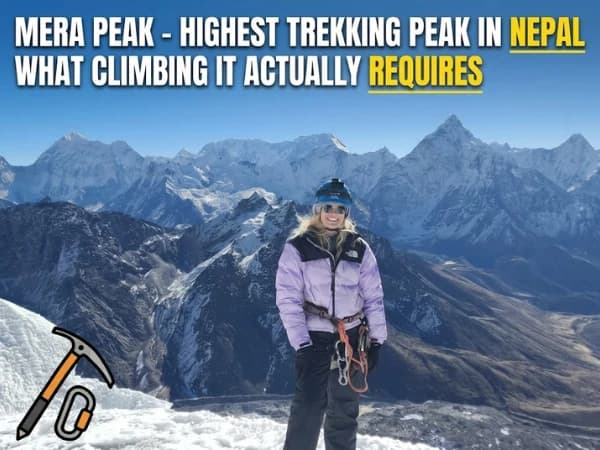
Mera Peak Climbing Itinerary 2027: 14 Days, Day by Day
Mera Peak in 14 days, night by night. The Hinku valley, a full rest day at Khare, Mera High Camp at 5,780 m, summit day, 2027 prices and the best months.
Read More Chat with Shreejan